
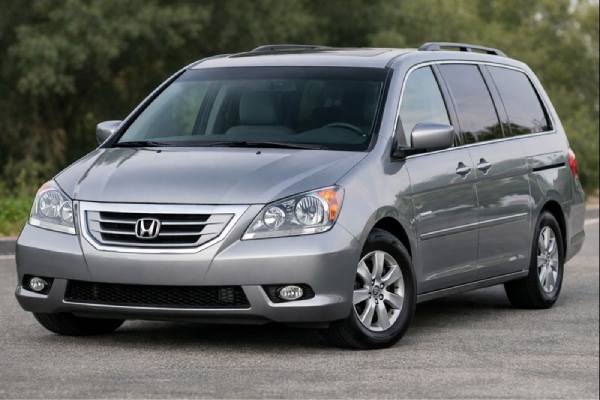


The 2008–2010 facelift Honda Odyssey (RL4) with the 3.5-liter J35A7 V6 targets families who want full-size minivan space without giving up the calm, predictable road manners Honda is known for. This version pairs a naturally aspirated V6 with a 5-speed automatic and front-wheel drive, so it feels strong in everyday driving—especially when merging, climbing grades, or hauling a full cabin. The facelift brought subtle refinements that matter long-term: updated interior materials, revised feature packaging, and (in many markets) wider availability of stability control and side-curtain airbags across trims.
For owners, the big story is balance. The Odyssey’s packaging and seat flexibility are excellent, and the drivetrain is durable when serviced on time. The trade-off is that age-related issues—sliding doors, mounts, and transmission fluid sensitivity—show up if maintenance is deferred or the vehicle is used hard in city stop-and-go.
Quick Specs and Notes
- Strong low- and mid-range pull for a loaded minivan; easy highway merging even with passengers.
- Very practical cabin packaging with family-friendly access and flexible seating layouts.
- Predictable handling and stable braking feel for the class, especially on good tyres.
- Plan on frequent automatic transmission fluid service to preserve shift quality and longevity.
- Timing belt service is a major interval item—budget for it at the scheduled mileage/time (whichever comes first).
What’s inside
- Facelift RL4 in focus
- J35A7 data and dimensions
- 2008–2010 trims and safety hardware
- Failure trends and recalls
- Maintenance roadmap for owners
- How it drives day to day
- Rivals: strengths and tradeoffs
Facelift RL4 in focus
Think of the 2008–2010 Odyssey facelift (RL4) as a “second refinement” of the third-generation formula: max cabin utility, a smooth V6, and car-like control—without chasing gimmicks. In day-to-day use, the strengths are obvious. The seating height makes entry easy, the sightlines are confidence-inspiring, and the chassis feels composed even when the van is loaded. For parents and frequent long-distance drivers, that relaxed stability is a real advantage: fewer steering corrections on the highway, less fatigue, and better control in crosswinds than many rivals of the same era.
The J35A7 3.5-liter V6 is the other pillar of the experience. It delivers power in a clean, linear way (no turbo delay, no power peaks that require aggressive downshifts). The 5-speed automatic is tuned for smoothness, and when it’s healthy and serviced properly, it suits the Odyssey’s mission well. The drivetrain’s main weakness isn’t the design concept—it’s heat and fluid stress. Minivans spend a lot of time doing exactly what strains an automatic transmission: low-speed city work, repeated stop-and-go, hills, and full loads. If fluid changes were ignored, shift quality can deteriorate, and the repair path can get expensive.
The facelift years also sit at a “sweet spot” for many buyers because they’re old enough to be affordable but modern enough to offer genuinely useful safety equipment. Depending on market and trim, stability control, side-curtain airbags, and improved child-seat provisions can be present, and the Odyssey’s structure performs well in mainstream crash testing for its time.
Ownership is best approached with a practical mindset: buy based on service history, not shine. A well-kept RL4 typically rewards you with predictable running costs and excellent family usability. A neglected one can become a rotating list of sliding-door fixes, suspension wear, and driveline complaints. The same model can be either outcome—your inspection and maintenance plan decide which one you get.
J35A7 data and dimensions
Below are owner-focused specifications for the 2008–2010 facelift Odyssey (RL4) with the 3.5-liter J35A7 V6 and FWD. Exact figures can vary by VIN, emissions family, wheel package, and market equipment—use the tables as a decision guide, then verify against your vehicle’s documentation.
Powertrain and efficiency
| Item | Specification |
|---|---|
| Code | J35A7 |
| Engine layout and cylinders | V6, 6 cylinders, SOHC i-VTEC (VCM on some trims/markets) |
| Valves | 4 valves/cyl (24 total) |
| Bore × stroke | 89.0 × 93.0 mm (3.50 × 3.66 in) |
| Displacement | 3.5 L (3,471 cc) |
| Induction | Naturally aspirated |
| Fuel system | PFI/MPFI (market-dependent calibration) |
| Compression ratio | ~10.0–10.5:1 (varies by variant) |
| Max power | 244 hp (182 kW) (rpm varies by market calibration) |
| Max torque | Typically ~325–330 Nm (240–243 lb-ft) (rpm varies by calibration) |
| Timing drive | Belt |
| Rated efficiency (typical US EPA reference) | 13.1 L/100 km (18 mpg US combined); 14.7 (16 city) / 10.2 (23 hwy) |
| Real-world highway @ 120 km/h (75 mph) | Often ~10.5–12.5 L/100 km depending on load, tyres, wind, and terrain |
| Aerodynamics | Cd and frontal area not consistently published for all markets/trims |
Transmission and driveline
| Item | Specification |
|---|---|
| Transmission | 5-speed automatic |
| Drive type | FWD |
| Differential | Open (traction control via brake intervention where equipped) |
Chassis and dimensions (typical)
| Item | Specification |
|---|---|
| Suspension (front/rear) | MacPherson strut / multi-link |
| Steering | Power-assisted rack-and-pinion |
| Brakes | 4-wheel discs (diameters vary by trim/market) |
| Wheels/tyres | Commonly 16–17 in wheels; tyre sizes vary by trim |
| Ground clearance | Market/trim dependent; verify on vehicle label/spec sheet |
| Length / width / height | Varies slightly by market bumper/trim; verify by VIN |
| Wheelbase | Class-typical long wheelbase; verify by market spec sheet |
| Turning circle (kerb-to-kerb) | Commonly ~11.5–12.0 m (varies by wheel/tyre) |
| Kerb (curb) weight | Broadly ~2,000–2,150 kg depending on trim and equipment |
| GVWR | Market-dependent; check doorjamb label |
Performance and capability (real-world expectations)
| Item | Typical result (varies by load/tyres/conditions) |
|---|---|
| 0–100 km/h (0–62 mph) | ~8.5–9.5 s |
| Braking distance 100–0 km/h | Depends heavily on tyres/brakes; plan inspections rather than chasing a single number |
| Towing capacity | Market/trim dependent; confirm in owner documentation and hitch rating |
| Payload | Check doorjamb label for the only reliable figure |
Fluids, service capacities, and key torques (owner-useful)
| Item | Specification |
|---|---|
| Engine oil spec and viscosity | Honda-approved oil meeting current API standard; commonly 5W-20 (market dependent) |
| Engine oil capacity (with filter) | 4.3 L (4.5 US qt) |
| Engine oil drain bolt torque | 39 Nm (29 lb-ft) |
| Coolant | Honda Long Life/Type 2 equivalent; typically 50/50 mix unless local climate requires otherwise |
| Coolant capacity (total) | 7.6 L (8.0 US qt) |
| Coolant reserve tank | 2.5 L (2.6 US qt) |
| Transmission/ATF | Honda ATF (spec varies by market; often ATF-Z1 era fluid—use the correct approved equivalent today) |
| ATF capacity (drain and refill) | 3.1 L (3.3 US qt) |
| ATF capacity (total) | ~5.0 L (5.3 US qt) |
| Power steering fluid (total) | 4.0 L (4.2 US qt) |
| Brake fluid | DOT 3 or DOT 4 (confirm cap label) |
| Fuel tank | 80 L (21.1 US gal) |
| A/C refrigerant | R-134a; 700–750 g (24.7–26.5 oz) |
| Wheel nut torque | 127 Nm (94 lb-ft) |
Electrical and ignition
| Item | Specification |
|---|---|
| Spark plugs | OE types vary by calibration/market; use the exact part number specified for your VIN |
| Spark plug gap | Typically preset on OE iridium plugs; avoid re-gapping unless the service manual explicitly allows it |
| 12 V battery | Size/CCA vary by market; choose correct group size for tray and climate |
| Alternator output | Varies by trim and equipment load; confirm by part number or service info |
Safety and driver assistance (period-correct)
| Item | Notes |
|---|---|
| Stability control | Often standard or widely available by these years; confirm by trim and market |
| Airbags | Front airbags plus additional side and curtain airbags depending on trim/market |
| Child-seat anchors | LATCH/ISOFIX-type systems; confirm seating positions in owner manual |
| ADAS | Modern AEB/ACC/LKA generally not offered on this generation; safety is primarily structure, belts, airbags, ABS, and stability control |
2008–2010 trims and safety hardware
Trim naming varies by region, but the practical differences tend to fall into a few buckets: seating configuration, door and tailgate convenience features, audio/navigation, and safety equipment packaging. For most buyers today, the best trim is the one with documented maintenance and the safety features you care about—because a perfect options list doesn’t outweigh neglected fluids or ignored door problems.
Trims and options: what changes in real ownership
Common equipment themes you’ll see across markets include:
- Sliding door equipment: Power sliding doors can be a genuine quality-of-life upgrade, but they add motors, cables, and sensors that eventually need service. Manual doors reduce complexity but lose convenience with kids.
- Seat count and layout: Most are 7- or 8-seat configurations. Pay attention to second-row chair style, center “plus-one” seat design, and how easily the third row folds into the floor.
- Infotainment tiers: Base audio is simpler and often more reliable long-term. Premium systems (navigation, rear entertainment, upgraded amplifiers) improve comfort but add failure points and higher replacement costs.
- Climate and comfort: Automatic climate control, heated seats, and power tailgate (where offered) make daily use nicer, especially in winter, but also add actuators and switches to the reliability equation.
- Tyre and wheel packages: Larger wheels usually sharpen response but can increase tyre costs and reduce ride compliance over rough pavement.
Quick identifiers when shopping
Use a few fast checks before you even start a test drive:
- Stability control indicator: Look for the stability/VSA-related button or dashboard icon during key-on self-test.
- Airbag coverage: Check for “side airbag” and “curtain” labels on seats/pillars (where fitted), and verify via the vehicle’s safety equipment list.
- Door function test: Run each sliding door through open/close cycles from the fob, dash switch, and handle. Listen for cable noise or “hesitation.”
- Rear HVAC presence: A dedicated rear HVAC panel/vents are a strong sign the van was optioned for family duty.
Safety ratings: how to interpret them for 2008–2010
For these facelift years, mainstream crash ratings generally reflect strong structure and restraint performance for their era, especially in front and side impacts. Keep in mind that test protocols change over time, so you should compare like-for-like tests (same rating body, same year rules). The key ownership takeaway is simple: if your van has stability control, properly functioning airbags, good tyres, and well-maintained brakes, you are capturing most of the real-world safety benefit available to this generation.
Safety systems and “ADAS” reality check
This Odyssey generation usually does not offer modern active driver assistance like automatic emergency braking. Instead, safety is built around:
- ABS and brake force distribution for controlled stops
- Stability control/traction control to reduce loss-of-control events
- Multiple airbags (varies by trim/market) and well-engineered crumple zones
- LATCH/ISOFIX anchor systems to support correct child-seat installation
After any collision repair or airbag deployment, insist on documentation that the correct modules, sensors, and seatbelt pretensioners were replaced and that warning lights remain off after multiple key cycles.
Failure trends and recalls
A 2008–2010 Odyssey can be extremely dependable, but it’s not tolerant of skipped service. The most useful way to think about reliability is by prevalence and cost tier, because that guides what you inspect first and what you budget for.
Common patterns by prevalence and cost
| Area | Prevalence | Cost tier | Typical age/mileage band |
|---|---|---|---|
| Sliding door cables/rollers/sensors | Common | Medium | 10+ years; worse with heavy daily use |
| Engine mounts (especially active mounts where fitted) | Common | Medium | 120,000–220,000 km |
| Automatic transmission shift quality from old fluid | Common | Medium to High | 120,000 km+ with poor service history |
| Suspension bushings, ball joints, end links | Common | Low to Medium | 150,000 km+ |
| Alternator/battery and charging complaints | Occasional | Medium | 8–15 years |
| Power steering seepage/whine from old fluid | Occasional | Low to Medium | 10+ years |
| A/C leaks or weak cooling | Occasional | Medium | 10–15 years |
Symptoms → likely causes → best remedies
- Harsh 2–3 shift, flare, or shudder → aged ATF, overheating history, or internal wear → start with correct fluid service (often multiple drain-and-fills), add cooling inspection, then diagnose pressures if symptoms persist.
- Vibration at idle in gear → worn engine mounts or mount control issues (if equipped) → confirm with load test, replace mounts as needed, then recheck idle quality.
- Sliding door reverses, beeps, or stops mid-travel → worn rollers, stretched cable, dirty track, failing motor, or sensor misread → clean and lubricate tracks, inspect roller wear, then replace cable/roller assemblies when needed.
- Steering groan at full lock → low/old power steering fluid or pump strain → refresh with correct fluid and avoid holding lock; persistent noise can indicate pump wear.
- Overheating under load or weak cabin heat → coolant neglect, radiator restriction, thermostat aging → pressure test system, verify fan operation, and renew coolant with correct type.
- Intermittent electrical glitches → weak battery, poor grounds, alternator aging → load-test battery and charging system before chasing modules.
Recalls, TSBs, and coverage: how to handle it correctly
By age alone, many vans will have had multiple recall campaigns across components (common examples in this era include airbags and other safety-related items). The most important owner behavior is not memorizing recall numbers—it’s verifying completion.
Do this before purchase and again after you buy:
- Run an official VIN recall check and print/save the result.
- Ask for dealer service history showing recall completion dates.
- Confirm warning lights are off (airbag, ABS, stability control).
- Inspect for quality of prior repairs (fasteners, harness routing, missing clips).
Software and calibrations
This generation is not software-defined like modern vehicles, but updates can still matter. If you have persistent transmission behavior complaints, idle control quirks, or warning lights with no hardware fault found, a dealer-level scan and software check can be the official next step. Treat “needs a reflash” as a diagnosis outcome, not a guess—always ask what symptom the update addresses.
Maintenance roadmap for owners
A facelift RL4 Odyssey stays cheap to own when you keep three systems healthy: engine oil quality, timing belt service, and automatic transmission fluid condition. Everything else—brakes, suspension, cooling—follows normal wear patterns for a heavy family vehicle.
Practical schedule you can actually follow
Use your vehicle’s maintenance minder or official schedule as the final authority, but the plan below works well as a conservative ownership baseline.
| Item | Interval (distance/time) | Notes |
|---|---|---|
| Engine oil and filter | 8,000–10,000 km (5,000–6,000 mi) or 6 months (severe use) | Use the correct viscosity and spec for your market; short trips justify shorter intervals |
| Engine air filter | Inspect every oil service; replace ~24,000–40,000 km | Dusty areas shorten life |
| Cabin air filter | 15,000–24,000 km or annually | Often overlooked; impacts HVAC performance |
| ATF (drain and refill) | 40,000–60,000 km | More often if towing, mountains, heavy city use |
| Brake fluid | Every 2–3 years | Moisture absorption reduces braking consistency |
| Coolant | Per schedule; commonly ~5 years then periodic | Use the correct long-life coolant type |
| Spark plugs | Per schedule; commonly ~160,000 km | Use exact plug spec for your VIN/calibration |
| Timing belt and water pump inspection | Per schedule; commonly ~7 years / ~160,000–170,000 km | Do belt, tensioner, and water pump together if budget allows |
| Drive/serpentine belt | Inspect every service; replace at cracking/noise | Cheap prevention |
| Tyre rotation and alignment check | Rotate ~10,000–12,000 km; align as needed | Protects tyres and steering feel |
| Suspension inspection | Annually after ~150,000 km | Bushings and ball joints matter for safety |
Fluid specs and capacities (decision-making quick list)
- Engine oil: capacity 4.3 L (4.5 US qt) with filter; drain bolt torque 39 Nm (29 lb-ft).
- ATF: drain/refill about 3.1 L (3.3 US qt); total around 5.0 L (5.3 US qt).
- Coolant: total about 7.6 L (8.0 US qt); reserve tank about 2.5 L (2.6 US qt).
- A/C refrigerant: R-134a, 700–750 g—important for correct cooling and compressor life.
- Wheel nuts: 127 Nm (94 lb-ft)—use a torque wrench, especially after tyre work.
Buyer’s guide: inspection checklist that catches expensive problems
Before the test drive
- Verify cold start behavior (idle stability, no rattles, no flashing warning lights).
- Check for coolant smell, oil leaks near valve covers, and wetness around power steering lines.
- Confirm sliding door smoothness and consistent latch behavior.
During the drive
- Look for clean, consistent shifts (no flare, no harsh engagement when warm).
- Brake firmly once: feel for pulsing (rotors) or pull (caliper/tyre issues).
- Listen over bumps for clunks (end links, bushings, struts).
After the drive
- Re-check under the hood for fresh seepage.
- Smell for burnt ATF odor near the trans area.
- Inspect tyre wear: inside-edge wear suggests alignment or bushing issues.
Best ownership strategy for durability
If you’re aiming for long service life, prioritize:
- frequent ATF service, 2) timing belt planning, 3) high-quality tyres and brakes, and 4) proactive door maintenance (clean tracks, correct lubrication). This van rewards consistent care more than almost any single “upgrade.”
How it drives day to day
For a large minivan, the facelift Odyssey feels surprisingly “normal” from the driver’s seat. The steering is light but predictable, the body control is well judged, and the chassis doesn’t feel sloppy when you change lanes or take a fast on-ramp. That matters because the Odyssey’s real job is stability and comfort with real people onboard—kids moving around, luggage stacked high, and long motorway stretches.
Ride, handling, and NVH
- Ride quality: Generally compliant over broken pavement, especially on smaller wheels with taller tyre sidewalls. Larger wheel packages can add sharpness to bumps.
- Straight-line stability: A strong point. The long wheelbase helps it track cleanly at speed, which is noticeable in crosswinds or when passing trucks.
- Braking feel: When maintained, pedal response is consistent and easy to modulate. Because the vehicle is heavy, brake condition and tyre quality have an outsized effect on stopping confidence.
- Noise levels: Expect some road noise from the rear and tyres as the vehicle ages. Wind noise is usually moderate unless door seals are tired or the van has had body repairs.
Powertrain character: what owners actually notice
The J35A7’s strength is usable torque, not drama. In city driving, it pulls smoothly from low rpm without feeling strained. On the highway, kickdown is decisive when the transmission is healthy, and it will hold gears on grades without constant hunting—assuming fluid condition is good and the transmission isn’t overheating. If you test drive one and feel repeated “busy” downshifts at small throttle changes, treat it as a clue to investigate service history and transmission behavior further.
Real-world efficiency
Minivans are aerodynamic bricks compared with sedans, and fuel economy reflects that. Expect:
- Mixed driving: often in the low-to-mid teens (L/100 km) depending on traffic and load.
- Highway at 100–120 km/h: typically improves into the low teens (L/100 km) if tyres, alignment, and driving style are reasonable.
- Cold weather: higher consumption due to warm-up time and cabin heat demand.
Two habits make a measurable difference: keep tyres properly inflated and avoid carrying unused heavy cargo full-time. Small changes matter more on a heavy vehicle.
Load and towing behavior
When properly equipped, the Odyssey can handle light-to-moderate towing in a composed way, but the drivetrain’s health becomes even more important. Heat is the enemy: towing, hills, and summer traffic put extra stress into the transmission and cooling system. If you plan to tow regularly, prioritize transmission fluid service, cooling system condition, and brake quality. Also expect a meaningful fuel-consumption penalty when towing or carrying a full load—often noticeable immediately on long grades.
Rivals: strengths and tradeoffs
In the 2008–2010 era, the Odyssey’s main rivals typically include the Toyota Sienna, Chrysler Town and Country/Dodge Grand Caravan, Kia Sedona, and (in some markets) Nissan Quest variants. Choosing between them comes down to what you value: driving feel, interior packaging, long-term repair risk, or parts cost.
Odyssey vs Toyota Sienna (same-era comparison)
- Odyssey advantages: More “car-like” steering and body control, strong drivetrain feel, and excellent seat flexibility. Many owners prefer the driver ergonomics and road manners.
- Sienna advantages: Often perceived as more tolerant of neglect in some ownership circles, and some trims offered AWD (market-dependent), which can matter in snow regions.
- Your decision point: If you value sharper road behavior and don’t mind staying on top of ATF and timing belt planning, the Odyssey is compelling. If AWD availability or a different maintenance philosophy matters more, Sienna becomes the natural cross-shop.
Odyssey vs Chrysler minivans (Town and Country / Grand Caravan)
- Odyssey advantages: Typically stronger long-term feel in steering and chassis consistency; fewer “feature complexity” failures if you choose a simpler trim.
- Chrysler advantages: Often cheaper to buy used and can offer family-focused features and convenience equipment at lower prices.
- Your decision point: If your budget is tight and you’re willing to accept higher variability in ownership outcomes, Chrysler models can fit. If you want a more consistent driving and ownership baseline, Odyssey often wins.
Odyssey vs Kia Sedona (period models)
- Odyssey advantages: Power delivery and chassis tuning usually feel more refined; interior usability is a known strength.
- Sedona advantages: Depending on market, can undercut pricing and still offer a practical cabin.
- Your decision point: Choose based on service history and local parts support. A well-kept Sedona can be a value; a neglected one can be frustrating.
Practical verdict for shoppers
If you want a minivan that drives with confidence and offers one of the most usable cabin layouts in the segment, the facelift RL4 Odyssey is still a strong pick. The “cost of entry” is maintenance discipline: transmission fluid service, timing belt planning, and proactive attention to doors and mounts. If you can commit to that, the Odyssey’s strengths tend to show up every single day you own it.
References
- 2009 Odyssey – Owner’s Manual (Unlinked) 2009 (Owner’s Manual)
- Fuel Economy of the 2009 Honda Odyssey 2009 (Official Fuel Economy Data)
- 2009 Honda Odyssey 2009 (Safety Rating)
- Check for Recalls: Vehicle, Car Seat, Tire, Equipment 2026 (Recall Database)
Disclaimer
This article is for informational purposes only and is not a substitute for professional diagnosis, inspection, or repair. Specifications, torque values, service intervals, and procedures can vary by VIN, market, emissions certification, and equipment; always verify details using your official owner documentation and service information for the exact vehicle you are working on.
If you found this guide helpful, please consider sharing it on Facebook, X (Twitter), or your favorite forum to support our work.