
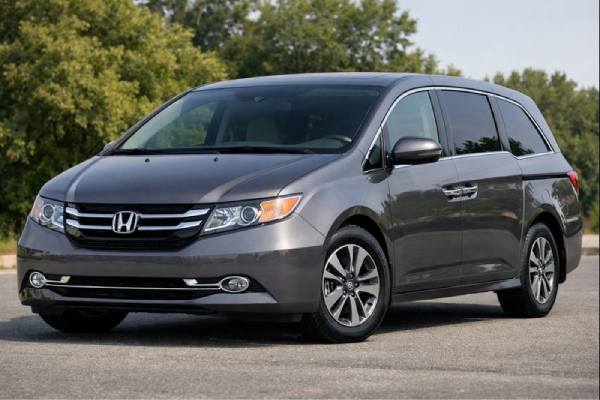
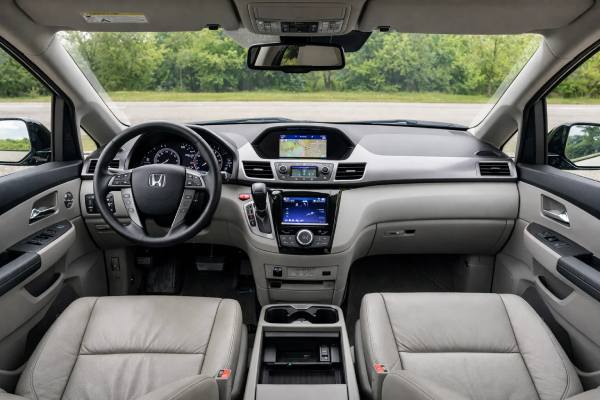
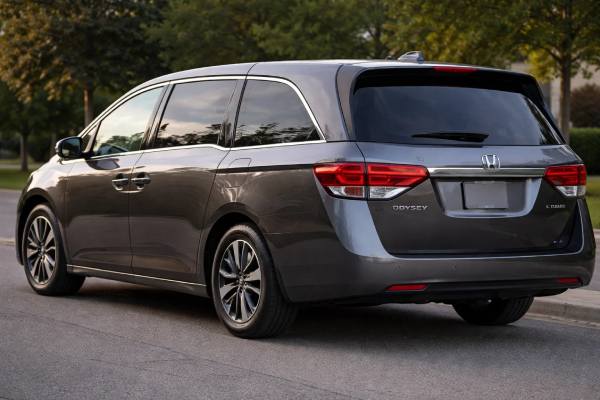
The 2014–2017 facelift Honda Odyssey (RL5) sits in a sweet spot for family hauling: modern enough to feel refined, yet mechanical enough to stay serviceable for the long haul. In this version, the 3.5-liter J35Z8 V6 is tuned for smooth torque and daily drivability, paired with a conventional automatic and front-wheel drive. The result is a minivan that feels confident on the highway, easy to place in town, and strong under load—especially with passengers and luggage aboard.
Ownership comes down to two themes. First, the Odyssey’s packaging and cabin usability remain standout strengths, including wide door openings and a low step-in height. Second, long-term reliability is usually good when maintenance is consistent, but it rewards owners who stay ahead of timing-belt service and keep an eye on V6-specific wear items (mounts, oil control, and cooling-system health).
What to Know
- Strong, smooth V6 torque makes full-load driving and merging feel effortless.
- Family-friendly packaging: easy access, flexible seating, and a large cargo hold.
- Stable highway manners and predictable braking for a vehicle of this size.
- Budget for timing-belt service if history is unknown; it is a must-do item on the J35.
- Plan on engine-oil and filter service about every 8,000–12,000 km (5,000–7,500 miles) or 12 months, depending on use and oil life.
Section overview
- 2014–2017 RL5 design notes
- J35Z8 specs and measurements
- Facelift trims and safety tech
- Known faults and service bulletins
- Maintenance schedule and ownership tips
- Road manners and fuel use
- Competitor comparison for buyers
2014–2017 RL5 design notes
The 2014 refresh of the RL5 Odyssey focused on usability and day-to-day refinement rather than a wholesale redesign. For owners, that matters because the core platform was already mature: suspension tuning, steering behavior, and cabin packaging were well-sorted, while the facelift years benefited from incremental improvements in noise control, trim execution, and available active-safety tech. In real life, these vans tend to feel “one piece” at speed—less busy over long freeway stretches than many older minivans, with fewer squeaks and rattles when interior pieces are still tight.
Power comes from Honda’s familiar J-series V6 family, here in J35Z8 form for the 248 hp configuration. The most important ownership trait of this engine is not peak output; it is how calmly it delivers torque in normal driving. With a full cabin and cargo aboard, the Odyssey does not feel strained. That relaxed character also helps the transmission live an easier life, as it does not need constant aggressive kickdowns to keep pace.
The facelift Odyssey is also a “systems” vehicle: sliding doors, power tailgate (on many trims), rear climate, multiple cabin screens/audio paths depending on trim, and a long list of sensors and modules. None of this is inherently fragile, but it means condition and maintenance history matter more than a simple test drive suggests. A van that has been used for short city trips, repeated door cycling, and irregular fluid services can feel tired even if mileage looks modest. Conversely, a higher-mileage Odyssey with careful transmission servicing and clean cooling-system history often feels surprisingly fresh.
If you are shopping, treat the facelift years as a balance between comfort and simplicity. They are newer than the earliest RL5 vans, but still avoid later-generation complexity like turbocharging or hybrid systems. That makes them appealing for owners who want a proven V6 minivan with straightforward mechanical serviceability—provided you stay disciplined about preventive maintenance.
J35Z8 specs and measurements
Below are core technical specifications for the 2014–2017 Odyssey FWD with the 248 hp J35Z8 setup. Values can vary slightly by trim, wheels/tires, and equipment, so treat these as a practical baseline and verify against your VIN-specific documentation.
Powertrain and efficiency
| Item | Specification |
|---|---|
| Code | J35Z8 |
| Layout | V6, SOHC i-VTEC |
| Valves | 4 valves/cyl (24 total) |
| Displacement | 3.5 L (3471 cc) |
| Bore × stroke | 89.0 × 93.0 mm (3.50 × 3.66 in) |
| Induction | Naturally aspirated |
| Fuel system | Multi-point fuel injection |
| Compression ratio | 10.5:1 |
| Max power | 248 hp (185 kW) @ 5,700 rpm |
| Max torque | 250 lb-ft (339 Nm) @ 4,800 rpm |
| Timing drive | Belt |
| EPA fuel economy (typical) | 10.7 L/100 km combined (22 mpg US / ~26 mpg UK) |
| Real-world highway @ 120 km/h (75 mph) | Often ~10.5–12.0 L/100 km, depending on load, tires, wind, and temperature |
Transmission and driveline
| Item | Specification |
|---|---|
| Transmission | 6-speed automatic |
| Drive type | FWD |
| Differential | Open (traction control manages wheel slip) |
| Steering | Electric power steering |
| Steering ratio | 14.0:1 |
Chassis, dimensions, and capacities
| Item | Specification |
|---|---|
| Front suspension | MacPherson strut |
| Rear suspension | Multi-link |
| Brakes | Power-assisted 4-wheel disc |
| Turning circle (kerb-to-kerb) | 11.3 m (37.1 ft) |
| Wheelbase | 3000 mm (118.1 in) |
| Length | 5154 mm (202.9 in) |
| Width | 1994 mm (78.5 in) |
| Height | 1737 mm (68.4 in) |
| Towing capacity (typical) | 1,588 kg (3,500 lb) |
Cargo volume (SAE)
| Configuration | Volume |
|---|---|
| Behind 3rd row | 1,093 L (38.6 ft³) |
| Behind 2nd row | 2,650 L (93.6 ft³) |
| Max (seats stowed/removed as designed) | 4,200 L (148.5 ft³) |
Fluids and service capacities (practical owner reference)
These are common service references for this generation; confirm exact quantities by VIN and procedure (drain-and-fill vs total capacity).
| System | Specification (typical) |
|---|---|
| Engine oil | 0W-20; capacity varies by drain method (commonly ~4.3 L / 4.5 qt with filter) |
| Coolant | Honda Type 2 / long-life premix (capacity varies by procedure) |
| ATF | Honda ATF for 6-speed (drain-and-fill is typically a partial refill, not “total capacity”) |
| A/C refrigerant | R-134a (charge varies by system label) |
Safety basics (typical)
| Item | Notes |
|---|---|
| Airbags | Front, front side, and side curtain airbags common; trim-dependent extras may apply |
| Stability and traction | ABS, stability control, and traction control commonly standard |
| Child-seat anchors | LATCH/ISOFIX anchors for outboard seating positions (verify seating map in your manual) |
Facelift trims and safety tech
Trims and equipment vary by market, but the 2014–2017 facelift years generally follow a familiar Honda pattern: a well-equipped base van, mid-range trims that add comfort and family features, and top trims that pile on convenience tech. When shopping, focus less on badge names and more on the functional equipment that changes ownership: door hardware, seating configuration, infotainment generation, and available driver aids.
Trims and options that change daily use
Key options and “quality of life” features you should identify early:
- Power sliding doors and tailgate behavior: Doors should open smoothly, reverse correctly when obstructed, and latch without slam force. Uneven motion or “half latching” is more than an annoyance—it can point to rollers, cables, or alignment issues.
- Second-row flexibility: Some versions offer more versatile second-row movement or seating shapes. If you routinely load child seats, check whether the seat tracks and latch points fit your real setup.
- Rear climate and vent performance: A weak rear A/C can come from low refrigerant, blower issues, or blocked airflow paths. Verify strong airflow at the rear vents.
- Infotainment tier: Higher trims may add a rear entertainment system and expanded audio. Make sure every screen, remote, headphones (if included), and HDMI/inputs (if equipped) work—these parts can be expensive used.
Quick identifiers to check in person
- Headlight type and beam pattern: Even without “modern” matrix tech, headlight condition matters. Cloudy lenses and tired bulbs can make night driving feel outdated.
- Interior wear tells: Driver seat bolster wear, sliding-door track grime, and sticky cupholders are common; heavy wear can signal high-use family duty even at moderate mileage.
- Build-date and VIN decoding: Use the VIN and door-jamb labels to confirm exact model year and equipment. This helps when ordering parts (brake sizes, alternator variants, door components).
Safety ratings and what they mean
The Odyssey’s safety reputation is strong for its era, but remember that ratings depend on the exact test and model year. A few practical points:
- Crash-test organizations differ: NHTSA uses star ratings, while IIHS uses category ratings (for example, small overlap and roof strength). Compare like-for-like tests.
- Trim equipment can change outcomes: Headlight performance and some active-safety features may be trim-dependent. For family use, good lighting and stable braking matter as much as the headline score.
- ADAS availability: These years can include features like forward collision warning and lane departure warning on certain trims/packages, but they are not the “all-in” ADAS suites seen on newer vehicles. If you want modern AEB (automatic emergency braking) performance, confirm exact equipment and its operating limits.
A smart shopping approach is to prioritize mechanical condition first (engine, transmission, cooling, brakes, tires), then select the trim whose convenience and safety equipment matches your real daily use.
Known faults and service bulletins
Most 2014–2017 Odyssey vans age well, but a few patterns show up often enough that you should screen for them during ownership—or during a pre-purchase inspection. The goal is not to fear the vehicle; it is to recognize the “usual suspects,” catch them early, and budget intelligently.
Common issues (higher prevalence)
- Engine mount wear (medium cost tier):
Symptoms: vibration at idle in Drive, shudder when engaging gear, or a low-frequency “boom” in the cabin.
Likely cause: hydraulic mounts soften or leak with age; V6 torque loads them heavily.
Remedy: replace the worn mount(s), then confirm idle speed and misfire counters are normal. - Oil consumption or plug fouling patterns (medium to high, depending on severity):
Symptoms: low oil level between services, intermittent misfire, or rough running after long highway cruising.
Likely cause: some V6 operating modes and long oil intervals can accelerate deposits; neglected PCV maintenance can worsen it.
Remedy: tighten oil-change discipline, verify PCV function, inspect plugs, and address any misfire quickly to protect the catalytic converters. - Power sliding door concerns (medium):
Symptoms: door reverses unexpectedly, struggles near the end of travel, or triggers warning chimes.
Likely cause: dirty tracks/rollers, tired cables, or alignment drift.
Remedy: clean and lubricate tracks correctly, check rollers, and repair worn components before the motor and cable system are damaged.
Occasional issues (watchlist)
- Alternator and battery stress: Frequent short trips with heavy electrical loads (rear A/C blowers, entertainment systems) can shorten life. Test charging voltage and load response.
- Brake judder: Warped rotors or pad deposits can happen if the van sees repeated heavy stops. A quality brake service and correct bedding often fixes it, but verify caliper slide health.
- Cooling system aging: Hoses, radiator end tanks, and thermostat behavior matter more as the vehicle approaches a decade old. Overheating history is a red flag.
Recalls, campaigns, and how to verify
Minivans of this era can be affected by safety campaigns (often including airbag-related recalls) and other corrective actions. Rather than relying on memory or seller claims:
- Run an official VIN check using a government recall database and confirm “remedy completed.”
- Ask for dealer printouts if the seller claims work was done.
- Inspect for evidence of correct repairs (for example, updated labels or service documentation).
Pre-purchase checks worth paying for
A thorough inspection for this Odyssey should include:
- Scan for stored and pending codes (engine and transmission).
- Verify oil level and condition, then check for seepage around common gasket areas.
- Road test from cold start through full warm-up, including low-speed parking maneuvers (listen for mount thumps) and highway cruising (watch for vibration).
- Confirm perfect sliding-door operation on both sides, multiple cycles.
- Review fluid-service history—especially transmission servicing and coolant maintenance.
A well-kept Odyssey is usually a dependable long-term tool. The ones that become expensive tend to be those with skipped maintenance and ignored early symptoms.
Maintenance schedule and ownership tips
Treat the 2014–2017 Odyssey as a “high duty-cycle” vehicle: even when it is lightly driven, it often sees lots of idling, short trips, passenger weight, and door cycles. A practical maintenance plan keeps it reliable and keeps resale strong.
Practical maintenance schedule (distance/time)
Use the vehicle’s oil-life monitoring if equipped, but keep real-world usage in mind.
- Engine oil and filter: every 8,000–12,000 km (5,000–7,500 miles) or 12 months. Short trips and cold weather justify the shorter end. Use the correct 0W-20 spec oil.
- Tire rotation and brake inspection: every 8,000–10,000 km (5,000–6,000 miles). Minivans are hard on front tires and front brakes.
- Cabin air filter: every 15,000–25,000 km (10,000–15,000 miles) or yearly if allergies/dust are common.
- Engine air filter: every 25,000–50,000 km (15,000–30,000 miles) depending on dust and driving.
- Brake fluid: about every 3 years, regardless of mileage. This protects ABS components and keeps pedal feel consistent.
- Coolant: follow the long-life interval for your coolant type, then shorten after the first change if your climate is harsh. Always use the correct Honda-compatible coolant.
- Spark plugs: commonly around 160,000–170,000 km (100,000–105,000 miles), but earlier if misfire counters rise or oil consumption has been present.
- Timing belt service (critical): typically around 168,000 km (105,000 miles) or about 7 years, whichever comes first. Include the tensioner and water pump during belt service unless your documentation proves they were recently replaced.
- Transmission service: do not treat the automatic as “lifetime fill.” A conservative approach is a drain-and-fill at roughly 40,000–60,000 km (25,000–40,000 miles) for heavy city use, or up to ~80,000 km (50,000 miles) for lighter highway use. Use the correct Honda ATF spec.
- Sliding-door track care: clean and lubricate correctly every 6–12 months (more often in winter road-salt regions). This is cheap prevention.
Essential ownership tips that reduce long-term cost
- Track oil level between services. Even a healthy engine can consume oil as it ages; catching low oil early prevents chain-reaction damage.
- Keep cooling healthy. Minivans run warm under load. A small coolant leak that seems “manageable” can turn into overheating on a summer road trip.
- Budget for rubber and hydraulics. Mounts, bushings, and struts are wear items. Renewing them can make a high-mileage Odyssey feel new again.
Buyer’s guide: what to seek and what to avoid
Seek:
- Documented timing-belt service (or a price that realistically accounts for doing it immediately).
- Evidence of periodic transmission servicing.
- Smooth sliding doors with clean tracks and consistent latch behavior.
- Even tire wear, suggesting alignment and suspension health.
Be cautious with:
- Vans with multiple warning lights, intermittent electrical issues, or unexplained battery drains.
- Harsh shifts or delayed engagement when shifting into Drive/Reverse.
- Overheating history or coolant smell after a test drive.
Long-term durability is excellent when you buy on condition and follow a prevention-first schedule. The facelift Odyssey rewards steady maintenance far more than reactive repairs.
Road manners and fuel use
For a front-wheel-drive minivan, the 2014–2017 Odyssey is unusually composed. The steering is light but accurate, and the chassis feels stable at highway speed—important for family duty where crosswinds, passing trucks, and uneven pavement are normal. You should expect a confident “big vehicle” feel rather than sporty feedback, but the Odyssey’s control is one of the reasons it earned a loyal owner base.
Ride, handling, and NVH
- Ride quality: tuned for comfort, with enough damping to prevent float. Worn struts or rear shocks show up as extra bounce over freeway undulations and a “second movement” after bumps.
- Cornering balance: predictable understeer at the limit, as expected for FWD. Good tires make a noticeable difference in wet traction and braking.
- Cabin noise: generally quiet for the class, but tire choice matters. Aggressive all-seasons can add a low-frequency hum; uneven tire wear can mimic bearing noise.
- Braking feel: strong and confidence-inspiring when brakes are fresh. If the pedal feels soft or inconsistent, prioritize brake fluid condition and caliper slide service.
Powertrain character
The 248 hp J35Z8 does not need to be revved hard to move the Odyssey briskly. It delivers torque smoothly and masks the vehicle’s weight well. The 6-speed automatic is usually clean-shifting when fluid is healthy; roughness, flare, or hesitation can signal overdue service or software calibration needs.
In everyday driving, you will notice:
- Strong midrange pull for passing and short on-ramps.
- Calm highway cruising at modest throttle openings.
- Better drivability under load than many smaller turbo engines, because there is no turbo lag and less heat stress.
Real-world efficiency
Official combined economy for this configuration is typically around 10.7 L/100 km (22 mpg US), with city and highway results depending heavily on trip length and traffic. Real-world expectations:
- City: often 12–14 L/100 km in dense traffic, less if trips are longer and traffic is light.
- Highway (100–120 km/h): commonly ~10.5–12.0 L/100 km, with roof boxes, headwinds, snow tires, and heavy loads pushing higher.
- Mixed family use: expect results close to the official combined figure if the van sees regular longer drives.
Load and towing
When properly equipped, the Odyssey can tow moderate loads, but plan realistically:
- Keep transmission fluid fresh if you tow.
- Use correct tire pressures and consider a brake inspection before long towing trips.
- Expect fuel consumption to rise significantly under load—often by 20–40% depending on trailer shape and speed.
Competitor comparison for buyers
Shopping a 2014–2017 Odyssey usually means comparing it to the Toyota Sienna of the same era, the Kia Sedona, and (in some markets) Chrysler’s minivan family. Each has a distinct personality, and the “best” choice depends on what you value most: AWD availability, interior ergonomics, powertrain feel, or long-term maintenance style.
Odyssey vs Toyota Sienna (similar years)
- Odyssey advantages: sharper road control, strong V6 response, and a cabin layout many owners find more intuitive. Family usability is excellent, and the Honda often feels lighter on its feet.
- Sienna advantages: AWD availability in many years (a major plus for snow-belt buyers), and a reputation for durable minivan duty cycles when maintained.
- Decision tip: if AWD is non-negotiable, Sienna wins by default. If you drive mostly paved roads and value handling and driver feel, Odyssey often edges ahead.
Odyssey vs Kia Sedona
- Odyssey advantages: broader parts ecosystem, strong V6 performance, and a long history of platform refinement.
- Sedona advantages: often a lower purchase price for similar mileage and equipment; some trims can feel very feature-rich for the money.
- Decision tip: Sedona can be a value play, but condition and maintenance documentation matter even more. With either, verify sliding-door health and avoid neglected examples.
Odyssey vs Chrysler Town and Country and Grand Caravan
- Odyssey advantages: generally tighter driving feel and strong long-term ownership satisfaction when maintained; Honda’s V6 drivability is a highlight.
- Chrysler advantages: often cheaper to buy, and some interior convenience features may appeal depending on the exact trim.
- Decision tip: if your budget is the primary constraint, the Chrysler options can be tempting—but buy the cleanest, best-documented example you can find, and expect more variability between individual vehicles.
Bottom line
A strong 2014–2017 Odyssey is a great “buy once, maintain steadily” family vehicle. It is usually the right choice for buyers who want a refined highway minivan with a proven V6 and do not need AWD. If you are disciplined about timing-belt service, fluids, and door hardware care, it can remain dependable and pleasant well into high mileage.
References
- Honda Odyssey Specifications 2016 (Specifications)
- 2014 Honda Odyssey minivan | IIHS-HLDI 2014 (Safety Rating)
- Vehicle Detail Search – 2014 HONDA ODYSSEY VAN FWD | NHTSA 2014 (Recall Database)
- 2014 Honda Odyssey 2014 (Fuel Economy)
- 2017 Honda Odyssey 2017 (Fuel Economy)
Disclaimer
This article is for informational purposes only and is not a substitute for professional diagnosis, inspection, or repair. Specifications, torque values, service intervals, and procedures can vary by VIN, market, model year, and installed equipment. Always verify details using official owner and service documentation for your exact vehicle.
If you found this guide useful, consider sharing it on Facebook, X (Twitter), or your favorite forum to help others find reliable ownership information.