
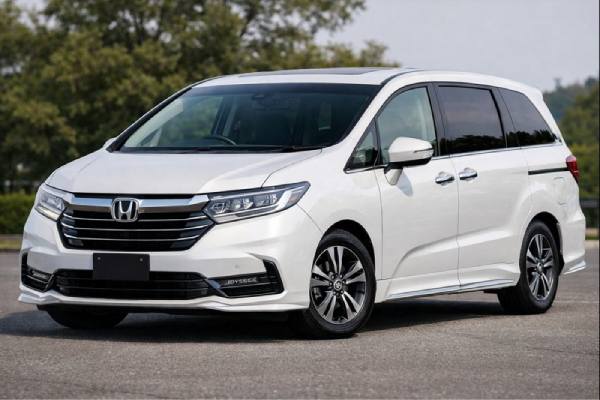
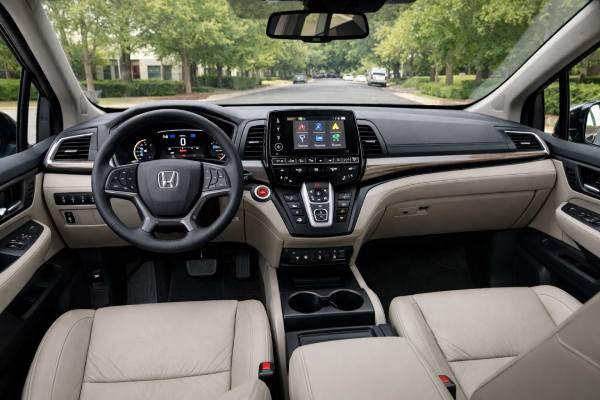
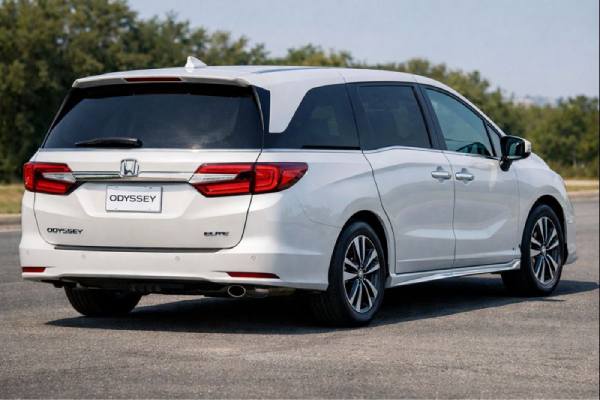
Honda’s facelifted RL6 Odyssey (2021–present) is a modern “family logistics” tool: a strong V6, a refined 10-speed automatic, and one of the most practical cabins in the segment. The J35Y6 3.5-liter V6 delivers easy passing power even when loaded, and the chassis stays calm at highway speeds—important for long trips with kids and cargo. Where the Odyssey earns its reputation is usability: wide-opening sliding doors, a low step-in height, flexible seating, and a cargo area that behaves more like a small room than a trunk.
Ownership is mostly straightforward, but it rewards owners who stay ahead of fluids and wear items. The Odyssey is also technology-heavy, so checking for software updates and verifying recall completion matters as much as checking tires and brakes. If you want a fast, comfortable, people-first minivan—and you’re fine with FWD only—this generation remains a benchmark.
What to Know
- Strong real-world power for hills and merges, even with 6–8 passengers.
- Cabin packaging is top-tier: sliding doors, easy-access third row, and family-friendly storage.
- 10-speed automatic improves cruising and response versus older 6-speed vans.
- Budget for proactive transmission fluid servicing and occasional electronics quirks as the van ages.
- Plan engine oil service roughly every 8,000–12,000 km (or 6–12 months) depending on use and the Maintenance Minder.
Navigate this guide
- Honda Odyssey RL6 at a glance
- Honda Odyssey RL6 specs and capacities
- Honda Odyssey RL6 trims and safety tech
- Reliability and common faults
- Maintenance schedule and buying tips
- Road manners and real economy
- Odyssey RL6 versus key rivals
Honda Odyssey RL6 at a glance
The 2021-present Odyssey is a facelift of Honda’s fifth-generation Odyssey (platform code RL6). In practical terms, it’s the same winning formula—V6 power, family-first cabin design, and a mature ride—refreshed with updated styling and evolving equipment packages. The heart of the van is the J35Y6 3.5-liter V6 rated at 280 hp, paired with a 10-speed automatic. That combination is one reason the Odyssey still feels “quick” compared with some rivals: it doesn’t need to work hard to maintain speed with a full load.
This Odyssey is FWD only. In snow belts, that’s the trade-off: you get simpler running gear, good packaging, and predictable handling, but you don’t get the traction margin of an AWD minivan. For many owners, good winter tires matter more than AWD; for steep-driveway and unplowed-road users, AWD can be the deciding factor.
Inside, the Odyssey’s advantages are more about design than luxury. The second row is where the magic happens: wide sliding doors, strong child-seat ergonomics, and configurations that help you reach the third row without turning every school run into a puzzle. The third row folds into the floor, and the cargo opening is low and square—easy for strollers, sports gear, and flat-pack furniture.
On the road, the Odyssey leans toward stability and comfort. Steering is light and friendly, and body control is better than you’d expect from a tall family van. Braking performance is usually confidence-inspiring when the system is in good shape, though any heavily loaded minivan will punish neglected brake fluid and worn pads.
For a used buyer, the “big picture” is simple: pick the trim that matches your family routine, verify maintenance history and open campaigns, and prioritize condition over mileage. A well-serviced Odyssey tends to age gracefully; a neglected one can feel expensive quickly because modern vans combine driveline, electronics, and safety systems in ways that magnify small problems.
Honda Odyssey RL6 specs and capacities
Below are the core technical details for the facelift RL6 Odyssey with the J35Y6 V6 and 10-speed automatic. Exact figures can vary slightly by model year, wheel/tire package, and market, so treat these as “decision-grade” specs and confirm against your VIN-specific documentation when ordering parts or fluids.
Powertrain and efficiency (typical)
| Item | Spec |
|---|---|
| Code | J35Y6 |
| Engine layout and cylinders | V6, 6 cylinders, SOHC, 24 valves (4 valves/cyl) |
| Displacement | 3.5 L (3,471 cc) |
| Induction | Naturally aspirated |
| Fuel system | Direct injection (DI) |
| Max power | 280 hp (209 kW) @ ~6,000 rpm |
| Max torque | ~355 Nm (~262 lb-ft) @ ~4,700 rpm |
| Timing drive | Belt |
| Transmission | 10-speed automatic |
| Drive type | FWD |
| Rated efficiency (example EPA) | ~10.7 L/100 km combined (22 mpg US), ~12.4 city (19 mpg), ~8.4 highway (28 mpg) |
Dimensions and weights (typical)
| Item | Spec (approx.) |
|---|---|
| Length | ~5,211 mm (~205.2 in) |
| Width | ~1,994 mm (~78.5 in) |
| Height | ~1,767–1,768 mm (~69.6 in) |
| Wheelbase | ~3,000 mm (~118.1 in) |
| Turning circle (kerb-to-kerb) | ~11.8–12.0 m (~38.7–39.4 ft) |
| Kerb (curb) weight | ~1,980–2,050 kg (~4,370–4,520 lb), trim-dependent |
| Fuel tank | ~73 L (~19.3 US gal / ~16.1 UK gal) |
Performance and capability (realistic expectations)
| Metric | Typical |
|---|---|
| 0–100 km/h (0–62 mph) | ~6.8–7.5 s (trim, load, and tires matter) |
| Braking feel | Strong when serviced; benefits from fresh brake fluid |
| Towing capacity | Often up to ~1,588 kg (~3,500 lb) in many markets; verify by VIN/market label |
Fluids and service capacities (decision-grade)
| System | Specification (typical) | Capacity (approx.) |
|---|---|---|
| Engine oil | 0W-20 full synthetic | ~5.0 L (~5.3 US qt) with filter |
| Coolant | Honda Type 2 (premix) | ~6–7 L (~6–7.4 US qt) total system |
| Transmission/ATF | Honda ATF for 10-speed (verify exact product spec for year) | service-fill varies; total system higher |
| Brake fluid | DOT 3 / DOT 4 equivalent (follow cap/manual) | bleed until clean |
| A/C refrigerant | R-1234yf on many newer years (verify under-hood label) | per label |
Key torque specs (common “critical fasteners”)
| Fastener | Torque (typical range) |
|---|---|
| Wheel lug nuts | ~108 Nm (~80 lb-ft) |
| Engine oil drain plug | ~30–40 Nm (~22–30 lb-ft), confirm for your pan/plug |
If you use these figures for maintenance planning, the biggest “gotcha” is the transmission: a 10-speed can be excellent, but fluid condition and correct spec matter more than many owners expect. When in doubt, follow the factory procedure and use the exact fluid called out for your model year.
Honda Odyssey RL6 trims and safety tech
Trim names vary by market and year, but most 2021-present Odysseys follow a ladder that starts with a well-equipped base and climbs toward leather, premium audio, rear entertainment options, power tailgate, and more advanced convenience features. If you’re shopping used, focus less on badges and more on “family function”: seating layout, sliding-door behavior, camera coverage, and whether your must-have tech is standard or optional.
Trims and options that change daily usability
- Sliding doors and tailgate: Power doors are nearly mandatory for family use. Test for smooth travel, consistent latch behavior, and proper pinch protection.
- Second-row versatility: Some configurations emphasize easy third-row access, others maximize “captain’s chair” comfort. Check how your child seats fit and whether you can still reach row three.
- Cameras and parking help: Later model years often improve camera resolution and screen response. Verify the rear camera image is stable and consistent.
- Infotainment and rear entertainment: Great when it works, frustrating when it doesn’t. Confirm Bluetooth pairing, USB charging performance, and screen stability on a long test drive.
- Heated/ventilated seating and cabin comfort: These options can be worth paying for if you live in extreme climates or do frequent long trips.
Safety ratings and crash performance
For this generation, a useful way to interpret safety is to separate three layers:
- Structure and crashworthiness: How the body protects occupants in a severe crash.
- Avoidance tech: AEB (automatic emergency braking), lane support, stability control, and traction management.
- Headlights and visibility: A surprisingly important factor in real-world night driving.
In many years, the Odyssey performs strongly in independent crash testing, but results can depend on the specific test version, headlight configuration, and whether a feature is standard on your trim. When comparing two used vans, don’t assume “same model = same rating.” Confirm that your exact year and configuration aligns with the rating you’re relying on.
Safety systems and ADAS notes
Most facelift RL6 models include a modern suite of driver-assistance features (often grouped under Honda’s safety branding). Typical functions include forward-collision warning, AEB, lane-keeping assistance, adaptive cruise control, and blind-spot monitoring on certain trims/years.
Two ownership points matter here:
- Calibration after repairs: Windshield replacement, front-end body work, alignment changes, and certain suspension repairs can require camera or sensor calibration. Budget time and money for this if the van has had prior damage.
- Battery health and low voltage: A weak 12-V battery can cause odd warnings and glitchy behavior. Many “mystery” ADAS faults disappear after restoring stable voltage and clearing codes correctly.
If safety tech is one of your main buying reasons, prioritize a van with clean service history, intact windshield and bumper areas (no sloppy repairs), and a test drive that includes highway lane support and stop-and-go behavior.
Reliability and common faults
The facelift RL6 Odyssey is generally durable, but it’s not “old-school simple.” Reliability is strongly tied to maintenance quality, software updates, and the condition of wear items that modern vans stress harder (brakes, tires, suspension bushings, and sliding door mechanisms).
Below is a practical “prevalence vs. severity” map to help you prioritize.
Common (expect to see, usually manageable)
- Sliding door roller/track wear or alignment drift (low to medium cost)
Symptoms: slow operation, hesitation, bounce-back, warning beeps.
Likely causes: track contamination, roller wear, latch adjustment, weak door motor over time.
Remedy: clean/lube per manual guidance, inspect rollers and latches, adjust alignment; replace worn rollers/motor if needed. - Brake wear under heavy city use (medium cost)
Symptoms: steering shake during braking, squeal, longer pedal travel.
Root causes: heat cycling, pad material choice, neglected fluid.
Remedy: quality pads/rotors, brake fluid every 2–3 years, ensure caliper slides move freely. - Infotainment quirks (low to medium cost)
Symptoms: reboots, slow response, intermittent camera feed or Bluetooth issues.
Root causes: software bugs, weak 12-V battery, failing USB hubs/cables.
Remedy: update software where applicable, load test the 12-V battery, keep charging ports clean and strain-free.
Occasional (watch for on higher-mileage or poorly maintained vans)
- 10-speed automatic shift quality issues (medium to high cost if ignored)
Symptoms: harsh 1–2 or 2–3 shifts, “hunting” at light throttle, delayed engagement.
Root causes: aged or incorrect ATF, adaptive learning out of range, calibration needs, or internal wear in severe cases.
Remedy: correct fluid service, verify software/calibration updates, perform relearn procedure if recommended; escalate to diagnostic testing if symptoms persist. - Direct-injection carbon buildup (medium cost, mileage/usage dependent)
Symptoms: rough idle, hesitation, reduced efficiency.
Root causes: intake valve deposits on DI engines, especially with short-trip use.
Remedy: driving pattern changes help; cleaning may be required if symptoms appear.
Rare (but expensive when it happens)
- A/C system repairs (high cost)
Symptoms: weak cooling, compressor noise, warning lights.
Root causes: leaks, compressor issues, or incorrect service practices.
Remedy: proper leak diagnosis, correct refrigerant type and charge per under-hood label.
Recalls, TSBs, and service actions
Across any modern model range, recalls and service bulletins can cover camera systems, seat sensors, wiring, fuel system components, and software updates. The smart approach is consistent:
- Run a VIN check before purchase.
- Ask for dealer printouts showing recall completion.
- Confirm function during inspection (camera feed, doors, seat belts, warning lights).
Pre-purchase checks to request
- Full maintenance history (oil changes plus proof of ATF servicing if higher mileage)
- Evidence of recall completion (VIN-based)
- Scan for diagnostic codes (including “history” codes)
- Test all sliding door functions repeatedly
- Check for coolant leaks and oil seepage around the front of the engine
- Verify stable ADAS behavior on a highway test drive
A good Odyssey usually feels “tight” even with mileage. If it feels sloppy, noisy, or electronically temperamental, assume deferred maintenance and negotiate accordingly.
Maintenance schedule and buying tips
Honda’s Maintenance Minder is usage-based, so there isn’t one universal “every X miles” schedule that fits all owners. Still, a practical plan keeps you ahead of the expensive stuff—especially the transmission, cooling system, and brakes.
Practical maintenance schedule (distance/time)
Engine oil and filter
- Typical: every 8,000–12,000 km (5,000–7,500 mi) or 6–12 months
- Use: 0W-20 full synthetic (verify spec for your year)
Tire rotation and inspection
- Every 8,000–10,000 km (5,000–6,000 mi)
- Check inner-shoulder wear; minivans are heavy and alignment-sensitive.
Engine and cabin air filters
- Inspect every 15,000–20,000 km; replace as needed
- Short-trip, dusty, or pet-heavy use shortens life.
Brake fluid
- Every 2–3 years, regardless of mileage
- This preserves pedal feel and reduces corrosion risk in the ABS module.
Coolant (Honda Type 2 premix)
- Often first change around 5 years, then every 3–5 years (market/year dependent)
- Confirm for your exact model year.
Spark plugs
- Often around 160,000 km (100,000 mi) or per Minder/maintenance schedule
- Replace coils only if testing indicates weakness or misfire.
Timing belt service (critical)
- Common guidance: ~168,000 km (105,000 mi) or 7 years (whichever comes first)
- Include belt, tensioner, and usually water pump while you’re in there. This is the “big ticket” service for the J35 family.
10-speed ATF service (highly recommended)
- Light duty: consider 50,000–80,000 km (30,000–50,000 mi) intervals
- Heavy city use, towing, mountains: aim closer to 40,000–60,000 km (25,000–40,000 mi)
- Use the exact factory fluid and procedure for your year.
12-V battery testing
- Test yearly after year 3; many batteries last 3–5 years
- Replace proactively if it tests weak—modern vans hate low voltage.
Buyer’s guide: what to inspect
Body and structure
- Look for uneven panel gaps, overspray, and mismatched paint texture.
- Check lower door edges and underbody for corrosion if you live in salted-road regions.
Driveline
- Cold start should be clean: no prolonged rattles, no flashing lights.
- On the test drive, check for delayed engagement and harsh low-gear shifts.
- Confirm there are no fluid leaks around the timing cover area.
Cooling and A/C
- Cabin should cool strongly within minutes.
- Any sweet smell, dampness, or fluctuating temperature deserves investigation.
Electronics
- Pair your phone, test all cameras, verify sliding doors operate smoothly multiple times.
- Confirm driver-assistance features behave consistently (no persistent warnings).
Best “value” approach by trim
Rather than chasing the highest trim, many families do best with a mid-trim that includes:
- Power sliding doors
- Blind-spot monitoring (if available)
- The seating/cargo configuration you actually need
- A clean service record
Long-term durability outlook: with regular oil changes, timely timing-belt service, and correct ATF maintenance, the drivetrain is capable of high mileage. Most ownership pain comes from deferred fluids, neglected brakes/suspension, or unresolved electronic/door issues that compound over time.
Road manners and real economy
For a minivan, the Odyssey can feel surprisingly “normal” to drive. It doesn’t demand attention in daily traffic, yet it responds quickly when you need power. That’s largely the V6’s advantage: you’re not waiting for turbo boost or asking a small engine to pull a big box up a hill.
Ride, handling, and NVH
- Ride comfort: Tuned for family use—firm enough to control body motion, soft enough to isolate rough pavement.
- Highway stability: A strength. It tracks cleanly and feels planted at 110–130 km/h (70–80 mph) in calm wind.
- Steering: Light and predictable. Not “sporty,” but accurate enough for tight parking and lane placement.
- Braking: Strong when fresh. If the pedal feels soft or the van shudders under braking, start with fluid condition and rotor/pad inspection.
Noise-wise, the Odyssey is generally quiet at cruise, but tire choice matters. Aggressive all-seasons can add hum that feels like a wheel bearing. If you’re chasing NVH issues, rotate tires front-to-rear and see if the noise moves before spending money on parts.
Powertrain character
- Throttle response: Smooth and immediate for an NA V6.
- 10-speed behavior: Good calibrations feel decisive, keeping revs low at cruise and downshifting quickly for passing. Poor calibrations or aged fluid can create hunting or harshness—one reason software updates and correct ATF servicing matter.
Real-world efficiency (what owners tend to see)
Your actual consumption depends heavily on speed, weather, and load. Typical patterns:
- City-heavy use: often ~12–14 L/100 km (17–20 mpg US), especially with short trips and idling.
- Highway steady-state (100–120 km/h): often ~8.5–10.5 L/100 km (22–28 mpg US), depending on terrain and wind.
- Mixed driving: commonly lands near the rated combined figure when driven calmly.
Cold weather can add meaningful consumption because the engine runs richer during warm-up and cabin heat demands increase. If you do many short trips, your “real economy” may look worse than the rating even with perfect maintenance.
Load and towing
When towing or running fully loaded, expect:
- Longer braking distances (keep brakes fresh)
- Higher transmission temperatures on grades (don’t ignore ATF service intervals)
- A noticeable fuel penalty—often 20–35% depending on speed, terrain, and trailer aerodynamics
For towing confidence, prioritize a van with documented ATF servicing, healthy cooling system, and properly rated tires.
Odyssey RL6 versus key rivals
The Odyssey’s competition is unusually strong because minivans are “specialized tools,” and each brand has chosen a different philosophy. Here’s how the facelift RL6 compares in the ways that usually matter to real owners.
Versus Toyota Sienna (hybrid, often AWD available)
Why buyers choose Sienna: hybrid efficiency, AWD availability in many years, strong resale.
Where Odyssey can win: V6 passing power feel, familiar drivability, and (for some families) seating/cabin ergonomics.
Decision point: if winter traction and fuel costs dominate your priorities, Sienna is hard to ignore. If you want the simplest “strong engine + conventional automatic” experience, Odyssey stays appealing.
Versus Chrysler Pacifica (and Pacifica PHEV)
Why buyers choose Pacifica: available plug-in hybrid option, some unique interior tricks, and often aggressive pricing.
Where Odyssey can win: long-term simplicity (non-PHEV), consistent road manners, and often fewer “complexity layers” than a PHEV for owners who keep vehicles a long time.
Decision point: the PHEV is brilliant for short commutes with home charging. If you can’t charge reliably or you want to minimize drivetrain complexity, the Odyssey’s conventional setup can be the safer bet.
Versus Kia Carnival
Why buyers choose Carnival: fresh styling, modern interior presentation, and strong value on features.
Where Odyssey can win: proven minivan packaging experience, strong V6 character (depending on year/powertrain), and a long-established ownership ecosystem.
Decision point: Carnival can feel newer and more “SUV-like,” but Odyssey remains one of the most purpose-built people movers.
The Odyssey’s “best fit” owner profile
Pick the facelift RL6 Odyssey if you want:
- A quick, confident minivan under load
- Excellent day-to-day family usability (doors, seating, cargo)
- A well-understood maintenance path (with one major timing-belt service)
- A long-distance road-trip vehicle that stays comfortable and stable
Consider a rival instead if you require:
- AWD (common reason people switch)
- A hybrid/PHEV strategy for fuel cost or HOV benefits
- The very newest infotainment approach or interior design language
If you’re shopping used, the best “rival” to any Odyssey is a better-maintained Odyssey. Condition, service records, and recall completion usually matter more than a badge at this point.
References
- 2020 Honda Odyssey 2020 (Safety Rating)
- 2024 Honda Odyssey 2024 (Fuel Economy Rating)
- Manuals Search – MyGarage – Honda 2026 (Owner’s Manual)
Disclaimer
This article is for informational purposes only and is not a substitute for professional diagnosis, inspection, or repair. Specifications, torque values, service intervals, and procedures can vary by VIN, model year, market, and equipment. Always verify details using your official Honda service information and the labels on your vehicle before servicing or ordering parts.
If this guide helped, please consider sharing it on Facebook, X (Twitter), or your favorite forum to support our work.