


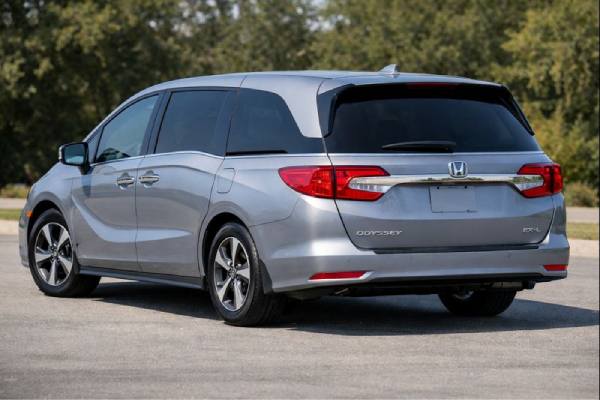
Honda’s RL6-generation Odyssey (2018–2020) is a practical “engineering-first” minivan: big interior volume, a strong 3.5-liter V6 (J35Y6), and family-focused packaging that makes daily use easier than most three-row crossovers. The J35Y6 pairs direct injection with cylinder deactivation (VCM) to deliver confident passing power even when loaded, while the chassis is tuned for stable highway tracking and predictable braking—key traits for long trips. Where ownership gets nuanced is in the details: the Odyssey’s available 9-speed and 10-speed automatics behave differently, sliding-door hardware needs periodic attention, and the electronics can be picky about battery health and software updates. If you shop carefully and maintain it with the right fluids and intervals, the 2018–2020 Odyssey can be one of the most capable people-movers in its era.
Quick Specs and Notes
- Strong V6 pull for a full cabin, with steady high-speed stability on long motorway runs.
- Very usable cabin layout: low step-in, wide doors, and flexible second-row movement for child seats.
- Available 10-speed models suit frequent highway driving; 9-speed-equipped trims can feel more “busy” at low speeds.
- Plan on timing-belt service around 170,000 km (105,000 mi) or 7 years (whichever comes first).
- Keep the 12 V battery healthy; weak voltage often shows up first as infotainment and door glitches.
Jump to sections
- Odyssey RL6 design and packaging
- J35Y6 specs and dimensions
- Trims, options, and safety tech
- Reliability issues and recalls
- Maintenance plan and buyer checks
- Real-world driving and economy
- How RL6 Odyssey stacks up
Odyssey RL6 design and packaging
The 2018–2020 Odyssey (RL6) is built around one mission: carry people and their gear with minimal friction. The floor is low, the openings are wide, and the seating and storage features are designed to reduce the “small hassles” that wear down owners over time. In practice, this shows up in three areas: access, flexibility, and day-to-day durability.
Access and ergonomics are the Odyssey’s quiet superpower. The front doors open wide, the second-row sliding doors create a large entry area, and the step-in height is manageable for kids and older passengers. For families using child seats, the geometry helps: you can load a rear-facing seat without contorting your back, and the second-row can be configured to create a walkway to the third row. Even if you never fold seats, the cabin feels purpose-built rather than adapted from an SUV platform.
Space and configuration matter more than raw “liters” in real life. The Odyssey’s long wheelbase supports a roomy second row and a third row that is more usable than many crossovers for adults on short trips. Cargo capacity behind the third row is typically enough for groceries and compact strollers; fold the third row and you get a flat load floor that swallows bikes, flat-pack furniture, and vacation luggage. The cabin storage is also genuinely helpful: large cupholders, door bins that fit bottles, and a center console designed for the chaos of family use.
Powertrain intent is also clear. The J35Y6 V6 is tuned for smooth, effortless torque delivery rather than sporty sound or high-rpm drama. That matters because minivans spend their lives loaded—people, backpacks, prams, and sometimes a trailer. A naturally aspirated V6 avoids turbo heat management and lag, and it holds speed comfortably on long grades. The tradeoff is that maintenance discipline matters: correct fluids, timely belt service, and attention to cooling system health.
What to watch is less about “big failures” and more about aging components. Sliding-door rollers, tracks, and latches will eventually need cleaning and sometimes parts. Electronics are generally solid, but like many modern vehicles they prefer stable voltage and up-to-date software. The best RL6 Odysseys are the ones that have been serviced consistently and used as designed: long drives, steady warm-ups, and preventative maintenance rather than crisis repairs.
J35Y6 specs and dimensions
Below are the core technical specifications owners and buyers most often need for maintenance planning, comparisons, and real-world expectations. Exact values can vary by market, trim, and equipment (especially wheel size, spare tire, and seating), so treat these as a solid baseline and verify by VIN when ordering parts.
Powertrain and efficiency (J35Y6)
| Item | Specification |
|---|---|
| Code | J35Y6 |
| Engine layout and cylinders | V6, 6 cylinders; SOHC i-VTEC; 4 valves/cyl (24 total) |
| Displacement | 3.5 L (3,471 cc) |
| Bore × stroke | 89.0 × 93.0 mm (3.50 × 3.66 in) |
| Induction | Naturally aspirated (NA) |
| Fuel system | Direct injection (DI) (market-dependent emissions hardware) |
| Compression ratio | ~11.5:1 (typical for this variant) |
| Max power | 280 hp (209 kW) @ ~6,000 rpm |
| Max torque | 355 Nm (262 lb-ft) @ ~4,700 rpm |
| Timing drive | Belt |
| Rated efficiency (typical combined) | ~11.0–12.5 L/100 km (≈ 19–21 mpg US / 23–26 mpg UK) depending on transmission and trim |
| Real-world highway @ 120 km/h (75 mph) | ~9.5–11.0 L/100 km (≈ 21–25 mpg US / 25–30 mpg UK) with a light load |
Transmission and driveline
| Item | Specification |
|---|---|
| Transmission | 9-speed automatic (some upper trims) or 10-speed automatic (most trims) |
| Drive type | FWD |
| Differential | Open (traction managed via brake-based stability/traction control) |
Chassis, brakes, wheels, and dimensions
| Item | Specification |
|---|---|
| Suspension (front/rear) | MacPherson strut / multi-link (typical RL6 layout) |
| Steering | Electric power steering |
| Brakes | Four-wheel disc with ABS, EBD, and brake assist (rotor sizes vary by trim) |
| Wheels and tyres | Commonly 18 in wheels; some trims use 19 in (tyre sizes vary by package) |
| Length / width / height | Approximately 5,180 / 1,995 / 1,695 mm (≈ 203.9 / 78.5 / 66.7 in) |
| Wheelbase | Approximately 3,000 mm (≈ 118.1 in) |
| Turning circle | Approximately 12.0 m (≈ 39 ft) |
| Kerb (curb) weight | Typically ~1,950–2,100 kg (≈ 4,300–4,630 lb) depending on trim |
| Fuel tank | Approximately ~73 L (≈ 19.3 US gal / 16.1 UK gal) |
Performance and capability (typical)
| Item | Typical value |
|---|---|
| 0–100 km/h (0–62 mph) | ~6.8–7.5 s depending on trim and test conditions |
| Top speed | ~190–200 km/h (118–124 mph) (electronically limited, market dependent) |
| Towing capacity | Often up to ~1,588 kg (3,500 lb) braked when properly equipped (verify by trim/market) |
Fluids, service capacities, and key torque specs (decision-grade)
| System | Spec (typical) |
|---|---|
| Engine oil | Full synthetic 0W-20; capacity varies by service method (verify by VIN) |
| Coolant | Long-life coolant; maintain correct mix ratio (typically 50/50) |
| Transmission fluid | Use the exact Honda-specified ATF for the 9AT or 10AT (do not assume interchangeability) |
| A/C refrigerant | Commonly R-1234yf on many late-2010s Hondas (verify under-hood label) |
| Lug nuts | Typically ~127 Nm (94 lb-ft) (verify wheel package) |
Electrical and ignition (typical)
| Item | Specification |
|---|---|
| 12 V battery | Group size and CCA vary; many trims use higher-capacity batteries due to electronics load |
| Spark plugs | Iridium-type plugs; gap commonly around 1.0–1.1 mm (0.039–0.043 in) (verify by VIN and emissions spec) |
Safety and driver assistance (baseline)
| Item | Notes |
|---|---|
| Crash ratings | IIHS and NHTSA provide US-market results; Euro NCAP generally not applicable for this model |
| ADAS suite | Honda Sensing (AEB/CMBS, ACC, lane support, road departure mitigation), plus blind-spot features on certain trims/packages |
Trims, options, and safety tech
For 2018–2020, the Odyssey lineup is best understood by two “layers”: powertrain/transmission choice and comfort/tech packages. Buyers often focus on trim names, but for ownership it’s more useful to identify what the vehicle actually has—especially the transmission, driver-assistance sensors, and cabin electronics.
Trims and equipment strategy. In many markets, base-to-mid trims prioritize value: durable cloth or basic leather, standard power sliding doors, and family features like multiple USB ports and easy-clean surfaces. Upper trims typically add more sound insulation, upgraded audio, built-in navigation or rear entertainment (market dependent), hands-free power tailgate, and larger wheels. The ownership implication is simple: higher trims can be excellent road-trip machines, but there is more to maintain—more motors, more modules, more screens, and more sensors.
9-speed vs 10-speed reality. The RL6 years often split transmissions by trim level. In day-to-day driving, a 10-speed Odyssey typically feels more seamless on the highway: lower cruising rpm, quick but smooth downshifts, and less “gear searching” on gentle grades. The 9-speed versions can be perfectly reliable, but they’re more likely to feel abrupt at parking-lot speeds or during rolling stops, especially if software updates are missing or the fluid service history is unclear. When shopping, make the transmission behavior part of your test drive: stop-and-go traffic, tight parking maneuvers, and a few medium-throttle merges will tell you a lot.
Safety systems and what to verify. Most RL6 Odysseys are built around a strong baseline of passive safety: multi-airbag coverage (front, side, and curtain airbags), modern crash structure, ABS, and stability control. Child-seat practicality is also a core feature: look for accessible lower anchors (LATCH/ISOFIX) and check whether the third row has tether points if you plan to mount child seats there.
On the active safety side, many 2018–2020 Odysseys offer Honda Sensing, which typically includes:
- Automatic emergency braking (AEB) / collision mitigation braking
- Adaptive cruise control (ACC)
- Lane keeping assist and lane-departure mitigation
- Road departure mitigation
Depending on trim and year, you may also find blind-spot monitoring, rear cross-traffic alert, parking sensors, and camera upgrades. If you buy an Odyssey for its driver aids, confirm all sensors are functional and properly calibrated after any windshield replacement or front-end repair. Even a small misalignment can trigger warning lights, disable features, or cause “phantom” alerts.
Year-to-year changes worth noting. Updates in this period often focus on infotainment behavior, standard safety packaging, and small trim reshuffles rather than major mechanical changes. That’s why documentation matters: the best indicator of a well-sorted Odyssey is not the badge on the tailgate but the service history and whether the vehicle has received applicable updates and recalls.
Reliability issues and recalls
The 2018–2020 Odyssey can be a dependable long-term vehicle, but it rewards owners who treat it like a complex family appliance: maintain it proactively, listen for early symptoms, and don’t ignore small glitches. Below are common patterns, organized by prevalence and cost impact.
Common (watch closely)
- Sliding door wear and alignment (low to medium cost).
Symptoms: door hesitates, reverses, beeps, rattles, or needs a firm pull to latch.
Likely causes: dirty tracks, worn rollers, cable tension issues, or latch misalignment.
Remedy: clean and lubricate tracks properly (avoid grease that traps grit), inspect rollers, and correct alignment before cables or motors get stressed. - Infotainment and camera “quirks” (low to medium cost).
Symptoms: slow boot, random reboots, Bluetooth instability, camera lag or dropout.
Likely causes: software bugs, low battery voltage, poor ground connections, or aging USB hubs.
Remedy: verify software updates, load-test the 12 V battery, and inspect grounds. Many “mystery” issues improve after restoring stable voltage. - Transmission behavior differences (medium cost if neglected).
Symptoms: harsh 1–2 shifts, shudder, delayed engagement, clunks on tip-in/tip-out.
Likely causes: old fluid, missed software updates, adaptation drift, or (less commonly) internal wear.
Remedy: confirm the correct ATF type for the 9AT/10AT, service on schedule, and ensure official updates have been applied.
Occasional (more situational)
- VCM-related vibration and mount wear (medium cost).
Symptoms: droning or vibration at light throttle, especially around 1,200–1,800 rpm.
Likely causes: active engine mount wear or sensitivity to cylinder deactivation transitions.
Remedy: diagnose mounts and confirm the engine is running smoothly (no misfires). If mounts are weak, VCM cycling becomes more noticeable. - Direct-injection deposit sensitivity (medium cost over time).
Symptoms: rough cold start, occasional hesitation, reduced fuel economy.
Likely causes: intake valve deposits and injector fouling patterns typical of DI engines, worsened by repeated short trips.
Remedy: use high-quality fuel, drive long enough to fully warm the engine, and address misfires early. Targeted cleaning may help when symptoms appear.
Rare but expensive (don’t ignore)
- Cooling system neglect leading to overheating (high cost).
Symptoms: rising temperature, coolant loss smell, heater performance changes.
Likely causes: aging hoses, radiator issues, water pump leakage, or neglected coolant.
Remedy: pressure test early; fix leaks before heat damages head gaskets or catalysts.
Recalls, service bulletins, and how to verify
Because recalls and service campaigns can change over time, treat this as a process rather than a one-time check:
- Run the VIN through an official recall lookup and save the results.
- Ask for dealer printouts showing completed campaigns and software updates.
- Confirm the symptoms are gone (doors, warning lights, cameras, and power outlets are common “tell” areas).
When you’re shopping, the best reliability predictor is a paper trail: regular oil services, correct transmission fluid services, and documented recall completion. A clean test drive matters too—especially for door operation, low-speed shifting, and infotainment stability.
Maintenance plan and buyer checks
The Odyssey RL6 is not hard to maintain, but it is unforgiving of wrong fluids and skipped “big ticket” intervals. A good plan focuses on: (1) keeping the engine healthy, (2) protecting the transmission, and (3) preventing small electrical problems from turning into chasing ghosts.
Practical maintenance schedule (typical; verify for your market)
- Engine oil and filter: every 8,000–12,000 km (5,000–7,500 mi) or 12 months, sooner for repeated short trips. Use the correct 0W-20 grade unless your owner documentation specifies otherwise.
- Engine air filter: inspect every oil change; replace around 24,000–48,000 km (15,000–30,000 mi) depending on dust.
- Cabin air filter: typically every 15,000–25,000 km or once per year (helps HVAC performance and reduces blower strain).
- Coolant: follow the long-life interval in your service literature; many owners plan a conservative change around 5 years / 100,000 km, then shorter intervals thereafter.
- Spark plugs: commonly 160,000 km (100,000 mi) region, but DI/VCM operation and driving style can shift this—replace sooner if misfires occur.
- Timing belt: plan for ~170,000 km (105,000 mi) or 7 years. Include tensioner and water pump if your service plan recommends it.
- Transmission fluid: service by the transmission type and duty cycle. For heavy city use, hot climates, or frequent loading, shorten intervals. Always use the exact Honda-specified fluid for the 9AT or 10AT.
- Brake fluid: every 3 years, regardless of mileage.
- Brakes (pads/rotors): inspect every 10,000–15,000 km; minivans eat rear pads faster if driven in traffic.
- Tyre rotation and alignment: rotate every 8,000–10,000 km; align annually or after curb impacts to protect tyres and steering feel.
- 12 V battery test: annually after year 3; replace preventatively around 4–6 years if you see slow cranking or frequent infotainment oddities.
Service details that prevent expensive mistakes
- Don’t mix ATF types. The 9-speed and 10-speed automatics can require different fluids. If the invoice doesn’t list the exact fluid, treat it as unknown.
- Use correct coolant. Mixing coolants can create deposits and shorten water pump life.
- Respect torque basics. Over-tightened lug nuts warp rotors; under-tightened ones are a safety risk. Use a torque wrench.
Buyer’s guide: what to inspect before purchase
- Sliding doors: operate each door repeatedly on level ground and slight inclines. Listen for grinding or clicking; confirm the door latches cleanly without needing a shove.
- Transmission behavior: check cold start, parking-lot creep, rolling stops, and moderate throttle merges. Avoid vehicles with persistent shudder or delayed engagement.
- Cooling system: look for dried coolant residue around hoses and under the water pump area; verify stable temperature on a long test drive.
- Electrical health: test every USB port, camera view, power outlet, and power seat. A weak battery can mask deeper issues, so a battery test is worth doing.
- Underbody and suspension: check for torn CV boots, leaking shocks, and uneven tyre wear that hints at alignment or bushing wear.
A well-kept Odyssey feels “tight” and calm: smooth low-speed operation, quiet doors, and stable infotainment. If it feels fussy during a test drive, it tends to stay that way until the underlying issues are fixed.
Real-world driving and economy
The RL6 Odyssey drives more like a large car than a bus, especially at motorway speeds. It won’t entertain you like a sport sedan, but it’s reassuring and easy to place—exactly what most owners want when transporting family.
Ride, handling, and NVH
On the road, the Odyssey’s straight-line stability stands out. The long wheelbase helps it track cleanly through crosswinds, and the suspension tuning balances compliance with control. Over broken pavement, it tends to absorb sharp impacts without excessive secondary bounce. Steering is light at low speeds for parking-lot work and firms up modestly on the move. Feedback is limited—typical of electric steering—but the response is predictable.
Noise levels depend heavily on trim and tyres. Upper trims with more sound insulation can be genuinely quiet at cruise, while large wheels and aggressive tyres can add a dull roar. If you value calm highway travel, prioritize the best-condition tyres and avoid mismatched tyre brands.
Powertrain character and transmission behavior
The J35Y6 V6 feels strong in the midrange. Passing power is immediate, and the engine is happier working steadily than being “stabbed” repeatedly in stop-and-go traffic. Under load—seven or eight passengers plus luggage—it still maintains speed confidently, which is a major advantage over smaller turbo fours that can feel strained when hot and heavy.
Transmission personality differs by unit:
- 10-speed: typically smoother at speed, often better at holding an efficient rpm band, and less prone to awkward low-speed moments when properly serviced.
- 9-speed: can feel more abrupt at very low speeds, especially during rolling stops, but can be perfectly fine when updated and maintained.
If you regularly drive in heavy city traffic, pay extra attention to low-speed modulation and how the transmission responds to gentle throttle changes.
Efficiency expectations you can live with
Owners who are realistic about a 2-ton minivan tend to be happiest. Typical results:
- City: often 12.5–14.5 L/100 km (≈ 16–19 mpg US / 19–23 mpg UK)
- Highway (100–120 km/h): often 9.5–11.0 L/100 km (≈ 21–25 mpg US / 25–30 mpg UK)
- Mixed driving: often 11.0–12.5 L/100 km (≈ 19–21 mpg US / 23–26 mpg UK)
Cold weather, short trips, roof boxes, and winter tyres can easily add 10–25% to consumption. Towing or fully loading the cabin usually adds another 10–20%, depending on speed and terrain.
Performance metrics that matter in ownership
Most drivers care less about 0–100 km/h times and more about merging and braking confidence. The Odyssey’s combination of V6 torque and modern stability control gives it an easy, unstrained feel on ramps and in passing lanes. Braking performance is generally consistent for family use, but like all heavy vehicles it benefits from quality pads, fresh brake fluid, and correct tyre pressures—especially before long mountain trips.
How RL6 Odyssey stacks up
Shopping a 2018–2020 Odyssey usually means cross-shopping a few familiar rivals. Each has a distinct “personality,” and the right pick depends on whether you prioritize driving feel, AWD availability, plug-in capability, or low running costs.
Versus Toyota Sienna (2018–2020 V6 era)
Why buyers choose Odyssey: more agile feel, strong packaging, and a cabin that feels purpose-built for daily family use. The Odyssey’s V6 response is immediate, and the seating and access often win over families with child seats.
Why buyers choose Sienna: Toyota’s reputation for durability and, in many markets, available AWD. If winter traction is a top priority, Sienna can be the safer bet.
Decision tip: If you need AWD, the Odyssey is usually out. If you want the best “big car” driving feel in a minivan, Odyssey is compelling.
Versus Chrysler Pacifica (and Pacifica Hybrid)
Why buyers choose Odyssey: a simpler powertrain strategy (no high-voltage hybrid system in these years), strong V6 performance, and generally predictable long-term ownership when maintained.
Why buyers choose Pacifica: features and flexibility (often including plug-in hybrid capability) and a more “tech-forward” spec sheet on paper.
Decision tip: If you can charge reliably and want to reduce fuel use dramatically in city driving, Pacifica Hybrid can make sense. If you want straightforward long-distance reliability and fewer specialized systems, Odyssey is attractive.
Versus Kia Sedona (and newer Kia Carnival, market dependent)
Why buyers choose Odyssey: stronger performance feel, widely supported service ecosystem, and a long track record of family use.
Why buyers choose Kia: value, warranty positioning (varies by region), and often a quieter cabin for the money.
Decision tip: Compare real-world condition and service history. A well-maintained Odyssey will usually outshine a neglected alternative, regardless of badge.
Versus Dodge Grand Caravan (value-focused)
Why buyers choose Odyssey: safety tech availability, modern cabin design, better driving refinement, and typically stronger resale.
Why buyers choose Grand Caravan: purchase price—often much lower.
Decision tip: If budget is tight, the Caravan can work, but the Odyssey typically returns value through safety equipment, comfort, and long-trip ease.
Bottom-line comparison
Choose the 2018–2020 Odyssey RL6 if you want a strong V6, excellent family ergonomics, and a minivan that feels stable and composed at motorway speeds. Prioritize examples with documented transmission service, completed recalls, and smooth sliding-door operation. If you need AWD, want a plug-in option, or strongly prefer a simpler electronics profile, one of the key rivals may fit better.
References
- Honda Odyssey minivan 2018 (Safety Rating)
- Vehicle Detail Search – 2018 HONDA ODYSSEY VAN FWD 2018 (Recall Database)
- 2018 Odyssey Owner’s Manual 2018 (Owner’s Manual)
- 2018 Honda Odyssey Owner’s Manuals 2018 (Owner’s Manual)
Disclaimer
This article is for informational purposes only and is not a substitute for professional diagnosis, inspection, or repair. Specifications, torque values, fluid types, service intervals, and procedures can vary by VIN, market, production date, and equipment; always confirm details using your official owner’s manual, service manual, and manufacturer updates for your specific vehicle.
If this guide helped, please consider sharing it on Facebook, X (Twitter), or your favorite forum to support our work.