

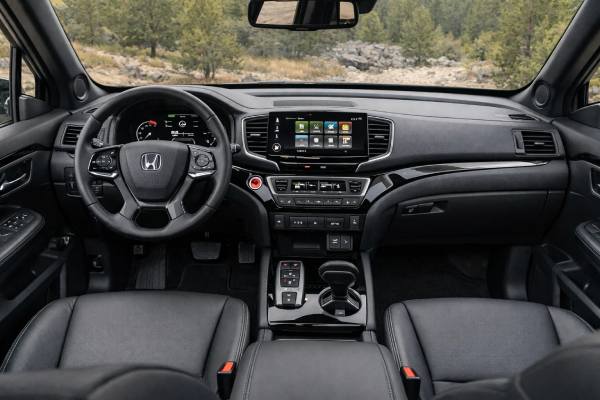

The Honda Passport (YF9) targets a very specific kind of owner: someone who wants a midsize SUV with real torque, simple day-to-day usability, and a chassis tuned for rougher roads—without stepping up to a full-size body-on-frame truck. In practice, this model is defined by its naturally aspirated 3.5-liter DOHC V6 (285 hp), a 10-speed automatic, and a traction system designed to keep moving on loose surfaces and wet pavement with minimal driver effort.
Where it tends to win is in power delivery (no turbo lag), predictable braking and steering feel, and a cabin layout that works well for long trips. The trade-off is that a V6 AWD SUV brings higher fuel use than smaller turbo crossovers, and it rewards owners who stay disciplined with fluid services—especially for the transmission and rear drive components.
What to Know
- Strong, linear V6 acceleration that stays smooth at highway speeds and during passing.
- AWD-focused traction and ground clearance that suit gravel roads, snow, and muddy trailheads.
- Straightforward 10-speed behavior when serviced on time and kept on the correct fluid.
- Budget for driveline fluid services if you tow or see frequent short trips in cold weather.
- Plan on oil service about every 12 months / 10,000 miles (16,000 km) sooner in severe use.
Navigate this guide
- Honda Passport YF9 ownership profile
- Honda Passport YF9 specs and technical tables
- Honda Passport YF9 trims, safety, and driver assistance
- Reliability, issues, and service actions
- Maintenance schedule and buyer’s guide
- Driving, performance, and real-world economy
- How it compares to rivals
Honda Passport YF9 ownership profile
Think of the Passport (YF9) as a “use it hard, live with it easily” midsize SUV. The core recipe—V6 power, a conventional automatic, and an AWD-capable platform—favors predictable response over chasing the best headline fuel numbers. If your driving includes steep grades, short on-ramps, two-lane passing, or a lot of fully loaded trips, the 3.5-liter naturally aspirated engine is a genuine quality-of-life upgrade. Throttle response stays consistent across temperatures and elevations because there’s no turbocharger to spool, no boost targets to meet, and no “waiting” for torque to arrive.
Chassis-wise, the Passport’s advantage is how confidently it deals with broken pavement and loose surfaces. Ground clearance and underbody geometry matter more than people expect; a few extra centimeters can be the difference between scraping and simply driving through. That extra tolerance also reduces stress on tires and suspension components when the vehicle is used on washboard roads or deep potholes.
Inside, the most practical ownership upside is packaging. Two-row SUVs often feel like compromised three-row vehicles with seats removed, but the Passport typically feels intentionally designed for five people and gear. It’s also a better match for owners who tow occasionally. The V6 and 10-speed combination helps keep engine temperature and transmission behavior stable on long climbs—provided the fluids are kept fresh and the cooling system stays clean.
The trade-offs are realistic rather than scary. A V6 AWD midsize SUV will use more fuel than a smaller 2.0 turbo crossover in city driving, and tires will matter: the wrong compound can dull wet traction and raise road noise. And like most modern vehicles, it’s electronics-heavy enough that a weak 12V battery can cause confusing warning lights—something owners can prevent with periodic battery testing and timely replacement.
Honda Passport YF9 specs and technical tables
Below are technical specs organized for quick scanning. Values can vary by trim, wheel/tire package, market, and test method, so use them as a planning baseline and verify against VIN-specific service information when ordering parts or fluids.
Powertrain and efficiency
| Item | Specification |
|---|---|
| Engine code | 3.5 DOHC V6 |
| Layout and valvetrain | V6, DOHC, 4 valves/cyl, variable valve timing |
| Displacement | 3.5 L (≈ 3471 cc) |
| Bore × stroke | 89.0 × 93.0 mm (3.50 × 3.66 in) |
| Induction | Naturally aspirated |
| Fuel system | Direct injection (DI) |
| Compression ratio | 11.5:1 |
| Max power | 285 hp (212 kW) @ 6100 rpm |
| Max torque | 355 Nm (262 lb-ft) @ 5000 rpm |
| Timing drive | Belt-driven cam system (verify interval by market) |
| Real-world highway @ 120 km/h (75 mph) | Commonly ~10.5–12.0 L/100 km (≈ 19–22 mpg US) depending on load and temperature |
Transmission and driveline
| Item | Specification |
|---|---|
| Transmission | 10-speed automatic |
| Drive type | AWD-focused configuration (market dependent) |
| Differential | Electronic traction distribution; rear drive unit uses dedicated fluid service |
Chassis and dimensions
| Item | Specification |
|---|---|
| Suspension (front / rear) | MacPherson strut / multi-link |
| Steering | Electric power steering (EPS), variable ratio 14.1:1–18.1:1 |
| Turning circle (kerb-to-kerb) | 38.9 ft (11.86 m) |
| Brakes (front / rear) | 13.8 in / 13.0 in discs (≈ 351 mm / 330 mm) |
| Wheels and tyres (EX-L) | 18 × 8.0 in; 255/55R18 110H |
| Wheels and tyres (TrailSport) | 18 × 8.0 in; 255/55R18 110H |
| Wheels and tyres (Black Edition) | 20 × 8.5 in; 265/45R20 104H |
| Overall length | 191.5 in (4,864 mm) |
| Overall width | 78.6 in (1,996 mm) |
| Overall height | 71.2 in (1,808 mm) |
| Wheelbase | 113.6 in (2,885 mm) |
| Track (front / rear) | 68.1 / 68.2 in (1,730 / 1,732 mm) |
| Ground clearance (EX-L / Black Edition) | 8.1 in (206 mm) |
| Ground clearance (TrailSport) | 8.3 in (211 mm) |
| Curb weight (EX-L) | 4,484 lb (2,034 kg) |
| Curb weight (TrailSport) | 4,607 lb (2,090 kg) |
| Curb weight (Black Edition) | 4,575 lb (2,075 kg) |
| Fuel tank | 18.5 US gal (70 L) |
| Cargo volume (behind 2nd row) | 44.5 ft³ (1,260 L) |
| Cargo volume (max) | 83.5 ft³ (2,364 L) |
Performance and capability
| Item | Typical planning value |
|---|---|
| 0–100 km/h (0–62 mph) | ~7.0–7.8 s depending on trim and surface |
| Braking 100–0 km/h | Typically ~36–41 m on good tires and dry pavement |
| Towing capacity | Often up to 2268 kg (5000 lb) when properly equipped |
| Payload | Trim and tire dependent; check door jamb label |
Honda Passport YF9 trims, safety, and driver assistance
Trims and options (how to identify what matters)
Passport trims tend to cluster into two buyer types: (1) comfort-first daily drivers that prioritize quieter tires, a softer ride, and convenience features, and (2) off-road oriented trims that prioritize ground clearance, underbody protection, and traction calibration. The easiest “quick identifiers” are usually wheels/tires, exterior cladding, skid-plate visibility, and interior seat materials. If you’re shopping used, confirm trim by the build sheet or dealer VIN equipment list; wheels and grilles are easy to swap, but brake sizes, cooling packages, and tow wiring are harder to fake.
Option packages that meaningfully change ownership are the ones tied to:
- Tow equipment (hitch, wiring, and cooling provisions). Even if you don’t tow often, having the correct factory wiring and programming can reduce electrical headaches.
- Wheel and tire package. Larger wheels look sharp, but they raise replacement cost and can worsen impact harshness on rough pavement. A slightly smaller wheel with a taller sidewall is often the best real-world choice.
- Lighting. Headlight performance can vary dramatically between trims, and lighting is both a safety item and a fatigue reducer on long night drives.
Safety ratings (what to read carefully)
Crash ratings are only comparable when the test version and vehicle configuration match. If a model earns a top award, it usually reflects strong performance in multiple crash modes plus acceptable headlight and crash-avoidance performance. However, a different wheel/tire, headlight unit, or seatbelt pretensioner calibration can change sub-scores. Treat ratings as “evidence of engineering direction,” not a promise that all trims behave identically.
Safety systems and ADAS (what you actually live with)
Most modern Passports include a suite covering:
- Automatic emergency braking (AEB) with vehicle and pedestrian detection (capability varies).
- Lane keeping support (often camera-based and sensitive to windshield condition).
- Adaptive cruise control (ACC) that works best with clean radar/camera sensors.
- Blind-spot monitoring (BSD) and rear cross-traffic alert (RCTA) depending on trim.
Two practical ownership notes:
- Calibration matters after repairs. Windshield replacement, front-end work, alignment changes, and some suspension repairs can require ADAS calibration. Budget for it and insist it’s done correctly.
- Tires change the behavior. The best ADAS in the world can’t overcome low-grip tires. If you choose aggressive all-terrains, expect longer braking distances on wet pavement and slightly more ABS intervention.
Reliability, issues, and service actions
For a “2025–present” platform cycle, reliability is best approached in two layers: what the powertrain family typically does over time, and what a newer model can do in the first 12–24 months of production.
Common (higher prevalence)
- Transmission shift quality changes
Symptoms: harsh 2–3 or 3–4 shifts, hesitation, or hunting on gentle grades.
Likely cause: aging or incorrect ATF, adaptive learning drift, or software calibration updates.
Remedy: verify fluid type and level procedure, service ATF at sensible intervals, and ensure the latest calibration is installed if the manufacturer specifies a reflash. - Rear drive unit fluid shear and noise (AWD models)
Symptoms: low-speed groan, shudder during tight turns, or mild vibration after towing.
Likely cause: fluid breakdown from heat cycles, especially with towing or short-trip winter driving.
Remedy: shorten service intervals, use the exact specified fluid, and confirm no leaks at seals. - Direct-injection carbon buildup over long intervals
Symptoms: rough cold idle, misfire counts, reduced efficiency.
Likely cause: intake valve deposits typical of DI engines over time.
Remedy: keep oil change discipline, avoid chronic short trips when possible, and consider intake cleaning only if symptoms and diagnostics support it.
Occasional (moderate prevalence)
- Battery-related warning cascades
Symptoms: multiple warning lights, intermittent sensor faults, or “systems unavailable” messages.
Likely cause: weak 12V battery voltage under load, especially in cold climates.
Remedy: battery test (not just voltage), check charging performance, and replace preventively around the typical 4–6 year window depending on climate. - Brake vibration or noise after heavy use
Symptoms: steering wheel shimmy under braking, squeal at low speeds.
Likely cause: pad material transfer, rotor hot spots, or aggressive tire packages changing brake load.
Remedy: proper bedding, inspect caliper slide pins, measure rotor runout, and use pad compounds suited to your use.
Rare (higher severity/cost tier)
- Cooling system problems under sustained load
Symptoms: rising temps on long grades, coolant loss, or repeated fan high-speed operation.
Likely cause: debris in cooling stack, weak cap, or leak points that show up only hot.
Remedy: pressure test, inspect radiator/condenser stack cleanliness, and verify correct coolant mix.
Recalls, TSBs, and how to verify completion
Because recall and TSB activity changes over time, the practical approach is:
- Run an official VIN recall check before purchase and again after major service visits.
- Ask for dealer service history printouts showing completion of software updates and campaigns.
- If a vehicle has ADAS faults after collision repair, confirm that calibrations were performed and documented, not just “cleared.”
Maintenance schedule and buyer’s guide
A V6 + 10-speed + AWD system can be very durable, but only when fluids and inspections are treated as “must-do,” not “nice-to-do.” Use this as a practical schedule for planning; then align it with your market’s official maintenance minder and severe-service definitions.
Practical maintenance schedule (distance/time)
- Engine oil and filter: every 10,000 miles (16,000 km) or 12 months, sooner (5,000–7,500 miles / 8,000–12,000 km) for short trips, towing, mountains, or extreme heat/cold.
- Tire rotation and brake inspection: every 6,000–8,000 miles (10,000–13,000 km); check inner shoulder wear.
- Cabin air filter: every 12 months (or sooner in dusty areas).
- Engine air filter: inspect every oil service; replace typically every 20,000–30,000 miles (32,000–48,000 km) depending on dust.
- Brake fluid: every 3 years, regardless of mileage.
- Transmission (10-speed) fluid: every 30,000–60,000 miles (48,000–96,000 km) depending on duty cycle; shorten with towing and high-heat use.
- Rear drive unit / AWD fluid: first change by 15,000–30,000 miles (24,000–48,000 km) if you tow or do lots of low-speed traction events; then every 30,000–50,000 miles (48,000–80,000 km) as a conservative plan.
- Coolant: commonly around 5 years / 100,000 miles (160,000 km) initial, then shorter; verify for your VIN/market.
- Spark plugs: commonly 100,000 miles (160,000 km); confirm exact interval and plug type.
- Serpentine belt and hoses: inspect yearly after year 4; replace when cracks, glazing, or seepage appear.
- 12V battery test: annually after year 3; replace proactively if cold-crank margin drops.
Fluids and torque values (what to keep strict)
- Use the exact ATF specified for the 10-speed. “Close enough” fluids can cause shift issues.
- Use the correct AWD/rear drive fluid; mixing fluids is a common source of noise and shudder.
- For torque values, prioritize VIN-specific service data for: wheel lug nuts, brake bracket bolts, and critical suspension fasteners.
Buyer’s guide checklist (especially for used examples)
- Scan for codes and review readiness monitors; don’t rely on a dash with no lights.
- Check driveline behavior: full-lock turns in a parking lot, gentle uphill cruising, and low-speed stop-and-go for shift quality.
- Inspect tires carefully: mismatched brands or uneven wear can stress AWD systems.
- Look for fluid service proof: ATF and rear drive unit service receipts matter more than “regular oil changes.”
- ADAS function check: ensure no camera/radar faults and verify lane and cruise features behave normally.
- Corrosion hotspots: rear subframe areas, brake line routing, and fastener condition in salty climates.
Long-term outlook: owners who treat the drivetrain fluids as core maintenance and keep good tires on the vehicle tend to get the “Honda durability” experience. Owners who stretch fluid intervals or ignore early driveline noises often pay more later.
Driving, performance, and real-world economy
On the road, the Passport (YF9) feels defined by calm competence rather than flash. Straight-line stability is typically a strong point: the wheelbase and suspension tuning keep it settled on highways, even when the cabin is loaded with passengers and cargo. Steering is usually weighted for confidence rather than “sportiness,” and that’s appropriate for a midsize SUV that may see bad weather and imperfect roads.
Powertrain character
The 3.5-liter DOHC V6 is the centerpiece. Expect:
- Immediate response at moderate throttle because torque arrives without boost delay.
- Consistent passing power from 50–80 mph (80–130 km/h) because the engine pulls cleanly toward higher rpm.
- 10-speed logic that can feel busy if you drive with tiny throttle changes on rolling terrain; it’s often smoother when you drive with slightly more decisive pedal input.
If your commute is mostly low-speed city driving, you may notice that a large-displacement engine spends a lot of time in low-load operation. That’s normal, but it makes maintenance discipline more important: short trips are hard on oil quality and can increase deposit formation.
Ride, handling, and NVH
Ride quality depends heavily on tires. A more aggressive all-terrain tire will:
- increase road noise at 60–75 mph (100–120 km/h),
- lengthen wet braking distances,
- and sometimes reduce steering precision on smooth pavement.
With highway-oriented tires, the Passport usually feels quieter and more relaxed, with fewer sharp impacts over expansion joints. Braking feel tends to be progressive, and ABS intervention is typically predictable—again, tire grip is the deciding factor.
Real-world efficiency
For a V6 AWD midsize SUV, real-world economy typically lands in these broad bands:
- City-heavy use: ~12.5–15.0 L/100 km (≈ 16–19 mpg US)
- Highway 100–120 km/h (60–75 mph): ~10.5–12.0 L/100 km (≈ 19–22 mpg US)
- Mixed driving: ~11.5–13.5 L/100 km (≈ 17–20 mpg US)
Cold weather and short trips can easily raise consumption by 10–20% because warm-up and cabin heat loads dominate.
Towing and load behavior
When properly equipped, the Passport’s V6 and gearing are well suited to moderate towing. The key is heat management:
- Keep transmission fluid fresh if you tow.
- Watch tire pressures and load ratings.
- Expect a fuel penalty that can reach 20–40% depending on trailer profile, speed, and terrain.
How it compares to rivals
The Passport (YF9) sits in a competitive space where buyer priorities matter more than brand loyalty. Here’s how it generally stacks up.
Versus two-row turbo crossovers (2.0T class)
Many rivals rely on smaller turbo engines and 8-speed or CVT-style automatics. They often win on fuel economy and sometimes on low-speed torque feel. The Passport’s advantage is simplicity and consistency:
- Better sustained power for long grades and repeated passing.
- Less variability in throttle response across temperatures.
- Typically more confidence when loaded or towing.
If your driving is mostly city commuting and you rarely carry heavy loads, a smaller turbo crossover may be the more rational choice. If you do real highway miles, mountains, or towing, the V6 Passport often feels easier.
Versus off-road-leaning SUVs
Against more off-road branded rivals, the Passport can be a “sweet spot” if you want capability without daily compromises:
- It’s often quieter and smoother on pavement than rugged body-on-frame alternatives.
- It tends to be easier to live with in parking lots and long commutes.
However, if your use includes frequent rock crawling, deep ruts, or heavy aftermarket modification, a purpose-built off-road platform can offer better approach angles, aftermarket support, and low-range gearing (where equipped). The Passport is best understood as “trailhead capable,” not a specialized crawler.
Versus other midsize two-row SUVs
In the mainstream two-row midsize field, the Passport’s strongest differentiators are:
- V6 refinement and linear response
- AWD traction tuning suited to real weather
- Practical packaging for five adults and luggage
Where rivals may beat it:
- Fuel economy (especially hybrids)
- Third-row availability (if you sometimes need 7 seats)
- Infotainment style and screen size trends
Who should choose it
Choose the Passport (YF9) if you want a durable-feeling SUV that stays composed under load, handles winter and gravel without drama, and delivers predictable V6 performance. Choose something else if your top priorities are hybrid fuel economy, a third row, or the lowest running costs in city-only driving.
References
- 2025 TOP SAFETY PICKs 2025 (Safety Rating)
- 2026 Honda Passport Earns TOP SAFETY PICK+ Rating … 2025 (Safety Rating)
- Vehicle Ratings 2025 (Safety Rating)
Disclaimer
This article is for informational purposes only and is not a substitute for professional inspection, diagnosis, or repair. Specifications, torque values, service intervals, and procedures vary by VIN, market, and equipment; always verify details using official owner and service documentation for your specific vehicle.
If this guide helped, please consider sharing it on Facebook, X (Twitter), or your favorite forum to support our work.