
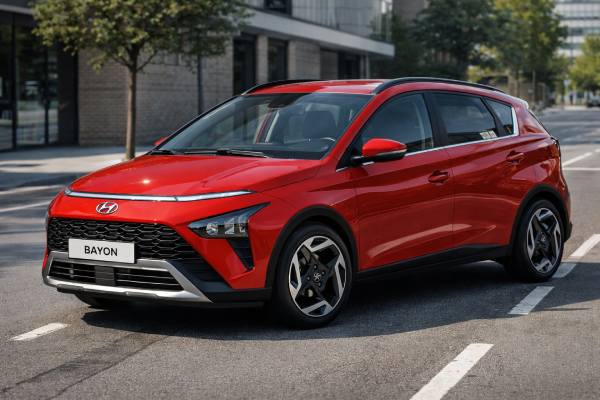
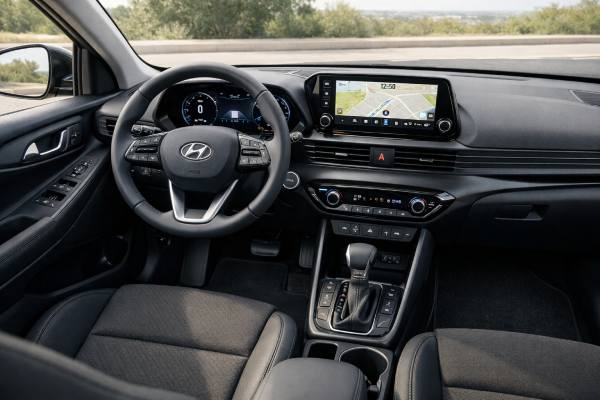
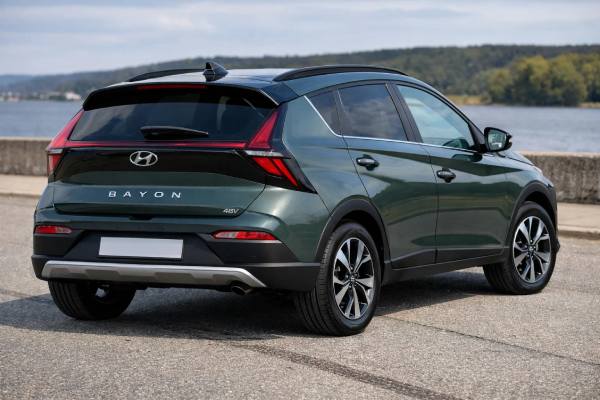
The facelifted 2024-on Hyundai BAYON 1.2 MPi sits at the simple end of Hyundai’s small-crossover range. It keeps the sharper front-end treatment, updated lighting signature, improved digital cabin and broad SmartSense safety package, but pairs them with the least complicated powertrain in the lineup: a naturally aspirated 1.2-litre four-cylinder and a 5-speed manual gearbox. That makes it appealing to owners who value low mechanical complexity, predictable running costs and easy urban manners more than outright pace. Official figures show modest performance, with 79 hp and a 14.2-second 0–100 km/h run, yet the BAYON answers with compact dimensions, low curb weight and a strong 411-litre boot for its class. The key question is not whether this is the quickest BAYON—it clearly is not—but whether the facelifted 1.2 MPi is the smartest long-term choice for calm city, suburban and light family use. For the right owner, it makes a strong case.
Quick Specs and Notes
- The 1.2 MPi and 5-speed manual keep the drivetrain simpler than the turbo and DCT options.
- A 411 L boot is a genuine strength in a small crossover.
- The 2024 facelift brings better cabin tech, OTA map updates and a stronger safety-tech story.
- Performance is modest, so overtaking and steep high-speed climbs need planning.
- A sensible baseline is an annual service, with tyre rotation around every 10,000–12,000 km.
Navigate this guide
- Hyundai BAYON BC3 facelift profile
- Hyundai BAYON 1.2 MPi data
- Hyundai BAYON trims and safety
- Reliability, faults and recalls
- Maintenance and buyer advice
- Driving feel and economy
- BAYON versus key rivals
Hyundai BAYON BC3 facelift profile
The facelifted BAYON is Hyundai’s European-market small crossover for buyers who want SUV-style seating and practicality without moving into a larger, heavier family SUV. The 2024 update did not reinvent the car, but it did sharpen the formula. Hyundai gave the BAYON a more assertive face with the full-width daytime-running-light signature, revised bumpers, fresh wheel designs and a cabin that leans harder into digital equipment and connectivity. OTA map updates, dual-screen availability, extra USB-C connectivity and a broader spread of driver-assistance features make the facelift feel more current than the original launch car.
What makes the 1.2 MPi version interesting is that it resists the industry trend toward more complexity. Instead of a small turbo engine, dual-clutch gearbox or mild-hybrid system, this version uses a naturally aspirated 1.2-litre inline-four with a manual transmission. On paper that means less torque and slower acceleration than the 1.0 T-GDi versions, but it also means fewer expensive subsystems in long-term ownership. For drivers doing shorter daily runs, school traffic, town errands and moderate suburban mileage, that simplicity can matter more than headline numbers. Officially, Hyundai rates it at 58 kW, or 79 PS, with 113 Nm, a 158 km/h top speed and 5.6 to 5.8 L/100 km WLTP combined fuel use.
Packaging is one of the BAYON’s biggest selling points. At 4,180 mm long, it stays compact enough for narrow urban streets and easy parking, yet it still offers 411 litres of boot space and a useful upright seating position. Hyundai also highlights strong legroom for the class and a roomy feel that helps the BAYON behave more like a junior family crossover than a raised city hatch. The result is a car that is easier to recommend to pragmatic buyers than to enthusiasts. It is not quick, sporty or premium. It is tidy, practical, modern-looking and easy to understand. That identity suits the 1.2 MPi especially well, because the engine’s strengths are calm operation, predictable responses and simpler ownership rather than excitement.
In plain terms, this is the BAYON for buyers who would rather have fewer moving parts than faster overtakes. That is a narrow but real audience, and Hyundai still serves it better than many rivals now focused almost entirely on turbo or hybrid power.
Hyundai BAYON 1.2 MPi data
The official facelift 1.2 MPi brochure provides the core engine, performance, weight and size figures. Hyundai’s broader facelift BAYON technical material fills in several chassis and body details shared across the facelift range. Where the open official documentation stops, the tables below say so rather than guessing.
Powertrain and efficiency
| Item | 2024–present Hyundai BAYON 1.2 MPi |
|---|---|
| Code | 1.2 MPi |
| Engine layout and cylinders | Inline-4, naturally aspirated petrol |
| Displacement | 1.2 L (1,197 cc) |
| Valvetrain, valves per cylinder, bore × stroke | Not publicly specified in the open facelift 1.2 source reviewed |
| Fuel system | Multi-point petrol injection |
| Compression ratio | Not publicly specified in the open facelift 1.2 source reviewed |
| Max power | 79 hp (58 kW) @ 6,000 rpm |
| Max torque | 113 Nm (83 lb-ft) @ 4,200 rpm |
| Timing drive | Not publicly specified in the open facelift 1.2 source reviewed |
| Rated efficiency | 5.6–5.8 L/100 km (42.0–40.6 mpg US / 50.4–48.7 mpg UK), WLTP combined |
| Real-world highway @ 120 km/h (75 mph) | No validated open official figure; expect higher consumption than WLTP combined |
| Emissions standard | Euro 6e |
Transmission, chassis and running gear
| Item | 2024–present Hyundai BAYON 1.2 MPi |
|---|---|
| Transmission | 5-speed manual |
| Drive type | Front-wheel drive |
| Differential | Open front differential |
| Suspension front / rear | MacPherson strut / coupled torsion beam axle |
| Steering | Motor-driven power steering |
| Steering ratio | Not publicly specified in the open source reviewed |
| Brakes | 280 mm (11.0 in) ventilated front discs; 262 mm (10.3 in) solid rear discs |
| Wheels and tyres | 195/55 R16 on 6.0J x 16 wheels |
Dimensions and capacities
| Item | 2024–present Hyundai BAYON 1.2 MPi |
|---|---|
| Length / width / height | 4,180 mm (164.6 in) / 1,775 mm (69.9 in) / 1,500 mm (59.1 in) |
| Wheelbase | 2,580 mm (101.6 in) |
| Turning circle, kerb to kerb | 5.2 m (17.1 ft) |
| Kerb weight | 1,045–1,155 kg (2,304–2,546 lb) |
| Fuel tank | 40 L (10.6 US gal / 8.8 UK gal) |
| Cargo volume | 411 L (14.5 ft³) seats up; 1,205 L (42.6 ft³) seats folded, VDA |
| Roof load | 70 kg (154 lb) |
| Towing capacity | 910 kg (2,006 lb) braked / 450 kg (992 lb) unbraked |
| Ground clearance | Not specifically published for the facelifted 1.2 MPi in the reviewed open sources |
Performance and safety data
| Item | 2024–present Hyundai BAYON 1.2 MPi |
|---|---|
| 0–100 km/h | 14.2 s |
| Top speed | 158 km/h (98.2 mph) |
| 100–0 km/h braking distance | Not publicly specified in the open source reviewed |
| Euro NCAP | 4 stars |
| Adult occupant | 76% |
| Child occupant | 82% |
| Vulnerable road users | 76% |
| Safety assist | 67% |
| IIHS | Not applicable / not tested |
Fluids and service capacities
| Item | What to verify by VIN |
|---|---|
| Engine oil specification and fill quantity | VIN-matched owner and workshop data |
| Coolant specification and fill quantity | VIN-matched workshop data |
| Manual transmission fluid specification and quantity | VIN-matched workshop data |
| A/C refrigerant type and charge | Under-bonnet label or workshop data |
| Key torque values | VIN-matched workshop data only |
Two details matter here. First, the 1.2 MPi is the lightest facelift BAYON powertrain, and that helps explain why its official economy remains respectable despite the old-school naturally aspirated setup. Second, open official sources for the facelifted 1.2 MPi do not publish every workshop figure an owner might want, so it is better to verify service fluids and torque values by VIN than to trust a generic chart copied across markets.
Hyundai BAYON trims and safety
Trim strategy for the facelifted BAYON is market-dependent, and that matters with the 1.2 MPi. In some European markets, including Ireland, the 1.2-litre engine remains part of the range, while UK facelift documentation focuses on the turbocharged 1.0-litre line and its Advance, Premium and Ultimate grades. So the safest way to think about the 1.2 MPi is as an entry-oriented powertrain whose exact trim name and options vary by country, even though the facelift’s design, cabin tech and core safety architecture are shared.
The easiest identifiers for this version are mechanical rather than cosmetic. The facelifted 1.2 MPi pairs its 79 PS output with a 5-speed manual, 195/55 R16 tyres and a simpler drivetrain package than the turbo or DCT cars. Visually, all facelift BAYONs gain the new front light bar theme, revised bumper treatment and updated wheel options. Inside, Hyundai’s 2024 changes matter more than trim badges: the refreshed BAYON adds OTA map support, available dual 10.25-inch displays, USB-C connectivity and a more polished digital feel. That means even the simpler powertrain can still benefit from a much more modern cabin experience than older base-grade small crossovers.
Safety is a stronger story than many buyers might expect in a budget-minded small crossover. Euro NCAP’s rating for the BAYON stands at 4 stars, with 76% for adult occupants, 82% for child occupants, 76% for vulnerable road users and 67% for safety assist. Crucially, the rating basis applies to the 1.2 MPI 4×2 as well as the 1.0 T-GDI versions, and the facelift review did not change that overall rating. That gives buyers of the facelifted 1.2 MPi a useful degree of confidence that the safer structure and systems were not stripped away just because this is the lower-output engine.
The exact standard-versus-optional ADAS mix still depends on market and trim, but the facelift range broadly offers forward collision-avoidance support, lane support, speed-limit assistance, driver-attention support and connected safety functions. Hyundai’s facelift announcement also highlights Lane Following Assist, Forward Collision-Avoidance Assist including junction support, Navigation-based Smart Cruise Control, Blind-spot Collision-Avoidance Assist, Driver Attention Warning and Leading Vehicle Departure Alert across the updated range, though not all of those features are fitted to every market version. In some markets, core items such as Forward Collision-Avoidance Assist, lane support, speed-limit assistance, rear parking sensors, E-Call, ISOFIX and multiple airbags are widely standard, while blind-spot warning sits higher in the trim walk. The practical takeaway is simple: check the exact car’s equipment list, but do not assume the 1.2 MPi is bare in safety terms.
Reliability, faults and recalls
Public evidence specific to the facelifted 2024-on 1.2 MPi is still limited, so the clearest reliability reading comes from two angles: the simplicity of this drivetrain, and the wider BAYON recall and service-campaign record. That is not a bad place to start. A naturally aspirated four-cylinder with a manual gearbox avoids several complexity points found elsewhere in the range, especially turbo hardware, mild-hybrid components and the dual-clutch transmission used on some 1.0 T-GDi versions. In principle, that should make the 1.2 MPi the calmest long-term ownership bet in the lineup, provided routine servicing is not neglected.
| Issue or risk area | Prevalence | Severity or cost tier | Applies to facelift 1.2 manual? | What to do |
|---|---|---|---|---|
| Outstanding recall or service campaign | Occasional | High if ignored | Yes | Run VIN or registration check and confirm dealer completion |
| Fuel pump performance loss on certain earlier BAYON vehicles | Occasional on affected cars | High | Mainly earlier production, VIN-specific | Verify remedy completion before purchase |
| DCT or TCU shift error campaign | Rare for this exact spec | High | No, not on the 5-speed manual | Relevant only as range background |
| ADAS camera or sensor miscalibration after repair | Occasional | Medium | Yes, on equipped cars | Ask for calibration proof after windscreen or front-end work |
| Condition-related wear on low-mileage cars | Common used-car issue | Low to medium | Yes | Inspect battery, brakes, tyres and service age, not mileage alone |
The publicly visible recall trail matters most on used examples. Recent recall notices in Europe show BAYON-related actions affecting certain vehicles in the broader model line, including a DCT or TCU-related shift issue on some BC3 cars and a separate fuel-pump-performance issue on certain 2021 to early-2023 production vehicles. The key point for this exact article is that the facelifted 1.2 MPi manual is not the DCT drivetrain named in that transmission-related campaign, but any BAYON buyer should still run a VIN-level recall check and ask for dealer records rather than assuming all work has been done. Hyundai’s own recall portal also makes that verification straightforward.
What should a buyer listen and look for? On this manual 1.2, condition usually matters more than a famous single failure point. A healthy car should start cleanly, idle smoothly, pull evenly without warning lights, shift without resistance and stop without brake vibration or heavy corrosion. Because the BAYON’s safety tech relies on cameras and sensors, any windscreen replacement or front-end repair should be followed by proper calibration. Ask for a full service history, proof of campaign completion, a recent battery test if the car has done many short trips, and tyre dates as well as tread depth. The most reassuring 1.2 MPi is the one with boring paperwork: annual servicing, no warning lights and no missed campaigns.
Maintenance and buyer advice
For this version, the best ownership strategy is simple: keep the servicing regular, do not stretch age-based items just because mileage is low, and verify workshop data by VIN before any DIY fluid work. Hyundai also backs the BAYON with a 5-year unlimited mileage warranty in many official-market sales channels, which reinforces the idea that this is meant to be a straightforward everyday car rather than a high-strung one.
A practical owner schedule for the 1.2 MPi looks like this:
| Item | Practical interval |
|---|---|
| Engine oil and filter | Every 12 months or roughly 10,000–15,000 km, sooner for repeated short trips |
| Engine air filter | Inspect yearly; replace around 30,000–45,000 km sooner in dust |
| Cabin air filter | About every 15,000–30,000 km or 12–24 months |
| Brake fluid | Every 2 years |
| Brake pads and discs | Inspect at every service |
| Tyre rotation | About every 10,000–12,000 km |
| Wheel alignment | Check yearly or when wear or steering pull appears |
| Spark plugs | Inspect at major service; replace to VIN-matched schedule |
| Coolant | Check level and condition yearly; replace only to VIN-specific schedule |
| Manual gearbox oil | Inspect for leaks and shift quality at service visits; replace if required by severe use or repair |
| 12 V battery | Test yearly after year 3; budget replacement around years 4–6 if use is mostly short-trip |
| Wipers, lights and washer system | Check every service |
For fluids and capacities, the honest answer is that open official facelift 1.2 MPi sources do not publish a full workshop fill chart. Before buying oil, coolant or A/C parts, verify the exact specification from the VIN-matched handbook, dealer parts desk or workshop data. That is especially important on modern Hyundai models because market, emissions version and supplier changes can affect approved fluids and procedures.
From a buyer’s point of view, inspect the car in this order:
- Confirm recall and service-campaign completion.
- Check for even cold start, steady idle and a clean clutch take-up.
- Inspect front and rear brakes for corrosion if the car has low mileage.
- Look for uneven tyre wear, which can point to alignment or pothole damage.
- Test every safety and infotainment feature, including parking sensors, camera systems and screen functions.
- Look for signs of crash repair around the front radar or camera area.
- Verify that boot trim, rear seats and parcel area are intact, because family-use wear shows here early.
The trims to seek are the ones that balance simple running gear with the facelift’s newer tech and safety kit. In most markets, that means not necessarily the absolute base car, but the lowest trim that still gives you the updated infotainment, parking aids and core ADAS. Long-term durability outlook is good in concept: simple engine, modest output, manual transmission and low weight. The main caution is not hidden fragility, but owner neglect.
Driving feel and economy
On the road, the facelifted BAYON 1.2 MPi behaves exactly as its specification suggests. It is easy to place, easy to park and easy to drive smoothly at low speed. The compact footprint, upright seating position and light controls make it well suited to towns, crowded suburbs and daily errands. Shared facelift BAYON hardware such as the 5.2 m turning circle, modest tyre widths and simple front-wheel-drive layout all support that easygoing character. It should feel lighter and less cumbersome than many larger crossovers, even if it does not feel especially sporty.
The engine is the limiting factor in dynamic driving, but not in a surprising way. With 79 hp and 113 Nm, this is a car that prefers measured inputs and planned overtakes. Hyundai’s own figures tell the story: 14.2 seconds to 100 km/h and 158 km/h flat out. Around town that is usually enough, because response is predictable and a naturally aspirated engine can feel clean and linear. On fast A-roads, hills or full-load motorway trips, the 1.2 needs frequent downshifts and a patient right foot. The 5-speed manual suits the engine’s honest character, but it cannot hide the fact that this BAYON is tuned for calm transport, not urgency.
Official combined WLTP fuel use of 5.6 to 5.8 L/100 km is respectable for a simple petrol crossover, though not miracle-level. In real use, city and mixed driving can stay fairly close to that if trips are long enough for the engine to warm fully. A steady 120 km/h motorway cruise will usually sit higher, because the engine has limited torque and only five ratios, so it works harder than a stronger turbo rival at the same speed. The positive side is that the 1.2 MPi avoids the extra mechanical layers that often make turbo or hybrid cars more expensive to own once they age.
Ride and refinement should be judged with the tyre and mission in mind. On 195/55 R16 tyres, the BAYON leans more toward predictable comfort than sharp handling. The MacPherson-strut front and torsion-beam rear setup are conventional, and that is fine here. Expect steady straight-line manners, safe understeer at the limit and braking that feels adequate rather than especially powerful. If you tow within the published BAYON platform limits, remember that this engine has little surplus performance in reserve. It can do the job on paper, but it is clearly better as a light-load commuter than as a regular towing tool.
BAYON versus key rivals
Against the Ford Puma, the BAYON 1.2 MPi loses the performance argument quickly. Turbocharged mild-hybrid Puma variants offer clearly stronger torque and much quicker real-world acceleration. By comparison, the BAYON’s 79 hp, 113 Nm and 14.2-second 0–100 km/h time make it clearly slower without giving back much in official fuel use. The Hyundai’s reply is simplicity: no turbo, no mild-hybrid layer on this version, and a calmer ownership proposition for buyers who value straightforward mechanicals over pace.
Against the Toyota Yaris Cross, the argument shifts from speed to drivetrain philosophy. The Toyota offers a more electrified answer to urban driving and usually stronger stop-start efficiency in town. The BAYON counters with a 411-litre boot, a straightforward manual-petrol setup and a slightly more traditional ownership experience. The Yaris Cross makes the stronger case for drivers who want hybrid efficiency and automatic convenience. The BAYON makes the stronger case for buyers who want a manual petrol crossover with less electrified complexity and a very useful boot in a compact footprint.
Against the Renault Captur, the BAYON feels like the tidier, smaller-scale answer. The Captur is often offered with stronger petrol outputs and can be the more versatile motorway or family-trip tool. The Hyundai answers with easier parking manners, lower apparent complexity and a clearer value story in basic daily use. If you regularly carry adults, long holiday luggage or want a stronger high-speed car, the Captur is the more complete tool. If your use is urban, light suburban and budget-aware, the BAYON 1.2 MPi remains easier to justify.
So where does the facelifted BAYON 1.2 MPi really win? It wins when the buyer’s priorities are simple petrol ownership, modern safety tech, strong small-car practicality and low-stress daily use. It does not win on speed, towing confidence or cutting-edge efficiency. That clarity is actually part of its appeal. It is a modest car, but an honest one.
References
- Bayon | Hyundai 2024 (Model Page)
- New Bayon: A stylish SUV with class-leading practicality 2024 (Press Release)
- Official Hyundai BAYON 2021 safety rating 2021 (Safety Rating)
- Recalls by manufacturer (2024) 2024 (Recall Database)
- Check if a vehicle, part or accessory has been recalled – GOV.UK 2025 (Recall Check)
Disclaimer
This article is for informational purposes only and is not a substitute for professional diagnosis or repair. Specifications, torque values, intervals and procedures vary by VIN, market and equipment, so readers must verify all details against the correct official service documentation before servicing, repairing or buying a vehicle.
If you found this guide useful, please consider sharing it on Facebook, X, or another social platform to support our work.