
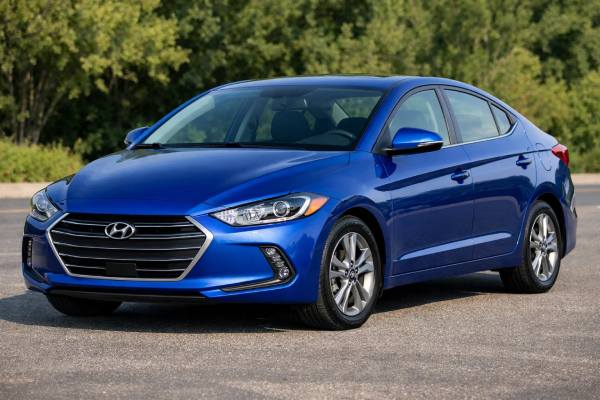
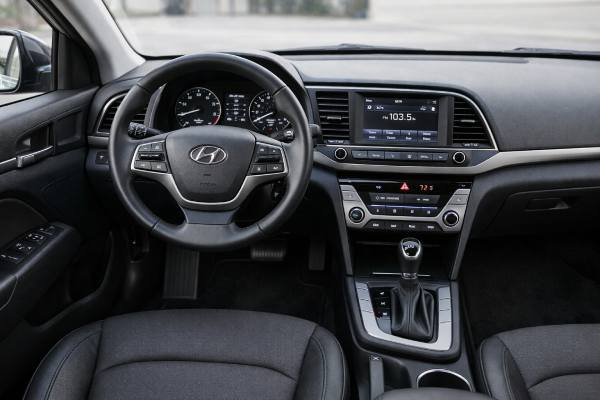
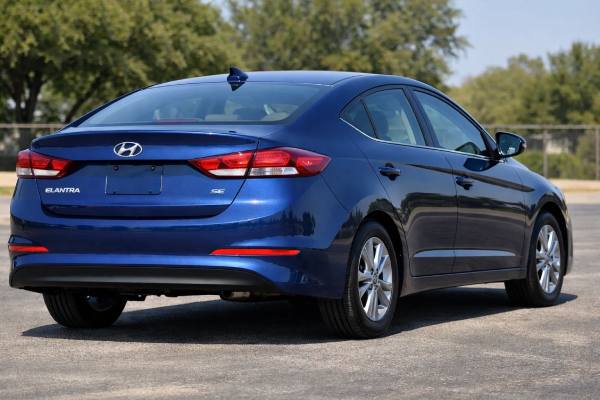
The 2017–2018 Hyundai Elantra AD 1.4 T-GDi is the efficiency-focused turbo version of Hyundai’s sixth-generation compact sedan. It sits in an appealing middle ground: stronger low-end torque than the naturally aspirated 1.6, better everyday economy than the larger 2.0, and less outright complexity than the later performance-oriented 1.6 T-GDi Sport models. In most markets, this engine is paired with Hyundai’s 7-speed dual-clutch transmission, which gives the car a more modern, long-legged feel on the highway than older torque-converter setups.
That makes it a smart used buy for drivers who want a roomy, quiet compact sedan with a useful turbocharged boost in mid-range response. The bigger caution is ownership discipline. This is a direct-injection turbo engine with a dry-clutch DCT, so clean oil, good cooling-system health, and software or recall history matter more than they do on the simplest Elantra versions. If maintained well, though, the 1.4 T-GDi remains one of the most balanced AD variants.
Top Highlights
- The 1.4 T-GDi gives the AD Elantra stronger mid-range torque than the base petrol engines without moving into full sport-sedan territory.
- Cabin space, rear-seat room, and a large trunk remain standout strengths for a compact sedan.
- Highway refinement is better than many buyers expect, especially with the 7-speed dual-clutch transmission.
- The ownership caveat is powertrain complexity: direct injection, turbocharging, and a dry-clutch DCT reward careful maintenance.
- For severe use such as short trips or heavy traffic, use 5,000 km or 6 months as the oil-service ceiling.
On this page
- Hyundai Elantra AD essentials
- Hyundai Elantra AD technical data
- Hyundai Elantra AD grades and safety
- Weak spots and service actions
- Upkeep plan and buying advice
- Daily driving and economy
- AD 1.4 against rivals
Hyundai Elantra AD essentials
The AD-generation Elantra was Hyundai’s move toward a more mature, quieter, and more refined compact sedan. It did not try to win buyers with flash alone. Instead, it focused on cabin space, a cleaner ride, better insulation, and a stronger value story. In 1.4 T-GDi form, it also introduced the kind of downsized turbocharged powertrain that many buyers wanted by 2017: compact displacement, decent torque, and a more relaxed highway character than older entry-level petrol sedans.
That engine matters because it changes the way the Elantra feels in normal use. The naturally aspirated engines in this generation are perfectly acceptable, but the 1.4 T-GDi feels more flexible. It pulls earlier, needs fewer downshifts, and suits the Elantra’s quiet, grown-up personality better than a peaky small-displacement unit would. The extra shove does not make it a sport sedan, but it makes it easier to live with when overtaking, climbing, or carrying passengers and luggage.
The rest of the car keeps Hyundai’s familiar compact-sedan formula. The body is sleek but still conventional enough to offer a usable rear seat and a generously sized trunk. Ride quality is settled, cabin noise is well managed for the class, and the overall feel is more mature than some rivals that chase a firmer, more aggressive setup. For buyers coming from older Elantras, the AD feels like a step forward in refinement rather than a dramatic character change.
One of its biggest advantages is packaging. This generation’s wheelbase and body layout give it more rear-seat comfort than many buyers expect from a compact sedan. Front-seat comfort is strong, and the trunk is large enough for family duty, airport runs, or weekly shopping without feeling compromised. That is an underrated advantage in used-car shopping, where many buyers focus on engine output and ignore daily practicality.
The 1.4 T-GDi version also sits in an interesting place within the wider AD lineup. It is more advanced than the base 1.6 MPI, but not as expensive or image-driven as the 1.6 turbo sport models. That makes it arguably the most balanced choice for owners who care about real-world response and economy rather than brochure bragging rights. It gives enough torque to justify the turbo badge, but it still feels like a car built for commuting, family use, and long-distance efficiency.
The caveat is that balance depends on care. Turbocharging, direct injection, and a dual-clutch transmission all raise the maintenance stakes. None of those systems is inherently a deal-breaker, but they do mean this version is less tolerant of skipped oil changes, overdue fluid work, or poor driving habits in traffic. Buy a good one, though, and the AD 1.4 T-GDi is one of the most sensible Elantras of its period.
Hyundai Elantra AD technical data
The 1.4 T-GDi AD Elantra uses Hyundai’s Kappa-family turbocharged direct-injection four-cylinder. In official public Hyundai material for the global Elantra Eco, the output is listed at 128 horsepower and 156 lb-ft, which converts to roughly 212 Nm. In many markets, this engine was paired with a 7-speed dual-clutch transmission and tuned for economy-focused performance rather than outright speed.
Powertrain and efficiency
| Item | Hyundai Elantra (AD) 1.4 T-GDi |
|---|---|
| Code | Kappa 1.4 T-GDi |
| Engine layout and cylinders | Inline-4, 4 cylinders, DOHC, 4 valves per cylinder |
| Bore × stroke | 71.6 × 84.0 mm (2.82 × 3.31 in) |
| Displacement | 1.4 L (1,353 cc) |
| Induction | Turbocharged |
| Fuel system | GDI / gasoline direct injection |
| Compression ratio | About 10.0:1 |
| Max power | 128 hp (95 kW) @ 5,500 rpm |
| Max torque | 212 Nm (156 lb-ft) @ 1,400–3,700 rpm |
| Timing drive | Chain |
| Rated efficiency | About 5.2–5.9 L/100 km (45.2–40.0 mpg US / 54.3–47.9 mpg UK), market cycle dependent |
| Real-world highway @ 120 km/h | Typically about 6.2–7.0 L/100 km (37.9–33.6 mpg US / 45.6–40.4 mpg UK) |
Transmission and driveline
| Item | Hyundai Elantra (AD) 1.4 T-GDi |
|---|---|
| Transmission | 7-speed dual-clutch transmission |
| Drive type | FWD |
| Differential | Open |
Chassis and dimensions
| Item | Hyundai Elantra (AD) 1.4 T-GDi |
|---|---|
| Suspension (front/rear) | MacPherson strut / coupled torsion beam axle |
| Steering | Electric power steering |
| Brakes | Front ventilated discs about 280 mm (11.0 in), rear solid discs about 262 mm (10.3 in) |
| Wheels and tyres | Most common sizes 205/55 R16 or 225/45 R17 |
| Ground clearance | About 150 mm (5.9 in), tyre and trim dependent |
| Length | 4,570 mm (179.9 in) |
| Width | 1,800 mm (70.9 in) |
| Height | 1,435 mm (56.5 in) |
| Wheelbase | 2,700 mm (106.3 in) |
| Turning circle (kerb-to-kerb) | About 10.6 m (34.8 ft) |
| Kerb weight | About 1,280–1,320 kg (2,822–2,910 lb), trim dependent |
| Fuel tank | 50 L (13.2 US gal / 11.0 UK gal) |
| Cargo volume | About 458 L (16.2 ft³) VDA or about 14.4 ft³ SAE depending on market method |
Performance and capability
| Item | Hyundai Elantra (AD) 1.4 T-GDi |
|---|---|
| 0–100 km/h | About 9.5–10.0 s |
| 0–62 mph | About 9.5–10.0 s |
| Top speed | About 200 km/h (124 mph) |
| Braking distance | Tyre-dependent; no single factory public figure confirmed for this exact variant |
| Towing capacity | Market dependent; verify by VIN plate and local handbook |
| Payload | Market dependent; verify by door-jamb label |
Fluids and service capacities
| Item | Hyundai Elantra (AD) 1.4 T-GDi |
|---|---|
| Engine oil | SAE 5W-20 or 5W-30 depending on climate/spec; about 4.0–4.3 L (4.2–4.5 US qt) |
| Coolant | Phosphate-based ethylene glycol coolant, 50:50 mix; about 6.0 L (6.3 US qt) |
| Transmission / DCT fluid | Special DCT gear oil/specification per Hyundai service literature; capacity varies by repair scope, commonly around 1.9–2.0 L for gearbox oil |
| Differential / transfer case | Not applicable |
| A/C refrigerant | R-134a; charge varies by market and must be confirmed on the under-hood label |
| A/C compressor oil | PAG type; confirm exact quantity on the vehicle label or workshop data |
| Key torque specs | Wheel lug nuts 88–107 Nm (65–79 lb-ft) |
Safety and driver assistance
| Item | Hyundai Elantra (AD) 1.4 T-GDi |
|---|---|
| Crash ratings | No dedicated public Euro NCAP result was located for this exact 1.4 T-GDi European sedan in the official sources reviewed |
| IIHS | Strong related 2018 Elantra sedan results; Top Safety Pick+ only with optional front crash prevention and specific headlights built after December 2017 |
| Headlight rating (IIHS) | Good or Poor depending on headlight specification |
| ADAS suite | AEB, lane warning/lane-keep functions, blind-spot monitoring, and rear cross-traffic alert were market- and trim-dependent, not universal |
The most important takeaway is not a single number. It is that the AD 1.4 T-GDi combines compact dimensions, useful torque, and a relatively modern transmission in a package that still feels like a practical family sedan rather than a compromise car.
Hyundai Elantra AD grades and safety
Trim structure varied by market, which matters more than usual with the AD Elantra because Hyundai spread comfort and safety equipment differently across regions. In some markets, the 1.4 T-GDi sat in the middle of the range as the efficient turbo choice. In others, it was tied to better-equipped trims to justify its premium over the base petrol engine. That means buyers should shop by actual equipment, not just trim name.
Mechanically, this engine was most often linked to the 7-speed DCT, which instantly distinguishes it from simpler manual or torque-converter Elantra versions. That pairing is important because the DCT changes both the ownership experience and the trim ladder. Cars with this powertrain were usually positioned as better-specced, more refined versions rather than stripped budget models.
Typical equipment on better 1.4 T-GDi cars included automatic climate control, touchscreen infotainment, rear camera, alloy wheels, cruise control, heated seats in colder markets, and a broader driver-assistance set than the base cars. Depending on region, higher trims could add LED lighting, blind-spot warning, lane-departure or lane-keeping support, rear cross-traffic alert, smart key entry, and power-adjustable driver’s seat functions. That is one reason the AD still feels current enough inside when you buy the right example.
Quick identifiers help when scanning used listings. Sixteen-inch wheels usually indicate a more comfort-oriented trim, while 17-inch wheels often point to a better-equipped or more appearance-focused version. LED rear lamps, larger infotainment screens, dual-zone climate controls, and driver-assistance buttons around the dash or steering wheel usually signal a higher trim or option pack. Cars with very basic cabin trim and no assistance hardware may be lower-output engines mislisted as the turbo.
Safety is one of the AD generation’s stronger points. Even without a dedicated public Euro NCAP page for this exact 1.4 T-GDi configuration in the sources reviewed, the platform-level safety story is solid. IIHS testing of the related 2018 Elantra 4-door sedan showed Good scores in driver-side small overlap, moderate overlap, side impact, roof strength, and head restraints. The qualification for Top Safety Pick+ required optional front crash prevention and specific headlights on cars built after December 2017, which is a useful detail for buyers comparing late-2018 vehicles with earlier builds.
That distinction matters. Not every AD Elantra has the same safety equipment. Headlight performance varied by specification, and the highest IIHS award depended on the correct headlight and crash-prevention combination. In practical terms, that means a late, well-optioned car can be materially safer than a basic earlier one, even within the same generation.
Structurally, the AD’s body shell is a major improvement over much older Elantras, and most cars came with a full baseline of airbags, stability control, ABS, and seatbelt pretensioners. ISOFIX/LATCH child-seat provisions are present, and the overall passive-safety package is competitive for the class. The main thing to remember is that optional safety tech was just that: optional. Buyers need to verify what the car actually has rather than assuming every turbo car got every safety feature.
Weak spots and service actions
The AD Elantra 1.4 T-GDi is generally a solid compact sedan, but it is not the type of car that shrugs off neglect. The biggest difference between a good car and a troublesome one is usually maintenance quality, not odometer reading. Because this variant combines a small turbocharged GDI engine with a dry-clutch dual-clutch transmission, it has more to gain from proper servicing and more to lose from corner-cutting than the simplest naturally aspirated Elantras.
A practical reliability map looks like this:
Common and usually low to medium cost
- Front anti-roll-bar links and minor front-end suspension wear.
- Battery weakness on short-trip cars.
- Rear-brake corrosion or uneven pad wear on lightly used vehicles.
- Cabin rattles or trim noises, especially around the dash and rear shelf.
- Spark plug wear that shows up sooner on cars used mostly in town.
Occasional and medium cost
- Dry-clutch DCT low-speed shudder or hesitant take-up in heavy traffic.
- Coil or ignition-related rough running under load.
- Turbo boost-control or vacuum-related drivability complaints.
- Steering-column or steering-coupler noise, usually more annoying than dangerous.
- Cooling-system seepage from hose joints, thermostat housing, or aged plastic fittings.
Less common, but more expensive
- Carbon-related intake deposit build-up causing idle roughness or lazy response.
- DCT clutch or actuator wear on abused cars.
- Turbocharger wear on engines that suffered long oil intervals or repeated hot shut-down after hard use.
The engine itself is not known for a single universal catastrophic weakness in the way some other Hyundai powertrains became known for bearing failures. That is encouraging. But direct injection and turbocharging bring their own maintenance logic. Oil quality matters. Warm-up habits matter. Cheap spark plugs and overdue service matter. A car that lived on the bare minimum can feel noticeably rougher and less eager than one maintained properly.
The DCT deserves special attention. In normal driving, it helps the Elantra feel efficient and modern. In slow stop-start traffic, though, dry-clutch dual-clutch gearboxes can feel less smooth than a conventional automatic. Occasional low-speed hesitation or light shudder is not always a failure, but pronounced judder, repeated overheating messages, harsh engagement, or poor service history should be treated seriously. This transmission likes clean software logic and calm inputs more than abuse.
Software and calibrations are worth asking about, even if public official bulletins for this exact European 1.4 T-GDi are lighter than for some U.S.-market Nu-engine cars. A dealer-level scan is valuable because it can reveal DCT history, misfire patterns, and stored engine codes long before they become a dashboard complaint.
On service actions, public official records reviewed do show that very early 2017 Elantra sedan builds in the U.S. had a tiny driver-airbag-module recall population. That does not mean the European 1.4 T-GDi is broadly recall-prone, but it does underline the main rule: check the exact VIN, not the model line in general. Region, build date, and plant matter.
As a used purchase, the Elantra AD 1.4 T-GDi is not a car to fear. It is a car to verify. A quiet cold start, clean shifts, good-quality tyres, and a believable service trail matter much more than badge polish.
Upkeep plan and buying advice
The best maintenance plan for the 1.4 T-GDi is preventive rather than reactive. This engine and gearbox respond well to fresh fluids, correct specifications, and regular checks. They respond badly to the “it still runs, so leave it” mindset. That is why a structured maintenance routine matters more here than on the simplest AD variants.
A practical schedule for a well-kept used example looks like this:
| Item | Sensible interval |
|---|---|
| Engine oil and filter | Every 10,000–12,000 km or 12 months; every 5,000 km or 6 months in severe use |
| Engine air filter | Inspect every service; replace around 30,000 km sooner in dust |
| Cabin air filter | About every 20,000–24,000 km or yearly |
| Spark plugs | Inspect by 40,000–45,000 km on urban cars; replace by schedule with correct turbo-rated plugs |
| Coolant | Follow factory interval, but inspect condition and level regularly |
| Timing chain | No routine replacement interval; inspect only if noise, correlation faults, or poor servicing suggest trouble |
| Accessory belt | Inspect at major service intervals and replace on condition |
| DCT fluid / gearbox oil | Inspect service history and renew in severe-use ownership rather than waiting for symptoms |
| Brake fluid | Every 2 years |
| Brake pads and rotors | Inspect every service |
| Tyre rotation | Every 10,000–12,000 km |
| Wheel alignment | On uneven wear, steering pull, or after pothole hits |
| 12 V battery test | Yearly after year four |
For severe service, Hyundai’s official maintenance guidance is very clear in spirit even when market tables differ: repeated short-distance driving, heavy traffic, dust, cold weather, mountainous roads, and towing all shorten fluid and filter life. That is especially relevant to this engine because direct injection and turbocharging are less forgiving of stretched oil intervals.
Fluid choices matter. Use the correct low-viscosity engine oil grade approved for the market and climate. Use the right DCT lubricant rather than a generic substitute. Keep the coolant chemistry correct for aluminum components. Cheap fluids save very little and can cost a lot. This powertrain benefits from doing the basics exactly right.
As a used buy, the inspection checklist should be practical:
- Start it stone cold and listen for rattles, rough idle, and smoke.
- Drive it long enough to feel DCT take-up in traffic and during repeated pull-aways.
- Check for misfire, hesitation, or boost surging under load.
- Inspect tyres for uneven wear and confirm they are a reputable matching set.
- Scan for stored powertrain codes even if the dashboard is clear.
- Verify service history, especially oil changes and spark-plug replacement.
- Confirm VIN-based recall and campaign status with an official lookup.
The best versions to seek are usually late 2017 or 2018 cars with complete service records, no aftermarket tuning, and no evidence of bargain-basement tyre or oil habits. Cars to avoid are those with rough cold starts, obvious DCT shudder, cheap mismatched tyres, or vague explanations about “a little turbo noise” or “a warning that came and went.”
Long-term durability is respectable if you keep ahead of service and avoid treating the drivetrain as maintenance-free. This is one of those cars that rewards owners who pay attention before the warning light arrives.
Daily driving and economy
The 1.4 T-GDi gives the AD Elantra the kind of everyday power delivery that suits a compact sedan well. It is not dramatic, but it is more satisfying than a basic naturally aspirated engine because the useful torque arrives early. In traffic, that means lighter throttle inputs and fewer high-rpm flares. On open roads, it means easier overtakes and less need to plan every pass around a downshift.
The engine character is smooth and understated. There is some turbo presence, but not enough to create a big on-off feeling. The power builds in a clean, measured way, and the torque plateau is broad enough to make the car feel stronger in the middle of the rev range than the horsepower figure alone suggests. That is exactly what most owners want from a compact turbo sedan.
The DCT shapes the experience significantly. When cruising or driving briskly on an open road, it works well and helps the Elantra feel more refined than older small autos. Gear changes are quick, highway revs stay low, and the car feels relaxed. In dense stop-start traffic, though, it can feel less creamy than a conventional torque-converter automatic. Slight hesitation or a light shudder in crawling traffic does not always mean a fault, but the best examples still feel smoother and more settled than neglected cars.
Ride quality is one of the AD’s stronger traits. Hyundai tuned this generation to feel more mature than the older Elantras, and it shows. Straight-line stability is good, suspension noise is modest, and the car deals with everyday broken pavement better than some firmer compact rivals. On 16-inch tyres, it is particularly easy to live with. Seventeen-inch-wheel cars look better, but usually add a little more road noise and sharpness.
Handling is safe and tidy rather than playful. The steering is light and accurate enough, but feedback is limited. Cornering balance is predictable, the rear torsion-beam setup is stable, and body roll stays under control without making the ride feel harsh. This is not a driver’s compact in the Focus or Mazda3 sense. It is a composed commuter that happens to be more polished than expected.
Real-world fuel economy remains a major attraction. Expect something like this in healthy cars:
- city: about 7.8–9.0 L/100 km
- highway at 100–120 km/h: about 6.2–7.0 L/100 km
- mixed use: about 6.8–7.8 L/100 km
Cold weather, low-quality tyres, carbon build-up, and repeated short trips can push those figures in the wrong direction. So can DCT clutch wear if the car spends its life creeping in traffic. But when maintained properly, the Elantra 1.4 T-GDi remains one of the more efficient and relaxed ways to cover distance in this class.
The overall dynamic verdict is easy to sum up. It is not exciting enough to chase as a fun car. It is good enough to appreciate every day as a very well-judged one.
AD 1.4 against rivals
The Elantra AD 1.4 T-GDi makes the most sense when compared with other efficient compact sedans rather than warm hatches or sport compacts. Against the Toyota Corolla 1.2T in markets where that rival was sold, the Hyundai usually feels roomier and often better equipped for the money. The Toyota counters with a stronger reputation for conservative durability and a generally simpler ownership image. The Hyundai fights back with a quieter cabin and a more relaxed highway gait when the DCT is working as intended.
Against the Honda Civic 1.0 or 1.5 turbo, the Elantra usually loses on steering feel and chassis sharpness. The Civic feels more driver-focused and can carry a higher dynamic ceiling. But the Hyundai can win on price, equipment value, rear-seat comfort, and lower-key styling. Buyers who want a calm, mature sedan often prefer the Elantra’s character.
The Mazda3 is another natural comparison. It is the better driver’s car, with more connected steering and more polished body control. The Hyundai responds with a softer, more comfort-led ride, usually better feature value, and a cabin that feels more spacious in the back seat. If your priorities are handling and response, the Mazda remains stronger. If your priorities are comfort, cost, and equipment, the Hyundai becomes more persuasive.
The Skoda Octavia and Volkswagen Jetta in some regions also overlap with the Elantra’s role. Those cars often offer a more European chassis flavor and sometimes a more premium-feeling interior. Hyundai counters with lower risk of expensive DSG-type reputation baggage in the minds of some buyers, strong standard safety equipment, and usually better warranty support when new. Used today, though, history matters more than badge.
The most difficult comparison is inside Hyundai’s own lineup. The naturally aspirated 1.6 or 2.0 Elantra will usually be the simpler long-term choice. The 1.6 turbo sport model will usually be the more entertaining choice. The 1.4 T-GDi sits between them as the practical sweet spot for buyers who want real torque and solid economy without moving into the higher-strain, higher-image side of the range.
That is why the AD 1.4 T-GDi can be such a good used buy. It is not the most famous variant, and it is not the one enthusiasts chase first. But for many owners, it is the version that best matches what a compact sedan is supposed to do: commute quietly, carry people and luggage comfortably, and use less fuel than a larger car while still feeling strong enough in daily driving.
References
- ALL-NEW 2017 HYUNDAI ELANTRA BRINGS ADVANCED TECHNOLOGY AND PREMIUM CONVENIENCE TO THE COMPACT CAR SEGMENT 2015 (Manufacturer Release)
- Elantra 2017 (Brochure)
- elantra.pdf 2021 (Owner’s Manual)
- 2018 Hyundai Elantra 4-door sedan 2018 (Safety Rating)
- Check for Recalls: Vehicle, Car Seat, Tire, Equipment 2025 (Recall Database)
Disclaimer
This article is for informational purposes only and is not a substitute for professional diagnosis, repair, or factory service information. Specifications, torque values, intervals, procedures, outputs, and equipment vary by VIN, market, trim, and production date, so always verify details against official service documentation and the labels fitted to the vehicle before carrying out maintenance or repairs.
If this guide was useful, please consider sharing it on Facebook, X, or another platform to support our work.