
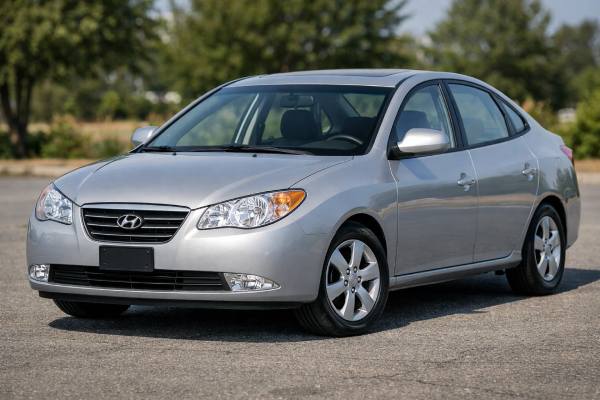
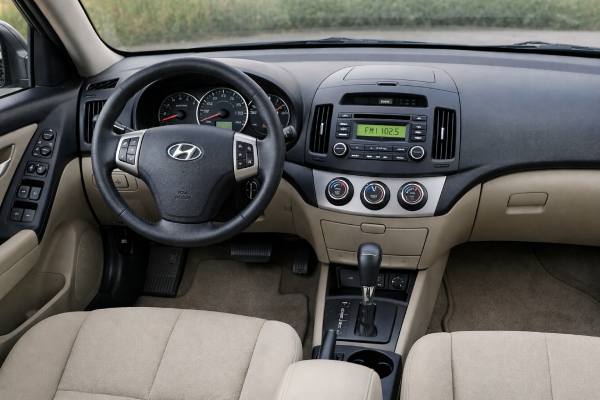
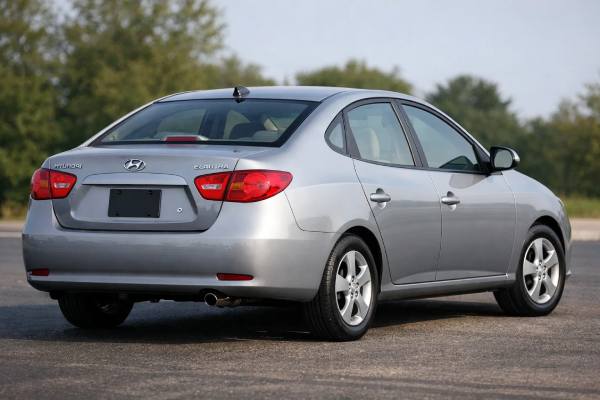
The Hyundai Elantra HD 1.6 CRDi is one of those compact sedans that becomes more appealing with age if you value substance over image. Sold during 2007–2010 with a 1.6-litre common-rail turbo-diesel, it paired useful low-end torque with a roomy body, straightforward front-wheel-drive engineering, and the kind of long-distance economy that still makes sense today. The HD generation was a big step forward for Hyundai in body stiffness, cabin space, and crash structure, even if it never tried to be the sportiest car in its class. For today’s buyer, the attraction is clear: you get a comfortable, practical sedan with a relatively simple diesel drivetrain and modest running costs. The caution is just as clear. At this age, service history, fuel-system health, steering condition, and corrosion matter more than trim level or brochure claims. Buy a sound one, and the Elantra HD diesel still feels rational and surprisingly capable.
What to Know
- The 1.6 CRDi’s 255 Nm torque output gives the HD stronger everyday pull than its modest power figure suggests.
- Cabin room is generous for a compact sedan, and the platform still feels stable on longer trips.
- Fuel economy remains one of the model’s biggest strengths, especially on open-road driving.
- EPS recalls, ABS recall history, and injector or EGR condition deserve careful checks before purchase.
- Change engine oil and filter every 10,000–12,000 km or 12 months, and shorten that interval in severe use.
Contents and shortcuts
- Elantra HD Diesel Overview
- Elantra HD 1.6 CRDi Figures
- Elantra HD Trim and Safety
- Common Problems and Recalls
- Long-Term Care and Used-Buy Checks
- On the Road and Fuel Costs
- HD Elantra Against Class Rivals
Elantra HD Diesel Overview
The HD-generation Elantra arrived at a point when Hyundai was moving from “good value” to genuinely competitive mainstream engineering. That shift is easy to see in this car. Compared with older Elantras, the HD is roomier, more mature, and more solidly tuned. It has a longer wheelbase than many buyers expect, a wide cabin for the class, and a calmer, more grown-up feel on the road. Even now, those qualities matter more than styling nostalgia.
The 1.6 CRDi version is the one that best suits the HD’s character if your driving includes regular highway use. The diesel does not turn the Elantra into a fast sedan, but it adds the kind of low-rpm shove that makes the car easier to use in real traffic. With 113 hp and about 255 Nm, it feels more muscular in the mid-range than a naturally aspirated petrol equivalent. That makes overtaking easier, improves relaxed cruising, and helps the Elantra carry passengers or luggage without feeling strained.
From an ownership perspective, the diesel has two big advantages. The first is efficiency. Even by current standards, a healthy HD 1.6 CRDi can deliver respectable real-world economy, especially outside the city. The second is mechanical clarity. This is still a relatively simple common-rail diesel from an era before driver-assistance complexity, downsized turbo-petrol heat management, and heavy electronic integration became normal. It has electronic systems, of course, but it still behaves like an old-school compact sedan in the workshop. That helps keep diagnosis and routine maintenance manageable.
The body shell also deserves more credit than it usually gets. The HD was engineered with a clear improvement in crash structure and restraint design over previous Elantras. In period testing it showed good frontal crash performance, though side-impact results were more mixed. That matches the car’s broader character: solid fundamentals, sensible engineering, and a few compromises typical of late-2000s compacts rather than any glaring design weakness.
Where buyers need to stay disciplined is in separating design quality from current condition. A well-kept HD diesel can still feel tight, stable, and economical. A neglected one quickly turns into a list of medium-cost fixes: steering issues, tired suspension, smoke, boost leaks, worn mounts, seized brakes, or rust hiding under fresh underseal. This is why the HD is not simply a cheap used Hyundai. It is a car that rewards careful selection.
In simple terms, the Elantra HD 1.6 CRDi works best for drivers who want a comfortable, efficient, honest sedan rather than something flashy. That was true when it was new, and it is still true now.
Elantra HD 1.6 CRDi Figures
For the 2007–2010 Elantra HD 1.6 CRDi, the most consistent public data points to the export-market manual sedan using Hyundai’s 1,582 cc four-cylinder common-rail turbo-diesel. Power is commonly listed as 115 PS, which corresponds to about 113 hp, and torque is generally quoted at 255 Nm. Some regional catalogues round figures differently, but the engineering picture stays the same.
| Powertrain and efficiency | Figure |
|---|---|
| Code | D4FB 1.6 CRDi |
| Engine layout and cylinders | Inline-4, DOHC, 4 cylinders |
| Valves per cylinder | 4 |
| Bore × stroke | 77.2 × 84.5 mm (3.04 × 3.33 in) |
| Displacement | 1.6 L (1,582 cc) |
| Induction | Turbocharged |
| Fuel system | Common rail direct injection |
| Compression ratio | About 17.3:1 |
| Max power | 113 hp (84.5 kW) @ 4,000 rpm |
| Max torque | 255 Nm (188 lb-ft) @ 1,900–2,750 rpm |
| Timing drive | Chain |
| Rated efficiency | Around 4.8–5.0 L/100 km (47.0–49.0 mpg US / 56.5–58.8 mpg UK) combined NEDC, depending on source and market |
| Real-world highway @ 120 km/h | Usually around 5.2–6.0 L/100 km in good condition |
| Transmission and driveline | Figure |
|---|---|
| Transmission | 5-speed manual |
| Drive type | FWD |
| Differential | Open |
| Chassis and dimensions | Figure |
|---|---|
| Suspension, front | MacPherson strut |
| Suspension, rear | Independent multi-link layout |
| Steering | Rack-and-pinion, motor-driven electric power steering on affected platform years |
| Steering ratio | Not consistently published in open diesel-specific data |
| Brakes | Front ventilated discs; rear discs on many export-market higher trims, though market variation exists |
| Wheels and tyres | 195/65 R15 common; 205/55 R16 on higher trims |
| Ground clearance | About 150–160 mm (5.9–6.3 in), market dependent |
| Length | 4,505 mm (177.4 in) |
| Width | 1,775 mm (69.9 in) |
| Height | 1,480–1,490 mm (58.3–58.7 in), market dependent |
| Wheelbase | 2,650 mm (104.3 in) |
| Turning circle, kerb-to-kerb | About 10.3–11.0 m depending on source and tyre package |
| Kerb weight | Roughly 1,260–1,315 kg (2,778–2,899 lb), depending on trim and market |
| GVWR | About 1,680–1,755 kg depending on regional spec |
| Fuel tank | 53 L (14.0 US gal / 11.7 UK gal) |
| Cargo volume | About 402 L (14.2 ft³) SAE-style / about 460 L (16.2 ft³) in many period export listings |
| Performance and capability | Figure |
|---|---|
| 0–100 km/h (0–62 mph) | About 11.7–12.1 s depending on market source |
| Top speed | About 184–188 km/h (114–117 mph) |
| Braking distance | No dependable open official figure for this exact diesel trim |
| Towing capacity | Market-dependent; verify by VIN and handbook |
| Payload | Commonly around 400–460 kg, depending on trim and registration spec |
| Fluids and service capacities | Figure |
|---|---|
| Engine oil | Use an owner-manual-approved diesel oil; 5W-30 or 5W-40 is common, with low-ash oil preferred where DPF is fitted; commonly catalogued around 5.3 L with filter |
| Coolant | Ethylene glycol coolant, normally 50:50 mix; exact fill varies by radiator and heater configuration |
| Manual transmission oil | API GL-4 manual transaxle fluid; commonly around 1.9–2.0 L |
| Differential / transfer case | Not applicable |
| A/C refrigerant | R134a; verify the charge on the vehicle label |
| A/C compressor oil | Verify from service data and system label |
| Key torque specs | Public diesel-specific torque data is inconsistent; confirm wheel nuts, drain plugs, caliper bolts, and mount fasteners from workshop documentation before service |
| Safety and driver assistance | Figure |
|---|---|
| ANCAP | 3 stars; overall score 19.81/37 for the July 2007-updated application |
| IIHS | Moderate overlap front: Good; side: Marginal; head restraints and seats: Acceptable |
| Headlight rating | Not applicable for this era |
| ADAS suite | None; no AEB, ACC, BSD, LKA, or Traffic Sign Assist |
What matters most is not one single number, but the overall shape of the data. The HD diesel is a compact sedan built around torque, range, and practicality. It is not quick enough to excuse a neglected example, but it is efficient enough to reward a good one.
Elantra HD Trim and Safety
The trim story on the HD is messy in the usual Hyundai way of that era: lots of market variation, fairly generous equipment, and names that changed depending on country. You will see badges such as SX, SLX, Elite, GLS, Comfort, Style, and region-specific combinations that do not always map neatly across brochures. That means used buyers should focus less on the trim badge and more on the actual equipment in front of them.
In practical terms, the 1.6 CRDi often sat in the middle or upper-middle part of the range because diesel buyers were usually expected to cover more distance and pay a bit more upfront. Many diesel cars therefore came with decent everyday equipment: air conditioning, power windows, central locking, ABS, multi-airbag setups, alloy wheels, trip computer functions, and sometimes climate control, leather trim, or parking aids depending on market. Some cars were plainly specified fleet-style sedans. Others were surprisingly complete. That spread is why paperwork and original brochure evidence matter.
Quick identifiers are easy enough once you know where to look. Wheel size is a good clue. Base cars often sat on 15-inch wheels, while better trims moved to 16-inch alloys. Side-airbag and curtain-airbag labeling helps identify safer versions. Climate-control panels, steering-wheel buttons, fog lamps, and seat trim can also reveal whether the car started life as an entry version or a better-equipped one. Since these cars are now old enough to have collected aftermarket radios, seat covers, and mixed parts, originality matters more than it did a decade ago.
Safety was a meaningful strength for the HD, but it needs to be read in period context. ANCAP’s result for the post-July-2007 application gave the Elantra 3 stars and 19.81 out of 37, applying to petrol and diesel variants with the updated rear door mechanism. Dual front airbags and ABS with EBD were standard in the tested Australian context, while side airbags, curtain airbags, and ESC varied by trim and market. That matters because a diesel Elantra with a fuller airbag set and ESC is a significantly more attractive used car than a basic one without them.
IIHS adds another useful layer. Frontal crash performance was strong, with a Good moderate-overlap rating applying to 2007–2010 models. Side performance was more mixed, rated Marginal for 2007–2010 cars built before December 2009, while head restraints and seats were rated Acceptable. That is a respectable safety profile for a late-2000s compact sedan, but it also shows the limits of the era. This is not a modern five-star-by-today’s-rules car. It is a structurally solid car with uneven side-impact performance and none of the active crash-avoidance features buyers now take for granted.
That last point matters when cross-shopping. There is no automatic emergency braking, no blind-spot monitoring, no lane support, and no calibration-heavy sensor suite. For some buyers, that simplicity is a plus. For safety-focused buyers, it is a reason to seek the best-equipped trim with the fullest restraint package and ESC if possible.
The smart buy, then, is not just “a diesel HD.” It is a diesel HD with the better safety hardware, believable service history, and trim features you will still appreciate after a year of ownership.
Common Problems and Recalls
The HD 1.6 CRDi has a better reputation for basic durability than many bargain diesels from the same era, but that does not mean it is carefree. Its problems follow a familiar pattern: diesel intake contamination, injector or glow-system aging, steering or electrical campaigns on certain platform years, and the normal suspension and brake wear of an older compact sedan.
The most common engine-side complaints are usually not catastrophic. EGR fouling, intake soot build-up, split intercooler or boost hoses, sticky vacuum controls, and tired MAF or MAP readings can all cause weak response, smoke, or limp-home behavior. The typical symptom chain is simple: the car feels flatter than it should, boost builds late, or there is visible smoke under load. In many cases the likely root cause is not a failed turbocharger at all, but dirty airflow control or leaking pipework. That is usually a low-to-medium cost fix if found early.
Injectors and fuel delivery deserve more respect. Hard starts, rough idle, diesel knock, white smoke on cold start, or excessive leak-off can point to injector wear or fuel-system imbalance. On a common-rail diesel, that moves the issue into the medium or high cost tier quickly. This is why a cold-start inspection matters so much. A warm engine can hide a lot. A cold one tells the truth about cranking speed, injector health, glow performance, and combustion quality.
Timing-chain anxiety is often overstated on these engines, but chain noise should never be ignored. Unlike a belt-driven engine, there is no fixed routine replacement interval in normal maintenance. That does not mean “lifetime.” Rattle at start-up, correlation faults, or persistent timing noise can indicate tensioner, guide, or chain wear, especially on engines that lived on stretched oil intervals. Oil quality matters more than owners sometimes realize on this point.
The driveline and chassis are more conventional. Clutch wear, dual-mass flywheel wear where fitted, gearshift-linkage looseness, front lower-arm bushes, drop links, wheel bearings, dampers, rear suspension bushings, and brake drag all show up with mileage and age. None of this is unusual. What matters is whether the car has had a sensible rolling refresh or whether everything has been left to wear out together.
Recalls and service actions are part of the story too, especially on platform-level issues. U.S.-market HD Elantras saw official action for the 2008 fuel pump sub-assembly campaign, 2007–2009 airbag weight-sensor connector contamination and ACU reprogramming, 2008–2009 EPS software update or unit replacement, and later ABS-module fire-risk action on 2007–2010 Korea-built cars. These campaigns do not always map directly to every export-market diesel sedan, but they do prove the point that VIN-based recall checking matters on the HD. A buyer should always check local official recall records and compare them with dealer invoices.
The summary is straightforward. There is no single reason to avoid the HD 1.6 CRDi. There are, however, several reasons to avoid a badly maintained one. The car rewards buyers who inspect systems, not just surfaces.
Long-Term Care and Used-Buy Checks
The Elantra HD diesel is easy to live with when it is serviced like a diesel, not like a disposable old sedan. That means short enough oil intervals, fuel-filter discipline, attention to airflow and vacuum plumbing, and honest inspection of the chain, clutch, and steering systems as the car ages. Neglect is what makes these cars feel expensive.
A practical service plan looks like this:
| Item | Practical interval | Notes |
|---|---|---|
| Engine oil and filter | Every 10,000–12,000 km or 12 months | Severe use: 7,500 km or less |
| Engine air filter | Inspect every service, replace around 15,000–30,000 km | Sooner in dusty conditions |
| Cabin filter | Every 12 months | Especially important for A/C performance |
| Fuel filter | Every 20,000–30,000 km | Critical for injector life |
| Coolant | Every 4–5 years or earlier if condition is poor | Use the correct antifreeze mix |
| Brake fluid | Every 2 years | Moisture affects pedal feel and component life |
| Auxiliary belt and tensioner | Inspect every service | Replace on cracking, noise, or glazing |
| Timing chain system | No fixed belt interval; inspect on rattle, poor history, or timing faults | Oil quality is critical |
| Glow plugs | Test before winter or on hard-start complaints | Replace as a set if needed |
| Manual gearbox oil | Refresh around 80,000–100,000 km or on unknown history | Use the correct GL-4 spec only |
| Tyres and alignment | Check monthly and during every service | Uneven wear often points to bushings or geometry |
| Battery and charging system | Test yearly after year 4 | Diesels are sensitive to poor cranking voltage |
| DPF checks | Only where fitted | Repeated short trips can create regeneration trouble |
For fluids, do not guess. Many owners use 5W-30 or 5W-40 diesel oil successfully, but the right answer depends on climate, emissions equipment, and the market handbook. DPF-equipped cars need the correct low-ash oil. Non-DPF cars still need a quality diesel specification, not bargain-bin generic oil. Manual transmission fluid should be the correct GL-4 grade, not GL-5 guessed in from a universal bottle. That kind of shortcut creates shift quality problems over time.
As a buyer, the inspection order matters. Start with the body and the paperwork. Check sills, arches, floor seams, subframe areas, brake and fuel lines, and signs of poor accident repair. Then check the cold start. A healthy HD 1.6 CRDi should fire cleanly, settle quickly, and pull evenly without clouds of smoke or a shaky idle. After that, inspect steering feel, clutch bite, gearbox shift quality, brake pull, suspension knocks, and whether the air conditioning and electrical systems work properly.
The best examples are usually mid- or upper-trim cars with full service records, clean underside condition, and evidence of adult ownership. The weakest buys are “cheap because diesel” cars with unclear injector history, overdue filters, steering warnings, smoke, or obvious suspension neglect. That is where false economy begins.
Long-term durability is decent if the body stays sound and service quality stays consistent. The HD is not especially demanding, but it is honest: it gives back what the owner puts into it.
On the Road and Fuel Costs
The Elantra HD 1.6 CRDi is not a sports sedan, but it is a very usable one. Its strongest quality on the road is composure. The car tracks neatly, feels stable at speed, and has the kind of calm, slightly mature tuning that makes daily commuting easy. Hyundai did not chase steering drama here. It chased predictability, and that still suits the car well.
The diesel powertrain fits that character. At low speeds, the 1.6 CRDi gives the Elantra more effortless shove than the numbers suggest. You feel it most in part-throttle use, where the car moves cleanly without needing big revs. That makes the HD easy in traffic and more relaxed on gradients than a naturally aspirated petrol. Turbo lag is present in the way all small diesels of the era show it, but it is mild enough that most drivers adapt quickly. Once boost builds, the car feels stronger in the middle of the rev range than a modest 113 hp rating implies.
The five-speed manual is part of that experience. It is not especially slick or sporty, but it usually matches the engine’s torque band well. The car works best when short-shifted and driven smoothly. If you try to wring it out like a hot hatch, the engine runs out of charm quickly. If you drive it as intended, it feels relaxed and efficient.
Ride quality is another plus. The independent rear suspension helps the HD feel more settled than some cheaper rivals with simpler rear layouts. On rougher roads it stays composed enough to feel like a proper family sedan rather than a budget special. Steering feel is light and not especially rich, but straight-line stability is good. NVH is typical of the class and era. Cold-start diesel clatter is obvious, but once warm the engine settles down reasonably well. Wind and tyre noise are present at highway speed, yet the car remains entirely usable for long trips.
Real-world fuel use is where the diesel really earns its place. In mixed driving, a healthy HD 1.6 CRDi often lands around 5.4–6.3 L/100 km. Open-road cruising can bring that closer to the low-5s, while heavy city use, winter conditions, or short-trip driving may push it into the high-6s. A steady 120 km/h run usually sits in the low-to-mid 5 L/100 km range if the tyres, alignment, and fuel system are all in good order. That gives the car respectable touring range from its 53-litre tank.
Braking feel is straightforward and confidence-inspiring when the system is maintained properly. The main caution is not brake design but neglected hardware: old fluid, sticky rear calipers where fitted, tired hoses, or uneven pad wear. A good HD brakes calmly. A neglected one feels cheaper than it should.
This is the essence of the driving verdict. The Elantra HD diesel is not memorable because it is thrilling. It is memorable because it is capable, calm, and efficient in the ways that matter most over time.
HD Elantra Against Class Rivals
The HD Elantra 1.6 CRDi sits in a crowded field of late-2000s compact diesels, and that is exactly where its value becomes easier to understand. Against cars such as the Ford Focus 1.6 TDCi, Toyota Corolla 2.0 D-4D, Volkswagen Jetta 1.9 TDI, Skoda Octavia 1.9 TDI, Renault Megane dCi, and Kia Cerato diesel, the Hyundai was rarely the class headline act. It was usually the quieter, more sensible choice.
Compared with a Focus diesel, the Hyundai gives away steering feel and driver involvement, but it often feels more straightforward and less demanding in day-to-day ownership. Compared with a Corolla diesel, it tends to offer better value at purchase price, though Toyota still keeps the stronger reputation advantage. Against a Jetta or Octavia TDI, the Elantra usually loses on badge cachet and sometimes resale confidence, but it can win on simplicity of ownership and lower buy-in cost. That matters because older compact diesels only make sense if the purchase leaves room for proper maintenance.
The HD also has a strong practical case. Cabin room is good, rear space is generous for the class, and the boot is genuinely useful. Some rivals may feel sharper or more premium, but not all of them feel more spacious. That balance of usable space, acceptable comfort, and diesel economy is what keeps the Elantra relevant.
Within the Elantra family, the 1.6 CRDi is arguably the sensible long-distance pick. The petrol models are easier for owners who do mainly short trips, but the diesel suits higher annual mileage much better. It gives the HD the torque and range the chassis always seemed to want. That does not make it the universal best choice. It does make it the best fit for buyers who spend time on faster roads and want lower fuel costs without moving into a larger car.
So where does the HD Elantra land overall? It is not the sharpest compact diesel of its era, and it is not the most prestigious. It is the rational one. If you want a roomy, efficient, well-behaved sedan with a relatively simple drivetrain and a lower purchase barrier than many rivals, it still makes a convincing case. The key is to buy the right example, not just the cheapest one.
References
- Hyundai Elantra | Safety Rating & Report 2007 (Safety Rating)
- 2007 Hyundai Elantra 2007 (Safety Rating)
- Recall Campaign 127: 2008 – 2009 Elantra (HD) and 2009 – 2010 Elantra Touring (FD) Software Update or EPS Replacement (TSB# 15-01-018) 2015 (Recall Database)
- Part 573 Safety Recall Report 20V-061 2020 (Recall Database)
- 2007 Elantra 2007 (Brochure)
Disclaimer
This article is for informational purposes only and is not a substitute for professional diagnosis or repair. Specifications, torque values, service intervals, procedures, and equipment can vary by VIN, market, build date, and trim, so always verify against the official service documentation for the exact vehicle before carrying out maintenance or making a buying decision.
If this guide helped you, please consider sharing it on Facebook, X, or another platform to support our work.