
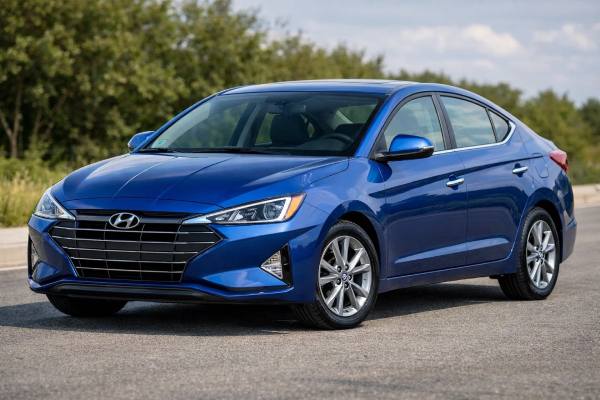
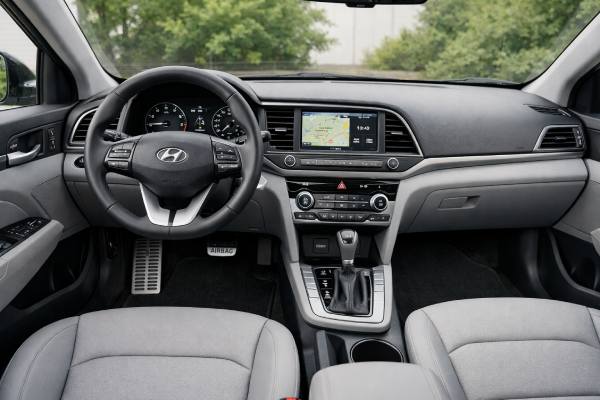
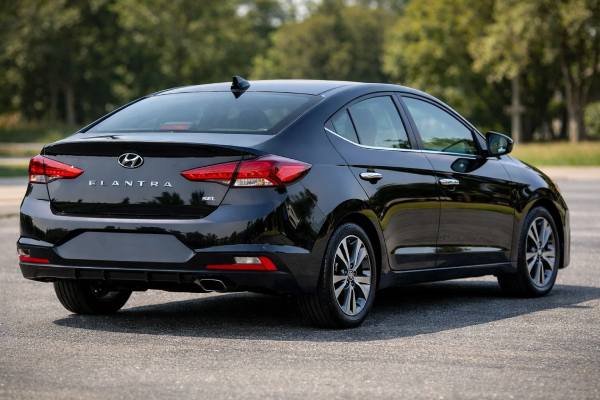
The facelifted Hyundai Elantra AD 1.4 T-GDi is a compact sedan built for buyers who want better everyday torque and cleaner fuel economy than a larger naturally aspirated petrol can usually deliver. In this 128 hp form, it is not a performance Elantra, but it is a more rounded car than the base engines, especially if you drive mixed urban and motorway miles. The 1.4 turbo suits the AD platform well because it adds mid-range pull without turning the car into a complicated high-output special. The facelift also sharpened the styling, refreshed some trim details, and kept the Elantra’s core strengths intact: a spacious cabin, easy controls, and strong safety credentials for the class. The ownership question is simple. Do you want a practical four-door that feels lighter and more flexible than its power figure suggests? If yes, this version makes a lot of sense, provided the service history is strong and the gearbox behaves properly.
Top Highlights
- The 1.4 T-GDi gives the Elantra stronger mid-range response than the basic naturally aspirated petrol versions.
- The cabin is roomy, the trunk is useful, and the facelift keeps the car modern enough for daily family use.
- Official safety results for the AD sedan family are strong, especially on the later facelift structure.
- Direct injection and the 7-speed dual-clutch setup make maintenance quality more important than on a simpler old compact.
- A realistic oil-service plan is every 8,000–10,000 km or 12 months, especially for short-trip use.
Start here
- Hyundai Elantra AD facelift basics
- Hyundai Elantra AD 1.4T specs
- Hyundai Elantra AD trims and safety
- Reliability patterns and campaigns
- Maintenance plan and buyer checks
- On-road feel and fuel use
- Facelift AD versus rivals
Hyundai Elantra AD facelift basics
The facelifted AD Elantra sits in an interesting space in Hyundai’s history. By 2019, Hyundai already knew how to build comfortable, well-equipped compact sedans, but it also needed the Elantra to look sharper and feel more contemporary. The facelift delivered that through a more angular front end, revised lamps, a new grille treatment, and a cleaner interior presentation. The result is a car that looks more assertive than the earlier AD without changing the core formula underneath.
That formula remains practical first. The Elantra is still a front-wheel-drive four-door sedan with a long wheelbase for the class, good rear-seat room, and a trunk large enough for real family or work use. That matters because many compact cars in this size class either push style and lose practicality, or chase value and feel too basic. The facelifted Elantra avoids both mistakes reasonably well. It stays easy to live with, and that is one of its strongest ownership advantages.
The 1.4 T-GDi version is especially important because it gives the platform the engine many drivers actually want. The naturally aspirated engines in this generation are serviceable, but the 1.4 turbo gives the Elantra more effortless shove in normal traffic. It does not need big revs to move cleanly, and it makes the car feel more relaxed when carrying passengers or merging onto faster roads. That does not make it sporty in the hot-sedan sense. It simply makes it better matched to modern traffic.
Another useful point is market variation. This engine was not the headline Elantra powertrain in every region, so trims, wheel sizes, safety equipment, and even gearbox pairings can vary. In North America, the 1.4 turbo was closely tied to the Eco trim and the 7-speed dual-clutch transmission. In other markets, equipment naming and feature packaging could differ. That means a used buyer should never rely only on badge or brochure memory. Confirm the exact VIN, wheel package, and equipment list on the actual car.
This version also reflects Hyundai’s broader engineering priorities of the time. The platform focused on aerodynamics, good cabin space, and a strong safety structure, while the turbo engine added efficiency and flexibility without the cost or weight of a larger powerplant. For the right owner, that blend is exactly the appeal. The car feels mature and sensible, but not slow-witted.
The caution is also clear. A direct-injection turbo engine and a dual-clutch gearbox ask more from maintenance quality than an old naturally aspirated compact with a conventional torque-converter automatic. That does not make the 1.4 T-GDi fragile. It means a good one is a very worthwhile buy, while a neglected one can become expensive faster than the badge might suggest.
Hyundai Elantra AD 1.4T specs
For the facelifted 2019–2020 1.4 T-GDi Elantra, the cleanest open official technical information comes from Hyundai’s 2019 Elantra specifications sheet and the model’s official pricing release. Those sources reflect the 1.4 turbo Eco configuration that carried the 128 hp rating and 7-speed dual-clutch transmission. Because market differences exist, some values below should still be confirmed by VIN before ordering parts.
Powertrain and efficiency
| Item | Hyundai Elantra AD Facelift 1.4 T-GDi |
|---|---|
| Code | Verify by VIN; public Hyundai material identifies the family as 1.4T Gamma turbo GDI rather than publishing a simple engine code |
| Engine layout and cylinders | Inline-4, 4 cylinders |
| Valvetrain | DOHC, 16 valves, 4 valves per cylinder |
| Bore × stroke | 71.6 × 84.0 mm (2.82 × 3.31 in) |
| Displacement | 1.4 L (1,353 cc) |
| Induction | Turbocharged |
| Fuel system | GDI direct injection |
| Compression ratio | 10.0:1 |
| Max power | 128 hp (95 kW) @ 5,500 rpm |
| Max torque | 212 Nm (156 lb-ft) @ 1,400–3,700 rpm |
| Timing drive | Chain |
| Rated efficiency | Around 7.1 L/100 km city, 6.2 highway, 6.7 combined in U.S. EPA terms, about 33 mpg US combined or 39.6 mpg UK |
| Real-world highway @ 120 km/h (75 mph) | Usually about 6.3–7.3 L/100 km in good condition |
Transmission and driveline
| Item | Data |
|---|---|
| Transmission | 7-speed dual-clutch automatic |
| Drive type | FWD |
| Differential | Open |
Chassis and dimensions
| Item | Data |
|---|---|
| Suspension front / rear | MacPherson strut front / coupled torsion beam axle rear on 1.4T Eco trim |
| Steering | Column-mounted motor-driven electric power steering |
| Brakes | Front ventilated discs / rear solid discs |
| Wheels and tyres | 195/65 R15 on 15-inch alloys for the Eco trim in official U.S. spec |
| Ground clearance | Verify by market and tyre package |
| Length / Width / Height | 4,620 / 1,801 / 1,435 mm (181.9 / 70.9 / 56.5 in) |
| Wheelbase | 2,700 mm (106.3 in) |
| Turning circle (kerb-to-kerb) | About 10.6 m (34.8 ft) |
| Kerb weight | About 1,296 kg (2,857 lb) for the Eco DCT in official U.S. spec |
| GVWR | About 1,760 kg (3,880 lb) in official U.S. Eco spec |
| Fuel tank | 53 L (14.0 US gal / 11.7 UK gal) |
| Cargo volume | About 408 L (14.4 ft³) seats up |
Performance and capability
| Item | Data |
|---|---|
| 0–100 km/h (0–62 mph) | Roughly 9.0–10.0 s depending on conditions |
| Top speed | Typically around 195–200 km/h (121–124 mph), market-dependent |
| Braking distance | No single public factory figure commonly published |
| Towing capacity | Verify by market; not a headline towing model |
| Payload | Verify by door sticker or VIN plate |
Fluids and service capacities
| Item | Data |
|---|---|
| Engine oil | Use the exact Hyundai-approved grade for the market; 5W-20 or 5W-30 commonly specified depending on climate and documentation |
| Engine oil capacity | Verify by VIN-specific manual before service |
| Coolant | Hyundai long-life coolant to the correct specification and mix ratio |
| Coolant capacity | Verify by VIN-specific manual |
| Transmission fluid | Verify by exact DCT service documentation |
| Differential / transfer case | Not separately serviced on this FWD layout |
| A/C refrigerant | Verify by under-bonnet label |
| A/C compressor oil | Verify by compressor type |
| Key torque specs | Use VIN-specific service data only |
Safety and driver assistance
| Item | Data |
|---|---|
| Crash ratings | Strong IIHS results for 2019–20 sedan family and 5-star ANCAP rating applying to all variants including turbo in that market |
| Headlight rating | Varies by headlamp specification; IIHS Top Safety Pick qualification depended on specific headlights and build timing |
| ADAS suite | Forward-collision mitigation, lane support, and related features depended on market and trim; the Eco baseline was not always the most heavily equipped version |
The spec sheet makes the character clear. The 1.4 turbo is the efficiency-focused engine with useful low-end torque, modest weight, and the DCT gearbox that helps the car feel more responsive than the paper figures alone suggest.
Hyundai Elantra AD trims and safety
The facelifted AD Elantra is one of those cars where trim structure matters more than many buyers realise. In the U.S. market, the 1.4 T-GDi was closely tied to the Eco trim, which tells you a lot about Hyundai’s intent. This was not the luxury Elantra and not the sporty Elantra Sport. It was the efficiency-minded trim for drivers who wanted the best mix of torque and fuel economy without stepping into the 1.6 turbo performance model.
That makes the Eco version appealing in a very specific way. You get the turbocharged engine and 7-speed dual-clutch transmission, but without the extra tyre cost, firmer ride, and higher hardware complexity of the stronger sport-oriented variant. Official U.S. equipment also paired it with 15-inch alloy wheels and relatively narrow tyres, which helps efficiency, ride comfort, and replacement cost. Those are good things for long-term owners.
In other regions, the same 1.4 T-GDi powertrain could appear under different trim names or equipment structures. Some markets added more comfort or safety features, while others focused more on value. That means quick identifiers matter. On the actual car, pay attention to wheel size, headlamp type, instrument cluster layout, screen size, and whether the car has market-specific driver-assistance features. The engine alone does not tell you the full story.
From a safety standpoint, the AD Elantra family is strong for its class and age. IIHS gave the 2019 Elantra very good crashworthiness results, and cars built after September 2018 benefitted from further passenger-side structural improvements. That is important because it means the facelift cars sit at the better end of the AD safety timeline. ANCAP also gave the Elantra five stars and stated that the rating applied to all variants including the turbo, which is especially useful for a 1.4 T-GDi article like this one.
The caveat is that driver-assistance content varies. Some Elantras of this generation qualified for top safety awards only with specific headlights and optional front crash-prevention equipment. In other words, do not assume every 1.4 T-GDi has the exact same active-safety package. Some will be well equipped, others will be more basic. That is why actual equipment inspection matters more than brochure memory.
Standard passive safety is better understood. The AD structure is solid, and curtain airbags, front side airbags, stability control, traction control, and anti-lock brakes were all part of Hyundai’s serious push to make the Elantra feel like a complete compact sedan rather than a budget compromise. That matters today, because even when infotainment ages, good structure and restraint hardware still matter every day.
For a used buyer, the best trim is not automatically the richest one. A cleaner, simpler 1.4 T-GDi with a known history is almost always the better buy than a more glamorous car with patchy servicing, accident repair, or missing recall documentation.
Reliability patterns and campaigns
The facelifted AD 1.4 T-GDi is generally a respectable used car, but it asks for a more informed ownership mindset than an older naturally aspirated Hyundai. The reason is not that the car is badly engineered. It is that the turbocharged direct-injection engine and dual-clutch transmission reward maintenance discipline and punish neglect faster than the simpler Elantras that came before.
The most common long-term issue pattern starts with direct injection. Because fuel is injected directly into the chamber rather than across the intake valves, intake carbon build-up is a realistic concern over time. Cars used mostly for short urban trips, low-quality fuel, and delayed oil changes are the most likely to develop rough idle, uneven cold starts, hesitant low-load running, or gradual performance loss. That does not mean every 1.4 T-GDi will suffer badly. It means the engine benefits from clean oil, good fuel, and regular long enough drives to fully warm through.
The second major watchpoint is the turbo and its support systems. This is not a high-boost performance unit, but boost-control issues, weak diverter or vacuum-related behaviour, and aging hoses can still create under-boost symptoms or inconsistent response. Many of these faults are moderate-cost rather than catastrophic, but they matter because owners sometimes misread them as “normal small turbo lag” until the issue becomes obvious.
The 7-speed dual-clutch transmission is the other big ownership topic. When healthy, it gives the Elantra crisp shifts and good economy. When neglected or worn, it can show low-speed judder, hesitant crawl behaviour, rough hot take-up, or awkward parking-speed engagement. Some low-speed oddness is normal in dry-clutch behaviour, but clear shudder, repeated hesitation, or warning messages are not. That is why a long, warm test drive is essential.
Cooling-system and general engine reliability are better news. There is no diesel aftertreatment to worry about, and the chain-driven timing system removes one major scheduled replacement item. That said, chain-driven does not mean ignore-it-for-life. Cold-start rattle, timing-correlation faults, or poor oil quality still deserve attention.
In campaign terms, the safest advice is market-specific verification. The AD Elantra family has seen official recall and service-campaign activity in some markets, and the exact list varies by VIN, build date, and region. That is why the smartest used-buyer habit is to run the VIN through Hyundai’s official recall and service-campaign checker and then confirm completion with dealer records. A seller saying “there are no recalls” is not evidence.
For reliability grading, the overall picture is:
- Common, low to medium cost: intake carbon build-up, coils or plugs, minor oil seepage, battery and charging complaints, suspension links and top mounts.
- Occasional, medium cost: turbo plumbing faults, cooling-system aging, DCT low-speed clutch complaints.
- Less common, higher cost: neglected DCT repairs, severe carbon-related drivability, or engine damage from long-term poor service.
A well-maintained car is usually straightforward. A neglected one quickly stops looking like a bargain.
Maintenance plan and buyer checks
The best way to own a 1.4 T-GDi Elantra well is to shorten the gap between “acceptable” maintenance and “smart” maintenance. On paper, many modern cars promise long service intervals. In real life, small turbo direct-injection engines respond far better to sensible preventive care, especially when the car does mixed city use.
A practical maintenance schedule looks like this:
| Item | Practical interval |
|---|---|
| Engine oil and filter | Every 8,000–10,000 km or 12 months |
| Engine air filter | Inspect every service; replace around 20,000–30,000 km |
| Cabin air filter | Every 12 months |
| Coolant | Inspect yearly; renew by the official time schedule or sooner if history is unclear |
| Spark plugs | Follow the exact plug interval for the engine and market; inspect earlier if misfire or rough idle develops |
| Fuel filter | Usually not a separate routine item in the same way as older cars; verify by VIN-specific service data |
| Timing components | Chain-driven; inspect for abnormal noise, stretch symptoms, or timing faults rather than replacing on a fixed belt interval |
| Auxiliary belt and hoses | Inspect every service |
| DCT service | Follow VIN-specific Hyundai guidance and check shift quality carefully |
| Brake fluid | Every 2 years |
| Brake pads and rotors | Inspect every service |
| Tyre rotation and alignment | Rotate every 10,000–12,000 km; align if wear becomes uneven |
| 12 V battery | Test from year 4 onward |
| Intake-system health | Watch for carbon-related rough running, especially on short-trip cars |
The most important fluid rule is simple: use the exact oil specification Hyundai requires for the engine and market, not a close-enough substitute. This matters because turbocharged direct-injection engines depend heavily on oil quality for chain tension, turbo health, and deposit control. Saving a little on oil often costs more later.
The buyer’s checklist should be strict:
- Start the engine fully cold.
- Listen for chain rattle, ticking, or uneven idle.
- Check for misfire feel during the first few minutes.
- Drive the car long enough for the transmission to warm up.
- Test low-speed crawl, parking manoeuvres, and repeated stop-start traffic.
- Check tyre wear for alignment or suspension clues.
- Verify recall and campaign completion by VIN.
- Ask for proof of oil changes, not just general service stamps.
Common reconditioning items on used examples include tyres, front brakes, batteries, coils, top mounts, and smaller suspension links. None of those is alarming. The red flags are weak warm shifting, rough cold starts, persistent check-engine lights, or a service history that does not clearly show regular oil care.
The versions to seek are the cars with complete records, clean warm behaviour, and no DCT drama. The ones to approach carefully are low-mileage short-trip cars with shiny paint but thin service evidence. Long-term durability is good enough to justify ownership, but only when the maintenance standard matches the engine’s needs.
On-road feel and fuel use
The facelifted Elantra 1.4 T-GDi drives like a compact sedan tuned for easy daily use rather than excitement. That sounds modest, but it is actually one of the car’s strongest qualities. The steering is light, the visibility is good, and the car feels simple to place in traffic. Around town, it feels smaller than its cabin suggests. On faster roads, it settles into a relaxed, grown-up rhythm.
The engine is the biggest contributor to that character. The 1.4 turbo does not deliver a dramatic rush, but it makes the Elantra feel lighter on its feet than the basic naturally aspirated engines. Most of the benefit comes in the middle of the rev range, where the torque arrives early and helps the car pull cleanly without needing constant downshifts. That makes normal overtakes and motorway merges easier, which is exactly what buyers in this segment usually want.
The 7-speed dual-clutch gearbox suits the engine on paper and often in practice. When healthy, it helps the Elantra feel alert and efficient, and it uses the small turbo’s torque curve well. In normal driving it is better judged as efficient and responsive rather than luxurious. Low-speed creep is the area where its character differs most from a conventional automatic. It can feel slightly mechanical at parking speeds, which is normal. Harsh or shaky behaviour is not.
Ride quality is pleasant, especially on the smaller-wheel 1.4T setup. The Eco-oriented tyre and wheel package helps the car absorb rough roads better than some higher-spec trims on larger wheels. That is one reason the 1.4 turbo can actually feel more cohesive than richer versions. It gives up some visual drama, but it gains everyday refinement.
Highway refinement is solid for the class. The AD platform is reasonably quiet, and the facelifted car feels mature at cruising speed. Wind and tyre noise are controlled well enough that the Elantra works as a real long-distance commuter, not just a city car with a trunk.
Fuel economy is one of the model’s quiet strengths. Official combined figures around 33 mpg US make sense for a roomy petrol sedan with a useful torque band. In real life, many healthy cars should deliver around 6.5–7.5 L/100 km in mixed driving, with steady highway work often landing lower. Cold weather, short trips, aggressive throttle use, and stop-start traffic will push that higher, especially because the direct-injection turbo motor is most efficient once fully warm.
The overall verdict on the road is clear. The 1.4 T-GDi does not turn the Elantra into a sports sedan, but it does give the car the responsiveness and flexibility it needs to feel genuinely modern and easy to live with.
Facelift AD versus rivals
The facelifted AD 1.4 T-GDi competes best when you compare it to other practical compact sedans rather than to premium sport compacts. Its natural rivals include cars such as the Honda Civic 1.5T, Toyota Corolla 1.2T or 1.6 petrol in some markets, Volkswagen Jetta 1.4 TSI, Skoda Octavia 1.4 TSI, and Kia Cerato/Forte equivalents. Against those cars, the Elantra’s strongest argument is balance.
Where it often wins is value. The Elantra gives you generous cabin room, a proper trunk, good safety structure, and a flexible turbocharged engine without the inflated image premium that some rivals carry in the used market. Hyundai also did a solid job with everyday comfort. The car feels mature enough in ride and noise control that it does not come across as a cheap compromise.
Against the Civic 1.5T, the Elantra is usually the calmer and more conservative choice. The Honda may feel sharper and more technically ambitious, but the Hyundai often feels simpler and less expensive to buy. Against a Jetta or Octavia 1.4 TSI, the Hyundai gives up some European cabin flavour and sometimes the most polished chassis feel, but it can match or beat them on space-value and ownership cost. Against a Corolla, the Hyundai usually feels more modern in outright engine response when both are petrol turbos, though Toyota retains the stronger long-term reliability image.
The Elantra’s weak points are not hard to identify. It does not have the sharpest steering in the class. Its torsion-beam rear suspension on the 1.4T Eco-style setup is competent rather than special. The 7DCT requires more care than a simple torque-converter automatic. And the direct-injection engine means long-term intake cleanliness matters more than on older port-injected rivals.
Those caveats do not ruin the car. They simply define the right owner. The best buyer for this Elantra is someone who wants a roomy, modern-looking compact sedan with better-than-basic torque, real motorway comfort, and sensible running costs, and who is prepared to value service history properly. The wrong buyer is someone who wants a zero-maintenance appliance or a true enthusiast car.
Overall, the facelifted AD 1.4 T-GDi is one of the more underappreciated compact sedans of its period. It is not class-defining in any single category, but it is consistently good in the areas that matter most: space, safety, efficiency, and daily usability. With the right history and the right inspection, it can be a smarter used buy than more obvious rivals.
References
- Hyundai Announces Pricing for Redesigned 2019 Elantra 2018
- 2019 Elantra Specifications 2018
- 2019 Hyundai Elantra 2026 (Safety Rating)
- Hyundai Elantra | Safety Rating & Report | ANCAP 2016 (Safety Rating)
- Home | Hyundai Recalls & Service Campaigns 2026 (Recall Checker)
Disclaimer
This article is for informational purposes only and is not a substitute for professional diagnosis or repair. Specifications, torque values, intervals, procedures, and equipment can vary by VIN, market, trim, build date, and transmission, so always verify all technical details against the official service documentation for the exact vehicle.
If this guide helped you, please consider sharing it on Facebook, X/Twitter, or other social platforms to support our work.