
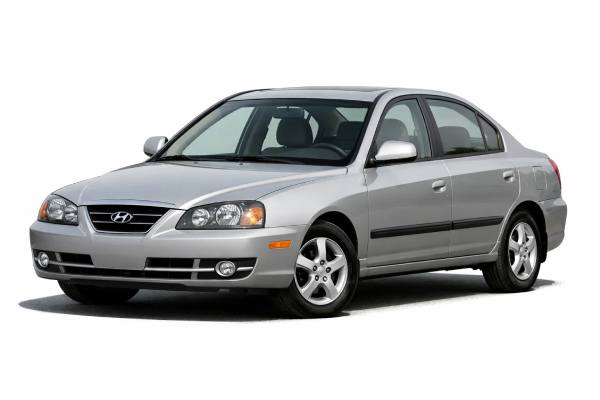
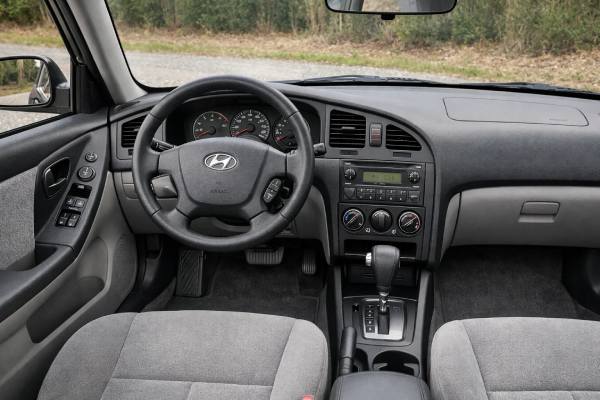

The facelifted Hyundai Elantra XD 1.5 CRDi is one of those cars that makes more sense the longer you look at it. It is not flashy, and it never aimed to be. What it offers instead is a roomy compact body, a torquey small diesel, straightforward front-wheel-drive engineering, and the kind of mechanical simplicity that can still make sense in today’s used market. The 2003 update sharpened the styling, improved cabin trim, and broadened equipment, while the 103 hp common-rail diesel added the low-speed pull and fuel economy many buyers wanted. The biggest attraction now is value: you get a comfortable family car with honest long-distance ability and relatively simple hardware. The main caution is age. Rust, worn suspension, tired diesel ancillaries, and patchy service history matter more than the badge. Buy one with clean structure, proof of proper maintenance, and a healthy fuel system, and the XD diesel can still be an unexpectedly sensible old-school daily driver.
Fast Facts
- Strong low-end torque and modest fuel use are the main reasons to choose the 1.5 CRDi.
- The XD platform offers useful cabin room and a proper family-car feel without oversized running costs.
- Facelift cars look cleaner, and many markets got better trim and safety equipment than early XD versions.
- Corrosion, injector condition, and neglected cooling or turbo plumbing are bigger risks than the engine’s headline power figure.
- A sensible oil-service rhythm is every 10,000–12,000 km or 12 months, with shorter intervals for hard city use.
Section overview
- Elantra XD Diesel in Context
- Elantra XD 1.5 CRDi Specs
- Elantra XD Trims and Protection
- Trouble Spots and Service Notes
- Service Calendar and Buyer Checks
- Daily Driving and Diesel Economy
- Elantra XD Against Competitors
Elantra XD Diesel in Context
The facelifted XD sits in the part of the market where Hyundai stopped being merely cheap and started becoming properly competitive. By 2003, the Elantra had already become a more mature car than the brand’s older compact efforts. The facelift cleaned up the front and rear styling, improved cabin presentation, and gave the range a more solid feel. It was still conservative, but in a good way. Buyers got a roomy compact car with fully independent suspension, four-wheel disc brakes on the better-equipped versions, and a layout that felt closer to mainstream Japanese and European rivals than older budget Hyundais had managed.
The 1.5 CRDi matters because it changes the car’s character. Petrol XD models are easy enough to own, but the diesel suits the Elantra’s relaxed, practical nature better. With 103 hp and a useful 240 Nm, it is not fast in a dramatic sense, yet it feels stronger than the number suggests because the torque arrives early. That makes it more satisfying on everyday roads, especially when carrying passengers or cruising at medium speeds. It also turns the XD into a credible long-distance budget car rather than just a cheap compact runabout.
One detail that deserves honesty is the exact market story. Open public sources agree on the facelifted 1493 cc common-rail diesel with 103 hp and 240 Nm, but they are not perfectly consistent about every regional trim, body style, or engine-code label. Late facelift cars are commonly catalogued under the D4FA family, while some period listings focus only on displacement and output. That means buyers should always confirm the actual engine code from the VIN or the engine stamp before ordering timing components, sensors, or fuel-system parts. On an older Hyundai diesel, that simple check can save time and money.
Body style also matters. The facelift-era 1.5 CRDi appears in both four-door and five-door catalogues depending on market. The sedan gives a more traditional profile and slightly smaller quoted cargo space, while the hatchback is the more useful shape if you regularly carry bulky items. Mechanically, though, the experience is much the same. You still get a compact front-wheel-drive diesel with a five-speed manual, a relatively light body, and straightforward packaging.
The real appeal today is not that the XD was the class leader. It was not. The appeal is that it is honest. It offers enough torque, enough room, enough comfort, and enough economy to stay relevant as an older used car, provided you buy condition rather than price alone. That is what keeps this facelift diesel interesting.
Elantra XD 1.5 CRDi Specs
Because the exact facelift 1.5 CRDi was sold differently across markets, the cleanest way to present the technical picture is to separate the diesel powertrain from the shared XD facelift chassis data. The 103 hp diesel is consistently listed as a 1493 cc common-rail turbo-diesel with 240 Nm and a five-speed manual, while sedan and hatch versions share the same basic platform dimensions and differ mainly in luggage volume and some trim-related weight details.
| Powertrain and efficiency | Figure |
|---|---|
| Code | Commonly catalogued as D4FA on late facelift cars; verify by VIN or engine stamp |
| Engine layout and cylinders | Inline-4 turbo-diesel |
| Valvetrain | Commonly catalogued as DOHC, 16 valves |
| Valves per cylinder | 4 |
| Bore × stroke | 75.0 × 84.5 mm (2.95 × 3.33 in) |
| Displacement | 1.5 L (1493 cc) |
| Induction | Turbocharged |
| Fuel system | Common rail direct injection |
| Compression ratio | Widely catalogued around 17.8:1 |
| Max power | 103 hp (76 kW) @ 4000 rpm |
| Max torque | 240 Nm (177 lb-ft) @ 2000 rpm |
| Timing drive | Commonly listed as chain on late 1.5 CRDi engine-family data; confirm on the exact engine code |
| Rated efficiency | 5.3 L/100 km (44.4 mpg US / 53.3 mpg UK) combined, commonly cited for the facelift 1.5 CRDi |
| Real-world highway @ 120 km/h | Usually about 5.0–5.8 L/100 km in healthy condition |
| Transmission and driveline | Figure |
|---|---|
| Transmission | 5-speed manual |
| Drive type | FWD |
| Differential | Open |
| Chassis and dimensions | Sedan | Hatchback |
|---|---|---|
| Suspension, front | MacPherson strut | MacPherson strut |
| Suspension, rear | Independent rear layout | Independent rear layout |
| Steering | Hydraulic power steering | Hydraulic power steering |
| Brakes | Ventilated front discs / rear discs | Ventilated front discs / rear discs |
| Wheels and tyres | 185/65 R15 common | 185/65 R15 common |
| Ground clearance | 160 mm (6.3 in) | 160 mm (6.3 in) |
| Length | 4496 mm (177.0 in) | 4496 mm (177.0 in) |
| Width | 1720 mm (67.7 in) | 1720 mm (67.7 in) |
| Height | 1425 mm (56.1 in) | 1425 mm (56.1 in) |
| Wheelbase | 2611 mm (102.8 in) | 2611 mm (102.8 in) |
| Kerb weight | about 1301 kg (2869 lb) | about 1301 kg (2869 lb) |
| Fuel tank | 54.9 L (14.5 US gal / 12.1 UK gal) | 54.9 L (14.5 US gal / 12.1 UK gal) |
| Cargo volume | 365 L (12.9 ft³) | 413 L (14.6 ft³) |
| Performance and capability | Figure |
|---|---|
| 0–100 km/h (0–62 mph) | Not consistently published in open sources for the exact export 103 hp trim |
| Top speed | Not consistently published in open sources for the exact export 103 hp trim |
| Braking distance | No reliable period open-source figure for this exact diesel trim |
| Towing capacity | Market-dependent; verify from VIN and handbook |
| Payload | Market-dependent; verify from registration data |
| Fluids and service capacities | Figure |
|---|---|
| Engine oil | Diesel-rated 5W-30 or 5W-40 depending climate and approval; commonly cited around 5.3 L with filter for the late 1.5 CRDi engine family |
| Coolant | Ethylene glycol coolant for aluminium radiators, typically 50:50; open engine-family data often lands around 5.3–5.5 L |
| Manual transmission oil | API GL-4 75W-90; XD owner data often cites about 2.15 L for the 5-speed manual transaxle family |
| Brake fluid | DOT 3 or DOT 4 as specified |
| Power steering fluid | PSF-type fluid; exact fill quantity varies with service operation |
| A/C refrigerant | R134a; charge varies by body style and market, so use the under-bonnet label |
| Key torque specs | Use VIN-specific workshop data; open public torque figures for this exact diesel facelift are inconsistent |
| Safety and driver assistance | Figure |
|---|---|
| Euro NCAP | Open public records for this exact facelift diesel are limited; XD-era platform references commonly cite a 3-star period result |
| IIHS | 2004–06 moderate-overlap frontal rating: Good for the 4-door sedan platform after airbag revisions |
| Headlight rating | Not applicable for this era |
| ADAS suite | None; no AEB, ACC, lane support, BSD, or traffic-sign assist |
The most important thing about the numbers is not raw performance. It is how neatly they fit the car’s mission. The XD diesel is about torque, range, and ease, not outright speed.
Elantra XD Trims and Protection
The facelift XD was sold in a wide mix of trims, and that matters more than many buyers expect. Hyundai often bundled equipment generously, but the exact names and combinations changed by region. You will see badges such as GSi, GLS, CDX, GT, and other local variations. Instead of chasing the badge alone, it is smarter to look at the physical equipment on the car. On a 2003–2006 Elantra, the important items are air conditioning, ABS, airbag count, trim fabric condition, wheel size, rear-seat folding arrangement, and whether the car is a sedan or five-door.
The four-door is the quieter, more traditional option. It feels like the calmer family choice and usually has cleaner luggage separation. The five-door is the more versatile car and, in many markets, leaned slightly sportier in presentation. Facelift hatchback literature also points to a stiffer setup and a spoiler on GT-oriented versions, so there can be a small functional difference in feel as well as appearance. The diesel powertrain, however, stays the main story. You are buying the torque-rich engine and the economy more than a meaningful chassis split between trims.
Useful trim identifiers include wheel design, fog lamps, cloth versus leather trim, radio type, climate-control layout, spoiler fitment on hatchbacks, and airbag labeling on the steering wheel and dashboard. The facelift also brought the backlit instrument cluster with black dials and white lettering, which is one of the easiest cabin clues that you are looking at the later XD rather than the earlier 2000–2003 car. If originality matters, the safest route is to compare the car with a period brochure or handbook before assuming everything still matches factory specification.
Safety is best understood in honest period terms. This is still a pre-ADAS compact car. There is no automatic emergency braking, lane keeping, blind-spot monitoring, or radar cruise. What mattered then was structure, airbags, ABS, and seat design. The facelift improved the car’s overall case by broadening equipment and, in some markets, revising restraint hardware. IIHS testing is the clearest verified platform reference in open public sources: the 2004–06 sedan earned a Good moderate-overlap frontal rating after Hyundai revised the airbag setup, though the same IIHS page also shows poor side-test and head-restraint results by modern standards. That is a fair summary of the whole safety picture: stronger than some people expect for the era, but still far behind newer cars in side-impact and whiplash protection.
For family buyers, the child-seat question is simple. Check the actual car. Some period XDs offered ISOFIX or LATCH anchors depending on market and trim, while others rely on conventional seat-belt installation only. The same goes for ABS and side airbags. They exist in the facelift range, but they are not universal enough to assume.
The best ownership approach is therefore trim-by-trim realism. Seek the car with the equipment you genuinely want, but never let extra trim distract you from the basics. On a 20-year-old diesel Elantra, condition beats specification every time.
Trouble Spots and Service Notes
The facelift XD 1.5 CRDi is not known for one spectacular built-in disaster. Its problem profile is more typical of an older common-rail diesel: age, wear, contamination, and neglected maintenance. That usually makes diagnosis easier, but it also means buyers need to inspect the car as a whole rather than hunting for a single famous fault.
Common, low-to-medium cost issues tend to cluster around intake and fuel-system aging. Sooted EGR valves, split boost hoses, sticky turbo control hardware, tired vacuum lines, and dirty intake plumbing can make the car feel weaker than it should. Symptoms include flat acceleration below 2500 rpm, smoke under load, limp-home behavior, uneven boost, or a generally lazy response. The likely causes are soot build-up, hose leaks, or age-hardened control plumbing. The usual remedy is cleaning, replacing tired hoses, and checking boost control operation rather than assuming the turbocharger itself is automatically bad.
Injector condition is the next big checkpoint. Hard starting, diesel knock, rough idle when cold, excessive smoke, or a sharp drop in fuel economy can point to poor injector spray, leak-off issues, or rail-pressure problems. This is a medium-to-high cost area because common-rail parts are not cheap relative to the car’s value. A smart pre-purchase inspection should include cold-start behavior and, ideally, a leak-off or balance check. A cheap XD diesel with a weak fuel system quickly stops being a bargain.
Turbo-related trouble is occasional rather than guaranteed, but age matters. Oil-feed neglect, dirty oil, and short-trip use can leave the variable-geometry hardware sticky or the turbo seals tired. Symptoms are whistle changes, blue smoke, boost lag, or sudden power loss. Remedy ranges from hose and control-side fixes to a rebuild or replacement. The good news is that many supposed turbo failures on old diesels turn out to be plumbing or EGR faults first.
The chassis is simpler and predictable. Front control-arm bushes, drop links, dampers, top mounts, wheel bearings, and rear suspension bushes are all wear items at this age. The XD can still drive well, but only if the suspension has not been allowed to age all at once. If the car feels floaty, knocks over broken surfaces, or eats tyres, expect a catch-up suspension bill. Steering racks can also seep with age, and engine mounts often soften enough to add diesel vibration at idle.
Rust is the highest-severity issue. Check the rear arches, sills, floor edges, front and rear subframe mounting points, fuel and brake lines, and the underside around suspension pick-up areas. Cosmetic rust is manageable. Structural corrosion is what kills the deal. On an XD, body condition is often the factor that decides whether the car is worth repairing at all.
Recall and service-action history is worth checking, but it needs context. U.S.-market XD recalls covered issues such as airbag-related occupant-classification reprogramming and a fuel-hose-clamp problem identified after crash testing. Those actions do not always map directly onto export 1.5 CRDi cars, but they do show why VIN-based history matters. The correct rule is simple: check official records for the actual market, then compare that with dealer or invoice history. On an older Hyundai, paperwork still matters.
Service Calendar and Buyer Checks
A good XD diesel does not need heroic maintenance. It needs consistent maintenance. That is an important difference. The 1.5 CRDi is happiest when oil changes are not stretched, the fuel system stays clean, and the cooling and intake systems are treated as service items instead of waiting for failure. Since many surviving cars are now on mixed service records, the smartest move after purchase is often to baseline the car properly.
| Item | Practical interval | Notes |
|---|---|---|
| Engine oil and filter | 10,000–12,000 km or 12 months | Shorter if mostly city, short trips, or hot climate |
| Engine air filter | Inspect every 15,000 km | Replace sooner in dusty use |
| Cabin filter | Every 12 months | If fitted on your market version |
| Fuel filter | 20,000–30,000 km | Critical on an older common-rail diesel |
| Coolant | Every 2–3 years | Use correct antifreeze, not plain water |
| Brake fluid | Every 2 years | Moisture ruins braking feel and internal parts |
| Auxiliary belt and tensioner | Inspect every service | Replace at first signs of cracking or chirp |
| Timing chain system | Inspect on noise, rattle, poor timing correlation, or unclear engine history | No routine belt interval, but do not ignore chain noise |
| Glow plugs and glow control | Test before winter and on hard-start complaints | Cheap to catch early, expensive if ignored |
| Manual gearbox oil | Refresh on unknown history or about every 80,000–100,000 km | Use correct GL-4 fluid only |
| Tyres and alignment | Check monthly and at each service | Uneven wear usually points to suspension issues |
| Battery and charging system | Test yearly after battery age exceeds 4 years | Diesels are sensitive to weak cranking voltage |
| Rust prevention and underside inspection | At least yearly | Essential for long-term survival |
For fluids, use diesel-rated oil that matches the climate and the engine’s condition. For the commonly catalogued late 1.5 CRDi family, open engine data often points to about 5.3 L with filter and coolant in the mid-5-litre range, but this is exactly where VIN confirmation matters. Manual transaxle fill for the XD family is commonly listed around 2.15 L with API GL-4 75W-90. Brake fluid should be DOT 3 or DOT 4 as specified, and power steering fluid should match Hyundai’s approved type. A/C refrigerant remains R134a on facelift XD cars, but charge quantity should always be taken from the under-bonnet sticker.
As a buyer, ask for five things first: proof of oil services, proof of fuel-filter changes, evidence of cooling-system work, clutch history, and any invoice trail for injectors, turbo hoses, or suspension refresh. Then inspect the shell. Check sills, arches, floor seams, jacking points, rear suspension mounting areas, and the condition of the brake and fuel pipes. On the test drive, insist on a cold start. A healthy 1.5 CRDi should start cleanly, idle evenly after a brief settle, and pull with solid low-end torque. Excessive smoke, a lazy turbo response, or a shaky idle are red flags.
The best cars are later facelift manuals with clean structure, working air conditioning, ABS, and obvious evidence of adult maintenance. The cars to avoid are the overly cheap ones with fresh underseal over crusty metal, vague injector behavior, no fuel-filter history, and sellers who describe diesel smoke as normal. Long-term durability is good enough if the body stays solid and the maintenance baseline is restored. If not, the Elantra becomes a chain of small bills.
Daily Driving and Diesel Economy
The XD 1.5 CRDi is a better driving car than its image suggests, as long as expectations are realistic. It does not feel sporty, but it feels settled. The steering is light, the controls are easy, and the chassis has a calm, mature balance that suits long commutes and ordinary roads. The main advantage of the diesel is not speed from a standstill. It is the way the car gathers itself once rolling. With 240 Nm arriving low in the rev range, the Elantra feels more flexible than a modest 103 hp rating implies.
In town, that means fewer downshifts and less throttle than you might expect from an older compact diesel. It is not silent, and there is the usual cold-start diesel clatter, but once warm it becomes quite usable and relaxed. On secondary roads, the engine’s torque helps it flow better than the petrol 1.6, especially with passengers on board. The manual gearbox suits the engine well because it lets you hold the torque band without fuss. It is the kind of car that feels strongest from mid-range rather than at the top end.
Ride and handling are a good match for the car’s purpose. The independent rear suspension gives the XD a more composed feel than some budget compact rivals of its time. It tracks neatly on open roads, deals with mid-corner bumps without getting too flustered, and remains predictable rather than playful. The downside is that worn examples lose this polish quickly. Tired dampers, old bushes, and cheap tyres can make the same car feel noisy and loose. So any road-test verdict on an XD depends heavily on condition.
Noise levels are period-correct. You hear the engine, especially from cold. Wind and tyre noise are more obvious than in a newer compact. But at a steady cruise, the car settles into a usable rhythm, and the diesel’s economy makes the trade-off feel fair. Real-world consumption is one of the model’s strongest points. A healthy car can often manage around 5.2–6.0 L/100 km in mixed use, roughly 4.8–5.6 on a gentle highway run, and around 6.5–7.5 in heavy urban traffic or winter conditions. Bad injectors, underinflated tyres, dragging brakes, or a clogged intake can push those numbers noticeably higher, so fuel economy is also a good health indicator.
Braking feel is straightforward and confidence-inspiring when the hardware is healthy. Pedal feel should be firm and easy to modulate. Any pulling, pulsing, or long travel suggests overdue brake work. Load carrying is also in the XD’s favor. Even the sedan is usefully sized, while the hatchback is genuinely practical. This is part of why the diesel powertrain works so well here. The car feels built for carrying people and luggage efficiently, not just impressing on a short test drive.
That is the lasting verdict on the road. The Elantra XD 1.5 CRDi is not exciting, but it is easy to understand, easy to live with, and pleasantly competent when in good order. For many owners, that is the exact kind of good it needs to be.
Elantra XD Against Competitors
The XD diesel makes the strongest case when compared with rivals on value and simplicity rather than brand prestige. Against period cars such as the Ford Focus 1.8 TDCi, Toyota Corolla 2.0 D-4D, Skoda Octavia 1.9 TDI, Renault Megane dCi, and Opel Astra CDTi, the Hyundai was rarely the enthusiast’s first choice. It usually lost on image and sometimes on outright refinement. What it gave back was a lower entry price, generous equipment in many trims, and a straightforward ownership experience when properly maintained.
Compared with a Focus diesel, the Elantra is less sharp to drive but usually calmer and less eager to turn every road into an event. Compared with a Corolla diesel, it is often cheaper to buy and roomier-feeling for the money, though Toyota’s reputation still carries more weight. Against the Octavia 1.9 TDI, the Hyundai tends to lose on drivetrain reputation and parts-network familiarity, but it can still win on purchase price and equipment level if you find a clean example. That is the pattern throughout: the XD is rarely the class benchmark, but it is often the quiet value play.
The best reason to choose the Elantra over those rivals today is not nostalgia. It is budget efficiency. If two cars need similar catch-up maintenance, the Hyundai often costs less to buy in the first place, leaving more room to sort rust, suspension, filters, fluids, and tyres properly. That matters because on old diesels, the cheapest sticker price is never the real cost. The smarter buy is the car that leaves you with enough budget to bring it back to a solid standard.
Within the XD range, the 1.5 CRDi is the sensible middle ground for drivers who value torque and economy more than outright pace. The 2.0 CRDi offers more shove, but the smaller diesel already does the everyday job well and usually feels like the more balanced budget choice. The petrols remain easier for short-trip owners, but for anyone doing regular open-road mileage, the 1.5 CRDi makes the most sense.
So how does it compare to rivals in one sentence? It is the compact diesel for buyers who want a capable, roomy, honest family car and are willing to trade some image and polish for lower buy-in cost and refreshingly straightforward utility. If that sounds like your kind of car, the facelift XD still deserves a serious look.
References
- 2004 Hyundai Elantra Sedan Photos, engines & full specs 2024 (Technical Data)
- 2004 Hyundai Elantra 5 Doors Photos, engines & full specs 2024 (Technical Data)
- 2004 Hyundai Elantra 2004 (Safety Rating)
- Vehicle Detail Search – 2005 HYUNDAI ELANTRA 4 DR 2005 (Recall Database)
Disclaimer
This article is for informational purposes only and is not a substitute for professional diagnosis or repair. Specifications, torque values, service intervals, procedures, and equipment can vary by VIN, market, body style, engine code, and trim, so always verify against official service documentation for the exact vehicle before carrying out maintenance or making a purchase decision.
If this guide helped you, please consider sharing it on Facebook, X, or another social platform to support our work.