
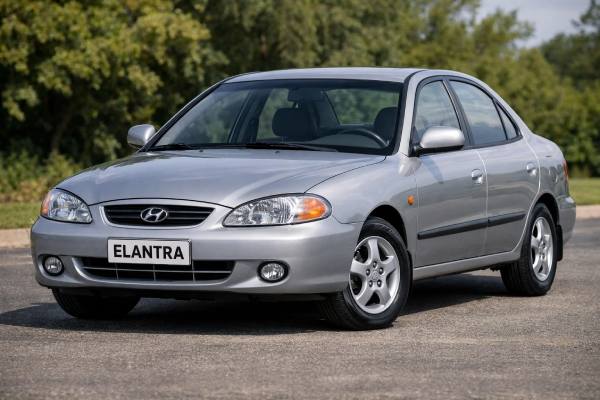
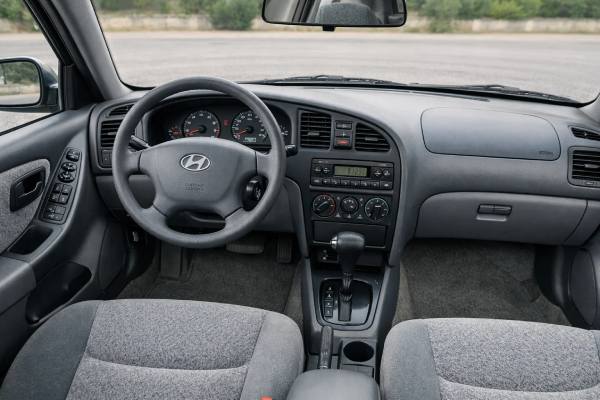
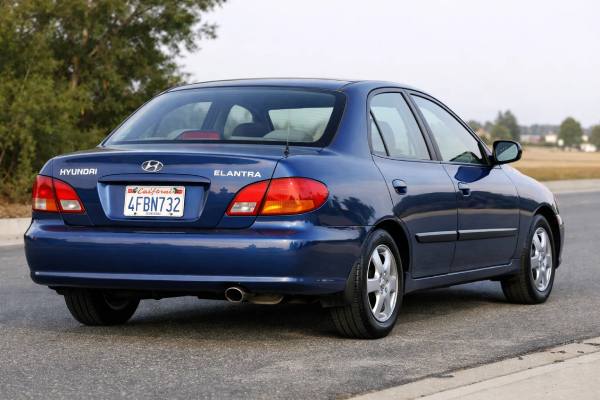
The facelifted Hyundai Elantra J2 1.8 from 1998 to 2000 is one of those cars that makes more sense the longer you look at it. In many European markets it was sold as the Lantra, but the appeal is the same: a simple, naturally aspirated compact family car with a 1.8-litre Beta four-cylinder, a 5-speed manual gearbox, and no unnecessary complexity. That matters today because the J2’s strengths are not fashion or badge value. They are mechanical simplicity, decent performance for its era, straightforward servicing, and useful everyday packaging. The facelift also arrived after Hyundai had already learned a great deal from the early J2 cars, so the later version feels like the more settled one to own. The catch is age. Rust, overdue timing belts, tired cooling systems, and neglected service histories now matter far more than the original brochure promises. Buy a good one, though, and the facelifted 1.8 remains an honest, usable old-school compact.
Owner Snapshot
- The 1.8-litre DOHC engine is simple, naturally aspirated, and easier to keep long-term than many later turbo units.
- Performance is still respectable for an older compact, with 128 hp and a period 0–100 km/h time of about 9.4 seconds.
- Cabin and boot space are solid for the class, and the hydraulic steering gives the car a more natural feel than many budget rivals.
- The biggest ownership risk is not the engine itself, but rust and missing timing-belt history.
- Treat 96,000 km or 60,000 miles as the key timing-belt interval, and do engine oil service at least every 6 months or roughly 12,000 km.
What’s inside
- Hyundai Elantra J2 facelift profile
- Hyundai Elantra J2 1.8 data
- Hyundai Elantra J2 trims and safety
- Reliability, faults and service actions
- Maintenance and used-buying guide
- Driving feel and running costs
- Elantra J2 against rivals
Hyundai Elantra J2 facelift profile
The facelifted J2 is best understood as Hyundai’s late-1990s attempt to build a compact family car that felt less bargain-basement than the brand’s earlier efforts. In period, that mattered. The J2 platform was already a big step forward in refinement and packaging, and the 1998 update sharpened the look and helped the car stay relevant until the all-new XD generation arrived. Depending on market, you will see Elantra or Lantra badges, and that naming difference still causes confusion today. Mechanically, though, the 1.8-litre facelift car is the same kind of proposition: front-wheel drive, naturally aspirated power, modest weight, and simple conventional running gear.
That simplicity is the main reason the 1.8 still deserves attention. The Beta G4GM engine is a 1,795 cc inline-four with double overhead camshafts, four valves per cylinder, multi-point fuel injection, and a timing belt rather than a chain. In the facelifted 128 hp form, it produces enough power to feel lively by the standards of late-1990s family cars without becoming stressed or complicated. There is no turbocharger to age, no direct-injection carbon issue in the modern sense, and no hybrid or dual-clutch system to turn a cheap used car into an expensive one. That does not mean the J2 is trouble-free. It means the problems are usually understandable.
The body is also more practical than people often remember. The sedan offers a useful 393-litre boot, five seats, and a fairly airy cabin for the class. In period, Hyundai sold the car as value-for-money transport, but the J2 was not stripped to the bone. Higher trims could include ABS, alloy wheels, air conditioning, power accessories, and better cloth trim. The facelift gave the range a tidier look and, in many markets, a better chance of being seen as a credible rival to the Corolla, Almera, and Astra.
Today, the facelifted 1.8 is strongest as an honest old-car buy for someone who wants a simple commuter, second car, or entry-level modern classic. It is not rare, exotic, or especially prestigious. Its value lies elsewhere: easy mechanical access, a willing engine, reasonable parts support, and a platform that still feels coherent when it has been cared for. The real dividing line is not trim level. It is whether the car has been maintained like a machine or ignored like cheap transport.
Hyundai Elantra J2 1.8 data
For this facelift-era article, the clearest openly available technical data aligns with the European-market Elantra or Lantra sedan using the 1.8-litre 128 hp engine and 5-speed manual gearbox. Some figures vary slightly by country, trim, and body style, so where open sources conflict, that is stated directly instead of smoothed over.
Powertrain and efficiency
| Item | Hyundai Elantra J2 facelift 1.8 |
|---|---|
| Code | Beta / G4GM |
| Engine layout and cylinders | Inline-4, transverse |
| Valvetrain | DOHC, 4 valves per cylinder |
| Displacement | 1.8 L (1,795 cc) |
| Bore × stroke | 82.0 × 85.0 mm (3.23 × 3.35 in) |
| Induction | Naturally aspirated |
| Fuel system | Multi-point injection |
| Compression ratio | 10.0:1 |
| Max power | 128 hp (94 kW) @ 6,100 rpm |
| Max torque | 162 Nm (119 lb-ft) @ 5,000 rpm |
| Timing drive | Belt |
| Rated efficiency | 8.5 L/100 km combined (27.7 mpg US / 33.2 mpg UK) |
| Period city and open-road figures | 10.8 L/100 km city; 7.2 L/100 km open road |
| Real-world highway @ 120 km/h (75 mph) | Usually around 8.0–9.0 L/100 km in healthy cars, often higher with age, load, or short gearing |
Transmission and driveline
| Item | Hyundai Elantra J2 facelift 1.8 |
|---|---|
| Transmission | 5-speed manual |
| Drive type | Front-wheel drive |
| Differential | Open front differential |
Chassis and dimensions
| Item | Hyundai Elantra J2 facelift 1.8 |
|---|---|
| Suspension front | Independent MacPherson-style strut layout |
| Suspension rear | Multi-link / coil-spring rear setup |
| Steering | Rack and pinion, hydraulic power assist |
| Brakes | Front ventilated discs; rear drums on many 1.8 cars, with some market variation by trim |
| Wheels and tyres | Most common: 195/60 R14 |
| Length | 4,420 mm (174.0 in) |
| Width | 1,700 mm (66.9 in) |
| Height | 1,390–1,393 mm (54.7–54.8 in) |
| Wheelbase | 2,550 mm (100.4 in) |
| Kerb weight | About 1,100–1,250 kg (2,425–2,756 lb), depending on market and equipment |
| GVWR | About 1,685 kg (3,715 lb) |
| Fuel tank | 55 L (14.5 US gal / 12.1 UK gal) |
| Cargo volume | 393 L (13.9 ft³), seats up |
| Ground clearance | Not consistently published in the open sources reviewed |
| Turning circle | Not consistently published in the open sources reviewed |
Performance and capability
| Item | Hyundai Elantra J2 facelift 1.8 |
|---|---|
| 0–100 km/h (0–62 mph) | 9.4 s |
| Top speed | 196 km/h (121.8 mph) |
| Braking distance | No reliable open period figure located |
| Towing capacity | Market-specific and not consistently published in the open sources reviewed |
| Payload | Around 438 kg (966 lb) in the source set reviewed |
Fluids and service capacities
| Item | Specification |
|---|---|
| Engine oil | API SG or SG/CD; typical viscosities include 10W-40 above 0°C and 5W-30 below 0°C |
| Engine oil capacity | 4.0 L (4.23 US qt) with filter; 3.7 L (3.91 US qt) without filter |
| Coolant | Ethylene glycol-based coolant, 40–50% mix |
| Coolant capacity | 6.0 L (6.3 US qt) |
| Manual transmission fluid | API GL-4, SAE 75W/85W/75W-90W |
| Manual transmission capacity | 2.15 L (2.28 US qt) |
| A/C refrigerant | R-134a |
| Refrigerant charge | 675–725 g (1.50–1.61 lb) |
| A/C compressor oil | PAG FD46XG or equivalent |
| A/C oil charge | 170–190 cc (5.7–6.4 oz) total system |
| Key torque spec | Wheel nuts: 90–110 Nm (66–81 lb-ft) |
Safety and driver assistance
| Item | Hyundai Elantra J2 facelift 1.8 |
|---|---|
| Euro NCAP | No verified period J2 facelift rating located in the reviewed open sources |
| IIHS | U.S.-market 1996–2000 sedan rated A overall in moderate overlap front; bumper improvements noted from 1999 |
| Headlight rating | Not applicable to this era of IIHS test reporting |
| ADAS suite | None in the modern sense |
The key takeaway from these numbers is that the J2 1.8 sat in a sensible middle ground. It was quicker than many basic 1.6 rivals, lighter and simpler than later compacts, and practical enough for family use. Even now, the specification reads like a recipe for straightforward ownership, provided the car’s age-related needs are handled properly.
Hyundai Elantra J2 trims and safety
Trim names varied widely by market, which is normal for a Hyundai of this period. In some places the facelifted car was sold simply as Elantra, in others as Lantra, and the grade walk often used familiar labels like GL, GLS, or CDX. That matters because equipment can differ more than the engine line would suggest. The 1.8 128 hp unit was usually a mid-range or upper-mid-range choice before the 2.0-litre became more common in some export markets. In practice, that means a facelifted 1.8 can appear either modestly specified or surprisingly well equipped depending on where it was first sold.
Quick identifiers help. Facelift cars generally have the later grille and revised light treatment, and in many European markets the 1.8 sat on 14-inch wheels with 195/60 tyres. Higher-spec cars often added ABS, alloy wheels, air conditioning, power windows, power mirrors, central locking, and upgraded seat fabrics. Some late cars also gained better interior trim or body-colour exterior details. If you are buying one now, do not rely on the badge alone. The best approach is to check the VIN, registration documents, and actual equipment on the car in front of you.
Mechanically, the difference between trims is not dramatic in the way it would be on a modern performance model. You are not choosing between radically different chassis packages. Instead, you are watching for meaningful real-world differences: ABS presence, wheel size, rear brake setup, air conditioning fitment, and whether the car has the 5-speed manual or automatic transaxle. For long-term ownership, the manual is usually the safer bet because it suits the engine well and keeps the car simpler. The automatic can still be fine, but only if shift quality and fluid condition are good.
Safety must be judged in period context. The J2 facelift is an old design by modern standards. It does not offer curtain airbags, active lane support, autonomous emergency braking, or the layered crash structure of a modern compact. Still, the U.S.-market 1996–2000 sedan achieved a strong IIHS moderate-overlap result for its era, with an A overall rating, and IIHS notes that bumpers were improved starting with 1999 models. That is useful, but it does not make the car a modern safety equal. It simply means the J2 was not as flimsy as older stereotypes suggest.
As for child-seat fitment and restraint hardware, inspect the actual car rather than assuming universal ISOFIX-style provision. Cars from this period often rely on more basic restraint layouts and market-specific equipment. The same caution applies to ABS and airbags. Some cars have them, some do not, and not every dashboard warning lamp tells the truth on a neglected old car. In other words, trim and safety on the facelifted J2 are less about brochure hierarchy now and more about individual-condition verification.
Reliability, faults and service actions
The facelifted J2 1.8 has a better reliability profile than many people expect, but that reputation depends heavily on context. When these cars were newer, the core 1.8-litre engine was generally not the weak point. Today, the problem is age, deferred maintenance, and the fact that many survivors have passed through owners who treated them as disposable transport. A healthy J2 can still be dependable. A neglected one can turn into a long list of small, irritating jobs.
The biggest single issue is timing-belt history. This engine uses a belt, not a chain, and the published replacement interval is 60,000 miles or 96,000 km. That is not a suggestion. On a car this old, an undocumented belt should be treated as overdue even if mileage is low. The right remedy is a full timing-belt service with tensioner and, ideally, water pump inspection or replacement at the same time. Cars advertised as “low mileage” but carrying a decade-old belt are not low-risk buys.
A second pattern is ignition-related rough running. Hyundai service material for the 1.8 and 2.0 Elantra or Tiburon engines notes that moisture in the spark-plug tubes can trigger misfires, especially after engine cleaning or work in damp conditions. Old plug wires, carbon tracking, and tired plugs make that worse. Symptoms are simple: rough idle, hesitation, and stored misfire codes. The remedy is equally simple in principle: dry the tubes, inspect the plugs and wires, use dielectric grease correctly, and replace aged ignition parts as a set if needed.
Manual-transmission cars have one small but common nuisance issue rather than a major failure point: clutch pedal squeak. Hyundai issued a service bulletin explaining that the source can be inadequate grease at the clutch release-shaft bushing. It sounds worse than it is. If the clutch action itself is normal and the noise is only a squeak or squawk, lubrication is often the answer rather than a full clutch job.
Another documented annoyance on 1998–1999 cars is hard refueling or premature pump shutoff. Hyundai traced this to the ORVR vent system on affected cars and published a bulletin covering the vent tee and fill vent valve. It is not a catastrophic defect, but it is exactly the kind of old-car quirk that frustrates owners who assume every fuel-pump problem is a bad pump or blocked filler neck.
Beyond those model-specific patterns, the big reliability enemies are familiar old-car ones: rust, leaking seals, aging cooling parts, worn CV boots, tired suspension bushings, and neglected fluids. Rust matters most. Before you worry about horsepower, inspect sills, arches, strut towers, floor edges, brake and fuel lines, and subframe mounting areas. A straight, rust-light J2 with a few mechanical needs is worth saving. A rotten one is not.
| Issue | Prevalence | Severity | Typical symptom | Usual remedy |
|---|---|---|---|---|
| Overdue timing belt | Common | High | No service proof, belt age unknown | Replace belt, tensioner, inspect water pump |
| Moisture-related misfire | Occasional | Low to medium | Rough idle, stumble, misfire codes | Dry plug tubes, renew plugs and wires, use dielectric grease correctly |
| Clutch pedal squeak | Occasional | Low | Squeak or squawk on pedal movement | Grease release-shaft bushing area |
| Hard-to-fill fuel tank | Occasional | Low to medium | Pump shuts off early during refueling | Inspect ORVR vent tee and fill vent valve |
| Cooling-system age failure | Common | Medium | Overheating, seepage, sweet smell | Hoses, radiator, cap, thermostat, water pump as needed |
| Rust and line corrosion | Common | High | MOT or inspection failure, flaky underbody metal | Proper rust repair or walk away |
Maintenance and used-buying guide
The right way to maintain a facelifted J2 1.8 today is to respect the original schedule but tighten it slightly for age. Even if the period maintenance book was written for a then-new car, every rubber part, seal, hose, and electrical connector on a surviving example is now old. That means the best owners are proactive, not reactive.
A sensible real-world schedule looks like this:
| Item | Practical interval |
|---|---|
| Engine oil and filter | Every 6 months or about 8,000–12,000 km |
| Timing belt | Every 96,000 km or 60,000 miles, sooner if age is unknown |
| Air filter | Inspect every 12 months; replace sooner in dust |
| Fuel filter | About every 84,000 km, or immediately if fuel contamination is suspected |
| Spark plugs | Inspect at major service; replace sooner if idle quality is poor or history is unknown |
| Coolant | Refresh every 3–5 years on an older car |
| Manual transmission fluid | Check level regularly; refresh about every 60,000–90,000 km |
| Brake fluid | Every 2 years |
| Auxiliary belts and hoses | Inspect yearly |
| Tyres | Rotate about every 10,000 km and watch for inner-edge wear |
| Battery | Test yearly after year 3 of service life |
The core fluid data is straightforward. Engine oil capacity is 4.0 L with filter. Manual-transmission oil capacity is 2.15 L, and the gearbox calls for GL-4 fluid in 75W/85W/75W-90W grades. Coolant capacity is 6.0 L and uses ethylene glycol-based coolant at roughly 40–50% concentration. For the air-conditioning system, the refrigerant is R-134a, with a charge of 675–725 g, and the compressor oil is a PAG type equivalent to FD46XG. Wheel-lug torque is 90–110 Nm. Those are useful workshop numbers for ownership decisions, but any repair still needs common sense and verification against the actual car.
For buyers, inspection order matters. Start with rust and paperwork, not cosmetics. A shiny J2 with no timing-belt history is a worse buy than a scruffy one with proper records. Then move to cooling condition, idle quality, clutch action, gearbox feel, steering play, brake-pipe corrosion, suspension knocks, and electrical basics like window motors, central locking, heater fan, and A/C. The engine should idle evenly, pull cleanly, and not leave mayonnaise under the cap or oily sludge all over the cam cover. A good manual gearbox should shift positively without crunching into second when cold.
The best facelifted 1.8 to buy is not necessarily the highest trim. It is the one with the strongest structure, the cleanest service history, and evidence of recent preventive work. A documented timing-belt change, fresh coolant, decent tyres, and a solid underbody are worth more than alloy wheels or extra trim pieces. The long-term durability outlook is still decent because the design is simple. What kills these cars is not exotic failure. It is neglect.
Driving feel and running costs
The Elantra J2 1.8 drives like a good late-1990s family car should: light on its feet, simple to understand, and more willing than you might expect from a budget-brand badge. The hydraulic steering is part of the charm. It does not feel hyper-quick, but it gives more natural weighting and road texture than many later electrically assisted economy cars. Around town, the J2 feels compact, easy to place, and pleasantly straightforward. That matters more now than outright pace.
The 1.8-litre engine is also a good fit for the car. With 128 hp and 162 Nm, it is not fast in a modern sense, but in period terms it was properly competitive. The official 0–100 km/h figure of about 9.4 seconds tells you most of what you need to know. It is brisk enough for confident slip-road work and relaxed overtakes if the car is healthy. It also responds in an old-fashioned, linear way. There is no turbo surge and no fake sporty tuning. You use the rev range, enjoy the clean throttle response, and let the manual gearbox do its part.
Ride quality is another pleasant surprise. The J2 does not have the last word in body control, but it generally rides with a softer, more forgiving feel than many later low-cost compacts on larger wheels. On a good set of 14-inch tyres, it takes broken roads reasonably well. The downside is noise. At motorway speed, the age of the body shell shows through in wind and road noise, and the engine works harder than a modern six-speed compact. Expect more sound at 120 km/h than in a newer rival.
Real-world fuel use is acceptable rather than exceptional. The period combined figure is 8.5 L/100 km, with 10.8 city and 7.2 open-road. In present-day use, a healthy, well-tuned car driven gently can stay close to those numbers at 90–100 km/h. Push the pace to 120 km/h, add modern traffic, hills, cold starts, or worn ignition parts, and the result usually drifts into the 8.0–9.5 L/100 km range. Around town, older automatics and poorly maintained manuals can easily move past 10 L/100 km. This is not a frugal miracle. It is a normal naturally aspirated compact from its time.
The important ownership point is that running costs are usually predictable. Fuel economy is only average, but the mechanical layout is easy to service and parts are not exotic. If the car is structurally sound, most bills tend to arrive as manageable maintenance items rather than spectacular failures. That is the J2’s strongest performance trait today: not speed, but low-drama usability.
Elantra J2 against rivals
Compared with the Toyota Corolla E110, the Hyundai makes a slightly different promise. The Corolla still has the stronger reputation for long-term durability and often wins on resale confidence. It is the safer answer for buyers who want the fewest surprises. The Elantra fights back with better value, a stronger equipment story in many trims, and a more eager feel in 1.8-litre form than some basic Corolla versions. If you care most about hassle-free ownership, the Toyota still leads. If you want a cheaper buy with a livelier engine and can inspect carefully, the Hyundai stays credible.
Against the Ford Focus Mk1, the J2 loses the pure driving contest. The Focus has the sharper chassis, more polished steering precision, and more modern dynamic tuning. Even now, a good Focus feels more sophisticated on a twisting road. The Hyundai’s counterargument is simplicity. The J2 feels less advanced, but it is also more straightforward to understand and often cheaper to buy and run if you find a solid one. Buyers choosing between them should ask whether they want the better driver’s car or the lower-risk budget classic.
The Nissan Almera of the same broad era offers another interesting contrast. The Almera is usually remembered for toughness and honest engineering, much like the Hyundai, but it can feel plainer and less willing in everyday use depending on engine choice. The Elantra 1.8 brings a little more punch and a slightly more generous sense of value, while the Nissan often wins points for no-nonsense durability. It is a close match, and condition matters more than the badge.
That is really the J2’s place in the market now. It is not the absolute best at any single thing. It is a balanced used-classic choice for buyers who value simple petrol engineering, respectable space, decent performance, and manageable repair logic. It loses to the Corolla on reputation, to the Focus on chassis finesse, and to some rivals on rust resistance. But it remains attractive because it usually costs less to get into and still delivers a complete, usable driving experience.
The verdict is easy to summarize. A facelifted Elantra J2 1.8 is worth buying when it is solid underneath, properly timed, and mechanically honest. It is not a collector’s prize, but it is a smart old car when chosen well. That may be the most Hyundai answer of all.
References
- Hyundai Lantra 1.8 16V (128 Hp) | Technical specs, data, fuel consumption, Dimensions 2026 (Technical Data)
- 2000 Hyundai Elantra 2026 (Safety Rating)
- Check for Recalls: Vehicle, Car Seat, Tire, Equipment | NHTSA 2026 (Recall Database)
- Timing Belt: Specifications — 1998 Hyundai Elantra Sedan L4-1.8L Service Manual | Operation CHARM 1998 (Service Manual)
- Capacity Specifications — 1998 Hyundai Elantra Sedan L4-1.8L Service Manual | Operation CHARM 1998 (Service Manual)
Disclaimer
This article is for informational purposes only and is not a substitute for professional diagnosis or repair. Specifications, torque values, intervals, and procedures vary by VIN, market, trim, body style, and equipment, so always verify the correct details against official service documentation before buying parts, servicing the car, or carrying out repairs.
If this guide helped you, please consider sharing it on Facebook, X, or another social platform to support our work.