
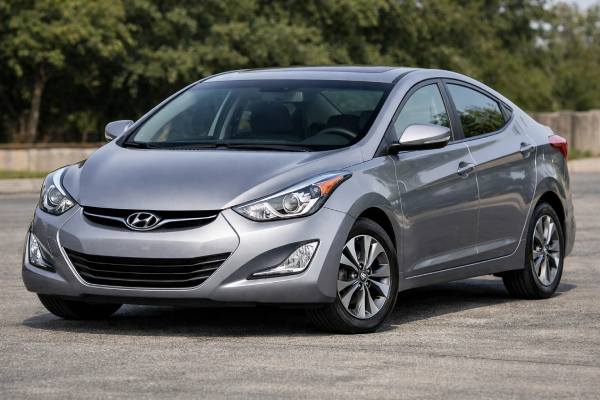
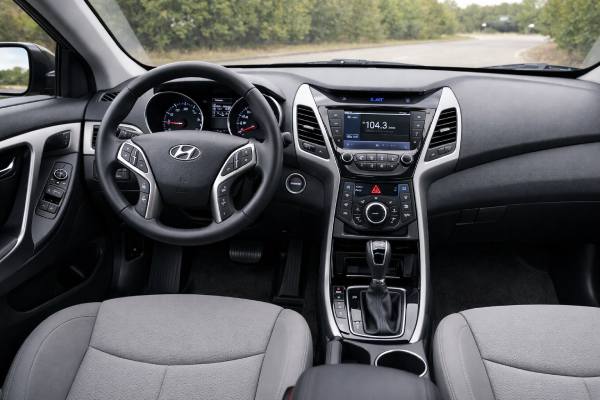
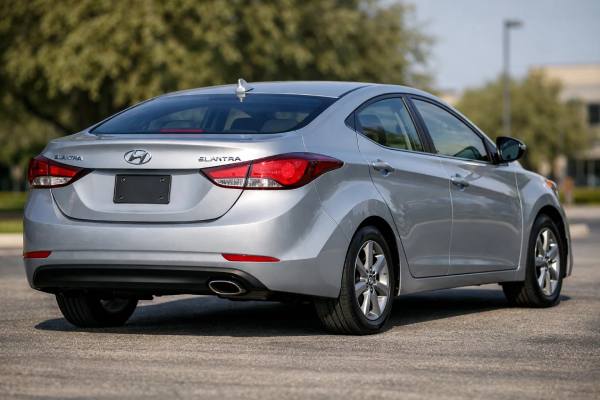
The facelifted Hyundai Elantra MD 1.6 MPI is a compact sedan that succeeds by getting the fundamentals right. It combines a simple naturally aspirated 1.6-litre petrol engine, roomy cabin packaging, light controls, and a clean aerodynamic shape that still looks modern enough today. The 2014 update sharpened the front and rear design, revised trim details, and in many markets improved convenience and safety equipment without changing the car’s basic formula. That formula remains attractive in the used market because the 1.6 MPI version avoids turbocharging, keeps servicing relatively straightforward, and suits drivers who want dependable daily transport rather than drama. The main caution is that “2014–2016 facelift” does not mean every market received exactly the same engine tune, trim structure, or safety equipment. Buy by VIN, service history, and actual equipment, not by badge alone. Done that way, the facelift MD remains one of Hyundai’s most sensible and usable compact sedans.
Core Points
- The 1.6 MPI is simpler to own long term than many turbocharged rivals from the same era.
- Cabin space is strong for the class, helped by a 2,700 mm wheelbase and a useful sedan boot.
- The facelift brought a sharper look, better trim presentation, and in some markets more convenience features.
- 2014–2015 cars should be checked for stop-lamp and ABS-related recall completion where applicable.
- A practical oil-service interval is every 12,000 km or 12 months, or every 6,000 km in severe use.
Quick navigation
- Elantra MD Facelift Snapshot
- Elantra MD 1.6 Data Tables
- Elantra MD Grades and Protection
- Weak Points and Service Actions
- Maintenance Map and Purchase Tips
- Driving Impressions and Economy
- How the Facelift MD Compares
Elantra MD Facelift Snapshot
The facelifted MD Elantra is a good example of Hyundai improving a sound platform without overcomplicating it. The original 2011 car already had strong points: a long wheelbase for the class, efficient packaging, clean aerodynamics, and a comfortable ride-biased chassis. The facelift kept all of that and focused on details buyers notice every day. The front bumper, grille, and lighting design became sharper, the rear looked cleaner, and many markets received revised wheel designs, improved cabin trim, and better convenience equipment. It was not a full redesign, but it was enough to make the car feel fresher and a little more polished.
The 1.6 MPI version is the one that suits the Elantra’s personality best if you want simple ownership. This is not the engine to choose for outright pace. It is the one to choose if you want a naturally aspirated petrol with multi-point injection, a timing chain, predictable throttle response, and fewer expensive surprises than a more stressed turbocharged unit can bring as mileage rises. In common market listings, the facelift 1.6 MPI is usually tied to a 97 kW output figure, often described as 132 metric horsepower class, though some regional brochures round it differently. What matters more than the exact label is how it behaves: smooth, linear, and easy to live with.
The Elantra MD also wins on space. The cabin feels larger than many people expect from the outside because Hyundai used the 2,700 mm wheelbase well. Rear-seat legroom is genuinely useful, front shoulder room is generous, and the sedan boot remains one of the car’s strongest practical advantages. This matters in the used market because many compact sedans from the same era now feel dated in both design and packaging. The Elantra still feels serviceable as a real family car rather than just a budget commuter.
Underneath, the recipe remains straightforward. MacPherson struts at the front, a torsion-beam rear axle, electric steering, and modest tyre sizes keep the car simple and affordable to run. That does mean the car is tuned more for stability and comfort than for enthusiastic cornering, but that is in line with its purpose. The MD was designed to be a competent, low-stress everyday car, and the facelift did not try to change that.
The main ownership lesson is that condition matters more than reputation. A tidy facelift MD with clear servicing, clean cooling-system history, smooth drivetrain behavior, and healthy suspension will feel much more expensive than it is. A neglected one with worn bushes, cheap tyres, tired ignition parts, and missing recall work will feel disappointing very quickly. In other words, the design is fundamentally sensible, but the individual car still decides the outcome.
Elantra MD 1.6 Data Tables
For the 2014–2016 facelift Elantra MD 1.6 MPI, open public information is reasonably strong on dimensions, safety, and maintenance basics, but some exact figures vary by market and trim. The tables below focus on the commonly catalogued 1.6 MPI sedan with front-wheel drive, while clearly flagging areas where body style, local equipment, or regional homologation can change the final number.
| Powertrain and efficiency | Figure |
|---|---|
| Code | Gamma 1.6 MPI family, commonly catalogued as G4FG |
| Engine layout and cylinders | Inline-4, DOHC, 4 cylinders |
| Valves per cylinder | 4 |
| Bore × stroke | 77.0 × 85.4 mm (3.03 × 3.36 in) |
| Displacement | 1.6 L (1,591 cc) |
| Induction | Naturally aspirated |
| Fuel system | MPI / port injection |
| Compression ratio | Commonly listed around 10.5:1 to 11.0:1 depending on market source |
| Max power | 132 hp (97 kW) @ 6,300 rpm in common market listings; some brochures round the figure slightly differently |
| Max torque | 157 Nm (116 lb-ft) @ 4,850 rpm |
| Timing drive | Chain |
| Rated efficiency | About 6.4–6.6 L/100 km (35.6–36.8 mpg US / 42.8–44.1 mpg UK) combined, market dependent |
| Real-world highway @ 120 km/h | Usually around 6.3–7.2 L/100 km in healthy condition |
| Transmission and driveline | Figure |
|---|---|
| Transmission | 6-speed manual or 6-speed automatic |
| Drive type | FWD |
| Differential | Open |
| Chassis and dimensions | Figure |
|---|---|
| Suspension, front | MacPherson strut |
| Suspension, rear | Torsion beam |
| Steering | Electric rack-and-pinion |
| Steering ratio | About 14.2:1 |
| Steering lock-to-lock | About 2.9 turns |
| Brakes | Front 280 mm ventilated discs; rear 262 mm discs on many better-equipped export trims, with market variation |
| Wheels and tyres | 195/65 R15 common; 205/55 R16 and 215/45 R17 on higher trims |
| Ground clearance | About 150 mm (5.9 in), market dependent |
| Length | 4,530–4,550 mm (178.3–179.1 in), depending on bumper specification and source |
| Width | 1,775 mm (69.9 in) |
| Height | 1,445 mm (56.9 in) |
| Wheelbase | 2,700 mm (106.3 in) |
| Turning circle, kerb-to-kerb | About 10.6 m (34.8 ft) |
| Kerb weight | About 1,236–1,285 kg (2,725–2,833 lb), depending on trim and transmission |
| GVWR | Market dependent |
| Fuel tank | 48 L (12.7 US gal / 10.6 UK gal) |
| Cargo volume | About 420–485 L (14.8–17.1 ft³), depending on measuring method and market listing |
| Performance and capability | Figure |
|---|---|
| 0–100 km/h (0–62 mph) | About 10.7–11.0 s manual |
| Top speed | About 200 km/h (124 mph) |
| Braking distance | No dependable open official figure for the exact 1.6 facelift trim |
| Towing capacity | Market dependent; verify from VIN and local handbook |
| Payload | Market dependent; verify from registration label or handbook |
| Fluids and service capacities | Figure |
|---|---|
| Engine oil | Typically SAE 5W-30 preferred, with 5W-40 also used in suitable climates; commonly around 3.6–3.7 L with filter |
| Coolant | Phosphate-based ethylene glycol coolant, usually 50:50 mix |
| Manual transmission oil | API GL-4 manual transaxle fluid, commonly around 1.7–2.0 L |
| Automatic transmission fluid | Hyundai SP-IV specification |
| Brake fluid | DOT 3 or DOT 4 as specified |
| A/C refrigerant | R-134a on period facelift cars; verify charge on the vehicle label |
| A/C compressor oil | Verify from compressor label and service data |
| Key torque specs | Use VIN-specific workshop information rather than generic internet values |
| Safety and driver assistance | Figure |
|---|---|
| ANCAP | 5 stars; overall score 33.21/37, applies to 2011–Jan 2016 range |
| IIHS | Good in moderate overlap front, side, roof strength, and head restraints; driver-side small overlap Acceptable for the 2011–16 application |
| Euro NCAP | No clearly verified Euro NCAP rating tied specifically to the facelift MD 1.6 MPI in open public sources |
| Headlight rating | Not a meaningful period reference for this variant |
| ADAS suite | None; no AEB, ACC, BSD, lane-centering, or traffic-sign assist |
The important part of the spec story is not one standout number. It is the balance. The facelift MD 1.6 MPI combines decent performance, low mechanical drama, and useful everyday practicality in a way that still feels sensible now.
Elantra MD Grades and Protection
Trim structure on the facelift MD varies by country, so it is safer to describe the range by equipment level rather than by badge alone. In many markets, the 1.6 MPI sat in the heart of the range. Entry trims focused on value with smaller wheels, simpler audio systems, manual climate control, and fewer cosmetic upgrades. Mid-spec cars added the features most buyers still care about today: alloy wheels, better seat trim, steering-wheel controls, improved infotainment, parking aids, and nicer cabin details. Higher trims often added projector lamps, LED light guides, leather trim, keyless entry and start, rear-view camera systems, and more upscale interior finishing.
For used buyers, the mid-range cars are often the sweet spot. They usually give you enough equipment to make the car feel modern without forcing you into the most option-heavy examples, where repairs for keyless systems, cameras, premium trim pieces, or infotainment can add unnecessary hassle. On facelift markets that offered Elegance- and Premium-type naming, the better-equipped 1.6 cars often stood out because they combined the simple engine with useful features like rear air vents, upgraded screens, folding mirrors, and in some cases Flex Steer steering-mode selection.
Quick identifiers are easy once you know where to look. Conventional reflector headlamps usually point to lower trims, while projector-type lamps with LED light guides usually signal higher facelift versions. Wheel size is another clue: 15-inch wheels often indicate a simpler car, while 16- and 17-inch packages usually belong to better-equipped trims. Inside, a supervision cluster, leather-wrapped wheel, rear-view camera, keyless start button, and upgraded center screen are common signs you are looking at one of the more complete facelift models.
Safety is one of the MD’s stronger talking points. In ANCAP testing, the Elantra achieved a 5-star result with 33.21 out of 37, and the rating applies across the 2011 to January 2016 range in that program. The test details matter because they show the car was not just relying on one good frontal result. The tested Elantra had dual front airbags, side airbags, side curtains, ABS, EBD, ESC, pretensioners, and strong frontal and side scores for its class and era. IIHS results are also solid overall, with Good ratings in moderate overlap front, side, roof strength, and head restraints, while the driver-side small overlap result lands at Acceptable for the 2011–16 application. That is not class-leading by current standards, but it is still a respectable safety record for a compact sedan of this age.
What the facelift MD does not bring is modern crash-avoidance tech. There is no autonomous emergency braking, blind-spot monitoring, rear cross-traffic alert, or lane-centering. That means the safest used example is not simply the one with the newest plate. It is the one with the fullest restraint package, working ESC, healthy tyres and brakes, and completed recall work where applicable.
Weak Points and Service Actions
The facelift MD 1.6 MPI generally avoids the engine reputation issues that shadow some other Hyundai powertrains, but that does not mean every used example is trouble-free. Its typical problems are more ordinary than dramatic, which is actually helpful for buyers. Most faults come down to maintenance quality, age, and wear rather than a single fatal design flaw.
The first area to check is ignition and basic running quality. Coil packs, spark plugs, battery condition, and throttle-body contamination can all cause rough idle, hesitant throttle response, misfire under load, or hard starting. These are common, usually low-to-medium cost issues. Symptoms often feel worse than the actual fault. A car that seems “weak” or “uneven” may simply need fresh ignition parts and a proper baseline service. The 1.6 MPI should idle smoothly and rev cleanly. If it does not, start with the basics.
Timing-chain wear is less common than timing-belt anxiety on older engines, but it should still be taken seriously. Persistent chain rattle at cold start, metallic timing noise, or timing-correlation faults point to tensioner or chain wear, often made worse by stretched oil intervals or incorrect oil viscosity. This is not the most common MD problem, but it sits in the medium-to-high cost tier if ignored. The smart rule is simple: a quiet engine with clean service history is reassuring; a noisy one is not.
Cooling systems are another age-related checkpoint. Radiators, plastic tanks, hose joints, and thermostat housings can begin to seep or crack after many years of heat cycles. Sweet coolant smell, unexplained top-ups, or staining around hose connections deserve attention. On this engine, overheating is far more dangerous than most owners realize, so a small leak should not be treated as a harmless nuisance.
On the chassis side, the usual compact-sedan wear points apply. Front lower-arm bushes, drop links, top mounts, dampers, rear beam bushes, wheel bearings, and brake hardware all age in predictable ways. The MD rides well when these parts are healthy, but becomes noisy and less settled once several of them wear out together. Electric steering is usually fine, but clunks, poor self-centering, or inconsistent assistance should not be ignored.
Recalls matter most on 2014–2015 facelift cars. In U.S. campaigns, the stop-lamp switch stopper pad recall affected certain 2013–2014 Elantra sedans, while the later ABS fire-risk recall covered 2011–2015 Elantras, including facelift years. The stop-lamp issue can create brake-light and shift-lock problems. The ABS campaign is more serious, involving the risk of an electrical short in the ABS module from internal brake-fluid leakage over time. Owners were advised in that campaign to park outside until the remedy was completed. These recalls are market-specific, but they prove the main point: always check the actual VIN in the relevant national database and compare that with dealer records.
In short, the facelift MD is not a fragile car. But it is old enough now that small neglected issues can stack into a disappointing ownership experience. A good one feels sound. A neglected one feels older than it should.
Maintenance Map and Purchase Tips
The facelift MD 1.6 MPI responds best to steady, boring maintenance. That is a compliment. It does not demand exotic service, but it does reward consistency. If you buy one with patchy records, the smartest move is to reset the maintenance baseline early.
| Item | Practical interval | Notes |
|---|---|---|
| Engine oil and filter | Every 12,000 km or 12 months | Severe use: 6,000 km or 6 months |
| Engine air filter | Inspect every service, replace around 48,000 km | Sooner in dusty conditions |
| Cabin air filter | Around every 24,000 km or 24 months | Earlier if airflow drops |
| Spark plugs | Follow market spec; iridium plugs can run long intervals, but inspect on drivability complaints | Replace earlier if misfire appears |
| Coolant | Long-life schedule in some manuals, but practical buyers should monitor age and condition closely | Do not ignore top-up history |
| Brake fluid | Every 2–3 years | Moisture contamination affects braking and component life |
| Drive belts | Inspect from mid-life onward | Replace on cracking, chirp, or tensioner wear |
| Manual transaxle oil | Refresh on unknown history or roughly 80,000–100,000 km | Use GL-4 only |
| Automatic transmission fluid | Use Hyundai SP-IV only and follow the correct service method | Do not mix fluid types |
| Tyres and alignment | Check monthly and at each service | Uneven wear usually points to bushes or geometry |
| 12 V battery | Test yearly after age 4 | Weak voltage can mimic larger problems |
| Timing chain system | No fixed replacement interval | Inspect if noisy or poorly maintained |
For lubricants and capacities, use the owner’s manual as the first reference and the VIN as the final one. The Gamma 1.6 MPI is commonly catalogued at roughly 3.6 to 3.7 litres of oil with filter. Manual cars generally take around 1.7 to 2.0 litres of the proper GL-4 transaxle oil. Coolant should be the correct phosphate-based ethylene glycol formulation, mixed with deionized water where required. A/C system details should always come from the under-bonnet label, not guesswork.
As a buyer, prioritize evidence over claims. Ask for oil-change invoices, proof of brake-fluid changes, battery history, recall completion, and any cooling-system work. Then inspect the car cold. A healthy facelift MD should start easily, idle steadily, shift smoothly, and drive straight without steering noise or brake pull. Look for shoulder wear on the tyres, rattles over sharp bumps, chain noise on first start, coolant smell, and any dashboard warning light that “just came on recently.”
The strongest buys are mid-spec cars with the better safety equipment and honest maintenance history. Manual 1.6 cars make the cleanest long-term ownership case, but a smooth automatic with proper service records is still a valid option. Avoid examples with vague electrical modifications, cheap mismatched tyres, steering clunks, or evidence of accident repair done on a budget.
Long-term durability is good enough to justify ownership, but only if the car begins from a healthy base. The Elantra MD is not the kind of used car that rewards cutting corners after purchase.
Driving Impressions and Economy
The facelift MD 1.6 MPI drives like a car built for real life. It is not a driver’s car in the strict enthusiast sense, but it is composed, light to use, and easier to appreciate the longer you spend with it. Around town, the controls are gentle, visibility is manageable, and the naturally aspirated engine responds in a very predictable way. There is no turbo surge and no odd drivetrain behavior. What you ask for is what you get.
The engine’s character is straightforward. Low-rpm torque is modest compared with a modern turbo petrol, so quick acceleration still asks for revs and sensible gear choice. But once you accept that, the 1.6 MPI feels smooth and willing rather than weak. The six-speed manual suits it particularly well because it lets you keep the engine in its useful range without fuss. The automatic is calmer in traffic, but slightly softens the car’s already relaxed character.
Ride quality is one of the Elantra’s stronger points. The suspension is tuned for comfort and stability more than for outright cornering sharpness, and that works well for a compact sedan. On ordinary roads the car settles quickly, deals with rough surfaces without excessive harshness, and feels mature enough for long commutes. Steering feel is light and not especially communicative, but it is accurate enough and makes the car easy to place. Some higher trims added Flex Steer modes, though the difference is more about weight than real feedback.
Noise, vibration, and harshness are acceptable for the class. At city speed the cabin is fairly quiet. At motorway pace, tyre and wind noise become more obvious, especially on larger wheel packages, but the car remains comfortable enough for long trips. Worn suspension or cheap tyres can make a used example feel far noisier than a healthy one, so condition changes the verdict more than trim.
Real-world fuel use remains competitive if the car is properly maintained. Expect around 7.5–9.0 L/100 km in dense city driving, around 6.2–7.2 L/100 km on a steady highway run, and about 6.8–7.8 L/100 km in mixed daily use. Cold weather, short trips, traffic, and poor alignment can move those numbers upward. On the other hand, a manual car on good tyres with clean plugs and correct oil can return figures close to the official combined claims if driven gently. That gives the MD a useful blend of economy and simplicity that many larger petrol sedans cannot match.
Braking feel is predictable and easy to modulate. The system is not sports-car sharp, but it should feel solid and straight. Any vibration, pull, or long pedal travel points to maintenance needs, not a fundamental design weakness. Overall, the facelift MD is best understood as an easy car to live with. It does not overwhelm you with talent, but it rarely frustrates you either. For many owners, that is exactly the right kind of competence.
How the Facelift MD Compares
The facelift MD 1.6 MPI sits in a very competitive part of the compact-sedan market, and that is where its balance becomes important. Against rivals such as the Toyota Corolla E170, Honda Civic ninth generation, Mazda3 BL/BM, Ford Focus Mk3 sedan, Kia Cerato/Forte, and Chevrolet Cruze, the Elantra does not dominate one single category. Instead, it combines several strengths into a package that still makes sense years later.
Compared with a Corolla, the Elantra often feels more style-led and sometimes better equipped for the price, though Toyota still holds the stronger default reputation in many markets. Against a Civic, the Hyundai is usually less playful and less distinctive from behind the wheel, but often more relaxed and easier to buy into at a lower price. Against a Focus, it gives away some steering feel, yet often wins on cabin space and low-stress ownership. That pattern repeats across the class: the Elantra is rarely the sharpest or the most prestigious, but it is often one of the most sensible all-rounders.
The facelift matters because it makes the MD more convincing as a used buy. The revised styling helps the car look newer, the trim updates improve the cabin, and the later production years often benefit from incremental fixes and better standard equipment. The 1.6 MPI also gives the facelift car a strong ownership case because it stays simpler than a turbocharged rival while still offering acceptable performance.
Within the Elantra range, the 1.6 MPI is the practical middle ground. Larger engines may feel stronger on paper, but the 1.6 fits the car’s mission better if your priority is long-term affordability. It is light enough, smooth enough, and efficient enough to do the job without introducing unnecessary complexity. That is the heart of its appeal.
So how does the facelift MD compare to rivals in one sentence? It is the compact sedan for buyers who value calm manners, useful interior space, honest mechanical design, and respectable safety more than badge image or outright handling sparkle. In that role, it still stands up well. The right example feels balanced, mature, and easy to justify, which is exactly what many used-car buyers are looking for.
References
- elantra.pdf 2021 (Owner’s Manual)
- Elantra FL_cover ol – Hyundai 2014 (Brochure)
- 2014 Hyundai Elantra 4-door sedan 2014 (Safety Rating)
- Hyundai Elantra | Safety Rating & Report 2011 (Safety Rating)
- Part 573 Safety Recall Report 23V-651 2023 (Recall Database)
Disclaimer
This article is for informational purposes only and is not a substitute for professional diagnosis or repair. Specifications, torque values, service intervals, procedures, and equipment can vary by VIN, market, build date, and trim, so always verify against the official service documentation for the exact vehicle before carrying out maintenance or making a purchase decision.
If this guide was useful, please consider sharing it on Facebook, X, or another social platform to support our work.