

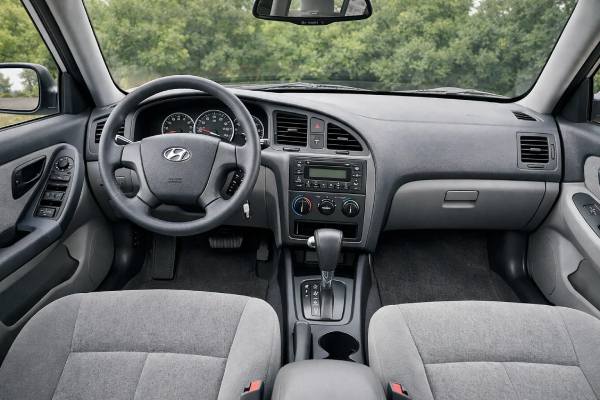
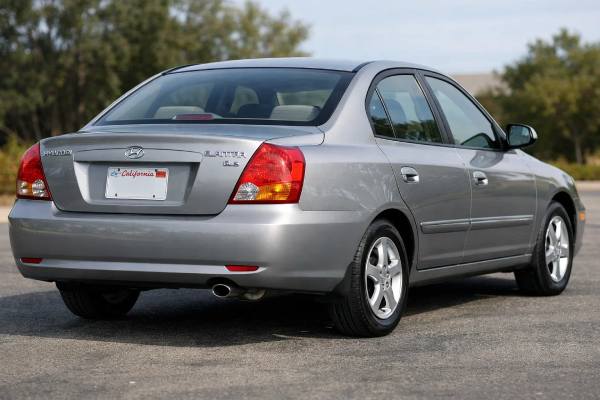
The facelifted Hyundai Elantra XD 1.6 sits in a useful sweet spot of old-school compact-car ownership. It is modern enough to feel easy to live with, yet simple enough to avoid many of the expensive complications that came later. The core of the car is Hyundai’s 1.6-liter G4ED inline-four, a naturally aspirated petrol engine with multi-point injection, a timing belt, and straightforward front-wheel-drive mechanicals. In facelift form, sold across the 2003 to 2006 period, the XD also gained a cleaner look, tidier cabin details, and better maturity than many people still associate with early-2000s Hyundai models. For buyers today, the attraction is not speed or prestige. It is space, honest engineering, manageable running costs, and the fact that most problems are mechanical and visible rather than hidden deep in software. A well-kept Elantra XD 1.6 can still be a practical daily car, but condition, rust history, and timing-belt proof matter far more than low mileage alone.
Essential Insights
- The 1.6 G4ED engine is simple, durable, and easier to service than many newer small petrol engines.
- Cabin space, boot room, and ride comfort are still strong points for an early-2000s compact sedan.
- Parts prices are usually modest, and the front-wheel-drive layout stays mechanically straightforward.
- Rust and overdue timing-belt service are bigger risks than the engine design itself.
- Treat 10,000 to 12,000 km or 12 months as a sensible oil-service target, and do the timing belt on strict age and mileage rules.
Contents and shortcuts
- Hyundai Elantra XD in context
- Hyundai Elantra XD figures
- Hyundai Elantra XD trims and protection
- Weak spots and campaign history
- Care plan and smart buying
- On-road feel and fuel use
- Versus compact rivals
Hyundai Elantra XD in context
The XD-generation Elantra was Hyundai’s push toward a more mature compact car, and the facelifted 2003–2006 version is where that effort feels most complete. It was never pitched as a sporty niche product. Instead, Hyundai aimed for a roomy, affordable, sensible family car with European-friendly proportions and uncomplicated engineering. That is exactly why the facelifted 1.6 still makes sense today. It is a front-wheel-drive compact that does not try to hide its purpose. It offers useful cabin space, a stable road manner, a decent boot, and mechanical parts that most independent workshops can still understand without brand-specific drama.
For this version, the main attraction is the 1.6-liter G4ED engine. It is a naturally aspirated 1,599 cc inline-four with double overhead camshafts, 16 valves, multi-point fuel injection, and around 105 hp. That is not a thrilling number, but in context it is enough. The engine gives the Elantra a balanced character: more relaxed than an entry-level 1.4, cheaper to feed and maintain than a bigger 2.0, and generally less stressed than many later downsized turbo units. There is no direct injection to carbon up intake valves, no turbo to cook oil, and no dual-clutch gearbox to complicate low-speed driving. That simplicity remains one of the XD’s biggest long-term strengths.
The facelift also helped the Elantra age better visually. Hyundai revised the front and rear styling, tidied some interior details, and made the car feel more cohesive. Better trims could be surprisingly well equipped for the time, with air conditioning, ABS, power accessories, alloys, and in some markets side airbags or upgraded trim. That matters in the used market because the XD 1.6 is not bought on badge prestige. It is bought because it can be a lot of car for the money if the shell is solid and the service history is believable.
The other side of the story is just as important. This is now an older car. Corrosion, rubber aging, brittle plastic, and deferred maintenance can outweigh the base design quality very quickly. The Elantra XD 1.6 is not a fragile car, but it is an old one. If you buy by mileage alone, you can still end up with a poor example. If you buy by structure, maintenance proof, and overall honesty, the facelifted XD remains one of the easier early-2000s compact cars to live with.
Hyundai Elantra XD figures
The 1.6-liter facelift Elantra was sold in both sedan and hatchback form in different markets, so exact numbers can shift slightly with body style, trim, and gearbox. The figures below focus on the common European 1.6 manual facelift car and note where market or body differences matter.
| Powertrain and efficiency | Data |
|---|---|
| Code | G4ED |
| Engine layout and cylinders | Inline-4, DOHC, 4 valves per cylinder, 76.5 × 87.0 mm (3.01 × 3.43 in) |
| Displacement | 1.6 L (1,599 cc) |
| Motor | Not applicable |
| Induction | Naturally aspirated |
| Fuel system | MPI |
| Compression ratio | 10.0:1 |
| Max power | 105 hp (77 kW) @ 5,800 rpm |
| Max torque | 143 Nm (105 lb-ft) @ 4,500 rpm |
| Timing drive | Belt |
| Rated efficiency | About 7.0 L/100 km combined, 9.1 city, 5.7 highway in common European data |
| Real-world highway @ 120 km/h | Roughly 6.4–7.2 L/100 km in a healthy manual car |
| Transmission and driveline | Data |
|---|---|
| Transmission | 5-speed manual, with 4-speed automatic available in some markets |
| Drive type | FWD |
| Differential | Open |
| Chassis and dimensions | Data |
|---|---|
| Suspension (front/rear) | MacPherson strut front / independent rear with coil springs and anti-roll bar |
| Steering | Hydraulic power rack and pinion |
| Brakes | Front ventilated discs; rear discs on some trims and markets, rear drums on lower-spec versions |
| Wheels and tyres | 195/60 R15 commonly fitted; some lower trims used 14-inch wheels |
| Ground clearance | About 160 mm (6.3 in) |
| Length / Width / Height | Around 4,495–4,520 mm / 1,720 mm / 1,420–1,425 mm depending on body style |
| Wheelbase | 2,610 mm (102.8 in) |
| Turning circle (kerb-to-kerb) | About 10.3 m (33.8 ft) |
| Kerb weight | Around 1,178–1,253 kg (2,597–2,762 lb) depending on body and market |
| GVWR | About 1,740 kg (3,836 lb) where published |
| Fuel tank | 55 L (14.5 US gal / 12.1 UK gal) |
| Cargo volume | About 367 L (13.0 ft³) for hatch figures commonly published; sedan figures may be larger by market method |
| Performance and capability | Data |
|---|---|
| Acceleration | 0–100 km/h in about 11.0 s |
| Top speed | About 182 km/h (113 mph) |
| Braking distance | No trustworthy period test figure confirmed for the exact 1.6 facelift variant |
| Towing capacity | Market dependent; verify plate and local documentation before towing |
| Payload | Roughly 450–500 kg depending on trim and body |
| Fluids and service capacities | Data |
|---|---|
| Engine oil | 5W-30 or 5W-40 meeting Hyundai-era petrol specs; about 3.3–3.9 L depending on source and filter service, verify by VIN/manual |
| Coolant | Ethylene glycol-based coolant; about 5.6 L (5.9 US qt) commonly listed |
| Transmission / ATF | Manual: 75W-90 API GL-4, about 2.15 L; automatic: Hyundai SP-III type fluid, verify exact refill amount by transmission |
| Differential / transfer case | Not applicable |
| A/C refrigerant | R-134a; exact charge varies by system label and market |
| A/C compressor oil | Verify by under-bonnet label or workshop manual |
| Key torque specs | Wheel nuts 90–110 Nm (66–81 lb-ft) |
| Safety and driver assistance | Data |
|---|---|
| Crash ratings | Euro NCAP-era result commonly recorded as 3 stars adult and 2 stars pedestrian; IIHS frontal rating improved to Good for 2004–06 after airbag revisions |
| Headlight rating | Not applicable for this era |
| ADAS suite | None in the modern sense |
These figures explain the Elantra XD 1.6 well. It is not quick, but it is light enough and geared sensibly enough to feel useful rather than strained. More importantly, the specifications reflect a car built before the industry piled on complexity. That remains one of its biggest ownership advantages.
Hyundai Elantra XD trims and protection
Trim structure on the facelifted XD depends heavily on region, so buyers need to think in terms of equipment groups rather than a single global trim ladder. In many European markets, the 1.6 lived in mid-range trims such as GL, GLS, CDX, or similar local names. In North America, Elantra and Elantra GT naming was more common, but those markets centered more on the 2.0-liter engine. For a used buyer today, the takeaway is straightforward: the 1.6 facelift usually came in practical, comfort-oriented trims rather than stripped fleet form, but exact content varies enough that you should inspect the car itself rather than trust the badge on the bootlid.
Mechanical differences by trim were usually modest, though still important. Better-equipped cars were more likely to get ABS, rear disc brakes, alloy wheels, air conditioning, and broader electrical convenience equipment. Some hatchback or GT-style versions also paired the nicer trim level with a firmer suspension tune or more complete brake package. Wheel and tyre combinations could also change the way the car feels. Fourteen-inch setups keep tyre costs down and soften the ride. Fifteen-inch wheels usually look better and sharpen the steering a little without making the Elantra harsh.
Quick identifiers are mostly visual. Higher trims tend to show cleaner interior fabrics, better switchgear, factory audio upgrades, alloys or full covers, and sometimes fog lamps or body-colour exterior details. Cars that claim to be top-spec but have base-grade door cards, missing A/C hardware, or a mismatched cabin deserve extra caution. At this age, trim integrity often says more about ownership history than the odometer does.
Safety needs careful context because the facelifted XD straddles two different stories. In European-style crash references tied to the early XD, the Elantra’s result was middling rather than class-leading, with a 3-star adult rating and a weak pedestrian outcome by early-2000s standards. The car’s structure was not the main problem. Restraint performance and occupant management were the bigger issues in the original era tests. In U.S. IIHS testing, the story improved later. The 2004–06 Elantra earned a Good rating in moderate-overlap frontal testing after airbag revisions, but the 2005 side test still produced a Poor overall result despite standard front seat-mounted combination head and torso airbags.
That split matters in plain language. The facelifted XD is safer than many people assume in a frontal crash if it has the later airbag configuration, but it still belongs to an era before modern side-structure expectations and before active safety became normal. There is no automatic emergency braking, no lane support, no blind-spot assist, and no stability control in the way a newer buyer would expect. On this Elantra, safety comes down to four things: choosing a later, cleaner example, confirming the airbag and seatbelt systems work properly, checking crash repairs carefully, and fitting good tyres rather than the cheapest rubber available.
Weak spots and campaign history
The facelifted Elantra XD 1.6 is generally a durable car, but it is not a car that tolerates neglect gracefully. Its problems are mostly conventional and easy to understand, which is good news. The bad news is that many surviving examples have already lived through enough years of deferred maintenance for ordinary wear items to stack into bigger ownership headaches. In practice, the most common issues fall into five groups: timing-belt neglect, corrosion, oil and coolant leaks, suspension wear, and age-related electrical faults.
The timing-belt system is the big one. On the G4ED engine, no sensible buyer should gamble with an undocumented belt. Many owners and aftermarket service schedules treat 60,000 km or 4 years as the safe replacement point, and on an older XD that is the standard I would follow unless genuine documentation proves a more recent change. Symptoms of overdue belt or tensioner wear are not always dramatic before failure, which is why history matters so much. A seller saying “it looks fine” is not a substitute for invoices. If there is doubt, budget for belt, tensioner, idlers, and a water pump decision immediately.
Oil leaks are usually low- to medium-severity rather than catastrophic. Common examples are rocker-cover-area seepage, aging cam or crank seals, and dampness around older gasket joints. Cooling systems also age in familiar ways: tired radiator end tanks, softened hoses, lazy thermostats, and old coolant that has been topped up with whatever was on the shelf. The fix is not complicated, but repeated small neglect turns into overheating risk quickly. Any XD that smells hot after a drive or shows staining around the radiator, expansion tank, or water pump deserves a closer look.
Chassis wear is another predictable theme. Front lower arm bushings, ball joints, anti-roll-bar links, dampers, and wheel bearings are all normal old-car wear items by now. None of them are unusual in themselves. What matters is whether the car has had them done properly. A well-kept Elantra still rides with decent composure and tracks straight. A tired one can feel loose, noisy, and much older than it really is. Manual gearboxes are generally sturdy, though worn mounts or tired linkage parts can make shift quality feel worse than the gearbox really is. Automatic cars need more care in buying because fluid neglect and age-related harshness can make them the more expensive long-term choice.
Corrosion is the true make-or-break issue. Check wheel arches, sill seams, floor edges, rear suspension mounting areas, front subframe zones, lower door edges, bonnet lip, boot floor, and brake-line areas. Surface rust is manageable. Structural rust is where cheap Elantras stop being cheap. A strong engine in a weak shell is still a weak car.
Campaign history is worth checking by market. U.S.-market documentation for the facelifted XD includes a 2004 fuel-vapor hose clamp recall linked to possible fuel leakage and 2004–05 airbag-related recall actions tied to occupant classification and deployment updates. These do not automatically apply to every European-market 1.6, but they are a reminder that campaign completion matters. Any buyer should verify recalls by VIN through Hyundai records where possible. On an older Elantra, a stamped booklet is helpful, but recall completion proof is even better.
Care plan and smart buying
Owning the Elantra XD 1.6 well is mostly about discipline. This is not a car that needs exotic service parts or specialist software, but it does reward regular maintenance. The sensible approach is to shorten intervals slightly compared with the most optimistic period schedules and to focus on age-sensitive items, not only mileage. The car is old enough now that rubber, coolant, brake fluid, and belts matter just as much as engine internals.
| Item | Practical interval | Notes |
|---|---|---|
| Engine oil and filter | Every 10,000–12,000 km or 12 months | Use shorter intervals for short trips or dusty use |
| Engine air filter | Inspect every service, replace around 20,000–30,000 km | Earlier in dusty climates |
| Cabin filter | Every 15,000–20,000 km or 12 months | If fitted |
| Spark plugs | Around 30,000–45,000 km for standard plugs, longer for platinum types | Use correct heat range |
| Coolant | Every 2–3 years | Do not mix random coolant types |
| Brake fluid | Every 2 years | Cheap prevention for ABS and caliper health |
| Timing belt | Every 60,000 km or 4 years unless documented otherwise by local manual | Replace tensioner and inspect idlers at the same time |
| Auxiliary belts and hoses | Inspect every service | Replace on cracks, glazing, or swelling |
| Manual transaxle oil | Check condition regularly, refresh around 60,000–80,000 km | Helps shift feel and synchro life |
| Automatic fluid | Check condition regularly; service conservatively if history is clear | Use correct Hyundai SP-III type fluid |
| Brakes | Inspect pads, sliders, hoses, and rear hardware every service | Old rear hardware can seize before pads fully wear out |
| Tyre rotation and alignment | Rotate about every 10,000 km, align when needed | Particularly important after suspension work |
| Battery | Test yearly from age 4 onward | Weak voltage causes many false “electrical” complaints |
Fluid decisions matter on this model because owners often overcomplicate simple jobs or oversimplify the wrong ones. For the 1.6, a good 5W-30 or 5W-40 that suits the engine’s period Hyundai specification is usually the safe answer. Manual cars want GL-4 transaxle oil, not any random gear oil. Brake fluid should not be ignored because old fluid accelerates corrosion and poor brake feel. Coolant should be renewed on time because radiator and heater-core life depend on it.
As a used buy, the smartest order of inspection is this:
- Body shell and underside.
- Timing-belt proof.
- Cooling-system condition.
- Suspension and steering wear.
- Gearbox and clutch behavior.
- Electrical function and warning lights.
- Interior and trim condition.
The best facelift XD 1.6 is usually a manual, mid- to higher-trim car with air conditioning, ABS, and a straight body. The manual suits the modest engine better and reduces future drivetrain risk. Automatic cars are not automatically bad, but they need cleaner history to make sense. Cars to avoid are the obvious ones: rust at structural points, no timing-belt paperwork, coolant smell, steering noise, uneven tyre wear, crash-repair evidence, and sellers who know nothing about the service history. Long-term durability is good enough to recommend, but only when the car has been maintained like transport rather than used up like an appliance.
On-road feel and fuel use
The Elantra XD 1.6 is a good example of a car that feels better in real life than its brochure numbers suggest. It is not fast, but it is light on its feet and easy to drive. Steering is hydraulic, which gives it a more natural weight and calmer straight-ahead feel than many later budget compacts with cheaper electric setups. Around town, visibility is decent, controls are straightforward, and the car feels narrower and easier to place than many newer compact sedans.
The 1.6-liter engine is honest rather than eager. It makes its 105 hp in a smooth, predictable way and prefers moderate revs over lazy low-rpm lugging. In city traffic, it is easy to use. On a faster road, it needs planning if the car is full of passengers or climbing grades, but it is not hopelessly slow. A healthy manual car reaching 100 km/h in about 11 seconds is perfectly usable in normal traffic. What matters more is that the throttle response is clean and the power delivery is linear. There is no turbo lag, no aggressive step in boost, and no gear-hunting drama from an overcomplicated transmission.
Ride quality is one of the XD’s better strengths. A sorted car rides with a soft, composed character that suits broken urban roads surprisingly well. It is not sporty, and body control is tuned more for comfort than cornering excitement, but it is stable enough on the motorway and predictable in quick lane changes. Cheap tyres can spoil that balance badly, so the difference between a well-shod Elantra and a neglected one is larger than many buyers expect. Braking feel is simple and easy to judge, though older cars with tired rear hardware or ancient fluid can feel wooden until refreshed.
Fuel use is reasonable for its age. Common period figures place the 1.6 manual around 9.1 L/100 km in town, 5.7 L/100 km on the highway, and 7.0 L/100 km combined. In modern real-world use, a healthy car typically lands in the low-7s to mid-7s on mixed driving and around the mid-6s on a steady 120 km/h run. Expect worse if the alignment is off, the oxygen sensor is aging, or the car is carrying extra weight. The 55-liter tank still gives the XD respectable touring range.
Noise levels remind you of the car’s age, but not in a disastrous way. Wind and tyre noise are more noticeable than in a newer Elantra, and the 1.6 engine is heard more clearly when extended. Yet the car is not crude when well maintained. In fact, a tidy XD can feel pleasantly mechanical in a way many newer budget cars do not. The real secret is condition. A worn Elantra feels old. A sorted Elantra feels simple, light, and perfectly usable.
Versus compact rivals
The facelifted Elantra XD 1.6 competed with cars like the Toyota Corolla E12, Honda Civic, Nissan Almera, Ford Focus, Mazda 3, and Mitsubishi Lancer, depending on market. It was rarely the most desirable badge in the group, and it was seldom the sharpest driver’s car. What it usually was, however, was value-heavy. Hyundai gave buyers a lot of cabin space, a respectable equipment list, and uncomplicated running gear for the money. That same pattern is why the car still deserves attention in the used market.
Against a Toyota Corolla of similar age, the Hyundai usually loses on reputation and interior longevity, but often wins on entry price and equipment value. Against a Ford Focus, it cannot match the Ford’s steering and chassis polish, yet it can be the easier car to justify if your goal is dependable everyday transport rather than handling sparkle. Against a Honda Civic, the Elantra generally feels softer and less tightly finished, but it is often cheaper to buy and less likely to be overpriced on reputation alone. Against a Nissan Almera, the Hyundai compares well for space and refinement, while the result on reliability depends more on maintenance than badge assumptions.
The XD’s strongest advantage is that it is rarely over-romanticized. That helps buyers. You are less likely to pay a “cult tax” for one, and more likely to find an honest car owned by someone who used it sensibly. Its biggest weakness versus the best rivals is body aging. Corrosion and trim wear can pull the Hyundai backward faster than on the strongest Japanese alternatives if the car lived in a wet climate or was neglected underneath.
That leads to the real verdict. The facelifted Hyundai Elantra XD 1.6 is not the default enthusiast choice and not the most prestigious compact of its era. But as a low-cost older daily, it makes a strong case. It has enough power, enough space, enough comfort, and enough mechanical simplicity to stay useful. Buy a clean, rust-light, well-documented manual example and it can be one of the more sensible old compact cars on the road. Buy a neglected one because it is cheap, and it will remind you quickly why condition matters more than the badge.
References
- HYUNDAI FOR 2004 2004
- HYUNDAI 2004 ELANTRA AUTOMOBILE OWNER’S MANUAL | ManualsLib 2004 (Owner’s Manual)
- 2005 Hyundai Elantra 2005 (Safety Rating)
- Hyundai Elantra (XD) 1.6i Specs, Performance, Comparisons 2003
- Hyundai Elantra III 1.6 (107 Hp) | Technical specs, data, fuel consumption, Dimensions 2001
Disclaimer
This article is for informational purposes only and is not a substitute for professional diagnosis or repair. Specifications, torque values, intervals, procedures, and equipment vary by VIN, market, trim, body style, and transmission, so always verify the exact vehicle against official service documentation before buying parts, servicing, or making repair decisions.
If this guide helped you, please consider sharing it on Facebook, X, or another platform to support our work.