
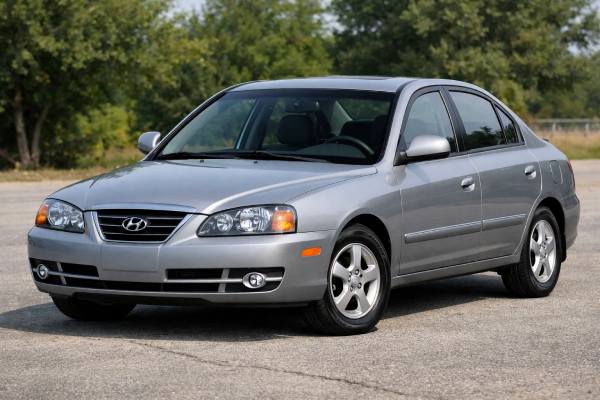
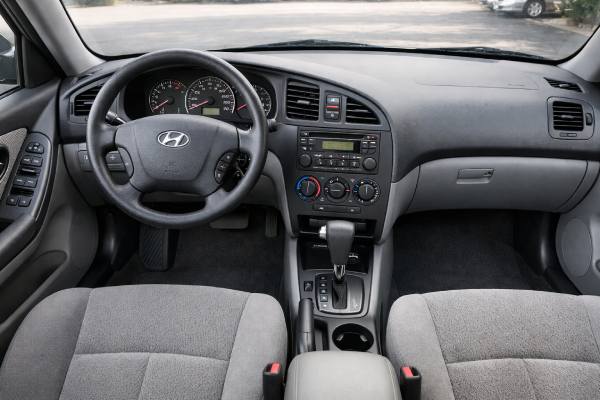

The facelifted Hyundai Elantra XD 2.0 sits in an interesting spot in early-2000s compact-car history. It is simple enough to live with today, but advanced enough to feel more mature than many budget rivals from the same era. In 132 hp form, this facelift petrol version is most closely tied to the emissions-tuned automatic North American setup, which means it trades a little peak output for smoother everyday use and cleaner certification. The bigger story, though, is not the number itself. It is the combination of a roomy body, independent rear suspension, honest controls, and low parts costs. That makes the Elantra XD facelift a smart buy when condition is strong. The risks are age-related rather than mysterious: timing-belt history, cooling-system health, automatic-transmission behavior, and corrosion matter far more than badge or trim name. Bought carefully, it remains one of the more sensible older compact sedans and hatchbacks in its price range.
Quick Specs and Notes
- The facelift XD feels roomy for its class and rides better than many cheap early-2000s rivals.
- The 2.0-litre petrol is smooth and simple, with broad parts availability and no direct-injection complexity.
- Independent rear suspension gives the car a more settled feel than many budget compacts of the time.
- Timing-belt proof and corrosion checks matter more than mileage alone on any 2003–2006 example.
- A practical oil-service interval is every 10,000 to 12,000 km or 12 months.
Section overview
- Hyundai Elantra XD Facelift Profile
- Hyundai Elantra XD 2.0 Figures
- Hyundai Elantra XD Grades and Crash Gear
- Trouble Spots and Recall History
- Service Schedule and Used Checks
- Daily Driving and Fuel Use
- Facelift Elantra Versus Rivals
Hyundai Elantra XD Facelift Profile
The facelifted XD Elantra is easy to underestimate because its styling is restrained and its brand image was still climbing at the time. Underneath, though, Hyundai gave this generation more substance than many buyers expected. The platform used a fully independent rear suspension instead of the cheaper torsion-beam setup common in budget compacts. The cabin was roomy enough that U.S. classification pushed the sedan into midsize territory by interior volume. And the facelift itself made the car look cleaner and more resolved, especially at the nose, while also refining trim structure and convenience features.
For the 132 hp version, there is one important nuance: this is not the broadest or most common global 2.0-litre facelift tune. In U.S. facelift-era form, 132 hp usually refers to the emissions-tuned automatic configuration rather than the full 138 hp ULEV version. That matters because buyers sometimes compare numbers from different markets and think something is wrong with the car. It usually is not. Hyundai offered more than one calibration, and the 132 hp version is best understood as the smoother, cleaner-certified automatic setup rather than the enthusiast pick.
In ownership terms, the facelift XD works best when you judge it by fundamentals. It is not quick, but it is comfortable enough, roomy enough, and cheap enough to justify. The controls are straightforward, visibility is good, and parts support remains decent in many markets. It is also old enough that simple engineering becomes an advantage. There is no turbocharger, no direct injection, no particulate filter, and no modern driver-assistance hardware waiting to bankrupt the owner. That does not make it trouble-free. It simply means the common problems are easier to understand.
The real buying priorities are predictable. Rust matters. Timing-belt history matters. Cooling-system condition matters. Automatic-transmission behavior matters. A rough car with glossy paint is still the wrong car. A tidy, well-documented one can still be a perfectly rational commuter or second family vehicle.
The facelift range also benefits from being the most complete version of the XD story. Hyundai had more confidence by this point, trim levels were better defined, and safety equipment was stronger on paper than many low-price rivals. That does not make it a modern safe car, and it does not turn it into a collector item. What it does mean is that the facelift 2.0 version remains one of the better older Hyundais to buy if you want honest transport with reasonable comfort and low running costs. In that role, it still makes sense.
Hyundai Elantra XD 2.0 Figures
The table below focuses on the facelift 2.0-litre 132 hp automatic version, which is the most accurate interpretation of this specific power figure in the XD facelift range. Some measurements differ slightly between sedan and hatchback, and some mechanical items differ by trim, so the notes flag those where needed.
Powertrain and efficiency
| Item | Hyundai Elantra XD Facelift 2.0 132 hp |
|---|---|
| Code | 2.0 DOHC CVVT / Beta II-family 4-cylinder petrol |
| Engine layout and cylinders | Inline-4, DOHC, 4 cylinders, 4 valves per cylinder |
| Bore × stroke | 82.0 × 93.5 mm (3.23 × 3.68 in) |
| Displacement | 2.0 L (1,975 cc) |
| Induction | Naturally aspirated |
| Fuel system | MPFI |
| Compression ratio | about 10.1:1 |
| Max power | 132 hp (98 kW) @ 6,000 rpm |
| Max torque | 180 Nm (133 lb-ft) @ 4,500 rpm |
| Timing drive | Belt |
| Rated efficiency | about 8.7 L/100 km combined (27 mpg US / 32.4 mpg UK) |
| Real-world highway @ 120 km/h | typically 7.5–8.5 L/100 km (31.4–27.7 mpg US / 37.7–33.2 mpg UK) |
Transmission and driveline
| Item | Value |
|---|---|
| Transmission | 4-speed automatic |
| Drive type | FWD |
| Differential | Open |
| Transmission fluid spec | Hyundai Genuine ATF / Diamond ATF SP-III / SK ATF SP-III equivalent |
Chassis and dimensions
| Item | Sedan baseline |
|---|---|
| Suspension front | MacPherson strut, anti-roll bar |
| Suspension rear | Fully independent multi-link, anti-roll bar |
| Steering | Rack-and-pinion power steering |
| Steering ratio | Not consistently published in open owner-facing factory data |
| Brakes | Front ventilated discs / rear drums on mainstream sedan trims |
| Wheels and tyres | 195/60 R15 most common |
| Length | 4,525 mm (178.1 in) sedan |
| Width | 1,725 mm (67.9 in) sedan |
| Height | 1,425 mm (56.1 in) |
| Wheelbase | 2,610 mm (102.8 in) |
| Turning circle | about 9.9 m (32.5 ft) |
| Kerb weight | about 1,224 kg (2,698 lb), trim-dependent |
| Fuel tank | 55 L (14.5 US gal / 12.1 UK gal) |
| Cargo volume | 367 L (13.0 ft³) sedan trunk |
| Hatchback note | 4,520 mm long and larger cargo area, trim-dependent |
Performance and capability
| Item | Value |
|---|---|
| 0–100 km/h (0–62 mph) | about 10.5–11.0 s |
| Top speed | about 185–190 km/h (115–118 mph), market-dependent |
| Braking distance | Not consistently published in factory owner literature |
| Towing capacity | Strongly market-specific; verify local approval and towbar rating |
| Payload | Trim and market dependent |
Fluids and service capacities
| Item | Value |
|---|---|
| Engine oil | API SH / ILSAC GF-1 or higher; 3.85 L (4.07 US qt) with filter |
| Coolant | Ethylene glycol base for aluminum radiator; about 6.0 L (6.4 US qt) |
| Automatic transmission fluid | SP-III-spec fluid; about 7.8 L (8.2 US qt) total fill |
| Manual transaxle fluid | 75W-90 API GL-4; 2.15 L (2.27 US qt) if manual |
| Power steering fluid | PSF-3; about 0.9 L (0.95 US qt) |
| Brake fluid | DOT 3 or DOT 4 equivalent |
| A/C refrigerant | Verify by under-hood label or VIN-specific service data |
| A/C compressor oil | Verify by VIN-specific service data |
| Key torque specs | Wheel nuts 88–108 Nm (65–80 lb-ft); drain plug 39–44 Nm (29–32 lb-ft); oil filter about 12–16 Nm (9–12 lb-ft) |
Safety and driver assistance
| Item | Value |
|---|---|
| Euro NCAP | 3 stars under older 2001 protocol for the XD platform |
| Adult occupant score | 20 points |
| Pedestrian score | 16 points under pre-2002 format |
| IIHS moderate overlap front | Good for 2004–2006 sedan rating application |
| IIHS side | Poor under original side test |
| IIHS head restraints and seats | Poor |
| ADAS suite | None in the modern sense |
The biggest specification takeaway is that the 132 hp version is not the fastest XD 2.0, but it is still the most straightforward automatic facelift variant to own. It combines simple naturally aspirated petrol engineering with a roomy body and a chassis that remains more sophisticated than many budget cars of its period.
Hyundai Elantra XD Grades and Crash Gear
Trim logic on the facelift XD depends on market, but the broad structure is consistent enough to be useful. In North America, facelift-era cars commonly appeared as GLS, GT, and later Limited. The sedan was the default practical choice, while the five-door added flexibility and, in better trims, a more interesting equipment set. If you are shopping now, the trim badge matters less than the hardware that came with it.
The core differences are worth watching. Standard sedan trims usually came with front discs and rear drums, steel wheels with covers, cloth trim, and a solid feature list for the time. GT versions, especially five-door cars, typically added rear disc brakes, alloy wheels, sport-tuned steering and suspension, fog lamps, better seat trim, and a more complete interior feel. Limited sedans leaned more toward comfort, with upgraded cabin trim and the automatic transmission as the natural match.
For this exact 132 hp article, the key detail is that the lower-output 2.0 automatic setup is most closely tied to emissions-tuned automatic trim configurations rather than the full 138 hp manual cars. That means the typical buyer experience is less about sporty tuning and more about relaxed, conventional daily use. If you want the facelift XD at its most appealing from a driver’s point of view, the GT five-door is usually the trim people remember. If you want the most faithful match to this 132 hp specification, the automatic sedan is the safer reference point.
Safety equipment was reasonably strong by early-2000s standards. Hyundai period materials highlighted dual front airbags, front seat-mounted side-impact airbags, pretensioners, force limiters, and available ABS with traction control on some trims or packages. ISOFIX and tether-anchor provisions also improved practicality for family use. Structurally, the XD had a stiff enough shell to earn some praise in certain areas, but the full crash picture is mixed.
That mix is important to explain properly. The facelift sedan performed better in IIHS moderate-overlap frontal testing than the earlier 2001-era platform result suggests, earning a Good rating for the 2004–2006 application. But the side rating remained Poor, and head-restraint performance was also Poor under the original IIHS tests. Euro NCAP’s older 2001 test for the platform delivered 3 stars and highlighted specific restraint and deformation concerns. So the right conclusion is not that the facelift magically transformed the XD into a modern safe car. It improved some outcomes and looked stronger in certain frontal tests, but it still belongs to an older safety generation.
There is no meaningful ADAS conversation here. No autonomous braking, no lane support, no blind-spot systems, and no radar cruise. That simplicity helps reliability, but it also means the driver carries all the safety workload. Buyers stepping out of newer vehicles should keep that firmly in mind. The facelift XD is best understood as a well-equipped older compact, not a bridge to modern active safety.
Trouble Spots and Recall History
The facelift Elantra XD is generally durable when serviced, but its ownership risks are easy to map because they are mostly mechanical and age-related.
Common, low- to medium-cost issues
- Timing-belt neglect: the engine is interference-sensitive enough that a broken belt can become very expensive very quickly.
- Valve-cover and cam-area seepage: older Beta-family petrol engines often show small oil leaks around upper engine seals and gaskets.
- Cooling-system fatigue: radiators, thermostat behavior, expansion tanks, and old hoses become weak with age.
- Crank and cam sensor faults: intermittent stalling, no-start behavior, and erratic running can trace back to sensors or wiring.
- Throttle-body and idle quality problems: rough idle or hesitation often improves with cleaning and basic tune-up work.
Occasional, medium-cost issues
- Automatic-transmission harshness or delayed engagement: the 4-speed automatic is usually durable, but neglected fluid, age, or valve-body wear can produce slow shifts, flare, or thunking engagement.
- Rear wheel bearings and suspension wear: humming, loose rear feel, or clunks from links and bushings are common on older high-mileage cars.
- Exhaust and heat-shield corrosion: especially on cars used in wet climates or with many short trips.
Common age-related body and chassis concerns
- front lower control arms
- subframe corrosion
- rear arches and sill edges
- brake-line and underbody rust
- tired engine mounts
- seized rear brakes on lightly used cars
The biggest officially documented warning sign is corrosion. Safety Gate in Europe and NHTSA in the United States both document front lower control arm corrosion risk on affected XD-era cars, especially in salt-belt use. In the U.S. recall campaign, dealers inspected the front lower control arms for corrosion, added drainage holes and rust-proofing where appropriate, and replaced damaged parts when needed. The front subframe was also part of the inspection logic. Even if your exact car sits outside a listed campaign or market, the message is the same: the front suspension arms and surrounding structure deserve careful inspection.
Software and calibrations are not a major ownership theme here. This is an advantage. There are no ADAS modules to recalibrate and no complex networked electronics that make ordinary repair awkward. The downside is that most problems are solved the old-fashioned way: inspection, diagnosis, and replacement of worn parts rather than a simple reflash.
When looking at one for purchase, ask for:
- timing-belt proof
- coolant service history
- automatic fluid-service records if applicable
- recall or campaign evidence where relevant
- recent suspension or brake invoices
- a cold start and a full drive, not just a quick warm loop
A good facelift XD feels mechanically plain but solid. A bad one feels loose, smells hot, leaks, or rusts in all the wrong places. That difference matters far more than odometer bragging rights.
Service Schedule and Used Checks
A conservative service plan suits the facelift XD far better than a stretched one. This is a simple naturally aspirated engine, but it still depends on clean oil, a healthy cooling system, and timely belt service. On older cars, time is often more important than mileage.
| Item | Practical interval |
|---|---|
| Engine oil and filter | every 10,000–12,000 km or 12 months |
| Air filter | every 20,000–30,000 km |
| Cabin filter | every 15,000–20,000 km or 12 months |
| Spark plugs | about every 45,000–60,000 km depending on plug type |
| Fuel filter | inspect service history and replace as needed, especially on neglected cars |
| Timing belt | around 90,000 km or 5–6 years |
| Tensioners and idlers | with timing-belt service |
| Water pump | strongly recommended with timing-belt service |
| Accessory belts and hoses | inspect every service, replace on first signs of cracking |
| Automatic transmission fluid | every 50,000–60,000 km for longevity |
| Manual transmission oil | around 60,000–90,000 km |
| Brake fluid | every 2 years |
| Brake inspection | every service |
| Coolant | every 2–4 years depending on coolant history |
| Tyre rotation | every 10,000–12,000 km |
| Alignment check | yearly or after pothole damage |
| Battery test | yearly from year 4 onward |
| Valve clearance | inspect if noisy or rough; adjust if out of spec |
The fluid logic is straightforward:
- engine oil around 3.85 L with filter
- automatic transmission total fill about 7.8 L
- coolant about 6.0 L
- power steering fluid about 0.9 L
For workshop decisions, the most useful quick values are wheel nuts at 88–108 Nm and the oil drain plug at 39–44 Nm. Those are not glamorous figures, but they matter because older cars often suffer from careless servicing more than design flaws.
For buyers, the inspection checklist is simple but non-negotiable.
- Check the timing-belt invoice. If there is no proof, budget for immediate replacement.
- Inspect rust underneath. Front control arms, subframe, brake lines, rear arches, and sill seams matter most.
- Test the automatic properly. Cold engagement, part-throttle shifts, reverse selection, and hill starts should all feel clean.
- Look for cooling-system neglect. Staining, mixed coolant, or pressure loss are bad signs.
- Watch for oil leaks. Small seepage is common; active dripping is not.
- Drive over poor surfaces. A loose or clunky XD usually needs suspension work.
The best facelift XD buys are usually 2005–2006 cars with clear timing-belt history, solid underbodies, and calm automatic behavior. A GT five-door is the enthusiast’s trim choice, but a clean automatic sedan often makes the better daily driver if comfort matters more than appearance. Cars to avoid are cheap salt-belt examples with no rust proofing record, no belt proof, and obvious transmission hesitation. Long term, these cars can last well, but only if basic maintenance stays ahead of age.
Daily Driving and Fuel Use
The facelift XD 2.0 automatic is not exciting, but it is more pleasant than its budget image suggests. The ride is supple enough for broken city streets, the body stays reasonably settled on the motorway, and the suspension has a maturity that some rivals from the same price bracket never quite achieved. That independent rear setup does not turn the car into a sports sedan, yet it helps the Elantra feel calmer and less cheap over mid-corner bumps and rough tarmac.
The steering is light and easy, with enough accuracy for everyday driving but not much real feedback. Around town that is an advantage. Parking is simple, the controls are intuitive, and outward visibility is good by modern standards. On the highway, the steering stays predictable but never especially involving. Braking feel is straightforward, though the exact confidence level depends a lot on trim because rear-disc GT cars feel a little more resolved than drum-brake sedans when pushed harder.
The powertrain character suits commuting better than quick driving. This 132 hp calibration is most closely associated with the automatic and feels like it. Throttle response is clean but not sharp, and the four-speed automatic is tuned for smoothness rather than urgency. It can hesitate a little before kickdown by modern standards, but once rolling the engine has enough mid-range to keep the car from feeling strained. It is a better fast A-to-B companion than its headline power figure suggests, even if it never feels especially quick.
Real-world fuel use remains one of the car’s stronger ownership points for a naturally aspirated automatic of its age:
- city: about 9.5–11.0 L/100 km
- highway at 100–120 km/h: about 7.2–8.5 L/100 km
- mixed use: about 8.2–9.2 L/100 km
That works out to roughly 29–26 mpg US in mixed driving, or around 34–31 mpg UK. A healthy engine, correct tyre pressures, and a working thermostat make a bigger difference than many owners realize. Short trips, worn plugs, sticky brakes, or tired oxygen-sensor behavior can easily drag the numbers down.
Noise levels are fair for the era. The engine is smoother than the diesel XD, but it still sounds like an early-2000s four-cylinder under load. Wind noise is acceptable, and tyre choice has a big effect on road roar. A well-kept facelift car feels more refined than a neglected one, because worn mounts, old suspension bushings, and poor tyres can make the whole car feel much older than it really is.
As a long-distance car, the Elantra works because it asks little of the driver. The seats are decent, the chassis is relaxed, and the engine is never especially stressed. Load it with passengers and luggage and it loses pace, but it still keeps its composure. That makes the 132 hp facelift version a better companion for ordinary use than a quick glance at the numbers might suggest.
Facelift Elantra Versus Rivals
The facelift XD Elantra competed with some very strong compact cars, so it is important to judge it honestly. Against a Toyota Corolla E120, the Hyundai usually loses on long-term resale confidence and the sheer reputation of the Toyota badge. It wins on cabin room, value for money, and often ride comfort. Against a Honda Civic VII, the Hyundai feels less clever but more conventional and often cheaper to buy in equivalent condition. Against a Ford Focus Mk1 facelift, the Hyundai loses on steering feel and driver appeal but keeps pace on comfort and often wins on equipment-per-dollar.
The most relevant rival set looks like this:
| Rival | Where the Elantra wins | Where the rival may win |
|---|---|---|
| Toyota Corolla E120 | Better value, roomy cabin, softer ride | Resale, reputation, and often durability confidence |
| Honda Civic VII | Simpler buying value, calmer ride, roomy interior | Sharper engine feel and stronger market loyalty |
| Ford Focus Mk1 facelift | Straightforward ownership, comfort, feature value | Better steering and more engaging road manners |
| Mazda3 BK | Usually cheaper to buy, simpler old-school feel | Newer platform polish and stronger cabin quality |
| Nissan Sentra B15 | Better suspension sophistication and interior space | In some markets, simpler drivetrain familiarity |
What gives the Elantra its edge is balance. It does not dominate any single category, but it avoids some of the weaknesses that make cheap older cars frustrating. It is roomy, honest, comfortable enough, and fairly easy to repair. That is why it remains appealing for buyers who want transportation more than image.
Its weaker points are also easy to define. Safety is dated. Rust can be serious. The automatic is competent rather than sharp. And the market never gave the XD the same affection that Corolla, Civic, and Focus models enjoy. That hurts enthusiasm, but it can help value.
My verdict is clear. The facelift Hyundai Elantra XD 2.0 132 hp is a smart choice when you want an older compact that feels more mature than its price suggests. The best examples are 2005–2006 cars with full timing-belt documentation, solid underbodies, and clean automatic behavior. The versions to avoid are rust-prone cars with vague history and cheap cosmetic freshening. Buy on condition, not nostalgia, and the facelift XD still makes practical sense. That is its real advantage over many better-known rivals.
References
- NEW MODEL ADDED TO HYUNDAI ELANTRA LINEUP FOR 2005 2005 (Manufacturer Publication)
- HYUNDAI ELANTRA: A “CLASS ABOVE” THE COMPETITION 2005 (Manufacturer Publication)
- 2005 Hyundai Elantra 2026 (Safety Rating)
- Adult occupant protection Child restraints Pedestrian … 2001 (Safety Rating)
- Dear 2001-2003 Elantra or 2003 Tiburon Owner 2009 (Recall Notice)
Disclaimer
This article is for informational purposes only and is not a substitute for professional diagnosis, repair, or VIN-specific workshop guidance. Specifications, torque values, intervals, procedures, and equipment can vary by VIN, market, body style, trim, and emissions calibration, so always verify details against the correct official service documentation for the exact vehicle.
If this article helped you, please consider sharing it on Facebook, X, or other platforms to support our work.