
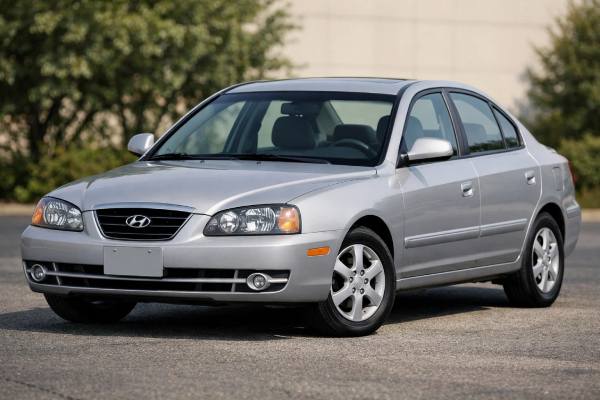
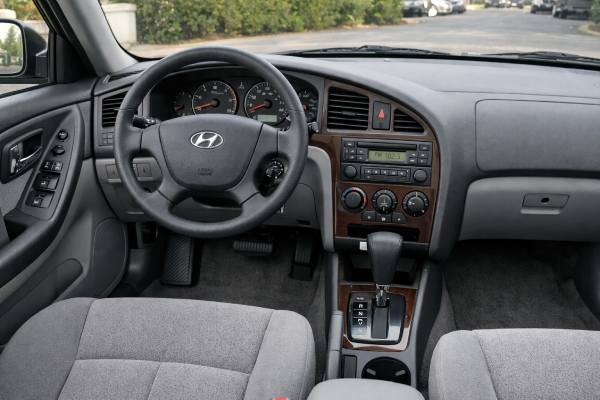
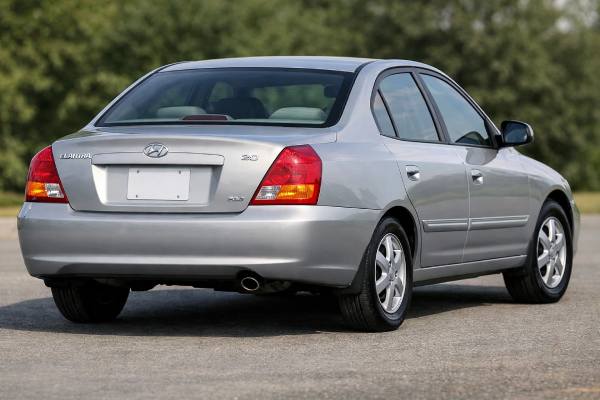
The facelifted 2003–2006 Hyundai Elantra XD 2.0 is one of those compact cars that makes more sense the longer you look at it. It arrived with cleaner styling, a more polished cabin, and, in 138 hp form, a stronger version of Hyundai’s 2.0-litre four-cylinder with continuously variable valve timing. For buyers then, it offered generous equipment and real interior space for the money. For buyers now, the attraction is different: simple, naturally aspirated engineering, reasonable parts cost, and a chassis that still feels honest and easy to live with.
The important detail is that the 138 hp rating applies to the ULEV 2.0-litre version; some automatic SULEV cars were rated lower. That distinction matters when shopping today. Get the right car, with timing-belt service, rust prevention, and cooling-system upkeep documented, and the facelift XD can still be a practical, low-stress used compact. Ignore those basics, and its value case disappears quickly.
What to Know
- The 138 hp 2.0-litre facelift car is the most useful XD powertrain for buyers who want simple performance without turbo complexity.
- Cabin room, hatchback flexibility, and a soft, mature ride are still genuine strengths.
- Parts pricing is usually reasonable, and the drivetrain is straightforward for independent shops.
- Timing-belt history and front-end rust checks matter more than odometer reading alone.
- Replace the engine oil and filter every 12,000 km or 12 months, and sooner in severe city use.
Start here
- Hyundai Elantra XD facelift character
- Hyundai Elantra XD spec sheets
- Hyundai Elantra XD trim and safety kit
- Failure points and campaign history
- Service routine and smart buying
- Ride, pace and fuel use
- Facelift XD versus compact peers
Hyundai Elantra XD facelift character
The facelifted Elantra XD is best understood as Hyundai’s move from bargain-basement transport toward something more rounded and credible in the compact class. The original XD already offered strong value, but the 2003–2006 facelift sharpened the look, cleaned up the cabin, and gave the car a slightly more grown-up personality. In 2.0-litre form, especially in 138 hp ULEV trim, it also delivered enough power to feel competitive without asking owners to accept much extra complexity.
That is still the core appeal now. The facelift XD uses old-fashioned, readable engineering. It is a front-wheel-drive compact with a naturally aspirated inline-four, multipoint injection, hydraulic steering, and either a 5-speed manual or a 4-speed automatic. There is no direct injection, no turbocharger, no dual-clutch gearbox, and no modern electronic driver-assistance layer. For some buyers, that sounds dated. For budget-minded used-car owners, it often sounds reassuring.
The 2.0-litre CVVT engine is the version to want if you actually drive the car beyond short urban hops. It has noticeably better everyday response than the smaller engines and suits the Elantra’s relaxed chassis much better. It is not quick in modern terms, but it has enough mid-range to make the car feel settled rather than strained. The manual version is the most engaging and, in many markets, the one attached to the full 138 hp figure. Some automatic SULEV versions dropped to 132 hp, so buyers should confirm emissions label, gearbox, and market specification rather than assuming all facelift 2.0 cars are identical.
Another strength is packaging. Hyundai positioned the Elantra as a roomy alternative to the Civic and Corolla, and that was not empty marketing. The sedan is usefully spacious, while the 5-door adds real cargo flexibility. The car is also compact enough to park easily, yet large enough inside that it does not feel like penalty-box transport. Even now, that balance is one of its biggest selling points.
The facelift also helped the XD feel less crude. Cabin trim remained modest, but the dashboard, instruments, and switchgear were cleaner than before. On upper trims, equipment was generous for the era. Air conditioning, power features, remote entry, decent audio, side airbags, and available ABS and traction control gave it a specification sheet that often looked stronger than its price suggested.
In today’s market, though, condition matters far more than trim. A healthy facelift Elantra XD 2.0 still feels like honest, well-judged transport. A neglected one feels like a cheap old compact with deferred maintenance everywhere. That gap defines the ownership experience more than the brochure ever did.
Hyundai Elantra XD spec sheets
For this article, the baseline is the facelifted 2003–2006 Hyundai Elantra XD with the 2.0-litre CVVT four-cylinder in 138 hp ULEV tune. Because Hyundai sold both sedan and 5-door versions, and because some automatic SULEV cars were rated at 132 hp, a few values vary by trim, body, and emissions calibration. Where that happens, the table notes it clearly.
Powertrain and efficiency
| Item | Hyundai Elantra XD facelift 2.0 |
|---|---|
| Code | 2.0-litre Beta-family DOHC CVVT inline-four |
| Engine layout and cylinders | Inline-4, 4 cylinders, DOHC, 4 valves per cylinder |
| Bore × stroke | 82.0 × 93.5 mm (3.23 × 3.68 in) |
| Displacement | 2.0 L (1,975 cc) |
| Induction | Naturally aspirated |
| Fuel system | MPFI / multipoint injection |
| Compression ratio | About 10.1:1 |
| Max power | 138 hp (103 kW) @ 6,000 rpm in ULEV tune |
| Max torque | 184 Nm (136 lb-ft) @ 4,500 rpm in ULEV tune |
| Timing drive | Belt |
| Rated efficiency | 8.7 L/100 km combined equivalent for 27 mpg US city and 34 mpg US highway manual rating |
| Real-world highway @ 120 km/h | Typically about 7.0–7.8 L/100 km (33.6–30.2 mpg US / 40.3–36.2 mpg UK) |
Transmission and driveline
| Item | Hyundai Elantra XD facelift 2.0 |
|---|---|
| Transmission | 5-speed manual standard on ULEV GLS and GT; 4-speed automatic optional |
| Drive type | FWD |
| Differential | Open |
Chassis and dimensions
| Item | 4-door sedan | 5-door hatch |
|---|---|---|
| Front suspension | MacPherson strut with anti-roll bar | MacPherson strut with anti-roll bar |
| Rear suspension | Fully independent multi-link | Fully independent multi-link |
| Steering | Hydraulic rack-and-pinion | Hydraulic rack-and-pinion |
| Brakes | Front discs, rear drums or rear discs by trim | Front discs, rear discs common on higher 5-door trims |
| Wheels and tyres | 195/60 R15 common | 195/60 R15 common |
| Length | 4,525 mm (178.1 in) | 4,520 mm (177.9 in) |
| Width | 1,725 mm (67.9 in) | 1,720 mm (67.7 in) |
| Height | 1,425 mm (56.1 in) | 1,485 mm (58.5 in) |
| Wheelbase | 2,610 mm (102.8 in) | 2,610 mm (102.8 in) |
| Fuel tank | 55 L (14.5 US gal / 12.0 UK gal) | 55 L (14.5 US gal / 12.0 UK gal) |
| Cargo volume | 368 L to 415 L market method dependent | About 569 L to parcel shelf equivalent, with much larger fold-down capacity |
Performance and capability
| Item | Hyundai Elantra XD facelift 2.0 |
|---|---|
| 0–100 km/h | About 9.0–9.5 s manual, slower with automatic |
| 0–62 mph | About 9.0–9.5 s |
| Top speed | Roughly 190–200 km/h (118–124 mph), depending on trim and transmission |
| Towing capacity | 850 kg (1,874 lb) braked / 453 kg (1,000 lb) unbraked |
| Payload | Check VIN plate; varies by body and trim |
| Braking distance | Period tests varied; no single factory figure published in the open sources reviewed |
Fluids and service capacities
| Item | Hyundai Elantra XD facelift 2.0 |
|---|---|
| Engine oil | API SH / ILSAC GF-1 or above; 3.85 L (4.07 US qt) with filter |
| Coolant | Ethylene-glycol coolant for aluminum radiator, 50:50 mix; 6.0 L (6.4 US qt) |
| Manual transmission fluid | 75W-90 API GL-4; 2.15 L (2.27 US qt) |
| Automatic transmission fluid | SP-III type; 7.8 L (8.2 US qt) total capacity |
| Power steering fluid | PSF-3; 0.9 L (0.95 US qt) |
| Brake fluid | DOT 3 or DOT 4 |
| A/C refrigerant | R134a; verify exact charge label by vehicle |
| Key torque specs | Oil drain plug 4.0–4.5 kgf·m, oil filter 1.2–1.6 kgf·m, wheel nuts vary by wheel type |
Safety and driver assistance
| Item | Hyundai Elantra XD facelift 2.0 |
|---|---|
| Euro NCAP | No facelift-specific Euro NCAP result was central to this U.S.-spec 138 hp version |
| IIHS moderate overlap front | Good |
| IIHS side | Poor |
| IIHS head restraints and seats | Poor |
| ADAS suite | None; no AEB, ACC, lane assist, blind-spot monitoring, or camera-based systems |
The key takeaway is simple: the facelift 2.0 Elantra paired useful power, roomy packaging, and uncomplicated mechanicals, but its safety and refinement standards now sit firmly in the early-2000s era.
Hyundai Elantra XD trim and safety kit
The facelift Elantra XD range is easier to understand when you separate body style, trim, and emissions tuning. In North American-spec form, the sedan was usually sold as GLS or Limited, while the 5-door appeared as GLS or GT. That matters because the 138 hp version was most closely associated with the ULEV powertrain, typically with the manual transmission. Some automatic SULEV cars were detuned to 132 hp. If you are shopping today, you need to verify the exact engine label, not just the badge on the trunk.
The GLS was the mainstream value model. It already carried a useful equipment list for the time, including air conditioning, power windows and locks, remote keyless entry, heated mirrors, cruise control, tilt steering, and a six-speaker audio system. The 5-door GLS usually added the more functional hatch layout, rear wiper, and in some versions a slightly sportier setup than the basic sedan.
The GT focused on appearance and a little more driver appeal rather than on outright performance changes. Common GT identifiers included alloy wheels, fog lamps, leather-trimmed steering wheel and shift knob, sport-tuned steering and suspension, rear disc brakes, a rear lip spoiler, and distinctive instrument lighting. It still was not a hot hatch, but it looked and felt a bit more special. The Limited sedan pushed in a different direction, adding leather, wood-look trim, a unique grille treatment, and more comfort-oriented presentation.
One important package across the facelift line was the Premium Package. On many U.S.-market cars, that added ABS and traction control along with a sunroof. That means some otherwise appealing cars still lack ABS, which is a real difference in period safety hardware and current wet-weather confidence. It also means buyers should not assume every facelift Elantra has the same brake and safety specification just because it is a top-trim badge.
Safety hardware was better than Hyundai’s older reputation suggested, but not class-leading in every test. Dual front airbags and front seat-mounted side airbags were standard across the U.S. facelift range, which was strong value at the time. The body used a stiff steel unibody with crumple zones, pretensioners, and height-adjustable shoulder anchors. Three-point belts were fitted in all seating positions, and child-seat anchorage support improved compared with earlier economy cars.
Crash results tell a mixed story. The facelift 2004–2006 sedan earned a Good IIHS moderate overlap frontal rating after Hyundai redesigned the frontal airbag system for 2004 and later production. But the same IIHS record shows poor side-impact performance and poor head-restraint results. That is the right way to judge the car now: not unsafe for its era in every area, but clearly below modern compact standards and inconsistent across test types.
There is no modern ADAS layer to discuss. No forward emergency braking, no adaptive cruise, no lane support, and no blind-spot monitoring. That reduces repair complexity, but it also means the driver is the full active-safety system.
Failure points and campaign history
The facelift Elantra XD 2.0 is usually dependable when it is maintained on schedule, but age has shifted the risk profile. The main problems now are no longer “new car issues.” They are timing-belt neglect, rust, cooling-system fatigue, worn suspension joints, old rubber, and deferred service. In other words, the Elantra is rarely ruined by one famous weakness. It is usually ruined by being cheap for too long.
A practical reliability map looks like this.
Common and low to medium cost
- Rocker-cover gasket leaks and general oil seepage.
- Engine mount wear causing vibration at idle.
- Blower resistor, power window regulator, and door-lock actuator failures.
- Anti-roll-bar links, bushes, and lower-arm wear.
- CV boot cracks and minor axle noise if ignored too long.
Occasional and medium cost
- Clutch wear or release-bearing noise on manual cars.
- Wheel-bearing hum.
- Automatic shift quality decline on poorly serviced 4-speed cars.
- Cooling-system seepage from radiator end tanks, thermostat housing, or old hoses.
- Oxygen sensor or ignition-component faults causing sluggish running or poor fuel economy.
Higher-risk if ignored
- Timing-belt failure.
- Repeated overheating leading to head-gasket damage.
- Severe rust at front suspension or subframe areas in salt-belt cars.
The 2.0-litre CVVT engine itself is fundamentally solid. It is an iron-block, aluminum-head four-cylinder that tolerates age reasonably well when oil changes, coolant quality, and timing-belt service are respected. It is not famous for extreme oil burning. Its bigger enemies are old coolant, contaminated fluid, broken engine mounts, and owners who keep driving after the first signs of overheating. The CVVT hardware is usually not the first thing that goes wrong. Routine maintenance still matters more.
The timing belt is the main engine-service risk. Hyundai’s maintenance literature set a long replacement window for the 2.0 CVVT, but today age matters as much as mileage. A belt that has simply existed for too many years is a liability even if the odometer looks low. If the seller cannot prove recent belt, tensioner, and water-pump work, you should budget for it immediately.
Rust is the other headline topic. Hyundai and NHTSA issued salt-belt recall and corrosion campaign actions involving front-end structural and suspension-related areas on affected period vehicles. Even outside recall regions, older XD cars deserve close inspection at the front lower control-arm mounting areas, subframe, sills, brake lines, and rear floor seams. A good-looking body can still hide a poor underside.
There were also campaign issues tied to early 2004 fuel-system clamp positioning and airbag-system changes. These do not mean every facelift Elantra is problematic, but they do reinforce a simple buying rule: run the VIN through the official recall system and ask for dealer documentation where possible.
In short, the facelift XD 2.0 is not fragile. It is just old enough that neglect now costs more than the car itself.
Service routine and smart buying
The right maintenance plan for the facelift Elantra XD 2.0 is conservative, predictable, and based on age as much as mileage. These cars respond very well to steady care, but they do not tolerate ignored belt service or repeated coolant neglect.
Practical maintenance schedule
| Item | Practical interval |
|---|---|
| Engine oil and filter | Every 12,000 km or 12 months; every 7,500 km in severe use |
| Engine air filter | Inspect every service; replace roughly every 48,000 km, sooner in dust |
| Cabin air filter | Replace about every 24,000 km or 12 months if fitted |
| Spark plugs | 160,000 km or 10 years for platinum plugs in 2.0 CVVT cars |
| Fuel filter | Inspect and replace by condition or when contamination symptoms appear |
| Timing belt | Inspect at 96,000 km or 5 years and replace if necessary; do not defer on age |
| Water pump and belt hardware | Best done with timing-belt service |
| Accessory belts and hoses | Inspect every service and replace on condition |
| Coolant | First replacement around 96,000 km, then by age and condition |
| Manual transmission oil | Inspect regularly; renew around 60,000–90,000 km for easier shift quality |
| Automatic transmission fluid | Sensible drain-and-fill service around 50,000–60,000 km |
| Brake fluid | Every 2 years |
| Brake pads, rotors, drums | Inspect every service |
| Tyre rotation | Every 10,000–12,000 km |
| Alignment check | After tyre-edge wear, steering pull, or suspension repair |
| 12 V battery | Test yearly after year four |
| Valve clearance | Inspect if excessive noise or vibration appears |
Fluid choices are straightforward. Engine oil should meet at least API SH or ILSAC GF-1 equivalent or better, with 5W-30 or 10W-30 class oils chosen according to climate. Engine oil capacity is 3.85 litres with filter. Coolant capacity is 6.0 litres, using proper ethylene-glycol coolant mixed 50:50 for aluminum-engine protection. Manual gearbox oil is 2.15 litres of GL-4 75W-90. Automatic capacity is 7.8 litres total, though a routine drain and refill will use less. Brake fluid is DOT 3 or DOT 4, and the power steering system uses PSF-3. These numbers make servicing easy, but they still need VIN-level confirmation before ordering parts.
As a used buy, the best facelift XD is not necessarily the highest trim. The smartest pick is usually a well-kept manual GLS or GT with documented belt work, healthy cooling system, clean underside, and working ABS if equipped. The Limited looks nicer, but more trim and more automatic-only examples can mean higher reconditioning cost with no big durability gain.
The inspection checklist is short and important:
- verify timing-belt evidence
- inspect radiator, hoses, and coolant quality
- look under the car for rust and front suspension corrosion
- check for oil leaks around the cover and front seals
- drive long enough to feel clutch, gearbox, and mounts
- test windows, blower fan, locks, ABS light, and air conditioning
Long term, the facelift XD 2.0 can still be a durable compact if bought on condition and serviced like a real car, not a disposable one.
Ride, pace and fuel use
The facelift Elantra XD 2.0 drives with the kind of balance many budget buyers still appreciate. It is not sporty, but it is composed, comfortable, and easy to understand. The steering is light but natural for the era, the pedals are simple to modulate, and the suspension is tuned more for stability and broken-road comfort than for sharp corner entry. In normal driving, that works well.
Ride quality is one of the car’s more enduring strengths. The Elantra absorbs rough urban surfaces better than some of its firmer rivals from the same period, and the fully independent rear suspension helps it feel calmer over mid-corner bumps than a basic torsion-beam compact often does. GT versions tighten body control slightly, but the car never becomes aggressive. It remains a comfortable commuter first.
The 2.0-litre engine suits the chassis much better than the smaller units. In 138 hp form, it gives the Elantra enough authority that it no longer feels like it is always asking for one more downshift. Response is linear, which is one of the advantages of a naturally aspirated engine in an older compact. There is no turbo lag, no sudden step in torque, and no complicated drive-mode behavior. What you get is what the throttle gives you. Low-rpm pull is adequate, mid-range is useful, and the engine is happiest when worked smoothly rather than aggressively.
The 5-speed manual is the best match. It lets the engine stay in its usable range and helps the car feel lighter on its feet. The 4-speed automatic is acceptable for easy driving but noticeably duller. It softens throttle response, cuts some pace, and slightly worsens economy. Buyers who spend most of their time in traffic may still prefer it, but the manual is the enthusiast and efficiency choice.
At highway speed, the Elantra is stable and relaxed enough, though age shows in wind and tyre noise. Compared with modern compacts, the cabin is louder and less isolated. Worn door seals, old tyres, or tired mounts can make that worse. A fresh, well-aligned car on good tyres feels much better than a neglected one.
Real-world fuel economy remains respectable:
- city: about 9.0–10.5 L/100 km
- highway at 100–120 km/h: about 7.0–7.8 L/100 km
- mixed use: about 8.0–9.0 L/100 km
That means roughly 22–26 mpg US in town, 30–34 mpg US on the highway, and around 26–29 mpg US combined depending on body, tyres, transmission, and state of tune. Towing or full-load driving will raise those numbers noticeably, and the owner’s manual is clear that trailer use counts as severe service. Still, for an early-2000s 2.0-litre compact with real cabin space, the numbers are fair.
The overall impression is steady competence. The facelift XD 2.0 does not excite, but it rarely feels frustrating when healthy.
Facelift XD versus compact peers
The facelift Elantra XD 2.0 was never the single best compact in its class. Its value came from how many boxes it ticked at once. Against the Toyota Corolla and Honda Civic of the same era, it usually offered more standard equipment and more apparent cabin space for the money. That remains true in the used market. You often get more car per dollar with the Hyundai. What you do not get is the same universal trust in long-term resale, safety reputation, or refinement.
Compared with the Corolla, the Elantra is roomier-feeling and often better equipped in period trim. The Toyota counters with a stronger reliability image and generally tighter long-term build quality. Compared with the Civic, the Hyundai feels softer and less polished dynamically, but often more generous on comfort and features. Buyers who care most about chassis finesse still tend to prefer the Honda. Buyers who care more about easy ownership value may lean toward the Hyundai.
The Ford Focus of the same era remains the handling benchmark. It steers better, feels more alive, and has a more eager chassis. The Elantra cannot match that. But the Hyundai often answers with lower purchase prices, a more relaxed ride, and less complicated ownership in non-performance form. For daily commuting, that difference matters more than magazine-style cornering ability.
Against the Mazda3 that followed, the facelift XD already feels a generation older. The Mazda is sharper, more modern inside, and often more desirable. Yet that higher desirability also usually means a higher price, and rust can be every bit as serious on neglected Mazdas. The Elantra’s appeal is that it stays simple and affordable, provided you buy a solid one.
One important advantage over some rivals is packaging. Hyundai marketed the Elantra as a class-above compact because of its interior volume, and there is truth in that. Families shopping on a tight budget may genuinely prefer its back seat and hatchback flexibility to tighter-feeling alternatives.
Where it clearly loses today is safety age. The facelift airbag redesign improved frontal performance, but IIHS side and head-restraint results were weak, and there is no modern electronic safety net. That alone will push some buyers toward newer cars, even if they cost more.
So the verdict is straightforward. The facelift 2003–2006 Hyundai Elantra XD 2.0 is a smart buy for owners who want space, simplicity, decent performance, and low-entry-cost ownership. It is not the class athlete or the class safety leader. It is the sensible middle ground car that can still work very well when chosen carefully.
References
- NEW MODEL ADDED TO HYUNDAI ELANTRA LINEUP FOR 2005 2005 (Manufacturer Release)
- HYUNDAI ELANTRA: A “CLASS ABOVE” THE COMPETITION 2005 (Manufacturer Release)
- 2004 Hyundai Elantra 2004 (Safety Rating)
- Gas Mileage of 2004 Hyundai Elantra 2004 (Official Fuel Economy Data)
- Hyundai Recall Campaign – Salt Belt States 2009 (Recall Notice)
Disclaimer
This article is for informational purposes only and is not a substitute for professional diagnosis, repair, or factory service information. Specifications, torque values, service intervals, procedures, and equipment vary by VIN, market, trim, transmission, emissions certification, and production date, so always verify against official service documentation and the labels fitted to the vehicle before carrying out maintenance or repairs.
If this guide was useful, please consider sharing it on Facebook, X, or another platform to support our work.