
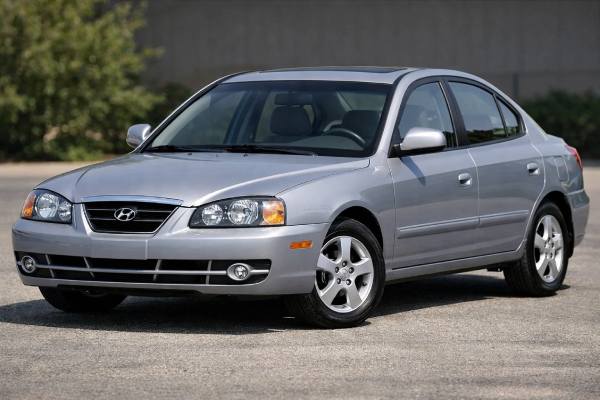
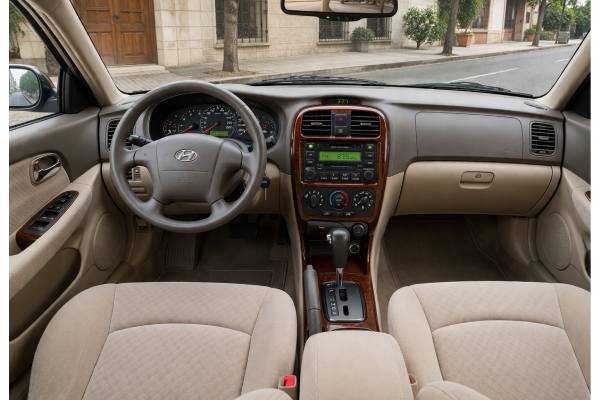

The facelifted Hyundai Elantra XD 1.8 is one of those used cars that looks simple on paper but makes a strong case in real ownership. From 2003 to 2006, Hyundai gave the XD a sharper front and rear design, a tidier dashboard, and a more polished overall feel without changing the basic formula that made the car easy to live with. In 1.8-liter form, it paired a naturally aspirated four-cylinder petrol engine with either a 5-speed manual or a 4-speed automatic, and that matters because it kept the car mechanically straightforward. There is no turbocharger, no direct injection, and very little electronic complexity by modern standards. For buyers today, that simplicity is a real advantage. The caveat is age. Timing-belt history, cooling-system condition, rust, suspension wear, and old-automatic maintenance now matter far more than trim level or original brochure price. A well-kept Elantra XD2 can still be roomy, dependable, and inexpensive to run. A neglected one can become a restoration project very quickly.
Owner Snapshot
- The 1.8-liter engine gives the facelifted XD noticeably better everyday pull than the 1.6 without adding much complexity.
- The facelift improved the cabin, lighting, and visual finish while keeping the same practical chassis and roomy interior.
- The 5-speed manual is usually the best long-term choice for cost, response, and repair simplicity.
- Timing-belt history and rust inspection matter more than mileage on almost every surviving car now.
- Engine oil and filter service every 10,000–12,000 km or 12 months is a sensible modern routine.
Section overview
- Hyundai Elantra XD2 essentials
- Hyundai Elantra XD2 specifications
- Hyundai Elantra XD2 trims and safety
- Known faults and recall history
- Maintenance plan and buying tips
- Driving feel and fuel use
- Elantra XD2 versus rivals
Hyundai Elantra XD2 essentials
The 2003–2006 facelifted Elantra XD, often referred to as the XD2, is best understood as a careful improvement of an already practical compact car rather than a full redesign. Hyundai kept the same basic platform, wheelbase, and suspension layout, but refreshed the sheet metal, lighting, bumpers, grille, and cabin. The result is a car that feels slightly more mature and better resolved than the early 2000–2003 XD, even though the core engineering stayed familiar.
That is good news for used buyers. The facelift retained one of the Elantra’s strongest traits: honest, conventional mechanical design. In 1.8-liter form, the car uses Hyundai’s naturally aspirated Beta-family petrol four-cylinder. This is the sort of engine that responds well to routine servicing and punishes neglect in fairly predictable ways. It has enough power to make the Elantra feel easier on open roads than the smaller 1.6, yet it avoids the extra fuel use and higher tax burden that sometimes came with 2.0-liter versions in certain markets. Depending on region and measurement standard, sellers may quote this engine at around 132 PS or about 130–132 hp, but the important point is how it behaves: smooth, willing, and clearly stronger than the base motor.
The facelift also improved day-to-day livability. Hyundai revised the dashboard, center console, vents, climate controls, instrument cluster, and trim presentation. Externally, the car gained a cleaner nose and tail, which made it look less anonymous. In some markets the facelift line-up also broadened, with sedan and five-door versions plus sport-oriented or better-equipped trims that added rear disc brakes, firmer suspension tuning, alloy wheels, and richer cabin materials.
As a used buy now, the Elantra XD2 sits in a useful middle ground. It is newer-looking and slightly better equipped than the earliest XD, but it still predates the heavy electronic layering that can complicate later compact cars. That makes it attractive to buyers who want a solid daily driver rather than a tech showcase. It also means that the usual old-car rules apply. A clean body shell, solid cooling system, fresh timing-belt record, healthy clutch or automatic, and even tyre wear tell you much more than a shiny exterior.
In short, the facelifted 1.8 Elantra is a sensible compact that aged better mechanically than it did emotionally. It was never the most exciting car in its class, but it remains appealing because it is roomy, reasonably refined, easy to service, and far less intimidating to own than many newer budget cars. For the right buyer, that mix still has real value.
Hyundai Elantra XD2 specifications
The table below uses the facelifted XD sedan as the baseline, because that is the clearest reference point for the 1.8-liter 132 hp version. Some trim, body, and market details differ for five-door models, regional emissions calibrations, and automatic versus manual cars, so exact figures should always be checked against the VIN plate and local handbook.
| Powertrain and efficiency | Hyundai Elantra XD facelift 1.8 |
|---|---|
| Code | Beta-family 1.8 MPI inline-four |
| Engine layout and cylinders | Inline-4, DOHC, 4 valves per cylinder |
| Displacement | 1.8 L (1,795–1,796 cc) |
| Bore × stroke | 82.0 × 85.0 mm (3.23 × 3.35 in) |
| Induction | Naturally aspirated |
| Fuel system | MPFI |
| Compression ratio | about 10.0:1 |
| Max power | 132 hp (97 kW) @ 6,000 rpm |
| Max torque | about 166 Nm (122 lb-ft) @ 5,000 rpm |
| Timing drive | Belt |
| Rated efficiency | about 7.4–7.8 L/100 km (30–32 mpg US / 36–38 mpg UK) combined |
| Real-world highway @ 120 km/h | about 7.2–7.8 L/100 km (30–33 mpg US / 36–39 mpg UK) |
| Transmission and driveline | Data |
|---|---|
| Transmission | 5-speed manual or 4-speed automatic |
| Drive type | Front-wheel drive |
| Differential | Open |
| Chassis and dimensions | Sedan baseline |
|---|---|
| Front suspension | MacPherson strut with anti-roll bar |
| Rear suspension | Independent multi-link with anti-roll bar |
| Steering | Power-assisted rack and pinion |
| Brakes | Front ventilated discs; rear drums or rear discs depending on trim and ABS package |
| Most common tyre size | 195/60 R15 |
| Length | about 4,525 mm (178.1 in) |
| Width | about 1,720 mm (67.7 in) |
| Height | about 1,425 mm (56.1 in) |
| Wheelbase | 2,610 mm (102.8 in) |
| Turning circle | about 10.2–10.4 m (33.5–34.1 ft) |
| Kerb weight | about 1,240–1,290 kg (2,734–2,844 lb) |
| GVWR | about 1,760–1,800 kg (3,880–3,968 lb), market dependent |
| Fuel tank | 55 L (14.5 US gal / 12.1 UK gal) |
| Cargo volume | sedan about 415 L (14.7 ft³); 5-door lower but more flexible |
| Performance and capability | Manual baseline |
|---|---|
| 0–100 km/h | about 9.7–10.0 s |
| Top speed | about 195–199 km/h (121–124 mph) |
| Braking distance | heavily tyre- and trim-dependent; verify tested figures locally |
| Towing capacity | market dependent; not all regions approved the 1.8 equally |
| Payload | typically about 450–520 kg (992–1,146 lb), trim dependent |
| Fluids and service capacities | Data |
|---|---|
| Engine oil | API SJ/SL or better; 5W-30 or 10W-30 by climate; about 4.0 L (4.2 US qt) with filter |
| Coolant | Ethylene glycol-based coolant; about 6.0 L (6.3 US qt) |
| Manual transmission fluid | API GL-4 SAE 75W-85 or 75W-90; 2.15 L (2.3 US qt) |
| Automatic transmission fluid | Hyundai ATF specification equivalent to period MX4/SP-series guidance; about 7.8 L (8.2 US qt) dry |
| Power steering fluid | Hyundai PSF-3 or equivalent approved fluid |
| Brake fluid | DOT 3 or DOT 4 |
| A/C refrigerant | Check under-hood label by market and compressor type |
| Key torque specs | Use VIN-specific workshop data before major service |
| Safety and driver assistance | Data |
|---|---|
| Crash ratings | Euro NCAP pre-2009 rating: 3 stars for Elantra generation benchmark |
| Headlight rating | No modern IIHS headlight score applicable |
| ADAS suite | None; ABS optional or trim dependent, no AEB, ACC, LKA, BSD, or RCTA |
This specification sheet tells the whole story of the XD2. The car wins by being straightforward, not by showing off. The 1.8 gives it enough performance to feel properly useful, while the independent rear suspension and modest kerb weight help it stay comfortable and composed.
Hyundai Elantra XD2 trims and safety
The facelifted Elantra’s trim structure depended heavily on market, and that matters because equipment differences were not merely cosmetic. Some regions offered simple GL or GLS-style trims. Others used GT-type packages for the five-door or better-equipped sedan versions. The safest approach today is to inspect the car itself rather than assuming the badge tells the whole story.
On facelift models, Hyundai revised the body with a new hood, grille, front bumper, headlights, rear bumper, and taillights. Inside, the XD2 gained a new instrument cluster, revised center console, updated HVAC controls, and a tidier dashboard layout. Those changes did not transform the car, but they made it feel newer and less sparse. If you compare a facelift car with an early XD back-to-back, the improvement in cabin presentation is easy to spot.
Equipment could vary a lot. A modest trim might include air conditioning, front airbags, power windows and mirrors, remote locking, tilt steering, and a split-fold rear backrest. Better-specified versions often added alloy wheels, front fog lights, cruise control, leather trim, upgraded audio, trip computer functions, and different seat fabrics. Some GT-style versions also brought meaningful mechanical changes, including rear disc brakes, firmer suspension tuning, and sportier steering calibration. Those changes are worth checking because they alter how the car feels on the road and how much it may cost to refresh.
Safety also needs to be viewed in period context. For the early 2000s, the Elantra looked reasonably generous in some trim levels, with front airbags and front seat-mounted side airbags available or standard depending on region. ABS was fitted in some better-equipped cars but was not universal everywhere. Child-seat provisions are simple by modern standards, and there is no modern ADAS layer at all. No automatic emergency braking, no blind-spot warning, no lane support, and no camera-based driver aids are part of the story here.
Euro NCAP’s official Elantra assessment remains the most relevant European benchmark for this generation. It rated the car at three stars under the older pre-2009 system. The detailed comments were more important than the raw star count. The Elantra showed a reasonably strong occupant cell in some respects, but restraint performance, driver protection in frontal impact, and a door opening during side impact all limited the result. In plain terms, the facelifted XD2 is safer than many older budget cars, but it is not a modern safety car by current standards.
That is why trim choice should be practical. A facelifted Elantra with working ABS, proper tyres, healthy brakes, and functioning airbags is more valuable than a theoretically rarer trim with warning lights or poor maintenance. Buyers should also confirm that the SRS light behaves correctly at startup and goes out as it should. At this age, equipment condition matters more than equipment count.
Known faults and recall history
The Elantra XD2 is generally easier to diagnose than to excuse. Most of its faults are familiar old-car issues, and that is a strength because owners are not dealing with obscure software failures or expensive hybrid hardware. The challenge is cumulative age. A twenty-year-old Elantra may have several medium-size issues at once, even if none of them is catastrophic.
The most important engine-side risk is timing-belt neglect. The 1.8 is not an engine to leave on a vague service history. If belt, tensioner, and water-pump replacement cannot be documented, that job moves straight to the top of the to-do list. Cooling-system weakness is the next major theme. Old radiators, heater hoses, plastic end tanks, thermostats, and expansion-bottle caps can all cause creeping temperatures or unexplained coolant loss. On a test drive, any sign of unstable temperature, poor heater output, or dried coolant staining deserves attention.
Common low- to medium-cost wear points include:
- Front lower-arm bushes and anti-roll-bar links
- Ball joints and tired dampers
- Engine and gearbox mounts
- Rocker-cover gasket leaks
- Power-steering hose seepage
- Wheel bearings on higher-mileage cars
- Rear brake drag on disc-equipped versions
- CV-boot splits and outer-joint clicking on neglected examples
The manual transmission is usually durable if the oil is clean and the linkage is in good order. The 4-speed automatic can still be acceptable, but only when it has been maintained. Rough engagement, delayed take-up, flare between shifts, or dark burnt fluid are all warning signs. At this age, the automatic is not a reason to reject every car, but it should lower your tolerance for missing service history.
Electrical problems are usually modest rather than dramatic. Expect occasional issues with window regulators, blower resistors, central locking, aging ground points, dashboard illumination, or sensor-related warning lights. These are usually manageable. The bigger concern is airbag-system integrity. Facelift-era Elantras were affected by official U.S. recall actions involving the occupant-classification system in certain 2004–2005 cars, and earlier official actions also addressed fuel-vapor-hose-clamp positioning on some 2004 vehicles. Even if your local-market car was not covered by the same campaign wording, those notices are a reminder to take SRS lights and fuel smells seriously.
Rust remains the true make-or-break issue. Check the sills, wheel arches, strut towers, rear trailing-arm and subframe mounting points, floor edges, brake and fuel lines, and the underside of the front suspension crossmember. Surface corrosion is one thing. Structural corrosion is another. On many Elantras now, body condition is the deciding factor. A mechanically average car with a clean shell is usually worth more than a smoother-running car with serious rust.
Maintenance plan and buying tips
A facelifted Elantra XD2 is easiest to own when you treat it like an honest old petrol car rather than a disposable bargain. It likes regular fluids, timely rubber-part replacement, and a little preventive work before small faults become roadside failures. That is not a criticism. It is simply how well-kept older compact cars survive.
| Maintenance item | Practical interval |
|---|---|
| Engine oil and filter | Every 10,000–12,000 km or 12 months |
| Severe-use oil service | Every 7,500 km or 6 months |
| Engine air filter | Inspect every service; replace around 20,000–30,000 km if dirty |
| Cabin air filter | Inspect annually; usually replace every 20,000–30,000 km |
| Spark plugs | About 40,000–60,000 km for standard plugs; longer for platinum types |
| Fuel filter | Replace by condition or scheduled service if fitted as a service item in your market |
| Timing belt, tensioners, and idlers | Replace at the manufacturer interval or immediately if history is unknown |
| Water pump | Best replaced with the timing belt |
| Coolant | Every 3–5 years depending on type and condition |
| Brake fluid | Every 2 years |
| Manual gearbox oil | About every 60,000–80,000 km is sensible |
| Automatic transmission fluid | About every 40,000–60,000 km is sensible on an older unit |
| Accessory belts and hoses | Inspect at every service |
| Brake pads, discs, drums, and handbrake | Inspect at every service |
| Tyre rotation and alignment | Rotate every 10,000–12,000 km; align when wear or pull appears |
| 12 V battery | Test annually after year 3 of battery age |
For practical decision-making, the key fluid data is straightforward:
- Engine oil: about 4.0 L with filter
- Manual transmission oil: 2.15 L
- Automatic transmission fluid: about 7.8 L dry
- Coolant: about 6.0 L
- Brake fluid: DOT 3 or DOT 4
- Power steering fluid: approved Hyundai-type PS fluid
The buying checklist should focus on structural and maintenance truth, not cosmetics:
- Ask for proof of timing-belt replacement.
- Inspect the underside before you admire the paint.
- Check for coolant residue around the radiator, hose joins, and thermostat housing.
- Look for oil seepage from the rocker cover and front seals.
- Listen for suspension knocks over broken surfaces.
- Confirm the clutch is smooth and the gearbox shifts cleanly.
- On the automatic, test cold engagement, hot engagement, and kickdown.
- Watch that the ABS and SRS lights illuminate and then go out properly.
- Check tyre wear across the tread for alignment or bush trouble.
- Verify that all locks, windows, fans, and climate controls work.
The best facelift 1.8 to buy is usually a manual sedan or five-door with full records, a recent timing-belt job, rust-free suspension points, and sensible tyres. Cars to be more cautious with include neglected automatics, heavily modified examples, and low-priced cars with fresh underseal but no photographic proof of the metal beneath. Long-term durability is respectable when the shell is sound. If the shell is not sound, nothing else matters very much.
Driving feel and fuel use
The facelifted Elantra XD2 drives with an easy, slightly understated character. It is not as sharp as a Ford Focus Mk1, and it does not have the reputation for mechanical polish that followed the Toyota Corolla, but it feels more substantial than many people expect from an early-2000s Hyundai. The controls are light, visibility is good, and the car settles into a relaxed rhythm very quickly.
The 1.8-liter engine is the right size for the chassis. It does not turn the Elantra into a sports sedan, but it gives the car enough mid-range usefulness that it feels less strained than the 1.6. There is no turbo lag, no peaky delivery, and no complicated mode logic. Just a clean, linear naturally aspirated response that rewards smooth inputs. The manual gearbox suits the engine best. It makes the most of the available power, gives the driver more control on hills and overtakes, and tends to be the more durable choice over time. The automatic is calmer in traffic but duller everywhere else.
Ride quality is one of the Elantra’s quiet strengths. The suspension tune leans toward comfort, and the independent rear layout helps the car stay composed over broken surfaces. It does not hide worn dampers or cheap tyres well, though. A tired example can feel loose and noisy, while a sorted one feels steady and surprisingly mature. Steering feedback is modest, but straight-line stability is decent when the alignment and bushings are right.
Noise, vibration, and harshness are typical for the era. Around town, the Elantra feels refined enough. At motorway speeds, wind noise and tyre roar become more noticeable, especially on older seals or budget tyres. The engine itself is usually smooth if serviced properly. Harsh vibration at idle often points to tired engine mounts rather than to a serious internal problem.
Real-world fuel use is fair for a compact 1.8 from this period. Expect roughly 9.0–10.0 L/100 km in heavy city use, around 7.2–7.8 L/100 km at a steady 120 km/h highway pace, and about 7.6–8.5 L/100 km in mixed use for a healthy manual car. The automatic generally uses a little more, especially in stop-start driving. Those numbers are not modern-hybrid impressive, but they are reasonable for a simple naturally aspirated compact that still offers useful performance.
The overall driving verdict is easy to summarize: the XD2 is pleasant, predictable, and more comfortable than sporty. That is exactly why it still works as a budget daily driver. It asks little of the driver and, when maintained properly, usually gives back more than its price suggests.
Elantra XD2 versus rivals
Compared with its closest early-2000s rivals, the facelifted Elantra XD2 is the value-minded all-rounder. It does not dominate any single category, but it avoids obvious disaster areas when bought carefully. Against the Toyota Corolla, the Hyundai usually loses on reputation and resale confidence, but often wins on equipment per euro or pound spent. Against the Honda Civic, it feels less crisp and less eager, though typically cheaper to buy and simpler to justify as a basic commuter.
The Ford Focus remains the more satisfying driver’s car. Its steering and chassis balance are better, and keen drivers still notice that immediately. The Elantra counters with a softer ride, a calmer personality, and in many markets a lower entry price for similar age and mileage. Compared with the Opel Astra G or Renault Mégane of the same era, the Hyundai sits comfortably in the middle. It lacks some of the image or cabin flair of those rivals, but it usually avoids the more expensive engineering complications that can appear when older European compact cars fall behind on maintenance.
Where the Elantra makes the strongest used-car case is simple ownership. Its 1.8 engine is easy to understand, the manual transmission is dependable, parts support is generally good, and the car is roomy enough to function as a proper family compact rather than a city-only runabout. The weak point is that condition now varies enormously. A clean Corolla or Civic may still be worth more money for a reason. But when the budget is limited and the Hyundai has the better shell, better service file, and fresher maintenance, it can be the smarter buy.
That is the real conclusion. The facelifted Elantra XD 1.8 is not a collector’s choice or a driver’s icon. It is a sensible, roomy, conventional compact car that still offers honest value when rust is controlled and the maintenance record is real. For practical buyers, that is often enough.
References
- HYUNDAI FOR 2005 2004
- Manual Transmission Oil – Vehicles | Hyundai Motor India 2026
- Automatic Transmission Oil – Vehicles | Hyundai Motor India 2026
- Adult occupant protection Child restraints Pedestrian … 2001 (Safety Rating)
- Motor Vehicle Recall 2005 (Recall Notice)
Disclaimer
This article is for informational purposes only and is not a substitute for professional diagnosis or repair. Specifications, torque values, intervals, approvals, and procedures vary by VIN, market, body style, transmission, and equipment, so always verify details against official service documentation before maintenance, repair, or parts ordering.
If this guide helped you, please consider sharing it on Facebook, X/Twitter, or another social platform to support our work.