
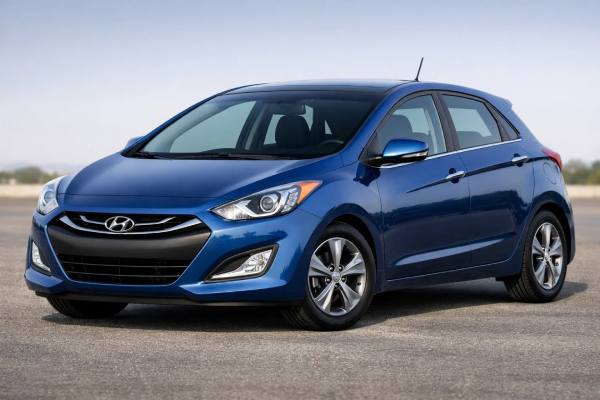
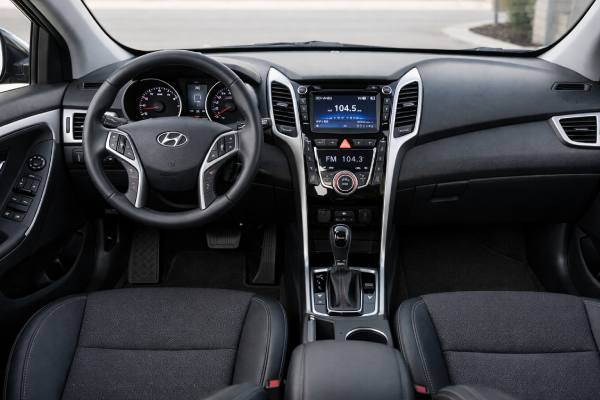
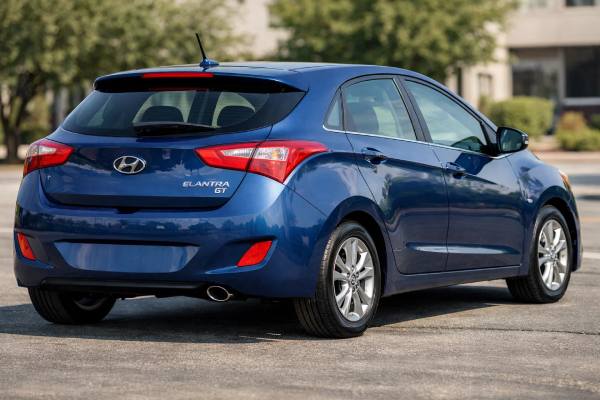
The facelift-era Hyundai Elantra GT 2.0 GDI is the version of the GD hatchback that makes the strongest all-round case today. It combines the practicality of a five-door body with a more useful 2.0-litre direct-injection engine, a six-speed manual or automatic, and a chassis tuned to feel a little sharper than the Elantra sedan without becoming tiring to live with. That balance is the whole point of the car. It is not a hot hatch, but it is noticeably more versatile and more engaging than many ordinary compact sedans from the same period. The 173-hp Nu GDI engine gives it enough real-world pace, while the hatchback body adds the sort of cargo flexibility many compact buyers actually need. The main caution is ownership history. Because this model falls into Hyundai’s wider Nu-engine inspection and warranty-extension story, service records, software updates, and cold-start behavior matter far more than the badge alone.
What to Know
- The hatchback body is the GT’s biggest strength, with genuinely useful cargo flexibility for daily life.
- The 2.0 GDI engine gives the facelifted GT a meaningful performance upgrade over the earlier 1.8 model.
- Higher trims add worthwhile comfort and tech without changing the car’s practical character.
- Nu 2.0 GDI cars should be checked for engine campaign history, cold-start noise, and oil-consumption signs.
- A sensible oil-service interval is every 12 months or about 12,000 km, with shorter intervals in severe use.
On this page
- Elantra GT GD Design and Role
- Elantra GT GD 2.0 GDI Data
- Elantra GT GD Trims and Safety
- Common Wear Points and Factory Actions
- Service Strategy and Used-Buying Advice
- Hatchback Manners and Real Economy
- GT Value Against Class Rivals
Elantra GT GD Design and Role
The 2014–2017 Elantra GT sits in a useful niche that is now much smaller than it used to be. It is a compact hatchback built for buyers who want sedan-like efficiency and cost control, but who also need the flexibility of a proper rear hatch and fold-flat rear seats. Hyundai understood that this version had to feel a little more special than the ordinary Elantra sedan, so the GT got its own body, a more cargo-friendly layout, and a slightly more responsive suspension tune. With the 2014 update, it also received a stronger 2.0-litre Nu GDI engine that replaced the earlier 1.8-litre unit and made the car feel much better matched to its role.
That engine swap is the main reason this version matters. The earlier GT was practical, but the 2.0 GDI facelift brought a more confident mid-range and a healthier overall character. At 173 horsepower and 154 lb-ft, it is not fast in the modern turbo-hatch sense, but it gives the GT enough energy to feel comfortable on highways, on-ramps, and loaded weekend trips. Hyundai paired it with a six-speed manual or a six-speed automatic, which means the car avoids the complexity and long-term uncertainty of an early dual-clutch setup. That is a real advantage in the used market.
The body style remains the Elantra GT’s strongest asset. Passenger volume sits at 96 cubic feet, cargo volume is 23 cubic feet with the rear seat up, and maximum cargo capacity reaches 51 cubic feet with the seats folded. Those are not token hatchback numbers. They make the GT meaningfully more useful than the Elantra sedan and let it compete with practical five-doors like the Mazda3 hatch, Ford Focus hatch, Volkswagen Golf, and Toyota Matrix. For an owner who carries luggage, bicycles, flat-pack furniture, or hobby gear, this is the feature that keeps the GT relevant.
Hyundai also tried to give the car a more premium feel than its price suggested. Even early facelift cars came with a fairly mature cabin layout, good basic ergonomics, heated front seats, Bluetooth, and driver-selectable steering modes. Later years added more infotainment support, new trim packaging, and extra convenience features that made the car feel less stripped than some rivals.
The result is a car with a very clear identity. It is not the lightest or most playful hatch of its era, and it is not the most prestigious. What it does well is combine useful space, honest equipment, and low-drama daily usability. If you approach it as a practical hatch with a welcome bit of extra power, it makes a lot of sense. If you expect it to behave like a true performance model, you are asking the wrong question.
Elantra GT GD 2.0 GDI Data
For the facelift-era 2014–2017 Elantra GT, Hyundai’s public launch and update material provides a solid foundation for the key numbers: power, torque, weight range, passenger and cargo volume, and fuel-economy ratings. A few workshop-level items vary by transmission, service method, and market, so those are identified carefully rather than overstated.
| Powertrain and efficiency | Figure |
|---|---|
| Code | Nu 2.0 GDI family |
| Engine layout and cylinders | Inline-4, DOHC, 4 cylinders |
| Valves per cylinder | 4 |
| Bore × stroke | 81.0 × 97.0 mm (3.19 × 3.82 in) |
| Displacement | 2.0 L (1,999 cc) |
| Induction | Naturally aspirated |
| Fuel system | GDI / direct injection |
| Compression ratio | Commonly catalogued at about 11.5:1 |
| Max power | 173 hp (129 kW) @ 6,500 rpm |
| Max torque | 154 lb-ft (209 Nm) @ 4,700 rpm |
| Timing drive | Chain |
| EPA rated efficiency, manual | 24 city / 34 highway / 27 combined mpg |
| EPA rated efficiency, automatic | 24 city / 33 highway / 27 combined mpg |
| Rated efficiency, manual | About 9.8 / 6.9 / 8.7 L/100 km city / highway / combined |
| Rated efficiency, automatic | About 9.8 / 7.1 / 8.7 L/100 km city / highway / combined |
| Real-world highway @ 120 km/h | Usually around 6.8–7.8 L/100 km in healthy condition |
| Transmission and driveline | Figure |
|---|---|
| Transmission | 6-speed manual or 6-speed automatic |
| Drive type | FWD |
| Differential | Open |
| Chassis and dimensions | Figure |
|---|---|
| Suspension, front | MacPherson strut with anti-roll bar |
| Suspension, rear | Coupled torsion beam with monotube dampers |
| Steering | Motor Driven Power Steering |
| Steering modes | Comfort / Normal / Sport |
| Brakes | 4-wheel disc ABS |
| Wheels and tyres | 16-inch alloys standard; 17-inch alloys on higher trims and packages |
| Length | 169.3 in (4,300 mm) |
| Width | 70.1 in (1,781 mm) |
| Height | 57.9 in (1,471 mm) |
| Wheelbase | 104.3 in (2,649 mm) |
| Kerb weight | About 2,745–2,959 lb (1,245–1,342 kg), depending on transmission and equipment |
| Fuel tank | 13.2 US gal / 50.0 L / 11.0 UK gal |
| Passenger volume | 96.0 ft³ |
| Cargo volume | 23.0 ft³ seats up / 51.0 ft³ seats folded |
| Performance and capability | Figure |
|---|---|
| 0–100 km/h (0–62 mph) | Typically around the high-8-second range manual, low-9-second range automatic |
| Braking distance 100–0 km/h | No dependable Hyundai-published open figure for the exact GT trim |
| Towing capacity | Not a major factory-rated use case in most GT markets; verify locally |
| Payload | Equipment-label dependent |
| Fluids and service capacities | Figure |
|---|---|
| Engine oil | 4.0 L (4.23 US qt) drain and refill |
| Oil specification | API SM / ILSAC GF-4 or higher |
| Oil viscosity | 5W-20 preferred in many manuals; 5W-30 and 10W-30 appear in the temperature chart |
| Coolant | Ethylene glycol-based long-life coolant; exact full-system fill varies with service state |
| Manual transaxle fluid | Verify by gearbox code; commonly around 1.9–2.0 L |
| Automatic transmission fluid | Hyundai SP-IV only; total quantity varies by dry fill vs drain-and-fill |
| A/C refrigerant | R-134a; exact charge varies by label and equipment |
| Key torque specs | Verify from VIN-specific workshop data before service-critical work |
| Safety and driver assistance | Figure |
|---|---|
| Airbags | 7, including driver knee airbag |
| Stability and braking systems | ESC, Traction Control, VSM, ABS, EBD, Brake Assist |
| NHTSA | Period U.S.-market material cites a 5-star overall rating |
| IIHS | Hatchback-specific public rating data are less cleanly separated than the sedan’s for this generation |
| ADAS suite | None; no AEB, ACC, lane support, BSD, or traffic-sign assist |
The numbers tell the truth about the GT. It is a practical hatch first, but not an underpowered one, and that makes it much easier to recommend than many compact five-doors that promised versatility but felt short on power.
Elantra GT GD Trims and Safety
The Elantra GT range was never especially confusing, but it did change enough during 2014–2017 that used buyers should look at actual equipment, not just the badge on the tailgate. The basic shape stayed the same across the facelift years: one five-door hatch with the 2.0 GDI engine, manual or automatic transmissions, and a menu of trim packages that changed the car’s comfort, style, and tech more than its core hardware.
Base GT models were already reasonable daily drivers. Even without the bigger option packages, they typically came with heated front seats, Bluetooth connectivity, a touchscreen audio interface, cruise control, 16-inch alloy wheels, a rear spoiler, a rear wiper, and the full core safety package. That matters, because it means the entry-level GT was never a bare commercial-grade hatch. It was pitched as a genuinely usable compact for private buyers.
Step up the ladder and the car becomes noticeably more appealing. Later 2014–2016 package combinations added leather seating, a panoramic sunroof, navigation, a rearview camera, dual-zone automatic climate control, automatic headlights, a power driver seat, upgraded audio, and 17-inch alloy wheels with a sharper suspension tune. By 2017, Hyundai added the Value Edition, which bundled many of the items buyers actually wanted, including leather seats, 17-inch alloys, proximity-key entry with push-button start, fog lamps, power driver-seat adjustment, heated front seats, auto headlights, and the sport-tuned suspension. That package is often the sweet spot in the used market because it adds most of the “nice to have” items without the cost of chasing the rarest fully loaded car.
Quick identifiers help when the trim history is fuzzy. The easiest clues are wheel size, seat material, whether the car has a panoramic roof, whether it has push-button start, and whether the center screen includes factory navigation and a rear camera. The 17-inch cars also tend to sit with a slightly more assertive stance and, when healthy, feel a little more tied down on the road.
Safety is one of the GT’s better features for its era. Hyundai gave it seven airbags, including a driver knee airbag, plus Electronic Stability Control, Traction Control, Vehicle Stability Management, Electronic Brake-force Distribution, Brake Assist, active front head restraints, and four-wheel disc brakes. That is a strong standard package for a compact hatch from the mid-2010s. In real use, it means the GT started with a solid passive and active safety foundation even before you look at crash-test ratings.
The one important limitation is technological age. The facelift GT does not offer modern driver-assistance features like autonomous emergency braking, blind-spot monitoring, rear cross-traffic warning, lane-centering, or adaptive cruise control. So while its safety basics are strong, it still belongs to the pre-ADAS era. Buyers who understand that trade-off usually appreciate the car more, because what it gives you is a strong hardware foundation without the added calibration complexity that comes with later sensor-heavy systems.
Common Wear Points and Factory Actions
The Elantra GT 2.0 GDI’s reliability story is less about one guaranteed failure and more about a known risk area plus the usual age-related wear of any mid-2010s compact car. The main area to understand is the Nu 2.0 GDI engine. Hyundai’s later dealer best-practice and warranty-extension documents make clear that 2014–2017 Elantra GT models with the Nu 2.0 GDI fall within the broader engine inspection, knock-sensor software, and extended-coverage conversation. That does not mean every engine is defective. It does mean buyers should treat cold-start behavior, oil history, and open-campaign status as major purchase filters.
The symptoms that matter most are persistent ticking or knocking, especially on cold start, oil-consumption complaints, metallic noise that rises with load, and engine warning behavior tied to protective software logic. In the Hyundai campaign logic, abnormal engine-bearing noise can trigger a flashing MIL, fault code P1326, and a reduced-performance protection mode. That is a high-severity issue, not because it is guaranteed to happen, but because it goes straight to the engine’s economic value. The recommended remedy path is not guessing. It is checking VIN eligibility, confirming KSDS or related update completion, and having the engine inspected properly before the problem becomes catastrophic.
Beyond that headline issue, the Nu GDI shares some normal direct-injection ownership themes. Intake-valve carbon build-up is not automatic, but it is possible over time because the fuel is injected directly into the chamber rather than washing over the back of the intake valves. Short-trip use, low-quality fuel, and infrequent hard running can make deposits worse. Symptoms usually include a rough idle, lazy response, or misfire under load. The remedy is intake cleaning, not panic.
The rest of the car is more conventional. Common low-to-medium cost wear items include front drop links, dampers, front lower-arm bushes, rear suspension noise, battery weakness, brake-slide corrosion, wheel bearings, and ignition coils. None of those faults is unusual. What matters is how many of them have been ignored at the same time. A GT with worn tyres, tired front-end joints, weak battery voltage, and overdue plugs can feel much worse than the design actually deserves.
There is also one important recall to verify. Certain 2013–2014 Elantra GTs were recalled for deterioration of the brake pedal stopper pad, which could leave the brake lamps illuminated, affect shift-interlock behavior, or alter brake-pedal-override logic. The fix is straightforward, but it should still be confirmed by VIN because it is a genuine safety campaign, not a minor service note.
So the honest verdict is this: the GT is not a uniformly troublesome hatchback, but it is not a car to buy casually. The engine campaign history matters, the recall history matters, and stacked neglect matters. A good example is still a good car. A vague one can become expensive quickly.
Service Strategy and Used-Buying Advice
The Elantra GT 2.0 GDI rewards sensible maintenance. It is not an engine that likes being ignored, and it is not a chassis that hides deferred upkeep very well. The best ownership approach is simple: keep oil clean, keep the ignition system healthy, service the transmission sensibly, and do not wait for small suspension and cooling problems to become larger ones.
| Item | Practical interval | Notes |
|---|---|---|
| Engine oil and filter | Every 12,000 km or 12 months | Severe use: every 6,000 km or 6 months |
| Engine air filter | Inspect every service, replace around 24,000–48,000 km | Sooner in dusty use |
| Cabin air filter | About every 24,000 km or 24 months | Replace earlier if airflow drops |
| Spark plugs | Around 168,000 km on long-life plugs | Replace earlier on misfire or weak idle |
| Coolant | Official long-life schedules can run very long; many cautious owners shorten the first interval | Verify against the exact manual |
| Brake fluid | Every 2–3 years | Time matters more than mileage here |
| Drive belts | Inspect from around 96,000 km onward | Replace on cracking, chirp, or tension loss |
| Manual transaxle fluid | Refresh around 80,000–100,000 km on a used car with unknown history | Use the correct GL-4 fluid |
| Automatic transmission fluid | Service earlier in hard use or unknown-history cars | Use Hyundai SP-IV only |
| Tyre rotation and alignment | About every 10,000–12,000 km | Uneven wear often reveals suspension issues |
| Battery and charging test | Yearly after battery age exceeds 4 years | Weak voltage can mimic other faults |
| Timing chain system | No fixed replacement interval | Inspect on rattle, fault codes, or poor oil history |
The engine oil is the priority item. Hyundai listed 4.0 litres for drain-and-refill, and on a GDI engine with known campaign history, that is not an item to stretch casually. Clean oil is not a guarantee against every Nu-engine problem, but poor oil history is one of the fastest ways to make a questionable car less appealing.
Fuel quality also matters more than many owners expect. Hyundai’s guidance for these years makes clear that detergent fuel quality and additive use can matter when top-tier fuel is not regularly used. That is not a marketing gimmick. It is a reminder that deposit control is part of long-term drivability on a direct-injection engine.
As a used purchase, the GT should be judged in this order: VIN history, engine behavior, suspension condition, and overall trim. Ask first whether the car has had the engine software campaign work completed and whether it falls within the Nu 2.0 extended-coverage group. Then start the car cold. Listen carefully for lower-end knock, persistent ticking, chain rattle, or an obviously rough idle. After that, look for normal hatchback-specific wear: tailgate struts, rear-wiper operation, cargo-floor trim damage, and water sealing around the hatch opening.
The best cars are stock or lightly used examples with clear service records, good tyres, smooth cold-start behavior, and no mystery warning lights. A Value Edition or Tech-equipped car can be a great buy, but only if the mechanical side is convincing. Avoid modified examples, vague sellers, and cars with bargain-basement maintenance history. The GT is good enough to deserve proper upkeep, and the best examples prove it.
Hatchback Manners and Real Economy
The facelift Elantra GT drives the way a practical compact hatch should drive: light, tidy, and easy to understand. It is not a genuine sport hatch, but it is more responsive than the Elantra sedan and more enjoyable than buyers often expect from a car marketed mainly on practicality. Around town, the shorter overall body and broad hatchback visibility make it easy to place. The steering is light in Comfort mode, the controls are simple, and the 2.0 GDI engine gives the car enough immediate response that it never feels flat-footed in normal use.
The engine is the key improvement over the earlier 1.8 GT. The 2.0 GDI does not deliver a turbocharged surge, but it feels noticeably healthier in the mid-range and more confident when merging, climbing, or carrying passengers. The manual is the cleaner enthusiast choice because it lets you use the engine more actively, but the automatic is perfectly reasonable for daily driving and suits the GT’s practical mission well. Neither gearbox transforms the car into a performance model, yet both are well matched to the engine.
Ride and handling are slightly more interesting than the GT’s image suggests. Hyundai gave the GT a sport-tuned suspension, and higher trims or packages on 17-inch wheels feel a little more alert than the base 16-inch cars. The trade-off is simple. The 16-inch setup is usually the best all-round choice for ride comfort and low operating cost. The 17-inch cars look better and respond a bit more cleanly in corners, but they also ride more firmly and magnify the effect of poor tyres or worn dampers.
Noise levels are acceptable for the class and period. Engine sound is modest most of the time, though the GDI engine becomes more noticeable when worked hard. Wind and tyre noise are present at highway speed, but not to the point of making the car tiring. In a well-kept example, the GT feels more mature than cheap.
Real-world economy remains one of its better traits. The official EPA rating of 27 mpg combined works out to about 8.7 L/100 km combined, and in real use that is attainable. Expect roughly 8.0–9.5 L/100 km in dense city driving, around 6.8–7.8 on a steady open-road run, and about 7.4–8.5 in mixed driving depending on transmission, tyres, temperature, and how heavily the car is loaded. A car with weak ignition components, poor alignment, dirty intake valves, or dragging brakes will miss those figures badly, so fuel use is also a useful health indicator.
The GT’s road verdict is therefore straightforward. It feels more useful than sporty, but it is not dull. It has enough engine, enough chassis, and enough refinement to make daily life easy, and that is exactly why it still works.
GT Value Against Class Rivals
The facelift Elantra GT competes best when judged as a practical hatchback rather than a budget performance car. Its natural rivals are the Mazda3 hatchback, Ford Focus hatchback, Volkswagen Golf, Toyota Matrix, Kia Forte5, and later Chevrolet Cruze hatch. Against that group, the Hyundai is rarely the absolute class leader in one dramatic area. Instead, it wins by putting together a useful mix of space, features, simple packaging, and generally manageable running costs.
Against the Mazda3, the GT gives away some steering feel and overall polish, but it often matches or beats it on equipment per dollar and cargo usefulness. Compared with the Focus hatch, the Hyundai is usually the easier long-term ownership bet because it avoids the Focus’s early dual-clutch baggage and stays mechanically conventional. The Golf feels more premium and more refined, but also tends to ask for more money upfront and can bring higher parts and labor costs as it ages. The Matrix remains a durable practicality benchmark, yet the GT feels more modern, quieter, and better equipped for its age.
What makes the GT particularly relevant now is that it is one of the last compact hatchbacks of its type before the segment became more crowded with turbo engines, complicated transmissions, and crossover alternatives. It gives you a five-door body, a naturally aspirated engine, a conventional automatic or manual, and a cabin that still feels current enough to live with. That combination is not glamorous, but it is valuable.
Within Hyundai’s own lineup, the GT is arguably the most appealing Elantra variant of the 2014–2017 period if you care about versatility. The sedan is more common and often cheaper, but the hatch is more useful. The coupe looks flashier, but it is far less practical. That leaves the GT as the balanced choice for buyers who want one car to do everything reasonably well.
The simplest way to summarize it is this: the facelift Elantra GT 2.0 GDI is the smart-value hatch for buyers who care more about usable space, honest equipment, and everyday drivability than about badge prestige or outright speed. If you buy one with the right history, it still deserves serious consideration.
References
- HYUNDAI MOTOR AMERICA LAUNCHES 2014 ELANTRA GT AT LOS ANGELES AUTO SHOW 2013 (Manufacturer Release)
- 2017 HYUNDAI ELANTRA GT UPDATED WITH THE LATEST TECH AND NEW TRIM LEVEL 2016 (Manufacturer Release)
- Fuel Economy of the 2014 Hyundai Elantra GT 2014 (Fuel Economy)
- IMPORTANT SAFETY RECALL 2017 (Recall Notice)
- TXXM / T6G / Engine II Class Action Settlement – Engine Warranty Extension and Engine Inspect and Replace Dealer Best Practice 2023 (Warranty Extension)
Disclaimer
This article is for informational purposes only and is not a substitute for professional diagnosis or repair. Specifications, torque values, intervals, procedures, and equipment can vary by VIN, market, trim, package, and transmission, so always verify against the official service documentation for the exact vehicle before carrying out maintenance or making a buying decision.
If this guide helped you, please consider sharing it on Facebook, X, or another social platform to support our work.