
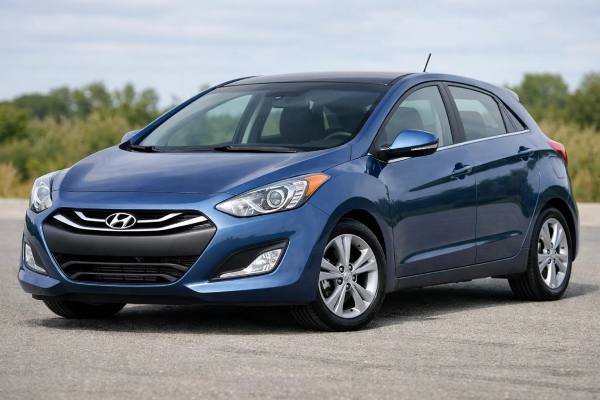
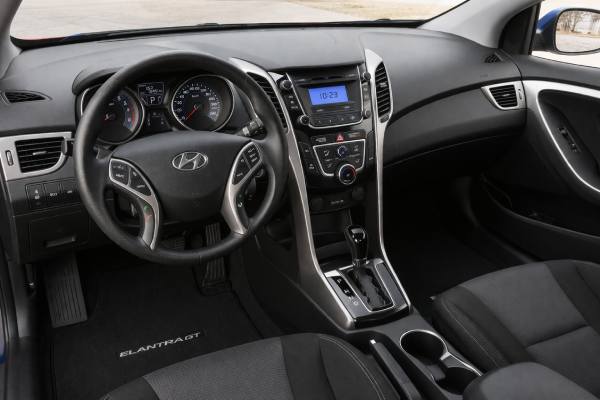

The 2013 Hyundai Elantra GT is the hatchback version of the Elantra family that many buyers wished Hyundai had offered sooner. It took the flowing MD-era design language, added a more useful five-door body, and paired it with the 1.8-litre naturally aspirated Nu MPI engine, six-speed transmissions, and a cabin that feels roomier than the exterior suggests. That combination still makes sense today. The 1.8 MPI is simple by modern standards, with no turbocharger and no direct injection, and the GT adds genuine cargo flexibility that the sedan cannot match. It also gets a sportier suspension tune than the four-door, which gives it a slightly sharper feel without making it harsh. The main ownership caution is not the basic design. It is age, maintenance history, and whether the car falls into the known Nu-engine warranty-extension population. Buy a clean, properly serviced example, and the 2013 Elantra GT remains a practical, well-rounded compact hatch.
Quick Specs and Notes
- The hatchback body is the Elantra’s biggest advantage, with 23 ft³ of cargo space and 51 ft³ with the rear seats folded.
- The 1.8 MPI engine is simpler to own than many later turbocharged compact-car engines.
- Sport-tuned suspension and selectable steering give the GT a more alert feel than the contemporary Elantra sedan.
- Certain 2013 GTs are included in Hyundai’s Nu-engine warranty-extension and inspection program, so VIN history matters.
- Treat 12,000 km or 12 months as a sensible oil-service maximum, and shorten that interval for severe use.
Contents and shortcuts
- Elantra GT GD Basics
- Elantra GT 1.8 Data Tables
- Elantra GT Features and Safety
- Age-Related Issues and Recalls
- Maintenance Plan and Buyer Tips
- Road Feel and Fuel Use
- Elantra GT Versus Rivals
Elantra GT GD Basics
The 2013 Elantra GT arrived as Hyundai’s answer to buyers who wanted Elantra efficiency and value without being limited to a sedan body. In North America, the GT replaced the older Elantra Touring with something much lighter, sleeker, and more modern. It is important to understand that this was not just a sedan with a hatch added to the back. Hyundai gave the GT a more European-leaning flavor, a shorter overall length, more flexible cargo space, a sport-tuned suspension, and trim and package choices aimed at buyers who cared a bit more about driving feel and practicality than simple fuel-economy bragging rights.
That balance is still what makes the car appealing today. The 1.8-litre Nu MPI four-cylinder makes 148 horsepower, which is not dramatic but is enough for a compact hatch that weighs as little as 2,745 pounds in manual form. The engine is naturally aspirated, uses multi-point injection, and avoids the turbocharging and direct-injection hardware that have made some later small engines more expensive to diagnose and repair. Hyundai paired it with either a six-speed manual or a conventional six-speed automatic with SHIFTRONIC manual mode and Active ECO programming. That gives the GT an honest, easy-to-understand powertrain layout that still suits daily use very well.
The other big piece of the puzzle is packaging. The GT’s hatchback body makes far better use of space than the Elantra sedan. Rear-seat passengers get more legroom than many people expect from a compact five-door, and cargo space is generous both with the seats up and with them folded. That alone makes the GT more useful for buyers who carry sports gear, luggage, flat-pack furniture, or simply want the versatility that a sedan trunk cannot match.
Hyundai also tried to make the GT feel distinct rather than merely practical. The brochure makes clear that the GT got driver-selectable steering, a firmer suspension tune, and higher-spec trims with 17-inch wheels, leather, a panoramic sunroof, navigation, and upgraded audio. So while it was never a true hot hatch, it did sit closer to the practical-sporty end of the compact-car market than the four-door Elantra.
Today, that makes it a very specific used-car proposition. If you want a compact hatch with strong cargo flexibility, decent efficiency, and uncomplicated mechanicals, the 2013 Elantra GT still makes a strong case. If you want maximum steering feel, turbo punch, or premium-badge polish, it will not be your first choice. But as a sensible everyday hatch with one standout advantage, usable space, it still holds up well.
Elantra GT 1.8 Data Tables
The 2013 Elantra GT’s official U.S. brochure provides a strong set of body, packaging, and economy figures, and Hyundai’s owner documentation fills in the engine-capacity and maintenance-spec side. Some items, such as exact GT-specific braking distances or Hyundai-published 0–100 km/h numbers, were not emphasized in period U.S. materials, so those are noted clearly rather than guessed.
| Powertrain and efficiency | Figure |
|---|---|
| Code | Nu 1.8 MPI family |
| Engine layout and cylinders | Inline-4, DOHC, 4 cylinders |
| Valves per cylinder | 4 |
| Bore × stroke | 81.0 × 87.2 mm (3.19 × 3.43 in) |
| Displacement | 1.8 L (1,797 cc) |
| Induction | Naturally aspirated |
| Fuel system | MPI / port injection |
| Compression ratio | Commonly catalogued around 10.3:1 |
| Max power | 148 hp (110 kW) @ about 6,500 rpm |
| Max torque | 131 lb-ft (178 Nm) @ about 4,700 rpm |
| Timing drive | Chain |
| Rated efficiency | EPA-corrected: manual 26/37/30 mpg city/highway/combined; automatic 27/37/30 mpg |
| Rated efficiency | About 7.8 / 6.4 / 7.1 L/100 km manual and 8.7 / 6.4 / 7.8 L/100 km automatic |
| Real-world highway @ 120 km/h | Usually about 6.4–7.2 L/100 km in healthy condition |
| Transmission and driveline | Figure |
|---|---|
| Transmission | 6-speed manual or 6-speed automatic with SHIFTRONIC |
| Drive type | FWD |
| Differential | Open |
| Chassis and dimensions | Figure |
|---|---|
| Suspension, front | MacPherson strut |
| Suspension, rear | Coupled torsion-beam axle, GT sport-tuned calibration |
| Steering | Motor Driven Power Steering |
| Steering modes | Comfort / Normal / Sport |
| Brakes | 4-wheel disc ABS with Brake Assist and EBD |
| Wheels and tyres | 16-inch alloys standard; 17-inch alloys on higher-spec GT package cars |
| Ground clearance | Not clearly published in the period U.S. brochure |
| Length | 169.3 in (4,300 mm) |
| Width | 70.1 in (1,781 mm) |
| Height | 57.9 in (1,471 mm) |
| Wheelbase | 104.3 in (2,649 mm) |
| Kerb weight | 2,745–2,919 lb (1,245–1,324 kg) manual |
| Kerb weight | 2,784–2,959 lb (1,263–1,342 kg) automatic |
| Fuel tank | 13.2 US gal / 50.0 L / 11.0 UK gal |
| Passenger volume | 96.1 ft³ |
| Cargo volume | 23 ft³ seats up / 51 ft³ seats folded |
| Performance and capability | Figure |
|---|---|
| 0–100 km/h (0–62 mph) | Hyundai did not widely publish a U.S.-spec GT figure; period estimates place the manual around the high-8-second range and the automatic around the low-9-second range |
| Top speed | Not prominently published in U.S. Hyundai consumer literature for the GT |
| Braking distance 100–0 km/h | No dependable Hyundai-published open figure found for the exact GT trim |
| Towing capacity | Not a primary U.S. use case; verify locally before towing |
| Payload | Market-label dependent |
| Fluids and service capacities | Figure |
|---|---|
| Engine oil | 4.23 US qt (4.0 L) drain and refill; API SM / ILSAC GF-4 or above |
| Oil viscosity | 5W-20 recommended for economy; 5W-30 and 10W-30 appear in the viscosity chart depending on temperature |
| Coolant | Ethylene glycol-based coolant; exact full-system fill varies by service state and heater circuit |
| Manual transaxle fluid | GL-4 manual transaxle fluid; check exact fill by gearbox service data |
| Automatic transmission fluid | Hyundai SP-IV only |
| A/C refrigerant | R134a; verify charge on under-bonnet label |
| Key torque specs | Use VIN-specific workshop documentation rather than generic online lists |
| Safety and driver assistance | Figure |
|---|---|
| Airbags | 7 airbags on GT, including driver knee airbag |
| Stability and braking aids | ESC, Traction Control, VSM, ABS, EBD, Brake Assist |
| IIHS / NHTSA note | Public U.S. hatchback-specific crash-rating data are less neatly separated than the sedan’s, so the strongest period safety case for the GT comes from its standard equipment and family-wide Elantra safety structure rather than one widely cited GT-only score |
| ADAS suite | None; no AEB, ACC, lane support, BSD, or traffic-sign assist |
The GT’s numbers tell a simple story: light weight, useful space, modest power, and a focus on practical everyday performance rather than headline speed.
Elantra GT Features and Safety
The 2013 Elantra GT was sold as more than just a hatchback body style. Hyundai positioned it as the more versatile and slightly more driver-focused member of the Elantra family. In period U.S. literature, the GT was offered with a mix of trim and package combinations that revolved around core GT equipment plus Style and Technology upgrades. The details matter because a used GT can feel either pleasantly well-equipped or surprisingly basic depending on how it was ordered.
Standard GT equipment was already respectable. Hyundai listed the 148-hp 1.8-litre engine, six-speed transmission choices, heated front seats, cruise, tilt-and-telescopic steering, Bluetooth hands-free phone capability, Blue Link telematics, fog lamps, daytime running lights, a rear wiper, integrated rear spoiler, metallic interior trim accents, and 16-inch alloys. The GT also got the driver-selectable steering modes and a sport-tuned suspension tune, which helped separate it from the softer Elantra sedan.
Move up the ladder and the GT became much more appealing. Style- and Technology-package cars could add proximity-key entry, push-button start, navigation, rearview camera, automatic headlights, dual-zone automatic climate control, a premium 360-watt audio system, 17-inch alloys, leather seating surfaces, power driver seat adjustment, underfloor cargo storage, and the large panoramic sunroof. These upgrades genuinely change the ownership experience. A well-optioned GT feels closer to a mini touring hatch, while a simpler one feels like a competent compact with strong utility.
The safety story is strong in equipment terms. Hyundai made a point of standardizing serious safety hardware on the GT, including 4-wheel disc brakes, Electronic Stability Control, Traction Control, Vehicle Stability Management, Brake Assist, Electronic Brake-force Distribution, tyre-pressure monitoring, active front head restraints, and a seven-airbag setup that included a driver knee airbag. For a 2013 compact hatch, that is a solid package. Child-seat practicality is also good, and the hatchback layout makes rear-seat access easier than in the Elantra Coupe.
Where buyers need to be careful is crash-rating language. Public U.S. crash-test references are easier to find for the Elantra sedan than for the GT hatch specifically. That does not mean the GT is unsafe. It means the best-documented part of its safety case is the hardware and structure Hyundai built into it, rather than a single, easy-to-find GT-only ratings page that everyone cites. So the right approach is to check the actual car: make sure all warning lights behave correctly, airbags are intact, the body shell shows no poor accident repair, and the tyres and brakes are doing their job.
For most owners, the sweet spot is a GT with the Technology package but without a rough modification history. You get the better feature set, the camera and navigation, the more premium cabin feel, and the upgraded convenience hardware that make this hatchback feel richer than its price point suggests. Just do not let options distract you from condition. On a 2013 GT, the best trim is still the one that has been looked after properly.
Age-Related Issues and Recalls
The biggest reliability question hanging over the 2013 Elantra GT 1.8 MPI is not whether every car is flawed. It is whether the individual car falls into Hyundai’s known Nu-engine problem population and whether it has been maintained well enough to avoid stacking age-related faults. That distinction matters, because a good GT can be a genuinely sensible used hatch, while a neglected one can quickly become a chain of medium-cost repairs.
The most important known issue is the 1.8-litre Nu engine inspection and warranty-extension story. Hyundai issued a Nu-engine class-action and warranty-extension program for certain 2011–2016 Elantras, certain 2013 Elantra Coupes, and certain 2013 Elantra GTs equipped with the 1.8L Nu engine. Related service bulletins describe inspection for cylinder-wall scuffing and piston-to-cylinder noise, with long-block replacement where required under the program. In ownership terms, that means cold-start knock, persistent ticking, oil-consumption complaints, or metallic engine noise deserve serious attention, especially on cars with thin maintenance records. This is an occasional but high-severity issue because it goes straight to the engine’s value.
The second major official item is the brake pedal stopper recall. Certain 2013–2014 Elantra sedan, coupe, and GT models were recalled because the brake pedal stopper pad could deteriorate. Symptoms could include brake lamps staying on, the ESC light illuminating, shift interlock oddities, or brake-pedal-override behavior. The fix is simple and inexpensive at dealer level, but it is still something every buyer should verify by VIN because it is an official safety recall, not a rumor.
Outside those headline items, most problems are ordinary compact-car wear. Low-to-medium cost faults often include worn front drop links, tired dampers, rear suspension noise, battery weakness, ignition-coil problems, spark-plug deterioration, and brake-slide corrosion. None of those faults is unusual, but together they can make a healthy GT feel sloppy, noisy, or reluctant. A rough idle, hesitant pull, or clunking front end usually points to catch-up maintenance rather than a fatal design issue.
A few issues are more conditional. Some owners report steering-column or steering-coupler noises, though these tend to be annoyance-level rather than major structural failures. Cooling-system age also matters more now than it did when these cars were newer. Hose joints, radiator seams, thermostat housings, and reservoir caps should all be inspected on age alone. Likewise, hatchback-specific details such as tailgate struts, rear-wiper operation, and cargo-area water sealing deserve a quick check because five-door cars tend to expose those little problems earlier than sedans do.
The bottom line is clear. The 2013 GT is not a universally troublesome hatch, but it is not a car to buy casually. Confirm recall completion, check whether the engine is in the Nu warranty-extension population, listen carefully on cold start, and do not confuse minor deferred maintenance with a bad design. In this car, paperwork and mechanical behavior tell the real story.
Maintenance Plan and Buyer Tips
The Elantra GT 1.8 MPI rewards routine service more than heroic repair work. Its biggest strength is that most of what it needs is ordinary: clean oil, healthy ignition parts, fresh filters, decent coolant, and suspension attention before wear becomes noise. The smart way to own one is to set a conservative baseline and then keep it there.
| Item | Practical interval | Notes |
|---|---|---|
| Engine oil and filter | Every 12,000 km or 12 months | Shorten for short trips, heat, idling, or severe use |
| Engine air filter | Inspect every service, replace around 24,000–48,000 km | Sooner in dusty conditions |
| Cabin air filter | About every 24,000 km or 24 months | More often if airflow drops |
| Spark plugs | 168,000 km / 105,000 miles for iridium plugs | Replace earlier on misfire or weak idle |
| Coolant | First major change around 192,000 km or 10 years, then every 48,000 km or 24 months | Verify with the handbook for the exact market |
| Brake fluid | Every 2–3 years | Practical interval, even if mileage is low |
| Drive belts | Inspect from 96,000 km or 72 months onward | Replace on cracking or tension loss |
| Manual transaxle fluid | Refresh around 120,000 km in harder use or unknown history | Severe-use guidance supports earlier service |
| Automatic transmission fluid | Inspect and service sooner in hard use | Use Hyundai SP-IV only |
| Tyre rotation | About every 12,000 km or 6–12 months | Also checks alignment and suspension health |
| Battery test | Yearly after age 4 | Weak voltage can create false drivability complaints |
| Timing chain system | No routine replacement interval | Inspect if cold-start rattle or timing faults appear |
The owner documentation also notes that if TOP TIER detergent gasoline is not regularly used, Hyundai recommends fuel additive use at every 7,500 miles or every engine-oil change. That does not mean additives are magic. It means Hyundai expected intake and fuel-system cleanliness to matter over time, even on a port-injected engine.
For fluid choices, keep it simple and correct. The owner’s manual lists 4.0 litres of engine oil for drain-and-refill and recommends API SM / ILSAC GF-4 or above, with SAE 5W-20 favored for economy and 5W-30 or 10W-30 appearing in the viscosity chart depending on temperature range. The automatic requires Hyundai SP-IV, and that is one place where improvising is a bad idea. For manuals, use the correct GL-4 fluid rather than generic gear oil with the wrong friction properties.
As a buyer, the checklist is straightforward. Start with the VIN. Verify recall completion and check whether the engine is covered by the Nu warranty-extension program. Then look for cold-start knock, oil-consumption evidence, weak idle, poor throttle response, sloppy front-end behavior, uneven tyre wear, and corrosion around brake hardware and underbody attachment points. On a hatchback, also inspect the tailgate, cargo-floor trim, rear washer and wiper, and water-sealing around the hatch opening.
The most desirable used examples are stock or lightly used GTs with clean service history, no obvious engine-noise drama, and no bargain-basement suspension or tyre choices. Cars to avoid are the ones with vague oil history, unexplained engine ticking, a glowing ESC light, or a seller who shrugs off recall questions. The long-term outlook is good enough to justify ownership, but only if the starting point is sound.
Road Feel and Fuel Use
The Elantra GT drives like a compact hatch that was engineered to feel a little more alert than the sedan it is based on, but not in a way that turns it into a true performance car. That is actually part of its charm. Around town it feels light, easy to place, and practical. The shorter body helps in parking, the hatch is useful in real life, and the engine responds cleanly without waiting for boost or juggling hybrid modes. If you value predictability, the GT gets a lot right.
The 1.8 MPI engine is not exciting in the modern turbo sense. It makes its power progressively rather than in one big mid-range wave, and that means you need revs if you want the car to feel brisk. In daily driving, though, that is not a serious drawback. The engine is smooth enough, the six-speed manual makes decent use of the available power, and the six-speed automatic is far better than the old four-speed units that used to drag small hatchbacks down. The GT’s light weight helps a lot here. It feels more willing than the 148-hp number alone suggests.
The GT-specific suspension tuning also matters. Hyundai’s own brochure separates the GT from the sedan by describing the hatchback as more responsive and sport-tuned. That comes through on the road. Steering still prioritizes ease over deep feedback, but the chassis reacts a bit more crisply than the sedan, and higher-spec cars on 17-inch wheels feel slightly more tied down. The driver-selectable steering modes do change the effort level, though not the underlying personality. Comfort is light and easy in town, Sport feels heavier on faster roads, and Normal is the most natural middle ground.
Ride quality depends heavily on wheel size and condition. On 16-inch wheels, the GT is usually the better all-round car. On 17s, it looks better and turns in a little more cleanly, but impacts come through harder. A fresh, well-kept GT still rides with enough compliance to feel mature. A tired one with worn dampers and cheap tyres quickly loses that polish.
Fuel economy remains one of the model’s strongest selling points, with one important caveat. Hyundai’s original 2013 fuel-economy labels were later corrected downward by the EPA. The updated official values are 26/37/30 mpg for the manual GT and 27/37/30 mpg for the automatic. In real life, a healthy car usually returns about 7.0–8.0 L/100 km in mixed use, around 6.4–7.2 on a steady highway run, and roughly 8.5–10.0 in dense urban driving depending on weather, tyres, traffic, and transmission choice. Those are still respectable numbers for a naturally aspirated hatch of this size.
So the road verdict is simple. The 2013 Elantra GT is not a hot hatch, but it is better than basic transportation. It is tidy, useful, efficient, and easy to understand. For many owners, that is exactly the right kind of good.
Elantra GT Versus Rivals
The 2013 Elantra GT makes the most sense when compared with the right cars. Its natural rivals are the Ford Focus hatchback, Mazda3 hatchback, Volkswagen Golf, Toyota Matrix, and Kia Forte5. Against that group, the Hyundai was not the sharpest driver’s car and not the most prestigious badge. What it offered instead was a strong blend of space, features, warranty coverage, and low-complexity mechanicals.
Against the Focus, the GT usually loses on steering feel and cornering engagement, but it can win on long-term simplicity and ownership friendliness. Against the Mazda3, it again gives away some driver appeal, yet often feels roomier and better equipped for the money. Compared with the Golf, the Hyundai is less polished and less premium in overall feel, but generally cheaper to buy and less intimidating to maintain. The Matrix is dependable and useful, but the Elantra GT feels more modern and more efficient in cabin design. That is the pattern throughout: the GT does not dominate one category, but it puts together a persuasive middle ground.
What really helps the Elantra GT today is the hatchback body combined with a naturally aspirated engine. Many compact cars from this era either lack the cargo flexibility buyers want now or use more complicated engines than necessary. The GT gives you real utility without demanding turbo or direct-injection ownership compromises. That makes it especially appealing to buyers who want one car to handle commuting, shopping, road trips, and occasional bulky cargo.
Within Hyundai’s own lineup, the GT is arguably the most appealing Elantra variant of this specific period for practical buyers. The sedan is fine, but the hatch is more versatile. The coupe looks sportier, but it is less useful. That leaves the GT as the balanced choice, especially if you find a well-kept car with the right options.
In one sentence, the 2013 Elantra GT compares to rivals as the smart-value hatch that majors on space, useful features, and straightforward ownership rather than class-leading excitement. That may not sound dramatic, but it is exactly why it still deserves attention in the used market.
References
- 2013 hyundai – elantra – Dealer E Process 2013 (Brochure)
- Owner’s Manual – Dealer E Process 2013 (Owner’s Manual)
- Fuel Economy of the 2013 Hyundai Elantra GT 2013 (Fuel Economy)
- Part 573 Safety Recall Report 17V-769 2017 (Recall Report)
- Brown Nu Class Action/Warranty Extension TXXK 2022 (Warranty Extension)
Disclaimer
This article is for informational purposes only and is not a substitute for professional diagnosis or repair. Specifications, torque values, service intervals, procedures, and equipment can vary by VIN, market, package, and production details, so always verify against the official service documentation for the exact vehicle before performing maintenance or making a purchase decision.
If this guide helped you, please consider sharing it on Facebook, X, or another social platform to support our work.