
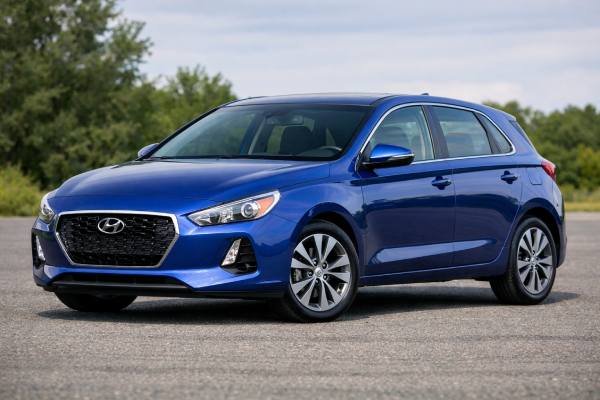
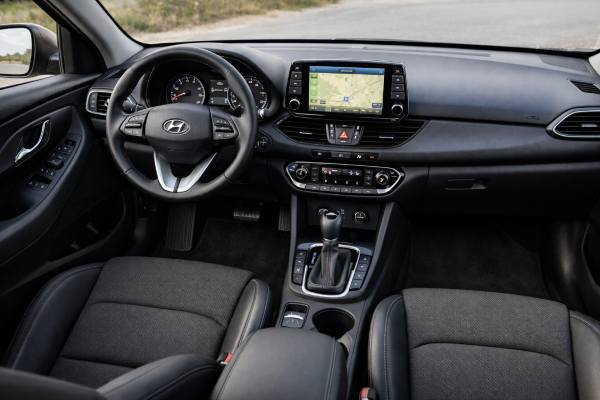
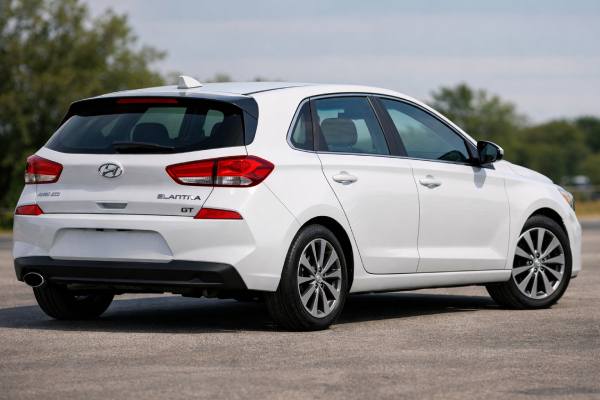
The Hyundai Elantra GT PD 2.0 GDI is a compact hatchback that gets the practical parts right without feeling dull. Sold from 2018 to 2020, it paired a roomy five-door body with a naturally aspirated 2.0-litre direct-injection engine, front-wheel drive, and either a six-speed automatic or, in some early versions and markets, a manual gearbox. That makes it a useful alternative to compact sedans for buyers who need more cargo flexibility but do not want an SUV. The real appeal today is balance. The PD GT offers a solid cabin, good hatchback utility, respectable highway comfort, and lower mechanical complexity than many turbocharged rivals. The caution is that the Nu 2.0 GDI engine sits inside Hyundai’s broader knock-sensor and warranty-extension story, so history matters. Service records, campaign completion, and smooth cold-start behavior are much more important than mileage alone. Buy carefully, and this remains one of the smarter practical hatchbacks of its era.
Quick Specs and Notes
- The 2.0 GDI gives the GT enough everyday pace while keeping the hatchback practical and easy to use.
- Cargo flexibility is a real strength, with 24.9 ft³ behind the rear seats and 55.1 ft³ with them folded.
- Ride quality is solid for a compact hatch, especially on the standard 17-inch wheel package.
- Engine campaign history matters, so check for knock-sensor software and warranty-extension eligibility before buying.
- A practical oil-change rhythm is every 12 months or about 12,000 km, with shorter intervals for severe use.
Start here
- Elantra GT PD Hatchback Basics
- Elantra GT PD Specs Table
- Elantra GT PD Features and Safety
- Reliability Patterns and Campaigns
- Service Planning and Buying Checks
- Road Feel and Fuel Use
- GT Hatchback Versus Rivals
Elantra GT PD Hatchback Basics
The PD-generation Elantra GT arrived at a time when compact hatchbacks still made perfect sense for buyers who wanted one car to do almost everything. It was not an SUV, not a sports hatch, and not just an Elantra sedan with a different rear end. Hyundai pitched it as a more versatile compact with cleaner European-style proportions, a large rear opening, fold-flat seats, and a cabin that felt a step more mature than many older Elantras. That basic idea still holds up well.
The 2.0 GDI version is the important one here because it defines the regular GT, not the sportier N Line. With 161 horsepower and 150 lb-ft of torque, the naturally aspirated Nu four-cylinder is not exciting in the way a turbo engine is, but it gives the car enough power to feel easygoing rather than strained. Hyundai paired it with a conventional six-speed automatic in later U.S.-market years, while early product information and some markets also showed manual availability. That matters because it means the 2.0 GT stays mechanically simpler than many small hatches that moved to turbo engines and dual-clutch transmissions.
Packaging is the GT’s best argument. Passenger space measures 96.5 cubic feet, which is generous for the class, and the cargo area is genuinely useful at 24.9 cubic feet with the seats up and 55.1 cubic feet with them folded. Those numbers make the GT much more practical than a sedan for anyone who carries bicycles, suitcases, pets, strollers, flat-pack furniture, or hobby gear. This is not a token hatchback. It is a real one.
The chassis also fits the car’s mission well. Up front there is a MacPherson strut setup, while the standard 2.0 GT uses a coupled torsion-beam rear axle with gas-filled monotube shocks. That does not sound exotic, but it keeps the car space-efficient and predictable. The hatch rides with more maturity than many buyers expect, especially on ordinary roads, and Hyundai’s steering-mode system lets the driver add a little more weight if desired. It still feels more practical than sporty, but that is exactly what many owners want.
The key ownership reality is that this is now a used hatchback whose condition matters more than its brochure. A tidy GT with proper oil changes, good tyres, completed campaigns, and no cold-start drama can still feel modern and rational. A neglected one can quickly become a story about warning lights, rough idle, steering clunks, and expensive engine questions. So the PD GT is not just a good design. It is a good design that still needs the right history.
Elantra GT PD Specs Table
For the 2018–2020 Elantra GT 2.0 GDI, Hyundai’s official specifications are fairly clear. The 2.0-litre base GT uses the Nu GDI four-cylinder with front-wheel drive, a conventional automatic in later U.S. trim structure, and hatchback packaging that gives it more cargo room than the sedan. Some transmission and trim details changed by year and market, so those are best treated carefully rather than generalized too far.
| Powertrain and efficiency | Figure |
|---|---|
| Code | Nu 2.0 GDI family |
| Engine layout and cylinders | Inline-4, DOHC, 4 cylinders |
| Valves per cylinder | 4 |
| Bore × stroke | 81.0 × 97.0 mm (3.19 × 3.82 in) |
| Displacement | 2.0 L (1,999 cc) |
| Induction | Naturally aspirated |
| Fuel system | GDI / direct injection |
| Compression ratio | 11.5:1 |
| Max power | 161 hp (120 kW) @ 6,200 rpm |
| Max torque | 150 lb-ft (203 Nm) @ 4,700 rpm |
| Timing drive | Chain |
| EPA rated efficiency | 25 city / 32 highway / 27 combined mpg with 6-speed automatic |
| Rated efficiency | About 9.4 / 7.4 / 8.7 L/100 km city / highway / combined |
| Real-world highway @ 120 km/h | Usually about 6.8–7.8 L/100 km in a healthy car |
| Transmission and driveline | Figure |
|---|---|
| Transmission | 6-speed automatic in later U.S.-market years; early availability varied by year and market |
| Drive type | FWD |
| Differential | Open |
| Chassis and dimensions | Figure |
|---|---|
| Suspension, front | MacPherson strut with coil springs |
| Suspension, rear | Coupled torsion beam axle with monotube dampers |
| Steering | Rack-and-pinion with Motor Driven Power Steering |
| Steering ratio | 13.4:1 |
| Turning circle, kerb-to-kerb | 34.78 ft (10.6 m) |
| Brakes | Front 11.0 in ventilated discs; rear 10.3 in solid discs |
| Wheels and tyres | 17 x 7.0J alloy wheels with P225/45 R17 tyres |
| Ground clearance | 5.9 in (150 mm) |
| Length | 170.9 in (4,341 mm) |
| Width | 70.7 in (1,796 mm) |
| Height | 57.7 in (1,466 mm) |
| Wheelbase | 104.3 in (2,649 mm) |
| Kerb weight | 2,943–3,040 lb (1,335–1,379 kg) automatic |
| GVWR | 3,968 lb (1,800 kg) automatic |
| Fuel tank | 14.0 US gal / 53.0 L / 11.7 UK gal |
| Cargo volume | 24.9 ft³ seats up / 55.1 ft³ seats down |
| Performance and capability | Figure |
|---|---|
| 0–100 km/h (0–62 mph) | Typically around 9.0–9.5 s depending on trim, load, and test source |
| Top speed | Not prominently published in consumer-facing U.S. materials |
| Braking distance | No dependable open official figure for the exact 2.0 GT trim |
| Towing capacity | Not a headline factory towing model in most markets; verify locally |
| Payload | Equipment-label dependent |
| Fluids and service capacities | Figure |
|---|---|
| Engine oil | 4.0 L (4.23 US qt) drain and refill |
| Oil specification | API SM / ILSAC GF-4 or higher |
| Oil viscosity | 5W-30 recommended in some manuals for economy; use the correct climate-appropriate grade approved for the market |
| Coolant | 5.8 L (6.12 US qt) automatic; phosphate-based ethylene glycol coolant |
| Automatic transmission fluid | Hyundai SP-IV; total quantity commonly listed at 6.7 L (7.08 US qt) |
| Manual transmission fluid | 1.7–1.8 L (1.8–1.9 US qt) where applicable |
| Brake fluid | FMVSS 116 DOT-3 or DOT-4 |
| A/C refrigerant | R-1234yf, 500 g (17.63 oz) |
| A/C compressor oil | PAG, 110±10 cc (3.88±0.35 oz) |
| Key torque specs | Verify by VIN-specific workshop information before service-critical work |
| Safety and driver assistance | Figure |
|---|---|
| Airbags | 7, including driver’s knee airbag |
| IIHS | Top Safety Pick for 2018 and 2019–2020 when equipped with optional front crash prevention and specific headlights |
| Euro NCAP | No clearly separate Euro NCAP result for the U.S.-market Elantra GT hatchback in open public sources |
| ADAS suite | None standard on the 2.0 GT beyond core stability systems; some warning features were package-dependent |
The biggest takeaway from the numbers is that the PD GT is not trying to win on headline acceleration. It wins by combining decent power, practical hatchback dimensions, and low day-to-day operating drama.
Elantra GT PD Features and Safety
The 2.0 GDI Elantra GT was sold as the practical side of the PD lineup, while the N Line covered the sportier side. That split matters when shopping because many features buyers now expect were bundled differently between the standard GT and the N Line. The 2.0 GT never tried to be a stripped fleet hatch, but it also did not always get the more advanced safety technology that later buyers assume was standard.
In basic form, the GT came with a respectable standard package. Equipment commonly included 17-inch alloy wheels, a rear spoiler and wiper, 8-inch Display Audio, rearview camera, Android Auto and Apple CarPlay, Bluetooth, power heated mirrors, keyless entry, cruise control, and a versatile two-stage cargo floor. Hyundai also gave the base GT a solid set of passive and chassis safety hardware: advanced dual front airbags, front seat-mounted side airbags, roof-mounted curtain airbags, a driver’s knee airbag, four-wheel disc brakes, ABS, Electronic Brake-force Distribution, Vehicle Stability Management, Electronic Stability Control, Traction Control, and Hill-start Assist Control. For a practical hatchback at this price point, that is a strong baseline.
Packages are where the car changes character. In 2019 and 2020 U.S. form, the Style Package on the standard GT added the items that made the hatch feel more upscale: panoramic sunroof, leather seating, blind-spot collision warning with rear cross-traffic collision warning, lane-change assist, proximity key with push-button start, dual-zone automatic climate control, heated front seats, power driver’s seat, and a more informative 4.2-inch cluster display. Those features are significant in the used market because they make the GT feel much closer to a premium compact than its price suggests.
The N Line sat above it mechanically, with the turbo engine, independent rear suspension, larger brakes, and later availability of more advanced ADAS features such as Forward Collision-Avoidance Assist, Lane Keeping Assist, Smart Cruise Control, High Beam Assist, and Driver Attention Warning through the Tech Package. That is worth stating clearly because many people cross-shop GTs assuming all PD hatchbacks got the same safety tech. They did not. The standard 2.0 GT was still safer in its fundamentals than many older compacts, but the most advanced crash-avoidance systems were not the base car’s main focus.
Crash performance is a real strength. IIHS rated the Elantra GT hatchback highly and awarded Top Safety Pick status when equipped with optional front crash prevention and specific headlights. Crashworthiness scores were strong across both small-overlap tests, moderate overlap, side, roof strength, and head restraints. That gives the GT a credible safety story beyond equipment lists alone.
The practical buying lesson is simple. If you want the basic hatchback virtues and lower ownership complexity, the standard 2.0 GT is the right car. If you also want the more advanced safety technology, you need to look closely at year, package, and actual equipment rather than assuming it is present.
Reliability Patterns and Campaigns
The Elantra GT PD 2.0 GDI is a car where you need to separate the platform from the engine story. The hatchback itself is not a particularly fragile design. Its interior, suspension, electrical systems, and body hardware tend to age in fairly normal compact-car ways. The major issue that changes the buying decision is the Nu 2.0 GDI engine and Hyundai’s broader campaign and warranty-extension response around connecting-rod bearing concerns.
That does not mean every Elantra GT 2.0 is headed for trouble. It does mean you should treat campaign completion and engine behavior as first-order buying checks. Hyundai’s later service bulletins and dealer best-practice documents make clear that 2018–2020 Elantra GT models with the Nu 2.0 GDI engine fall within the knock-sensor detection software and warranty-extension framework. In practical terms, the important symptoms are abnormal lower-end knocking, a flashing malfunction indicator lamp, fault code P1326, reduced engine speed, or engine-protection behavior. Those are not “watch it and see” symptoms. They are reason-to-stop-and-verify symptoms.
More ordinary engine issues are still worth noting. Because this is a direct-injection engine, intake-valve carbon build-up is possible over time. The common symptom pattern is rough idle, weak response, light misfire, or lazy throttle pickup. It is not guaranteed, and it does not affect every car badly, but repeated short-trip use and indifferent fuel quality can make it worse. Oil consumption should also be taken seriously. A small amount of use is not unusual on an older GDI engine, but frequent top-offs, oily plugs, or low-level warnings between services deserve inspection.
Timing-chain failure is not a headline pattern on every Nu engine, but chain noise should still not be ignored. A brief tick on very cold start is one thing. Persistent rattle, metallic scraping, or timing-related faults are another. If service history is weak, chain and tensioner noise should be treated as a medium-to-high risk item because it can turn a good-value hatch into a costly repair decision.
The rest of the car is less dramatic. Normal wear points include front drop links, dampers, top mounts, rear-beam bushings, ignition coils, batteries, brake hardware, and wheel bearings. Panoramic-roof cars also deserve a careful inspection because 2018 cars saw a recall tied to the panoramic sunroof motor on a very small production batch. It is not a mass defect across the whole range, but it proves that VIN-level recall checking matters.
The honest verdict is straightforward. The PD GT 2.0 GDI is not a bad car. It is a used car that demands good records. A quiet, smooth, campaign-complete example can still be a very rational hatchback. A vague one with knocking noise, missing service proof, and unknown software status is a much riskier buy than the attractive price suggests.
Service Planning and Buying Checks
The Elantra GT 2.0 GDI rewards consistent maintenance more than heroic repair bills. If you keep oil fresh, use the correct fluids, watch the cooling system, and do not ignore early warning signs, the car is manageable to own. If you treat it like a disposable hatchback and stretch every service, it becomes a much more expensive proposition.
A practical long-term plan looks like this:
| Item | Practical interval | Notes |
|---|---|---|
| Engine oil and filter | Every 12,000 km or 12 months | Severe use: every 6,000 km or 6 months |
| Engine air filter | Inspect every service, replace around 24,000–48,000 km | Sooner in dusty use |
| Cabin air filter | Around every 24,000 km or 24 months | Replace sooner if HVAC flow drops |
| Spark plugs | Long-life interval on paper can be very long, but inspect earlier on rough idle or misfire | Use the correct plug type |
| Coolant | Monitor condition and age closely even if the official interval is long | Never ignore coolant smell or seepage |
| Brake fluid | Every 2–3 years | Time matters as much as mileage |
| Drive belts | Inspect from mid-life onward | Replace on noise, cracking, or tensioner wear |
| Automatic transmission fluid | Service earlier in hard use or on unknown-history cars | Use Hyundai SP-IV only |
| Manual transmission oil | Refresh around 80,000–100,000 km where applicable | Use the correct GL-4 fluid |
| Tyre rotation and alignment | Every 10,000–12,000 km | Uneven wear often reveals suspension issues |
| Battery and charging test | Yearly after the battery is 4 years old | Weak voltage can mimic other faults |
| Timing-chain system | No fixed replacement interval | Inspect on noise, poor service history, or timing faults |
The oil service is the big one. Hyundai’s official capacity is 4.0 litres with filter, and on a Nu 2.0 GDI with known campaign relevance, clean oil is part of risk management, not just routine care. That does not eliminate all engine issues, but poor lubrication history is one of the fastest ways to reduce your confidence in a used example.
As a buyer, start with VIN and paperwork before you start the engine. Check for open recalls, especially the sunroof campaign where relevant, and ask specifically about knock-sensor software or engine-monitoring campaign completion. Then do a cold start. Listen for deep knock, persistent metallic rattle, rough idle, or excessive exhaust odor. After that, inspect the obvious hatchback-specific items: rear wiper operation, tailgate struts, water sealing around the hatch opening, rear cargo-floor condition, and the panoramic roof if fitted.
On the road, look for smooth automatic shifting, no hesitation under light throttle, no wheel-bearing drone, no clunking from the front suspension, and no brake pull. Because the GT often rides on larger tyres than a basic sedan, poor alignment or cheap tyres can change the feel of the car a lot.
The best buys are lightly modified or completely stock GTs with strong service history, good tyres, and quiet cold-start behavior. The cars to avoid are the cheap ones with vague answers about oil use, flashing warning history, bargain-service invoices, or sellers who say a ticking GDI is “normal.” Sometimes it is. Sometimes it is not. On this engine, that distinction matters.
Road Feel and Fuel Use
The Elantra GT 2.0 GDI is one of those hatchbacks that improves the longer you drive it. On a short test drive, it can seem merely competent. Over a longer week of commuting, errands, and highway trips, its balance starts to make more sense. It is easy to place, easy to park, and easier to load than the sedan, which already gives it a practical edge before the driving impressions even begin.
The engine suits the car’s role. With 161 horsepower, the naturally aspirated 2.0 does not surge like a turbo hatch, but it delivers clean, linear response and enough mid-range to avoid frustration. Around town, throttle response is predictable and the car rarely feels caught out. On the highway, the engine has enough strength for merging and passing without making the GT feel overpowered. The automatic transmission is the most common fit in later U.S. cars and suits the hatch’s daily-driver brief well. It is not especially quick-witted, but it is smoother and simpler than many of the dual-clutch alternatives buyers cross-shop.
Ride quality is another quiet strength. The standard 2.0 GT’s torsion-beam rear axle is not as sophisticated on paper as the N Line’s multi-link setup, yet in everyday driving it works well. The car rides with good body control, does not crash harshly over normal broken pavement, and feels more solid than some older Elantras. Steering weight changes a bit with the selectable modes, but the real personality remains the same: tidy, calm, and slightly more mature than sporty.
Noise levels are acceptable for the class. The engine itself is fairly subdued unless pushed hard, though direct-injection engines always sound a little more mechanical at idle than an old-school MPI unit. Wind and tyre noise appear at highway speed, particularly on rougher surfaces, but the GT still feels refined enough for long trips. A badly aligned car, old tyres, or worn front suspension will hurt that impression quickly, which is why condition matters so much.
Fuel use stays reasonable if the car is healthy. Expect around 8.5–10.0 L/100 km in heavy urban use, about 6.8–7.8 on a steady highway run, and roughly 7.8–8.8 in mixed real-world driving. A clean-running engine on good fuel can match or beat those figures. One with dirty intake valves, worn plugs, poor alignment, or dragging brakes will miss them. That makes fuel economy a useful ownership clue. A GT that suddenly uses much more fuel often has a reason.
So the road verdict is simple. The PD GT is not a performance hatch, but it is not dull either. It gives you practical hatchback versatility, steady road manners, and enough engine to make the car feel complete. For many owners, that is exactly the right answer.
GT Hatchback Versus Rivals
The Elantra GT 2.0 GDI fits into a part of the market where practicality and overall value matter as much as any one performance figure. Its natural rivals are the Mazda3 hatchback, Ford Focus hatchback, Volkswagen Golf, Kia Forte5, Toyota Corolla iM, and Honda Civic hatchback. Against those cars, the Hyundai rarely wins on brand prestige or driver reputation. What it does offer is a useful balance of space, equipment, hatchback flexibility, and generally manageable ownership when bought well.
Compared with a Mazda3 hatch, the GT gives away some steering feel and polish but often matches it on real-world usefulness and often undercuts it on purchase price. Against a Focus hatch, the Hyundai is usually the easier ownership play because it avoids the Focus’s well-known dual-clutch baggage in the trims that most shoppers compare. The Golf feels more premium and more refined, but usually costs more to buy and can be less forgiving on repair costs as mileage rises. The Corolla iM is arguably the durability-first choice, yet the Hyundai feels stronger in power and more generous in available comfort equipment.
The GT’s strongest argument is that it remains a real hatchback in the practical sense. The cargo area is genuinely useful, the rear opening is wide, and the cabin feels large enough to replace a small crossover for some owners. That makes it a better daily solution than many sedans and a more efficient alternative to a taller vehicle.
Within the Hyundai lineup, the GT is also easier to justify than some people expect. The sedan Elantra is cheaper and more common, but it cannot match the hatch’s versatility. The N Line is quicker and more interesting, but also more complex and usually more expensive. The standard 2.0 GT sits in the middle as the practical, balanced option.
So how does it compare to rivals in one sentence? It is the hatchback for buyers who want real utility, decent power, sensible equipment, and low day-to-day drama more than they want a sporty badge or turbocharged image. In the right condition, that still makes it a very appealing used buy.
References
- 2020 Elantra GT Specifications 2020 (Technical Data)
- 2019 PRICING Elantra GT Effective June 29 2019 2019 (Price Sheet)
- 2018 Hyundai Elantra GT 4-door hatchback 2018 (Safety Rating)
- Part 573 Safety Recall Report 18V-891 2018 (Recall Database)
- TXXM / T6G / Engine II Class Action Settlement 2023 (Warranty Extension)
Disclaimer
This article is for informational purposes only and is not a substitute for professional diagnosis or repair. Specifications, torque values, service intervals, procedures, campaign coverage, and equipment can vary by VIN, market, trim, package, and transmission, so always verify against the official service documentation for the exact vehicle before carrying out maintenance or making a buying decision.
If this guide helped you, please consider sharing it on Facebook, X, or another social platform to support our work.