
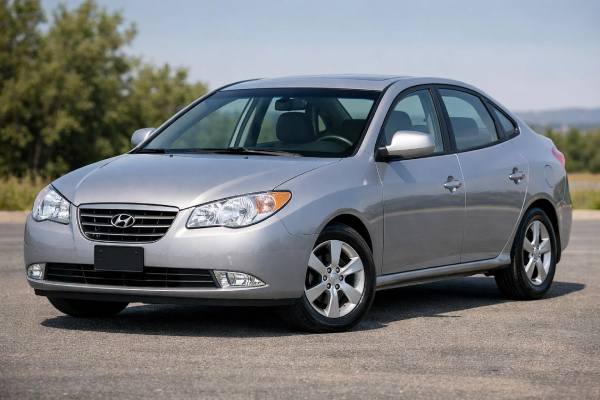
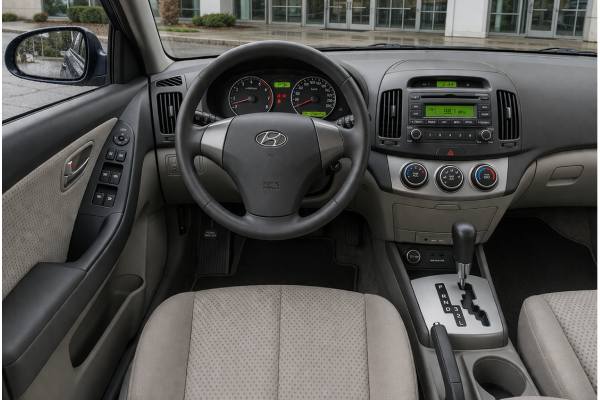

The 2007–2010 Hyundai Elantra HD 2.0 is the kind of compact sedan that tends to age better on paper than in reputation. It is roomy for its size, simple in layout, and built around proven hardware: a naturally aspirated 2.0-litre Beta-series four-cylinder, conventional front-wheel drive, and straightforward suspension. That makes it appealing today for buyers who want a low-cost daily driver without turbochargers, direct injection, or complex hybrid systems. The catch is that the exact 2.0 rating varies by market and emissions calibration. Some official North American literature lists 138 hp, while certain PZEV versions are rated at 132 hp. This article follows the 132 hp figure in the title, while noting where the wider 2.0-litre HD range shares the same chassis, packaging, and service logic. In real ownership, the car’s strengths are space, comfort, and honest mechanicals. Its risks are timing-belt history, age-related wear, and recall follow-up.
What to Know
- The HD Elantra is unusually roomy for a compact sedan, with a useful 14.2 ft³ trunk and a wide, comfortable cabin.
- The 2.0-litre engine is simple and durable when serviced on time, and it avoids the complexity of later downsized engines.
- Ride comfort is better than many rivals on the same tyre size, and the chassis is calm and predictable.
- The most important ownership caveat is deferred maintenance, especially timing-belt replacement and recall completion.
- Treat engine oil changes every 10,000–12,000 km or 12 months, and timing-belt service around 90,000–96,000 km, as smart ownership practice.
Contents and shortcuts
- Hyundai Elantra HD 2.0 profile
- Hyundai Elantra HD 2.0 data
- Hyundai Elantra HD trims and safety
- Reliability, faults and recalls
- Maintenance and used-buyer guide
- Driving feel and fuel use
- Elantra HD versus rivals
Hyundai Elantra HD 2.0 profile
The HD-generation Elantra marked a real step forward for Hyundai in the compact-sedan class. Earlier Elantras were competent but still carried the feel of value-first cars. The HD, launched for the 2007 model year, felt more mature. It grew in size, gained a cleaner and more substantial cabin, and moved closer to mainstream Japanese rivals in refinement and usability. That shift matters today because the HD still feels like a complete car rather than a cheap one. Its design is conservative, but the engineering brief was sound.
At the center of the 2.0-litre car is the Beta II family engine, a naturally aspirated inline-four with dual overhead camshafts, 16 valves, multi-point fuel injection, and variable valve timing. It is not an advanced engine by modern standards, but that is part of the appeal. There is no direct injection to complicate intake cleanliness, no turbocharger to age, and no hybrid system to turn a budget daily driver into an electrical gamble. The engine is easy to understand, parts are widely available, and routine maintenance is still manageable for independent garages.
One useful clarification is necessary. The title figure of 132 hp matches a lower-rated 2.0-litre emissions calibration used in some North American PZEV applications, while much official U.S. Hyundai literature for the standard ULEV 2.0 shows 138 hp. The underlying car, however, is largely the same in structure, dimensions, suspension design, and ownership logic. That means buyers searching for the HD 2.0 are still looking at the same core vehicle, even if the published output varies slightly by version.
The rest of the package is straightforward and sensible. The sedan rides on a 2,650 mm wheelbase, offers generous interior room for the class, and carries a trunk that was notably large for the segment when new. Hyundai also positioned the Elantra as a safety and value play. In many markets, it came with six airbags, ABS with electronic brake-force distribution, four-wheel disc brakes, and active front head restraints at a time when some compact rivals still reserved parts of that list for higher trims.
Today, the HD 2.0 makes the most sense for owners who want a dependable commuter or family runabout at a reasonable cost. It is not the sharpest compact from its era, and it does not have the resale halo of a Corolla or Civic. But it does offer a rare mix of space, simplicity, and comfort. The line between a smart buy and a false economy comes down to condition: timing-belt history, rust exposure, suspension wear, and recall completion matter far more now than trim badges or brochure language.
Hyundai Elantra HD 2.0 data
The HD 2.0 can look confusing in databases because output varies by market and emissions certification. For this article, the 132 hp figure in the title is respected, but it is important to note that many official North American sources list the standard 2.0-litre ULEV engine at 138 hp and 136 lb-ft, while certain PZEV versions were rated at 132 hp and 133 lb-ft. The body, suspension, cabin dimensions, and most service points are shared.
Powertrain and efficiency
| Item | Hyundai Elantra HD 2.0 |
|---|---|
| Code | G4GC |
| Engine layout and cylinders | Inline-4, transverse, 4 cylinders |
| Valvetrain | DOHC, 4 valves per cylinder, CVVT |
| Bore × stroke | 82.0 × 93.5 mm (3.23 × 3.68 in) |
| Displacement | 2.0 L (1,975 cc) |
| Induction | Naturally aspirated |
| Fuel system | Multi-point fuel injection |
| Compression ratio | About 10.1–10.3:1, depending on source set |
| Max power | 132 hp (98.5 kW / 134 PS) @ 6,000 rpm for PZEV tune; 138 hp (103 kW) in common ULEV tune |
| Max torque | 133 lb-ft (180 Nm) @ 4,600 rpm for 132 hp tune; 136 lb-ft (184 Nm) for common ULEV tune |
| Timing drive | Belt |
| Rated efficiency | Up to 36 mpg highway in official U.S. literature; combined figures vary by tune and transmission |
| Real-world highway @ 120 km/h (75 mph) | About 6.8–7.8 L/100 km in a healthy car, typically higher with automatic, poor alignment, or neglected service |
Transmission and driveline
| Item | Hyundai Elantra HD 2.0 |
|---|---|
| Transmission | 5-speed manual or 4-speed automatic |
| Drive type | Front-wheel drive |
| Differential | Open front differential |
Chassis and dimensions
| Item | Hyundai Elantra HD 2.0 sedan |
|---|---|
| Suspension front / rear | MacPherson strut / fully independent rear suspension |
| Steering | Rack-and-pinion; motor-driven power steering on many North American cars |
| Steering ratio | Not consistently published in the open official sources reviewed |
| Brakes | Four-wheel disc brakes |
| Wheels and tyres | Most common: 195/65 R15; some trims used 205/55 R16 |
| Length / width / height | 4,505 mm (177.4 in) / 1,775 mm (69.9 in) / 1,480–1,490 mm (58.3–58.7 in) |
| Wheelbase | 2,650 mm (104.3 in) |
| Turning circle | Not consistently published in the open official sources reviewed |
| Kerb weight | Roughly 1,246–1,294 kg (2,747–2,853 lb), depending on trim and transmission |
| GVWR | Commonly around 1,760–1,800 kg (3,880–3,968 lb), market-dependent |
| Fuel tank | 53 L (14.0 US gal / 11.7 UK gal) |
| Cargo volume | 402 L (14.2 ft³) trunk, seats up |
Performance and capability
| Item | Hyundai Elantra HD 2.0 |
|---|---|
| 0–100 km/h (0–62 mph) | About 9.9–10.5 s depending on tune and transmission |
| Top speed | About 190–195 km/h (118–121 mph) |
| Braking distance | No single reliable open official figure confirmed |
| Towing capacity | Market-specific and not consistently published in the open official sources reviewed |
| Payload | Usually around 430–470 kg class depending on trim |
Fluids and service capacities
| Item | Practical guidance |
|---|---|
| Engine oil | API SM or equivalent; commonly 5W-20 preferred in North America, with 5W-30 used in some climates |
| Engine oil capacity | About 4.0 L (4.2 US qt) with filter |
| Coolant | Ethylene glycol-based coolant, commonly 50/50 mix |
| Coolant capacity | Verify by VIN and market before refill |
| Manual transmission fluid | Hyundai-approved API GL-4 manual transmission oil |
| Automatic transmission fluid | Hyundai-approved ATF for the 4-speed automatic; verify exact spec by VIN |
| A/C refrigerant | R-134a |
| A/C refrigerant charge | Verify under-bonnet label before service |
| A/C compressor oil | PAG type compatible with the fitted compressor; verify by label and compressor part |
| Key torque spec | Wheel nuts typically 90–110 Nm (66–81 lb-ft) |
Safety and driver assistance
| Item | Hyundai Elantra HD 2.0 |
|---|---|
| Euro NCAP | No directly verified HD Euro NCAP page located in the reviewed source set |
| ANCAP | 4 stars, applies to Jul 2007–2011 variants with dual frontal airbags |
| IIHS | Good in moderate overlap front for 2007–10; Marginal in original side test for 2007–10 built before December 2009; head restraints Acceptable |
| Headlight rating | Not applicable to this IIHS test era |
| ADAS suite | None in the modern sense |
The numbers tell the story clearly. The HD is not a performance compact, but it is roomy, respectable, and mechanically plainspoken. That is still a useful combination.
Hyundai Elantra HD trims and safety
Trim levels for the HD Elantra varied by market, but the broad structure stayed familiar. In North America, buyers typically encountered GLS, SE, and Limited. Elsewhere, equivalent trim walks used different names, but the pattern remained the same: base cars focused on value, middle trims delivered the best balance of equipment, and upper trims added comfort rather than major mechanical changes. For a used buyer today, that matters because the best HD is rarely the cheapest one. It is usually the one with the right mix of safety equipment, ordinary wheel sizes, and a documented maintenance history.
On the 2.0-litre car, the most meaningful equipment differences are not performance upgrades. They are functional items that shape daily ownership. Mid- and higher-level cars often add better seat trim, alloy wheels, steering-wheel audio controls, cruise control, heated seats, and upgraded audio. Some markets also added electronic stability control higher up the range. U.S.-market press material emphasized that even mainstream trims could include six airbags, ABS with EBD, active front head restraints, and four-wheel disc brakes. That was a real selling point in the late 2000s and remains one of the HD’s strongest period credentials.
Quick identifiers are useful when viewing cars in person. Fifteen-inch wheels with 195/65 tyres are common on lower and mid trims and generally suit the chassis well. Sixteen-inch wheels on sportier-looking versions add style but can make ride quality slightly busier and tyre replacement more expensive. Leather or leatherette trim, fog lamps, sunroof equipment, and a fuller set of steering-wheel controls usually point to a Limited-style or upper-market trim. None of these features changes the car’s basic reliability, but they do change what it feels like to own day to day.
Safety results are mixed in a way that is typical for this era. IIHS gave the 2007–10 Elantra a Good result in moderate-overlap frontal crashworthiness, which reflects a strong basic occupant cell for its class. The side test story was weaker. IIHS rated the original side test Marginal for 2007–10 cars built before December 2009, with torso protection standing out as the weak point. ANCAP’s result for Australian-market cars from July 2007 onward was 4 stars, applying to variants with dual frontal airbags and reflecting a better outcome once Hyundai introduced an upgraded rear-door mechanism. That matters because it shows Hyundai improved aspects of the car during production.
There is no meaningful ADAS layer here. No autonomous emergency braking, no lane-keeping, no adaptive cruise, no blind-spot monitoring. What matters instead is whether the basic safety hardware still works properly. Buyers should check for an airbag light that proves out and goes off, ensure ABS warning lamps are not disabled, inspect crash repairs carefully around the front structure and B-pillars, and verify recall completion. On a car this old, a straight, unmolested shell with functioning restraint systems is worth more than a long list of trim features.
Reliability, faults and recalls
The Elantra HD 2.0 is fundamentally a durable car, but it is now old enough that reliability depends far more on service discipline than on original engineering. The basic engine and chassis are not unusually fragile. Most ownership trouble comes from a familiar set of issues: missed timing-belt changes, neglected fluids, suspension wear, cheap tyres, and open recalls that were never completed.
The most important mechanical point is the timing belt. The G4GC engine uses a belt, not a chain, and that alone shapes the used-buying conversation. On a 15- to 19-year-old compact car, an undocumented belt should be treated as overdue. A seller who says “it was probably done” is not offering proof. The right answer is paperwork, or a purchase price that assumes immediate timing-belt service. It is wise to do the tensioners and inspect or replace the water pump at the same time, because repeating the labor later makes little financial sense.
Beyond that, the engine itself is usually straightforward. Oil leaks from aging gaskets, rough idle from tired ignition parts, and cooling-system age failures are more common than catastrophic internal failures. The 2.0-litre Beta engine likes clean oil, a healthy cooling system, and correct belt maintenance. Ignore those basics and the car becomes far less charming. Keep them current and it usually behaves like the dependable naturally aspirated four-cylinder it was meant to be.
The recall story is more important here than on some rival compacts. U.S.-market campaign history includes several items worth checking by VIN. Certain 2008 Elantras built from November 5, 2007 through June 28, 2008 were recalled for a fuel-pump issue. A separate campaign addressed contamination of the passenger-seat weight-classification connector, which could affect airbag operation if liquid seeped through the cupholder area. Hyundai later launched Recall 127 for certain HD Elantras involving the electronic power steering system, requiring software updates or EPS-unit replacement depending on the case. A much later recall added relay installation to address moisture-related ABS-module short-circuit fire risk on certain 2007–2010 Elantras. Not every market saw the same actions, but every buyer should verify completion using the correct VIN check and dealer records.
| Fault area | Prevalence | Severity | Typical symptom | Likely remedy |
|---|---|---|---|---|
| Overdue timing belt | Common | High | Unknown service history, age-related cracking, belt noise | Full timing-belt service with tensioners, inspect water pump |
| Cooling-system wear | Common | Medium to high | Overheating, seepage, sweet smell, soft hoses | Replace weak hoses, thermostat, cap, radiator, pump as needed |
| Suspension wear | Common | Low to medium | Front-end clunks, vague steering, uneven tyre wear | Bushings, drop links, struts, alignment |
| Brake age and slider seizure | Common | Medium | Pulling, uneven pad wear, dragging feel | Caliper service or rebuild, pads, discs, fluid |
| Fuel-pump recall condition | Occasional | High if present | Stalling or no-start on affected cars | VIN check and recall remedy |
| Passenger airbag sensor recall condition | Occasional | High if present | Airbag warning light, restraint concern | Recall confirmation and repair |
| EPS recall condition | Occasional | Medium to high | Heavy steering, abnormal EPS behavior | VIN check, software update, or EPS repair |
| ABS module short risk | Occasional | High | No symptom before failure possible | Confirm recall completion |
In short, the HD 2.0 is dependable when boring things have been done on time. It becomes expensive when owners assume a simple car can survive neglect forever.
Maintenance and used-buyer guide
A practical maintenance plan for the HD 2.0 should be slightly stricter than the original new-car mindset. Age changes the rules. Rubber parts harden, seals shrink, and fluids degrade even when mileage stays low. That means a low-mileage Elantra that sat often can need as much recommissioning as a higher-mileage commuter car.
A sensible maintenance schedule looks like this:
| Item | Practical interval |
|---|---|
| Engine oil and filter | Every 10,000–12,000 km or 12 months |
| Air filter | Inspect every service, replace about every 20,000–30,000 km |
| Cabin air filter | Every 15,000–20,000 km or yearly |
| Spark plugs | Inspect at major service; replace to spec and use condition as a tune indicator |
| Timing belt kit | About every 90,000–96,000 km or earlier if history is unknown |
| Water pump | Inspect or replace with timing-belt service |
| Coolant | Every 3–5 years |
| Brake fluid | Every 2 years |
| Manual transmission oil | About every 60,000–90,000 km |
| Automatic transmission fluid | Refresh earlier than “lifetime” claims suggest, especially on older cars |
| Accessory belts and hoses | Inspect yearly |
| Brake pads, discs, calipers, and lines | Inspect every service |
| Tyre rotation | About every 10,000 km |
| Alignment check | Yearly or whenever wear or pull appears |
| 12 V battery and charging test | Yearly after year 4 of battery life |
The most useful fluid figure is the engine oil fill, commonly listed around 4.0 L with filter. Use the correct API-grade oil and choose viscosity for climate and market guidance rather than internet myth. Coolant should be a proper ethylene glycol mix. Transmission fluids are worth verifying by VIN and gearbox because age, service history, and regional spec differences matter. This is also a car where simple torque awareness helps. Wheel nuts at 90–110 Nm are straightforward, and using a torque wrench rather than guesswork prevents a surprising number of avoidable problems.
When buying used, inspect in this order:
- Rust and accident repair quality.
- Timing-belt proof.
- Recall completion.
- Cold start, idle, and warning lights.
- Cooling-system condition.
- Steering feel and suspension noises.
- Brake performance and handbrake function.
- Tyre wear pattern.
- Gearbox behavior, manual or automatic.
- Air-conditioning and electrical accessories.
Common reconditioning needs include tyres, front suspension links or bushes, engine mounts, cooling hoses, struts, and brake service. None of those is fatal on its own. The best car is the one where these jobs have already been handled sensibly, not hidden with a polish and a fresh wash.
The years to seek are usually later, cleaner cars with verified recall history and evidence of regular servicing. Avoid examples with vague paperwork, mismatched tyres, steering warnings, overheated-coolant smell, or obvious skipped maintenance. Long-term durability remains decent because the car is fundamentally simple. The real enemy is not complexity. It is neglect dressed up as “cheap to run.”
Driving feel and fuel use
The Elantra HD 2.0 drives with exactly the sort of calm, sensible character that makes old compact sedans worth defending. It is not flashy, and it does not pretend to be sporty, but it is easy to drive well. Visibility is good, the controls are light, and the car feels larger inside than it does from behind the wheel. That makes it a strong everyday car, especially for mixed suburban and highway use.
The ride quality is one of its better traits. Hyundai gave the HD a mature suspension tune, and the car absorbs broken urban surfaces more smoothly than some rivals from the same period. On 15-inch wheels it is especially agreeable. The trade-off is that handling is tidy rather than exciting. Turn-in is safe and predictable, body roll is noticeable but controlled, and the steering is accurate enough without being especially rich in feedback. It behaves like a family sedan, which is exactly what it is.
The engine character depends slightly on whether you are thinking about the 132 hp or 138 hp version, but the broader impression stays the same. The 2.0-litre likes a clean throttle, builds power progressively, and works best in the middle of the rev range rather than at the top. With the 5-speed manual, it feels more alert and better matched to the car’s weight. The 4-speed automatic is smoother in traffic but blunts response and raises fuel use. Neither version is fast by modern standards, yet both provide enough performance for normal overtakes and motorway merging when healthy.
Real-world fuel economy is reasonable, not extraordinary. Official U.S. material highlighted up to 36 mpg highway, which helps explain why the car became popular as a commuter sedan. In present-day mixed use, a healthy manual-transmission car typically lands around 7.2–8.3 L/100 km, with highway driving often a little better and short-trip city driving clearly worse. Automatic cars usually consume more, especially in winter traffic or with worn tyres and alignment drift. At a steady 120 km/h, expect a healthy example to sit somewhere in the high-sixes to high-sevens, depending on load and conditions.
Noise, vibration, and harshness are acceptable for the class. Wind and tyre noise are more noticeable than in a modern compact, but the car is not coarse. Brake feel is simple and easy to judge, especially because the Elantra uses four-wheel discs. Confidence depends more on maintenance than design. Fresh fluid, good pads, straight tyres, and free-moving calipers transform the way these cars feel.
That is the HD’s driving verdict in one line: it is not exciting, but it is genuinely agreeable. For many owners, that is the better quality to have.
Elantra HD versus rivals
Against the Honda Civic of the same era, the Elantra cannot match the Honda’s stronger resale, cleaner dashboard design, or sharper market reputation. The Civic also tends to feel a little more polished in response and a little more modern inside. The Hyundai answers with more rear-seat and trunk practicality, simpler pricing on the used market, and a value equation that is often better once purchase cost is included. If the Civic is the safer badge choice, the Elantra is often the smarter money choice.
Compared with the Toyota Corolla, the Hyundai faces a similar problem. The Corolla’s durability reputation remains powerful, and many buyers will pay extra for it even when the actual condition of the car in front of them is no better. The Elantra fights back with more generous packaging and, in many trims, stronger standard safety and convenience equipment for the money. On the road, the Hyundai also feels less pinched and more relaxed over distance. The Toyota still wins on reputation, but the Hyundai is frequently the better-equipped bargain.
The Mazda3 is the driver’s car in this comparison set. It offers sharper steering, stronger cornering attitude, and a more engaging feel overall. The downside is that used examples can be harder, noisier, and in some regions more rust-prone than buyers first expect. The Elantra is not as fun, but it is calmer, softer-riding, and often cheaper to restore into dependable daily use. Buyers who want involvement choose the Mazda. Buyers who want comfort and logic often land on the Hyundai.
The Ford Focus also deserves mention. It remains one of the most satisfying compacts to drive from this period, especially in European-market form. But the Elantra counters with a simpler ownership vibe and a cabin that feels slightly roomier and more straightforward. The Focus is the better enthusiast’s car. The Elantra is the better “just work every day” car.
That is ultimately where the HD 2.0 succeeds. It does not dominate the class in image, sportiness, or brand prestige. What it offers is balance: solid space, honest performance, good ride comfort, sensible safety equipment for the era, and an uncomplicated engine that still makes sense today. For a buyer who values those things and is willing to be strict about maintenance history, the HD Elantra remains one of the quieter good decisions in the used-compact market.
References
- ALL-NEW 2007 HYUNDAI ELANTRA REDEFINES COMPACT CAR SEGMENT 2006 (Press Kit)
- NEW 2007 HYUNDAI ELANTRA PRICING ANNOUNCED 2006 (Pricing and Specs)
- 2008 Hyundai Elantra 2026 (Safety Rating)
- Hyundai Elantra | Safety Rating & Report | ANCAP 2026 (Safety Rating)
- Check for Recalls: Vehicle, Car Seat, Tire, Equipment | NHTSA 2026 (Recall Database)
Disclaimer
This article is for informational purposes only and is not a substitute for professional diagnosis or repair. Specifications, torque values, intervals, capacities, and procedures vary by VIN, market, emissions calibration, trim, and equipment, so always verify the correct details against official service documentation before buying parts, servicing the car, or carrying out repairs.
If this guide was useful, please consider sharing it on Facebook, X, or another social platform to support our work.