


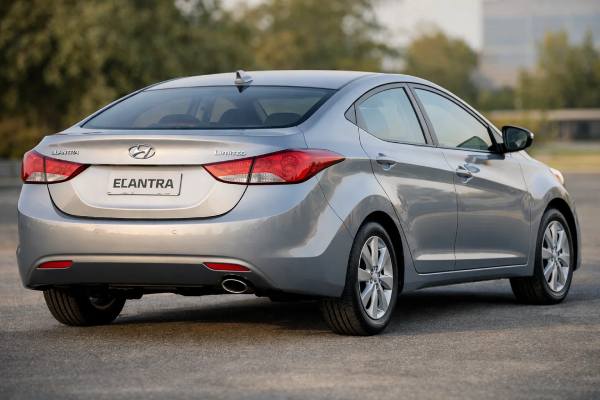
The Hyundai Elantra MD 1.6 MPI is one of those cars that looks simple on paper but makes more sense the deeper you go. For 2011–2013, it offered a light, efficient compact-sedan package with a naturally aspirated 1.6-litre petrol engine, six-speed transmissions, generous cabin space, and a surprisingly modern safety structure for its time. It was not designed to be exciting in the traditional sense. Instead, it aimed to be sleek, roomy, economical, and easy to live with. That formula still works well today. The 1.6 MPI version is especially appealing because it avoids turbo complexity and fits the car’s calm character. The biggest ownership question is not whether the design was fundamentally sound. It usually was. The real question is how well the individual car has been maintained. Chain-noise checks, suspension wear, cooling-system condition, and bodywork history matter far more than brochure promises. Buy a good one, and the MD still feels like a smart, usable compact sedan.
Top Highlights
- The 1.6 MPI engine is simpler and usually cheaper to own than a comparable turbocharged alternative.
- Cabin and boot space are strong for the class, and the 2,700 mm wheelbase helps rear-seat comfort.
- Six airbags, ESC, and strong period crash performance are real advantages for a 2011–2013 compact sedan.
- Korea-built early cars should be checked for completion of the headliner support-bracket recall.
- A practical oil-service rhythm is every 12,000 km or 12 months, or every 6,000 km in severe use.
Explore the sections
- Elantra MD 1.6 in Profile
- Elantra MD 1.6 Spec Sheet
- Elantra MD Equipment and Safety
- Known Faults and Campaigns
- Upkeep Schedule and Buying Advice
- Real-World Drive and Economy
- How the MD Measures Up
Elantra MD 1.6 in Profile
The MD-generation Elantra marked a clear shift in Hyundai’s compact-car strategy. Earlier Elantras were sensible but often conservative in design. The MD changed that. It brought the brand’s flowing-surface styling language into the small-sedan class and made the car look more upscale than its price suggested. Underneath the shape, however, Hyundai stayed fairly disciplined. This was still a front-wheel-drive compact built around packaging efficiency, light weight, and easy everyday ownership.
The 1.6 MPI version is the most balanced form of that idea in many export markets. It uses Hyundai’s Gamma-family naturally aspirated four-cylinder petrol engine with dual CVVT and multi-point injection. That matters because this engine delivers decent output without the extra plumbing, heat, and long-term complexity of a turbocharged setup. It also suits the Elantra’s actual mission. The MD is not a sports sedan. It is a roomy, efficient commuter and family car that feels most convincing when used calmly and consistently.
One of the MD’s biggest strengths is packaging. The wheelbase stretches to 2,700 mm, which is generous for the class, and that gives the car a mature cabin feel. Rear passengers get more legroom than the car’s exterior size suggests, and the boot is large enough to make the MD a practical daily sedan rather than just a stylish one. Visibility is not as open as in older boxier compact cars, but the car is easy to judge on the road and generally simple to drive in town.
The chassis recipe is straightforward. Up front there are MacPherson struts, while the rear uses a torsion-beam setup. That is not exotic, but it is space-efficient and predictable. Hyundai matched it with electric power steering, six-speed manual or six-speed automatic transmissions depending on market, and modest tyre sizes that help keep running costs reasonable. The result is a compact sedan that feels lighter and more efficient than many rivals from the same period.
The ownership appeal now is clear. The MD 1.6 MPI gives you modern-enough safety, sensible fuel economy, decent cabin quality, and a relatively simple engine. The risks are also clear. Any 2011–2013 car is now old enough that age-related wear matters more than original marketing. Suspension bushes, brake hardware, cooling-system parts, ignition components, and paint or corrosion condition all deserve attention. In other words, the MD is a good design, but the individual car still matters more than the spec sheet.
Elantra MD 1.6 Spec Sheet
For the 2011–2013 Elantra MD 1.6 MPI, official public documents give a strong base for dimensions, power, and safety equipment, but they are less consistent on every service-fill figure in every market. The table below reflects the most repeatable published data for the 132 hp export-market 1.6 MPI sedan, with clear notes where values vary by trim, body build, or handbook.
| Powertrain and efficiency | Figure |
|---|---|
| Code | Gamma 1.6 MPI family, commonly catalogued as G4FG in 132 hp form |
| Engine layout and cylinders | Inline-4, DOHC, 4 cylinders |
| Valves per cylinder | 4 |
| Bore × stroke | 77.0 × 85.4 mm (3.03 × 3.36 in) |
| Displacement | 1.6 L (1,591 cc) |
| Induction | Naturally aspirated |
| Fuel system | MPI / port injection |
| Compression ratio | Commonly catalogued at 10.5:1 to 11.0:1 depending on market data source |
| Max power | 132 hp (97 kW) @ 6,300 rpm |
| Max torque | 157–160 Nm (116–118 lb-ft) @ 4,850 rpm |
| Timing drive | Chain |
| Rated efficiency | About 6.4 L/100 km (36.8 mpg US / 44.1 mpg UK) combined NEDC |
| Real-world highway @ 120 km/h | Usually around 6.3–7.2 L/100 km in good condition |
| Transmission and driveline | Figure |
|---|---|
| Transmission | 6-speed manual or 6-speed automatic |
| Drive type | FWD |
| Differential | Open |
| Chassis and dimensions | Figure |
|---|---|
| Suspension, front | MacPherson strut |
| Suspension, rear | Torsion beam |
| Steering | Electric rack-and-pinion |
| Steering ratio | About 14.2:1 |
| Steering lock-to-lock | About 2.9 turns |
| Brakes | Front 280 mm ventilated discs; rear 262 mm discs on commonly cited 1.6 export trims |
| Wheels and tyres | 195/65 R15 common; 205/55 R16 and 215/45 R17 on higher trims |
| Ground clearance | About 150 mm (5.9 in), market dependent |
| Length | 4,530–4,550 mm (178.3–179.1 in), depending on market source and bumper spec |
| Width | 1,775 mm (69.9 in) |
| Height | 1,445 mm (56.9 in) |
| Wheelbase | 2,700 mm (106.3 in) |
| Kerb weight | About 1,236 kg (2,725 lb) for a typical manual 1.6 sedan |
| Fuel tank | 48 L (12.7 US gal / 10.6 UK gal) |
| Cargo volume | About 485 L (17.1 ft³) |
| Performance and capability | Figure |
|---|---|
| 0–100 km/h (0–62 mph) | About 10.7 s manual |
| Top speed | About 200 km/h (124 mph) |
| Braking distance 100–0 km/h | No dependable official open figure for the exact 1.6 trim |
| Towing capacity | Market-dependent; verify from VIN and local handbook |
| Payload | Market-dependent; verify from registration label or handbook |
| Fluids and service capacities | Figure |
|---|---|
| Engine oil | Commonly 5W-20, 5W-30, or 5W-40 depending on climate and market; Gamma 1.6 engines are commonly catalogued around 3.6–3.7 L with filter |
| Coolant | Ethylene glycol-based coolant, normally 50:50 mix; exact fill varies by market and heater layout |
| Manual transmission oil | API GL-4 manual transaxle fluid, commonly around 1.9–2.0 L |
| Automatic transmission fluid | Hyundai SP-IV specification; total fill varies with service method and transmission state |
| Brake fluid | DOT 3 or DOT 4 as specified by the handbook |
| A/C refrigerant | R134a; charge varies by market and label |
| Key torque specs | Verify from VIN-specific workshop data rather than generic online charts |
| Safety and driver assistance | Figure |
|---|---|
| ANCAP | 5 stars, overall 33.21/37 in 2011 testing |
| IIHS | Good in moderate overlap front, side, roof strength, and head restraints; small overlap driver-side Acceptable based on later testing applied to 2011–16 |
| Headlight rating | Not a core period rating item for this model |
| ADAS suite | None; no AEB, ACC, lane-centering, BSD, or traffic-sign assist |
The key point here is that the MD 1.6 MPI is mechanically simple for its era. That helps both ownership cost and repair logic. The few numbers that are unclear in open public data should always be verified by VIN, not guessed.
Elantra MD Equipment and Safety
Trim names for the MD varied a lot by region, but the structure of the range was usually clear. Entry cars focused on value, mid-spec trims added convenience, and higher trims brought better wheels, climate features, trim upgrades, and more cosmetic polish. In markets such as Central Europe, the 1.6 MPI often appeared in Classic, Comfort, and Style-type grades. Even the simpler versions were not badly equipped for the period. Many cars came with ABS, EBD, stability control, six airbags, ISOFIX anchors, power accessories, and a proper six-speed transmission. That baseline matters because it helps the MD feel newer than many rivals from the late 2000s.
The mid-range cars usually make the most sense as used buys. They tend to combine the 1.6 MPI engine with air conditioning, better trim materials, steering-wheel audio controls, front fog lamps, power mirrors, and more useful daily comfort items without getting too complicated. Higher trims often add 16- or 17-inch wheels, leather details, rain sensors, heated mirrors, rear parking sensors, start button systems, and upgraded interior finishes. These extras can be nice, but on an older Elantra, condition still matters more than feature count.
Quick identifiers help because the badge alone can mislead. Look at the wheel size, steering-wheel trim, climate-control panel, fog lamps, key type, and whether the car has parking sensors or a sunroof. Also check the instrument cluster and safety labels. Some market cars were assembled in Korea, others in the United States, and that matters because the Korea-built early sedans were the ones tied to the better-known headliner-bracket recall.
Safety is one of the MD’s strongest long-term selling points. ANCAP awarded the Elantra five stars in 2011, with an overall score of 33.21 out of 37. The tested Australian car included dual front airbags, side airbags, curtain airbags, ABS, EBD, and ESC as standard. IIHS also rated the redesigned Elantra strongly in its core tests. On the sedan platform, moderate-overlap front, side, roof-strength, and head-restraint results were all good. Later small-overlap testing was less impressive, with an acceptable result, but even that still places the car respectably in period context.
What the MD does not offer is modern active safety. There is no autonomous emergency braking, blind-spot monitoring, adaptive cruise control, lane-centering, rear cross-traffic alert, or traffic-sign recognition. That should be viewed honestly, not emotionally. For a 2011–2013 compact sedan, the passive safety package was solid. For a buyer comparing it with much newer cars, the lack of driver-assistance technology is a meaningful gap.
The best way to judge an individual car is therefore simple. Confirm the airbag and ESC package, verify recall completion where relevant, inspect the seat belts and warning lights, and make sure the tyres and brakes are not undermining an otherwise sound safety design. The MD started with a good foundation. It only stays that way if the car has been kept properly.
Known Faults and Campaigns
The good news with the MD 1.6 MPI is that it does not carry the same reputation as some later Hyundai engine stories. The 1.6 Gamma MPI is generally viewed as the more straightforward, less controversial engine in the range. The bad news is that age-related faults can still pile up, and a neglected car will feel much worse than the design deserves.
The most important official campaign for 2011–2013 cars is the headliner support-bracket recall affecting certain Korea-built Elantras. In those cars, a support bracket attached to the headliner could become displaced during side-curtain-airbag deployment. The dealer remedy was the installation of adhesive strips over the support brackets. This is not a reason to avoid every early MD, but it is a reason to verify VIN history and make sure the repair was completed if the car is in the affected production band.
Outside recall work, most problems are ordinary and manageable. Engine-related issues are usually low to medium severity if caught early. Coil packs, spark plugs, battery weakness, and throttle-body contamination can all cause rough idle, hesitation, or hard starting. A healthy Gamma MPI should idle smoothly and respond cleanly. If it does not, start with the basics before assuming anything dramatic. Vacuum leaks, tired ignition parts, and neglected service items explain many complaints.
Timing-chain trouble is not common in the same way timing-belt failures are on older engines, but chain noise still deserves attention. Rattle on cold start, a persistent metallic timing noise, or correlation faults can point to tensioner or chain-wear issues. On a high-mileage or oil-neglected car, that becomes a medium-to-high cost concern. The fix is not always immediate engine failure, but ignoring it is unwise. Clean oil and correct service intervals matter here.
Cooling systems are another age checkpoint. Radiator seams, hose connections, thermostat housings, and plastic tanks can all start to show their age after a decade or more. Symptoms include slow temperature creep, sweet coolant smell, and staining around hose joints or the radiator. The remedy is normally straightforward, but overheating is the mistake that turns a cheap repair into an expensive one.
The chassis is predictable in the best and worst sense. Front lower-arm bushes, drop links, dampers, top mounts, rear beam bushes, and wheel bearings all wear in normal ways. Electric power steering is usually reliable, but clunks, vague centering, or steering-column noises should not be ignored. Automatic-transmission cars can also develop shift adaptation complaints or harsh engagement if fluid condition, battery voltage, or software health has been neglected.
The biggest purchase risk, however, is still not one famous defect. It is stacked neglect. A tired 1.6 MPI MD with cheap tyres, weak battery, old plugs, worn bushes, and poor service history can feel like a bad design when it is really just a badly maintained example. That distinction matters.
Upkeep Schedule and Buying Advice
The MD 1.6 MPI responds well to routine service. It is not a fragile engine, but it does not reward long oil-change experiments or lazy cooling-system maintenance. If you are buying one today, the smart move is to reset the baseline unless the records are unusually complete.
| Item | Practical interval | Notes |
|---|---|---|
| Engine oil and filter | Every 12,000 km or 12 months | Severe use: 6,000 km or 6 months |
| Engine air filter | Inspect every service, replace around 48,000 km | Sooner in dusty use |
| Cabin air filter | About every 24,000 km or 24 months | Replace sooner if airflow drops |
| Spark plugs | Around 168,000 km on iridium plugs in some schedules | Earlier if misfire or rough idle appears |
| Coolant | First major change around 192,000 km or 10 years in some schedules, then every 48,000 km or 24 months | Verify by market manual |
| Brake fluid | Every 2–3 years | Sooner if moisture contamination is suspected |
| Drive belts | Inspect from about 96,000 km onward | Replace on cracking, noise, or tension loss |
| Manual gearbox oil | Refresh on unknown history or roughly 80,000–100,000 km | Use correct GL-4 fluid only |
| Automatic transmission fluid | Follow the exact local service plan; inspect sooner in hard use | Use Hyundai SP-IV only |
| Tyres and alignment | Check monthly and at each service | Uneven wear usually reveals suspension issues |
| Battery | Test yearly after age 4 | Weak voltage can create false drivability complaints |
| Timing chain system | No fixed belt-style replacement interval | Inspect on noise, fault codes, or poor history |
For fluids, use the correct viscosity rather than guessing from what is cheap on the shelf. In warm climates, 5W-30 and 5W-40 are common practical choices, while thinner approved oils may appear in some manuals for fuel economy. The safest answer is always the official handbook for the car’s market and engine code. For the Gamma 1.6 MPI, many service sources cluster around 3.6–3.7 L of engine oil with filter, but always fill by the correct procedure and confirm on the dipstick.
As a buyer, prioritize structure, service history, and drivability over trim. A clean mid-spec car with solid maintenance is better than a loaded one with vague history. On inspection, check for uneven idle, timing-chain noise on cold start, coolant smell, rough shifting, steering-column knocks, tyre shoulder wear, and rear suspension looseness. Also look carefully at the body. The MD is not usually notorious for catastrophic rust, but poorly repaired accident damage, stone-chipped front edges, and neglected underbodies still matter.
The strongest version for many buyers is a 1.6 manual in mid trim. It gives you the simple engine, good fuel economy, and fewer long-term transmission questions. The automatic is still a valid choice if it shifts smoothly and has a believable service story. Avoid cars with unexplained warning lights, cheap aftermarket electrical work, or missing recall history on Korea-built early examples. Long-term durability is good enough to justify a purchase, but only if the car starts from a healthy baseline.
Real-World Drive and Economy
The Elantra MD 1.6 MPI is a calm car to drive, and that is meant as praise. It does not pretend to be sporty, yet it avoids feeling dull if the chassis is still fresh. Around town, the light controls, compact footprint, and smooth naturally aspirated engine make the car easy to use. The electric steering is accurate enough, though not especially talkative, and the six-speed manual suits the engine’s character better than you might expect. The automatic adds convenience but softens the car’s responses.
The engine itself is honest. Low-rpm shove is modest compared with a turbocharged rival, so brisk acceleration still asks for revs and sensible gear choice. Once into the mid-range, the engine feels clean and willing rather than strained. That is why the MD works well as a daily sedan. It is predictable. There is no dramatic turbo step, no hybrid transition, and no complicated power delivery to learn. The trade-off is that full-load performance feels merely adequate by current standards.
Ride quality is another quiet strength. The MD is tuned more for stability and comfort than sharp cornering. On ordinary roads, it settles well and keeps the cabin composed. The rear torsion beam is less sophisticated than an independent setup on paper, but in everyday use the car feels tidy and well controlled. Where owners get disappointed is when worn dampers, bushings, or cheap tyres undo that balance. A good MD rides more smoothly than many people expect. A neglected one can feel noisy and oddly restless.
Noise levels are decent for the period. At city speed, the cabin is fairly civil. At motorway speed, tyre and wind noise become more obvious, but not to an unreasonable degree. Engine sound is subdued unless you work it hard. In this respect, the 1.6 MPI fits the car nicely. It is not particularly charismatic, but it is refined enough for the job.
Real-world fuel use is one of the model’s better qualities. Expect roughly 7.5–9.0 L/100 km in dense city driving, around 6.2–7.2 L/100 km on a steady highway run, and about 6.8–7.8 L/100 km in mixed daily use if the car is healthy. A gentle driver in warm weather can beat those numbers. A car with poor alignment, dirty plugs, dragging brakes, or underinflated tyres will miss them badly. The official combined figure around 6.4 L/100 km is achievable only under favorable conditions, but the MD still remains efficient enough to feel economical in real ownership.
Braking feel is easy to judge and confidence-inspiring when the hardware is healthy. Pedal feel should be firm, straight, and progressive. Any vibration or pull suggests overdue maintenance, not inherent weakness. In short, the MD 1.6 MPI is not thrilling, but it is easy to understand and easy to live with. That is why it still makes sense.
How the MD Measures Up
The MD Elantra 1.6 MPI competes best on balance. Against period rivals such as the Toyota Corolla E150, Honda Civic FB, Mazda3 BL, Ford Focus Mk3, Chevrolet Cruze, and Kia Cerato/Forte, it was rarely the driver’s first pick and rarely the weakest car either. Its strongest argument was that it combined sleek styling, real interior space, good safety, and sensible operating costs in one clean package.
Compared with a Corolla, the Elantra often feels more stylish and sometimes better equipped for the money, though Toyota still carries the stronger default reputation. Compared with a Civic, the Hyundai is usually less playful but often quieter in character and more relaxed for ordinary commuting. Against a Focus, it gives away some steering feel but may win on simplicity and straightforward ownership. That is the recurring pattern: the MD does not dominate one category, but it avoids serious weakness in most of them.
What makes the 1.6 MPI version especially relevant is that it sidesteps some of the complexity that later compact cars picked up. It is not turbocharged, it does not use modern ADAS sensor suites, and it does not ask for specialist equipment to solve every minor issue. That matters in the used market. A car like this can still be worth maintaining because the repair logic remains fairly accessible.
Within the Elantra range itself, the 1.6 MPI is the sensible middle ground in markets that received it. The larger 1.8 gives stronger easy performance, but the 1.6 is usually enough for the chassis and may be the more attractive long-term buy where tax, fuel, or insurance matters. For buyers who mostly do commuting, moderate highway use, and family errands, the 1.6 fits the car naturally.
So how does it compare to rivals in one line? It is the compact sedan for buyers who value calm design, useful space, good safety fundamentals, and a simple naturally aspirated engine more than outright handling sparkle. In that role, it still holds up well. The right example feels lighter, more grown-up, and more sensible than its price often suggests.
References
- HYUNDAI Elantra 2013 (Price List)
- Hyundai Motor Company 2013 (Brochure)
- 2011 Hyundai Elantra 2011 (Safety Rating)
- Hyundai Elantra | Safety Rating & Report | ANCAP 2011 (Safety Rating)
- SAFETY RECALL NOTICE 2013 (Recall Notice)
Disclaimer
This article is for informational purposes only and is not a substitute for professional diagnosis or repair. Specifications, torque values, service intervals, procedures, and equipment can vary by VIN, market, production plant, and trim, so always verify against the official service documentation for the exact vehicle before carrying out maintenance or making a purchase decision.
If you found this guide useful, please consider sharing it on Facebook, X, or another platform to support our work.