
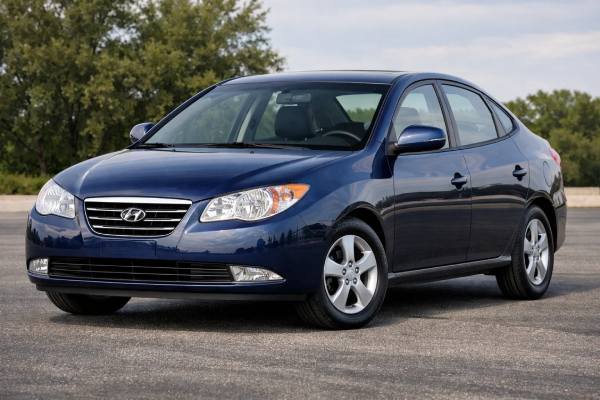
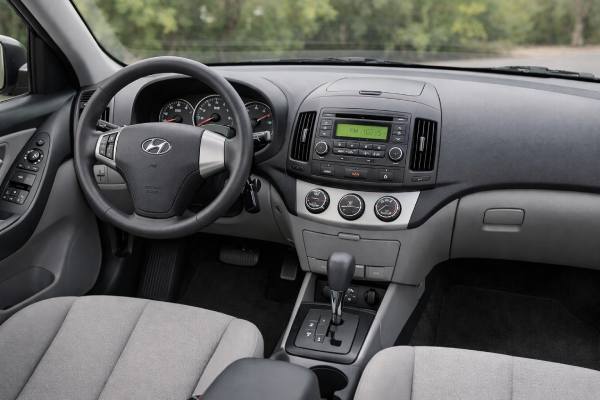
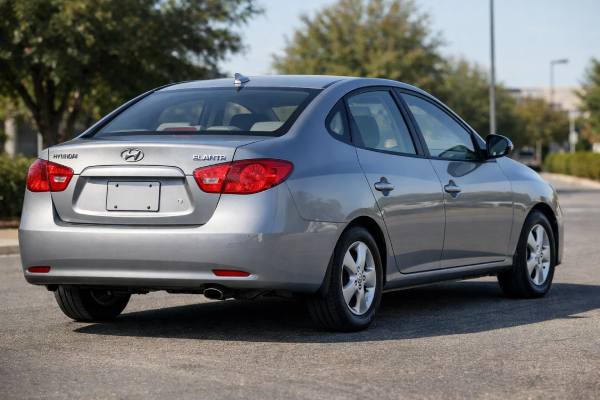
The Hyundai Elantra Touring is one of those cars that makes more sense the longer you live with it. Sold in the U.S. for 2009 and 2010, it combined the Elantra’s dependable 2.0-litre naturally aspirated petrol engine with a roomy five-door body, a long wheelbase, and a chassis that was more sophisticated than many buyers expected in this price class. The key engineering point is the platform itself: unlike some low-cost rivals of the period, the Touring used a multi-link rear suspension, standard electronic stability control, and a genuinely useful cargo area. The ownership story today is mostly about condition. The engine is straightforward, the automatic is conventional, and parts supply is still manageable, but timing-belt history, suspension wear, brake condition, and recall completion matter far more than trim name. Bought carefully, the Elantra Touring remains one of the more rational older compact wagons on the used market.
At a Glance
- The Touring’s biggest strengths are cargo space, rear-seat room, and easy everyday visibility.
- The 2.0 MPI engine is simple and durable when serviced on time, with no turbocharger or direct-injection complexity.
- The chassis is better than the badge suggests, thanks to its multi-link rear suspension and standard stability control.
- The main used-car caution is not the engine itself but overdue timing-belt work, worn suspension parts, and old automatic fluid.
- A smart oil-service interval is every 6,000 to 12,000 km depending on use, or every 12 months at the latest.
Explore the sections
- Hyundai Elantra Touring FD Character
- Hyundai Elantra Touring FD Numbers
- Hyundai Elantra Touring FD Equipment and Safety
- Reliability Patterns and Service Actions
- Maintenance Plan and Buying Advice
- Driving Manners and Fuel Use
- Touring FD Against Key Rivals
Hyundai Elantra Touring FD Character
The Elantra Touring is not just an Elantra sedan with a longer roof. That is the first thing worth understanding. Hyundai marketed it as a more functional, sportier five-door, and the car does feel distinct enough to justify that claim. It carries the same basic 2.0-litre four-cylinder petrol engine and front-wheel-drive layout as the sedan, but its packaging changes the ownership experience quite a lot. This is a practical wagon-style hatch with real luggage space, a low load floor, and a rear seat that folds flat enough to be genuinely useful. For buyers who need one car to handle commuting, family errands, and occasional bulky cargo, that still matters.
The Touring also sits in a useful middle ground. It is larger and more flexible than a typical compact hatchback, but it does not feel like a bloated crossover. Hyundai’s own launch material leaned on exactly that point. The car was presented as bigger than a hatchback, smaller than a wagon, and unusually space-efficient. Those claims were not just marketing fluff. Passenger and cargo packaging is one of the Touring’s strongest traits even now. With the rear seats upright, the luggage area is already useful. With them folded, the car becomes surprisingly generous for its footprint.
The second important point is the chassis. This generation used MacPherson struts up front and a multi-link rear suspension, which gave the Touring a more composed ride than some cheaper rivals. Hyundai also made the Touring more driver-focused than the sedan, with firmer spring rates, larger stabilizer bars, and model-specific steering tuning. That does not turn it into a hot hatch, but it does explain why the Touring tends to feel more settled and more planted than many buyers expect from a budget Hyundai of this era.
The 2.0 MPI engine is also central to the ownership picture. It is a naturally aspirated, port-injected four-cylinder with variable valve timing. That means fewer long-term system headaches than many later small-displacement direct-injection or turbocharged engines. Its weaknesses are ordinary ones: timing-belt service, gasket seepage, sensor aging, and neglected cooling systems. In return, it offers broad parts availability and predictable repair costs.
The Touring’s value today is simple. It is not fashionable, but it is useful. It is not fast, but it is good enough. It is not premium, yet it often gives owners more space, more standard safety equipment, and less purchase-price pain than better-known rivals. That combination is why it still deserves a careful look.
Hyundai Elantra Touring FD Numbers
For this article, the focus is the 2009–2010 Hyundai Elantra Touring with the 2.0 MPI petrol engine rated at 138 hp. Some details differ by gearbox and trim, but the core mechanical picture is consistent across the line.
Powertrain and efficiency
| Item | Hyundai Elantra Touring (FD) 2.0 MPI |
|---|---|
| Code | Beta II-family 2.0 MPI petrol |
| Engine layout and cylinders | Inline-4, DOHC, 4 cylinders, 4 valves per cylinder |
| Bore × stroke | 82.0 × 93.5 mm (3.23 × 3.68 in) |
| Displacement | 2.0 L (1,975 cc) |
| Induction | Naturally aspirated |
| Fuel system | MPI |
| Compression ratio | about 10.1:1 |
| Max power | 138 hp (103 kW) @ 6,000 rpm |
| Max torque | 186 Nm (137 lb-ft) @ 4,600 rpm |
| Timing drive | Belt |
| Rated efficiency | 9.0–9.1 L/100 km combined manual or automatic (26 mpg US / 31.2 mpg UK) |
| Real-world highway @ 120 km/h (75 mph) | about 7.5–8.5 L/100 km (31.4–27.7 mpg US / 37.7–33.2 mpg UK) |
Transmission and driveline
| Item | Value |
|---|---|
| Transmission | 5-speed manual or 4-speed automatic with Shiftronic |
| Drive type | FWD |
| Differential | Open |
Chassis and dimensions
| Item | Value |
|---|---|
| Suspension front | Independent MacPherson strut with stabilizer bar |
| Suspension rear | Independent multi-link with stabilizer bar |
| Steering | Rack-and-pinion, motor-driven power steering |
| Steering ratio | Not consistently published in owner-facing factory literature |
| Brakes | 300 mm (11.8 in) front ventilated discs / 262 mm (10.3 in) rear solid discs |
| Wheels and tyres | 195/65 R15 or 215/45 R17, depending on trim and package |
| Ground clearance | not typically published in open U.S. owner-facing sources |
| Length / Width / Height | 4,475 mm / 1,765 mm / 1,520 mm (176.2 / 69.5 / 59.8 in) |
| Wheelbase | 2,700 mm (106.3 in) |
| Turning circle | 10.4 m (34.2 ft) |
| Kerb weight | about 1,295–1,355 kg (2,855–2,987 lb), trim and gearbox dependent |
| GVWR | market- and label-specific; verify by VIN |
| Fuel tank | 53 L (14.0 US gal / 11.7 UK gal) |
| Cargo volume | 688 L seats up / 1,849 L seats down (24.3 / 65.3 ft³), manufacturer quoted |
| Payload | label-specific; verify by VIN and market |
| Towing capacity | market-dependent and not broadly published for U.S. owner literature |
Performance and service capacities
| Item | Value |
|---|---|
| 0–100 km/h (0–62 mph) | about 10.6 s manual / 11.2 s automatic |
| Top speed | about 190 km/h (118 mph) |
| Braking distance | not consistently published in factory owner materials |
| Engine oil | API SM / ILSAC GF-4 or above; SAE 5W-20 preferred; 4.0 L (4.23 US qt) |
| Coolant | Ethylene-glycol base coolant for aluminum radiator; 6.6 L (6.97 US qt) |
| Manual transmission oil | API GL-4 SAE 75W-85; 2.0 L (2.11 US qt) |
| Automatic transmission fluid | Hyundai / Diamond / SK ATF SP-III; 6.6 L (6.97 US qt) |
| Brake and clutch fluid | DOT 3 or DOT 4; 0.7–0.8 L (0.7–0.8 US qt) |
| A/C refrigerant | verify by under-hood label or VIN-specific service data |
| A/C compressor oil | verify by VIN-specific service data |
| Key torque specs | Wheel nuts 88–107 Nm (65–79 lb-ft) |
Safety and driver assistance
| Item | Value |
|---|---|
| Euro NCAP | No commonly cited Touring-specific Euro NCAP result for this U.S.-market five-door |
| IIHS moderate overlap front | Good, applied from 2007–2010 Elantra sedan to Touring from 2009 |
| IIHS head restraints and seats | Good |
| NHTSA frontal rating | 5 stars front, 4 stars side, 4 stars rollover for U.S. Touring-era federal ratings |
| ADAS suite | None in the modern sense; no AEB, ACC, lane support, or blind-spot monitoring |
These figures explain why the Touring still appeals. It is not powerful, but it is spacious, decently efficient, and mechanically plain in a good way.
Hyundai Elantra Touring FD Equipment and Safety
The Elantra Touring’s trim structure is simpler than many newer Hyundai lines, but it still matters when you are buying used. In 2009, the Touring arrived as a fairly well-equipped single-model proposition rather than a long trim ladder. Hyundai leaned on standard safety and convenience equipment as a selling point, which helped the car stand out. By 2010, Hyundai expanded the lineup with a new lower-cost GLS model and a clearer split between value-oriented and better-equipped versions.
That 2010 change is important for shoppers. The GLS reduced the entry price but kept meaningful hardware such as electronic stability control, four-wheel disc brakes, and the core audio and convenience basics. Higher-spec versions, most notably the SE, added the features enthusiasts actually notice in daily use: 17-inch wheels, a sunroof, heated seats, leather trim on touchpoints, and a more attractive cabin presentation. Roof rails also became available. In practice, the 2009 car often feels like a strong-value single-spec model, while the 2010 line is easier to shop by budget.
Mechanical differences between trims are modest but not meaningless. The Touring already had model-specific suspension and steering tuning compared with the sedan, yet wheel and tyre choice affect the outcome. Fifteen-inch cars ride better and cost less to tyre. Seventeen-inch SE cars feel sharper but tend to ride more firmly and are usually the more expensive used buy. Manual cars feel more alert and slightly more efficient on faster roads. Automatic cars are easier in traffic but make the engine feel flatter.
Safety equipment was one of Hyundai’s strongest arguments. Standard features included electronic stability control, traction control, ABS with electronic brake-force distribution and brake assist, six airbags, active front head restraints, seatbelt pretensioners, and reminders. That was a serious list for a mainstream five-door at the time, and it still matters because some rivals offered parts of that package only on higher trims.
Crash-test results need to be read with care. The Touring has a Touring-specific IIHS page for head restraints and seats, where it scores Good. The frontal offset rating applied from the redesigned 2007–2010 Elantra sedan to the Touring beginning in 2009, also at Good. That is encouraging. At the same time, this is still an older compact platform from a different safety era, so buyers should not mistake those results for the broader active-safety and small-overlap protections found on newer cars. NHTSA-era federal ratings were also respectable, but again, they belong to the standards of the time.
Child-seat practicality is decent because of the body shape and rear access, though it is not a crossover-like high-seat vehicle. The Touring’s real safety strength is simpler: it gave buyers a lot of core passive and active safety equipment for the money, and it did so as standard rather than as an expensive add-on.
Reliability Patterns and Service Actions
The Elantra Touring’s reliability story is mostly reassuring, but it is not exciting. This is a car that ages in understandable ways. The engine is conventional, the automatic is old-school, and the chassis does not hide its wear for long. That is good news for diagnosis, but it also means the difference between a well-kept car and a neglected one is usually obvious.
The most common issues are low- to medium-cost age items. Timing-belt neglect sits at the top of the list because it turns a cheap car into an expensive one quickly. Valve-cover seepage, tired engine mounts, worn suspension links, front lower arm bushings, wheel bearings, sticking rear brake hardware, aging oxygen sensors, and cracked intake or EVAP hoses are all typical older-compact problems. None of these are unusual, but on a $3,000–$6,000 car they matter.
The engine itself is usually durable if it gets clean oil, coolant, and belt service. It is not known for the sort of dramatic oil-consumption pattern that later Hyundai engines are infamous for. What it does dislike is neglect. Missed timing-belt changes, poor-quality coolant, and overdue plugs can make it feel rougher and lazier than it really is. Automatic cars also deserve a careful test. The 4-speed unit is usually robust, but harsh shifts, delayed engagement into Drive or Reverse, and slipping when warm usually point to neglected fluid or internal wear.
Here is a practical fault map:
- Common, low cost: valve-cover gasket seepage, brake wear, sway-bar links, alignment drift, weak hatch struts
- Common, medium cost: timing-belt overdue, front lower arm bushings, rear brakes dragging, wheel bearings, tired engine mounts
- Occasional, medium cost: automatic shift quality issues, EPS warning light problems, cooling-system leaks
- Rare, high cost: badly neglected automatic transmission, overheating damage from ignored coolant loss
Official service actions matter. Several U.S. campaigns touched the Touring. One notable recall covered certain 2009–2010 Touring models for electronic power steering, where the EPS system could lose assist and fall back to manual steering effort. Another later campaign covered certain 2009–2011 Touring vehicles for ABS module moisture intrusion that could create a fire risk even when parked. There was also a 2010–2012 Touring headliner support bracket recall related to side-curtain-airbag deployment. Not every 2009–2010 car is affected by every campaign, so VIN-level verification is essential.
Software is a smaller story here than on modern cars, but it is not absent. EPS recall work included control-unit updates or unit replacement depending on diagnosis. That means a clean dashboard today is not enough; you want proof the car was checked and the proper campaign work was completed.
The safest buying approach is simple. Ask for service history, belt proof, recall completion records, and a cold-start inspection. Then drive the car long enough for the automatic, steering, and brakes to get fully warm. The Touring is usually honest. If something is wrong, it tends to show you.
Maintenance Plan and Buying Advice
A conservative maintenance plan suits the Elantra Touring better than the bare minimum. Hyundai’s owner literature allows normal and severe schedules, and many used examples now live in “severe” reality because of age, short trips, traffic, and uncertain history.
| Item | Practical interval |
|---|---|
| Engine oil and filter | 6,000–12,000 km or 12 months; use 6,000 km in short-trip or hot-climate use |
| Severe-service oil interval | about 6,000 km / 3,750 miles or 6 months |
| Air filter | inspect every service; replace more frequently in dust |
| Cabin filter | about every 12,000–15,000 km or 12 months |
| Spark plugs | about every 96,000 km / 60,000 miles |
| Timing belt | about every 96,000 km / 60,000 miles or 48–60 months depending on use and history |
| Timing-belt idler and tensioner | with timing belt |
| Water pump | strongly recommended with timing-belt service |
| Coolant | first service around 96,000 km / 60 months, then more frequently thereafter |
| Automatic transmission fluid | about every 80,000–96,000 km if you want long-term durability |
| Manual transmission oil | inspect and refresh around 96,000 km or when condition is unknown |
| Brake fluid | every 2 years |
| Drive belts and hoses | inspect every service |
| Tyre rotation | about every 12,000 km |
| Alignment check | yearly or after impact damage |
| Battery test | yearly from year 4 onward |
For fluids and capacities, the useful numbers are straightforward:
- engine oil: 4.0 L with filter, API SM / ILSAC GF-4 or better, 5W-20 preferred
- automatic fluid: 6.6 L, SP-III specification
- manual transaxle: 2.0 L, API GL-4 SAE 75W-85
- coolant: 6.6 L, ethylene-glycol base coolant for aluminum radiator
- brake and clutch fluid: DOT 3 or DOT 4
- fuel tank: 53 L
The buyer’s checklist is even more important than the schedule:
- Verify timing-belt history. No invoice means assume it is due now.
- Inspect recall status. Ask for VIN-based campaign completion, especially for EPS and ABS.
- Check the front suspension closely. Bushings, lower arms, and alignment wear are common.
- Drive the automatic from cold. Any hesitation, flaring, or hard engagement deserves caution.
- Inspect the rear brakes and parking brake. Touring wagons that sat unused can develop dragging rear hardware.
- Look underneath. Rear subframe corrosion is not the main Touring horror story, but rusted brake lines, crusty exhaust sections, and tired underbody hardware still matter.
- Check hatch hardware. Struts, latches, and the cargo cover are easy to ignore and expensive to replace piece by piece.
The best buys are manual cars with full belt history or automatic cars with clean fluid-service evidence and smooth operation. The cars to avoid are cheap examples with shiny paint, no records, and an owner who says it “just needs a tune-up.” On an older Touring, that often means several deferred jobs, not one.
Driving Manners and Fuel Use
The Elantra Touring drives better than many people expect, though it does so in a calm, sensible way rather than an exciting one. The car’s strongest dynamic trait is composure. It rides with more maturity than a lot of budget small cars from the same period, and the multi-link rear suspension helps it stay settled over broken pavement and mid-corner bumps. The Touring also feels more planted than the sedan at highway speed, which suits its long-roof mission.
Steering is light but accurate enough. Around town that makes parking easy, and on the highway it keeps the car relaxed. It is not full of feedback, but it does not feel sloppy when the front suspension is healthy. Manual-transmission cars feel more natural because the engine can be kept in its sweet spot. Automatic cars are perfectly acceptable daily drivers, though the 4-speed gearbox shows its age on steep grades and during quick kickdown requests.
The powertrain character is simple and familiar. This 2.0 MPI engine likes to rev a bit more than the car’s easygoing feel suggests. Around 2,500–4,500 rpm it is strong enough for normal passing, but above that it becomes noisier without feeling especially quick. That is not a major flaw. It is just the normal behavior of a naturally aspirated four-cylinder from this era. The engine is smooth enough when healthy, and it avoids the turbo lag or injection-system roughness that can make newer small engines more expensive to own.
Real-world fuel use is respectable for an older, naturally aspirated wagon:
- City: about 9.0–10.5 L/100 km
- Highway at 100–120 km/h: about 7.2–8.5 L/100 km
- Mixed driving: about 8.2–9.2 L/100 km
EPA-era U.S. figures place the Touring at 23 mpg city and 31 mpg highway with the manual, or 23 mpg city and 30 mpg highway with the automatic. In practice, the manual usually does a little better on longer open-road drives, while the automatic is easier to live with in congestion but slightly thirstier at speed.
Noise, vibration, and harshness are decent rather than special. Wind noise is reasonable. Tyre choice affects road roar a lot. Seventeen-inch setups look better but transmit more impact harshness. Fifteen-inch cars are the ones most owners will find friendlier over bad surfaces and cheaper to keep in tyres.
So the driving verdict is straightforward. The Elantra Touring is not sporty in the way a Mazda3 hatch is sporty. It is spacious, steady, and comfortable enough to make long trips easier than its low market value suggests. That is exactly why it still works.
Touring FD Against Key Rivals
The Elantra Touring’s most natural rivals are the Mazda3 five-door, Toyota Matrix and Pontiac Vibe, Volkswagen Rabbit or Jetta SportWagen, and to a lesser extent the Subaru Impreza hatchback. Each takes a different approach to the compact-wagon idea, which helps explain where the Hyundai fits.
| Rival | Where the Touring wins | Where the rival may win |
|---|---|---|
| Mazda3 hatch | Cargo value, softer ride, simpler ownership costs | Sharper handling, better steering, more enthusiast appeal |
| Toyota Matrix / Pontiac Vibe | More rear-seat and cargo usefulness, richer standard safety content for the time | Strong reputation for durability and resale |
| Volkswagen Rabbit / Jetta SportWagen | Lower purchase cost, simpler long-term engine layout, cheaper basic repairs | Cabin quality, highway refinement, brand image |
| Subaru Impreza hatch | Better fuel costs and simpler FWD drivetrain | AWD traction and rough-weather confidence |
The Hyundai’s strongest argument is value per cubic foot. It offers a genuinely useful cargo area, a roomy back seat, and standard stability control at a time when some rivals still treated that as optional or trim-restricted. It is also mechanically simple in a reassuring way. No turbocharger, no direct injection, and no AWD hardware mean fewer expensive surprises than some used alternatives.
Its biggest weaknesses are equally clear. The four-speed automatic is dated. The interior is functional rather than upscale. And while crash protection was respectable for its time, the Touring does not bring the broader safety envelope of newer small wagons or crossovers. It also lacks the cult following that helps Matrix, Mazda3, and Subaru values stay stronger. That can be frustrating when you sell, but useful when you buy.
For a practical owner, the Touring makes the most sense against the Volkswagen and Subaru alternatives. The VW often feels more polished but can be more expensive once age-related repairs begin. The Subaru offers AWD confidence but adds drivetrain complexity and higher running costs. Against the Mazda3, the Hyundai gives away fun but gains cargo logic and everyday ease. Against the Matrix, the Touring usually feels more comfortable and a little more substantial, even if the Toyota still owns the stronger reputation for bulletproof reliability.
My verdict is that the Elantra Touring remains one of the better hidden-value choices in this class. It is best for drivers who want a compact wagon that is cheap to buy, useful to own, and straightforward to service. It is not the emotional choice. It is the rational one. And for many used-car buyers, that is the better reason to choose it.
References
- FUEL-EFFICENT 2009 HYUNDAI ELANTRA TOURING ARRIVES IN UNITED STATES 2008 (Manufacturer Publication)
- HYUNDAI EXPANDS ELANTRA TOURING LINEUP WITH NEW GLS MODEL 2010 (Manufacturer Publication)
- 2009 Hyundai Elantra Touring 2026 (Safety Rating)
- Gas Mileage of 2009 Hyundai Elantra 2026 (Fuel Economy Data)
- Part 573 Safety Recall Report 15V-100 2015 (Recall Database)
Disclaimer
This article is for informational purposes only and is not a substitute for professional diagnosis, repair, or VIN-specific workshop guidance. Specifications, torque values, intervals, procedures, recall applicability, and parts fitment can vary by VIN, trim, transmission, market, and production date, so always verify details against the correct official service documentation for the exact vehicle.
If this guide helped you, please consider sharing it on Facebook, X, or another platform to support our work.