
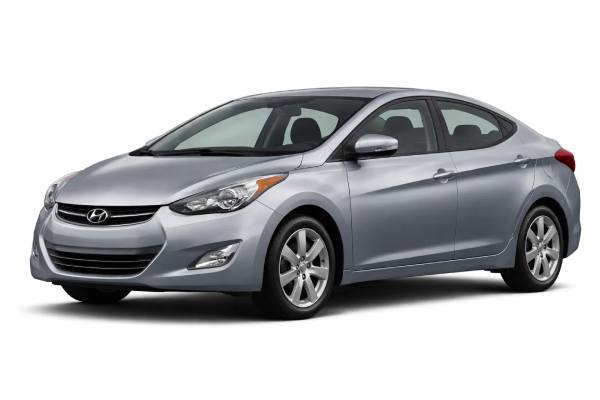
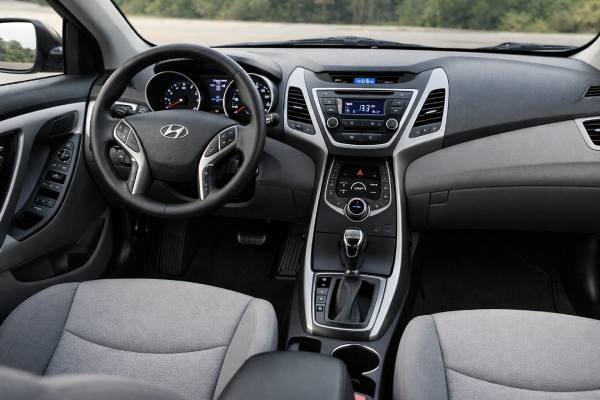
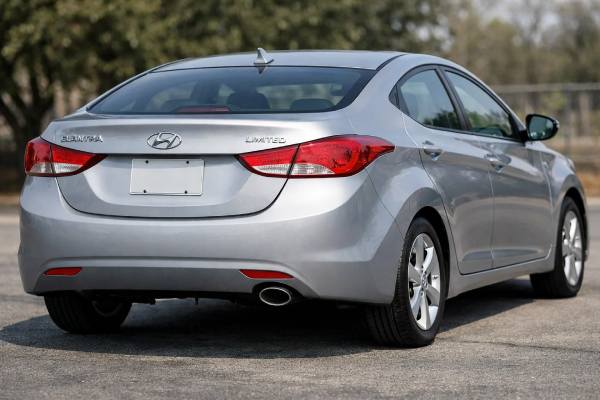
The Hyundai Elantra UD 1.8 MPI is one of those compact sedans that looks more ordinary than it really is. Underneath the flowing bodywork, Hyundai gave it a roomy cabin, a large boot, a well-packaged front-wheel-drive platform, and a naturally aspirated 1.8-liter engine that stays simpler than many later small turbo units. For the 2011 to 2013 period, the 145 hp variant is the one most people associate with the PZEV tune used in some markets, while many other listings show the same basic 1.8 MPI engine at 148 hp. In either case, the ownership story is similar: good interior space, respectable fuel economy, and straightforward day-to-day usability, balanced against the need to watch maintenance quality closely. This generation also has a meaningful safety and recall history, so buying well matters more than chasing the cheapest example. A cared-for UD 1.8 can still be an excellent practical used sedan.
Top Highlights
- The 1.8 MPI engine is smoother and simpler than many later downsized turbo engines.
- Cabin space and a 460 L boot make the UD more practical than its compact-sedan footprint suggests.
- Manual cars are usually the lower-risk long-term buy if condition is equal.
- Poor oil service can speed up timing-chain wear and make cold-start noise worse.
- A sensible oil and filter interval is every 10,000 to 12,000 km or 12 months.
Start here
- Hyundai Elantra UD ownership picture
- Hyundai Elantra UD technical details
- Hyundai Elantra UD trims and safety gear
- Reliability patterns and recalls
- Maintenance routine and buying tips
- Daily driving and real economy
- Rival comparison and value
Hyundai Elantra UD ownership picture
The UD-generation Elantra was Hyundai’s attempt to move the compact sedan into a more style-led, more upscale space without losing the everyday usefulness buyers actually needed. In many ways, it worked. The car arrived with a long wheelbase for the class, a low drag shape, generous rear-seat room, and a trunk large enough to make it feel closer to a midsize sedan in daily use. That is still the Elantra UD’s biggest advantage today. It is easy to dismiss it as just another early-2010s front-wheel-drive four-door, but the packaging is genuinely strong.
For this version, the focus is the 1.8 MPI engine in 145 hp form. That matters because the engine story can look confusing on paper. Hyundai’s 1.8-liter Nu four-cylinder is commonly listed at 148 hp in ULEV form, but the PZEV version used in California-emissions states and some related markets was rated at 145 hp and 130 lb-ft of torque. Mechanically, the two are close. The real attraction is not the small output difference but the underlying design: naturally aspirated, chain-driven cams, multi-point injection, and a six-speed manual or six-speed automatic rather than a more troublesome early dual-clutch or turbo package. That makes the car easier to understand and, in many cases, easier to keep running well.
The UD also arrived at a point when Hyundai was getting much better at fundamentals. The body structure, refinement, and cabin design all felt more mature than older Elantras. You sit in one today and immediately notice that it was engineered with real family use in mind. The controls are simple, rear-seat space is strong, and visibility is still decent by modern standards. Even the styling, once polarizing, now helps the car stand out from more anonymous rivals of the period.
That does not mean it is flawless. The UD’s weakness is not that it was badly engineered; it is that it is now old enough for deferred maintenance to hide under decent paint and a tidy cabin. A cheap Elantra can still look better than it drives. Cold-start engine behavior, chain noise, suspension wear, brake condition, recall completion, and rust around the underside all matter more than shiny body panels. In other words, the Elantra UD 1.8 is best approached as a sensible, well-packaged compact sedan that rewards careful selection. Buy a clean, documented one and it feels honest and usable. Buy a neglected one and the same simplicity that makes it easy to fix can also reveal just how much the previous owner skipped.
Hyundai Elantra UD technical details
The figures below focus on the 2011 to 2013 Elantra UD sedan with the 1.8 MPI engine in its 145 hp tune. Because Hyundai sold both 145 hp PZEV and 148 hp ULEV calibrations in this period, some specifications vary slightly by market and emissions package. Where exact values differ, the table stays centered on the 145 hp target variant and notes the broader range when that helps.
| Powertrain and efficiency | Data |
|---|---|
| Code | Nu 1.8 MPI, commonly coded as part of the Nu-family 1.8-liter engine range |
| Engine layout and cylinders | Inline-4, DOHC, 4 valves per cylinder, about 81.0 × 87.1 mm (3.19 × 3.43 in) |
| Displacement | 1.8 L (1,797 cc) |
| Motor | Not applicable |
| Induction | Naturally aspirated |
| Fuel system | MPI |
| Compression ratio | About 10.3:1 |
| Max power | 145 hp (108 kW) @ 6,500 rpm for the PZEV tune; many other listings show 148 hp |
| Max torque | 176 Nm (130 lb-ft) @ about 4,700 rpm for the 145 hp tune |
| Timing drive | Chain |
| Rated efficiency | Roughly 7.1–7.6 L/100 km combined, depending on transmission and market cycle |
| Real-world highway @ 120 km/h | About 6.3–7.2 L/100 km in a healthy manual or well-sorted automatic |
| Transmission and driveline | Data |
|---|---|
| Transmission | 6-speed manual or 6-speed automatic |
| Drive type | FWD |
| Differential | Open |
| Chassis and dimensions | Data |
|---|---|
| Suspension (front/rear) | MacPherson strut front / torsion-beam rear |
| Steering | Motor-driven power steering rack |
| Brakes | Front ventilated discs; rear discs on many trims and markets, rear drum arrangements also appeared in lower-spec versions |
| Wheels and tyres | 195/65 R15 or 205/55 R16 are the most common sizes |
| Ground clearance | About 140 mm (5.5 in) |
| Length / Width / Height | 4,530 mm / 1,775 mm / 1,445 mm (178.3 / 69.9 / 56.9 in) |
| Wheelbase | 2,700 mm (106.3 in) |
| Turning circle (kerb-to-kerb) | About 10.6 m (34.8 ft) |
| Kerb weight | About 1,225–1,270 kg (2,701–2,800 lb), depending on trim and transmission |
| GVWR | About 1,760 kg (3,880 lb), depending on market |
| Fuel tank | 48.5–53 L depending on market data; about 12.8–14.0 US gal |
| Cargo volume | 460 L (16.2 ft³) for the sedan |
| Performance and capability | Data |
|---|---|
| Acceleration | 0–100 km/h in about 10.0–10.6 s, depending on tune and gearbox |
| Top speed | About 190–202 km/h (118–126 mph), depending on market spec |
| Braking distance | No single manufacturer-validated figure for the exact 145 hp sedan confirmed in the reviewed sources |
| Towing capacity | Market dependent; verify on VIN plate and local documentation before towing |
| Payload | Roughly 430–500 kg (948–1,102 lb), depending on trim |
| Fluids and service capacities | Data |
|---|---|
| Engine oil | SAE 5W-20 is commonly preferred in North American guidance, with 5W-30 used in some climates and markets; about 4.0 L (4.2 US qt) with filter |
| Coolant | Ethylene glycol-based coolant; roughly 5.9–6.0 L (6.2–6.3 US qt) |
| Transmission / ATF | Manual: GL-4 75W-85 or 75W-90 class fluid depending on market guidance, about 1.9–2.0 L; automatic: Hyundai SP-IV family fluid, verify exact fill by service method |
| Differential / transfer case | Not applicable |
| A/C refrigerant | R-134a; verify exact charge on the under-bonnet label |
| A/C compressor oil | Verify by system label and service literature |
| Key torque specs | Wheel nuts 88–107 Nm (65–79 lb-ft) |
| Safety and driver assistance | Data |
|---|---|
| Crash ratings | IIHS: Good in moderate overlap front, side, roof strength, and head restraints; Acceptable in driver-side small overlap for 2013 testing |
| Headlight rating | Not applicable for this era |
| ADAS suite | None in the modern sense |
The important thing in this table is not one single number. It is the overall picture. The Elantra UD 1.8 gives you useful space, respectable performance, and a simple naturally aspirated engine without moving into the heavier, more complicated end of the market. That is exactly why it still attracts practical used-car buyers.
Hyundai Elantra UD trims and safety gear
Trim names varied by region, but the underlying pattern stayed familiar. The 1.8 MPI usually lived in volume trims rather than niche performance versions, which is good news for buyers today because it means most used examples were bought for normal family use rather than modified or driven unusually hard. In North America, GLS and Limited were the names many people remember. In other markets, trim ladders were arranged differently, but the equipment spread followed the same logic: base cars focused on value, mid-range cars added the features most owners actually wanted, and upper trims brought alloys, upgraded cabin materials, better audio, and sometimes the more desirable rear brake and safety equipment package.
Mechanical differences by trim were not huge, but they were worth checking. Higher trims were more likely to get larger wheels, rear disc brakes, fog lamps, automatic climate control, heated seats, and a fuller safety package. Lower trims could still be very good used buys, especially with the manual gearbox, but there is little point paying nearly the same money for a stripped car when a better-equipped example is available with the same service quality. On this generation, condition still matters more than trim, but a clean mid-range or upper-mid trim usually gives the best ownership balance.
Quick identifiers are simple. Alloy wheels, better seat trim, a more complete climate panel, steering-wheel controls, and upgraded instrument-cluster details usually point to the nicer versions. Some cars also added a sunroof, leather, heated rear seats, or navigation depending on market. Because these cars have passed through many owners by now, always look for consistency. A car with “Limited” badges and a bare-bones interior deserves closer scrutiny. Mismatched panels, wrong wheels, or obvious feature deletions often tell you more about previous ownership than the odometer does.
Safety is one of the UD’s stronger arguments, but it needs honest framing. In IIHS testing, the 2013 sedan earned Good ratings in the moderate-overlap front test, side test, roof strength, and head restraints. That is a solid result for a compact sedan of the period. The weaker area is the driver-side small-overlap front result, where the 2013 Elantra was rated Acceptable rather than Good. That still leaves it as a respectable car in class context, but not one that should be oversold as class-leading across the board.
In everyday terms, many UD Elantras came with six airbags, ABS, electronic stability control, active head restraints, and child-seat anchor points. What they do not have is the modern prevention layer that newer buyers now expect. There is no automatic emergency braking, no blind-spot system, no lane centering, and no traffic-sign recognition. So the real safety checklist on a used UD is practical: confirm the warning lamps behave correctly, inspect for poor crash repair, make sure the tyres are decent, and verify recall completion. A later-model Elantra with unresolved campaigns is not safer than an earlier one with a clean history. On this car, service history is part of the safety equipment.
Reliability patterns and recalls
The Elantra UD 1.8 has a generally good reputation, but not because it is immune to problems. Its strength is that most of its faults are understandable and, when caught early, manageable. The biggest risks come from deferred maintenance, ignored recalls, and age-related wear rather than from one single catastrophic design flaw affecting every car. That is encouraging, but it also means a neglected example can look deceptively normal while hiding a growing list of medium-cost repairs.
The most important engine-specific point is timing-chain health. The Nu 1.8 uses a chain instead of a belt, which many owners treat as lifetime hardware. That is too optimistic. The chain itself can last a very long time, but the system still depends on good oil quality, regular oil changes, and clean tensioner operation. The common warning pattern is cold-start rattle, rougher startup behavior, or timing-related fault codes rather than instant failure. Cars with long oil-change intervals, repeated short trips, or low oil levels deserve extra caution. The good news is that the 1.8 MPI avoids some other common later-era issues. Because it is multi-point injected rather than direct injected, it is less prone to heavy intake-valve carbon buildup.
Other engine and drivability issues are mostly routine. Ignition coils, spark plugs, oxygen sensors, thermostats, rocker-cover leaks, and intake or evap faults can all appear with age. None of those are unusual for a naturally aspirated four-cylinder of this period. Cooling systems should be watched too. Radiator plastic tanks, hoses, and caps all age, and a small leak that gets ignored can still turn into an overheated engine surprisingly quickly.
The chassis is no different from many compact sedans of the era. Front drop links, lower arm bushes, ball joints, rear beam bushes, dampers, and wheel bearings all wear normally. Brake hardware, especially rear components on lightly used cars, can also stick or corrode before pad wear alone tells the story. The Elantra should feel calm and tidy on the road. If it clonks, wanders, or feels unstable under braking, assume worn components rather than “bad design.”
There is also real recall and service-action history to check. Three items deserve special attention on 2011–2013 cars sold in the U.S. and related markets:
- Side-curtain airbag headliner bracket recall: certain 2011–2013 Korean-built Elantras were recalled because a headliner support bracket could become displaced during side curtain airbag deployment if it had already been partially dislodged.
- Brake pedal stopper pad recall: certain 2013 sedans built from December 2012 to April 2013 were recalled because the pad material could deteriorate, causing the stop lamps to stay on, the traction control warning lamp to illuminate, or the shift interlock behavior to change.
- ABS module fire-risk recall: later recall action covered 2011–2015 Elantras because brake fluid could leak internally in the ABS module and create an electrical short, raising fire risk even when parked.
There is also a lower-severity but common steering-related service theme. Hyundai extended warranty coverage in some markets for the motor-driven power steering coupling because it could wear and create a clicking or knocking sensation in the steering column. That is usually more annoying than dangerous, but it is worth asking about because it tells you whether the owner or dealer stayed on top of known issues.
Maintenance routine and buying tips
The Elantra UD 1.8 is easy to maintain well if you stay ahead of it. The car does not demand specialist care, but it does reward consistency. The smartest approach is to shorten a few intervals slightly compared with the most optimistic factory schedule, especially on older cars with mixed service history. Good oil, clean coolant, fresh brake fluid, and regular checks of the chain-driven engine’s startup behavior will do more for long-term reliability than any aftermarket additive or miracle fix.
| Item | Practical interval | Notes |
|---|---|---|
| Engine oil and filter | Every 10,000–12,000 km or 12 months | Shorter intervals help chain life and cold-start behavior |
| Engine air filter | Inspect every service, replace around 20,000–30,000 km | Earlier in dusty use |
| Cabin air filter | Every 15,000–20,000 km or 12 months | Useful for blower and A/C performance |
| Spark plugs | Around 45,000–60,000 km for standard plugs, longer for iridium types | Use the correct spec |
| Coolant | Every 2–3 years | Keep concentration and coolant type consistent |
| Brake fluid | Every 2 years | Important for ABS and caliper health |
| Manual gearbox oil | Around 60,000–80,000 km if used hard or shifting feels worse | Helps preserve shift quality |
| Automatic fluid | Service conservatively if history is known and condition is good | Use the correct Hyundai ATF only |
| Timing chain | No fixed belt-style interval; inspect on symptoms, noise, or timing faults | Oil quality is the main preventive factor |
| Auxiliary belt and hoses | Inspect every service | Replace on visible wear or cracking |
| Tyre rotation | Every 10,000–12,000 km | Check alignment at the same time |
| Battery testing | Yearly from year 4 onward | Weak voltage can trigger misleading warning lights |
Useful ownership figures include about 4.0 L engine-oil capacity with filter, about 6.0 L coolant capacity, and wheel-nut torque in the 88–107 Nm range. Those numbers are enough for planning, but exact fluid approvals and service methods should still be checked against the vehicle’s own documentation.
A careful used-buy inspection should follow this order:
- Body shell and underside.
- Recall completion and service paperwork.
- Cold-start engine sound.
- Cooling-system integrity.
- Steering feel and suspension noise.
- Brake condition and tyre wear pattern.
- Electronics and warning lights.
The best buy in this range is usually a manual 1.8 with a mid-range or higher trim, ABS and stability control, straight bodywork, and a believable maintenance file. Manual cars avoid automatic transmission risk and generally suit the engine well. Automatic cars are not bad by default, but they need stronger evidence of careful servicing to justify the same price.
Cars to avoid are the obvious ones: chain rattle that is waved away as “just how they sound,” mixed tyres, crash-repair signs around the front structure, coolant smell, rusty underbody seams, or unresolved recalls. Long-term durability is one of the UD’s strengths, but only when the car has been maintained like a real family vehicle rather than used until something broke.
Daily driving and real economy
The Elantra UD 1.8 is a better everyday driver than its reputation suggests. It does not have the sharp steering of a Ford Focus or the mechanical polish of the best Japanese rivals, but it feels settled, quiet enough, and easy to use. The cabin is airy, the seats are comfortable for the class, and the car’s long wheelbase helps it ride with more maturity than many compact sedans of the same era.
The 1.8 MPI engine matches that character well. It is not exciting, but it is willing and smooth. In traffic, it responds cleanly without turbo lag. On a faster road, it asks for a downshift sooner than a torquier larger engine would, but it never feels coarse when you use the rev range properly. The manual gearbox is usually the more rewarding choice because it makes the most of the engine’s modest output and avoids the extra softness of the automatic. The automatic suits urban driving, but it can make the car feel more relaxed than lively.
Ride and handling lean clearly toward comfort. The front strut and torsion-beam rear setup does not sound exotic, yet Hyundai tuned it well enough for the car’s mission. A healthy UD feels stable on the motorway, predictable in quick lane changes, and comfortable on broken roads. The downside is that worn dampers, tired front bushes, or cheap tyres spoil the experience quickly. If you drive one and it feels noisy or loose, assume maintenance debt first.
Brake feel is generally straightforward. Cars with rear discs and fresh fluid usually feel a bit cleaner and more confidence inspiring, but even lower-spec brake packages are fine when properly serviced. Steering is light in parking and acceptable at speed, though the system can feel numb compared with the best hydraulic rivals of the time. That is part of the UD’s personality: calm and easy, not especially talkative.
Real-world economy is one of the 1.8’s strengths. A healthy manual car can sit in the high-6s to low-7s L/100 km in mixed driving, and a steady 120 km/h motorway run often lands between roughly 6.3 and 7.2 L/100 km depending on tyres, weather, and load. City use will usually rise into the high-8s or low-9s. The automatic is a little thirstier, but not enough to ruin the case for the car. More importantly, the fuel use is matched by generally modest maintenance costs. That makes the UD 1.8 easy to recommend as a practical daily used sedan. It is not fast enough to buy for fun, but it is pleasant enough to make everyday driving feel easy rather than like a chore.
Rival comparison and value
The Elantra UD 1.8 entered one of the most crowded compact-sedan classes in years. It faced the Toyota Corolla, Honda Civic, Mazda 3, Ford Focus, Chevrolet Cruze, and various regional rivals that were strong in at least one key area. The Hyundai was rarely the default enthusiast pick, and it was not the prestige option either. What it offered instead was a strong all-round package: space, value, good standard equipment, respectable fuel economy, and simple naturally aspirated mechanicals.
Against a Corolla of the same era, the Hyundai usually loses on long-standing brand reputation and sometimes on long-term interior wear. But it often wins on cabin space, boot room, and used purchase price. Against a Civic, the Elantra feels less sharply engineered in some details, yet it can be easier to buy without paying a reputation premium. Against a Focus, the Hyundai gives away steering feel and chassis playfulness, but often wins on rear-seat space and ownership simplicity.
The Mazda 3 is probably the rival that most clearly highlights the Elantra’s personality. The Mazda feels more driver-focused and more polished in steering response. The Hyundai feels calmer, softer, and more practical. That difference matters because many used-car buyers are not shopping for handling trophies. They want a roomy, comfortable, efficient car that is inexpensive to buy and not especially difficult to maintain. In that context, the Elantra’s softer edges become a virtue rather than a weakness.
The Chevrolet Cruze is another useful benchmark. In many markets, the Cruze can feel sturdier on the move, but it also drags more drivetrain complexity and weight into the ownership picture. The Hyundai’s naturally aspirated MPI engine and lighter overall feel are a real advantage for buyers who want fewer long-term surprises. Compared with various Nissan compact sedans of the same period, the Elantra often comes out looking even stronger thanks to better cabin execution and the absence of CVT-related concerns.
That said, the Elantra’s value only exists when condition is right. It is not one of those cars that magically stays a good buy just because the model itself was decent when new. A rusty, noisy, poorly maintained UD is not better value than a slightly pricier but cleaner Corolla or Civic. The Hyundai’s edge comes when you find a well-kept car that has had proper servicing, recall completion, and decent tyres. In that situation, it becomes one of the most sensible compact sedans of its era.
So the verdict is clear. The 2011–2013 Hyundai Elantra UD 1.8 MPI in 145 hp form is not the most exciting car in the class, but it is one of the more rational ones. It offers real space, straightforward engineering, respectable safety for its period, and costs that can stay manageable if you buy the right example. For practical buyers, that is a very strong combination.
References
- THE 2011 HYUNDAI ELANTRA: THE NEW STANDARD FOR COMPACT SEDANS 2010
- HYUNDAI ELANTRA 2013 OWNER’S MANUAL Pdf Download | ManualsLib 2013 (Owner’s Manual)
- 2013 Hyundai Elantra 2013 (Safety Rating)
- Part 573 Safety Recall Report 16V-574 2016 (Recall Database)
- Part 573 Safety Recall Report 23V-651 2024 (Recall Database)
Disclaimer
This article is for informational purposes only and is not a substitute for professional diagnosis or repair. Specifications, torque values, service intervals, procedures, and equipment can vary by VIN, market, emissions package, trim, and transmission, so always verify the exact vehicle against official service documentation before buying parts, servicing, or making repair decisions.
If this guide was useful, please consider sharing it on Facebook, X, or another platform to support our work.