
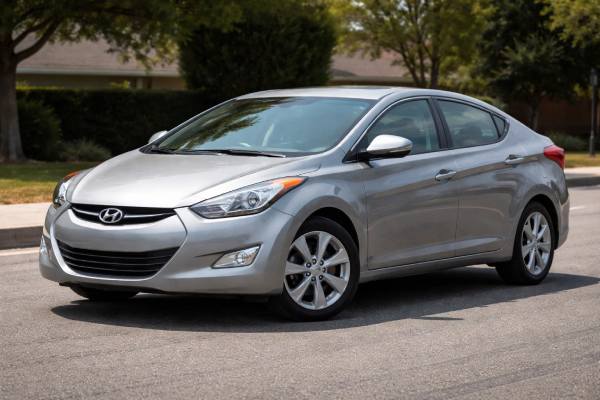
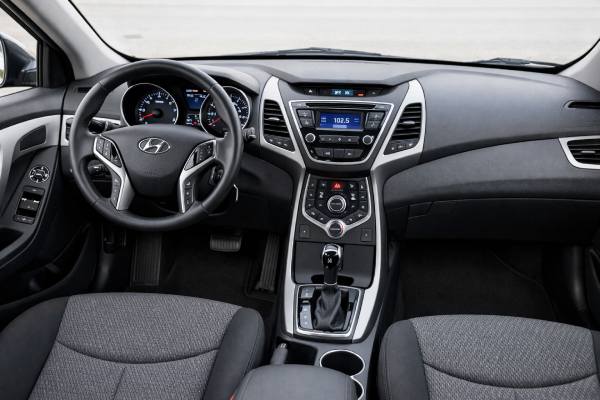
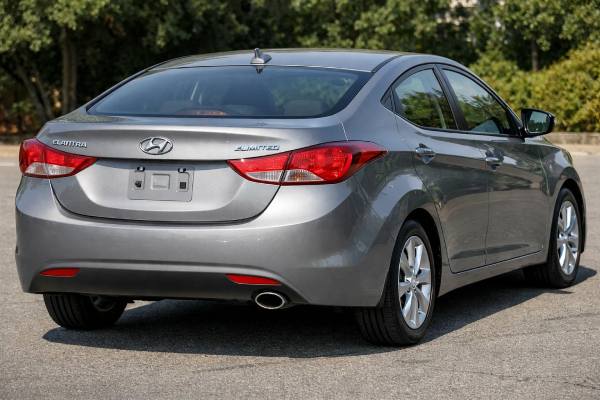
The 2011–2013 Hyundai Elantra UD 1.8 MPI is one of those compact sedans that looks ordinary until you examine what Hyundai actually delivered. It brought a light, efficient platform, a modern 1.8-litre Nu engine, a 6-speed manual or 6-speed automatic, and unusually generous cabin space for the class. In several markets it was marketed as a compact, yet its interior volume pushed it into mid-size territory by U.S. standards. That made it appealing when new, and it still matters today for used buyers who want fuel economy, low running complexity, and real rear-seat room without stepping up to a larger car. The main ownership story is simple. This is not a turbocharged or direct-injected headache, but it is not maintenance-free either. The Nu 1.8 uses a timing chain, not a belt, yet oil quality, steering-coupler wear, suspension condition, and recall follow-up now matter more than the sales brochure ever did. Buy a well-kept one, and the UD still feels like a smart, practical daily car.
At a Glance
- The 1.8 MPI engine is light, efficient, and simpler to own than many later small turbo engines.
- Cabin room and trunk space are genuine strengths, especially for a sedan in this class.
- Ride comfort is better than many compact rivals on 15-inch wheels, and the 6-speed gearbox options help efficiency.
- The biggest caution is engine-noise history on some Nu 1.8 cars, plus steering-coupler wear and recall completion.
- A sensible baseline is engine oil and filter every 10,000–12,000 km or 12 months, with regular checks for chain noise, coolant condition, and brake wear.
Section overview
- Hyundai Elantra UD 1.8 big picture
- Hyundai Elantra UD 1.8 spec tables
- Hyundai Elantra UD trims and protection
- Common problems and service actions
- Maintenance and smart buying
- Road behavior and real economy
- How the UD compares
Hyundai Elantra UD 1.8 big picture
The UD-generation Elantra was a bigger leap than Hyundai usually gets credit for. Earlier Elantras were honest, affordable sedans, but the 2011 redesign gave Hyundai a compact car that finally looked and felt engineered around efficiency, packaging, and mainstream competitiveness rather than low entry price alone. The styling was more dramatic, the body was lighter and more aerodynamic, and the interior packaging was excellent. Even now, the car’s sense of space remains one of its strongest selling points. Rear-seat room is generous, the trunk is large, and the overall layout feels more mature than many budget-brand compacts from the same period.
The 1.8 MPI version is especially important because it was the core powertrain of the range during these years. Hyundai’s Nu 1.8 four-cylinder was designed to replace the older Beta-family engine and did so with more modern materials and lower internal friction. It uses an aluminum block and head, dual continuously variable valve timing, a variable intake system, hydraulic lash adjusters, and a maintenance-free silent timing chain rather than a scheduled replacement belt. That makes the UD 1.8 more attractive to long-term owners than many older compact sedans, because there is no timing-belt service looming in the background. At the same time, this engine is still conventional enough to avoid the extra complexity of direct injection or turbocharging.
In period, the Elantra’s strength was not raw pace. It was efficiency with useful real-world performance. With 148 hp and 131 lb-ft in standard tune, it was more than adequate for daily use, and the 6-speed manual or automatic helped the car cruise more calmly than older 4- or 5-speed compact rivals. Hyundai also leaned hard on weight efficiency. A manual-transmission Elantra weighed roughly 2,661 lb in official U.S. market material, and that low weight helped both fuel economy and general responsiveness.
The other reason the UD still makes sense is comfort. Hyundai tuned it for relaxed everyday driving rather than sport-sedan sharpness. The front uses MacPherson struts, while the rear uses a coupled torsion beam rather than a fully independent layout. That sounds simple, because it is simple, but it also helps explain why the Elantra rides comfortably and keeps maintenance reasonable. The trade-off is that it is safe and predictable rather than truly entertaining.
Today, the best way to view the UD 1.8 is as a practical used family sedan with strong fundamentals and a few known caveats. It is roomy, efficient, easy to understand, and still pleasant to drive. The question is no longer whether it was a good new car. It clearly was. The real question is whether the example in front of you has been maintained well enough for those strengths to survive.
Hyundai Elantra UD 1.8 spec tables
The 2011–2013 Elantra UD 1.8 MPI was sold in several markets, and the core mechanical package stayed very similar across them. The main variation to note is emissions calibration. Standard ULEV versions were rated at 148 hp and 131 lb-ft, while PZEV versions sold in California and certain other states were slightly lower at 145 hp and 130 lb-ft. This article follows the 148 hp version in the title and tables.
Powertrain and efficiency
| Item | Hyundai Elantra UD 1.8 MPI |
|---|---|
| Code | G4NB / Nu 1.8 MPI |
| Engine layout and cylinders | Inline-4, transverse, 4 cylinders |
| Valvetrain | DOHC, D-CVVT, 4 valves per cylinder |
| Bore × stroke | 81.0 × 87.2 mm (3.19 × 3.43 in) |
| Displacement | 1.8 L (1,797 cc) |
| Induction | Naturally aspirated |
| Fuel system | Multi-point injection |
| Compression ratio | 10.3:1 |
| Max power | 148 hp (110 kW) @ 6,500 rpm |
| Max torque | 178 Nm (131 lb-ft) @ 4,700 rpm |
| Timing drive | Chain |
| Rated efficiency | About 7.4 L/100 km combined (32 mpg US / 38.4 mpg UK), ULEV versions |
| Highway rating | About 6.2 L/100 km (38 mpg US / 45.6 mpg UK) |
| Real-world highway @ 120 km/h (75 mph) | Usually about 6.8–7.8 L/100 km in a healthy sedan |
Transmission and driveline
| Item | Hyundai Elantra UD 1.8 MPI |
|---|---|
| Transmission | 6-speed manual M6CF3-1 or 6-speed automatic A6GF1 |
| Drive type | Front-wheel drive |
| Differential | Open front differential |
Chassis and dimensions
| Item | Hyundai Elantra UD 1.8 MPI sedan |
|---|---|
| Suspension front / rear | MacPherson strut / coupled torsion beam |
| Steering | Column-mounted motor-driven electric power steering |
| Turning circle | 10.6 m (34.8 ft) |
| Brakes | Ventilated front discs about 280 mm (11.0 in), solid rear discs about 262 mm (10.3 in) |
| Wheels and tyres | Most common: 195/65 R15; higher trims often 205/55 R16 or 215/45 R17 |
| Length / width / height | 4,529 mm (178.3 in) / 1,775 mm (69.9 in) / 1,435 mm (56.5 in) |
| Wheelbase | 2,700 mm (106.3 in) |
| Kerb weight | About 1,207–1,279 kg (2,661–2,820 lb) manual; about 1,225–1,305 kg (2,701–2,877 lb) automatic |
| GVWR | About 1,720 kg (3,792 lb), market-dependent |
| Fuel tank | 48 L (12.68 US gal / 10.56 UK gal) |
| Cargo volume | 419 L (14.8 ft³), seats up |
| Ground clearance | Not consistently published in open official sources reviewed |
Performance and capability
| Item | Hyundai Elantra UD 1.8 MPI |
|---|---|
| 0–100 km/h (0–62 mph) | About 9.8–10.4 s depending on gearbox |
| Top speed | About 195–202 km/h (121–126 mph) |
| Braking distance | No single official open figure confirmed |
| Towing capacity | Often not officially rated in North American literature; check local homologation by VIN and market |
| Payload | Roughly 420–500 kg depending on trim and gearbox |
Fluids and service capacities
| Item | Practical guidance |
|---|---|
| Engine oil | API SM or better; SAE 5W-20 preferred in many markets, 5W-30 acceptable depending on climate |
| Engine oil capacity | 4.0 L (4.2 US qt) with filter |
| Coolant | Ethylene glycol-based coolant, usually 50/50 mix |
| Coolant capacity | About 5.9 L (6.23 US qt) |
| Manual transmission fluid | Hyundai-approved API GL-4 manual transmission oil; verify exact grade by VIN |
| Automatic transmission fluid | Hyundai ATF SP-IV or VIN-specified equivalent |
| Differential / transfer case | Not applicable |
| A/C refrigerant | R-134a |
| A/C refrigerant charge | Verify under-hood label before service |
| A/C compressor oil | PAG type specified for the fitted compressor; verify by label |
| Key torque specs | Wheel nuts 90–110 Nm (66–81 lb-ft); oil drain plug about 39 Nm (29 lb-ft) |
Safety and driver assistance
| Item | Hyundai Elantra UD 1.8 MPI |
|---|---|
| IIHS | Good moderate overlap front, Good side, Good roof strength, Good head restraints; Small overlap driver-side Acceptable for 2011–16 rating set |
| ANCAP | 5 stars, overall score 33.21 out of 37 for the 2011-on tested car |
| Headlight rating | Not applicable to the test era covered |
| ADAS suite | None in the modern sense |
On paper, the UD 1.8 is a simple, efficient sedan with strong space efficiency and no unnecessary mechanical drama. That description still holds up well today.
Hyundai Elantra UD trims and protection
The UD Elantra’s trim structure varied by market, but the underlying pattern stayed familiar. In North America, most buyers saw trims such as GLS and Limited during these years, while other markets used different names but a similar equipment ladder. The 1.8 MPI was the core engine, so trim differences were usually about comfort, wheel size, convenience features, and appearance rather than major mechanical changes. That is useful for used buyers, because the best version is usually not the rarest or most expensive. It is the one that combines manageable running gear with the equipment you actually care about.
Lower and mid trims generally make the most sense now. A 15-inch-wheel Elantra with cloth seats, manual or automatic climate control, straightforward audio, and standard-sized tyres is often cheaper to maintain and rides better than a higher-spec car on larger wheels. That matters because the UD’s strength is comfort and space, not sportiness. A top-spec car with leather, sunroof, heated seats, navigation, bigger alloys, and extra cosmetic trim can feel nicer, but it will not fundamentally change the car’s character. It just adds more things to age.
There were some year-to-year equipment adjustments. Hyundai added and shuffled option content across the run, including small convenience changes, package revisions, and market-specific trim tuning. In some markets, 2012 cars picked up package changes such as fog lamps, visor revisions, and color updates. By 2013, Hyundai was also widening the Elantra family with coupe and GT hatchback variants, but the sedan retained the same basic value proposition. For this article, the key point is that the 2011–2013 sedan stayed mechanically consistent enough that condition matters more than model-year marketing details.
Safety equipment was a real selling point when new. Many UD sedans came with six airbags, four-wheel disc brakes, ABS with electronic brake-force distribution, active front head restraints, and electronic stability control, either standard or widely available depending on market. That helped the car earn strong safety recognition for its time. IIHS results were particularly solid in the original moderate-overlap front, side, roof-strength, and head-restraint categories. ANCAP also rated the Elantra at 5 stars for the 2011-on tested model and noted standard ESC and a strong set of core passive-safety features on the Australian-tested car.
The important limitation is obvious: there is no modern ADAS story here. No autonomous emergency braking, no lane-centering, no adaptive cruise, no blind-spot monitoring. So when you assess safety on a used UD Elantra, you focus on fundamentals instead. Does the airbag light prove out correctly? Does the ABS light stay off? Has the structure ever been repaired poorly after a crash? Are the seat belts intact, the tires matched, and the brakes healthy? Those questions matter more than trim level now.
As for quick identifiers, 15-inch wheels and simpler cloth trim usually point to value-focused trims, while 16- or 17-inch wheels, leather, push-button extras, or premium audio tend to signal a better-equipped car. None of that changes the engine, the chain drive, or the basic chassis. What it does change is long-term running cost. For most used buyers, a clean mid-spec sedan is the sweet spot.
Common problems and service actions
The Elantra UD 1.8 is generally dependable, but it is not problem-free, and the most important issues are now well known. The biggest one involves the Nu 1.8 engine itself. Some 2011–2016 Elantras with this engine developed abnormal upper-end knocking or piston-slap-type noise, often more obvious in cold weather. Hyundai later issued technical guidance for cylinder-wall inspection and short-block replacement when scuffing was confirmed, and some markets also saw extended coverage around this issue. In practical terms, a buyer should take any cold-start knock seriously. A brief, normal mechanical tick is one thing. A persistent hollow knock or obvious upper-end slap that fades only as the engine warms deserves proper diagnosis.
The second common issue is steering-column noise from the motor-driven power steering system. On some MD and UD cars, the flexible coupling in the MDPS assembly wears and creates a clicking, thudding, or slightly loose-feeling sensation when turning the wheel, especially at low speed or during parking manoeuvres. This is annoying rather than catastrophic, but it is very common on aging Hyundai and Kia models from this period. The good news is that the coupler itself is inexpensive. The bad news is that the job is fiddly enough that sloppy repairs can create other steering-column problems.
The rest of the reliability picture is more conventional. Front suspension wear is common on higher-mileage cars, especially stabilizer links, strut mounts, and lower bushings. Brake calipers can stick if servicing has been ignored, and uneven pad wear is not unusual. The 6-speed automatic is usually durable if treated well, but it benefits from fluid service more than owners who believe in “lifetime fluid” often admit. The manual is straightforward, though a worn clutch or poor shift feel on a high-mileage example usually reflects use rather than a design defect.
There are also recall and campaign items worth checking. Early 2011–2013 Elantras were subject to a headliner support-bracket recall related to side-curtain airbag deployment. Later, Hyundai also launched a major ABS-module fire-risk recall that can affect 2011–2015 Elantras in certain markets. The fix history matters. You do not want to guess whether those repairs were done.
| Issue | Prevalence | Severity | Typical symptoms | Likely remedy |
|---|---|---|---|---|
| Nu 1.8 piston slap or cylinder-wall scuffing | Occasional but important | High | Cold-start knock, upper-end slap, persistent engine noise | Inspect cylinder walls, follow factory procedure, replace short block if scuffing confirmed |
| MDPS flexible coupler wear | Common | Low to medium | Click, thud, light steering knock when turning | Replace coupler and recalibrate steering as required |
| Front suspension wear | Common | Low to medium | Clunks, loose feel, uneven tyre wear | Links, mounts, bushings, alignment |
| Brake drag or uneven wear | Common | Medium | Pulling, hot wheel, uneven pad wear | Caliper service, pads, discs, fluid |
| Automatic-transmission neglect | Occasional | Medium | Harsh shifts, lazy response, flare | Fluid service, diagnosis before it worsens |
| Open recall or service campaign | Occasional | High | No obvious symptom in some cases | VIN check and dealer confirmation |
| Cooling-system age failure | Occasional | Medium to high | Overheating, seepage, sweet smell | Thermostat, hoses, radiator, cap, pump as needed |
For pre-purchase work, ask for a full service file, proof of recall completion, oil-change history, and any documentation about engine-noise diagnosis or repair. On this car, paperwork is not boring. It is the difference between a smart buy and a false bargain.
Maintenance and smart buying
The Elantra UD 1.8 rewards ordinary maintenance, which is exactly what many used examples did not receive. The good news is that the platform is simple enough for a practical owner schedule to make a real difference. The key is to treat the timing chain correctly. Because it is chain-driven, there is no routine belt replacement interval. That does not mean you ignore it. Chain noise, poor oil history, or timing-correlation faults still deserve attention. The chain’s durability depends heavily on oil condition.
A sensible maintenance schedule looks like this:
| Item | Practical interval |
|---|---|
| Engine oil and filter | Every 10,000–12,000 km or 12 months |
| Engine air filter | Inspect every service, replace about every 20,000–30,000 km |
| Cabin air filter | Every 15,000–20,000 km or yearly |
| Spark plugs | Inspect at major service; replace to schedule and earlier if idle quality falls off |
| Timing chain | No routine replacement interval; inspect if noisy, poorly maintained, or if timing-correlation faults appear |
| Coolant | Every 3–5 years |
| Brake fluid | Every 2 years |
| Automatic transmission fluid | Refresh preventively rather than trusting “lifetime” language |
| Manual transmission fluid | About every 60,000–90,000 km |
| Accessory belt and hoses | Inspect yearly |
| Tyre rotation | About every 10,000 km |
| Alignment check | Yearly or when wear or pull appears |
| Battery and charging test | Yearly after year 4 of battery life |
For fluids, the headline numbers are useful. Engine oil is about 4.0 L with filter, with 5W-20 commonly preferred in North America and 5W-30 acceptable in some climates. Coolant capacity is roughly 5.9 L, using the correct ethylene glycol-based mix. Automatic cars need the exact ATF spec for the A6GF1 unit. Do not let a general workshop substitute a universal fluid without confirming compatibility. Wheel nuts should be tightened properly, not guessed at, and oil drain-plug torque matters too because stripped pans or loose plugs are completely avoidable.
Buying advice for the UD is simple and strict. Start with the engine cold. Listen for anything more than a brief, normal startup tick. Check steering for the familiar low-speed click or thud that suggests a worn MDPS coupler. Drive the car long enough for the automatic to warm fully if fitted. Watch temperature stability, idle quality, brake pull, and steering-centre feel. Then inspect tyres for matched brands and even wear, because cheap tyres and bad alignment tell you a lot about the previous owner.
Common reconditioning items include front dampers, drop links, engine mounts, tyres, brake service, battery replacement, and steering-column coupler work. None of those jobs is fatal on its own. But when a seller presents all of them at once as “normal old-car stuff,” the car is telling you it was run cheaply.
The versions to seek are clean, documented sedans with modest wheel sizes, regular oil changes, and confirmed recall history. Avoid cars with cold-start knock, mystery fluid changes, neglected interior electronics, or a steering system that sounds like it is clicking through marbles. Long-term durability is good when the basics are respected. It gets poor very quickly when they are not.
Road behavior and real economy
The Elantra UD 1.8 is easy to like from the driver’s seat because it does not try too hard. It is light, open-feeling, and calm in the way a good daily sedan should be. The steering is electrically assisted, so it does not have the natural weight of an older hydraulic setup, but it is accurate enough and easy in town. Parking, lane changes, and long commutes are all low-effort tasks in this car, which is one reason the UD made such a strong first impression when it launched.
The engine suits that character. In standard 148 hp form, the 1.8 MPI is not especially punchy at low rpm, but it responds cleanly and builds power smoothly. There is no turbo lag because there is no turbo, and that gives the car a predictable feel that many owners still appreciate. The 6-speed manual gets the most from the engine. It keeps the car alert, makes the powertrain feel lighter, and fits the chassis well. The 6-speed automatic is smoother in traffic and perfectly usable, but it softens response and tends to blur the engine’s willingness. Neither version is quick in a sporty sense, yet both feel adequate for highway merging and ordinary overtaking when healthy.
Ride quality is one of the Elantra’s best traits. Hyundai’s coupled torsion-beam rear suspension was a cost-conscious choice, but it works well here. On 15-inch tyres, the car rides with a controlled, slightly soft edge that suits broken roads and long commutes. Larger wheels look better, but they take away some of that compliance. Cornering behavior is safe and tidy. There is noticeable body roll if you push, and the car prefers steady inputs over aggressive driving, but the balance is predictable. This is not a driver’s compact like a Mazda3. It is a comfort-first compact sedan with good packaging.
Refinement is decent for the era. Wind noise is not class-leading, and the engine becomes more audible when extended above 4,000 rpm, but normal cruising is relaxed. The 6-speed gearing helps. Compared with older 4-speed automatics and 5-speed manuals in rival compacts, the UD feels less busy on the highway.
Fuel economy remains one of the car’s strongest real-world arguments. Official ratings around 28/38 mpg were a major selling point when new, and healthy cars can still return good numbers. In mixed use, expect roughly 7.2–8.0 L/100 km from a well-maintained sedan. A steady 120 km/h highway run usually lands in the high-sixes to high-sevens, depending on wind, tyre pressure, load, and transmission. Short cold trips, bad alignment, dragging brakes, or a lazy automatic can push that much higher.
The key verdict is simple. The Elantra UD 1.8 is not an exciting compact, but it is an agreeable one. It does everyday driving with very little fuss, and that quality often matters more than a sharper skidpad number or a faster sprint time.
How the UD compares
Against the Toyota Corolla of the same era, the Hyundai still faces the obvious problem: reputation. The Corolla remains the safer answer in the minds of many buyers, and that keeps its resale and used pricing stronger than the Hyundai’s. But the Elantra counters with more interesting styling, better cabin and trunk packaging, and a stronger sense of value for the money. In ordinary use, the Hyundai often feels roomier and less plain. If you want the safer badge choice, the Corolla still wins. If you want more car for the same budget, the Elantra remains compelling.
Compared with the Honda Civic, the Hyundai again wins on space and price while losing on brand image and, in some trims, overall polish. The Civic’s cabin design and control feel were often a little sharper, and its long-term reliability reputation still carries more weight. But the Elantra’s mid-size interior classification and generous trunk gave it a real advantage for family use. It felt bigger inside than many buyers expected, and that remains one of its most practical edges today.
The Mazda3 is the driver’s car in this group. It has more steering feel, a more eager chassis, and a generally more engaging personality on a winding road. The Hyundai cannot match that. What it offers instead is lower stress. It rides more softly, feels less intense, and works better if your priorities are commuting comfort and ease of use rather than involvement. Buyers who enjoy driving will still lean toward the Mazda. Buyers who want space, comfort, and simplicity may prefer the Hyundai.
The Chevrolet Cruze deserves mention because it was one of the Elantra’s direct comparison targets when new. The Cruze often feels heavier and more solid, but it also tends to feel heavier in every sense. The Hyundai’s weight efficiency, smooth 1.8 MPI engine, and roomy interior gave it a cleaner everyday character. The Cruze can feel more substantial. The Elantra usually feels easier.
That is the UD’s real position in the segment. It is not the badge leader, and it is not the enthusiast’s first pick. What it offers is balance: strong interior space, good economy, a simple naturally aspirated engine, useful safety credentials for the era, and straightforward ownership when maintained correctly. Those are not glamorous advantages, but they age well.
The best way to summarize the Elantra UD 1.8 is this: it was a smart mainstream compact when new, and it can still be a smart used car now. The شرط is simple. You have to buy the right one. A clean, quiet, documented Elantra still makes excellent sense. A cheap one with engine noise and vague service history does not.
References
- THE 2012 HYUNDAI ELANTRA GETS EVEN BETTER 2011 (Manufacturer Specifications)
- 2011 Hyundai Elantra 2026 (Safety Rating)
- Hyundai Elantra | Safety Rating & Report | ANCAP 2026 (Safety Rating)
- Microsoft Word – 21-EM-001H – Nu Engine Cylinder Block Inspection and Replacement 2021 (TSB)
- Hyundai – Recalls 2026 (Recall Database)
Disclaimer
This article is for informational purposes only and is not a substitute for professional diagnosis or repair. Specifications, torque values, intervals, and procedures vary by VIN, market, trim, emissions calibration, and equipment, so always verify the correct data against official service documentation before servicing, repairing, or purchasing a vehicle.
If this guide helped you, please consider sharing it on Facebook, X, or another social platform to support our work.