
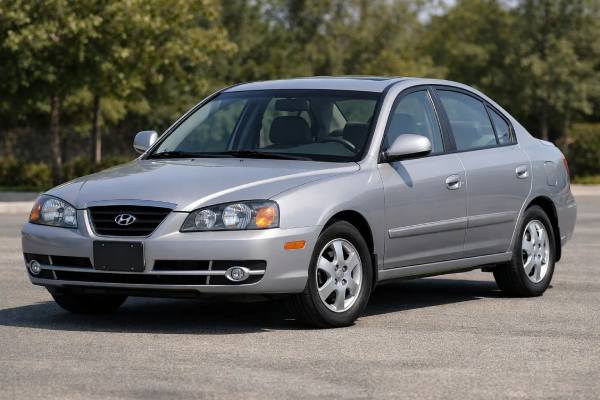
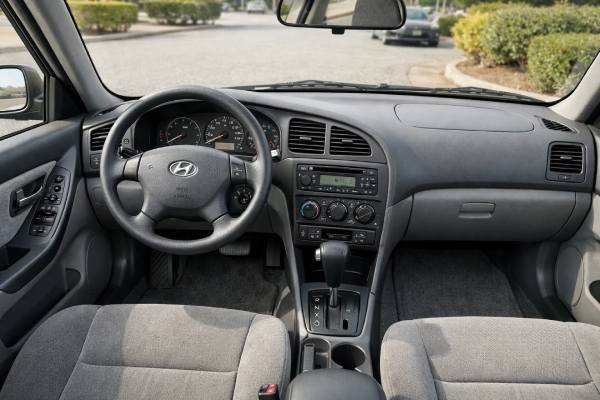
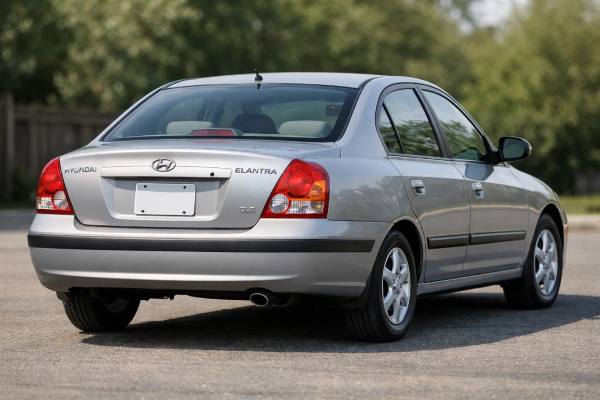
The Hyundai Elantra XD 1.6 from 2000 to 2003 is one of those compact cars that makes more sense the longer you look at it. It arrived with a roomier body, a more mature chassis, and a simple naturally aspirated 1.6-liter petrol engine that is still easy to service today. In the right condition, it offers honest strengths: good cabin space for its size, predictable road manners, low parts costs, and mechanical simplicity compared with many newer small cars. That does not make it trouble-free. At this age, condition matters far more than badge appeal. Timing-belt history, cooling-system health, rust, suspension wear, and recall completion now matter more than the original brochure promises. Even so, a well-kept Elantra XD remains a practical used choice for buyers who want a compact saloon or hatchback with straightforward engineering, light controls, and ownership costs that are usually easier to manage than those of many newer rivals.
At a Glance
- The 1.6-liter engine is simple, durable, and cheap to maintain when the timing belt and cooling system are kept up.
- The XD body brought useful gains in rear-seat room, refinement, and ride comfort over earlier Elantras.
- Parts prices are usually modest, and the 5-speed manual is a better long-term match than an old neglected 4-speed automatic.
- Rust, tired suspension, and missing timing-belt records are bigger risks than normal engine wear on most cars now.
- A sensible oil and filter routine is every 10,000–12,000 km or 12 months, with shorter intervals for hard use.
Navigate this guide
- Hyundai Elantra XD in context
- Hyundai Elantra XD technical profile
- Hyundai Elantra XD equipment and protection
- Failure points and official actions
- Upkeep schedule and shopper advice
- Road manners and real fuel use
- How the XD stacks up
Hyundai Elantra XD in context
The XD-generation Elantra marked a meaningful step forward for Hyundai. Compared with the earlier Lantra and Elantra models, it was roomier, quieter, and more mature in its responses. Hyundai stretched the wheelbase, improved interior packaging, and tuned the car to feel closer to a European family saloon than a bargain-basement compact. That matters because the 2000–2003 Elantra was not sold only on low price. It was Hyundai’s attempt to prove that value and everyday refinement could live in the same car.
In 1.6-liter form, the XD usually carried Hyundai’s Alpha II-family four-cylinder engine, commonly catalogued as the G4ED. This is a naturally aspirated, multi-point-injected petrol engine with a simple layout, no turbocharger, and no direct injection. That immediately helps long-term ownership. There is less heat load than in a small turbo engine, fewer costly emissions-side complications, and generally less to go wrong when the car ages. The trade-off is obvious enough: 107 hp is adequate rather than exciting, especially if the car is fitted with the older automatic transmission.
Body style also matters. Depending on market, the XD was sold as a four-door saloon and as a five-door hatch. Both offer useful cabin space for the class, but buyers often find the hatchback more versatile while the saloon feels slightly more conventional and quieter over rough roads. In either form, the XD’s strongest everyday qualities are visibility, light steering effort, and a supple chassis balance that favors comfort over sharpness.
From an ownership perspective, the real appeal today is simplicity with decent substance. The Elantra XD does not have modern driver-assistance systems to worry about, and it predates many of the complex electronics that can sour used-car ownership. At the same time, it is not so old-school that it feels crude. It still brought useful safety and comfort improvements for its era, including front side airbags in some markets, a stronger-feeling cabin, and more suspension sophistication than many compact rivals at the time.
That said, no one should buy one on nostalgia alone. At more than twenty years old, every XD is condition-led. Service records, rust history, underbody condition, accident repair quality, and the basic health of the cooling system are now more important than trim badge or paint color. A clean Elantra XD can still be a smart budget car. A neglected one can quickly become a false economy.
Hyundai Elantra XD technical profile
Because the XD was sold in multiple body styles and regional specifications, some figures vary by market, trim, and transmission. The table below focuses on the common 2000–2003 European-market 1.6-liter 107 hp baseline, while using period owner literature and factory material for shared chassis and service data where those figures overlap.
| Powertrain and efficiency | Hyundai Elantra XD 1.6 |
|---|---|
| Code | G4ED |
| Engine layout | Inline-4, DOHC, 4 valves per cylinder |
| Displacement | 1.6 L (1,599 cc) |
| Bore × stroke | 76.5 × 87.0 mm (3.01 × 3.43 in) |
| Induction | Naturally aspirated |
| Fuel system | MPFI |
| Compression ratio | 10.0:1 |
| Max power | 107 hp (79 kW) @ 5,800 rpm |
| Max torque | about 143 Nm (105 lb-ft) @ 3,000 rpm |
| Timing drive | Belt |
| Rated efficiency | about 7.0 L/100 km (33.6 mpg US / 40.4 mpg UK) combined |
| Real-world highway @ 120 km/h | about 6.8–7.6 L/100 km (30.9–34.6 mpg US / 37.2–41.5 mpg UK) |
| Transmission and driveline | Data |
|---|---|
| Transmission | 5-speed manual or 4-speed automatic |
| Drive type | Front-wheel drive |
| Differential | Open |
| Chassis and dimensions | Data |
|---|---|
| Front suspension | MacPherson strut with anti-roll bar |
| Rear suspension | Fully independent multi-link with anti-roll bar |
| Steering | Power-assisted rack and pinion |
| Brakes | Front ventilated discs; rear drums on many base cars, rear discs on ABS-equipped or higher trims |
| Typical tyre size | 195/60 R15 |
| Length | Sedan 4,525 mm (178.1 in); hatch about 4,520 mm (178.0 in) |
| Width | 1,720–1,725 mm (67.7–67.9 in) |
| Height | about 1,420–1,425 mm (55.9–56.1 in) |
| Wheelbase | 2,610 mm (102.8 in) |
| Kerb weight | typically about 1,180–1,265 kg (2,602–2,789 lb) |
| Fuel tank | 55 L (14.5 US gal / 12.1 UK gal) |
| Cargo volume | body-style and market dependent; sedan and hatch figures differ noticeably |
| Performance and utility | Manual baseline |
|---|---|
| 0–100 km/h | about 11.0 s |
| Top speed | about 182 km/h (113 mph) |
| Towing capacity | market dependent; verify local approval data |
| Payload | trim and body dependent |
| Fluids and service capacities | Data |
|---|---|
| Engine oil | API SH or higher / ILSAC GF-1 or better; commonly 5W-30 or 10W-30 by climate; 3.85 L (4.1 US qt) with filter |
| Engine oil without filter | 3.55 L (3.8 US qt) |
| Coolant | Ethylene glycol-based coolant for aluminum radiator; about 6.0 L (6.3 US qt) |
| Manual transmission fluid | API GL-4 SAE 75W-90; 2.15 L (2.3 US qt) |
| Automatic transmission fluid | Hyundai SP-III ATF; about 7.8 L (8.2 US qt) dry capacity |
| Power steering fluid | PSF-3; about 0.9 L (1.0 US qt) |
| Brake fluid | DOT 3 or DOT 4 |
| A/C refrigerant | Verify from under-hood label by market and compressor type |
| Key torque specs | Use VIN-specific workshop data before service work |
The important part of this profile is not that the Elantra XD has thrilling numbers. It does not. Its value lies in having enough performance for normal driving, a roomy footprint for the class, and a straightforward service recipe. That is why the 1.6 manual remains the most attractive version for many used buyers today.
Hyundai Elantra XD equipment and protection
Trim naming on the Elantra XD varied more than on later Hyundais. Depending on market, buyers saw badges such as GL, GLS, CDX, or local-equipment names that changed from brochure to brochure. For used buyers, the safest approach is to ignore badge prestige and focus on what is actually fitted. Base cars often came with steel wheels, simpler cloth trim, rear drum brakes, fewer electrical features, and optional rather than standard ABS. Better-specified cars added alloy wheels, air conditioning or climate control, rear-disc brake packages, power features, improved audio, and sometimes sunroof or leather trim.
The hatchback versions were often marketed as the slightly sportier or more lifestyle-oriented Elantras, especially in North America where GT models bundled firmer tuning, rear disc brakes, and richer equipment. In Europe, however, the picture was less tidy. Some saloons were generously equipped, and some hatchbacks were not. That is why quick identifiers matter more than brochure memory. Look at the wheel size, rear brake type, steering-wheel trim, seat fabric, climate controls, and whether the car has ABS, side airbags, and factory fog lights. Those details tell you more than a worn boot badge.
Year-to-year changes within 2000–2003 were evolutionary rather than dramatic. The big step was the arrival of the XD generation itself. Hyundai emphasized a longer wheelbase, more cabin space, quieter running, and a more refined body shell than before. By 2002 and 2003, the company’s trim strategy in several markets leaned harder into value, adding more standard comfort equipment while keeping list prices aggressive. The major visible facelift arrived after the exact range covered here, so a 2000–2003 car is usually the cleaner early-XD shape.
Safety is a mixed story. For its time, the Elantra XD could look generous on the equipment sheet. Front airbags were standard, and some markets got front side airbags, pretensioners, and better child-seat anchorage provisions than many budget rivals offered. The chassis was also designed with front and rear crumple zones and a more robust passenger cell than earlier Hyundai compacts. But by modern standards the safety package is still basic. There is no meaningful ADAS layer here: no autonomous emergency braking, no blind-spot monitoring, no lane support, and no modern driver aids beyond ABS where fitted.
Crash-test results also need proper context. Euro NCAP tested the Hyundai Elantra 1.6 GLS in 2001 and rated it at three stars for adult protection, with a poor pedestrian result by later standards. The detailed comments were more revealing than the star count alone. The body shell held up better in some areas than older cheap compacts often did, but the test still exposed concerns around driver protection, seat movement, restraint control, and a door opening during side impact. In plain terms, the XD was competitive enough for its era, but it is not a car anyone should describe as modern in safety performance.
For a used buyer, the takeaway is simple. Choose condition and actual equipment over trim mythology. A well-kept higher-spec car with ABS, sound brakes, and properly functioning airbags is a far better buy than a supposedly rare trim that has rust, warning lights, or half-working electrics.
Failure points and official actions
By now, the Elantra XD’s problems are a blend of age, maintenance history, and a few genuine known weak points. The good news is that most faults are predictable and rarely mysterious. The bad news is that age can stack several minor issues on top of each other, turning a cheap purchase into a long reconditioning list.
Common low- to medium-cost issues usually include:
- Timing-belt neglect. The belt-driven 1.6 engine is not the kind of motor you want to gamble with. If the belt, tensioners, and water pump history are unknown, treat them as overdue.
- Cooling-system aging. Radiators, hoses, thermostats, and plastic tanks can deteriorate with time. Symptoms include slow warm-up, creeping temperatures in traffic, coolant staining, and weak cabin heat.
- Suspension wear. Front lower-arm bushings, anti-roll-bar links, ball joints, and rear bushings can all loosen with age, leading to knocks, vague tracking, and uneven tyre wear.
- Engine and gearbox mounts. Tired mounts often make the car feel rougher than it really is, especially at idle or during take-up from a stop.
- Gasket and seal seepage. Rocker-cover leaks, oil misting, and minor power-steering hose seepage are common older-car problems rather than model-defining disasters.
Occasional medium-cost issues include crank or cam sensor faults, tired alternators, sticky rear brakes, wheel-bearing noise, CV-boot splits, and automatic-transmission shift quality that deteriorates when fluid has been ignored for years. The 4-speed automatic is not automatically bad, but it is far less tolerant of neglect than the 5-speed manual.
The highest-cost risk is rust. In many markets, corrosion now matters more than the engine. Inspect the sills, rear arches, suspension pick-up points, front subframe area, floor edges, brake and fuel lines, and any sign of prior underseal covering poor repairs. A rusty Elantra XD can stop being worth saving surprisingly quickly.
Official safety actions deserve real attention. One European recall notice covered certain Hyundai Coupe and Elantra XD/GK vehicles built between 2001 and 2003 due to inadequate anti-corrosion coating on front axle A-arms, with the risk that corrosion could lead to failure and loss of control. In the United States, recall actions also addressed airbag concerns. One campaign covered movement of the side-impact airbag wiring harness under the front seats, which could trigger an SRS lamp and affect side-airbag deployment. Another follow-up notice addressed possible contamination of the airbag control-module connector from spilled liquid through the console opening, again with airbag-system consequences.
For today’s buyer, that means three things. First, confirm recall completion with official records where possible. Second, never ignore an SRS light on an XD. Third, treat corrosion as a safety issue, not just a cosmetic annoyance. A tidy engine in a structurally poor shell is not a good car.
Upkeep schedule and shopper advice
The Elantra XD rewards preventive maintenance. It is not a demanding car, but it is old enough that missed basics now matter more than on a newer vehicle. For most owners, the right approach is a practical schedule that respects the original maintenance guidance while tightening some intervals for age, stop-start driving, and uncertain history.
| Item | Practical interval |
|---|---|
| Engine oil and filter | Every 10,000–12,000 km or 12 months |
| Severe-use oil service | Every 7,500 km or 6 months |
| Engine air filter | Inspect every service; replace as needed, often 20,000–30,000 km |
| Cabin air filter | Inspect annually; replace around 20,000–30,000 km |
| Spark plugs | Inspect by type; commonly 45,000–60,000 km for standard plugs, longer for platinum |
| Timing belt, tensioners, and idlers | Replace immediately if undocumented; otherwise keep to a conservative age-based schedule |
| Water pump | Best done with the timing-belt job |
| Coolant | Every 3–5 years depending on coolant type and condition |
| Brake fluid | Every 2 years |
| Manual gearbox oil | About every 60,000–80,000 km is sensible |
| Automatic transmission fluid | About every 40,000–60,000 km is sensible on an older unit |
| Accessory belts and hoses | Inspect at every service |
| Brake pads, rotors, drums, and handbrake | Inspect at every service |
| Tyre rotation and alignment | Rotate every 10,000–12,000 km; align if wear or steering pull appears |
| 12 V battery | Test annually after year 3 of battery age |
The original period service literature is more relaxed in some places than many specialists would be today, especially around long-life intervals. That is why a smart owner adapts. A twenty-plus-year-old car does not benefit from stretching fluids to the limit just because the handbook once allowed it under ideal conditions.
Fluid and decision-making data are straightforward:
- Engine oil: about 3.85 L with filter
- Manual gearbox oil: 2.15 L of GL-4 75W-90
- Automatic: Hyundai SP-III fluid
- Coolant: about 6.0 L, ethylene glycol-based
- Power steering: about 0.9 L of the specified fluid
- Brake fluid: DOT 3 or DOT 4
The buyer’s inspection checklist should focus on expensive age-related problems rather than cosmetic perfection:
- Ask for proof of timing-belt replacement, not a promise.
- Check for rust underneath before you care about paintwork.
- Look for coolant crust, heater smell, or stained radiator seams.
- Listen for front-end knocks and feel for vague steering.
- Confirm that the clutch takes up cleanly and that the manual gearbox shifts without crunching.
- On automatics, check for flaring, delayed engagement, or burnt fluid smell.
- Make sure the SRS and ABS lights behave correctly at startup.
- Inspect tyres for uneven wear, which can reveal bush or alignment issues.
- Budget for a baseline service on any newly bought car unless the history is unusually strong.
Long-term durability is decent when the body is solid and the servicing is current. The Elantra XD is not fragile. It is simply at an age where neglect compounds quickly. Buy the best-structured, best-documented car you can find, even if it costs more upfront.
Road manners and real fuel use
The Elantra XD drives like a compact car from a period when comfort still mattered more than aggressive showroom impressions. That is one of its quiet strengths. The steering is light, the controls are easy, and the suspension tune is aimed at taking the edge off ordinary roads rather than chasing hot-hatch reflexes. Around town, that makes the car easy to live with. The cabin is airy, visibility is good, and the turning effort is low enough that it never feels like a chore in traffic.
The 1.6-liter engine is not fast, but it is usually pleasant. Throttle response is clean, and because the engine is naturally aspirated there is no turbo lag to manage. It does need revs more than a modern small turbo would, but it also feels linear and predictable. In a well-maintained manual car, performance is enough for urban work, secondary roads, and relaxed motorway use. The automatic is adequate but undeniably duller. It suits gentle driving, but it blunts what little urgency the 1.6 has.
Ride quality is one of the XD’s better traits. The fully independent rear suspension helped it feel more composed than many budget compact cars of the time. It does not corner with the precision of a Ford Focus Mk1, but it stays tidy and secure if the dampers, tyres, and bushes are in good order. Straight-line stability is decent, though older examples can wander if the alignment is off or the suspension is tired. Body roll is present but not excessive.
Noise levels depend heavily on condition. A healthy Elantra XD can feel impressively grown-up for an early-2000s budget compact, especially at 80–100 km/h. At 120 km/h, however, wind and tyre noise become more noticeable, and a tired exhaust or worn door seals can make the car seem rougher than it should. This is another reason condition matters more than reputation.
Real-world fuel use is fair for an older 1.6 petrol. Expect roughly 8.5–9.5 L/100 km in dense city use, around 6.8–7.6 L/100 km on a steady 120 km/h highway run, and about 7.2–8.0 L/100 km in mixed use for a healthy manual car. The automatic usually sits a little higher. Those figures will not impress next to a modern hybrid, but they are acceptable for a naturally aspirated compact of this era.
Braking feel is solid when the system is fresh, but many surviving cars suffer from old fluid, tired hoses, sticky rear hardware, or mismatched tyres. That can make the Elantra feel worse than it really is. A properly sorted example is comfortable, predictable, and pleasantly easy to drive, which is exactly what many budget buyers want.
How the XD stacks up
Against its early-2000s compact rivals, the Hyundai Elantra XD makes its case with value, space, and mechanical simplicity rather than standout driver appeal. The clearest comparison is with the Toyota Corolla of the same era. The Corolla generally wins on long-term reputation and resale confidence, but the Elantra often gives you more equipment for the money and a cabin that feels surprisingly roomy. If both cars are equally clean, the Toyota is still the safer bet for many buyers. In the real used market, though, a better-kept Elantra can be the smarter purchase.
Next to the Honda Civic, the Hyundai usually feels softer and less eager. The Civic’s powertrains and chassis are often more engaging, but the Elantra counters with lower buy-in cost, simpler value positioning, and a less image-driven market. Against the Ford Focus Mk1, the Hyundai loses on steering feel and cornering polish. The Focus remains the sharper driver’s car. The Elantra fights back with easier ownership in some markets, strong parts availability, and a more comfort-first nature.
Compared with mainstream European rivals such as the Opel Astra G or Renault Mégane of the same period, the Hyundai sits in a middle ground. It is not as dynamically ambitious as the Focus, not as bulletproof in public imagination as the Corolla, and not as fashionable as some European hatchbacks once were. But it avoids many of the costly complications that can haunt more sophisticated used cars from the same era.
That is why the XD still has a place. It suits buyers who want a cheap, roomy, honest compact and who are willing to spend time finding a structurally sound example. Its biggest enemy is no longer the competition from 2001. It is age, neglect, and rust. If you solve those, the Elantra XD 1.6 still offers real value: enough performance, easy servicing, decent comfort, and a straightforward ownership experience that many newer budget cars struggle to match.
References
- HYUNDAI ELANTRA GLS SEDAN PROVIDES VALUE AND REFINEMENT FOR 2002 2002
- HYUNDAI FOR 2004 2003
- Safety Gate Alerts 2012 (Recall Database)
- MOTOR VEHICLE RECALL 2008 (Recall Notice)
- MOTOR VEHICLE RECALL – FOLLOW-UP NOTICE 2010 (Recall Notice)
Disclaimer
This article is for informational purposes only and is not a substitute for professional diagnosis, repair, or VIN-specific technical advice. Specifications, torque values, service intervals, procedures, and equipment vary by VIN, market, body style, and trim, so always verify details against official service documentation before maintenance, repair, or parts ordering.
If this guide was useful, please consider sharing it on Facebook, X/Twitter, or another platform to support our work.