
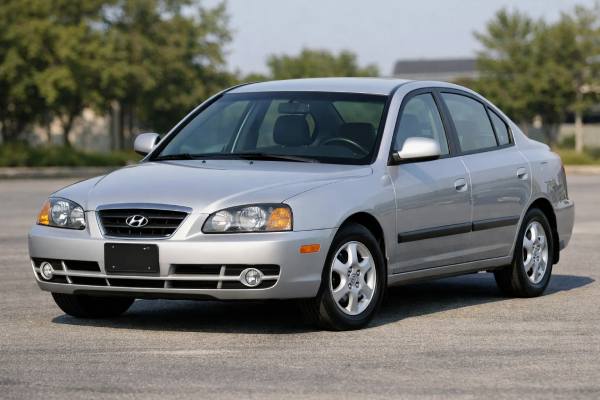
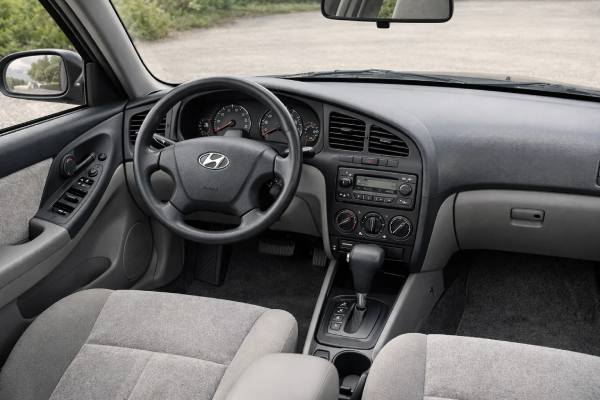
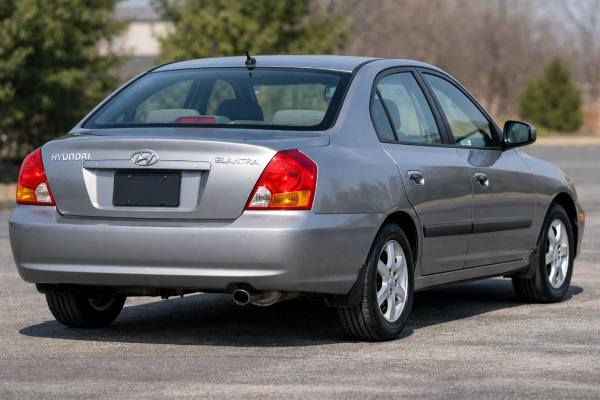
The 2000–2003 Hyundai Elantra XD 1.8 sits in an interesting place in the compact-car market. It was built at a time when Hyundai was still proving itself globally, so the car had to offer more space, more equipment, and a lower purchase price than many established rivals. In 1.8-litre form, it also gave buyers a useful step up from the 1.6 without the extra weight and fuel use of the 2.0.
That makes this version appealing today for a simple reason: it is an old-school, naturally aspirated compact with straightforward engineering, a roomy cabin for its class, and mostly mechanical problems that are familiar and fixable. The trade-off is equally clear. Safety performance is dated, some materials age poorly, and maintenance discipline matters far more now than badge reputation ever did. A clean Elantra XD 1.8 can still be a smart budget buy, but only if timing-belt history, cooling-system condition, and rust prevention have not been ignored.
Essential Insights
- The 1.8-litre Elantra XD is one of the better value versions, with useful power and simpler hardware than many later compact cars.
- Cabin space, a compliant ride, and low parts prices remain genuine strengths.
- The 1.8 DOHC engine is usually durable when serviced on time and kept cool.
- Timing-belt history and rust inspection matter more than mileage alone on this model.
- Use 10,000 km or 12 months as a sensible oil-service interval, and shorten that for severe city use.
What’s inside
- Hyundai Elantra XD profile
- Hyundai Elantra XD data tables
- Hyundai Elantra XD grades and protection
- Known faults and service actions
- Ownership schedule and used-buy tips
- Road manners and real economy
- Elantra XD against competitors
Hyundai Elantra XD profile
The XD-generation Elantra was Hyundai’s attempt to move from “cheap transport” into the more demanding small-family-car class. In period, that meant offering generous interior room, soft-riding suspension, strong feature value, and clean styling without pushing the car into the price band of a Honda Civic or Toyota Corolla. The 1.8-litre version was especially important in export markets because it balanced decent performance with modest running costs.
Mechanically, the Elantra XD 1.8 is simple by modern standards. It uses a naturally aspirated inline-four petrol engine, multipoint fuel injection, and conventional front-wheel-drive layout. There is no turbocharger, no direct injection, no particulate filter, and no advanced driver-assistance package to complicate ownership. For modern used-car buyers, that simplicity is not a weakness. It is one of the car’s biggest strengths.
This version also arrived before compact cars became oversized. The Elantra XD is easy to place on narrow roads, easy to park, and light enough that tyres, brakes, and suspension parts are generally inexpensive. Yet it still feels usefully roomy inside. Rear-seat space is respectable for its era, and the sedan has a practical boot, while the hatchback adds better flexibility for bulky loads.
The 1.8-litre engine deserves special mention. It is not the quickest engine offered in the XD range, but it is usually the sweet spot. It has enough output to keep the car from feeling strained in everyday driving, and it avoids some of the extra fuel use and insurance cost that can come with larger engines in some markets. In real use, it is best described as willing rather than fast. It revs cleanly, responds predictably, and suits the car’s relaxed chassis.
There were updates during this 2000–2003 window. The 2003 facelift brought revised front and rear styling, detail cabin improvements, and in some markets expanded equipment. Some regions also saw traction-related features or brake-assist improvements packaged higher in the trim ladder. The core character, however, stayed the same throughout: comfortable, practical, and tuned for normal daily driving rather than sporty ambition.
What matters most today is not year alone but condition. A well-kept Elantra XD 1.8 can still be dependable and cheap to run. A neglected one quickly turns into a long list of small repairs, overdue belt work, oil leaks, suspension wear, and rust. That is why this model rewards careful selection more than spec-sheet shopping.
Hyundai Elantra XD data tables
The exact 1.8-litre 132 hp Elantra XD was sold in several export markets, so some values vary slightly by body style, trim, and local specification. The core mechanical data, though, is consistent enough to map the car clearly.
Powertrain and efficiency
| Item | Hyundai Elantra XD 1.8 |
|---|---|
| Code | Commonly listed as G4GB 1.8 DOHC Beta-family engine |
| Engine layout and cylinders | Inline-4, 4 cylinders, DOHC, 4 valves per cylinder |
| Bore × stroke | 82.0 × 85.0 mm (3.23 × 3.35 in) |
| Displacement | 1.8 L (1,796 cc) |
| Induction | Naturally aspirated |
| Fuel system | MPFI / multipoint injection |
| Compression ratio | About 10.0:1 |
| Max power | 132 hp (97 kW) @ 6,000 rpm |
| Max torque | 166 Nm (122 lb-ft) @ 5,000 rpm |
| Timing drive | Belt |
| Rated efficiency | Typically about 8.0–8.8 L/100 km (26.7–29.4 mpg US / 32.1–35.3 mpg UK), market dependent |
| Real-world highway at 120 km/h | Usually about 6.8–7.6 L/100 km (30.9–34.6 mpg US / 37.2–41.5 mpg UK) |
Transmission and driveline
| Item | Hyundai Elantra XD 1.8 |
|---|---|
| Transmission | 5-speed manual, with 4-speed automatic available in some markets |
| Drive type | FWD |
| Differential | Open |
Chassis and dimensions
| Item | Hyundai Elantra XD 1.8 |
|---|---|
| Front suspension | Independent MacPherson strut with anti-roll bar |
| Rear suspension | Dual-link / multi-link style rear suspension with coil springs |
| Steering | Rack-and-pinion, hydraulic power assist |
| Brakes | Typically 257 mm (10.1 in) front vented discs and 258 mm (10.2 in) rear solid discs on common 1.8 export cars |
| Wheels and tyres | Most common size 195/60 R15 |
| Ground clearance | Not consistently published; modest sedan-car clearance |
| Length | 4,495 mm (177.0 in) pre-facelift sedan; facelift sedan grew slightly in some markets |
| Width | 1,720 mm (67.7 in) |
| Height | 1,425 mm (56.1 in) |
| Wheelbase | 2,610 mm (102.8 in) |
| Turning circle | About 10.3 m (33.8 ft) |
| Kerb weight | About 1,275–1,290 kg (2,811–2,844 lb), depending on body and trim |
| GVWR | About 1,800 kg (3,968 lb) |
| Fuel tank | 55 L (14.5 US gal / 12.1 UK gal) |
| Cargo volume | Sedan about 415 L (14.7 ft³); hatchback about 367 L (13.0 ft³), with larger fold-down capacity in the hatch |
Performance and capability
| Item | Hyundai Elantra XD 1.8 |
|---|---|
| 0–100 km/h | About 9.7 s |
| 0–62 mph | About 9.7 s |
| Top speed | About 199 km/h (124 mph) |
| Braking distance | Rarely published in consistent official form for this exact variant |
| Towing capacity | Market dependent; verify local handbook and VIN plate |
| Payload | About 500–510 kg (1,102–1,124 lb) |
Fluids and service capacities
| Item | Hyundai Elantra XD 1.8 |
|---|---|
| Engine oil | 5W-30 or 5W-40 depending on climate and market spec; about 4.0 L (4.2 US qt) change fill, about 4.5 L (4.8 US qt) dry |
| Coolant | Ethylene-glycol long-life coolant, typically 50:50 mix; about 6.0 L (6.3 US qt) system capacity |
| Manual transmission fluid | GL-4 75W-90; about 2.2 L (2.3 US qt) |
| Automatic transmission fluid | Hyundai SPIII-type equivalent where specified; capacity varies widely between drain fill and overhaul |
| Differential / transfer case | Not applicable |
| A/C refrigerant | R134a; charge varies by market and compressor specification |
| A/C compressor oil | PAG type; verify under-bonnet label |
| Key torque specs | Wheel nuts typically about 90–110 Nm (66–81 lb-ft); always verify for wheel type and market |
Safety and driver assistance
| Item | Hyundai Elantra XD 1.8 |
|---|---|
| Euro NCAP | 3 stars under the pre-2009 system |
| IIHS | Poor moderate-overlap frontal result for 2001–2003 U.S.-spec sedan |
| Headlight rating | Not applicable for this era |
| ADAS suite | None; no AEB, ACC, lane assist, blind-spot monitoring, or traffic-sign tech |
The biggest lesson from these numbers is that the Elantra XD 1.8 is a traditional compact sedan or hatchback with enough performance to feel useful, but without the complexity of later small cars.
Hyundai Elantra XD grades and protection
Trim structure varied strongly by market, which matters more than usual on the Elantra XD 1.8. In North America, the better-known XD models were tied more closely to 2.0-litre engines, while many export markets sold the 1.8 in grades such as GL, GLS, CDX, or local equivalents. Because of that, used buyers should focus less on trim names and more on actual equipment, brakes, upholstery, and safety hardware.
In most regions, the 1.8 sat in the middle of the range. That usually meant body-colour exterior trim, 15-inch wheels, power windows, central locking, air conditioning, and a better audio system than entry-level 1.6 cars. Higher trims could add alloy wheels, sunroof, fog lamps, leather or part-leather trim, steering-wheel audio controls, and sometimes automatic climate features depending on market. Hatchback versions often had a slightly sportier look, while sedan versions leaned toward comfort and luggage space.
Mechanical differences by trim were modest. This is not a platform where buyers were choosing between radically different dampers, active differentials, or performance packages. The important differences were usually:
- manual versus automatic transmission
- steel wheels versus alloys
- ABS package presence
- traction-control availability on some later or higher-spec cars
- body style choice between sedan and hatchback
Quick identifiers help. Four-wheel discs, factory alloys, fog lamps, and better seat trim usually point to the better-equipped cars. Facelift 2003 cars are easy to spot by their revised front lighting and bumper treatment, plus updated rear styling. If the car has a spoiler, chrome exterior details, or upgraded instruments, it is often from the higher end of the export trim ladder.
Safety is where the XD shows its age. In Europe, the Elantra’s crash-test performance was ordinary at best for the period and now looks clearly dated. Euro NCAP’s pre-2009 result was only three stars, with notable concern around driver protection in frontal impact and a door opening in side impact. In the United States, the IIHS moderate-overlap result for the 2001–2003 sedan was poor, and the late airbag deployment issue became a lasting black mark on the car’s safety reputation.
Safety equipment also varied. Dual front airbags were standard in many markets. Side airbags were optional or unavailable depending on trim and region. ABS was not universal, and traction control, where offered, was normally tied to the ABS package or upper trims. Electronic stability control was not part of the mainstream XD story in this early period. Child-seat hardware also needs checking car by car, because anchor arrangements were not perfectly uniform across export markets.
There is no ADAS discussion in the modern sense because the car predates that era. No autonomous emergency braking, no adaptive cruise, no blind-spot monitoring, and no lane support were offered. For today’s buyers, that means two things. First, there is nothing expensive to calibrate. Second, safety expectations must stay grounded in the standards of the early 2000s, not today’s compact class.
Known faults and service actions
The Elantra XD 1.8 does not usually suffer from one single catastrophic design defect. Its pattern is more typical of an aging early-2000s compact: timing-belt neglect, rust, small oil leaks, worn suspension joints, and tired cooling systems. When these cars go bad, they usually do so because several medium problems pile up at once.
A practical reliability map looks like this.
Common and usually low to medium cost
- Rocker-cover gasket seepage and light oil sweating around seals.
- Front anti-roll-bar links, lower-arm bushes, and ball-joint wear.
- Tired engine mounts that create extra vibration at idle.
- Power-window regulators, door-lock actuators, and blower-resistor faults.
- Rust around arches, sills, subframe mounting points, and exhaust components.
Occasional, medium cost
- Clutch wear, release-bearing noise, or hydraulic issues on manual cars.
- Radiator end-tank seepage, thermostat faults, or old hoses causing overheating.
- Wheel-bearing hum, especially on higher-mileage cars.
- CV boot splits leading to joint wear if ignored.
- Automatic shift quality decline on neglected 4-speed cars.
Serious if ignored
- Overdue timing-belt failure.
- Corrosion in salt-belt front lower control arms and front subframe areas.
- Repeated overheating that damages the head gasket or warps the head.
The engine itself is generally durable. Symptoms such as rough idle, weak cold start, or hesitation more often point to basic maintenance items than deep internal failure. Dirty throttle bodies, aging ignition components, vacuum leaks, and old sensors can all create drivability complaints that look worse than they are. Persistent oil consumption is not the main story here. Coolant neglect and belt neglect are bigger threats.
The timing belt is the central engine risk. This is an age-sensitive item now, not just a mileage item. If the history is unknown, assume the belt, tensioner, and water pump need attention. The usual symptom of belt neglect is not warning noise; it is sudden failure. That is why documented replacement matters so much in used-car shopping.
Rust is the other major theme. Hyundai ran a salt-belt corrosion recall and related campaign work in the United States for certain 2001–2003 Elantras because severe corrosion could affect the front lower control arms and front subframe. Even outside those regions, older XD cars deserve close inspection underneath. Corrosion around jacking points, front suspension pick-up points, and rear floor seams matters more than shiny paint on the bonnet.
Software is a minor issue compared with newer cars. There are no complex powertrain calibrations to chase. This car’s service actions are much more about physical inspection and recall completion than about reflashes. For buyers, that simplifies things. Ask for service records, recall documentation where applicable, and evidence of cooling-system, belt, and brake upkeep. Then inspect the underside carefully.
A well-maintained Elantra XD 1.8 can feel pleasantly durable. A neglected one becomes a lesson in compounding deferred maintenance.
Ownership schedule and used-buy tips
The best maintenance plan for the Elantra XD 1.8 is conservative and boring. That is exactly what works. The engine and chassis do not ask for exotic fluids or specialty procedures, but they do respond badly to long gaps between routine work.
Practical maintenance schedule
| Item | Sensible interval |
|---|---|
| Engine oil and filter | Every 10,000 km or 12 months; 7,500 km in severe use |
| Engine air filter | Inspect every service, replace about every 30,000 km |
| Cabin air filter | Every 15,000–20,000 km if fitted |
| Spark plugs | 30,000–45,000 km for basic plugs, longer for premium plug types; verify fitted spec |
| Fuel filter | Around 60,000 km where serviceable |
| Timing belt, tensioner, and idlers | Follow market schedule exactly; if history is unknown, replace immediately |
| Water pump | Strongly recommended with timing-belt service |
| Accessory belts and hoses | Inspect every service, replace on condition |
| Coolant | Around 5–6 years or about 90,000 km, then shorter intervals afterward |
| Brake fluid | Every 2 years |
| Manual transmission oil | About every 60,000–90,000 km |
| Automatic transmission fluid | About every 50,000–60,000 km if automatic |
| Brake pads and rotors | Inspect every service |
| Tyre rotation | Every 10,000 km |
| Alignment check | On uneven wear, steering pull, or after suspension work |
| 12 V battery | Test annually after year four |
| Valve clearance | No routine adjustment on most versions unless symptoms appear |
For decision-making, the key consumables are simple. Engine oil is usually 5W-30 or 5W-40 depending on climate and handbook spec. Manual gearbox oil should be GL-4, not a random universal gear oil. Coolant should be proper antifreeze, mixed correctly, not plain water topped up forever. Brake fluid should be kept fresh because old fluid corrodes internals and softens pedal feel.
When buying one, inspect it in this order:
- Rust underneath, especially front control-arm areas, subframe, sills, and rear floor seams.
- Timing-belt proof, ideally with date and mileage.
- Cooling system condition, including radiator, cap, hoses, and expansion tank.
- Oil leaks from the rocker cover, front seals, and sump area.
- Clutch feel, gearbox synchros, and CV-joint noise on full lock.
- Suspension play, tyre wear pattern, and wheel-bearing noise.
- Electrical basics such as windows, blower fan, locks, and warning lamps.
The reconditioning items most buyers should budget for are predictable: tyres, brakes, engine mounts, one or two suspension joints, fluids, filters, and likely a belt service unless clearly documented. None of these are unusual. The danger is buying a cheap car that needs all of them at once.
The most attractive examples are later 2002–2003 cars with solid rust protection, good service history, manual gearbox, and mid-spec equipment such as ABS and air conditioning. The long-term durability outlook is decent if corrosion stays under control and the timing belt never becomes an afterthought.
Road manners and real economy
The Elantra XD 1.8 drives like a compact car from a calmer era. Its priorities are ride comfort, easy controls, and predictable responses. Around town, that works well. The steering is light, visibility is decent, and the engine has enough smoothness that it never feels harsh in ordinary commuting. This is not a sports sedan, but it is rarely annoying.
Ride quality is one of the car’s best traits. Compared with some firmer rivals from the same period, the XD absorbs poor surfaces well and settles quickly after bumps. That makes it pleasant in real daily use. The trade-off is softer body control. Press it hard into corners and it leans more than a Focus or Mazda3, while the steering tells you less about what the front tyres are doing. Grip is fine for normal driving, but the chassis is tuned for reassurance, not entertainment.
The 1.8-litre engine suits that character. Throttle response is linear, and because there is no turbocharger, there is no boost surge or lag. Low-rpm torque is adequate rather than strong, so the car prefers a measured driving style. If you keep the revs in the middle of the range, it feels alert enough. If you expect effortless overtaking in a high gear, it can feel flat. The 5-speed manual is the better fit because it lets the driver use the engine properly. The automatic is convenient but dulls performance.
At highway speed, the Elantra feels stable enough, though refinement is only average by modern standards. Tyre roar and wind noise build steadily, and older examples can develop extra cabin noise from worn seals, aged tyres, or failing mounts. Even so, it remains an easy long-distance car if the suspension is fresh and the alignment is correct.
Real-world fuel economy remains respectable for an early-2000s naturally aspirated compact. A healthy manual 1.8 should usually return roughly:
- city: 8.8–10.2 L/100 km
- highway at 100–120 km/h: 6.8–7.6 L/100 km
- mixed use: 7.8–8.8 L/100 km
That translates to roughly 23–27 mpg US in town, 31–35 mpg US on the highway, and about 27–30 mpg US combined depending on route, body style, and gearbox. Cold weather, automatic transmission, old oxygen sensors, and poor tyre pressure can all move those numbers in the wrong direction.
The verdict on performance is simple. With around 132 hp and a 0–100 km/h time just under 10 seconds, the Elantra 1.8 is neither slow nor quick by the standards of its day. It is enough. And for many owners, that was exactly the point.
Elantra XD against competitors
The Elantra XD 1.8 was never the default class leader, but it was often one of the strongest value plays. That still defines it now. Against the Toyota Corolla E120, the Hyundai usually gives you more equipment for the money and a softer, roomier feel. The Corolla fights back with stronger long-term reputation, better resale history, and generally more confidence-inspiring passive safety perception. If absolute low-risk ownership is the goal, the Toyota usually wins. If price and equipment matter more, the Hyundai becomes attractive.
Against the Ford Focus Mk1, the Elantra loses the handling contest clearly. The Focus steers better, feels sharper, and remains the driver’s car of the group. But the Hyundai can counter with a more comfort-oriented ride, simpler ownership in some trim combinations, and often lower used purchase prices. Buyers who care about steering feel will choose the Ford. Buyers who care about cost and everyday softness may prefer the Hyundai.
Compared with the Mazda3 that followed soon after, the XD feels older in almost every way: cabin design, safety impression, body control, and market image. But it is also cheaper to buy, and its conventional 1.8-litre setup can be easier for a budget owner to maintain than some later compact cars weighed down by more electronics and costlier trim.
The Nissan Almera N16 is a closer comparison. Both cars lean toward sensible transport more than driving excitement. The Elantra usually wins on cabin feel and perceived value, while the Almera can feel a little more tightly assembled. Rust and maintenance history decide more than brand reputation here.
One area where the Elantra must concede ground is safety. Even for its time, its crash-test story was mixed. That matters if the buyer is choosing between several similarly priced older compacts. Another area is rust sensitivity in harsh climates, especially on neglected cars. Buyers in dry regions will rate the Hyundai much more kindly than buyers in heavy-salt regions.
Where the Elantra XD 1.8 still makes sense is as an honest budget compact for someone who wants a roomy, straightforward, naturally aspirated car with cheap parts and no modern-system complexity. It is not the most refined rival, the safest rival, or the most fun rival. It may still be one of the most practical rivals for a careful buyer with modest expectations and a good inspection checklist.
References
- A MORE UPSCALE LOOK AND PERFORMANCE IMPROVEMENTS FOR NEW ELANTRA 2003 (Manufacturer Release)
- HYUNDAI MOTOR ADDS NEW ELANTRA TO CHINESE PRODUCT LINEUP 2003 (Manufacturer Release)
- 2001 Hyundai Elantra 2001 (Safety Rating)
- Dear 2001-2003 Elantra or 2003 Tiburon Owner 2009 (Recall Notice)
- Check for Recalls: Vehicle, Car Seat, Tire, Equipment | NHTSA 2025 (Recall Database)
Disclaimer
This article is for informational purposes only and is not a substitute for professional diagnosis, repair, or workshop-level inspection. Specifications, torque values, intervals, equipment, and procedures vary by VIN, market, body style, and production date, so always verify details against official service documentation and the labels fitted to the vehicle before carrying out maintenance or repairs.
If this guide was useful, please consider sharing it on Facebook, X, or another platform to support our work.