
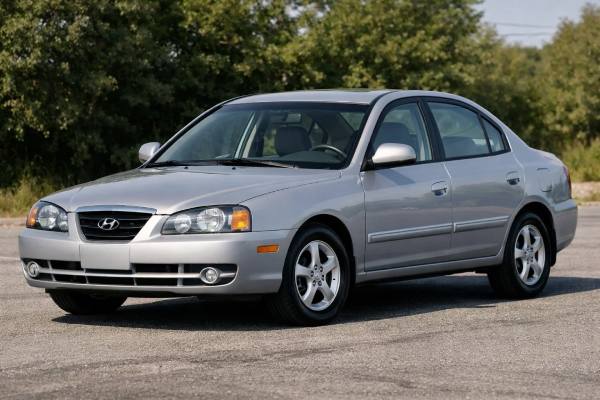
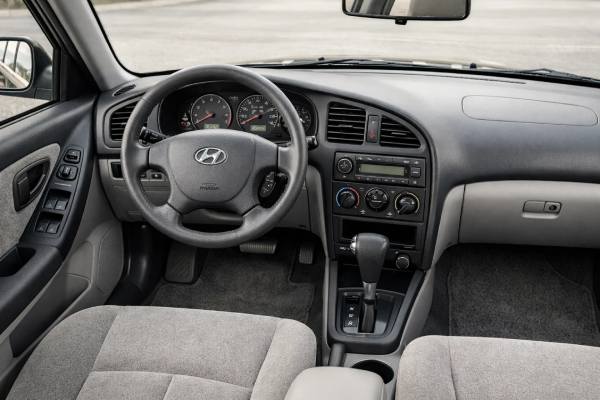
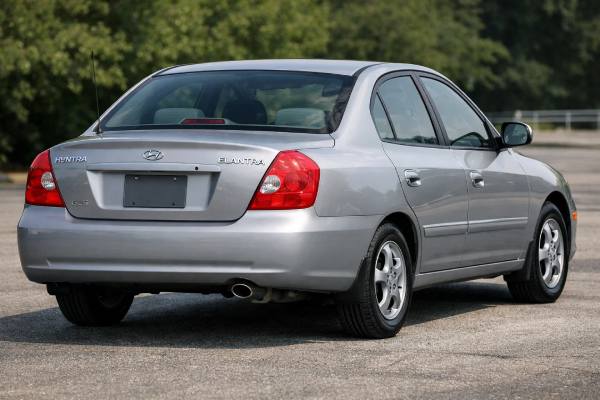
The Hyundai Elantra XD 2.0 from the 2000–2003 period is one of those compact cars that makes more sense the longer you look at it. It arrived as a bigger, quieter, and more mature replacement for the J2, with a stronger 2.0-litre four-cylinder engine, fully independent suspension, and a cabin that felt roomier than many rivals suggested. In this 138 hp form, it was never a sport sedan, but it offered a useful blend of low purchase cost, simple front-wheel-drive packaging, and enough torque to feel more relaxed than the smaller-engined versions. Today, the XD’s appeal is mostly about value and straightforward ownership. It is old enough that condition matters more than trim badge, and simple enough that most of its major weaknesses are familiar: timing-belt history, cooling-system health, rust in the wrong places, and suspension wear. Find a clean one, and it can still be a practical, honest daily car.
Owner Snapshot
- The 2.0-litre engine gives the XD noticeably better everyday performance than the smaller petrol versions.
- Independent rear suspension and a long wheelbase help ride comfort and cabin composure.
- The car is roomy, simple to understand, and usually cheaper to repair than many newer compact sedans.
- Rust, timing-belt neglect, and cooling-system age are the main ownership risks now.
- Treat a timing-belt service as due around 60,000 miles or 96,000 km unless documented more recently.
Explore the sections
- Hyundai Elantra XD in context
- Hyundai Elantra XD 2.0 specs
- Hyundai Elantra XD grades and safety
- Common faults and recall items
- Service plan and buyer checks
- Real-world driving and economy
- How the XD stacks up
Hyundai Elantra XD in context
The XD-generation Elantra marked an important step for Hyundai. Compared with the older J2, it looked more substantial, rode on a longer wheelbase, offered more cabin space, and felt less like a bargain-basement compact. Hyundai leaned heavily on value, but with the XD it also pushed refinement, safety features, and ride quality in a way that made the car more credible against established Japanese rivals. In North America, the redesign arrived for 2001, while the generation itself spans the early 2000s, which is why many buyers refer to the 2000–2003 period when talking about the pre-facelift XD.
For the 2.0-litre version, the biggest gain over entry-level Elantras is flexibility. This engine gives the car enough torque to feel comfortable with passengers, air conditioning, and highway work without needing to be driven hard all the time. It is still a naturally aspirated compact-car engine from its era, so there is no turbo shove and no premium feel, but it suits the car well. Around town, it is smoother and more relaxed than the smaller-displacement alternatives, and on open roads it turns the Elantra into a more rounded all-purpose sedan rather than just a budget commuter.
The chassis also matters. Hyundai marketed the XD as a more refined compact, and that claim was not empty. The longer wheelbase improves cabin packaging, while the fully independent suspension gives the car a calmer, more settled feel than some cheaper rivals with simpler rear layouts. The result is not sporty in the modern hot-compact sense, but it is easy to drive, stable enough on the highway, and forgiving on rough urban streets. For many owners, those are the qualities that matter more than quick steering or sharp turn-in.
Inside, the XD is one of those cars that can surprise people who only remember Hyundai’s older reputation. The controls are simple, the driving position is decent, and the sedan is roomy enough to work as a genuine family car. Split-folding rear seats, useful trunk access, and reasonable passenger space help the car feel more grown up than some competitors from the same period. Higher trims added features that were still meaningful in this class at the time, such as side airbags, ABS, traction control in some configurations, leather seating on GT versions, and better audio systems.
The biggest reason to like the XD today is that it is understandable. There is no direct injection, no turbocharger, no complex hybrid system, and no modern driver-assistance package waiting to trigger expensive calibration bills. The most important ownership questions are mechanical and structural: has the timing belt been done properly, is the cooling system healthy, is the body rust-free, and have the suspension and brakes been maintained?
That last point defines the whole car. A clean XD 2.0 with real maintenance history can still be a sensible low-cost compact. A rusty one with vague service records is usually a false economy, no matter how cheap it looks.
Hyundai Elantra XD 2.0 specs
Public data for the early XD is a mix of manufacturer press material, fuel-economy records, and region-specific specification sheets, so some figures vary slightly by market and test method. The most important thing for buyers is that the overall package stays consistent: a naturally aspirated 2.0-litre four-cylinder, front-wheel drive, manual or automatic transmission, and a comfort-oriented compact chassis. Where figures differ by market, that is noted clearly rather than hidden.
Powertrain and efficiency
| Item | Hyundai Elantra XD 2.0 |
|---|---|
| Code | Beta II 2.0; exact engine code varies by market and VIN |
| Engine layout and cylinders | Inline-4, 4 cylinders |
| Valvetrain | DOHC, 16 valves, 4 valves per cylinder |
| Bore × stroke | 82.0 × 93.5 mm (3.23 × 3.68 in) |
| Displacement | 2.0 L (1,975 cc) |
| Induction | Naturally aspirated |
| Fuel system | MPFI / electronic fuel injection |
| Compression ratio | About 10.0:1; verify by market specification |
| Max power | 138–140 hp (103–104 kW) @ 6,000 rpm depending on market and rating method |
| Max torque | 182 Nm (133 lb-ft) @ 4,500 rpm |
| Timing drive | Belt |
| Rated efficiency | About 9.4–9.6 L/100 km city and 7.8 L/100 km highway in EPA-equivalent terms for the 2003 2.0 |
| Real-world highway @ 120 km/h (75 mph) | Usually around 7.5–8.5 L/100 km when healthy |
Transmission and driveline
| Item | Data |
|---|---|
| Transmission | 5-speed manual or 4-speed automatic, depending on trim and market |
| Drive type | FWD |
| Differential | Open |
Chassis and dimensions
| Item | Data |
|---|---|
| Suspension front / rear | MacPherson strut front / fully independent multi-link rear |
| Steering | Power-assisted rack-and-pinion |
| Brakes | Front ventilated discs about 257 mm (10.1 in); rear drums about 203 mm (8.0 in) on many GLS cars, rear discs on higher-spec GT packages |
| Wheels and tyres | 185/65 R15 or 195/60 R15 were common; GT trims often used 15-inch alloys |
| Ground clearance | Not consistently published; verify by market |
| Length | About 4,495 mm (177.0 in) |
| Width | About 1,720 mm (67.7 in) |
| Height | About 1,425 mm (56.1 in) |
| Wheelbase | 2,609 mm (102.7 in) |
| Turning circle (kerb-to-kerb) | Roughly 10.4–10.6 m (34.1–34.8 ft), market-dependent |
| Kerb weight | Roughly 1,250–1,315 kg (2,756–2,899 lb), depending on trim and transmission |
| GVWR | Verify by VIN plate |
| Fuel tank | 55 L (14.5 US gal / 12.1 UK gal) |
| Cargo volume | About 365 L (12.9 ft³) in sedan form |
| Seats-down cargo | Sedan offers pass-through via split rear seat; no single universal expanded figure published for all markets |
Performance and capability
| Item | Data |
|---|---|
| 0–100 km/h (0–62 mph) | About 9.5–10.5 s, depending on trim and transmission |
| Top speed | About 195–200 km/h (121–124 mph) |
| Braking distance | No widely published factory figure |
| Towing capacity | Market-dependent; verify locally |
| Payload | Usually around 430–500 kg depending on exact curb mass |
Fluids and service capacities
| Item | Data |
|---|---|
| Engine oil | Commonly 5W-30 or 10W-30 depending on climate and manual guidance; about 4.0 L (4.2 US qt) with filter |
| Coolant | Ethylene glycol type for aluminum engines, typically 50:50 mix; about 6.3 L (6.7 US qt) |
| Transmission / ATF | Verify by gearbox code; do not assume universal fill spec |
| Differential / transfer case | Not separately serviced on this FWD layout |
| A/C refrigerant | Verify by under-bonnet label |
| A/C compressor oil | Verify by compressor type |
| Key torque specs | Always verify against official service information for the exact VIN |
Safety and driver assistance
| Item | Data |
|---|---|
| Crash ratings | IIHS 2001–2003 moderate overlap front: Poor overall; side and head restraint results also poor on the 2003 page |
| Headlight rating | Not published by IIHS for this generation |
| ADAS suite | None; no AEB, ACC, lane assist, blind-spot monitoring, or rear cross-traffic alert |
The numbers tell the story clearly. The XD 2.0 is not a high-performance compact, but it is quicker and more useful than the smaller-engined versions, and it combines that with a chassis designed more for comfort and control than outright sportiness.
Hyundai Elantra XD grades and safety
Trim structure on the XD varies by region, but the broad pattern is easy enough to follow. In the U.S. and several export markets, the car was sold as a value-led GLS sedan and a more feature-heavy GT derivative, with the GT eventually offered in both five-door and four-door forms by 2003. Other markets used different naming, but the same basic separation applied: a mainstream comfort-oriented trim and a sportier or better-equipped version with more convenience and appearance upgrades.
On a typical 2.0-litre GLS sedan, the core package was already decent for the time. Hyundai pushed the Elantra as a compact that came loaded with features many rivals still charged extra for. Air conditioning, power windows, power locks, power mirrors, remote trunk release, a split-folding rear seat, and a tilt steering column were all important selling points. Hyundai also emphasized cabin room, which helped the XD feel like more car for the money. That mattered in a class where some rivals had stronger badges but tighter cabins or thinner standard equipment lists.
GT versions added the equipment that most clearly changed the driving and ownership experience. Depending on year and market, that could include leather seating surfaces, 15-inch alloy wheels, fog lamps, rear disc brakes, sport-tuned suspension and steering, cruise control, upgraded audio, unique instrument lighting, rear spoiler details, and hatchback practicality on five-door versions. The GT is the one to seek if you want the XD at its most appealing, but the simpler GLS has its own advantages. It is usually cheaper, often easier to keep original, and may have led an easier life.
Mechanically, the 2.0-litre package stayed broadly similar across trims. Differences were mostly in brakes, suspension tuning, wheels, and equipment rather than in the engine itself. That is good news for owners because it means you are usually choosing between comfort and extra equipment, not between radically different maintenance paths.
Safety is more mixed. Hyundai made real progress with the XD compared with older budget sedans. Front side airbags were a notable feature in period and helped Hyundai market the car as a value leader with serious safety content. Front-seat belt pretensioners, crumple-zone design, and optional ABS with traction control also strengthened the case for the car. In practical ownership terms, a well-equipped XD was not bare-bones transportation.
But the crash-test picture remains a caution. IIHS rated the 2001–2003 Elantra poorly in moderate overlap frontal testing, and the 2003 page also shows poor side and head-restraint results. That means you should be realistic about what the XD is: a useful early-2000s compact, not a car that approaches modern crash performance. There is no electronic stability control, no curtain-airbag coverage, and no modern structural strategy of the kind buyers now take for granted.
For family use, the seatbelts, anchor points, and restraint condition matter as much as the original brochure. On any surviving XD, check belt retraction, buckle operation, airbag warning-light function, and evidence of accident repair. Because this is now an older vehicle, safety is as much about current condition as it is about original design.
The best ownership choice is usually a later, cleaner car with side airbags, ABS, and documented maintenance. In an XD, equipment matters, but structural condition matters more.
Common faults and recall items
The Elantra XD 2.0 has a better mechanical foundation than some people expect, but by now the reliability story is dominated by age, maintenance history, and corrosion exposure. In other words, the design is only half the story. The other half is what owners did, or failed to do, over two decades.
The most important engine item is the timing belt. This is a belt-driven twin-cam engine, and a neglected belt service is one of the biggest reasons an old XD turns into poor value. If the seller cannot prove when the timing belt, tensioner, and ideally the water pump were last replaced, assume the job is due immediately. Even on cars that still run fine, old timing components create risk with very little warning.
Oil leaks are common and usually low to medium cost. Valve-cover gasket seepage, cam and crank seal sweating, and oil around the front of the engine are typical age-related issues. These are manageable, but they matter because oil contamination shortens belt life and makes it harder to judge the engine’s real condition. A clean, dry upper engine area is always a positive sign.
Cooling-system wear is one of the more important medium-severity issues. Radiators, thermostat housings, hoses, and plastic tanks age out, especially on cars that sat unused or saw inconsistent coolant service. The 2.0 engine is generally durable when kept cool, but repeated overheating is the kind of neglect that can quickly turn a usable car into a bad one. Brown coolant, a weak heater, or unexplained coolant loss should all be taken seriously.
Idle issues and hesitation are often caused by ordinary early-2000s petrol-car faults: old spark plugs, weak ignition leads or coils, dirty throttle bodies, vacuum leaks, or tired sensors. These tend to be more annoying than catastrophic. The positive side is that diagnosis is usually straightforward.
The manual gearbox is usually durable if treated well, but older examples can show weak synchros, worn clutches, hydraulic issues, or seal leaks. The automatic is generally serviceable, but neglected fluid changes and harsh use can show up as flare, lazy shifts, or rough engagement. In a used XD, a proper warm test drive matters far more than cold first impressions.
Suspension wear is expected. Lower-arm bushes, ball joints, anti-roll-bar links, top mounts, rear suspension bushes, and wheel bearings are all normal wear items on a compact from this era. None are surprising, but several together can make the car feel much worse than it really is.
The major structural concern is rust. That includes front lower control arms, front subframe areas, arches, sill seams, floor edges, and brake or fuel lines. This is not just theory. Hyundai issued a campaign for corrosion inspection and treatment on certain 2001–2003 Elantras in salt-belt states, specifically covering front lower control arms and the front subframe. There was also an earlier recall affecting some 2001–2002 cars for side-impact airbag wiring under the front seats, and certain 2002–2003 cars were involved in a fuel-tank-related recall campaign. On a used XD, recall completion should be checked before any money changes hands.
There are no modern software campaigns that define ownership here. This is mainly a mechanical and corrosion-based used-car evaluation. Buy the best body, best cooling system, and clearest belt history you can find.
Service plan and buyer checks
A Hyundai Elantra XD 2.0 can still be an easy car to live with, but only if you approach it like an aging mechanical sedan rather than a disposable cheap car. The good news is that routine service is straightforward. The bad news is that many surviving examples have passed through years of budget-minded ownership, which means basic upkeep has often been delayed.
A practical maintenance schedule looks like this:
| Item | Practical interval |
|---|---|
| Engine oil and filter | Every 8,000–10,000 km or 12 months |
| Engine air filter | Inspect every service; replace around 20,000–30,000 km or sooner in dusty conditions |
| Cabin air filter | If fitted, inspect yearly |
| Coolant | Inspect yearly; renew about every 2–3 years unless the correct long-life coolant schedule is documented |
| Spark plugs | Usually 30,000–40,000 km for standard plugs; longer if the correct long-life plug type is fitted |
| Fuel filter | Replace to the market schedule or when fuel-delivery condition suggests age |
| Timing belt | Replace at the factory interval; if the history is unknown, treat it as overdue now |
| Water pump | Sensible to replace during timing-belt service |
| Auxiliary belts and hoses | Inspect every service |
| Manual gearbox oil | Check for leaks and shift quality; refresh on condition or at sensible longer intervals |
| Automatic transmission fluid | Inspect condition and shift quality; do not ignore old or burnt fluid |
| Brake fluid | Every 2 years |
| Pads, discs, drums, and shoes | Inspect every service |
| Tyre rotation and alignment | Rotate around every 10,000 km; align if wear is uneven |
| 12 V battery | Test from about year 4 onward and replace on condition |
The most useful service-capacity figures for planning are the oil and coolant amounts. Engine oil is about 4.0 L with filter, while coolant capacity is roughly 6.3 L. Always match final fill quantities and fluid grades to the exact manual or service data for the VIN, because regional variations do exist. This matters even more for automatic transmission fluid, where guessing the wrong type is an easy way to create shift problems.
For buyers, inspection is everything. Start with the shell. Look closely at the front lower control arms, subframe edges, rear arches, sill seams, floorpan edges, jacking points, and brake-line routing. Surface rust is one thing. Structural corrosion or perforation is where a cheap XD stops being a good buy.
Then inspect the engine bay. You want clean coolant, no obvious oil contamination around the timing cover or valve cover, stable idle, and no signs of repeated overheating. Ask directly for proof of timing-belt replacement. A receipt matters. A seller’s memory does not.
During the drive, check:
- Cold start quality
- Idle stability with air conditioning on
- Clutch take-up and gearbox engagement
- Brake pull, vibration, or rear-drum imbalance
- Suspension knocks over broken surfaces
- Steering return and straight-line tracking
- Automatic shift quality if fitted
Recommended buys are usually later, rust-free cars with side airbags, ABS, and proper service history. A clean GT can be the nicest XD to own, but a simpler GLS with better rust history is the smarter purchase than a shinier but neglected GT. Long-term durability is good enough to justify ownership, but only when the body and service record are right.
Real-world driving and economy
The Elantra XD 2.0 drives like a compact sedan designed by people who wanted it to feel mature rather than flashy. That is still one of its best qualities. The steering is light to moderate in effort, visibility is good, and the controls are straightforward. In normal use, the car feels easy rather than special, which is exactly what many owners want from a simple daily driver.
Ride quality is one of the stronger points. The longish wheelbase for the class and the independent rear suspension help the XD absorb ordinary road imperfections with more composure than some budget rivals from the same era. It does not feel soft in a sloppy way. Instead, it feels calm, which makes it more pleasant in town and less tiring on longer trips. Higher-spec GT models with sport tuning trade a little of that softness for tighter body control, but even those remain on the comfort-oriented side of the class.
The 2.0-litre engine suits the chassis well. It is not especially eager at the top end, but it has enough torque to make the car feel reasonably confident. Around town, throttle response is predictable and linear, because this is a naturally aspirated engine without turbo lag or complex torque management. On the highway, the car can cruise comfortably, though fast passing still requires planning if the car is loaded.
The 5-speed manual is usually the better enthusiast choice, but “enthusiast” should be understood in relative terms. It simply makes the car feel more direct and a little more lively. The 4-speed automatic is fine for commuting, though it is a conventional early-2000s automatic, not a fast or clever unit by modern standards. Smoothness and condition matter more than speed here.
Noise, vibration, and harshness are respectable for the era. Hyundai worked on refinement in the XD with details such as hydraulic engine mounts, a ribbed engine block, and a front subframe. At city speeds, the car is generally quiet enough to feel more polished than the older Hyundai stereotype suggests. At motorway speeds, wind and tyre noise are more noticeable than in a modern compact, but still acceptable for the class and age.
Fuel economy is reasonable rather than remarkable. EPA data for the 2003 2.0 shows around 21–22 mpg city and 30 mpg highway, which translates to roughly 11.2–10.7 L/100 km city and 7.8 L/100 km highway depending on transmission and configuration. In real ownership, a healthy manual car often lands around 8.0–9.0 L/100 km in mixed use, while city-heavy driving can push it into the 10s. Hard motorway use at around 120 km/h often sits in the upper-7s to mid-8s. A neglected ignition system, dragging brakes, poor alignment, or low tyre pressures will worsen those numbers quickly.
The XD is at its best as a relaxed compact with enough power to avoid feeling strained. It is not quick enough to be exciting, but it is strong enough to feel more useful than the cheapest small-engined alternatives. That is a good place for an everyday sedan to be.
How the XD stacks up
Against its early-2000s rivals, the Elantra XD makes sense as the value-and-space choice rather than the class benchmark in any one area. It competed with cars such as the Toyota Corolla, Honda Civic, Mazda Protegé/323, Nissan Sentra, Mitsubishi Lancer, and Ford Focus. Compared with those cars, the Hyundai’s strongest arguments were price, equipment, and interior room.
That value case was real. Even when new, the XD often included features that many rivals either omitted or charged extra for. Power accessories, side airbags, a roomy cabin, and a respectable 2.0-litre engine helped it feel like more car for the money. That still matters today because the used market often reflects the old brand hierarchy more than the actual usefulness of the vehicle. In simple terms, you can sometimes buy a better-kept Elantra for the same money as a much rougher Corolla or Civic.
The Elantra also compares well on comfort. The ride is more relaxed than many small Japanese rivals from the same period, and the chassis tuning makes it an easy long-distance commuter. Buyers who care about softness, cabin space, and low-stress operation often prefer the XD once they actually drive one.
Its weaknesses are just as clear. A Corolla usually has the stronger long-term reputation. A Civic often feels sharper and more responsive. A Focus from the same era can feel more interesting to steer. The Hyundai’s safety story is also weaker than buyers may hope once the IIHS data is considered. Then there is rust. In climates with heavy road salt, corrosion can erase the Elantra’s value advantage quickly.
Parts quality and prior repair quality also matter more on the Hyundai than on some rivals. Many old XDs have lived through budget ownership, which means mixed aftermarket parts, overdue service, and cosmetic repairs hiding rust are common. A good one can feel surprisingly honest and durable. A bad one can feel worn out everywhere at once.
So where does that leave the XD 2.0 today? It is still one of the smarter low-cost choices if you buy on condition rather than badge image. It offers strong everyday usability, decent performance for its era, generous space, and simple mechanical systems. It loses points for dated crash performance, rust exposure, and the usual old-car risks tied to cooling systems, belts, and worn suspension parts.
Overall, the Hyundai Elantra XD 2.0 is not the hero car of its segment, but it is one of the better underappreciated ones. Find a clean, dry, well-serviced example, and it can still be a very sensible compact sedan. Buy the first cheap rusty one you see, and it will remind you why old economy cars need careful selection.
References
- HYUNDAI ELANTRA GLS SEDAN PROVIDES VALUE AND REFINEMENT FOR 2002 2002
- 2003 Hyundai Elantra 2026 (Safety Rating)
- Gas Mileage of 2003 Hyundai Elantra 2026
- Vehicle Detail Search – 2001 HYUNDAI ELANTRA 4 DR | NHTSA 2026 (Recall Database)
- MOTOR VEHICLE RECALL 2008 (Recall Notice)
Disclaimer
This article is for informational purposes only and is not a substitute for professional diagnosis or repair. Specifications, torque values, intervals, procedures, and fitted equipment can vary by VIN, market, trim, transmission, and prior repair history, so always verify critical details against the official service documentation for the exact vehicle.
If this guide was useful, please consider sharing it on Facebook, X/Twitter, or other social platforms to support our work.