
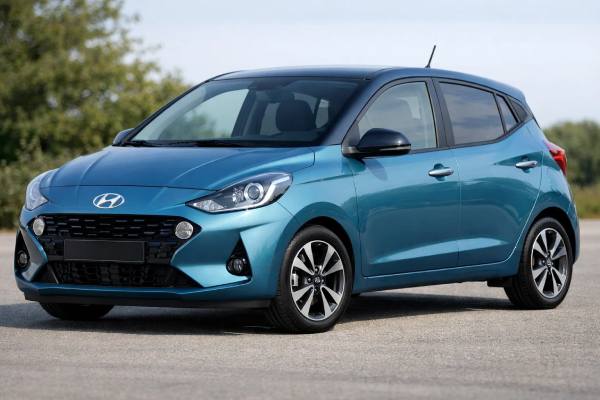
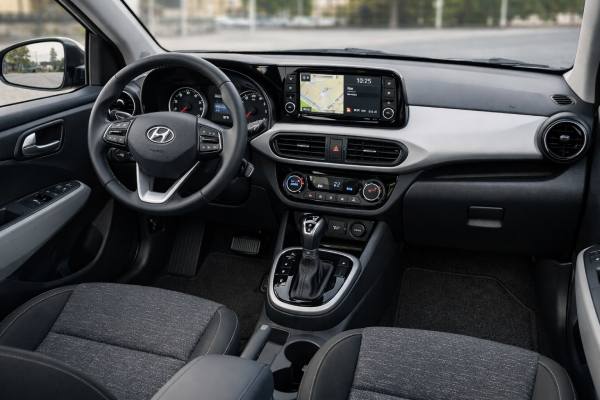

The 2020–2023 Hyundai i10 AC3 1.0 LPG is one of the more interesting city cars of its class because it combines a modern small-car platform with a factory bi-fuel setup. That matters. A factory LPG car is usually easier to live with than an aftermarket conversion because the calibration, packaging, and warranty logic were designed around dual-fuel use from the start. In the i10’s case, the result is a compact hatchback with very low running costs, tidy dimensions, and a cabin that feels more substantial than many A-segment rivals.
It is not fast, and it is not meant to be. On LPG it delivers 65 hp, prioritising economy and predictable daily use over outright pace. But the AC3-generation i10 is roomy for its size, easy to place in traffic, and more sophisticated in safety and connectivity than older i10s. For buyers who want low cost per kilometre without moving into hybrid complexity, it remains a very sensible small car.
Owner Snapshot
- The factory LPG setup is the headline advantage, especially for high-mileage city and suburban use.
- Cabin space, boot packaging, and visibility are strong for such a short car.
- Hyundai added a notably broader active-safety package than many traditional city-car rivals.
- Pay close attention to service history, ignition-system condition, tyre quality, and the health of both fuel systems.
- Engine oil and filter should be changed every 15,000 km or 12 months in normal use, with shorter intervals in harsh service.
Jump to sections
- Hyundai i10 AC3 LPG in context
- Hyundai i10 AC3 LPG numbers
- Hyundai i10 AC3 grades and safety
- Trouble spots and factory fixes
- Service routine and buyer advice
- Everyday performance and fuel costs
- Best alternatives and verdict
Hyundai i10 AC3 LPG in context
The AC3-generation Hyundai i10 is a much more mature city car than early i10s. It looks sharper, feels wider on the road, and offers a level of refinement that would have seemed ambitious in this class a decade earlier. In 1.0 LPG form, it also speaks directly to a very practical buyer: someone who wants a modern small hatchback but cares more about fuel cost, simplicity, and manoeuvrability than acceleration figures.
That LPG setup is the defining feature. This is not just a small petrol hatchback with a cheap conversion. It is a factory bi-fuel car, which means Hyundai engineered the packaging, engine management, and model approval around both petrol and LPG use. In practice, that usually gives a cleaner ownership experience than a converted car. It also means you still keep a petrol tank, so the car remains flexible on longer trips or in places where LPG infrastructure is thinner.
The rest of the package is equally sensible. At 3.67 metres long, the i10 is easy to thread through traffic and easy to park. But the wheelbase and body packaging make it feel bigger inside than many people expect. Adults can sit in the back without the cabin feeling like an afterthought, and the 252-litre boot is genuinely useful in this class. That makes the AC3 a real everyday car rather than a purely urban toy.
The driving brief is straightforward. The 1.0-litre three-cylinder engine is naturally aspirated, chain-driven, and tuned for modest running costs, not for strong overtaking reserves. On petrol, the same engine is slightly stronger. On LPG, it drops to 65 hp and 91.2 Nm, so you should expect calm rather than urgent performance. That sounds limiting, but in the real world it fits the car’s purpose. The i10 is light, the clutch and shifter are easy to use, and the car feels at home in town, on ring roads, and on moderate suburban routes.
What gives the AC3 more depth is that Hyundai did not leave it as a bare-bones budget hatchback. Safety technology was stronger than many class rivals, trim quality improved, and later updates added more driver-assistance features. This is still an A-segment car, and it still has the compromises that come with that, but it is not a crude one.
If you are shopping today, the real appeal is clear. The i10 AC3 LPG offers predictable engineering, very small road footprint, and low fuel expense, while avoiding the weight and complexity of hybrid hardware. For the right owner, that is still a very strong combination.
Hyundai i10 AC3 LPG numbers
For this guide, the exact focus is the Hyundai i10 AC3 1.0 MPI LPG with the 5-speed manual, sold from 2020 through 2023. Hyundai’s official technical sheet identifies the engine family as the 1.0 MPI 67 CV unit, but the key point is that the car produces different outputs depending on fuel. On LPG, the quoted figure is 47.8 kW, or 65 hp.
| Powertrain and efficiency | Hyundai i10 AC3 1.0 LPG |
|---|---|
| Engine family | 1.0 MPI bi-fuel |
| Code | Market catalogues commonly identify this engine family as G3LA-based |
| Engine layout and cylinders | Inline-3, transverse |
| Valvetrain | DOHC, 12 valves, 4 valves per cylinder |
| Bore × stroke | 71.0 × 84.0 mm (2.80 × 3.31 in) |
| Displacement | 1.0 L (998 cc) |
| Induction | Naturally aspirated |
| Fuel system | Multi-point electronic injection |
| Compression ratio | 11.0:1 |
| Max power on petrol | 67 hp / 49.3 kW @ 5,500 rpm |
| Max power on LPG | 65 hp / 47.8 kW @ 5,620 rpm |
| Max torque on petrol | 96.1 Nm (70.9 lb-ft) @ 3,750 rpm |
| Max torque on LPG | 91.2 Nm (67.3 lb-ft) @ 4,100 rpm |
| Timing drive | Chain |
| Rated combined efficiency, LPG | 8.2 L/100 km (28.7 mpg US / 34.4 mpg UK) WLTP combined |
| Real-world highway at 120 km/h | about 7.0–7.8 L/100 km LPG in normal use |
| Transmission and driveline | Hyundai i10 AC3 1.0 LPG |
|---|---|
| Transmission | 5-speed manual |
| Drive type | FWD |
| Differential | Open |
| Chassis and dimensions | Hyundai i10 AC3 1.0 LPG |
|---|---|
| Front suspension | MacPherson strut |
| Rear suspension | Torsion beam |
| Steering | Rack and pinion, electric power assistance |
| Steering lock-to-lock | 2.6 turns |
| Minimum turning radius | 4.9 m (16.1 ft) |
| Brakes | Front ventilated discs; rear drums or discs depending on version |
| Common wheel sizes | 15 in or 16 in alloy depending trim |
| Common tyre sizes | 185/55 R15 86H or 195/45 R16 84H |
| Ground clearance | 149 mm (5.9 in) max |
| Length | 3,670 mm (144.5 in) |
| Width | 1,680 mm (66.1 in) |
| Height | 1,480 mm (58.3 in) |
| Wheelbase | 2,425 mm (95.5 in) |
| Kerb weight | 1,051 kg (2,317 lb) |
| GVWR | 1,410 kg (3,109 lb) |
| Fuel tank | 36 L petrol (9.5 US gal / 7.9 UK gal) plus 40 L LPG tank gross |
| Cargo volume, VDA | 252 L (8.9 ft³) seats up / 1,050 L (37.1 ft³) seats folded |
| Performance and capacity | Hyundai i10 AC3 1.0 LPG |
|---|---|
| 0–100 km/h | 14.8 s |
| Top speed | 156 km/h (97 mph) |
| Braking distance | Not openly published in Hyundai’s public LPG technical sheet |
| Braked towing | 300 kg (661 lb) |
| Unbraked towing | Verify by market and VIN |
| Payload | about 359 kg (792 lb), based on the official weight sheet |
| Fluids and service data | Hyundai i10 AC3 1.0 LPG |
|---|---|
| Engine oil | Use handbook-approved Hyundai specification and climate-matched viscosity grade |
| Engine oil capacity | Verify by VIN in the 2020–2023 owner’s manual |
| Coolant | Hyundai-approved ethylene-glycol coolant for aluminium engine systems |
| Coolant capacity | Verify by VIN in the 2020–2023 owner’s manual |
| Manual transmission fluid | Hyundai-approved manual transaxle fluid |
| A/C refrigerant | Verify from the under-bonnet label for the exact vehicle |
| Key torque specs | Wheel and chassis torque values should be verified in official service data |
| Safety and driver assistance | Hyundai i10 AC3 |
|---|---|
| Euro NCAP | 3 stars, 2020 protocol |
| Adult occupant protection | 69% |
| Child occupant protection | 75% |
| Vulnerable road users | 52% |
| Safety assist | 59% |
| IIHS | Not rated |
| Core safety technologies | AEB, lane support, fatigue monitoring, speed assistance, eCall |
| Later feature expansion | 2023 update added broader SmartSense content in some markets |
The numbers describe a car that is compact, honest, and strongly shaped by cost efficiency. The LPG system is the real differentiator, but the roomy body and low mass do a lot of the work too.
Hyundai i10 AC3 grades and safety
Trim names changed by country, but the broad pattern stayed familiar. Entry models covered the essentials, middle trims added the equipment most owners actually want, and upper grades introduced more convenience, style, and safety technology. Because the i10 AC3 was sold across many European markets, exact trim badges varied, but the practical structure remained similar.
The most sensible used choices are usually middle trims. These tend to bring the best balance of price and useful equipment: air conditioning, a proper touchscreen, rear camera or sensors, alloy wheels, smartphone connectivity, and a more complete safety package. Base cars can still be worthwhile if they are very well cared for, but they often feel sparse. Top trims are attractive, especially with the stronger infotainment and added SmartSense features, but condition still matters more than trim hierarchy.
Some market versions also allowed either four-seat or five-seat layouts, while efficiency-oriented packages could alter wheel size, gearing, and seat configuration. That is worth checking because tyre cost, ride quality, and highway engine speed can vary slightly depending on exact spec. Quick identifiers include wheel size, infotainment screen type, climate controls, steering-wheel trim, seat upholstery, parking hardware, and the presence of camera-based assistance features behind the windscreen.
Safety is where the AC3-generation i10 moved the model line forward. Euro NCAP tested the i10 in 2020 and awarded it three stars, with 69% adult-occupant protection, 75% child-occupant protection, 52% vulnerable road-user protection, and 59% safety assist. That is not a class-leading score, but it needs context. Euro NCAP’s protocol had become much stricter, and the i10 still offered a wider active-safety package than many long-running city-car rivals.
The tested car had standard autonomous emergency braking, driver-attention monitoring, lane support, speed assistance, seatbelt reminders, and advanced eCall. Euro NCAP also noted that AEB was standard equipment and that lane support actively corrected steering when the car drifted from the lane. Rear-seat whiplash protection, however, was only marginal in the geometric assessment, and the car did not have centre airbags for far-side protection.
Hyundai’s own launch material also highlighted a broad SmartSense offering. On early AC3 cars this typically meant Forward Collision-Avoidance Assist, High Beam Assist, Lane Keep Assist, Driver Attention Warning, and speed-limit support, though exact standard or optional status depended on market and trim. The 2023 update added broader functionality in some regions, including cyclist-aware FCA, Lane Following Assist, and Rear Occupant Alert.
The practical takeaway is simple. For a city car, the AC3 i10 is reasonably well equipped from a safety standpoint, but the exact build matters. Buyers should confirm the actual hardware on the car, not just the brochure for the model line.
Trouble spots and factory fixes
The Hyundai i10 AC3 1.0 LPG is still a relatively modern car, so its reliability profile is not the same as that of a 15-year-old budget hatchback. So far, it appears mechanically straightforward rather than defect-prone. There is no major public sign of one defining systemic weakness in the way some small turbo engines or complex transmissions develop a reputation. Still, bi-fuel ownership adds a few details worth watching.
Common or plausible low-cost wear points
- Clutch wear on city-driven cars. This is especially relevant because LPG versions are often bought for high urban mileage. Symptoms are slip under load, a high bite point, or take-off shudder.
- Rear-brake corrosion or uneven wear on lightly used examples. Small hatchbacks that live in town can go through long periods of light brake loading.
- 12 V battery weakness. Stop-start systems, short trips, and long parking periods can all lower voltage and create nuisance warnings.
- Cheap tyre replacement. The i10’s balance depends more than many owners expect on decent tyres, especially in wet conditions.
Occasional issues to inspect
- Front suspension knocks from drop links, top mounts, or bushes on poor roads.
- Exhaust and underbody corrosion in harsh climates.
- Electrical irritation from weak batteries, sensor faults, or low-voltage conditions rather than major module failure.
- Interior trim rattles, door-seal noise, or hatch-area knocks, particularly on rough roads.
LPG-specific ownership caveats
- The ignition system matters more on an LPG car. Spark plugs and coils need to stay healthy because misfires are more noticeable and more damaging to smooth running in a bi-fuel setup.
- Both fuel systems must stay in use. Cars that spend long periods running only one fuel can develop stale petrol, injector deposit issues, or neglected system faults on the unused side.
- LPG hardware should be checked for leaks, correct switching behaviour, and service record completeness. Market rules for tank inspections or component certification can differ, so local compliance matters.
- Factory LPG is generally preferable to conversion work, but it still needs proper maintenance discipline.
On software and calibration, the i10’s camera-based safety systems introduce a modern used-car concern: front-end repair quality. Windscreen replacement, accident repair, or sensor disturbance can affect driver-assistance performance. If a car has warning lights, calibration messages, or suspicious panel gaps, investigate before buying.
Recalls and service actions are best handled by VIN rather than by internet lists. Public recall visibility varies by market, and a car imported or re-registered across countries can have a patchy paper trail. The best practice is to ask for dealer records and check the car against the official recall portal for its registration market.
Overall, the AC3 LPG version looks encouraging. Most risk comes from usage pattern, service quality, and neglect, not from a clearly flawed core design.
Service routine and buyer advice
The i10 AC3 1.0 LPG rewards simple, disciplined maintenance. That is the right mindset for this car. Its attraction is low operating cost, but low operating cost only stays low when the car receives timely routine care. Skip the basics, and the savings disappear quickly.
A sensible real-world maintenance plan looks like this:
| Service item | Practical interval |
|---|---|
| Engine oil and filter | Every 15,000 km or 12 months |
| Engine air filter | Inspect yearly, replace about every 30,000–45,000 km |
| Cabin filter | Replace yearly |
| Spark plugs | Inspect earlier on LPG use, replace around 30,000–45,000 km depending on plug type and condition |
| Brake fluid | Every 24 months |
| Coolant | Follow VIN-specific handbook schedule and inspect annually |
| Manual transmission oil | Check for leaks and condition; preventive refresh around 60,000–90,000 km is sensible |
| Rear-brake service | Inspect at every service, especially on lightly used cars |
| Tyre rotation | Every 10,000–12,000 km |
| Wheel alignment | As needed after potholes, uneven wear, or suspension work |
| Auxiliary belt and hoses | Inspect yearly |
| Timing chain | No routine replacement interval; inspect if noisy or if timing faults appear |
| 12 V battery test | Yearly once the battery is four years old |
| LPG system check | Include leak check and proper switching operation during routine service |
For fluids, always prioritise the handbook and VIN. Hyundai’s public LPG technical sheet is excellent for dimensions and performance, but it does not openly publish every fill quantity. That means engine-oil capacity, coolant fill quantity, refrigerant charge, and some torque figures are best verified directly in the 2020–2023 owner’s manual or service data.
Buyer inspection should focus on the things that matter on a dual-fuel city car:
- Start from cold and let it idle on petrol, then confirm clean running after switching fuel modes if applicable.
- Check for hesitation, misfire, or rough transition under light throttle.
- Test the clutch on an incline and in a higher gear.
- Inspect tyres carefully. Cheap tyres often tell you the maintenance mindset of the owner.
- Check the rear brakes and handbrake performance.
- Confirm all warning lights clear properly, especially engine, ESC, lane, and front-safety warnings.
- Look for evidence of front-end repairs that could affect camera calibration.
- Ask for LPG-system service paperwork, not just general stamps.
The best used buys are medium-trim manual cars with good tyres, complete service invoices, clean switching behaviour, and evidence of regular ignition maintenance. Cars to avoid are those with mixed tyres, poor idle, warning lights, cheap accident repair, or vague answers about LPG service.
Long term, the outlook is positive. This is a straightforward small car with a factory bi-fuel twist, not a highly stressed or over-engineered one.
Everyday performance and fuel costs
The i10 AC3 1.0 LPG is not a car you buy for speed, but it is a car you can like for how easy it feels every day. Around town, the steering is light, the controls are friendly, and the body is short enough to turn a difficult parking space into a routine manoeuvre. The cabin layout is simple and visibility is strong, which lowers stress in exactly the kind of environments where this car will spend most of its life.
On LPG, the engine loses a little compared with its petrol rating. You feel that most clearly in mid-range pull and when the car is loaded with passengers or climbing hills. But the i10 is light enough that it still feels responsive in city work. The five-speed manual suits it well, and the naturally aspirated throttle response is clean and predictable. There is no turbo lag, no strange gearbox logic, and no sense that the car is trying to do more than it should.
Ride comfort is one of the AC3’s better traits. It is not plush, but it is calmer and more settled than many old-school city cars. The suspension absorbs urban imperfections reasonably well, especially on 15-inch wheels. On 16-inch setups, the car looks sharper but can feel firmer over broken surfaces. The overall balance is tidy and safe rather than playful.
At faster speeds, the limits arrive in the expected places. The 65 hp LPG tune has enough performance for normal open-road use, but motorway overtaking requires planning. Wind and tyre noise build with speed, and long uphill stretches highlight the modest torque figure. This is normal for the class. It is perfectly capable of leaving town, but it is happiest when its workload matches its size.
Real-world LPG efficiency is where the model earns its place. A realistic ownership spread is:
- City: about 8.0–9.0 L/100 km LPG, roughly 26.1–29.4 mpg US or 31.4–35.3 mpg UK
- Highway at 100–110 km/h: about 6.5–7.2 L/100 km LPG, roughly 32.7–36.2 mpg US or 39.2–43.5 mpg UK
- Highway at 120 km/h: about 7.0–7.8 L/100 km LPG, roughly 30.2–33.6 mpg US or 36.2–40.4 mpg UK
- Mixed use: about 7.4–8.4 L/100 km LPG, roughly 28.0–31.8 mpg US or 33.6–38.2 mpg UK
Those numbers do not look dramatic if you compare them with petrol on a litres-only basis, because LPG contains less energy per litre. The real benefit is usually cost per kilometre. In markets where LPG remains much cheaper than petrol, the i10 can be impressively economical to run.
That is the heart of the verdict from behind the wheel. The i10 AC3 LPG is easy, calm, and inexpensive rather than quick or exciting. For many owners, that is exactly the point.
Best alternatives and verdict
The Hyundai i10 AC3 1.0 LPG makes the most sense when compared with the rivals buyers really consider: other city cars, not larger superminis. In that context, it remains one of the more rounded choices.
Against the Kia Picanto, the Hyundai feels like a close family member because in many ways it is one. The Picanto can be a little more playful in styling, but the i10 often feels slightly more mature in cabin packaging and overall polish. If both are similarly maintained, the choice often comes down to fuel type, equipment, and price.
Against the Toyota Aygo X and the older Aygo/108/C1 style of city car, the i10 stands out for interior usefulness and a more complete road feel. Those rivals are light, efficient, and easy in town, but the Hyundai often feels more grown-up and less compromised for daily mixed use. The LPG option also gives it a strong running-cost argument that many direct rivals cannot match.
Against the Fiat Panda, the contest becomes one of philosophy. The Panda is wonderfully upright and practical, and some buyers love its character. But the Hyundai usually feels more modern in safety tech, cabin finish, and general road manners. The i10 is the more conventional recommendation if your goal is low-drama ownership.
Against the Volkswagen up!, Skoda Citigo, and SEAT Mii, the Hyundai loses a little of the German trio’s clean dynamic polish but gains points for equipment, packaging, and in this case the factory LPG proposition. If fuel cost is central to the buying decision, the LPG i10 becomes very compelling.
Its weaknesses are clear enough. Three stars in 2020 Euro NCAP form is respectable, not standout. The LPG engine tune is perfectly usable but not brisk. Highway work is fine, not effortless. And while the factory bi-fuel setup is a big advantage, it also means buyers need to respect the maintenance needs of two fuel systems rather than one.
Even so, the overall verdict is strong. The Hyundai i10 AC3 1.0 LPG is a practical, intelligently packaged city car with one of the better low-running-cost powertrains available in its segment. It is not the car for someone who wants quick overtaking or premium feel. It is the car for someone who wants dependable, compact, affordable transport that still feels modern enough to live with every day. In that role, it does its job very well.
References
- Hyundai Owners Manuals 2026 (Owner’s Manual)
- Caratteristiche Tecniche HYUNDAI i10 GPL 2024 (Technical Data)
- EuroNCAP | Hyundai i10 2020 (Safety Rating)
- The All-New Hyundai i10: Go Big. 2019 (Press Kit)
- Check if a vehicle, part or accessory has been recalled 2026 (Recall Database)
Disclaimer
This article is for informational purposes only and is not a substitute for professional diagnosis, repair, or VIN-specific workshop guidance. Specifications, torque values, service intervals, fill capacities, equipment, and procedures can vary by market, trim, production date, and exact vehicle configuration, so always verify details against the official owner’s manual and service documentation for the specific car.
If this guide was useful, please consider sharing it on Facebook, X, or another social platform to support our work.