
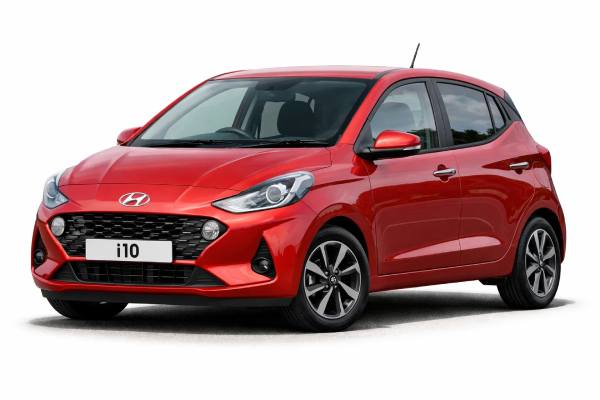
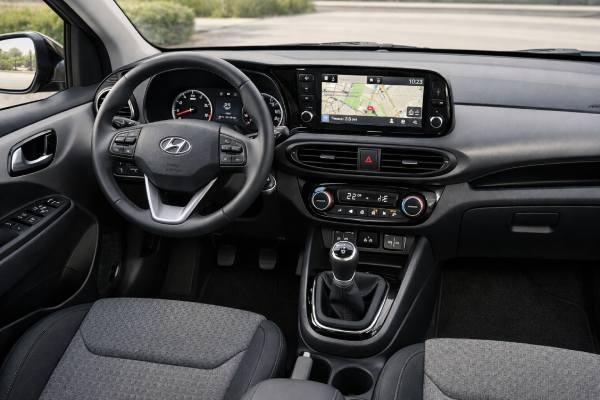

The third-generation Hyundai i10 AC3 moved the model from basic city-car duty into something broader and more grown-up. In 1.2 MPi form, it keeps the light weight, small footprint, and low running costs people expect from an i10, but adds enough extra power to make daily driving easier outside town. That matters more than the raw number suggests. This engine gives the car better flexibility with passengers, less strain on hills, and a calmer feel at higher speeds than the base 1.0. Hyundai also paired it with a simple front-wheel-drive layout, compact dimensions, and a sensible equipment structure that, in many markets, included active safety features that used to be unusual in this class.
For owners, the big themes are clear. The AC3 is practical, easy to place, and usually inexpensive to keep. The caution is not a design disaster but the usual used-car reality: maintenance quality, recall completion, tyre choice, and suspension or clutch wear matter more than badge appeal.
What to Know
- The 1.2 MPi feels noticeably more relaxed than the 1.0 in mixed driving.
- Cabin space and a 252 L boot are strong points for a car this short.
- Standard active safety was unusually good for the class at launch in several markets.
- Check recall history, front suspension noise, tyres, and clutch or AMT behavior before buying.
- A cautious owner routine is oil and filter every 10,000–15,000 km or 12 months.
Section overview
- Hyundai i10 AC3 city-car brief
- Hyundai i10 AC3 spec and data
- Hyundai i10 AC3 trims and safety kit
- Failure patterns and recall checks
- Upkeep plan and used-buy advice
- Road manners and real fuel use
- Where it sits among rivals
Hyundai i10 AC3 city-car brief
The AC3-generation i10 is a better-resolved car than its size first suggests. Hyundai kept the basic city-car formula intact, but made the body longer, wider, and visually more planted than the earlier IA. That change matters in everyday use. The car is still easy to park and thread through tight streets, yet it feels more stable and less toy-like on open roads. The cabin also benefits. Five seats remained part of the package, luggage capacity stayed useful at 252 liters, and the overall shape gave the i10 a more serious small-hatch feel rather than a budget-only one.
In this 1.2 MPi version, the engine is the real sweet-spot feature. Hyundai marketed it as an 84 PS unit, which is often rounded in listings as 84 hp, though the technical figure is 61.8 kW. The important point is not the metric conversion but the way it changes the car’s character. Compared with the 1.0, the four-cylinder 1.2 is smoother, less strained when loaded, and better suited to suburban roads or occasional motorway use. It is still a small naturally aspirated engine, so it does not turn the i10 into a fast car, but it gives the chassis enough headroom to feel properly matched. Hyundai also offered both a five-speed manual and a five-speed automated manual transmission, depending on market and trim.
The other reason the AC3 matters is safety and equipment strategy. At launch, Hyundai gave even modest trims a stronger set of active safety features than many older city cars had ever offered. That helped the i10 feel more up to date than several value-priced rivals, even if its Euro NCAP result under the tougher 2020 protocol stopped at three stars. It was not a bad car in absolute terms; the protocol simply became much stricter, and the i10’s class still imposes physical limits.
Ownership appeal follows from that mix. The AC3 1.2 is compact, efficient, and mechanically uncomplicated. It uses a conventional suspension layout, simple front-wheel drive, and a naturally aspirated petrol engine with no hybrid hardware and no turbocharger. That keeps repair risk modest. The biggest buying mistake is assuming every small i10 is cheap and fine by default. A well-maintained AC3 is usually an easy, low-drama hatchback. A neglected one can quickly need tyres, brakes, front suspension parts, recall work, and small electrical fixes that cancel out the value advantage.
Hyundai i10 AC3 spec and data
The open official data for the 2020–2023 1.2 MPi AC3 is reasonably consistent across Hyundai’s launch and later UK technical sheets. Where small differences appear, they usually come from trim, tyre package, or manual-versus-AMT transmission. The core engineering picture is stable.
| Powertrain and efficiency | Specification |
|---|---|
| Engine family | 1.2 MPi Kappa / Smartstream family application |
| Engine layout and cylinders | Inline-4, transverse |
| Valvetrain | DOHC, 4 valves per cylinder |
| Displacement | 1.2 L (1,197 cc) |
| Bore × stroke | 71.0 × 75.6 mm (2.80 × 2.98 in) |
| Induction | Naturally aspirated |
| Fuel system | Multi-point fuel injection |
| Compression ratio | 11.0:1 |
| Max power | 84 PS / 61.8 kW @ 6,000 rpm, commonly rounded in listings to about 84 hp |
| Max torque | 118 Nm (87.0 lb-ft) @ 4,200 rpm |
| Timing drive | Hyundai open spec sheets do not highlight a routine belt service for this engine; verify chain-related service detail by VIN and manual |
| Rated efficiency, 5MT | 5.3 L/100 km combined in Hyundai’s 2023 UK sheet on 185/55 R15 trim data |
| Rated efficiency, 5AMT | 5.5 L/100 km combined in the same 2023 UK sheet on 185/55 R15 trim data |
| Real-world highway @ 120 km/h | Usually lands above WLTP combined and near or above the extra-high phase figure; expect roughly low-6s L/100 km in a healthy manual as a practical estimate |
| Transmission and driveline | Specification |
|---|---|
| Transmission | 5-speed manual or 5-speed AMT |
| Drive type | FWD |
| Differential | Open |
| Chassis and dimensions | Specification |
|---|---|
| Front suspension | McPherson strut |
| Rear suspension | Coupled torsion beam axle |
| Steering | MDPS electric assist |
| Steering ratio / turns | 2.64 turns lock-to-lock |
| Turning circle | 9.72 m (31.9 ft) in later UK data; early launch sheets also express this as 4.86 m radius |
| Brakes | Front ventilated discs and rear solid discs in the official UK spec sheets used here |
| Most popular tyre size | 185/55 R15 |
| Other tyre sizes | 175/65 R14 and 195/45 R16 by trim |
| Length | 3,670 mm (144.5 in) |
| Width | 1,680 mm (66.1 in) |
| Height | 1,480 mm (58.3 in), with small trim variation |
| Wheelbase | 2,425 mm (95.5 in) |
| Kerb weight | About 932–1,007 kg (2,055–2,220 lb) for 1.2 5MT; about 935–1,006 kg (2,061–2,218 lb) for 1.2 5AMT |
| GVWR | 1,430 kg (3,153 lb) |
| Fuel tank | 36 L (9.5 US gal / 7.9 UK gal) |
| Cargo volume | 252 L (8.9 ft³) seats up / 1,050 L (37.1 ft³) seats down, VDA |
| Performance and capability | Specification |
|---|---|
| 0–100 km/h / 0–62 mph | 12.6 s manual / 15.8 s AMT |
| Top speed | 171 km/h (106 mph) manual and AMT in the launch sheet |
| Towing capacity | 300 kg braked / 300 kg unbraked in Hyundai’s later UK sheet |
| Payload | Roughly 423–498 kg manual, 424–495 kg AMT depending on trim |
| Safety and driver assistance | Specification |
|---|---|
| Euro NCAP | 3 stars; Adult 69%, Child 75%, VRU 52%, Safety Assist 59% |
| IIHS | Not rated |
| Headlight rating | Not applicable |
| ADAS at launch in UK sheet | AEB with FCW, Driver Attention Alert, ESC, HAC, LKAS, TPMS, and eCall listed as standard across early trims |
The table above reflects the main published open-source figures for the AC3 1.2 MPi. Exact wheel, emissions, and payload values vary by trim and gearbox, so VIN-specific verification remains important before purchase or service.
Hyundai i10 AC3 trims and safety kit
For this generation, trim names changed over the run and varied by market, so buyers should shop by equipment rather than badge alone. In the UK at launch in 2020, the structure centered on SE, SE Connect, and Premium. By 2023, Hyundai UK had moved to Advance, Premium, and N Line. That does not mean the underlying car changed completely. It means Hyundai gradually reorganized packaging, infotainment, wheel design, and convenience features while the AC3 platform stayed fundamentally the same.
For a 1.2 MPi buyer, the useful trim split is practical. Early SE Connect and Premium cars are the ones most likely to deliver the best balance of value and equipment in the used market. They paired the stronger engine with better infotainment, rear-view camera availability, alloy wheels, and a broader comfort list. In 2023 terms, the same logic points to Advance or Premium rather than the most basic configuration. Typical step-up items across the run included:
- 15-inch or 16-inch alloy wheels instead of steel wheels.
- Rear camera and larger touchscreen audio.
- Apple CarPlay and Android Auto.
- Climate control on richer trims.
- Heated front seats and heated steering wheel on upper trims.
- Projection headlamps, LED daytime running lights, and privacy glass on higher grades.
- N Line appearance and interior details on the sportier trim path.
Safety equipment was a real selling point at launch. In many markets, the early trim structure included front, side, and curtain airbags, passenger airbag deactivation, ABS, ESC, hill-start assist, driver attention alert, eCall, AEB with forward collision warning, lane departure warning with lane keep assist, and TPMS. That is an impressive baseline for a small non-premium hatch. It also helps explain why the i10 feels newer than many older city cars when you compare actual feature lists, even though the Euro NCAP result itself was only three stars under the far stricter 2020 regime. Euro NCAP scored the car at 69% adult occupant protection, 75% child occupant protection, 52% vulnerable road user protection, and 59% safety assist.
There are two practical cautions here. First, do not assume every 2020–2023 i10 has identical ADAS content. Some markets bundled safety features differently, and optional packs could add navigation, intelligent speed-limit warning, Bluelink, or wireless charging rather than altering the core mechanical package. Second, any used example with camera-based or lane-support equipment deserves extra care after windscreen replacement or front-end repair. A poorly repaired car can have no warning lights and still feel slightly off in lane-support behavior. That is not unique to Hyundai, but it matters more now that even small cars carry more driver-assistance hardware than they once did.
Failure patterns and recall checks
The AC3 i10 1.2 MPi does not stand out for a single universal engine defect. The public official record is stronger on campaign items than on a repeating fundamental weakness in the 1.2 MPi itself. In real ownership, that usually means the most meaningful problems are ordinary small-car issues: wear from urban use, missed servicing, cheap tyres, and buyers overlooking unfinished recall work because the car feels simple and inexpensive.
The clearest official safety campaign affecting AC3 cars in the covered period is the seat-belt tensioner recall recorded through EU Safety Gate. That alert covers Hyundai i10 AC3 vehicles built between 5 September and 16 October 2020 and states that the front passenger seat-belt tensioner may malfunction, increasing injury risk in an accident. Hyundai’s own recall portal is therefore not optional background reading on this model; it is part of the buying checklist.
There is also a more recent official Safety Gate alert affecting some 2021–2023 cars for fuel-pump impeller expansion. The summary states that the impeller may expand beyond specification, causing low fuel pressure and possible no-start or loss-of-propulsion behavior. That is especially relevant to today’s used buyer, because a later-issued recall can affect a car that seemed fine during earlier ownership. A seller who says there were never any recalls should not be taken at face value. Run the VIN through Hyundai’s recall system and, where relevant, a national recall checker.
Outside official campaign items, the faults most worth watching are lower-cost but common used-car nuisances. Front suspension knocks from links or bushes, brake corrosion on low-mileage urban cars, weak 12 V batteries, and clutch wear on manual cars are more plausible ownership concerns than catastrophic engine failure. AMT cars also deserve a careful test drive because an automated manual is mechanically simple but can feel clumsy if calibration, clutch wear, or previous stop-start driving have not been kind to it. That does not make AMT cars bad; it makes condition more important than brochure logic.
Pre-purchase checks should therefore be specific:
- Verify recall completion by VIN.
- Start from fully cold.
- Listen for suspension noise on rough roads.
- Test the clutch or AMT repeatedly in stop-start use.
- Scan for stored engine, ABS, and camera-related faults.
- Check tyre brand and condition on all four corners.
- Confirm every driver-assistance function that is fitted actually works.
Upkeep plan and used-buy advice
Because market schedules vary, the smartest approach with the AC3 1.2 is to separate official baseline from sensible private ownership. Hyundai’s service and warranty materials stress regular maintenance and direct owners back to the correct owner’s manual for exact intervals. For a used 2020–2023 car, a conservative schedule is usually wiser than the longest permissible one. That protects the engine, helps the transmission behave better, and reduces the chance of small-city-car neglect turning into a cluster of medium-sized bills.
A practical maintenance plan looks like this:
- Engine oil and filter every 10,000–15,000 km or 12 months.
- Engine air filter inspect every service, replace around 30,000 km sooner in dusty use.
- Cabin filter about every 15,000–20,000 km or annually.
- Spark plugs around 40,000–60,000 km depending on plug type and usage.
- Brake fluid every 2 years.
- Coolant replaced by the correct manual schedule rather than treated as lifetime fluid.
- Manual gearbox oil inspected for leaks and refreshed preventively on higher-mileage cars.
- AMT transmission health checked early if shift quality changes.
- Tyre rotation around every 10,000 km with alignment checks when wear becomes uneven.
- 12 V battery tested yearly once the car is several years old.
Open official sources for this exact AC3 variant publish strong core vehicle data, but they do not consistently expose every fluid capacity in one public sheet. The safe buyer’s answer is therefore to verify VIN-specific oil grade, coolant specification, refrigerant charge, and torque values from the correct owner’s manual or dealer documentation before purchase or service. What is clearly published in the open technical data for the covered AC3 1.2 is the 36 L fuel tank, the tyre packages, the wheel sizes, the weight ranges, and the basic brake and chassis layout.
When viewing a used example, look for the reconditioning items that separate a cheap car from a good cheap car:
- Matching quality tyres instead of the cheapest replacements.
- Quiet front suspension over broken tarmac.
- No steering vibration under braking.
- Clean clutch take-up on manuals.
- Smooth low-speed creep and repeatable take-off on AMT cars.
- Air conditioning that actually cools.
- A complete service record and at least one proof point for recall completion.
- No cheap body repairs around the front where ADAS sensors or camera alignment could matter.
Long-term durability should be viewed as good rather than bulletproof. The AC3’s advantage is that most ownership risks are understandable and inspectable. Buy on condition, evidence, and tyres, not color or trim hype.
Road manners and real fuel use
The 1.2 MPi i10 drives like a small hatchback that has enough engine for its job. That sounds modest, but it is a real compliment. At low speed, the car is light, easy to place, and easy to park. Visibility is good, the controls are simple, and the chassis feels predictable. In traffic, the 1.2 has less of the strained edge that often appears in base-engine city cars. It pulls more naturally away from junctions, deals better with passengers, and feels less busy when the road opens up.
Ride quality is acceptable rather than plush. The wheelbase is still short, so sharp bumps and expansion joints are obvious, especially on 16-inch cars. What the AC3 does better than older i10s is settle down after the bump. It does not feel as flimsy or as easily upset. Steering is light and accurate enough, but feedback is limited. That fits the mission. This is a city car designed to be unintimidating, not playful in the hot-hatch sense. Manual cars feel more natural than AMT cars because the engine’s modest torque and clean response suit a conventional clutch-and-stick setup. The AMT remains a useful convenience choice, but buyers need to accept slower, more deliberate low-speed shifts.
Official economy is one of the i10’s strengths, but trim and gearbox matter. The 1.2 manual is rated at 5.3 L/100 km combined on common 185/55 R15 data, with the AMT at 5.5 L/100 km. Premium trim data rises slightly. In practice, that usually means something like these owner-facing expectations:
- City: around mid-6s to low-7s L/100 km.
- Mixed: about mid-5s to low-6s L/100 km in the manual.
- Highway at 100–120 km/h: roughly low-6s to upper-6s L/100 km, depending on tyre, wind, and load.
Those real-world ranges are estimates based on official test-cycle data and the car’s general design, not a factory promise. They are still useful because they describe the kind of result most careful owners will recognize.
Performance is sufficient rather than generous. Hyundai quoted 12.6 seconds to 62 mph for the manual and 15.8 seconds for the AMT, with 106 mph top speed. That is enough to merge and overtake sensibly, but only if the driver plans ahead. The good news is that the car never feels confused about its role. It is not pretending to be sporty. It is trying to be easy, efficient, and useful, and with the 1.2 engine it usually succeeds.
Where it sits among rivals
The AC3 i10 1.2 occupies a strong middle ground in the city-car class. It is not the cheapest-feeling option, not the sharpest to drive, and not the most prestigious, but it combines space, equipment, and low operating cost unusually well. That balance is why it remains easy to recommend to used buyers who want one car to do urban work and occasional longer trips without constant compromise.
Against the Volkswagen up!, Skoda Citigo, and SEAT Mii, the Hyundai usually wins on newer-feeling safety equipment and, depending on market, better value for money. The VW-group trio often feel slightly tidier in steering response and road noise, but many examples are older now, and equipment parity is not always as good as memory suggests. The i10’s 1.2 also gives it enough flexibility to keep up in mixed driving without feeling under-engined. Against the Toyota Aygo, Peugeot 108, and Citroen C1, the Hyundai tends to feel more grown-up, roomier, and less tinny over distance. Those cars remain excellent in town, but the i10 is the better all-rounder.
The closest natural rival is the Kia Picanto of the same era. That comparison usually comes down to price, condition, equipment, and local parts or dealer support. The Hyundai is not automatically better; it is simply one of the safest bets in this part of the market when bought carefully. Compared with the Fiat Panda, the i10 feels less quirky but often more polished and easier to buy rationally. Compared with the Suzuki Celerio, it usually offers a better cabin and broader equipment spread, even if the Suzuki can be very efficient.
So who is this exact AC3 1.2 best for? Drivers who want a light, economical hatch that can handle city life without being trapped there. It suits first-time drivers, commuters, older owners who value visibility and simple controls, and households needing a practical second car.
Who should look elsewhere? Anyone who spends most of the week on fast motorways, expects premium refinement, or wants the latest driver-assistance depth that became more common after this model’s launch years. For the right buyer, though, the verdict is clear: the 2020–2023 Hyundai i10 AC3 1.2 MPi is one of the better-balanced small used cars in its class, with real strengths in packaging, ease of use, and ownership logic.
References
- Press Information The All-New Hyundai i10 2020 (Technical Data)
- Hyundai i10 range | Technical, Specifications and Pricing | April 2023 2023 (Technical Data)
- Official Hyundai i10 2020 safety rating – Euro NCAP 2020 (Safety Rating)
- Hyundai Owners manuals 2026 (Owner’s Manual)
- Home | Hyundai Recalls & Service Campaigns 2026 (Recall Database)
Disclaimer
This article is for informational purposes only and is not a substitute for professional diagnosis, repair, or a VIN-specific inspection. Specifications, torque values, service intervals, fluid grades, recall applicability, and repair procedures can vary by market, production date, gearbox, trim, and installed equipment. Always verify the exact requirements against the official service documentation for the specific vehicle.
If this guide helped you, please consider sharing it on Facebook, X, or another platform to support our work.