
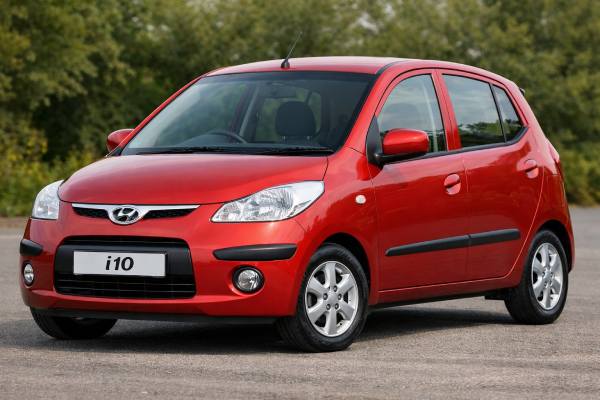
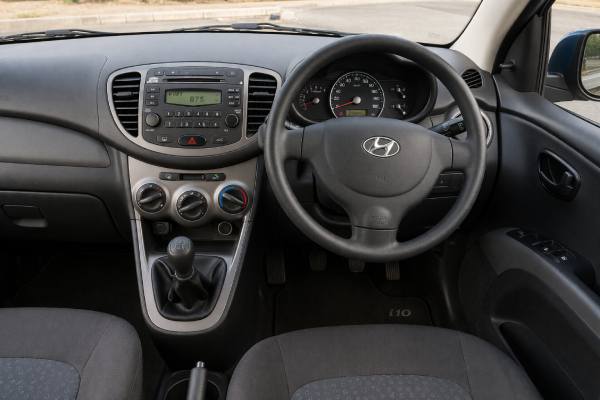
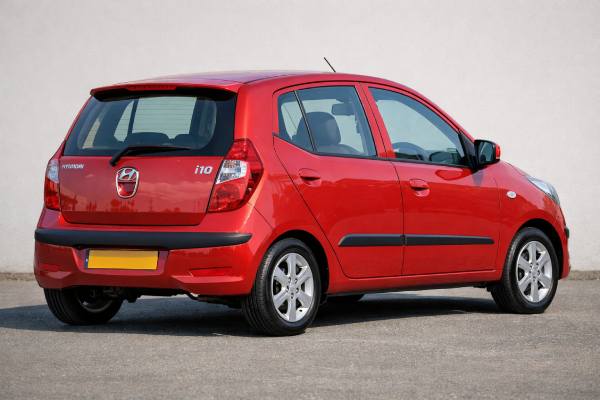
The 2008–2011 Hyundai i10 (PA) 1.1 CRDi is one of those rare old-school city cars that still makes sense on hard numbers. It is short, light, easy to park, and more flexible than the petrol i10 models because the small turbo-diesel produces useful torque low in the rev range. That gives it a more relaxed feel in traffic and on secondary roads, while still delivering very low fuel use for a practical five-door hatchback. The catch is age. Today, every PA-generation CRDi is an older small diesel, so condition matters far more than brochure promises. A well-kept example can still be cheap to run and pleasant to own. A neglected one can quickly lose that advantage through injector, EGR, clutch, and rust-related costs. This guide focuses on the exact 75 hp 1.1 CRDi hatchback sold from 2008 to 2011, with emphasis on the specs, ownership strengths, known faults, maintenance needs, and how it compares with the small-car rivals buyers still cross-shop today.
Fast Facts
- Strong low-rpm torque makes it feel easier in traffic than the petrol i10.
- Official combined fuel use is about 4.3 L/100 km when the car is healthy.
- Cabin and luggage space are good for a hatchback just over 3.5 metres long.
- Mostly short-trip use can bring soot, EGR, and injector-related diesel problems.
- Plan on oil and filter service every 12 months or about 10,000 to 15,000 km.
Guide contents
- Hyundai i10 PA Diesel Basics
- Hyundai i10 PA Specs and Data
- Hyundai i10 PA Trims and Safety
- Reliability and Known Faults
- Maintenance and Buying Advice
- Driving and Efficiency
- Rivals and Best Alternatives
Hyundai i10 PA Diesel Basics
The PA-generation Hyundai i10 was designed as a practical city hatchback, but the 1.1 CRDi version gave it a notably different character from the petrol range. Its 1,120 cc three-cylinder common-rail diesel makes 75 hp and 153 Nm, which is a healthy torque figure for a car this small. On the road, that matters more than the power number. The diesel pulls cleanly from low revs, needs fewer downshifts, and feels less strained with passengers or luggage than the smaller petrol engines. It is still not a fast car, but it is a more capable long-distance tool than many people expect when they first see one.
This version suits drivers who do regular mixed or longer runs, want a simple manual gearbox, and care more about fuel economy than outright refinement. It does not suit buyers who only drive a few kilometres at a time, or who want the quietest and smoothest version of the i10. Like many small diesels of its era, it rewards proper warm-up, good fuel, regular oil changes, and occasional longer drives that keep the engine and intake system cleaner. Use it correctly and it can feel durable and efficient. Use it as a pure short-hop town car and the ownership case becomes much weaker.
There are several ownership strengths worth calling out. The cabin packaging is good for the footprint, visibility is easy, parts support is generally decent, and the manual gearbox keeps the car simple. The platform is conventional, with MacPherson struts up front and a torsion-beam rear axle, so servicing is rarely exotic. Fuel range is respectable too. With a 35-litre tank and a low combined fuel-use figure, a healthy car can go a long distance between fills, especially on mixed roads rather than in heavy urban use.
Its weak points are predictable rather than mysterious. It is an older diesel with more vibration at idle than the petrol cars, modest motorway reserve, and a strong dependence on maintenance history. The best examples are the ones with documented servicing, evidence of regular longer runs, and no signs of deferred repairs. In today’s used market, condition is the real trim level. A clean, honest, well-serviced 1.1 CRDi is still a smart little car. A cheap one with missing history is usually cheap for a reason.
Hyundai i10 PA Specs and Data
Open official documentation for the early European-market 1.1 CRDi is patchy, so the table below reflects widely consistent PA 1.1 CRDi data as used across core markets. Where figures can shift slightly by trim, wheel size, or measurement method, the entry is shown as approximate or market-dependent instead of forcing one exact number.
| Powertrain and efficiency | Specification |
|---|---|
| Code | D3FA |
| Engine layout and cylinders | Inline-3, 3 cylinders, DOHC, 4 valves per cylinder |
| Bore × stroke | 75.0 × 84.5 mm (2.95 × 3.33 in) |
| Displacement | 1.1 L (1,120 cc) |
| Induction | Turbocharged, intercooler |
| Fuel system | Common-rail direct injection |
| Compression ratio | 17.8:1 |
| Max power | 75 hp (55 kW) @ 4,000 rpm |
| Max torque | 153 Nm (113 lb-ft) @ 1,900–2,750 rpm |
| Timing drive | Chain-driven |
| Rated efficiency | 4.3 L/100 km combined (54.7 mpg US / 65.7 mpg UK) |
| Rated urban / extra-urban | 5.3 / 3.8 L/100 km |
| Real-world highway at 120 km/h | Usually about 4.7–5.5 L/100 km in healthy condition |
| Transmission and driveline | Specification |
|---|---|
| Transmission | 5-speed manual |
| Drive type | FWD |
| Differential | Open |
| Chassis and dimensions | Specification |
|---|---|
| Suspension, front / rear | MacPherson strut / torsion-beam rear axle |
| Steering | Rack-and-pinion; power assist common, exact system varies by trim and market |
| Brakes | Front disc / rear drum; exact diameters vary by market |
| Most common tyre size | 165/60 R14 or 175/60 R14 |
| Ground clearance | About 150 mm (5.9 in), market-dependent |
| Length / width / height | About 3,565–3,585 mm / 1,595 mm / 1,540 mm (140.4–141.1 / 62.8 / 60.6 in) |
| Wheelbase | 2,380 mm (93.7 in) |
| Turning circle, kerb-to-kerb | About 9.5 m (31.2 ft) |
| Kerb weight | About 1,040–1,115 kg (2,293–2,458 lb), depending on trim and standard |
| GVWR | About 1,520 kg (3,351 lb) |
| Fuel tank | 35 L (9.2 US gal / 7.7 UK gal) |
| Cargo volume | About 225 L / 910 L (7.9 / 32.1 ft³), seats up / seats folded |
| Performance and capability | Specification |
|---|---|
| 0–100 km/h | 15.8 s |
| Top speed | 163 km/h (101 mph) |
| Braking distance 100–0 km/h | Not consistently published for this exact trim |
| Towing capacity | Often listed up to 700 kg braked / 400 kg unbraked where locally approved |
| Payload | Usually around 405 kg, market-dependent |
| Fluids and service capacities | Specification |
|---|---|
| Engine oil | Hyundai-approved diesel oil; commonly 5W-30 or 5W-40 by climate and emissions setup; about 5.3 L (5.6 US qt) |
| Coolant | Ethylene-glycol long-life coolant, typically 50/50 mix; about 5.3 L (5.6 US qt) |
| Manual transmission oil | API GL-4 SAE 75W-85; about 1.9 L (2.0 US qt) |
| Differential / transfer case | Not applicable |
| A/C refrigerant | R134a on period-correct systems; charge varies by market and compressor |
| Key torque specs | Always verify by VIN and wheel type before tightening critical fasteners |
| Safety and driver assistance | Specification |
|---|---|
| Euro NCAP | 4 stars in 2008 testing |
| IIHS | Not rated for this market car |
| Headlight rating | Not applicable |
| ADAS suite | None in the modern sense; ABS common, ESC not universal, no AEB, ACC, LKA, BSD, or RCTA |
The key numbers explain the whole appeal. On paper, 75 hp does not sound like much, but 153 Nm in a car this light is what gives the diesel i10 its relaxed feel. At the same time, the dimensions show why it remains an easy urban car: a short body, a tall roof, and a manageable turning circle. The main caveat is that exact equipment, weight, and even body length can shift slightly by facelift, bumper design, market, and trim.
Hyundai i10 PA Trims and Safety
Trim names varied more by country than by core mechanical spec, so it is better to think about the 1.1 CRDi in terms of equipment level rather than one global trim ladder. In many markets, the diesel sat above the cheapest petrol models and was commonly paired with air conditioning, power steering, central locking, and 14-inch wheels. Better-equipped cars may add body-colour exterior trim, upgraded audio, steering-wheel controls, fog lamps, and nicer interior fabrics. Mechanical differences between CRDi trims were usually modest. The real spread came from wheel size, tyre brand, air conditioning fitment, and equipment weight rather than major suspension or brake changes.
If you are trying to identify one quickly, look for CRDi badging, the diesel idle note, and the lower-revving power delivery on a test drive. On paper, the best identifier is still the VIN and engine-code lookup. That matters because old cars are often badly advertised, imported from another market, or described by sellers who do not know the difference between petrol and diesel variants. Year-to-year changes in this period were mostly small equipment reshuffles and local market updates rather than a complete mechanical rethink, so buying on condition and documentation is smarter than chasing a specific badge.
Safety is respectable for an older city car, but it is still clearly from a different era. Euro NCAP gave the i10 4 stars in 2008. The passenger compartment remained stable in the frontal impact, but driver chest protection was rated weaker than ideal, and there was no head-protecting airbag available for the pole test. Child-occupant performance was a stronger point, though the clarity of the passenger-airbag status warning and the marking of the ISOFIX and top-tether points were criticized. Pedestrian protection was mixed, with good bumper performance but weaker bonnet-edge performance.
In daily ownership terms, buyers should expect dual front airbags, front belt pretensioners, load limiters, ABS on many cars, and ISOFIX on the rear outer seats. Electronic stability control was not universal in this class at the time, and many examples still on the market do not have modern driver-assistance systems of any kind. There is no automatic emergency braking, no lane support, no blind-spot warning, and no rear cross-traffic alert. After service work on ABS or, where fitted, ESC components, proper scan-tool checks are worth doing, because a simple warning lamp on an older car can hide a wheel-speed sensor, tone ring, or wiring issue that a brief road test alone may miss.
Reliability and Known Faults
The 1.1 CRDi i10 can be a durable little car, but it is not tolerant of neglect. Age, use pattern, and service quality matter more than mileage alone. In broad terms, the most common issues are low-to-medium cost drivability faults, the occasional medium-cost fuel or turbo problem, and high-cost trouble mostly on cars that have been badly maintained for a long time.
Common and usually manageable issues include:
- Rough idle, hesitation, or extra smoke after lots of short trips. The usual pattern is soot build-up around the EGR and intake system, sometimes helped along by weak vacuum lines or tired sensors.
- Hard cold starting. On these cars, start by testing the battery, glow plugs, glow system, and starter speed before blaming the injection system.
- Clutch wear on heavy city-use cars. A high bite point, slip in higher gears, or shudder when moving off usually means a clutch budget is needed soon.
- Suspension knocks. Front drop links, top mounts, and bushes are typical age-related wear items, and rear drums can seize or wear unevenly if servicing has been skipped.
Occasional but more expensive issues include:
- Injector leakage, poor spray pattern, or rail-pressure faults. Symptoms can include difficult starts, diesel knock, smoke, limp mode, and uneven running.
- Boost leaks from split hoses or tired clamps. These can make the car feel flat well before the turbo itself is actually failing.
- Timing-chain noise on neglected engines. This is not the part to ignore if you hear rattle on start-up or see timing-correlation faults.
- Wheel-bearing hum and gearbox wear on high-mileage cars, especially if lubrication and clutch history are unclear.
Rare but serious problems are usually the result of neglect rather than dramatic design flaws. These include turbocharger wear after poor oil service, overheating from ignored coolant loss, and corrosion around the underbody, rear floor, suspension mounts, brake lines, or subframe areas in salted-road climates. Any diesel i10 that smokes heavily under load, starts badly when cold, or has obvious rust underneath deserves a cautious inspection, not a hopeful one.
Software matters less here than on newer cars, but dealer history still helps. If a car has proof of ECU updates for idle quality, emissions-related drivability, or starting behaviour, that is a plus. For recalls and service campaigns, the right move is simple: verify completion by VIN through Hyundai and cross-check dealer records where possible. That is better than trusting a seller’s memory.
Before purchase, ask for a full service history, recent oil and filter records, proof of recall work if applicable, a genuine cold-start demonstration, and a proper underbody inspection. On a good car, the engine should start cleanly, settle quickly, pull evenly, and show no heavy smoke or obvious chain rattle.
Maintenance and Buying Advice
For this engine, a conservative maintenance plan is better than a maximum-interval plan. The 1.1 CRDi is small, efficient, and reasonably tough, but it depends on clean oil, a healthy glow system, good filters, and a cooling system that is not allowed to slowly drift into trouble.
A practical ownership schedule looks like this:
- Every 10,000 to 15,000 km or 12 months
Change engine oil and filter, inspect for leaks, check coolant level and condition, inspect boost hoses, test the battery, and look at brake wear and tyre condition. - Every 20,000 to 30,000 km
Replace the engine air filter and cabin filter, clean the brakes if the car lives in wet or salty conditions, and check wheel alignment if tyre wear looks uneven. - Every 30,000 to 45,000 km or every 2 to 3 years
Refresh brake fluid, inspect the auxiliary belt and hoses, and strongly consider a manual-gearbox oil change even if the factory schedule sounds more inspection-based than replacement-based. - Every 50,000 to 60,000 km
Replace the fuel filter, inspect the glow plugs and intake system, and pay close attention to injector behaviour, rail pressure, and cold-start quality. - Ongoing, not by fixed belt interval
This diesel uses a timing chain, so there is no routine belt replacement schedule. Instead, listen for rattle, check for timing faults, and investigate immediately if the engine becomes noisy on start-up.
For fluids, the most useful decision-making numbers are these: engine oil capacity is about 5.3 L, coolant around 5.3 L, and manual transmission oil about 1.9 L of API GL-4 SAE 75W-85. Because this is an older global model with market variation, it is always wise to verify by VIN before ordering fluids in bulk or following a repair-sheet summary from a generic parts source.
As a buyer, the best cars are usually later, well-documented examples that have not spent their whole life doing tiny urban trips. Look for:
- Clean cold starts without long cranking
- No blue smoke and no thick black smoke under normal acceleration
- No obvious injector knock or chain rattle
- Smooth clutch take-up and a gearbox that selects all ratios cleanly
- Solid service history with regular oil changes
- Working air conditioning and no overheating signs
- Minimal underside corrosion, especially around structural and brake-line areas
Cars to avoid are the ones with missing history, warning lights, heavy smoke, weak starting, obvious rust, or a seller who says the diesel “just needs a good run.” That often means deferred maintenance. Long-term durability is decent when the car is serviced on time and driven in a way that suits a diesel. It is poor when owners chase low fuel bills but skip the care that made those fuel bills possible.
Driving and Efficiency
On the road, the 1.1 CRDi i10 feels exactly like a sensible small diesel should. It is not exciting, but it is more useful than the numbers first suggest. The low-end torque makes urban driving easy, because the car moves off without fuss and does not need to be worked hard. In normal traffic, it feels stronger than a basic power figure of 75 hp implies. The five-speed manual suits the engine well enough, though it is not a slick or sporty shift. On faster roads, the diesel stays competent rather than relaxed. It will cruise, but you notice the short wheelbase, lighter body, and limited reserve when gradients, crosswinds, or full loads appear.
Ride quality is acceptable for a short-wheelbase hatchback. Around town it is easy to place, and the steering is light enough to make parking simple. The trade-off is that coarse surfaces and motorway expansion joints remind you that this is still an economy city car rather than a larger supermini. Noise, vibration, and harshness are fair for the class and period, but the diesel is never as smooth at idle as the petrol i10. Once rolling at moderate speeds, though, it settles into a more mature rhythm than many tiny three-cylinder city cars of the same era.
Fuel economy is still the main reason to choose this version. The official figures most commonly published for the 75 hp car are 5.3 L/100 km urban, 3.8 extra-urban, and 4.3 combined. In practice, most owners should expect something like:
- City: about 5.0 to 6.0 L/100 km
- Mixed: about 4.5 to 5.2 L/100 km
- Highway at 100 to 120 km/h: about 4.4 to 5.5 L/100 km
Cold weather, repeated short starts, bad injectors, under-inflated tyres, and poor fuel can all push it above those figures. With the 35-litre tank, practical range usually lands in the 600 to 750 km zone rather than the full theoretical number. Performance is modest but usable. The 0–100 km/h run takes about 15.8 seconds, and top speed is around 163 km/h. That tells the truth of the car. It is built for thrift first, not pace.
If your local market approves towing, published figures often show around 700 kg braked and 400 kg unbraked. That is enough for light utility work, but this is not a car that enjoys heavy loads on long grades. Keep expectations realistic and it remains a pleasant, efficient small hatch.
Rivals and Best Alternatives
The Hyundai i10 1.1 CRDi sits in an unusual corner of the used market because there were never many genuinely small diesel city cars that balanced low running costs, five-door practicality, and simple manual mechanicals this well. Its closest kind of rival is the Kia Picanto diesel of the same era. In broad terms, those cars chase the same buyer: someone who wants tiny dimensions but still covers enough distance to benefit from diesel economy. In practice, buy the one with the better history, not the one with the nicer badge or colour.
Against older small petrol city cars, the i10 diesel has a different value case. Cars like the Toyota Aygo, Peugeot 107, Citroën C1, or Suzuki Alto are often simpler and better suited to pure short-trip use. They avoid the classic old-diesel concerns around soot, injector health, and cold-start behaviour. But they usually cannot match the Hyundai diesel’s mid-range pull or long-run fuel economy. If your driving is mostly local errands, the petrol rivals often make more sense. If you regularly cover mixed or longer distances, the i10 CRDi starts to look clever again.
The Fiat Panda 1.3 Multijet is another interesting comparison point. It can feel a little more grown-up on faster roads and often has a more characterful engine, but condition and maintenance history matter just as much there, and repair costs can climb quickly on neglected examples. The Hyundai’s strength is not that it is the most charismatic choice. Its strength is that it is easy to understand. It is a small, efficient, conventional hatchback with decent packaging and one standout asset: excellent economy for its size.
So the verdict is straightforward. Choose the i10 1.1 CRDi if you want a compact five-door hatchback, do enough mileage to justify a diesel, and can find a thoroughly documented car. Choose a petrol rival if the car will spend most of its life on short urban hops. The Hyundai is a smart used buy only when its use pattern matches its engine. When that match is right, it still has real advantages.
References
- Hyundai Owners manuals | Hyundai Motor UK 2026 (Owner’s Manual Portal)
- Manual Transmission Oil – Vehicles | Hyundai Motor India 2026 (Service Fluid Guide)
- 2009 Sustainability Report 2009 (Official Emissions Reference)
- Euro NCAP in 2008: Making safety your top priority 2009 (Safety Rating)
- Home | Hyundai Recalls & Service Campaigns 2026 (Recall Checker)
Disclaimer
This article is for informational purposes only and is not a substitute for professional diagnosis or repair. Specifications, torque values, intervals, and procedures can vary by VIN, market, production date, emissions setup, and equipment level, so always verify critical details against official service documentation for the exact vehicle.
If this guide helped you, please consider sharing it on Facebook, X, or another social platform to support our work.