
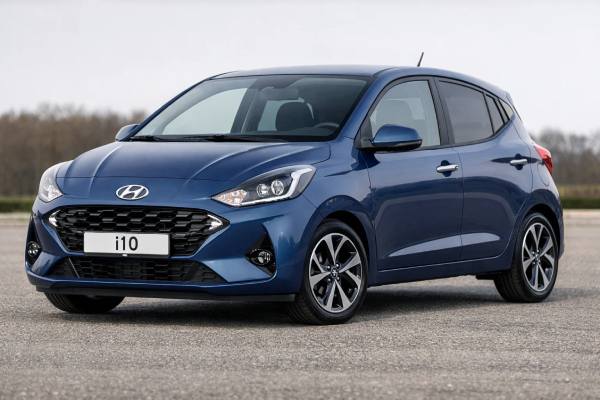
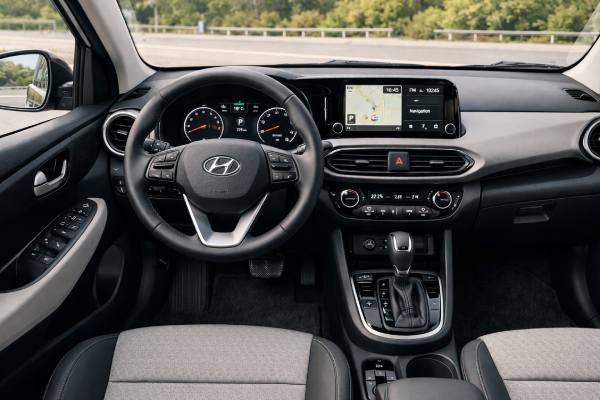
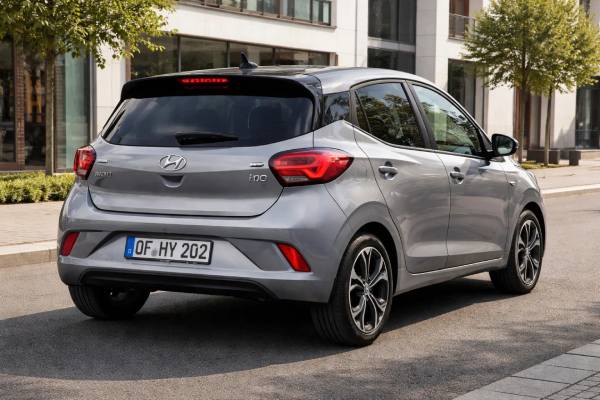
The facelifted Hyundai i10 AC3 with the 1.0 MPi engine remains one of the clearest examples of what a modern city car should do well. It is small outside, easy to park, light on fuel, and simple to understand. In this 2023–2024 facelift form, it also gained sharper styling, upgraded cabin tech, and a broader standard safety package that gives it a more current feel than many low-cost rivals. The 1.0-liter three-cylinder is not fast, but it is efficient, mechanically straightforward, and better suited to short urban trips than many heavier small hatchbacks.
For owners, the appeal is obvious: low running costs, tidy packaging, and a practical five-door layout. The more important point is expectation. This version works best as a refined urban tool with occasional longer-trip ability, not as a motorway car first. Buy it with the right use case in mind, keep the service history clean, and it can be a very sensible long-term small-car choice.
Essential Insights
- Very compact outside but genuinely useful inside, with five doors and a 252 L boot.
- Facelift updates brought better safety tech, fresher styling, and stronger infotainment options.
- The 1.0 MPi is cheap to run and simple to own, especially with the manual gearbox.
- AMT cars need a careful test drive because shift quality matters more than on a conventional automatic.
- A cautious service rhythm is oil and filter every 10,000–15,000 km or 12 months.
Explore the sections
- Hyundai i10 AC3 facelift focus
- Hyundai i10 AC3 1.0 MPi numbers
- Hyundai i10 AC3 facelift equipment and safety
- Common faults and service campaigns
- Running care and shopping tips
- Everyday driving and economy
- Comparison with key city-car choices
Hyundai i10 AC3 facelift focus
The 2023 facelift did not change the basic mission of the AC3-generation i10, but it did make the car feel fresher and more complete. Hyundai revised the front end with a new grille treatment, integrated LED daytime running lights, updated lamp internals, and new wheel designs. Inside, the changes were less dramatic but still useful. Better trim detailing, improved charging provision, and updated digital interfaces helped the i10 feel more modern without turning it into something more complicated than it needs to be.
That matters because the i10’s strongest quality has always been clarity of purpose. This is a compact hatch designed to be easy to own. It is light, efficient, and short enough to make city parking almost effortless. At the same time, it does not feel stripped down. The five-door body, five-seat layout, and 252-liter boot give it a level of everyday practicality that many city cars promise but do not fully deliver.
In facelifted 1.0 MPi form, the engine sits at the value end of the range. Official output for the covered 2023–2024 version is 67 PS, commonly listed in the market as 67 hp, from a naturally aspirated 998 cc three-cylinder. The engine is paired with either a five-speed manual or a five-speed automated manual transmission. The manual is usually the more convincing choice because it suits the modest power output and keeps the car feeling lighter, cheaper, and more predictable. The AMT brings convenience in traffic, but it can never fully hide the pause-and-shift feel that comes with this gearbox type.
The facelift also mattered for safety perception. Hyundai leaned heavily on standard driver-assistance features in this class, which helped the i10 stand out against older rivals and cheaper used alternatives. Even so, the physical limits of the segment remain. This is still a light A-segment hatchback, and buyers should judge its safety in the context of size, weight, and price rather than expecting supermini-class crash performance.
For the right owner, the facelifted 1.0 MPi makes sense because it stays disciplined. It does not pretend to be sporty or premium. Instead, it offers good visibility, low running costs, tidy urban manners, and enough comfort and technology to avoid feeling bare. That is a better formula than it sounds. In a market where many small cars have disappeared, the i10 still feels like a rational answer to a real need.
Hyundai i10 AC3 1.0 MPi numbers
Using 2023–2024 facelift UK and European technical data as the baseline, the 1.0 MPi version is defined by compactness, simplicity, and modest but usable performance. One small point worth noting is that Hyundai’s official literature uses PS and kW, while used-car listings often translate that into hp. For this 2023–2024 facelift article, the covered variant is the 67 PS / 49 kW version sold in that period.
| Powertrain and efficiency | Specification |
|---|---|
| Code / family | 1.0 MPi Kappa-family three-cylinder |
| Engine layout and cylinders | Inline-3, transverse, 3 cylinders |
| Valvetrain | DOHC, 4 valves per cylinder |
| Bore × stroke | 71.0 × 84.0 mm (2.80 × 3.31 in) |
| Displacement | 1.0 L (998 cc) |
| Induction | Naturally aspirated |
| Fuel system | Multi-point fuel injection |
| Compression ratio | 11.0:1 |
| Max power | 67 PS (49 kW) @ 5,500 rpm, commonly listed as 67 hp |
| Max torque | 96 Nm (70.8 lb-ft) @ 3,750 rpm |
| Timing drive | Public facelift technical sheets do not clearly publish a routine replacement interval; verify chain-related service detail by VIN and manual |
| Rated efficiency, Advance 5MT | 5.1 L/100 km (46.1 mpg US / 55.4 mpg UK) |
| Rated efficiency, Premium 5MT | 5.3 L/100 km (44.4 mpg US / 53.3 mpg UK) |
| Rated efficiency, Advance 5AMT | 5.4 L/100 km (43.6 mpg US / 52.3 mpg UK) |
| Real-world highway @ 120 km/h | Usually around 6.0–6.8 L/100 km in steady use, depending on wind, tyres, and load |
| Transmission and driveline | Specification |
|---|---|
| Transmission | 5-speed manual or 5-speed AMT |
| Drive type | FWD |
| Differential | Open |
| Chassis and dimensions | Specification |
|---|---|
| Front suspension | McPherson strut |
| Rear suspension | Coupled torsion beam axle |
| Steering | Motor Driven Power Steering |
| Steering lock-to-lock | 2.64 turns |
| Turning circle | 9.72 m (31.9 ft) |
| Brakes | UK technical sheet lists front ventilated discs and rear solid discs |
| Most common tyre size | 185/55 R15 |
| Other tyre size | 195/45 R16 on higher trims |
| Length | 3,670 mm (144.5 in) |
| Width | 1,680 mm (66.1 in) |
| Height | 1,480 mm (58.3 in) |
| Wheelbase | 2,425 mm (95.5 in) |
| Kerb weight | 921–993 kg (2,031–2,189 lb) manual; 924–995 kg (2,037–2,194 lb) AMT |
| GVWR | 1,410 kg (3,109 lb) |
| Fuel tank | 36 L (9.5 US gal / 7.9 UK gal) |
| Cargo volume | 252 L (8.9 ft³) seats up / 1,050 L (37.1 ft³) seats down, VDA |
| Performance and capability | Specification |
|---|---|
| 0–100 km/h / 0–62 mph | 14.8 s manual / 17.8 s AMT |
| Top speed | 156 km/h (97 mph) |
| Towing capacity | 300 kg (661 lb) braked / 300 kg (661 lb) unbraked |
| Payload | 417–489 kg (919–1,078 lb) manual; 415–486 kg (915–1,071 lb) AMT |
| Fluids and service data | Practical guidance |
|---|---|
| Engine oil | Use Hyundai-approved petrol-engine oil; grade can vary by market and climate, commonly low-viscosity oil such as 0W-20 or 5W-30 where specified |
| Coolant | Hyundai-approved long-life coolant; confirm exact chemistry and volume by VIN |
| Transmission fluid | Verify manual and AMT fluid specifications from VIN-specific documentation |
| Brake fluid | Use Hyundai-specified brake fluid only |
| Wheel nut torque | 11–13 kgf·m (79–94 lb-ft) |
| A/C refrigerant and compressor oil | Confirm by VIN and market documentation before service |
| Safety and driver assistance | Specification |
|---|---|
| Euro NCAP | 3 stars; Adult 69%, Child 75%, VRU 52%, Safety Assist 59% |
| IIHS | Not rated |
| Headlight rating | Not applicable |
| ADAS | FCA, FCW, LKA, LFA, DAW, ISLA or ISLW, TPMS, and eCall availability varies by trim and market |
These figures show the car’s real character. It is not quick, but it is light, space-efficient, and cheap to run, which is exactly what this class is supposed to do well.
Hyundai i10 AC3 facelift equipment and safety
The facelift i10 range was reorganized in several markets, and that matters because the 1.0 MPi could be found in more than one trim and with more than one gearbox. In the UK, the key facelift trims were Advance, Premium, and N Line. The 1.0 MPi belongs mainly in the Advance and Premium conversation, while N Line centers on the turbo engine and a different buyer.
For used shoppers, Advance is the sensible baseline. It usually includes the practical features most owners actually notice every day: LED daytime running lights, a proper digital instrument display, keyless entry or improved access convenience depending on spec, rear parking sensors, USB-C charging, and the brand’s core safety suite. That makes it more appealing than the word “entry trim” suggests. Premium adds the comfort and presentation touches that can make the i10 feel less budget-minded, including larger alloy wheels, heated front seats, heated steering wheel, upgraded interior trim, front fog lamps, privacy glass, and often extra convenience tech.
The facelift also brought visible year-to-year detail changes that help identify cars correctly. Hyundai revised wheel designs, updated the grille, and adjusted interior materials on Premium and N Line. Some cars also gained navigation-linked connectivity, over-the-air update capability for infotainment and map data, and wireless phone charging. These items are not universal, so buyers should inspect the actual car rather than relying on trim name alone. A Premium with options can be a far richer car than an Advance, but a clean Advance with the manual gearbox may still be the smarter long-term buy.
Safety is where the facelift i10 punches above the expectations many people still bring to this class. Hyundai made a point of fitting a more complete active-safety bundle than older city cars typically offered. Depending on trim and market, that includes:
- Forward Collision-Avoidance Assist with pedestrian and cyclist detection.
- Front Collision Warning.
- Lane Keep Assist.
- Lane Following Assist.
- Driver Attention Warning.
- Intelligent Speed Limit Assist or warning.
- High Beam Assist.
- Rear Occupant Alert.
- eCall.
- Tyre Pressure Monitoring System.
Passive safety equipment is more conventional but still important. Front, side, and curtain airbags were part of the package in core European specifications, while ISOFIX points on the rear outboard seats support family use. Euro NCAP’s 2020 result of three stars can look modest if read without context, but the test standard was much harsher than the protocols that helped many earlier city cars score four stars. The real takeaway is that this i10 offers unusually broad active safety for a low-cost hatch, even if its small size still sets physical limits in a crash.
For most buyers, the sweet spot is a manual Advance or Premium with full safety equipment, healthy tyres, and clear service evidence. That gives you the best blend of value, simplicity, and usable technology.
Common faults and service campaigns
One of the most important things to say about the facelifted 2023–2024 1.0 MPi i10 is that there is not yet the same deep long-term reliability record you would see on a decade-old model. That is not a weakness in itself. It simply means buyers should separate confirmed patterns from assumptions. So far, the i10 AC3 facelift looks more like a car with manageable small issues than one with a defining powertrain flaw.
The most plausible ownership issues are ordinary rather than dramatic:
- Common and low-cost:
- Weak 12 V batteries on cars that do many short trips.
- Brake surface corrosion on lightly used urban cars.
- Poor ride or extra noise caused by cheap replacement tyres.
- Trim rattles or minor infotainment glitches after updates.
- Occasional and low-to-medium cost:
- Front suspension knocks from links or bushes on rough roads.
- Parking sensor or camera issues after minor bumper repairs.
- Door-lock or switchgear niggles.
- Uneven AMT behavior if clutch adaptation or wear becomes a factor.
- Less common but worth taking seriously:
- ADAS calibration problems after windscreen replacement.
- No-start or rough-start complaints that trace back to battery condition, software state, or fuel-delivery faults.
- Clutch wear on manual cars that have lived in constant stop-start traffic.
The 1.0 MPi engine itself is straightforward. There is no turbocharger, no direct-injection carbon concern of the sort seen on some more complex engines, and no hybrid battery system to age out of warranty. That simplicity is a real ownership advantage. The flip side is that a small naturally aspirated engine feels the effects of neglect quickly. Missed oil changes, low oil level, cheap spark plugs, or weak ignition components will show up as roughness, poor response, or extra noise faster than on a larger, more relaxed engine.
Software and calibrations matter mostly around convenience and safety systems rather than the core engine. If the car has navigation, connectivity features, or camera-based assistance, it should have its updates and recalibrations handled properly. A repaired front bumper or a replacement windscreen on a facelift i10 is not automatically a problem, but it should push you to inspect lane-support and forward-safety behavior more carefully during the test drive.
Service campaigns and recalls should never be guessed. Hyundai’s official recall checker exists for a reason. Even if a particular facelift car feels perfect, you should still run the VIN through the recall portal and ask the seller for dealer proof of completion. This is especially important because campaign coverage can depend on production date, market, and equipment. A careful buyer treats recall completion the same way they treat service history: as a requirement, not a bonus.
Running care and shopping tips
The best way to own a 1.0 MPi facelift i10 is to keep the maintenance routine simple and early. Because the car is light and not mechanically complex, basic preventive care goes a long way. These cars are not expensive to service compared with larger hatchbacks, so there is little benefit in trying to stretch intervals.
A practical schedule for long-term ownership looks like this:
- Engine oil and filter every 10,000–15,000 km or 12 months.
- Engine air filter inspect every service and replace around 30,000 km, sooner in dusty use.
- Cabin filter every 15,000–20,000 km or annually.
- Spark plugs around 40,000–60,000 km depending on plug type and usage pattern.
- Brake fluid every 2 years.
- Tyre rotation roughly every 10,000 km, with alignment checks whenever wear looks uneven.
- Brake inspection at every service, especially on low-mileage city cars.
- Battery test yearly once the car is beyond about three years of age.
- Manual or AMT drivetrain check if shift quality changes, even if no fault light is present.
- ADAS and camera systems checked after any glass or front-end repair.
A few service points deserve special emphasis. First, the 1.0 engine should never be run low on oil. Small naturally aspirated engines are tough when cared for, but they do not hide neglect well. Second, AMT cars deserve more attention than manuals when shopping used. The automated manual is efficient and simple on paper, but if it feels jerky or indecisive in traffic, that is part of the ownership experience, not just a one-off quirk. Third, tyre choice can change the whole verdict of the car. Good tyres improve braking, steering feel, and cabin noise far more than many buyers expect.
When inspecting a used facelift i10, focus on the small things that reveal the quality of previous ownership:
- Matching tyres from a decent brand.
- Quiet front suspension on broken tarmac.
- Smooth clutch take-up on manual cars.
- Predictable creep and clean repeat starts on AMT cars.
- Air conditioning that cools properly.
- No warning lights related to lane assist, collision warning, or tyre pressure.
- Clean, even braking with no steering shake.
- A complete service file and verified recall status.
- No obvious signs of low-quality cosmetic accident repair around the front.
The long-term durability outlook is good if the car stays within its intended role. This is not a heavy-use delivery tool or a high-speed motorway machine. It is a light urban hatchback that rewards routine care and punishes neglect more with annoyance than with catastrophic failure. That is a favorable place to be in the used market.
Everyday driving and economy
The facelifted i10 1.0 MPi drives exactly as a sensible city car should: lightly, clearly, and without drama. Around town, it is very easy to place. The steering is light, visibility is strong, and the car’s narrow footprint makes it feel smaller than many modern hatchbacks that now claim to be compact. Parking, U-turns, and short gap changes are all simple, which is why the i10 still feels relevant in dense urban use.
The ride is firm enough to keep the body under control but soft enough to absorb the usual city-road damage at normal speeds. Sharp potholes still come through, especially on 16-inch wheels, but the chassis settles quickly and does not feel loose. Straight-line stability is decent for the class, though the short wheelbase and light weight mean crosswinds and poor road surfaces are more noticeable than in a larger B-segment car.
The 1.0 MPi engine is honest rather than exciting. It feels best in urban and suburban work where its low running costs and clean throttle response matter more than outright pace. With the five-speed manual, the car is responsive enough for daily driving and usually feels better than the raw acceleration figure suggests. With the AMT, the car is still usable, but low-speed shift logic and small pauses under load are more noticeable. Buyers who enjoy smooth progress usually prefer the manual.
Real-world economy is one of the car’s main strengths. Official combined WLTP figures range from 5.1 L/100 km in a lighter manual trim to 5.6 L/100 km or more in richer AMT or wheel-package combinations. In everyday use, realistic expectations are:
- City driving: about 6.0–7.2 L/100 km.
- Mixed commuting: around 5.2–6.0 L/100 km.
- Highway at 100–120 km/h: usually 6.0–6.8 L/100 km.
Cold weather, short trips, strong headwinds, and larger wheel packages can raise those numbers quickly. That does not make the car inefficient; it simply reflects how hard a small naturally aspirated engine must work when speed rises. At motorway pace, the i10 can cruise, but it is no longer in its comfort zone. Noise rises, overtakes need planning, and the engine feels busier. That is why the 1.0 makes most sense for owners whose lives are centered on town, ring roads, and short regional runs.
The good news is that the car rarely feels confused. It is not trying to be a mini GT. It is trying to be easy, cheap, and practical, and in 1.0 MPi facelift form it succeeds as long as the owner’s expectations match the job.
Comparison with key city-car choices
The facelifted Hyundai i10 1.0 MPi sits in a strong position among small hatchbacks because it blends value, equipment, and practicality better than many direct alternatives. It is not the most powerful, not the most stylish, and not the most premium, but it is one of the easiest to recommend when you look at the whole ownership picture.
The closest natural rival is the Kia Picanto. The two cars appeal to similar buyers, but the Hyundai often feels slightly more mature in packaging and safety presentation, while the Kia can feel a touch more playful in styling. In real buying terms, condition, trim, price, and warranty status usually matter more than the brand badge.
Against the Toyota Aygo X, the i10 feels more traditional and usually better value. The Toyota brings crossover styling and a higher driving position, but the Hyundai often counters with a cleaner price-to-equipment ratio and a more efficient use of its size. Against the Fiat Panda, the i10 feels more modern in safety and infotainment, while the Panda fights back with clever packaging and character. Against older Volkswagen up!, Skoda Citigo, and SEAT Mii models, the Hyundai benefits from newer equipment and a fresher cabin, even if those cars still have a strong reputation for neat road manners.
The i10 also makes more sense than many used superminis when the buyer truly wants a city car, not just a cheap bigger car. A used B-segment hatch may offer more motorway comfort, but it also brings larger tyres, bigger parking footprints, and often higher running costs. The i10 wins when urban usability is the priority.
So who should buy this exact 2023–2024 facelift 1.0 MPi? Drivers who value easy parking, low fuel use, simple mechanicals, and a surprisingly complete safety package. It suits commuters, new drivers, small households, and anyone who needs a compact second car that does not feel disposable.
Who should skip it? Drivers who spend most of their time at 120 km/h, expect strong overtaking reserve, or want the smoothness of a conventional automatic. For those buyers, the 1.2 or a larger class of car makes more sense. For everyone else, the facelift i10 1.0 MPi remains one of the better-balanced small cars available in its space: honest, efficient, practical, and easy to live with.
References
- Hyundai Motor UK announces new i10 pricing and specification 2023 (Press Release)
- Hyundai i10 range | Technical, Specifications and Pricing | April 2023 2023 (Technical Data)
- Official Hyundai i10 2020 safety rating 2020 (Safety Rating)
- Hyundai Owners manuals | Hyundai Motor UK 2026 (Owner’s Manual)
- Home | Hyundai Recalls & Service Campaigns 2026 (Recall Database)
Disclaimer
This article is for informational purposes only and is not a substitute for professional diagnosis, repair, or VIN-specific service information. Specifications, torque values, service intervals, fluid grades, capacities, and procedures can vary by market, production date, gearbox, trim, and installed equipment. Always verify the exact requirements against the official owner’s manual, workshop information, and dealer records for the specific vehicle.
If this guide helped you, please consider sharing it on Facebook, X, or another platform to support our work.