
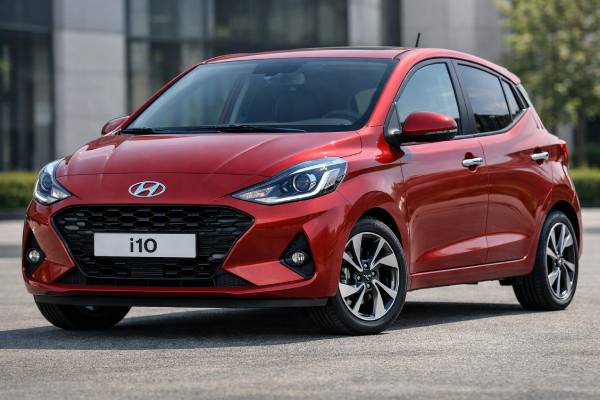
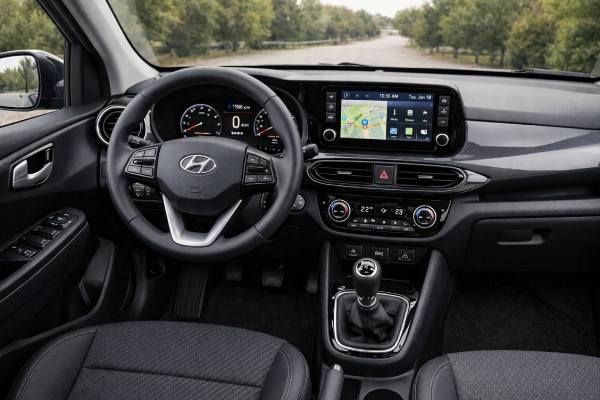

The facelifted Hyundai i10 AC3 with the 1.2 MPi engine is one of the more convincing small-car formulas still on sale. It keeps the size and cost advantages that make the i10 attractive in cities, but the four-cylinder 1.2 adds a useful layer of smoothness and flexibility over the base three-cylinder engine. That matters in daily life. The car feels less strained with passengers, easier on inclines, and better suited to short motorway runs. Hyundai also used the facelift to sharpen the design, tidy the trim structure, and keep a broad standard safety package in place, which helps the i10 feel more current than many rivals in the same footprint. For most owners, the appeal is clear: simple petrol power, low weight, practical packaging, and manageable running costs. The main caution is expectation. This is an excellent urban hatch and an acceptable mixed-use small car, but it is still happiest when city use remains the priority.
Owner Snapshot
- Smoother and more relaxed than the base 1.0, especially with passengers or suburban use.
- Compact outside, yet genuinely practical with five doors and a 252 L boot.
- Strong standard safety kit remains a standout feature in this class.
- AMT versions need a careful test drive because shift quality matters more than with a conventional automatic.
- A sensible routine is oil and filter every 10,000–15,000 km or 12 months.
Contents and shortcuts
- Hyundai i10 AC3 facelift profile
- Hyundai i10 AC3 1.2 data pack
- Hyundai i10 AC3 grades and safety tech
- Problem areas and ownership watchpoints
- Service routine and buyer filters
- Real-world pace and efficiency
- Rival matchups and best fit
Hyundai i10 AC3 facelift profile
The 2024-on facelift does not reinvent the AC3 i10, but it does sharpen the package in useful ways. Hyundai revised the front-end design with a new grille pattern, updated lamp graphics, and new wheel designs, while keeping the body’s practical dimensions unchanged. That matters because the i10’s core success has always come from disciplined packaging rather than gimmicks. It is short enough to park easily, narrow enough to work well on tight streets, and upright enough inside to make good use of its footprint. The facelift simply makes that formula feel a little fresher and a little less budget-led.
The 1.2 MPi engine is the more rounded non-turbo option in the range. Hyundai describes it as a 1.2-litre four-cylinder petrol engine with 79 PS, available with either a manual transmission or an automated manual transmission. That engine choice is important because it gives the i10 more headroom than the base 1.0. The difference is not dramatic in brochure numbers, but it is noticeable in daily use. The car feels more relaxed pulling away from junctions, less busy on light inclines, and more natural when carrying adults in the rear. For owners who plan to keep the car for several years, the 1.2 is often the better match to the chassis.
The facelift also keeps the i10 relevant at a time when many brands have either left the segment or moved their smallest cars toward crossover styling. Hyundai stayed with the conventional five-door hatch recipe, and that is a real strength. You get a square, usable boot, easy rear-seat access, and low running costs without the weight and price penalties that usually come with pseudo-SUV styling. The i10 still looks small, but it does not feel stripped down. Even lower trims now come with a surprisingly mature safety and infotainment baseline for the class.
Ownership-wise, the facelifted 1.2 MPi i10 makes sense because it remains mechanically simple. It is naturally aspirated, front-wheel drive, and compact. There is no turbocharger, no dual-clutch transmission, and no hybrid battery system to add cost or complexity. That does not make it immune to wear, but it does mean most risks stay understandable. Tyres, brakes, battery condition, suspension wear, and recall completion matter more here than any exotic powertrain issue. That is exactly the sort of reliability profile many small-car buyers actually want.
Hyundai i10 AC3 1.2 data pack
The open official data for the current facelift i10 1.2 MPi is centered on Hyundai’s April 2024 technical sheet for Model Year 2025, supported by the current i10 features page and the standing Euro NCAP assessment for the AC3 generation. The table below focuses on the 1.2 MPi 79 PS manual and AMT forms, which are the versions that matter most to buyers looking at this exact facelifted powertrain.
| Powertrain and efficiency | Specification |
|---|---|
| Code / family | 1.2 MPi Kappa-family petrol engine |
| Engine layout and cylinders | Inline-4, transverse, 4 cylinders |
| Valvetrain | DOHC, 4 valves per cylinder |
| Bore × stroke | 71.0 × 75.6 mm (2.80 × 2.98 in) |
| Displacement | 1.2 L (1,197 cc) |
| Induction | Naturally aspirated |
| Fuel system | Multi-point fuel injection |
| Compression ratio | 11.0:1 |
| Max power | 79 PS (58 kW) @ 6,000 rpm, commonly listed as 79 hp |
| Max torque | 118 Nm (87.0 lb-ft) @ 4,200 rpm |
| Timing drive | Verify service detail by VIN and manual; public open spec sheet does not publish a routine replacement interval |
| Rated efficiency, 5MT | WLTP figures were still marked tentative in the April 2024 UK technical sheet |
| Rated efficiency, 5AMT | WLTP figures were still marked tentative in the April 2024 UK technical sheet |
| Real-world highway @ 120 km/h | Usually around 6.2–7.0 L/100 km in steady use, depending on tyres, weather, and load |
| Transmission and driveline | Specification |
|---|---|
| Transmission | 5-speed manual or 5-speed automated manual |
| Drive type | FWD |
| Differential | Open |
| Chassis and dimensions | Specification |
|---|---|
| Front suspension | McPherson strut |
| Rear suspension | Coupled torsion beam axle |
| Steering | Motor Driven Power Steering |
| Steering lock-to-lock | 2.64 turns |
| Turning circle | 9.72 m (31.9 ft) |
| Brakes | Front ventilated discs, rear solid discs |
| Most popular tyre size | 185/55 R15 on Advance |
| Alternative tyre size | 195/45 R16 on Premium |
| Length | 3,670 mm (144.5 in) |
| Width | 1,680 mm (66.1 in) |
| Height | 1,480 mm (58.3 in) |
| Wheelbase | 2,425 mm (95.5 in) |
| Kerb weight | 932–1,007 kg (2,055–2,220 lb) manual; 935–1,006 kg (2,061–2,218 lb) AMT |
| GVWR | 1,430 kg (3,153 lb) |
| Fuel tank | 36 L (9.5 US gal / 7.9 UK gal) |
| Cargo volume | 252 L (8.9 ft³) seats up / 1,050 L (37.1 ft³) seats down, VDA |
| Performance and capability | Specification |
|---|---|
| 0–100 km/h / 0–62 mph | 13.2 s manual / 16.6 s AMT |
| Top speed | 98 mph manual, 99 mph AMT |
| Towing capacity | 300 kg (661 lb) braked / 300 kg (661 lb) unbraked |
| Payload | 423–498 kg (933–1,098 lb) manual; 424–495 kg (935–1,091 lb) AMT |
| Fluids and service capacities | Practical guidance |
|---|---|
| Engine oil | Use Hyundai-approved petrol-engine oil; exact grade depends on market and climate |
| Coolant | Hyundai-approved long-life coolant; verify exact chemistry and volume by VIN |
| Transmission / AMT fluid | Confirm the correct fluid from VIN-specific workshop information |
| Differential / transfer case | Not applicable |
| A/C refrigerant | Confirm by VIN before service |
| A/C compressor oil | Confirm by VIN before service |
| Wheel-nut torque | 11–13 kgf·m (79–94 lb-ft) |
| Safety and driver assistance | Specification |
|---|---|
| Euro NCAP | 3 stars; Adult 69%, Child 75%, VRU 52%, Safety Assist 59% |
| IIHS | Not rated |
| Headlight rating | Not applicable |
| ADAS | FCA, ISLA, LFA, LKA, DAW, TPMS, and eCall standard in the April 2024 UK sheet |
Those figures show the facelift i10’s real identity. It is not built around outright speed. Instead, it combines modest mass, sensible gearing, compact dimensions, and a stronger non-turbo petrol engine to make the car feel light-footed and practical rather than underpowered or fussy.
Hyundai i10 AC3 grades and safety tech
For the facelifted 2024-present range, Hyundai UK reorganized the i10 around Advance, Premium, and N Line. The 1.2 MPi belongs mainly in the Advance and Premium conversation, which is good news because those trims cover the most useful buyer profiles. Advance is not a bare-bones version. Hyundai positioned it as a richer replacement for the previous SE Connect logic, adding LED daytime running lights, a full TFT instrument cluster, keyless entry, updated USB-C charging ports, and rear parking sensors. That means the lower trim already feels competitive for everyday use.
Premium is the trim that pushes the i10 beyond simple transport. Hyundai’s launch material lists 16-inch alloy wheels, halogen bi-function headlamps, smart key access, privacy glass, heated front seats, heated steering wheel, electric-folding mirrors, wireless charging, and revised interior trim for Premium models. In practice, that makes Premium the more appealing used buy if the price gap is sensible, because it adds daily-use comfort rather than superficial extras. The larger wheels do bring a slightly firmer ride and more tyre cost, but they also give the car a more complete feel.
The facelift’s most important strength, however, is safety equipment. Hyundai made a point of keeping a broad active-safety suite standard across the trim structure in the published UK specification. The April 2024 technical sheet lists Driver Attention Warning, eCall, ESC, Forward Collision-Avoidance Assist for car, pedestrian, and cycle detection, Intelligent Speed Limit Assist, ISOFIX rear anchor points, Lane Follow Assist, Lane Keep Assist, Leading Vehicle Alert, and TPMS as standard across Advance, Premium, and N Line. That is an unusually complete list for a small, cost-conscious hatchback.
Euro NCAP’s AC3 i10 assessment remains the reference point for crash-test context. The car holds a 3-star overall rating under the 2020 protocol, with 69% adult occupant protection, 75% child occupant protection, 52% vulnerable road user protection, and 59% safety assist. Those numbers do not look generous beside larger or newer superminis, but they need to be read honestly. The protocol was much tougher than the standards that allowed many older city cars to score four stars, and the i10 still benefits from a stronger active-safety baseline than most low-cost small cars used to offer. The key judgment is not that the i10 is class-leading in crash outcome, but that it is unusually well equipped for avoidance and assistance in its segment.
For most buyers, the best balance is simple. Choose Advance if low running cost and specification efficiency matter most. Choose Premium if heated seats, extra convenience, and richer cabin trim justify the higher purchase price. Either way, the facelift i10’s equipment strategy is one of its biggest selling points, because it gives the car more substance than its size would suggest.
Problem areas and ownership watchpoints
Because this facelifted 1.2 MPi i10 is still relatively new, the most honest reliability view is a measured one. Public official sources do not show a defining facelift-specific engine defect for the 2024-present 1.2 MPi. That is encouraging, but it does not mean there are no ownership watchpoints. It means the likely concerns are the ordinary ones that affect most light urban hatchbacks: short-trip wear, missed servicing, cheap tyres, weak batteries, and poor repair quality after minor impacts. Hyundai’s official recall checker should therefore be treated as part of the buying process, not as an afterthought.
The first group of issues to watch is low-cost and common. A car that spends most of its life on short cold trips can go through front brakes more from corrosion than from mileage, can flatten a 12 V battery earlier than expected, and can develop cabin rattles or minor trim noises that reflect usage rather than engineering weakness. None of that is dramatic, but it affects owner satisfaction. Likewise, a small hatch on poor replacement tyres can feel noisier, less stable, and worse at braking than its test numbers suggest. On the i10, tyre quality makes a bigger difference than many buyers expect.
The second group concerns transmission and front-end wear. Manual cars are usually the simpler long-term bet, but urban use can still wear the clutch faster than the odometer suggests. AMT cars deserve an even more careful test drive. Hyundai describes the AMT as a lighter, more efficient alternative to a traditional automatic, which is accurate, but it also means the car can feel more deliberate during shifts. Jerky low-speed progress is not always a defect, yet repeated hesitation, poor creep behavior, or rough restarts may point to adaptation issues, clutch wear, or poor previous use. Suspension-wise, the likely weak points are the familiar small-car items: drop links, bushes, and the occasional knock over broken roads.
The third group is modern rather than mechanical: safety and infotainment calibration. Because the facelift i10 carries more driver-assistance hardware than older city cars, windscreen replacement, bumper damage, and cheap body repairs deserve more scrutiny. A car can show no obvious fault lights yet still have poorly aligned lane or forward-collision hardware if repair work was rushed. That is why every used inspection on one of these should include a road test that actively checks warning systems, camera behavior, and parking aids. On a newer car, correct repair quality matters as much as whether there was repair work at all.
Overall, the reliability outlook is positive but practical. The facelift i10 1.2 MPi looks more like a car that suffers from neglect or rough urban life than one that is haunted by a built-in powertrain problem. That is a favorable kind of risk for a used buyer, because it is mostly visible, testable, and manageable.
Service routine and buyer filters
The best way to own the facelift i10 1.2 well is to treat it like a simple car that deserves regular basics, not like an appliance that can be ignored because it is small. Hyundai’s public owners-manual portal provides the route to the correct 2024-present manual, and that VIN-specific documentation should always be the final source for fluid grades, capacities, and scheduled work. For most owners, though, a cautious real-world schedule is easy to define.
A practical maintenance routine looks like this:
- Engine oil and filter every 10,000–15,000 km or 12 months.
- Engine air filter inspect at every service and replace around 30,000 km, sooner in dusty use.
- Cabin filter every 15,000–20,000 km or annually.
- Spark plugs around 40,000–60,000 km depending on plug type and duty cycle.
- Brake fluid every 2 years.
- Coolant replaced to the correct manual interval rather than treated as permanent.
- Manual gearbox or AMT behavior reviewed promptly if shift quality changes.
- Tyres rotated roughly every 10,000 km, with alignment checked whenever wear becomes uneven.
- Brakes inspected regularly on low-mileage cars because corrosion can matter more than pad thickness.
- 12 V battery tested yearly once the car is several years old.
The open April 2024 technical sheet is very useful for chassis, weight, tyre, and payload data, but it does not provide every fluid capacity in the kind of public summary a workshop manual would. The safest decision-making approach is therefore to use the open sheet for vehicle configuration and the official owner’s manual for exact service consumables. In other words, you can rely on Hyundai’s public technical data to understand the car’s layout, but not to replace VIN-specific service literature. That distinction matters when owners are choosing oil grade, coolant type, or A/C service quantities.
When shopping used, the inspection list should be simple and disciplined:
- Start the car fully cold and listen for rough idle or poor battery performance.
- Check clutch take-up carefully on manuals.
- Test AMT versions repeatedly in stop-start traffic, not just on a smooth road.
- Listen for front-suspension noise on patched urban tarmac.
- Confirm that parking sensors, camera functions, and lane-support warnings all work properly.
- Inspect all four tyres for brand, age, and even wear.
- Make sure the brake pedal is clean and straight under moderate braking.
- Ask for clear proof of recall completion and routine servicing.
- Inspect for low-quality front-end or windscreen repairs that could affect ADAS operation.
The long-term durability verdict is good if the car stays within its intended role. The facelift i10 1.2 is not a heavy-load motorway workhorse, but it does not need to be. As a low-cost urban and suburban hatch with occasional longer-trip use, it has the right mix of simplicity, comfort, and maintainability to age well.
Real-world pace and efficiency
The facelifted i10 1.2 MPi drives like a small hatch that has enough engine for what it is trying to do. That may sound faint, but it is actually a strong point. Around town, the car is easy to place, easy to park, and light in its controls. The steering is quick enough for urban maneuvers without ever feeling nervous, and the upright glasshouse helps visibility. Compared with the 1.0, the 1.2 feels calmer and more natural when moving away from junctions or carrying extra weight. It still is not quick, but it does not feel constantly at full effort either.
Ride quality is sensible rather than plush. The wheelbase remains short, so sharp potholes and expansion joints are obvious, especially on Premium’s 16-inch wheels. What the i10 does well is recover quickly. It does not wallow, and it rarely feels loose or floaty. On the smaller 15-inch wheel package, the car usually rides a little more sweetly and quietly, which is why Advance trims can actually be the better choice for owners who prioritize comfort over showroom impact. Straight-line stability is decent for the class, though motorway crosswinds and coarse surfaces still remind you that this is a light A-segment hatch.
The manual gearbox is the more satisfying pairing. Hyundai’s official figures show the 1.2 manual reaching 62 mph in 13.2 seconds, while the AMT needs 16.6 seconds. That gap is large enough to matter in real traffic, especially when joining fast roads. The AMT still makes sense for drivers who spend most of their time in congestion and accept slower, more deliberate shifts, but anyone who cares about smoothness, response, or overtaking reserve should choose the manual. That recommendation follows directly from the official performance spread and the basic nature of this transmission type.
Fuel economy is one of the car’s core strengths, even though the public April 2024 UK sheet still marked WLTP fuel figures as tentative. In practice, the facelift 1.2 usually lands in the same general window as earlier 1.2 AC3 cars: roughly mid-5s to low-6s L/100 km in mixed driving for the manual, a little worse for the AMT, and around low-6s to high-6s L/100 km at a steady 120 km/h depending on weather, load, and wheel package. Those are real-world expectations, not official promises, but they fit the powertrain’s output, gearing, and mass well.
The bottom line is simple. The 1.2 facelift i10 is not exciting, but it is well judged. It gives the small Hyundai just enough extra smoothness and flexibility to feel more complete than the base engine car, while preserving the easy urban character that makes the i10 attractive in the first place.
Rival matchups and best fit
The facelifted i10 1.2 MPi sits in a very rational part of the market. It is not trying to win on headline performance or premium branding. Instead, it competes on packaging, safety equipment, low running costs, and ease of use. That makes it especially relevant now that many traditional city cars have either grown larger, become more crossover-like, or disappeared entirely. The i10 still feels like a true small hatchback, and that alone gives it a clear identity.
Its closest rival remains the Kia Picanto. The cars target almost the same buyer, and both are sensible small-car choices. The Hyundai usually feels a little more mature in cabin presentation and safety messaging, while the Kia often leans harder into style. In real buying terms, neither wins automatically. Condition, trim, price, and local dealer support matter more than the badge. The i10’s advantage is that the 1.2 powertrain and current safety suite make it feel broader in use than many people expect from a city car.
Against the Toyota Aygo X, the Hyundai looks more traditional but often more efficient in its use of space and price. The Toyota offers a higher seating position and crossover image, but the i10 counters with a more compact footprint, lower mass, and often a better equipment-to-cost story. Against the Fiat Panda, the Hyundai feels more modern in safety and infotainment, though the Fiat still has packaging charm. Against older Volkswagen up!, Skoda Citigo, and SEAT Mii examples, the Hyundai benefits from being a current-generation car with fresher driver-assistance content and more up-to-date cabin tech, even if those older models still have a strong reputation for neat road manners.
So who should buy the facelift 1.2 MPi? Drivers who want a small hatch that works brilliantly in town but does not feel underprepared once the trip gets a little longer. It suits commuters, small households, newer drivers, and anyone who wants a second car that does not feel disposable. It is especially convincing for owners who value smoothness over outright power and who want more flexibility than the 1.0 can offer.
Who should look elsewhere? Anyone who spends most of the week at motorway speeds, wants strong overtaking reserve, or expects the behavior of a conventional automatic. For those buyers, a larger class of car or a different powertrain makes more sense. For everyone else, the facelift Hyundai i10 AC3 1.2 MPi remains one of the most balanced new small hatchbacks available: compact, well equipped, easy to own, and mechanically simple in all the right ways.
References
- Hyundai i10 | Technical, Specifications and Pricing | Model year 2025 | April 2024 2024 (Technical Data)
- Hyundai i10 | Features | Hyundai Motor UK 2026 (Manufacturer Information)
- EuroNCAP | Hyundai i10 2020 (Safety Rating)
- Hyundai Owners manuals | Hyundai Motor UK 2026 (Owner’s Manual)
- Home | Hyundai Recalls & Service Campaigns 2026 (Recall Database)
Disclaimer
This article is for informational purposes only and is not a substitute for professional diagnosis or repair. Specifications, torque values, intervals, fluid grades, capacities, and procedures can vary by VIN, market, trim, gearbox, and installed equipment. Always verify details against the official service documentation and dealer records for the exact vehicle.
If this guide was useful, please consider sharing it on Facebook, X, or another platform to support our work.