


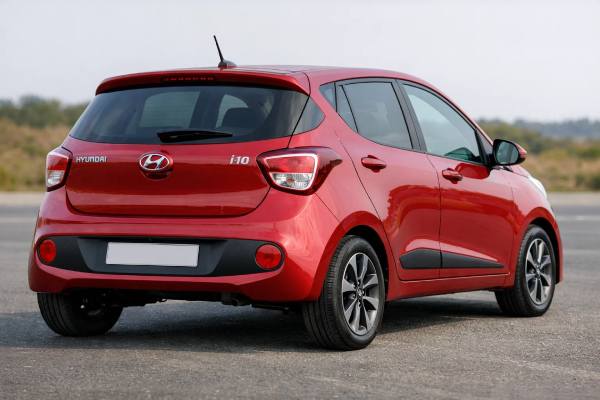
The facelifted Hyundai i10 (IA) 1.0 Kappa MPi is one of those small hatchbacks that makes more sense the longer you live with it. It is compact enough for crowded cities, light on fuel, and mechanically straightforward, yet it feels more solid and mature than many budget city cars from the same period. Its 1.0-litre three-cylinder petrol engine is simple, naturally aspirated, and chain-driven, which is good news for owners who want low running costs without turbocharger or direct-injection complexity. The facelift years also brought a cleaner look, better infotainment on higher trims, and stronger everyday usability. The main compromise is performance: 66 hp is enough for town work and light motorway use, but not much more. This guide covers the facelifted IA-series car, not the newer AC3-generation i10, and focuses on the 1.0 MPi model sold from 2016 onward, including late-run examples registered into 2020 in some markets.
Essential Insights
- Light steering, compact size, and strong visibility make it easy in urban traffic.
- The 1.0 Kappa MPi engine is simple, economical, and generally durable when serviced on time.
- Cabin space and rear-seat usefulness are better than many rivals in the same class.
- Neglected oil changes can shorten timing-chain life and make an otherwise good engine noisy.
- A practical oil-service rhythm is every 10,000–15,000 km or 12 months.
Section overview
- Hyundai i10 IA facelift profile
- Hyundai i10 IA 1.0 tech data
- Hyundai i10 IA grades and protection
- Dependability, fault patterns, and campaigns
- Service plan and smart buying
- Road manners and real use
- Hyundai i10 IA against city car rivals
Hyundai i10 IA facelift profile
The facelifted IA-generation i10 is best understood as a carefully improved version of an already sensible city car. Hyundai did not reinvent the formula. It kept the high roof, short footprint, upright cabin packaging, and simple front-wheel-drive layout that made the original IA useful, then added sharper exterior details, cleaner trim choices, and, on better-equipped late cars, improved infotainment and convenience equipment. That conservative approach suits the car well. Instead of chasing fashion, the facelift kept the i10 focused on the things owners notice every day: visibility, ease of parking, low running costs, and a cabin that feels roomy for such a small body.
The 1.0 Kappa MPi engine is central to the car’s appeal. It is a naturally aspirated three-cylinder with multi-point injection and a timing chain rather than a belt. In plain terms, that means fewer expensive long-term timing-service worries than some older small engines, and less hardware complexity than turbocharged rivals. Output is modest at 66 hp, so this is not a fast car, but the engine is eager enough in city use and usually cheaper to maintain than more ambitious small-capacity turbo units. It also suits the i10’s light weight. The result is a car that feels honest rather than strained in everyday traffic.
Packaging is another strong point. The i10 sits in the city-car class, yet it often feels closer to a small supermini in how it uses its cabin space. Front-seat room is good, the driving position is upright and easy to judge, and rear-seat access is better than many narrower rivals. The boot size depends on trim and spare-wheel setup, but even the smaller quoted figure is decent for the class. Fold the rear seats and it becomes surprisingly useful for groceries, commuting gear, or a weekend away.
There are limits, and they matter. The i10 1.0 is happiest in urban and suburban work. It can handle motorway trips, but steep grades, full passenger loads, and quick overtakes expose the engine’s modest reserve. The facelift did not turn the car into a modern active-safety leader either. Most versions rely on sound fundamentals, airbags, stability control, and driver care rather than advanced assistance systems. That means good tyres, healthy brakes, and a clean service record matter more than ever. For buyers who understand that trade-off, the facelifted IA i10 remains one of the more convincing used city cars of its era.
Hyundai i10 IA 1.0 tech data
The table below reflects representative European-spec facelift IA 1.0 MPi data. Exact figures vary by market, wheel package, trim, and whether the car is an early facelift or a later special edition. Where official numbers differ across brochures, the variation is usually equipment-related rather than mechanical.
| Item | Hyundai i10 (IA facelift) 1.0 Kappa MPi |
|---|---|
| Code | 1.0 Kappa MPi |
| Engine layout and cylinders | Inline-3, DOHC, 12-valve |
| Valves per cylinder | 4 |
| Displacement | 1.0 L (998 cc) |
| Bore × stroke | 71.0 × 84.0 mm (2.80 × 3.31 in) |
| Induction | Naturally aspirated |
| Fuel system | MPi |
| Compression ratio | 10.5:1 |
| Max power | 66 hp (49 kW) @ 5,500 rpm |
| Max torque | 95 Nm (70 lb-ft) @ 3,500 rpm |
| Timing drive | Chain |
| Rated efficiency | about 4.7–5.1 L/100 km (50.0–46.1 mpg US / 60.1–55.4 mpg UK) combined, depending on trim and test cycle |
| Real-world highway @ 120 km/h | usually about 6.0–6.8 L/100 km |
| Transmission and driveline | Value |
|---|---|
| Transmission | 5-speed manual |
| Drive type | FWD |
| Differential | Open |
| Chassis and dimensions | Value |
|---|---|
| Suspension, front / rear | MacPherson strut / coupled torsion beam axle |
| Steering | Motor-driven power steering; about 14:1 ratio |
| Lock-to-lock turns | about 2.77–2.8 |
| Brakes | Many facelift European cars used 252 mm ventilated front discs and 234 mm rear discs; verify by market and trim |
| Most popular tyre sizes | 175/65 R14 and 185/55 R15 |
| Length | 3,665 mm (144.3 in) |
| Width | 1,660 mm (65.4 in) |
| Height | 1,500 mm (59.1 in) |
| Wheelbase | 2,385 mm (93.9 in) |
| Turning circle | 9.56–9.72 m (31.4–31.9 ft) |
| Kerb weight | about 933–1,008 kg (2,057–2,222 lb) |
| GVWR | 1,420 kg (3,131 lb) |
| Fuel tank | 40 L (10.6 US gal / 8.8 UK gal) |
| Cargo volume | 218–252 L seats up / 1,012–1,046 L seats down, VDA |
| Performance and capability | Value |
|---|---|
| 0–100 km/h (0–62 mph) | about 14.7–15.2 s |
| Top speed | about 153–155 km/h (95–97 mph) |
| 100–0 km/h braking | not consistently published in official material; tyre condition and trim make a noticeable difference |
| Towing capacity | Official European brochures commonly list no towing approval for this version |
| Payload | about 412–487 kg (908–1,074 lb) |
| Fluids and service capacities | Value |
|---|---|
| Engine oil | SAE 5W-30 commonly specified in official material for Europe; 2.7 L (2.85 US qt) |
| Coolant | Hyundai long-life ethylene-glycol coolant with distilled water; mix and capacity vary by market, verify by VIN |
| Manual transmission oil | API GL-4 SAE 70W; 2.0 L (2.11 US qt) |
| Differential / transfer case | Not separate on this FWD transaxle layout |
| A/C refrigerant | Market-specific; check under-bonnet refrigerant label |
| A/C compressor oil | Market-specific; verify by service label |
| Key torque spec | Wheel lug nuts: 88–107 Nm (65–79 lb-ft) |
| Safety and driver assistance | Value |
|---|---|
| Euro NCAP | 4 stars; Adult 79%, Child 80%, Pedestrian 71%, Safety Assist 56% |
| IIHS | Not applicable |
| ADAS suite | Basic by modern standards; most facelift IA cars rely on ABS, ESC, VSM, TPMS, and standard passive safety rather than AEB or lane-centering systems |
The important point is not any one number. It is the overall picture. The facelifted i10 1.0 is light, efficient, and mechanically simple. Those traits matter more in long-term ownership than headline acceleration ever will.
Hyundai i10 IA grades and protection
Trim structure depends strongly on market, so the most useful way to shop a facelift IA i10 is by equipment level rather than by one universal trim name. Entry cars usually came with 14-inch wheels, manual air conditioning, basic audio, cloth trim, and fewer exterior styling touches. Mid-grade versions often added remote locking, better interior trim, body-colour exterior details, upgraded infotainment, and cruise control or a speed limiter. Late-run special editions, especially in markets like the UK, often bundled the features buyers actually want on used cars today: 15-inch alloys, smartphone connectivity, a 7-inch navigation screen, rear privacy glass, rear split-folding seats, and a more polished cabin feel.
That matters because the mechanical core changed far less than the equipment list. The 1.0 MPi powertrain remained the budget-minded choice throughout the facelift period. The main functional differences from trim to trim were usually wheel and tyre size, seat trim, infotainment level, and a few convenience features rather than any major suspension or gearbox change. In practical terms, that is good news. It means buyers can focus on condition and equipment without worrying that one trim hides a very different engine or driveline.
Late special editions also make identification easier. PLAY and similar versions often have obvious visual clues such as 15-inch alloys, black gloss mirror caps, special badging, navigation, and Apple CarPlay or Android Auto. Earlier facelift cars are plainer and usually easier to value on condition alone. If you want the best ownership mix, these late cars are attractive because they keep the simple 1.0 engine while giving you the cabin tech that older city cars often lack.
Safety is respectable in period context, but plainly dated by current standards. Euro NCAP tested the IA-generation i10 in 2014 and gave it four stars, with 79% for adult occupant protection, 80% for child occupant protection, 71% for pedestrian protection, and 56% for safety assist. That was a credible result for a light city hatch at the time and reflects a stable passenger cell, useful restraint performance, and standard ESC. It does not mean the car performs like a modern five-star supermini under today’s tougher protocol. It does not.
In equipment terms, many European facelift cars included front, side, and curtain airbags, ISOFIX anchorages in the rear, ABS, ESC, VSM, brake assist, seatbelt reminders, and TPMS. What they usually did not include was a modern ADAS package. No widespread facelift IA spec offered the kind of standard autonomous emergency braking, adaptive cruise control, or lane-centering buyers now take for granted in newer cars. That makes pre-purchase checks simple but important: verify warning lights, confirm airbags and stability systems are functioning normally, and do not underestimate the benefit of fitting good tyres to a light car with modest crash reserves.
Dependability, fault patterns, and campaigns
The facelifted i10 1.0 has a strong reputation because it is fundamentally uncomplicated. In used-car terms, that is often better than being clever. The Kappa MPi engine avoids turbo heat, high-pressure direct injection, and dual-clutch gearbox headaches. Most problems owners see are age, neglect, or urban-use wear rather than deep design flaws. That is a very good starting point for anyone shopping on a realistic budget.
The most important engine issue to watch is oil neglect. The timing chain itself is not a routine replacement item, but chain noise, tensioner wear, and rough cold-start rattles can appear if the car has gone too long between oil changes or run low on oil. Symptoms are usually a metallic rattle on cold start, rough idle, or timing-correlation fault codes on neglected cars. The likely root cause is dirty or degraded oil affecting chain and tensioner health. The best remedy is simple: use the correct oil, keep the interval sensible, and do not buy a car with obvious cold-start chain noise unless it is priced for repair.
Other common low- to medium-cost issues are familiar small-car items. Ignition-coil and spark-plug problems can cause a shaky idle or a misfire under load. A dirty throttle body can make the idle uneven. Lambda sensors age, especially on short-trip cars, and can trigger a warning light without indicating a serious engine problem. Batteries also matter more than owners expect. Many i10s live short-trip lives, so weak 12 V batteries and poor charging habits are common causes of electrical oddities, slow cranking, and spurious warning messages.
Driveline and chassis faults are usually modest. Clutches wear normally if the car has spent years in traffic. Gearboxes are generally durable, but a tired clutch release bearing or poor shift quality on a neglected example is not unusual. Suspension wear usually shows up as front drop-link noise, tired bushes, or a loose feel over broken surfaces. Wheel bearings can hum at motorway speeds. Brakes are usually straightforward, but city use can leave discs or calipers sticky if servicing has been minimal.
There is less public evidence of major pan-market software campaigns here than on later ADAS-heavy Hyundais. Infotainment map updates and routine dealer software checks exist, but this model is not known for widespread calibration drama. On recalls and service campaigns, the safest advice is VIN-based verification. Public campaign availability varies by country, and open European recall detail is patchy by model year. Do not assume a car has no campaigns merely because a seller says so. Check the official Hyundai recall tool, ask for dealer history, and treat documented campaign completion as part of a good service record. On this car, transparency is a real value marker.
Service plan and smart buying
The i10 1.0 rewards boring maintenance. That is not criticism. It is one of the model’s main advantages. Because the engine and driveline are simple, routine care does most of the long-term reliability work. Ignore the basics and even a sturdy city car becomes irritating. Keep up with them and the car usually stays cheap, predictable, and easy to own.
A sensible real-world service plan looks like this:
| Service item | Practical interval |
|---|---|
| Engine oil and filter | Every 10,000–15,000 km or 12 months |
| Engine air filter | Inspect yearly; replace around 20,000–30,000 km |
| Cabin air filter | Every 20,000 km or 12–24 months |
| Spark plugs | Around 45,000–60,000 km |
| Coolant | First change at about 5 years, then per coolant condition and market schedule |
| Brake fluid | Every 2 years |
| Manual transmission oil | Around 60,000–90,000 km for long-term smoothness |
| Timing chain | Inspect for noise, stretch symptoms, and correlation faults; replace only when needed |
| Auxiliary belt and hoses | Inspect at every annual service |
| Brake pads, discs, and rear hardware | Inspect at every service |
| Tyre rotation and alignment check | Every 10,000–15,000 km or when wear suggests it |
| 12 V battery test | At each annual service after year 3 |
Useful fluid figures for the 1.0 manual are 2.7 L of engine oil and 2.0 L of manual transmission oil. For lubrication, Hyundai owner-manual material commonly points to SAE 5W-30 for European use, while the transaxle fluid is GL-4 SAE 70W. Wheel-lug torque is 88–107 Nm. Coolant and refrigerant specifications should be checked by VIN and under-bonnet label, because markets and production dates differ.
For buyers, the inspection checklist is short but important:
- Start the engine from cold and listen for timing-chain rattle, uneven idle, or misfire.
- Check service history for regular oil changes, spark plugs, and brake-fluid replacement.
- Inspect coolant level and look for dried residue around hoses, radiator edges, and the expansion tank.
- Drive over rough roads to listen for front-end knock from links or bushes.
- Test clutch take-up and make sure the gearbox shifts cleanly when warm.
- Check all warning lights, windows, locks, heater fan, and infotainment.
- Inspect tyres for mixed brands, odd wear, or very old date codes.
- Look underneath for impact damage, corrosion starting at seams, or poor previous repairs.
The best buys are late facelift cars with full history, decent tyres, and no cold-start drama. A plain but well-kept 14-inch-wheel car is often a better purchase than a flashy special edition with patchy maintenance. The years to seek are generally the late-run facelift cars with updated infotainment and known ownership history. The cars to avoid are those with chain noise, a neglected service file, or obvious city-car abuse. Long-term durability is good, but only if the owner treated the car like a machine worth maintaining.
Road manners and real use
The facelifted i10 1.0 does not win you over with speed. It wins you over with ease. Around town, it feels light, tidy, and calm. The steering is very light at parking speeds, the upright seating position gives a clear view out, and the short nose makes it easy to place. In daily traffic, those qualities matter more than power figures. This is exactly the sort of car that feels smaller than it is when squeezing through tight streets, then feels bigger than it is once you sit inside.
The 1.0 MPi engine suits that role. Throttle response is clean and predictable, and the naturally aspirated setup avoids the hesitations or low-speed surges that can make some small turbo engines feel awkward in city use. You do need revs when pulling away briskly or climbing a hill, but the power delivery is linear and easy to judge. With a light load, the car feels cheerful enough. With four adults and luggage, it feels every bit of its 66 hp. That is the right expectation to set.
Ride quality is decent for the class. Short-wheelbase body movement is still there, so sharp edges and broken city surfaces come through more than they would in a larger supermini, but the i10 is not crashy if the suspension is healthy. Smaller wheels generally improve comfort. On 15-inch packages, the car looks better and turns in a little more cleanly, but the improvement in style is greater than the improvement in handling.
At speed, the i10 remains competent rather than relaxed. A steady 100 km/h is easy enough. At 120 km/h, wind and engine noise become much more noticeable, and overtakes take planning. Straight-line stability is acceptable for a light city hatchback, but crosswinds and coarse road surfaces remind you of the car’s class. Brake feel is usually progressive, though cheap tyres can undermine confidence more quickly here than in a heavier car.
Real-world fuel use is one of the car’s strongest assets. In mixed daily use, many owners can expect roughly 5.2–6.0 L/100 km. Gentle extra-urban driving can dip into the high 4s or low 5s, while urban winter use or faster motorway work can move things toward the high 6s. Highway consumption at 120 km/h usually lands around 6.0–6.8 L/100 km, depending on load, tyre choice, wind, and terrain. That makes the i10 1.0 neither magically efficient nor disappointing. It is simply honest. For a naturally aspirated petrol city car with simple hardware, that honesty is part of the charm.
Hyundai i10 IA against city car rivals
The facelifted i10 1.0 sits in a part of the market where the right choice depends less on badge prestige and more on what kind of daily life you lead. Against a Kia Picanto of the same era, the Hyundai feels like a close relative, because it effectively is. The Picanto may appeal a little more on style or trim, but the i10 usually makes its case with slightly more mature cabin packaging and a very straightforward ownership experience. Choosing between them often comes down to condition, trim, and service history rather than any major mechanical difference.
Against the Toyota Aygo, Peugeot 108, and Citroën C1 family, the i10 usually feels roomier and more substantial. Those cars are excellent urban tools, often with very good fuel economy and sharp city manners, but they can feel narrower, noisier, and more basic on longer trips. The Hyundai’s bigger-car feel is a genuine strength. If you regularly carry passengers or want a city car that does not feel flimsy on poorer roads, the i10 often comes across as the more rounded choice.
Against a Volkswagen up!, Skoda Citigo, or SEAT Mii, the i10 faces a tougher dynamic rival. The VW-group cars often feel more polished in steering and chassis response, and some buyers will prefer their cleaner motorway manners. The Hyundai answers by being easy to own, often better equipped for the money, and less intimidating to buy used because its mechanical story is so simple. It is the practical choice rather than the enthusiast’s choice.
That sums up the i10 1.0 well. It is not the quickest car in its class. It is not the quietest. It is not the most modern on safety tech either. What it offers is a strong blend of urban usability, sensible packaging, low mechanical complexity, and good day-to-day economy. For drivers who want a dependable used hatchback for commuting, school runs, errands, and occasional longer trips, that blend can be more valuable than a sharper chassis or a slightly more fashionable badge.
The facelift IA i10 is therefore easiest to recommend to buyers who prize simplicity and consistency. If your priority is city use, low operating stress, and a car that should not surprise you with exotic repair bills, it is one of the stronger choices in the class. If your priority is fast motorway work, advanced safety technology, or a more refined long-distance feel, there are better alternatives. The Hyundai’s strength is that it understands its job and sticks to it.
References
- Hyundai i10 | Technische Daten | Stand: 6.2016 2016 (Technical Data)
- i10 & i20 PLAY pricing and technical specifications 2019 (Technical Specifications)
- Hyundai i10 – Euro NCAP Results 2014 2014 (Safety Rating)
- Handleidingen | Hyundai Motor Nederland 2026 (Owner’s Manual Hub)
- Home | Hyundai Recalls & Service Campaigns 2026 (Recall Database)
Disclaimer
This article is for informational purposes only and is not a substitute for professional diagnosis, inspection, or repair. Specifications, torque values, service intervals, procedures, and equipment can vary by VIN, market, model year, and trim, so always verify critical details against the official service documentation for the exact vehicle.
If this guide was useful, please consider sharing it on Facebook, X, or another platform to support our work.