
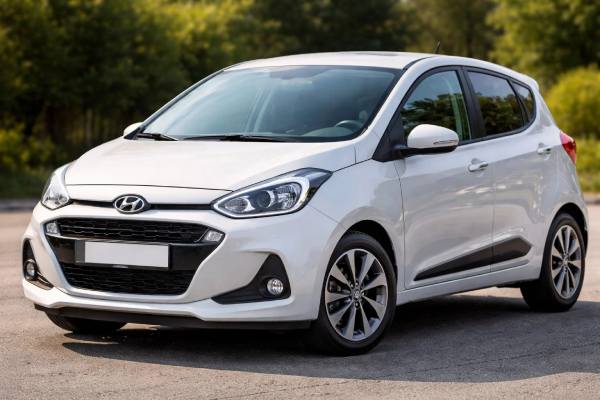
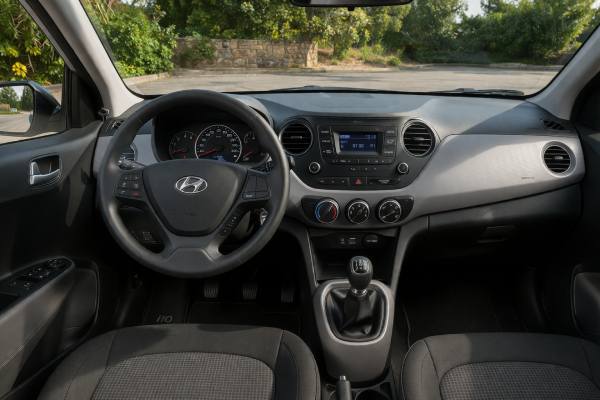
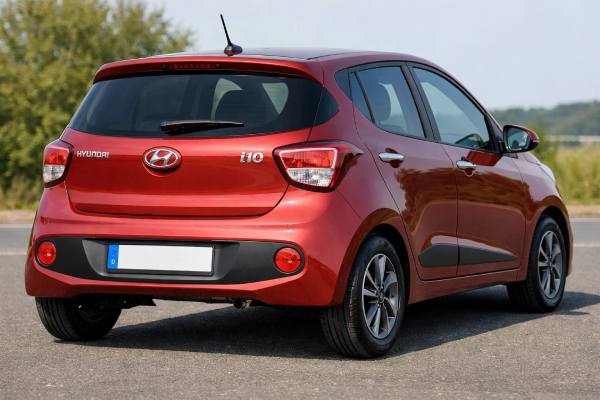
The facelifted Hyundai i10 IA with the 1.25 Kappa MPi petrol engine is the version that gives this city car its best all-round balance. It is still compact, light, and easy to place in traffic, but the extra power over the 1.0 makes it more relaxed on fast roads, less strained with passengers, and more useful as an only car. In most European references, this engine is described as a 1.2 because its capacity is 1,248 cc, while Hyundai marketing often called it a 1.25. Either way, this is the same naturally aspirated four-cylinder Kappa unit, rated at 87 hp in facelift-era trim. It also matters that this generation was sold with market-specific differences in safety features, wheel sizes, rear brakes, and equipment. That means the exact VIN still matters. Even so, the core strengths are consistent: smart packaging, low routine costs, a simple MPi engine, and everyday usability that still feels well judged years later.
Essential Insights
- The 1.25 Kappa MPi gives the i10 noticeably better flexibility than the 1.0 without making ownership much more expensive.
- Cabin packaging is excellent for the class, with generous rear-seat room and a useful 252 L boot.
- Some facelift 1.2 cars gained stronger safety equipment and rear-disc-brake setups, depending on market and trim.
- Rear brake sticking, clutch feel issues, and neglected short-trip servicing are more common concerns than major engine failures.
- A sensible oil-and-filter interval is every 10,000 km or 12 months in real-world use.
What’s inside
- Hyundai i10 IA facelift profile
- Hyundai i10 IA specs and hardware
- Hyundai i10 IA trims and safety kit
- Reliability trends and service actions
- Maintenance schedule and buying checks
- Road feel and fuel use
- Rival picture and value
Hyundai i10 IA facelift profile
The facelifted IA-generation i10 is a small car that feels carefully engineered rather than merely cost-cut. Hyundai did not turn it into a mini supermini, but it did give it enough width, height, and cabin intelligence to feel genuinely useful in daily life. That is why this generation stayed relevant long after launch. Even in facelift form, it remained short enough for crowded city parking, yet large enough inside to work as a main household car for many owners.
The 1.25 Kappa MPi version is the key point in the range. The smaller 1.0-litre three-cylinder is perfectly acceptable for urban errands, but the 1.25-litre four-cylinder is the engine that makes the IA i10 feel properly complete. It is smoother, stronger in the mid-range, and more confident when joining faster traffic. With 87 hp and 121 Nm, it is not quick in an absolute sense, but it is strong enough to make the car feel less like a compromise. In a hatchback this light, modest gains in torque and refinement matter more than the raw numbers suggest.
There is also some naming confusion worth clearing up. Hyundai often described the engine as a 1.25, while technical references usually list it as a 1.2 because the actual displacement is 1,248 cc. That is normal. The underlying engine is the G4LA Kappa MPi unit, and it sits at the heart of the car’s good reputation. It is naturally aspirated, uses multi-point injection rather than direct injection, and avoids the extra complexity that later small turbo engines brought to this class.
The 2016 facelift did more than refresh the nose. In European-market brochure material, Hyundai also pushed connectivity and safety harder, adding a 7-inch navigation screen, smartphone integration, and availability of features such as Front Collision Warning System and Lane Departure Warning System in some specifications. That was a notable move in this segment at the time. Even when not every market received identical equipment, the facelift gave the i10 a more mature feel and better perceived value.
Space remains one of the i10’s biggest strengths. The boot is officially 252 litres with the rear seats up, expanding to 1,046 litres when folded. Rear-seat space is also better than many budget city-car rivals, and the tall roofline makes entry and exit easier than the low-slung styling might suggest. Add the five-door body, good visibility, and light controls, and the result is a city car that is not just easy to own, but easy to live with.
That last point is what keeps the IA i10 interesting as a used buy. It is not glamorous, and it is not especially fast, but it is one of those rare small cars that keeps its value because the original design brief was realistic. Hyundai focused on usability, not gimmicks. The 1.25 MPi version simply delivers the best expression of that formula.
Hyundai i10 IA specs and hardware
For this article, the technical focus is the European-style facelifted IA i10 1.25 Kappa MPi with the 5-speed manual, because that is the most common and the cleanest match for the 87 hp performance figures. Some markets kept the model on sale longer than others, and equipment differences do affect weight, wheels, rear-brake layout, and safety features, so exact VIN decoding still matters.
| Powertrain and efficiency | Hyundai i10 IA 1.25 Kappa MPi |
|---|---|
| Code | G4LA |
| Engine layout and cylinders | Inline-four, transverse, DOHC, 4 valves per cylinder |
| Bore × stroke | 71.0 × 78.8 mm (2.80 × 3.10 in) |
| Displacement | 1.2 L (1,248 cc) |
| Induction | Naturally aspirated |
| Fuel system | MPi |
| Compression ratio | 10.5:1 |
| Max power | 87 hp (64 kW) @ 6,000 rpm |
| Max torque | 121 Nm (89 lb-ft) @ 4,000 rpm |
| Timing drive | Chain |
| Rated efficiency | 4.9 L/100 km (48.0 mpg US / 57.6 mpg UK) combined |
| Real-world highway at 120 km/h | Usually about 5.5–6.2 L/100 km depending on load, wind, tyres, and terrain |
| Transmission and driveline | |
|---|---|
| Transmission | 5-speed manual |
| Drive type | FWD |
| Differential | Open |
| Chassis and dimensions | |
|---|---|
| Suspension front/rear | MacPherson strut / torsion beam |
| Steering | Electric power steering, rack and pinion |
| Brakes | Front ventilated discs; rear discs on some 1.2 facelift-market specs, drums in others |
| Popular tyre sizes | 175/65 R14 or 185/55 R15 |
| Ground clearance | 149 mm (5.87 in) |
| Length / width / height | 3,665 / 1,660 / 1,500 mm (144.29 / 65.35 / 59.06 in) |
| Wheelbase | 2,385 mm (93.9 in) |
| Turning circle | About 9.8 m (32.2 ft), market dependent |
| Kerb weight | About 1,016 kg (2,240 lb), market dependent |
| GVWR | 1,450 kg (3,197 lb) |
| Fuel tank | 40 L (10.57 US gal / 8.80 UK gal) |
| Cargo volume | 252–1,046 L (8.9–36.9 ft³) |
| Performance and capability | |
|---|---|
| 0–100 km/h | 12.3 s |
| Top speed | 175 km/h (108.7 mph) |
| Braking distance | No single factory figure is consistently published across all facelift markets |
| Towing capacity | Market-specific; verify by VIN and local homologation data |
| Payload | About 434 kg (957 lb) |
| Fluids and service capacities | |
|---|---|
| Engine oil | Commonly 5W-30 or 5W-20 where specified; about 3.6 L (3.8 US qt) |
| Coolant | Long-life ethylene-glycol type; exact spec and fill vary by market |
| Transmission oil | Manual gearbox oil; verify by gearbox code before fill |
| Differential / transfer case | Not applicable |
| A/C refrigerant | R134a on most facelift-era examples; confirm on vehicle label |
| A/C compressor oil | Confirm by compressor label and VIN |
| Key torque specs | Wheel nuts commonly fall in the high-80s to low-100s Nm range depending on wheel type and market |
| Safety and driver assistance | |
|---|---|
| Crash ratings | Euro NCAP 4 stars; commonly cited score breakdown 79% adult, 80% child, 71% pedestrian, 56% safety assist |
| IIHS | Not applicable |
| Headlight rating | Not applicable |
| ADAS suite | Depending on market and trim: FCWS, LDWS, cruise control with speed limiter, TPMS, ESS, ESP, HAC |
A few technical details shape the ownership verdict. The first is the chain-driven valvetrain. It removes a timing-belt replacement cost, but it also means oil quality matters. The second is the 40-litre fuel tank, which gives the car a very practical range for a small hatchback. The third is the lightweight chassis. This engine never turns the i10 into a performance car, but it gives the car enough reserve to feel mature rather than merely adequate.
Hyundai i10 IA trims and safety kit
Trim structure on the facelifted IA i10 varies a lot by country, so the smartest way to understand the range is not by a single set of badge names, but by equipment themes. In most European-market lineups, the 1.25 MPi engine sat higher than the basic 1.0, and that usually meant a better chance of getting the features buyers still care about today: air conditioning, upgraded wheel designs, a better infotainment unit, nicer trim finishes, and stronger safety equipment. Some markets also linked the 1.25 more closely with the 4-speed automatic, although the 5-speed manual remains the more widely sought configuration.
Mechanically, there are a few useful differences to watch for. On some facelift 1.2/1.25 specifications, Hyundai used rear disc brakes rather than the simpler rear drum setup found on lesser versions or in other markets. This is worth checking because it changes rear-brake service cost and partly explains why some owner reports mention rear pad sticking rather than drum seizure. Wheel and tyre combinations also vary, usually between 14-inch and 15-inch setups, and that can noticeably affect ride quality, steering weight, and replacement cost. Better-trimmed cars can look more appealing on larger wheels, but the 14-inch setup often rides more sweetly on broken roads.
The facelift also improved the car’s technology story. Hyundai’s 2016 European brochure highlights a 7-inch navigation screen, Apple CarPlay, Android Auto, LIVE Services, and a more ambitious safety package than buyers traditionally expected in this class. That included availability of Front Collision Warning System, Lane Departure Warning System, cruise control with speed limiter, Tyre Pressure Monitoring System, Emergency Stop Signal, Electronic Stability Programme, and Hill-start Assist Control. The key word is availability. Not all trims, countries, or build dates got the same specification. If active safety matters, do not rely on sales descriptions alone. Physically verify the camera hardware, dashboard menus, warning-light sequence, and the car’s original equipment list.
The basic passive-safety picture is stronger than the first-generation i10, but still modest by modern standards. The second-generation i10 earned a 4-star Euro NCAP rating, with widely cited subscores of 79% for adult occupant protection, 80% for child occupant protection, 71% for pedestrian protection, and 56% for safety assist. For an A-segment hatch of its era, that was respectable. It does not mean this is a modern five-star city car under current protocols, but it does mean Hyundai had moved the i10 further upmarket in safety thinking.
As a used buy, the most useful trim clues are the wheels, infotainment screen, climate controls, steering-wheel buttons, and presence of camera-based safety hardware. Mid-spec cars are often the sweet spot. They usually deliver air conditioning, useful infotainment, and reasonable trim without adding expensive cosmetic extras that matter less once the car is several years old. High-spec cars can be desirable, but only if every system still works correctly. On a small used hatchback, broken convenience equipment can quickly cancel out the appeal of a nicer badge or a prettier wheel design.
Reliability trends and service actions
The facelifted IA i10 1.25 MPi has a good reputation because its problems are usually understandable, age-related, and manageable. This is not a car known for a single disastrous engine flaw or a routinely weak gearbox. Instead, it follows the pattern common to many well-designed small cars: wear items, short-trip stress, and maintenance shortcuts matter more than dramatic engineering defects.
The most widely reported issue on used-car surveys and owner-focused reviews is rear-brake trouble. On facelifted IA 1.2 cars with rear discs, this tends to show up as sticking pads, uneven rear-brake action, or unexpectedly fast disc wear. Symptoms include a dragging feel, a hot rear wheel after a short trip, or a handbrake that feels less effective than expected. Usually, the root cause is not catastrophic. Light use, damp conditions, and infrequent hard braking let corrosion build on the rear components. The cure is careful inspection, proper lubrication of the moving parts where appropriate, and replacement of worn pads, discs, or sliders when needed.
Clutch and gear-selection complaints are the next items to watch. Some used-car guides note a few cases of sticking clutches or difficulty selecting reverse. That does not mean the gearbox is fundamentally weak, but it does mean the test drive matters. A healthy car should engage reverse cleanly, shift smoothly, and show a consistent clutch take-up point. A heavy pedal, vague shift feel, or crunch when selecting reverse deserves closer inspection. Sometimes the answer is adjustment, wear in the clutch hydraulics, or an overdue gearbox-oil refresh rather than a major transmission repair.
Suspension wear is ordinary rather than alarming. Drop links, bushes, and dampers are typical age items, especially on cars that have spent years in pothole-heavy urban driving. Listen for front-end knocks over low-speed bumps and pay attention to tyre wear. Uneven shoulder wear often reveals more about a used i10 than a polished service receipt does. Wheel bearings can also begin to hum with age, but that is hardly unusual in the class.
Engine reliability is usually strong. The 1.25 Kappa MPi benefits from simple fuel injection and a naturally aspirated layout. The main caution is not a scheduled timing-belt job, but oil quality and chain health over time. A well-maintained engine should start cleanly, idle smoothly, and stay quiet. A neglected one may show cold-start chain rattle, rough idle, or timing-related fault codes. Those symptoms do not prove disaster, but they do indicate that the chain set, tensioner, or lubrication history needs attention.
This is also not a software-heavy car in the way newer small cars are. Infotainment glitches and sensor quirks can happen, but major ownership patterns are still mostly mechanical. That is helpful. It means the best pre-purchase questions are still the traditional ones:
- Was the oil changed on time?
- Have the rear brakes been serviced properly?
- Are all warning lights behaving normally?
- Does the clutch engage smoothly?
- Are the tyres a quality matching set?
For recalls and service campaigns, the right method matters more than a generic list. Hyundai’s VIN-based recall portal and government recall databases are the safest way to confirm completion history. That is especially important for a car sold across many markets with slightly different equipment and campaign exposure.
Maintenance schedule and buying checks
The smartest maintenance plan for the i10 1.25 MPi is conservative but not excessive. This engine and platform respond well to ordinary, disciplined care. They do not need specialist rituals, but they do punish the kind of neglect small cheap cars often receive. Because many i10s spend their lives on short trips, it is wise to service them by time as much as by distance.
A practical ownership schedule looks like this:
| Item | Sensible interval |
|---|---|
| Engine oil and filter | Every 10,000 km or 12 months; sooner for repeated short trips |
| Engine air filter | Inspect every service, replace around 30,000 km or sooner in dusty use |
| Cabin air filter | Every 15,000–20,000 km or 12–24 months |
| Coolant | Check condition yearly; replace by age and specification if history is unclear |
| Spark plugs | Inspect by 30,000 km; replace according to plug type and market schedule |
| Fuel filter | Follow the local maintenance schedule if separately serviceable |
| Timing chain | No fixed age-based replacement; inspect if there is rattle, rough running, or timing-correlation faults |
| Auxiliary belt and hoses | Inspect yearly, replace on cracking, glazing, leakage, or noise |
| Manual gearbox oil | Inspect for leaks and shift quality; refreshing around 90,000–100,000 km is sensible |
| Brake fluid | Every 2 years |
| Brake pads, discs, shoes, or drums | Inspect at least annually |
| Tyre rotation | About every 10,000 km |
| Alignment check | Yearly, or after pothole impact or uneven tyre wear |
| 12 V battery | Test annually after year 4 |
In fluid terms, this is a simple car. Engine oil capacity is about 3.6 litres, fuel-tank capacity is 40 litres, and the cooling system uses a conventional long-life coolant. What matters more than the headline quantity is correct spec and clean service practice. For example, this engine’s chain-driven valvetrain makes oil quality more important than on some old-school belt-driven units. Cheap oil left in the sump too long is false economy.
Buyers should approach inspection in a structured way. First, start the car cold. Listen for chain noise, idle instability, or dashboard lamps that fail to cycle correctly. Second, test every electrical item, especially the radio, heater fan, screen functions, central locking, and any camera-based safety system. Third, inspect the rear brakes with special attention, because brake drag and uneven rear wear are more common than serious engine faults. Fourth, inspect the tyres. Budget or mismatched tyres often signal cost-cut ownership and can also distort how the car steers and rides.
A good used example should feel tight, light, and eager, not loose or tired. The best buys are usually mid- or high-spec cars with full service history, strong evidence of recent brake work, and a calm, quiet test drive. The worst are low-mileage cars that sound attractive on paper but have had years of short-trip neglect and little real maintenance. Long-term durability is good, but only when the car has been looked after as a machine rather than treated as disposable transport.
Road feel and fuel use
On the road, the i10 1.25 MPi feels more mature than its size suggests. That is the real payoff of choosing this engine. The car still behaves like a city hatchback, with light controls and easy visibility, but it does not feel trapped by that role. It can handle faster roads without sounding permanently overworked, and that broadens its usefulness significantly.
In urban driving, the i10 is easy and predictable. The steering is very light at low speed, the pedals are easy to modulate, and the square-edged body makes parking simple. The 1.25 engine helps here, too. Because it has a little more torque and refinement than the 1.0, you need fewer downshifts and less patience when pulling into traffic or climbing an incline. Throttle response is not exciting, but it is clean and linear, which suits the car’s straightforward personality.
On country roads and motorways, the benefit over the smaller engines becomes more obvious. A 0–100 km/h time of around 12.3 seconds and a 175 km/h top speed are modest figures, but they are enough to keep the car from feeling fragile or breathless. Overtakes still need planning, and the i10 is not a car that rewards aggressive driving, yet the 1.25 turns the experience from merely acceptable into comfortably workable. It feels especially better when carrying passengers or luggage.
Ride quality is generally decent for the class. The suspension is tuned to cope with urban roads rather than to entertain on a smooth B-road. You will feel sharp potholes and short-wheelbase vertical movement, especially on larger wheels, but the chassis usually avoids the brittle, crashy feel some cheap city cars develop. Straight-line stability is acceptable, though not as planted as in a larger supermini. Crosswinds and rough motorway surfaces can remind you that this is still a short, tall hatchback.
Noise levels are also class-typical. Around town, the four-cylinder engine is reasonably smooth and unobtrusive. At 110–120 km/h, wind and tyre noise build noticeably, and the i10 begins to feel more like a city car stretching its legs than a natural long-distance cruiser. That is not a flaw so much as an honest reflection of the class.
Real-world fuel use remains a strength. The official combined figure is around 4.9 L/100 km, but real mixed use is usually higher. A careful owner can expect roughly 5.8–6.4 L/100 km in mixed driving, around 5.2–5.8 L/100 km on a steady highway run, and 6.8–7.6 L/100 km in cold short-trip traffic. That is still very reasonable, especially given the stronger performance over the base engine.
The verdict from behind the wheel is simple. The 1.25 MPi does not transform the i10 into something sporty, but it does give the car the pace, smoothness, and flexibility it needs to feel complete. For many drivers, that is the difference between a backup car and a genuinely satisfying small daily car.
Rival picture and value
The facelifted i10 1.25 MPi sits in a very strong place among used city cars because it avoids most of the usual compromises. It is not the cheapest-feeling option, but it is still simple. It is not the fastest, but it is usefully stronger than the weakest rivals. It is not the most refined, but it offers more space and better day-to-day usability than many of the tiny budget hatchbacks it competed against.
Against the Toyota Aygo, Peugeot 108, and Citroen C1 trio, the Hyundai usually wins on cabin usefulness and broader ability. Those cars can be charming, cheap, and easy to park, but many feel narrower, noisier, and more obviously compromised as family transport. The i10’s five-door practicality, 252-litre boot, and stronger rear-seat space make it the easier recommendation for buyers who want one car that can handle both city errands and normal household duties.
Against the Suzuki Celerio and earlier Alto, the i10 again feels like the more rounded package. The Suzukis are light, honest, and efficient, but the Hyundai typically feels more substantial and better finished. The Kia Picanto is the closest alternative, and in many cases it comes down to condition and equipment rather than an absolute engineering gap. Even so, the Hyundai often feels a touch roomier, and the 1.25 MPi version is particularly well judged.
The Fiat Panda deserves mention because it offers clever packaging and a different kind of character. On rough roads, the Panda can feel more forgiving, and its upright design is still refreshingly practical. But the Hyundai tends to feel like the safer buy for owners who prioritize predictable maintenance, broad parts availability, and low-stress ownership.
Where the i10 loses ground is mainly in refinement and the pace of safety development. Newer city cars such as the Volkswagen up, Skoda Citigo, and later third-generation i10 feel more modern in some dynamic and safety areas. They may be quieter at speed, more stable on the motorway, or stronger in active safety. But those gains often come with higher purchase prices, more complexity, or both.
That is why the IA facelift 1.25 MPi remains such a rational used buy. It offers enough engine, enough cabin, enough comfort, and enough quality without asking the owner to absorb large running costs or complicated repair risks. Its weaknesses are familiar and manageable: brake wear, age-related suspension or clutch issues, and the need to check trim and market differences carefully. Its strengths are even clearer: honest engineering, practical dimensions, a smooth four-cylinder engine, and an ownership profile that remains easy to justify.
If you want the best version of the IA-generation i10 without drifting into unnecessary complexity, this is the one to look for. A well-kept 1.25 MPi still feels like a smart answer to a very ordinary but very important question: what small used car will quietly get daily life right?
References
- The New 2016 (Brochure)
- Handleidingen | Hyundai Motor Nederland 2026 (Owner’s Manual Portal)
- Hyundai i10 II (facelift 2016) 1.2 (87 Hp) | Technical specs, data, fuel consumption, Dimensions 2026 (Technical Data)
- Hyundai i10 – Euro NCAP Results 2014 2014 (Safety Rating)
- Home | Hyundai Recalls & Service Campaigns 2026 (Recall Database)
Disclaimer
This article is for informational purposes only and is not a substitute for professional diagnosis, repair, or official workshop guidance. Specifications, torque values, service intervals, procedures, capacities, and equipment can vary by VIN, market, trim, transmission, and production date, so always verify the exact data for your vehicle against official service documentation before carrying out maintenance or repairs.
If this guide was useful, please consider sharing it on Facebook, X, or another social platform to support our work.