
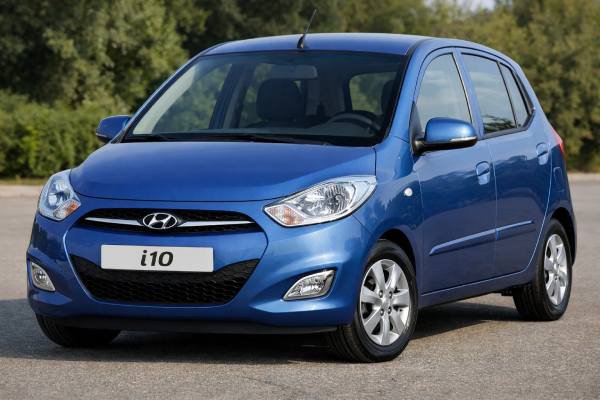

The facelifted Hyundai i10 PA with the 1.1-liter LPG setup sits in a very practical corner of the city-car market. It is small outside, easy to place in traffic, simple to service, and usually cheaper to run than many petrol-only rivals. The basic engineering is straightforward: a naturally aspirated four-cylinder engine, front-wheel drive, compact dimensions, and light controls that make it well suited to daily urban use. That simplicity is a real strength today, because parts are widely available and repair costs are usually modest.
The main caution is that this is now an older car. Condition matters more than brochure promise. Timing-belt history, brake condition, battery health, fuel-pump behavior, and the quality of the LPG system all have a direct effect on ownership satisfaction. Buy a well-kept example and it can still be an honest, low-cost runabout. Buy a neglected one and the savings disappear quickly.
Quick Specs and Notes
- Low running costs, compact size, and very easy city maneuvering.
- Simple G4HG engine layout keeps most routine maintenance affordable.
- Good visibility and light steering make it friendly for new drivers.
- Timing-belt history and LPG system condition matter more than mileage alone.
- A sensible service rhythm is oil every 10,000–15,000 km or 12 months, with timing-belt replacement treated as critical around 60,000 km on older cars.
Quick navigation
- Hyundai i10 PA facelift basics
- Hyundai i10 PA LPG data
- Hyundai i10 PA trims and safety
- Known weak spots and fixes
- Maintenance plan and buying advice
- On-road character and efficiency
- Rivals and best fit
Hyundai i10 PA facelift basics
The 2011 facelift gave the first-generation i10 a cleaner look and, in many markets, a tidier equipment structure. Under the skin, it remained a conventional A-segment hatchback with a short wheelbase, a light body, MacPherson strut front suspension, a torsion-beam rear axle, and electric power steering. That formula still makes sense. It keeps the car light on its feet, cheap to run, and easy to understand mechanically.
For the 1.1 LPG version, the real appeal is not speed. It is operating cost. The 1.1-liter G4HG engine is a simple naturally aspirated unit, and in LPG form it can deliver lower fuel spend per kilometer than the petrol version, especially in heavy urban use. The trade-off is that LPG cars need closer attention to fuel-system condition, switch-over quality, and service history. That matters even more now because some markets had factory-style LPG offerings while others mostly saw dealer-fit or aftermarket conversions.
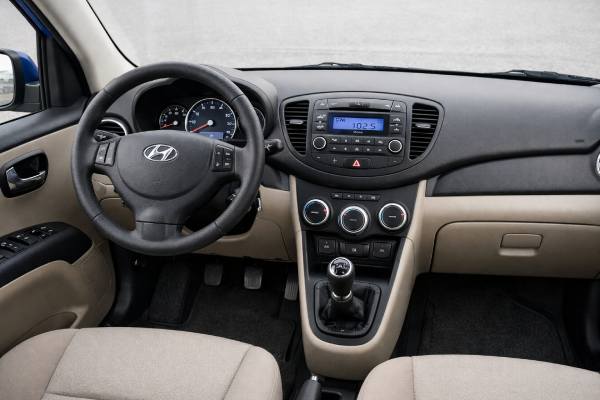
The cabin is basic but honest. The i10’s tall roofline helps headroom, and the upright driving position gives good outward visibility. Front-seat space is respectable for the class, and rear-seat space is acceptable for short trips. The boot is not large, but it is usable for shopping, school runs, and light luggage. The real everyday advantage is packaging: the car is short enough for tight city parking, but boxy enough to be practical.
This facelifted PA also benefits from a reputation for straightforward ownership. Service parts are common, workshop familiarity is high, and many faults are old-fashioned rather than mysterious. That is good news for buyers who want a cheap commuter rather than a tech-heavy mini car. The downside is that refinement is limited. At highway speeds, the i10 feels narrow, lightly insulated, and busy over rough surfaces. It is happiest in towns, suburbs, and short mixed trips.
For most owners, the verdict is simple: this i10 works best as a low-cost urban hatch with sensible expectations. It is not a long-distance cruiser, not a premium-feeling supermini, and not a performance model. It is a practical, compact tool that can still make sense if bought carefully and maintained on schedule.
Hyundai i10 PA LPG data
For this exact facelifted 2011–2013 1.1 LPG 69 hp version, some published figures vary by market and by how the LPG installation was specified. The core mechanical details are consistent, but economy, tank layout, and a few capacity figures can differ. The table below focuses on the most dependable commonly published data for the facelift PA platform and flags market-sensitive items where needed.
| Item | Specification |
|---|---|
| Engine code | G4HG |
| Engine layout and cylinders | Inline-4, SOHC, 3 valves per cylinder |
| Displacement | 1.1 L (1,086 cc) |
| Bore × stroke | 67.0 × 77.0 mm (2.64 × 3.03 in) |
| Induction | Naturally aspirated |
| Fuel system | Multi-point fuel injection with LPG system, market dependent |
| Compression ratio | 10.1:1 |
| Max power | 69 hp (51 kW) @ about 5,500 rpm |
| Max torque | Commonly published around 99 Nm (73 lb-ft) @ about 4,500 rpm; LPG calibration can vary by market |
| Timing drive | Belt |
| Rated efficiency | Market dependent; LPG use is usually higher by volume than petrol, but lower in cost per kilometer |
| Real-world highway at 120 km/h | Usually modestly economical for size, but noisy; LPG figures depend strongly on setup and load |
| Transmission and driveline | Specification |
|---|---|
| Transmission | 5-speed manual is the common pairing |
| Drive type | FWD |
| Differential | Open |
| Chassis and dimensions | Specification |
|---|---|
| Front suspension | MacPherson strut |
| Rear suspension | Coupled torsion beam axle |
| Steering | Rack and pinion with electric assistance |
| Steering ratio | About 2.99 turns lock-to-lock |
| Brakes | Front ventilated discs; rear drums on most versions, with some market exceptions |
| Most popular tyre size | 165/60 R14 |
| Alternative tyre size | 155/70 R13 on lower-spec cars |
| Ground clearance | Commonly published around 149 mm (5.9 in) |
| Length | About 3,565 mm (140.4 in), with small market variation |
| Width | 1,595 mm (62.8 in) |
| Height | 1,540 mm (60.6 in) |
| Wheelbase | 2,380 mm (93.7 in) |
| Turning circle | 4.8 m (15.7 ft) |
| Kerb weight | Roughly 905–950 kg (1,995–2,094 lb), market and equipment dependent |
| GVWR | Roughly 1,405–1,430 kg (3,098–3,153 lb) |
| Fuel tank | Petrol reserve tank and LPG tank arrangement vary by market and installation |
| Cargo volume | 225 L seats up, 910 L seats down, VDA |
| Performance and capacities | Specification |
|---|---|
| 0–100 km/h | Usually in the mid-15-second range, market dependent |
| Top speed | Usually around the mid-140s to mid-150s km/h, market dependent |
| Braked towing | Roughly 700–800 kg (1,543–1,764 lb), market dependent |
| Unbraked towing | Roughly 400–450 kg (882–992 lb), market dependent |
| Payload | Typically modest; verify from VIN plate |
| Fluids and service capacities | Typical working figures |
|---|---|
| Engine oil | 5W-30 or 5W-40 meeting the correct Hyundai spec; about 3.0 L (3.2 US qt) with filter |
| Coolant | Ethylene-glycol premix to Hyundai specification; commonly around 4.7–5.0 L (5.0–5.3 US qt) |
| Manual transmission oil | About 1.9 L (2.0 US qt) |
| A/C refrigerant | R134a; about 450 ± 25 g |
| A/C compressor oil | PAG 46; about 120 mL |
| Wheel-nut torque | About 88–107 Nm (65–79 lb-ft) |
These numbers show the i10’s character clearly: light, simple, small, and built for daily usability rather than headline performance.
Hyundai i10 PA trims and safety
Trim naming varied by country, but the facelifted i10 usually followed a familiar ladder: basic models, mid-grade comfort trims, and better-equipped versions with alloy wheels, upgraded interior trim, and convenience features. In the UK and similar markets, names such as Classic, Active, Style, and Blue appeared. Other regions used different badges, but the structure was similar.
The key point for buyers is that equipment spread matters more than badge wording. Some cars have only the essentials, while better trims add items that improve daily use and resale appeal. Look for practical differences rather than trim names alone:
- Air conditioning rather than a fan-only setup.
- Electric front windows and central locking.
- Better seat fabric and more durable interior trim.
- 14-inch wheels with 165-section tyres instead of narrower base tyres.
- Audio upgrades and steering-wheel controls on higher trims.
- Passenger airbag deactivation where fitted.
- ESP on some markets, though often not standard across the range.
There were few major mechanical differences between trims in this power class. Suspension layout stayed the same, the braking package remained simple, and the 1.1 LPG’s main distinctions usually related to fuel system setup and wheel or equipment specification rather than chassis changes. That is good for ownership, because it limits trim-specific parts surprises.
Safety is a mixed picture by modern standards. The first-generation i10 achieved a respectable result for its era, but buyers should remember the age of the underlying design. Euro NCAP testing for the i10 line recorded:
- 4 stars for adult occupant protection.
- 4 stars for child occupant protection.
- 3 stars for pedestrian protection.
That is acceptable for a late-2000s city car, though nowhere near current supermini standards. Airbag provision typically included front airbags and front side airbags, while side curtain airbags were not universal. ABS with electronic brake-force distribution was common. Stability control was not fitted as widely as it should have been, so it is worth actively seeking cars equipped with ESC or ESP if available in your market.
ISOFIX child-seat points were part of the package on many versions, usually on the outer rear seats. Seatbelt pretensioners were also common. For daily safety, tyre condition and brake health matter just as much as the factory equipment list, especially on older examples. A well-kept i10 on good tyres can feel honest and predictable; a neglected one can feel nervous, noisy, and longer to stop.
The best trim choice is usually a mid- or upper-grade car with air conditioning, 14-inch wheels, and the strongest safety equipment available in your region. It adds real value without changing the i10’s basic low-cost character.
Known weak spots and fixes
The facelifted i10 PA is generally dependable when maintained, but it is not trouble-free. Most of its common issues are age-related rather than design catastrophes. That is good news, because diagnosis is usually straightforward and repair costs are often reasonable.
Here is the practical fault map.
- Common and low to medium cost:
- Weak 12 V battery. Symptoms include slow cranking, warning lights, and random electrical complaints. Remedy: battery test, charging-system check, and battery replacement if needed.
- Brake drag or uneven rear braking. Symptoms include a hot wheel, poor economy, or weak parking brake performance. Remedy: clean and rebuild rear brakes, free seized hardware, replace worn shoes or drums, and refresh brake fluid.
- Fuel-pump weakness. Symptoms include hard starting, stalling, hesitation, or refusal to switch cleanly between petrol and LPG modes. Remedy: fuel-pressure testing and pump replacement if pressure is out of spec.
- Lighting faults. Usually simple bulb-holder, earth, or connector problems.
- Occasional and medium cost:
- Oil leaks from rocker-cover or seal areas. Symptoms are oil smell, wet engine surfaces, and gradual oil loss. Remedy: gasket and seal replacement, then clean and monitor.
- Steering wear or abnormal assistance feel. Symptoms include vague steering, pull, or inconsistent weight. Remedy: inspect alignment, front joints, bushings, and the electric steering system before replacing major parts.
- Suspension wear. Front drop links, bushes, and wheel bearings can show age on rough roads. Symptoms are knocks, humming, or unstable tracking. Remedy: replace worn components and align the car properly.
- High importance even if not always expensive:
- Timing-belt neglect. This engine uses a belt, so service history matters. Symptoms of overdue service can be none at all until failure risk rises. Remedy: replace belt, tensioner, and related hardware on time, especially if history is unclear.
- Cooling-system aging. Old hoses, tired clamps, or a weak radiator can create slow leaks and overheating risk. Remedy: pressure-test the system and replace aging components before they fail.
For LPG cars, one extra rule applies: verify what kind of LPG installation the car has. A tidy, well-documented system is fine. A poorly documented conversion is a risk. Check the regulator or vaporiser, injector rail, filters, tank age, filler hardware, and changeover behavior. Rough running on LPG, backfiring, or repeated engine-warning lights usually mean the car has been serviced reactively rather than properly.
Recall and service-action history is market-specific, so always verify by VIN through the official recall portal and dealer records. On a used example, proof of completed recall work and timing-belt service is worth more than a polished exterior.
Maintenance plan and buying advice
This is a car that rewards preventive care. Official schedules differ slightly by market, but on an older 1.1 LPG i10, a cautious plan is smarter than stretching intervals. The engine is simple, so basic maintenance is usually cheap enough to do early.
A practical ownership schedule looks like this:
- Engine oil and filter every 10,000–15,000 km or 12 months.
- Engine air filter inspect at every service and replace around 30,000–40,000 km.
- Cabin filter about every 30,000 km or sooner in dusty use.
- Spark plugs around every 30,000 km.
- Timing belt, tensioner, and related hardware around 60,000 km or if age history is uncertain.
- Auxiliary belt and cooling hoses inspected every service, replaced on condition.
- Brake fluid every 2 years.
- Coolant checked regularly and fully renewed to correct specification if service history is unclear.
- Manual gearbox oil checked for leaks and condition, with a refresh sensible on an older car even if not always emphasized.
- LPG filters and leak checks according to the system maker’s guidance, usually at routine annual servicing.
Useful decision figures:
| Service item | Practical guidance |
|---|---|
| Engine oil capacity | About 3.0 L with filter |
| Coolant capacity | Roughly 4.7–5.0 L |
| Manual gearbox oil | About 1.9 L |
| Wheel-nut torque | 88–107 Nm |
| Brake fluid | DOT-spec fluid as required by the market manual |
| Refrigerant | R134a |
When inspecting a used car, focus on the expensive mistakes owners make, not just cosmetic wear:
- Cold start from fully cold, on petrol first.
- Smooth idle and clean transition to LPG.
- No misfire, hesitation, or fuel smell.
- Proof of timing-belt replacement.
- No coolant crusting around radiator, hoses, or pump area.
- Firm brake pedal and no dragging rear brakes.
- No wheel-bearing drone on a test drive.
- Stable steering and no heavy pull.
- Clutch take-up should be smooth and gearbox should shift without graunching.
- Underbody rust check around brake lines, subframe edges, exhaust, and rear arch areas.
- Full service file, spare key, and recall verification.
Best buys are usually honest, mid-spec cars with documented servicing and a clean LPG installation. Cars to avoid are those with missing belt history, poor fuel-system behavior, or obvious signs of deferred maintenance. Long-term durability is decent if the car is treated like a machine that needs regular basics, not a disposable city runabout.
On-road character and efficiency
The i10 PA’s driving experience is built around ease, not excitement. In town, that works in its favor. The steering is light, visibility is strong, the controls are simple, and the car’s short footprint makes parking easy. The upright shape also helps at junctions and in tight traffic. This is one of those cars that feels smaller and less stressful than many newer hatchbacks.
Ride quality is acceptable at low speed, but the chassis can feel busy on broken surfaces. Expansion joints, sharp potholes, and patched urban roads are all noticeable. Body control is safe rather than sporty. There is enough grip for normal driving, but narrow tyres and a short wheelbase mean the i10 reaches its comfort limit quickly if pushed. The electric steering is light and useful in town, though it offers little real feedback.
The 69 hp 1.1 engine is adequate. It does not transform the car, but it is enough for city work and moderate suburban driving. Throttle response is usually clean in a healthy car, and the five-speed manual suits the power output better than an old-style automatic would. Overtaking at higher speeds needs planning, especially with passengers or on inclines. At 100–120 km/h, the car can hold speed, but noise rises quickly and refinement drops off.
Real-world efficiency is one of the main reasons to consider the LPG version. A petrol-only 1.1 i10 can return modest fuel use in mixed driving, and the LPG version usually burns more fuel by volume while still costing less to run per kilometer because LPG is cheaper. In practice:
- City use: LPG cost advantage is strongest here.
- Mixed use: still economical if the system is well tuned.
- Highway use: the car remains cheap overall, but aerodynamic drag and high revs reduce the benefit.
Two caveats matter. First, poorly calibrated LPG systems can make the car feel weaker or less smooth than it should. Second, carrying an LPG tank can reduce some practicality depending on where the tank is mounted. On the road, though, the i10’s appeal stays consistent: it is simple, easy, and unintimidating.
For drivers who mostly commute, shop, and park in tight spaces, that matters more than outright pace. For frequent long-distance motorway use, there are better small cars.
Rivals and best fit
The facelifted Hyundai i10 1.1 LPG competes best when the buyer wants low purchase cost, easy maintenance, and cheap urban use. It is less convincing when judged by modern safety expectations, long-distance refinement, or cabin quality.
Against key rivals:
- Kia Picanto of the same era:
- Very close mechanically and often just as cheap to run.
- Parts and workshop knowledge are similarly easy to find.
- Often the nearest direct alternative if condition is better.
- Chevrolet Spark:
- Can feel roomy and honest for the money.
- Usually not more refined, and parts support can be less attractive in some markets.
- The Hyundai is often the safer ownership bet.
- Fiat Panda:
- More characterful and often more practical in cabin shape.
- Can be excellent in town, but condition and maintenance discipline matter even more.
- The i10 usually wins on simplicity and predictability.
- Volkswagen up!, Skoda Citigo, and SEAT Mii:
- More mature on the highway, better packaging in some areas, and a newer-feeling structure.
- Usually cost more to buy.
- Better if you spend more time outside the city.
- Toyota Aygo, Peugeot 107, and Citroen C1:
- Cheap to run and very urban-friendly.
- Smaller-feeling and less substantial in some ways.
- The i10 often offers a more conventional cabin and a calmer everyday character.
Who should buy the i10 PA 1.1 LPG? A driver who wants a small, affordable hatch for daily errands, commuting, and short mixed trips. It suits first-time drivers, second-car households, and anyone who values low operating cost over image or performance.
Who should skip it? Anyone who regularly drives long highway distances, wants modern active-safety systems, or does not want the extra inspection burden that comes with an older LPG car.
Overall, the i10 is strongest as a sensible used buy when condition is good, timing-belt history is documented, and the LPG setup is tidy and proven. In that context, its advantages are clear: low running cost, practical packaging, simple maintenance, and a driving experience that stays easy rather than demanding.
References
- Hyundai Owners manuals | Hyundai Motor UK 2026 (Owner’s Manual)
- Euro NCAP in 2008: Making safety your top priority 2009 (Safety Rating)
- Check if a vehicle, part or accessory has been recalled – GOV.UK 2026 (Recall Database)
- Hyundai i10 (2008-2013) 2025 (Used Car Data)
- PERIODIC MAINTENANCE SERVICE FOR i10 PA 1.1 2020 (Maintenance Schedule)
Disclaimer
This article is for informational purposes only and is not a substitute for professional diagnosis, repair, or vehicle inspection. Specifications, torque values, service intervals, capacities, and procedures can vary by VIN, market, trim, and installed equipment, especially on LPG-equipped vehicles. Always verify details against the correct official service documentation for the exact car.
If this guide helped you, please consider sharing it on Facebook, X, or another social platform to support our work.