
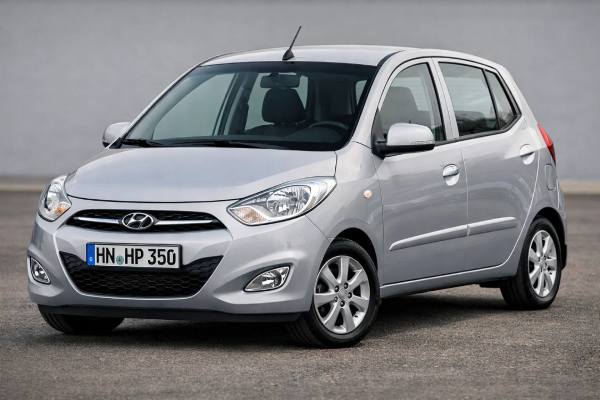
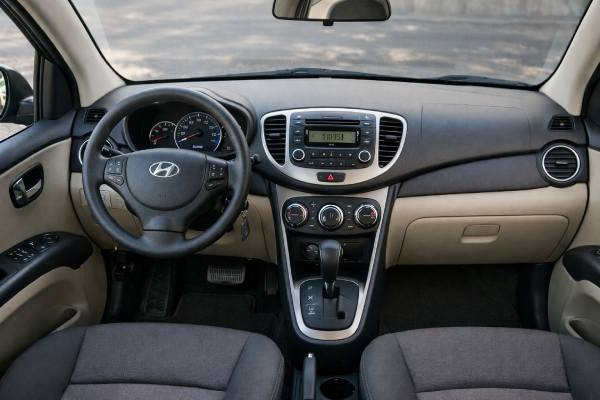
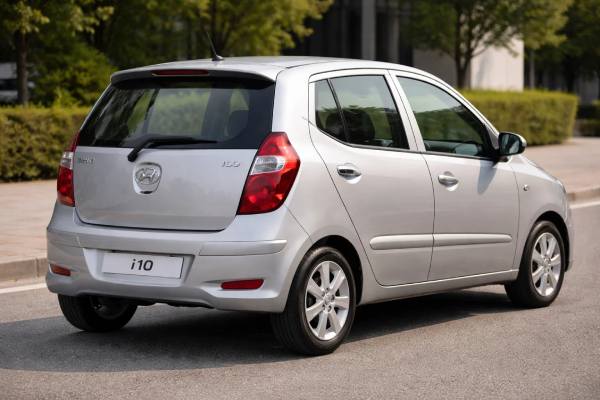
The facelifted 2011–2013 Hyundai i10 PA with the 1.2 Kappa petrol engine is the version many buyers actually want. It keeps the same compact footprint and easy city manners as the smaller-engined cars, but adds the extra power that makes the i10 feel calmer on hills, less strained with passengers, and more relaxed at highway speed. This engine is often described as a 1.2, but its actual displacement is 1,248 cc, so some markets and brochures call it a 1.25. Power is likewise quoted as 85 bhp or 86 hp depending on the market and conversion method. Underneath that naming confusion is a simple, well-judged supermini-sized city car: naturally aspirated petrol power, front-wheel drive, a light body, and an ownership experience built more on sensible engineering than on novelty. The main strengths are space efficiency, low routine costs, and strong everyday usability. The main watchpoints are age-related brake wear, short-trip neglect, and condition-based buying rather than any single fatal design flaw.
Fast Facts
- The 1.2 Kappa gives the facelifted i10 noticeably better flexibility than the older 1.1 without turning the car into a costly ownership risk.
- Cabin and boot space are excellent for the class, especially if you regularly carry adults or child seats.
- The engine uses a timing chain, so clean oil and regular servicing matter more than a fixed belt-replacement interval.
- Rear brakes, tired batteries, and neglected suspension wear are more common ownership issues than major engine failures.
- A sensible oil-service interval for real-world use is every 10,000 km or 12 months, with shorter intervals for repeated short trips.
Navigate this guide
- Hyundai i10 PA 1.2 in context
- Hyundai i10 PA 1.2 technical picture
- Hyundai i10 PA 1.2 grades and protection
- Known fault patterns and service actions
- Ownership routine and smart buying
- On-road character and fuel use
- Where it fits among city-car rivals
Hyundai i10 PA 1.2 in context
The facelifted first-generation Hyundai i10 is one of those small cars that makes more sense the longer you live with it. It is not exciting in the traditional hot-hatch way, but it is cleverly packaged, easy to see out of, inexpensive to insure in many markets, and far more useful than its tiny footprint suggests. In facelifted 2011–2013 form, the i10 gained a cleaner front-end design, updated engines, improved emissions performance, and a tidier range structure. That matters because the earlier i10 already had a good reputation for straightforward ownership, and the facelift sharpened the parts of the car that buyers noticed every day.
For the 1.2 Kappa version, the big gain is drivability. The smaller 1.1 works well in town, but the 1.2 is the engine that makes the i10 feel like it can do more than urban errands. It still suits stop-start traffic and tight parking spaces, yet it is better on faster A-roads, less breathless on gradients, and more comfortable carrying four adults. On paper, the difference is only about 17 hp over the old 1.1, but in a car weighing only about 910 kg, that extra output changes the character more than the raw number suggests.
Another point worth knowing is the naming. This engine is widely listed as the G4LA Kappa unit. Because it displaces 1,248 cc, some period reviews call it a 1.25-liter engine, while databases and many owners simply refer to it as a 1.2. Both descriptions point to the same basic powertrain here. In most facelift-market forms, output lands around 85–86 hp and 121 Nm. That places it near the top of what buyers expected in a budget city car at the time, and it helps explain why so many used-car guides recommend the 1.2 over the weaker alternatives.
The rest of the package is equally important. The i10 is only 3,585 mm long, but it is tall, upright, and usefully square inside. The rear bench is more practical than in several period rivals, and the 225-liter boot is large enough for shopping, school bags, or a weekend away. The five-door body is also a real advantage. Many city cars from this era felt like stripped-down second cars; the i10 feels more like a small primary car.
That is also where its ownership appeal comes from. The facelifted 1.2 Kappa i10 is not about status or performance bragging rights. It is about honest engineering, low-cost consumables, and an ability to cope with normal life. When buying one used, the decisive factors are service quality, brake condition, tyres, and evidence of careful ownership. Choose on condition, not trim badge alone, and this version remains one of the smarter used city-car buys.
Hyundai i10 PA 1.2 technical picture
For the 2011–2013 facelifted 1.2 Kappa manual hatchback, the numbers tell a useful story. This is still a compact city hatchback, but the 1.2 engine gives it a stronger performance envelope than the 1.0 and 1.1 versions. Some equipment and weight details vary by market, yet the main technical picture is consistent.
| Powertrain and efficiency | Hyundai i10 PA 1.2 Kappa |
|---|---|
| Code | G4LA |
| Engine layout and cylinders | Inline-four, transverse, DOHC, 4 valves per cylinder |
| Bore × stroke | 71.0 × 78.8 mm (2.80 × 3.10 in) |
| Displacement | 1.2 L (1,248 cc) |
| Induction | Naturally aspirated |
| Fuel system | Multi-point manifold injection |
| Compression ratio | 10.5:1 |
| Max power | 86 hp (63 kW) @ 6,000 rpm |
| Max torque | 121 Nm (89 lb-ft) @ 4,000 rpm |
| Timing drive | Chain |
| Rated efficiency | 4.6 L/100 km (51.1 mpg US / 61.4 mpg UK) combined |
| Real-world highway at 120 km/h | Usually about 5.3–6.0 L/100 km depending on load, wind, and tyres |
| Transmission and driveline | |
|---|---|
| Transmission | 5-speed manual |
| Drive type | FWD |
| Differential | Open |
| Chassis and dimensions | |
|---|---|
| Suspension front/rear | MacPherson strut / torsion beam |
| Steering | Rack and pinion, power assisted |
| Brakes | Front ventilated discs / rear drums |
| Wheels and tyres | Most common size 165/60 R14 |
| Ground clearance | 149 mm (5.87 in) |
| Length / width / height | 3,585 / 1,595 / 1,540 mm (141.1 / 62.8 / 60.6 in) |
| Wheelbase | 2,380 mm (93.7 in) |
| Turning circle | 9.5 m (31.2 ft) |
| Kerb weight | 910 kg (2,006 lb) |
| GVWR | 1,415 kg (3,120 lb) |
| Fuel tank | 35 L (9.25 US gal / 7.70 UK gal) |
| Cargo volume | 225–910 L (7.95–32.14 ft³) |
| Performance and capability | |
|---|---|
| 0–100 km/h | 12.2 s |
| Top speed | 169 km/h (105 mph) |
| Braking distance | No single factory figure is consistently published for all markets |
| Towing capacity | 800 kg braked / 450 kg unbraked in commonly listed specs |
| Payload | About 505 kg (1,113 lb) |
| Fluids and service capacities | |
|---|---|
| Engine oil | 5W-30 is commonly used; about 3.6 L (3.8 US qt) |
| Coolant | Long-life ethylene-glycol type; about 4.2 L (4.44 US qt) |
| Manual transmission oil | Commonly catalogued around 1.9 L, but verify by gearbox code |
| Differential / transfer case | Not applicable |
| A/C refrigerant | R134a; charge varies by VIN and should be checked on the vehicle label |
| A/C compressor oil | Verify by VIN and compressor label |
| Key torque specs | Wheel nuts commonly listed around 88–107 Nm depending on market and wheel type; verify by manual |
| Safety and assistance | |
|---|---|
| Crash ratings | Euro NCAP old-protocol 4-star rating for first-generation i10 |
| IIHS | Not applicable |
| Headlight rating | Not applicable |
| ADAS suite | None in the modern sense; ABS common, ESC/ESP varies by trim and market |
A few notes matter here. First, this engine uses a timing chain, not a belt. That reduces scheduled replacement cost, but it does not mean lifetime neglect is acceptable. Second, the official 4.6 L/100 km combined figure is respectable, though real-world mixed use is usually higher. Third, the car’s light weight explains why 86 hp feels more useful than the output figure might suggest. This is not a fast car, but it is quick enough to feel substantially more complete than the smaller-engine versions.
Hyundai i10 PA 1.2 grades and protection
Trim naming varied by country, but facelift-era European and UK buyers usually encountered versions such as Classic, Active, and Style, with the Blue model aimed more at the lower-emissions 1.0 side of the range. The important point for today’s buyer is that the 1.2 was often the more desirable engine and was commonly paired with better trim levels. That means a 1.2 car is more likely to have the comfort equipment owners actually want: air conditioning, front electric windows, central locking, a decent stereo, and in some markets alloy wheels, heated front seats, or upgraded interior trim.
Mechanically, most trim differences are small. The 1.2 does not turn into a sport model in higher trims, and the basic suspension architecture stays the same. What changes are the wheels, tyre choice, cabin materials, convenience equipment, and in some markets whether electronic stability control was included. That matters because the used-market badge does not always tell the full story. Hyundai reused names across regions, so a Style in one market may not match a Style in another. The safest approach is always to decode the car by VIN, the original handbook pack, and the equipment you can physically see.
Quick identifiers help. Entry and mid-spec cars usually ride on steel wheels or simple 14-inch wheels, with straightforward seat fabrics and fewer trim accents. Better-equipped examples tend to show body-colour mirrors and handles, upgraded audio units, and sometimes nicer wheel designs. Because the i10 was popular with private owners, retirees, and urban commuters, many examples remain quite original. That makes it easier to spot missing trim, non-factory stereos, or evidence of accident repair.
Safety needs to be read in period context. The first-generation i10 earned a 4-star Euro NCAP result under the older rating rules. That was respectable for a small, budget-focused hatchback of its time, but it does not mean this car offers modern crash performance or current active-safety standards. The core safety package usually includes front airbags, side airbags in better-specified cars, ABS, and ISOFIX child-seat mounts. Some markets also offered ESC or ESP, but not every car has it. On a used example, confirm warning lights work correctly at startup and go out as they should, especially the ABS and airbag lights.
There is no advanced driver-assistance suite here. No autonomous emergency braking, no lane-centering, no blind-spot monitoring, and no adaptive cruise control. That sounds like a weakness compared with newer cars, and it is, but it also means fewer cameras and sensors to fail. The main safety condition points on a used i10 are more basic: tyre age and quality, rear-brake health, steering feel, crash-repair quality, and whether the car still tracks straight under firm braking.
For family use, the i10 remains better than its size suggests. The rear seat is more accommodating than many class rivals, and ISOFIX provision in the rear outboard positions is a practical advantage. Still, buyers need to remember what this is: a well-designed older city car, not a modern small car with a full active-safety shield.
Known fault patterns and service actions
The facelifted i10 1.2 Kappa has a good reputation because its problems are usually small-car problems, not catastrophic engineering failures. That does not make every example trouble-free, but it does make the fault pattern easier to understand and cheaper to manage than on many more complex used cars. The most important thing is to separate common age-related wear from true design weakness.
Common, usually low-to-medium cost issues include rear-brake sticking, seized handbrake operation, and uneven braking effort after long periods of gentle urban use. The rear drums simply do not love inactivity, damp weather, and short-trip service. Symptoms include a dragging feel, weak handbrake hold, scraping noises, or excessive heat from one rear wheel. The remedy is usually straightforward: strip, clean, and adjust the rear brakes, then replace shoes, cylinders, springs, or drums if corrosion is advanced.
Also common are battery and charging-related complaints on lightly used cars. Many i10s live short urban lives, which is hard on small batteries. Slow cranking, radio resets, dim lamps, or random electrical oddities often trace back to an ageing battery or marginal charging state rather than to serious module failure. On a pre-purchase inspection, a simple battery test and charging-voltage check are worthwhile.
Occasional medium-cost issues include front suspension wear, worn drop links, tired lower-arm bushes, and wheel-bearing noise. These are not unusual for an older, light hatchback. During a test drive, listen for front-end knocking over broken roads and for a humming wheel bearing that rises with speed. Steering racks are not a major headline fault here, but worn suspension and poor tyres can make the steering feel worse than it should.
Engine-wise, the 1.2 Kappa is generally strong when it gets clean oil at sensible intervals. The timing chain is a benefit, but not a license to ignore maintenance. On neglected cars, chain noise on cold start, rough idle, or cam/crank correlation faults can point to chain or tensioner wear. That is not as routine as timing-belt replacement on the 1.1, but it is the key engine-specific caution for the 1.2. The remedy is condition-based inspection and replacement of the chain set when symptoms or fault codes justify it.
Cooling-system issues are less common than brake wear, but do not ignore them. An old thermostat, weak water pump, or tired radiator can produce slow warm-up, overheating in traffic, or unexplained coolant loss. Check carefully for dried coolant traces around hose joints and radiator seams.
Because recall and service-action visibility varies by country, the right process is more important than any generic list. Ask for:
- Full service history, especially oil changes
- Evidence of dealer or specialist inspections
- VIN-based recall check results
- Proof of brake and tyre work
- Confirmation of any engine fault-code history
Software and calibration campaigns are not a major part of the ownership story here. This is a relatively simple car, so mechanical condition matters more than software version. If the engine idles cleanly, starts easily, and drives without hesitation, that is usually more revealing than chasing vague update rumors.
Ownership routine and smart buying
The best maintenance plan for an ageing i10 1.2 is conservative, simple, and consistent. This is the sort of engine that lasts well when it gets fresh oil, decent coolant, and basic mechanical sympathy. It is also the sort of engine that can feel rough and neglected if owners assume a timing chain means maintenance-free life.
A practical ownership schedule looks like this:
| Item | Practical interval |
|---|---|
| Engine oil and filter | Every 10,000 km or 12 months; every 7,500 km if used mostly for short trips |
| Engine air filter | Inspect every service; replace around 30,000 km sooner in dusty use |
| Cabin air filter | Every 15,000–20,000 km or 12–24 months |
| Coolant | Check yearly; replace by age and condition, commonly around 5 years if history is unclear |
| Spark plugs | Inspect by 30,000 km; replacement interval depends on plug type and market specification |
| Fuel filter | Follow market-specific schedule if separately serviceable |
| Timing chain | No routine age-based replacement; inspect for rattle, stretch symptoms, and timing faults |
| Serpentine belt and hoses | Inspect yearly and replace on cracking, glazing, or noise |
| Manual transmission oil | Inspect for leaks and shift quality; refresh around 90,000–100,000 km is sensible |
| Brake fluid | Every 2 years |
| Brake pads, shoes, discs, drums | Inspect at least annually |
| Tyre rotation | About every 10,000 km |
| Wheel alignment | Check yearly or after uneven wear or pothole impact |
| 12 V battery | Test annually after year 4; many fail between years 4 and 6 |
Fluid and capacity planning is straightforward. The engine oil capacity is about 3.6 liters, coolant about 4.2 liters, and the fuel tank 35 liters. Manual transmission fill is commonly listed around 1.9 liters, but that should be confirmed by gearbox code before service. For wheel nuts, many manuals and period references place the torque in roughly the 88–107 Nm range depending on wheel type and market, so this is one area where VIN- or manual-specific verification matters.
For buyers, the checklist is short but important:
- Start it cold and listen for chain rattle, tapping, or unstable idle.
- Test every electrical item, including the radio, central locking, and heater fan.
- Check the rear brakes for drag, weak handbrake performance, or uneven operation.
- Inspect tyres carefully; cheap mismatched tyres often point to cost-cut ownership.
- Look for coolant staining, oil leaks, and poor accident repair around the front end.
- Drive it on a rough road and at 90–110 km/h to expose suspension wear and NVH issues.
The best examples are usually simple, honest cars with full service records, not heavily “upgraded” ones. A clean mid-spec 1.2 with air conditioning and strong maintenance history is often the sweet spot. Long-term durability is good if the car has not been run on neglected oil and dead rear brakes. In other words, this i10 rewards disciplined care more than it rewards expensive intervention.
On-road character and fuel use
The facelifted i10 1.2 is easy to drive well because everything about it is straightforward. Visibility is good, the controls are light, and the body is compact enough that you do not need to think about parking. The engine is the key upgrade over the smaller variants. It is still naturally aspirated, so it does not deliver a turbo-style surge, but it responds cleanly and gives the car a more settled feel in everyday use.
Around town, the i10 feels exactly as a good city car should. It steps away cleanly, fits into gaps without stress, and turns tightly enough to make narrow streets easy work. The steering is light rather than talkative, but that suits the mission. At low speed, the car feels nimble and cooperative. On poor urban surfaces, you will notice some vertical movement and the occasional thump from the short wheelbase, yet the overall ride is acceptable and rarely harsh by class standards.
At higher speed, the 1.2 engine pays for itself. This is the version that makes the i10 feel usable outside the city, not just inside it. A 0–100 km/h time of 12.2 seconds and a top speed around 169 km/h mean it is no performance car, but overtakes and highway merges feel far less apologetic than they do in the 1.0 or old 1.1. The gearbox suits the engine’s modest torque band, though you still need to shift sensibly on steep grades or with a full load.
Noise levels are typical for the class. In town, the engine is unobtrusive. At motorway speed, wind and road noise become more obvious, and the i10 starts to remind you that it was designed as an affordable city hatchback rather than a long-distance cruiser. Straight-line stability is decent, but it is not as planted at speed as larger superminis or newer city cars like the Volkswagen up. Braking feel is generally clean when the system is healthy, although a poorly maintained example with sticky rear drums can feel less confidence-inspiring than it should.
Real-world economy is one of the car’s stronger points, but buyers should still separate official numbers from owner reality. The official combined figure is 4.6 L/100 km. In practice, many owners can expect about 5.8–6.4 L/100 km in mixed driving, roughly 5.1–5.8 L/100 km on an easy highway run, and around 6.8–7.5 L/100 km in cold urban use with many short trips. That is still economical, but not miracle-car economical. The 1.2 pays back its extra pace with only a modest real-world fuel penalty over the smaller engines.
Overall, the driving verdict is simple. The i10 1.2 is not fun in a sporty sense, but it is easy, predictable, and sufficiently energetic for real life. In this class, that is often the better kind of competence.
Where it fits among city-car rivals
The facelifted i10 1.2 sits in a strong position among used city cars because it avoids extremes. It is not the cheapest-feeling car in the class, but it is not overcomplicated. It is not the most refined, but it is practical. It is not the most playful, but it is usefully quicker than many budget-minded rivals. That balanced nature is why it remains easy to recommend.
Against the Toyota Aygo, Peugeot 107, and Citroen C1 triplets, the Hyundai usually wins on space and everyday completeness. Those cars can be very cheap to run and easy to park, but many feel narrower, noisier, and less adult in the rear seat. The Hyundai’s five-door layout, broader cabin feel, and stronger 1.2 engine often make it the better choice for buyers who want one small car to do everything.
Against the Suzuki Alto and Nissan Pixo, the i10 again feels like the more rounded package. Those rivals are light and efficient, but the Hyundai usually feels more substantial and more useful on longer trips. The Fiat Panda 1.2 is a very interesting rival because it offers charm, clever packaging, and often excellent visibility, but the i10 tends to feel like the lower-risk buy for buyers who care most about predictable parts supply and straightforward maintenance.
Its closest rival is often the Kia Picanto of the same era. That is no surprise, given the corporate relationship and similar design priorities. In many used markets, the Hyundai edges ahead because it feels slightly roomier and is often easier to find in well-kept form. The Kia can match it closely on value, but the Hyundai’s blend of packaging and 1.2 performance is hard to dismiss.
Where the i10 loses is mostly in refinement and modern safety. A Volkswagen up, Skoda Citigo, or SEAT Mii will usually feel quieter at speed and more mature on the road. Some later rivals also bring stronger crash structures and more active-safety equipment. So if your life is mostly highway mileage, the Hyundai may not be the best answer. But if your driving is mixed, local, budget-sensitive, and practical, the i10 1.2 remains highly persuasive.
The final verdict is that the facelifted Hyundai i10 PA 1.2 Kappa is the sweet-spot version of the first-generation car. It gives you the performance the platform always wanted, without spoiling the low running costs and easy ownership that made the i10 popular in the first place. Its best qualities are simple: useful pace, good packaging, manageable maintenance, and honest engineering. Buy a well-kept one, and it still makes a lot of sense.
References
- Hyundai Owners manuals | Hyundai Motor UK 2026 (Owner’s Manual Portal)
- Hyundai i10 I (facelift 2011) 1.2 (86 Hp) | Technical specs, data, fuel consumption, Dimensions 2026 (Technical Data)
- EuroNCAP | Hyundai i10 2008 (Safety Rating)
- Check if a vehicle, part or accessory has been recalled – GOV.UK 2026 (Recall Database)
Disclaimer
This article is for informational purposes only and is not a substitute for professional diagnosis, repair, or official workshop guidance. Specifications, torque values, service intervals, capacities, procedures, and equipment can vary by VIN, market, transmission, trim, and production date, so always verify the exact data for your vehicle against official service documentation before carrying out maintenance or repairs.
If you found this guide useful, please consider sharing it on Facebook, X, or another social platform to support our work.