
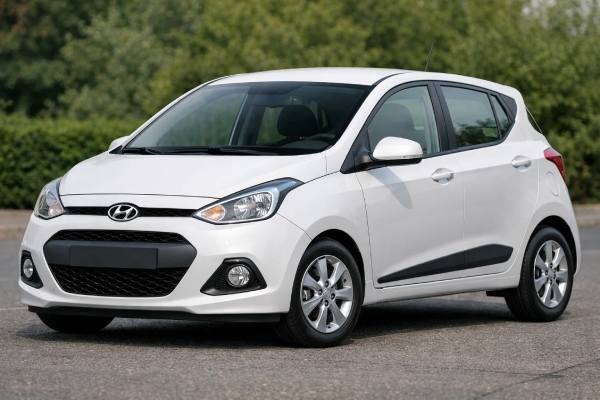
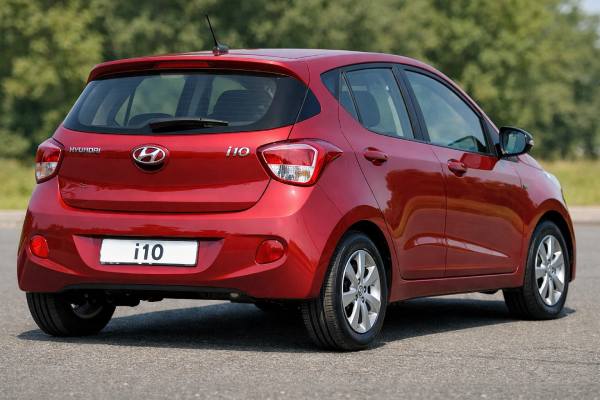
The 2014–2016 Hyundai i10 (IA) 1.0 Kappa LPGi is one of the more sensible small cars of its period if your priorities are clear. It keeps the second-generation i10’s smart packaging, easy maneuverability, and low running-cost focus, then adds a factory bi-fuel setup that can make everyday commuting much cheaper than a comparable petrol-only city car. The trade-off is performance. With 67 hp and modest torque, this is a car built for efficiency and simplicity, not urgency. Still, the IA-generation i10 is larger and more mature than the earlier PA car, with better cabin space, a stronger safety story in European trim, and more refined road manners. The LPGi version can be a very good used buy when the system is original, properly maintained, and matched to the right driving pattern. This guide covers the exact 2014–2016 1.0 LPGi model, including specs, dimensions, safety, reliability, maintenance, and the ownership advantages that still make it worth considering.
Essential Insights
- Factory LPGi setup can cut fuel costs noticeably when LPG is easy to find locally.
- Cabin space, visibility, and urban maneuverability are strong for a car this short.
- European-market IA i10 safety is meaningfully better than many older city-car rivals.
- Poor servicing or neglected LPG system checks can erase the running-cost advantage.
- Change engine oil and filter every 15,000 km or 12 months in normal use.
What’s inside
- Hyundai i10 IA LPGi Character
- Hyundai i10 IA Technical Data
- Hyundai i10 IA Trims and Safety
- Known Faults and Service Actions
- Upkeep and Used-Buying Guide
- Road Manners and Efficiency
- How It Stacks Up Against Rivals
Hyundai i10 IA LPGi Character
The IA-generation Hyundai i10 moved the model forward in the areas that matter most to real owners. It became longer, wider, and more stable than the old PA car, while keeping the compact footprint that makes an i10 attractive in the first place. For the 1.0 LPGi, that matters because this version is not really about sporty driving or outright performance. It is about low day-to-day cost, simple controls, and enough interior space to make a tiny hatchback feel less cramped than many buyers expect.
The factory LPGi model uses Hyundai’s 998 cc three-cylinder Kappa engine with a bi-fuel setup. In practical terms, that means a car that can run on LPG and petrol, usually switching in a way that is mostly transparent once warmed up. The real appeal is cost per kilometre. In markets where LPG remains widely available and meaningfully cheaper than petrol, the i10 LPGi can be a very economical commuter, delivery car, or second household car. Unlike aftermarket conversions, a factory-installed system tends to integrate more cleanly with the car’s original calibration, emissions equipment, and service logic. That does not make it maintenance-free, but it does reduce the guesswork.
This version makes the most sense for drivers who mainly want predictability. It starts easily, parks easily, is simple to place in traffic, and does not ask much from its owner beyond timely maintenance and occasional common-sense inspection of the LPG system. The five-speed manual gearbox suits the car well, and the IA body gives it a more planted feel than many older A-segment hatchbacks. It is still a light, short, narrow car, so you do not buy one for motorway pace or effortless overtaking. You buy it because it is small enough for crowded streets and cheap enough to justify frequent use.
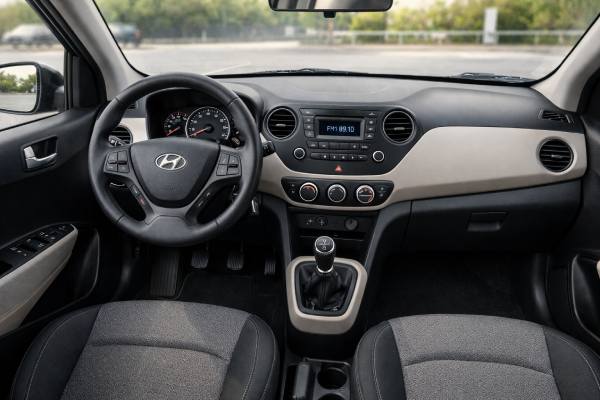
There are also ownership advantages beyond fuel cost. The cabin is cleverly laid out, the upright seating position helps visibility, and the luggage area is useful for the class. The i10 was also one of the more mature European-market city cars of its generation in terms of safety structure and basic active-safety hardware. That is important, because small cars often cut too much in that area.
The caveat is equally clear. The LPGi only stays attractive when the car still has its original, tidy, correctly maintained fuel system. A shabby example with warning lights, poor cold running, or a badly documented service record can become frustrating very quickly. On the used market, the best i10 LPGi cars are usually the ones with boring histories: regular servicing, no modifications, and owners who treated the LPG system as part of the car rather than an excuse to postpone maintenance.
Hyundai i10 IA Technical Data
The table below focuses on the 2014–2016 European-market Hyundai i10 IA 1.0 Kappa LPGi with the factory bi-fuel setup. A few items vary slightly by market, trim, or homologation cycle, so those entries are marked accordingly instead of pretending there was one universal figure for every country.
| Powertrain and efficiency | Specification |
|---|---|
| Code | B3LA |
| Engine layout and cylinders | Inline-3, 3 cylinders, DOHC, 4 valves per cylinder |
| Bore × stroke | 71.0 × 84.0 mm (2.8 × 3.3 in) |
| Displacement | 1.0 L (998 cc) |
| Induction | Naturally aspirated |
| Fuel system | Multi-point injection with factory bi-fuel petrol/LPG setup |
| Compression ratio | 10.5:1 |
| Max power | 67 hp (49 kW) @ 6,200 rpm |
| Max torque | Commonly catalogued around 90 Nm (66 lb-ft) @ 3,500 rpm |
| Timing drive | Chain-driven |
| Rated efficiency | Market and test-cycle dependent; commonly listed around 5.1 L/100 km on LPG in later Euro 6 listings, while some early Euro 5 databases quote lower equivalent-cycle figures |
| Real-world highway @ 120 km/h (75 mph) | Usually about 6.5–7.5 L/100 km on LPG in healthy condition |
| Transmission and driveline | Specification |
|---|---|
| Transmission | 5-speed manual |
| Drive type | FWD |
| Differential | Open |
| Chassis and dimensions | Specification |
|---|---|
| Suspension, front / rear | MacPherson strut / coupled torsion-beam axle |
| Steering | Motor power-assisted steering |
| Brakes | Front disc / rear drum |
| Wheels and tyres, most common sizes | 155/70 R13, 175/65 R14, 185/55 R15 |
| Ground clearance | About 149–150 mm (5.9 in), market-dependent |
| Length / width / height | 3,665 / 1,660 / 1,500 mm (144.3 / 65.4 / 59.1 in) |
| Wheelbase | 2,385 mm (93.9 in) |
| Turning circle, kerb-to-kerb | About 9.6 m (31.5 ft) |
| Kerb weight | About 989 kg (2,180 lb), market-dependent |
| GVWR | About 1,470 kg (3,241 lb), verify by vehicle plate |
| Fuel tank | Petrol tank 40 L (10.6 US gal / 8.8 UK gal); LPG tank capacity varies by market, commonly around 27.2 L |
| Cargo volume | 252 L / 1,046 L (8.9 / 36.9 ft³), VDA |
| Performance and capability | Specification |
|---|---|
| 0–100 km/h (0–62 mph) | About 15.2 s |
| Top speed | About 153 km/h (95 mph) |
| Braking distance | Not consistently published for the LPGi in open official material |
| Towing capacity | Often not rated or locally restricted on LPG variants; verify registration-market data |
| Payload | Roughly 400–480 kg depending on exact kerb weight and plate data |
| Fluids and service capacities | Specification |
|---|---|
| Engine oil | API SM or higher, ACEA A5 or higher for Europe; SAE 5W-30 recommended for best economy; 3.0 L (3.17 US qt) |
| Coolant | Ethylene-glycol coolant for aluminium radiator, mixed with water; 4.9 L (5.17 US qt) for 1.0 M/T |
| Transmission oil | Genuine Hyundai manual-transmission fluid, API GL-4 SAE 70W; 1.9–2.0 L (2.0–2.1 US qt) |
| Differential / transfer case | Not applicable |
| Brake and clutch fluid | FMVSS 116 DOT 3 or DOT 4; 0.7–0.8 L (0.7–0.8 US qt) |
| A/C refrigerant | R-134a |
| Key torque specs | Wheel nut torque in the manual is shown as 9–11 kgf·m, approximately 88–108 Nm (65–80 lb-ft) |
| Safety and driver assistance | Specification |
|---|---|
| Crash ratings | Euro NCAP 2014: 4 stars; Adult 79%, Child 80%, Pedestrian 71%, Safety Assist 56% |
| IIHS | Not applicable to this model and market |
| Headlight rating | Not applicable |
| ADAS suite | No modern AEB on early cars; ABS, ESC, seatbelt reminder, and speed-limiter fitment varied by market and trim; later brochures in some markets advertised FCWS and LDWS, but not as universal LPGi equipment |
The most important numbers here are not the raw acceleration figures. They are the dimensions, the modest curb weight, and the simple mechanical layout. The i10 LPGi is easy to own because it is fundamentally conventional. The other big point is fuel data. With LPG cars, published figures often differ more than buyers expect because countries, emissions standards, and reporting methods changed across the decade. That is why real-world condition matters more than chasing one perfect brochure number.
Hyundai i10 IA Trims and Safety
The 2014–2016 i10 IA was sold in many European markets with different trim names, so the useful way to understand equipment is by feature tier rather than by one universal badge ladder. The 1.0 LPGi was typically positioned as a rational running-cost choice rather than a stripped fleet special. In many countries it could be found with air conditioning, electric front windows, central locking, a height-adjustable driver’s seat, basic infotainment, trip computer functions, and either 13-inch or 14-inch wheels. Higher trims added nicer seat fabrics, steering-wheel controls, rear electric windows, fog lamps, alloy wheels, and more cosmetic detailing.
Mechanically, most LPGi cars stayed close to the regular 1.0 petrol layout. That means no dramatic suspension or brake upgrades simply because the car ran on LPG. The meaningful differences were the bi-fuel hardware, the extra mass from the LPG installation, and, in some cases, the loss of a conventional spare-wheel arrangement depending on tank packaging. If you are shopping used, look beyond the trim badge and inspect what is actually on the car. Market imports can create confusion, and sellers often describe features incorrectly.
Good quick identifiers include the LPGi badging where fitted, the original dashboard fuel-switch arrangement, and a boot-floor or underbody layout consistent with the factory system rather than a later conversion. The VIN remains the best way to confirm what the car left the factory with. That matters because a genuine factory LPGi usually offers a neater ownership experience than a car converted later in life.
Safety is one of the IA i10’s stronger points. Euro NCAP tested the second-generation European i10 in 2014 and awarded it four stars. The tested car was a left-hand-drive 1.0 petrol Comfort, and Euro NCAP stated that the rating applied to all Hyundai i10s of the specification tested. The scores were solid for the class: 79 percent for adult occupant protection, 80 percent for child occupant protection, 71 percent for pedestrian protection, and 56 percent for safety assist. The tested vehicle included front airbags, side thorax and curtain airbags, pretensioners, load limiters, ISOFIX anchorages on the rear outer seats, a front passenger airbag deactivation switch, and ESC as standard in the tested configuration.
That does not mean every 2014–2016 LPGi in every country carries identical safety equipment. Some markets packaged ESC, speed-limiter functions, tyre-pressure monitoring, hill-start assist, or side airbags differently. Late 2016 marketing material in some European markets also highlighted features such as forward collision warning and lane departure warning on selected versions, but those systems were not a universal reality across all early IA LPGi cars. For a used buyer, the safest assumption is simple: verify the actual car.
In practical terms, the IA i10 is safer than many older city cars because it combines a newer shell, better restraint strategy, and more complete standard safety hardware than the class used to offer. It is still a small hatchback from the mid-2010s, so expectations should remain realistic. But as an urban commuter or small family runabout, it gives a more reassuring baseline than many cheap city-car alternatives from the same money bracket.
Known Faults and Service Actions
The Hyundai i10 IA 1.0 LPGi is generally a solid small car, but its long-term value depends heavily on how well the fuel system and routine maintenance have been handled. In reliability terms, this is not a fundamentally fragile model. Most ownership problems come from wear, neglected servicing, cheap replacement parts, or LPG-related shortcuts rather than from a major design flaw.
The most common low-cost or medium-cost issues are as follows:
- Rough running at idle or uneven response when switching between petrol and LPG. This usually points to tired ignition components, overdue plugs, contaminated injectors, poor calibration, or ageing LPG system parts rather than catastrophic engine trouble.
- Hesitation under load. Common causes include worn spark plugs, weak coils, vacuum leaks, throttle-body contamination, or fuel-pressure issues on the petrol side that also affect the bi-fuel strategy.
- Clutch wear in city-heavy use. The i10 is light, but many examples spend their lives in stop-start traffic, which can shorten clutch life.
- Suspension noises from links, bushes, or top mounts. These are normal age-related repairs on a light hatchback, not a sign that the platform itself is weak.
- Battery and charging complaints. A tired 12 V battery can confuse owners because it may first show up as poor starting, unstable idle, or warning lamps rather than an obvious electrical failure.
Occasional but more expensive faults include:
- Neglected LPG hardware. Factory systems are usually dependable, but injectors, lines, shut-off valves, and pressure-regulation components do age. A car that smells of fuel, switches badly, or runs much better on one fuel than the other needs proper diagnosis, not guesswork.
- Cooling-system weakness from age rather than design. Hoses, clamps, radiator seepage, and thermostat problems are worth watching on any older small car.
- Steering and wheel-bearing wear on rough-road cars.
- Exhaust corrosion, especially on cars used for short trips and in salty climates.
The engine itself is usually durable if oil changes are done on time. It is chain-driven, which removes a routine timing-belt cost, but that does not mean the timing system should be ignored forever. Chain noise at start-up, correlation faults, or persistent top-end rattle deserve proper inspection. The manual’s service schedule also calls for valve-clearance checks on the 1.0 at 95,000 km or 48 months, and that is more important on an LPG-capable engine than many buyers realize. LPG combustion can be less forgiving of neglected valvetrain settings over time.
For recalls and campaigns, the most honest approach is VIN-first. Hyundai’s official recall tools in Europe are mainly VIN-based, which makes public model-by-model campaign summaries less transparent than buyers often expect. That means a seller’s statement of “no recalls” is not enough. Ask for a dealer printout, or run the VIN through Hyundai’s official recall checker for the relevant market. Also ask whether the car has had software updates related to drivability, emissions, warning lights, or body-control issues. Small improvements in calibration can make a noticeable difference in how a city car behaves.
Before buying, request a genuine cold start, a drive on both fuels if the system allows it, a scan for stored faults, and visible proof of regular servicing. A tidy i10 LPGi usually feels honest right away. A neglected one usually tells on itself within the first ten minutes.
Upkeep and Used-Buying Guide
The i10 LPGi rewards disciplined, boring maintenance. That is good news, because boring maintenance is usually cheaper than major repair. Hyundai’s normal European service schedule for the petrol engines gives a useful base, and the LPGi owner should follow it with a little more caution around ignition health and valve-clearance checks.
A practical maintenance plan looks like this:
- Every 15,000 km or 12 months
Change engine oil and filter. Inspect for leaks, check coolant level, inspect accessory belts, test battery health, and inspect tyres and brakes. - Every 30,000 km or 24 months
Inspect or renew brake fluid as needed according to schedule, inspect clutch and brake hydraulics, and inspect fuel lines and connections carefully. For LPGi cars, this is also a good interval for a closer look at LPG lines, connectors, and switching behaviour. - Every 35,000 km
The standard schedule shows the engine air filter moving into replacement at alternating service points. In dusty use, replace it earlier. - Every 95,000 km or 48 months
Check valve clearance on the 1.0 engine. This matters on the LPGi and should not be skipped. - Every 120 months or 210,000 km for the first coolant change, then every 40,000 km or 24 months
That is the factory-style coolant schedule shown in the owner’s manual, but many cautious owners refresh earlier on older cars. - Every 160,000 km
Spark plugs are shown as a long-interval item in the schedule, but on an LPG-capable engine many specialists prefer not to push them that far in real life. Earlier replacement is often cheap insurance.
Useful fluid and capacity figures are straightforward. Engine oil capacity is 3.0 L. Manual-transmission oil is 1.9 to 2.0 L of Hyundai GL-4 SAE 70W fluid. Coolant capacity for the 1.0 manual is 4.9 L. Brake and clutch fluid capacity is about 0.7 to 0.8 L, using DOT 3 or DOT 4 fluid. The manual also shows wheel-nut torque in the roughly 88 to 108 Nm range. Those are the decision-making numbers most owners and buyers care about.
As a used purchase, seek cars with these traits:
- Factory LPG system still intact and unmodified
- Clean service record with time-based servicing, not only mileage-based servicing
- Evidence that the car has been run on petrol often enough to keep that side of the system healthy
- Smooth starts, stable idle, and clean switching between fuels
- No dashboard warning lamps
- Tight gear selection and a clutch that does not slip or shudder badly
- No obvious crash repair or underbody rust
Be careful with cars that have spent their lives as low-budget delivery vehicles, learner cars, or fleet runabouts without records. Also be careful with examples whose seller cannot explain the LPG service history. Long-term durability is good when the i10 is maintained on schedule and the LPG system is treated as original equipment. It is much less impressive when owners assume low fuel cost means low maintenance cost.
Road Manners and Efficiency
The Hyundai i10 IA 1.0 LPGi drives like a well-sorted city car with honest limits. That is meant as praise. Around town, it feels light, easy, and predictable. The steering is light enough for tight parking, the visibility is strong, and the clutch and gearshift are simple to work with in traffic. The suspension is not plush, but it is mature enough that the car does not feel nervous or flimsy on ordinary roads. Compared with many older A-segment cars, the IA i10 has a more substantial feel.
The powertrain is adequate rather than energetic. With 67 hp and around 90 Nm, the car depends on revs more than a small turbo or diesel would. That means you plan overtakes, especially on hills or with passengers. In town, this is less of a problem than it sounds because the car is light and the gearing is sensible. On faster roads, however, the i10 reminds you that economy came first. It will cruise, but it does not surge. Crosswinds and gradients also make themselves known more than they would in a larger supermini.
Noise, vibration, and harshness are acceptable for the class. The three-cylinder character is always present, but the IA body is refined enough that the car feels more modern than many bargain-city hatchbacks from the early 2010s. On LPG, the driving experience should feel almost the same as on petrol in a healthy car. If it does not, something is wrong. Noticeable hesitation, jerky transitions, or a big power gap between fuels usually points to a service issue, not an unavoidable feature of the design.
Real-world fuel economy is the main reason to buy this version. Exact figures vary by market, ambient temperature, and how the car reports petrol versus LPG use, but healthy examples usually land in these broad ranges on LPG:
- City: about 7.0 to 8.5 L/100 km
- Mixed: about 6.3 to 7.4 L/100 km
- Highway at 100–120 km/h: about 6.5 to 7.5 L/100 km
Petrol consumption during cold starts and warm-up phases means actual fuel-cost calculations should be based on both fuels, not on LPG alone. Even so, the LPGi can still be cheaper to run than the ordinary petrol version when local LPG pricing is favourable. That is the key ownership math.
Performance is modest but usable. Expect about 15.2 seconds for 0–100 km/h and roughly 153 km/h flat out. Those are enough for everyday use, but they tell you exactly what this car is: a cost-focused small hatch, not a warm hatch in disguise.
Ride and handling are best described as tidy and safe. The i10 turns in cleanly, stays stable enough on normal roads, and does not feel clumsy in quick urban maneuvers. Braking feel is ordinary but dependable when the system is in good condition. Tyre choice matters more than buyers often think on light city cars, so a good set of tyres can improve refinement, braking, and wet-road confidence noticeably.
How It Stacks Up Against Rivals
The Hyundai i10 IA LPGi sits in a small niche because factory LPG city cars were never common everywhere, and they make the most sense only in the right regions. If LPG supply is easy and stable where you live, the i10 gains a clear running-cost advantage over ordinary petrol city cars such as the Toyota Aygo, Peugeot 108, Citroën C1, Volkswagen up!, Skoda Citigo, or SEAT Mii. Most of those rivals are simple, practical, and often pleasant to drive, but few offer the same bi-fuel cost appeal from the factory.
Against the Kia Picanto of the same period, the i10 is effectively competing against a close mechanical cousin. In that comparison, condition, history, and equipment matter more than badge preference. Against the Fiat Panda LPG, the Hyundai often feels more conventionally modern and, in many markets, easier to live with from a parts-and-service perspective. The Panda fights back with a roomier, taller package and a characterful driving feel, but not everyone wants that.
Compared with the ordinary petrol i10 1.0, the LPGi makes its case only if fuel economics matter enough to offset its weaker flexibility and added system complexity. If you drive very low annual mileage, live far from LPG stations, or mostly do infrequent short trips, the petrol model is often the smarter buy. It is simpler, a little easier to explain to any workshop, and slightly less dependent on specialised diagnosis. But if you commute regularly, know the local LPG network, and can buy a well-kept factory car, the LPGi usually wins the ownership-cost argument.
The Hyundai’s real strengths versus rivals are balance and maturity. It is roomy for its size, easy to drive, safety-conscious for the class, and mechanically straightforward. Its weak points are equally clear: modest performance, the need for careful fuel-system upkeep, and the fact that cheap examples are often cheap because owners chased savings while skipping maintenance.
So where does that leave it? In the right market, the 2014–2016 Hyundai i10 IA 1.0 LPGi is one of the more rational used city cars you can buy. Not the fastest, not the most stylish, and not the rarest. Just one of the easiest to justify when the numbers, service history, and real-world use all line up.
References
- Εγχειρίδια Κατόχου – Hyundai Ελλάς ΑΒΕΕ 2026 (Owner’s Manual Portal)
- Hyundai Owners manuals | Hyundai Motor UK 2026 (Owner’s Manual Portal)
- Hyundai i10 – Euro NCAP Results 2014 2014 (Safety Rating)
- Home | Hyundai Recalls & Service Campaigns 2026 (Recall Database)
- The New 2016 (Official Brochure)
Disclaimer
This article is for informational purposes only and is not a substitute for professional diagnosis or repair. Specifications, torque values, service intervals, procedures, and equipment can vary by VIN, market, trim, emissions standard, and fuel-system configuration, so always verify critical details against the official service documentation for the exact vehicle.
If you found this guide useful, please consider sharing it on Facebook, X, or another social platform to support our work.