
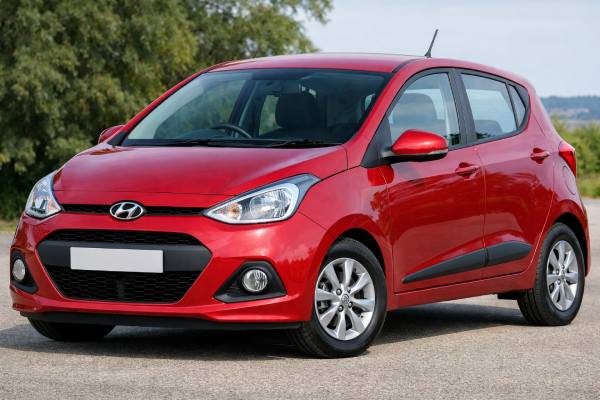
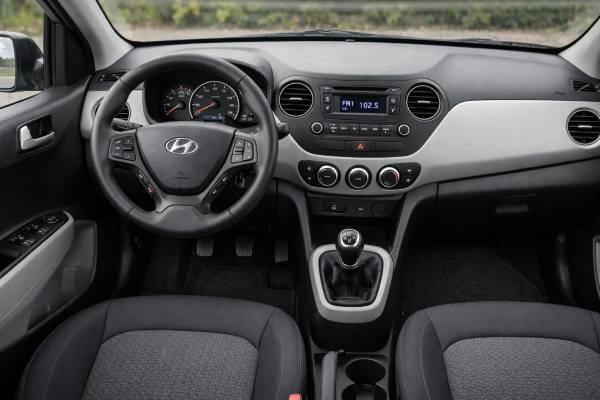
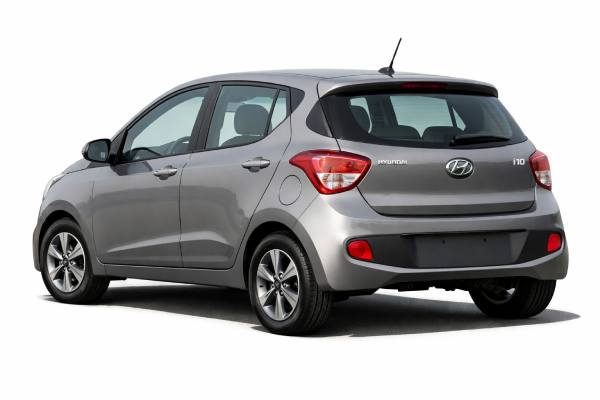
The Hyundai i10 IA with the 1.25 Kappa MPi engine is one of those rare city cars that still makes strong sense as a used buy. It is compact, light, easy to place on narrow streets, and cheap to run without feeling stripped down. More importantly, the 1.25-liter four-cylinder gives it enough extra flexibility over the 1.0 to make the car feel more relaxed in mixed driving. It is still a small hatchback, but it is not as easily overwhelmed by passengers, hills, or short motorway runs.
From an ownership perspective, the important engineering points are simple. This engine uses a timing chain rather than a belt, the chassis is conventional and inexpensive to service, and the car’s low mass helps tyres, brakes, and fuel use. The main caution is age and condition. A good i10 IA is durable and pleasant. A neglected one can suffer from wear in suspension, brakes, electrics, and clutch-related items that quickly erase the low-cost advantage.
At a Glance
- Stronger mid-range and easier motorway merging than the 1.0-liter i10.
- Timing chain engine avoids routine belt replacement costs.
- Spacious cabin and useful 252 L boot make it more practical than many city-car rivals.
- Condition matters: suspension wear, tired batteries, and neglected servicing are more important than odometer bragging rights.
- A sensible routine is engine oil every 10,000–15,000 km or 12 months, whichever comes first.
Guide contents
- Hyundai i10 IA in context
- Hyundai i10 IA technical figures
- Hyundai i10 IA grades and protection
- Trouble spots and factory actions
- Service plan and smart-buy checks
- Behind the wheel and fuel use
- Stacking up against city-car rivals
Hyundai i10 IA in context
The second-generation Hyundai i10 arrived as a more mature, more European-feeling replacement for the older PA model. It was still firmly an A-segment hatchback, but it was longer, wider in useful ways, quieter on the move, and noticeably more substantial in everyday driving. For buyers looking at the 2014–2016 1.25 Kappa MPi, that matters because this version sits close to the sweet spot of the range. It keeps the i10’s basic virtues of small size and low costs, while adding enough performance to make the car feel less stretched.
The 1.25 engine changes the character more than the numbers first suggest. On paper, 87 hp does not sound dramatic. In a light hatchback, though, it gives the i10 better flexibility in real traffic, easier overtakes on two-lane roads, and less need to work the gearbox hard. That is the real ownership advantage. The 1.0 is adequate, but the 1.25 feels more relaxed and better matched to the car’s size and five-seat layout.
The IA also improved packaging. Cabin room is a strong point, with a tall roofline, decent front-seat space, and a rear bench that is genuinely usable for a car this short. The boot is practical rather than huge, but the square opening and folding rear seat make the car easy to live with. It still works well as a commuter, a second household car, or a first car that needs to handle more than short urban hops.
Underneath, the engineering is conventional in a good way. The front suspension is MacPherson strut, the rear axle is a torsion-beam arrangement, the steering is electrically assisted, and the drivetrain is simple front-wheel drive. That keeps parts prices reasonable and workshop familiarity high. It also means the i10 IA is easy to inspect when buying used. There is very little hidden complexity.
The main distinction within 2014–2016 is equipment evolution. Early cars are usually more basic. Late-2016 facelifted or updated cars can bring LED running lights, revised trim details, and in some markets a broader safety equipment list. That does not change the basic verdict, though. The IA 1.25 remains a straightforward, light, practical hatch that does most daily jobs well, provided it has been serviced properly and not treated as a disposable city runabout.
Hyundai i10 IA technical figures
The 1.25 Kappa MPi is the key technical step up in this i10 range. It is a naturally aspirated four-cylinder with multi-point injection, dual overhead cams, chain drive, and continuously variable valve timing. Hyundai’s own 2016 European technical data sheet is especially useful here because it covers the 1.2-liter variant directly.
| Powertrain and efficiency | Specification |
|---|---|
| Engine code / family | Kappa 1.25 MPi |
| Engine layout and cylinders | Inline-4, transverse |
| Valvetrain | DOHC, 4 valves per cylinder, CVVT |
| Displacement | 1.2 L (1,248 cc) |
| Bore × stroke | 71.0 × 78.8 mm (2.80 × 3.10 in) |
| Induction | Naturally aspirated |
| Fuel system | Electronically controlled multi-point injection |
| Compression ratio | 10.5:1 |
| Max power | 64 kW @ 6,000 rpm, commonly marketed as 87 hp / 87 PS |
| Max torque | 120.7 Nm (89.0 lb-ft) @ 4,000 rpm |
| Timing drive | Chain |
| Rated efficiency, manual | 4.9 L/100 km (48.0 mpg US / 57.7 mpg UK) combined |
| Rated efficiency, automatic | 5.9 L/100 km (39.9 mpg US / 47.9 mpg UK) combined |
| Official urban / extra-urban, manual | 6.5 / 4.1 L/100 km |
| Real-world highway @ 120 km/h | Not officially published; usually noticeably above the extra-urban lab number |
| Transmission and driveline | Specification |
|---|---|
| Transmission | 5-speed manual, or 4-speed automatic in some markets |
| Drive type | FWD |
| Differential | Open |
| Chassis and dimensions | Specification |
|---|---|
| Front suspension | MacPherson strut |
| Rear suspension | Coupled torsion-beam / twist-beam axle |
| Steering | Electric rack and pinion |
| Steering ratio | 14:1 |
| Steering lock-to-lock | 2.8 turns |
| Front brakes | Ventilated discs, 252 mm (9.92 in) |
| Rear brakes | Market-specific; some official European sheets list 234 mm rear discs, while other markets used drums |
| Most common tyre size | 175/65 R14 |
| Optional tyre packages | 15-inch wheels on some higher trims and markets |
| Ground clearance | Market-specific; modest city-car clearance |
| Length | 3,665 mm (144.3 in) |
| Width | 1,660 mm (65.4 in) |
| Height | 1,500 mm (59.1 in) |
| Wheelbase | 2,385 mm (93.9 in) |
| Turning circle | 9.56 m (31.4 ft) |
| Kerb weight | About 1,016–1,124 kg (2,240–2,478 lb), depending on trim and transmission |
| GVWR | About 1,450–1,455 kg (3,197–3,208 lb) |
| Fuel tank | 40 L (10.6 US gal / 8.8 UK gal) |
| Cargo volume | 252 L (8.9 ft³) seats up / 1,046 L (36.9 ft³) seats down, VDA |
| Performance and capability | Specification |
|---|---|
| 0–100 km/h, manual | 12.3 s |
| 0–100 km/h, automatic | 13.8 s |
| Top speed, manual | 175 km/h (109 mph) |
| Top speed, automatic | 163 km/h (101 mph) |
| 80–120 km/h, manual | 20.2 s in 5th gear |
| Braking distance | Hyundai did not publish a headline factory figure |
| Towing capacity | Not universally homologated in European data sheets; verify by VIN and market |
| Payload | Roughly 331–419 kg depending on trim and transmission |
| Fluids and service capacities | Typical supported figures |
|---|---|
| Engine oil | Common owner-manual grade: SAE 5W-30; verify exact API/ACEA spec by VIN and climate |
| Engine oil capacity | 3.3 L (3.5 US qt) |
| Coolant | Capacity varies by market documentation; verify from VIN-specific manual before refill |
| Manual transmission oil | API GL-4 SAE 75W-85 |
| Manual transmission oil capacity | 1.9 L (2.0 US qt) |
| Automatic transmission fluid | ATF MX4 |
| Automatic transmission capacity | 6.1 L (6.4 US qt) |
| Brake fluid | Use Hyundai-approved fluid for the market specification |
| Wheel-nut torque | 11–13 kgf·m (79–94 lb-ft), about 107–127 Nm |
| Safety and driver assistance | Specification |
|---|---|
| Euro NCAP | 4 stars; Adult 79%, Child 80%, Pedestrian 71%, Safety Assist 56% |
| IIHS | Not rated |
| Headlight rating | Not applicable |
| ADAS | Early 2014–2015 cars were largely conventional; later 2016 updates in some markets added features such as FCWS and LDWS |
This data makes the i10’s appeal easy to see: it is light, compact, mechanically simple, and brisk enough in 1.25 form to feel more rounded than the base engine cars.
Hyundai i10 IA grades and protection
Trim names varied a lot across Europe, so the safest way to shop is by equipment, not badge alone. In the UK, buyers often saw versions such as S, SE, Premium, and Premium SE. In Ireland, Classic and Deluxe naming was common. In parts of continental Europe, trim structures such as i10, Trend, and Style were used instead. The exact names matter less than the feature spread.
The 1.25 engine was usually not the absolute base model. In most markets it sat in better-equipped versions, which is good for used buyers because many 1.25 cars also pick up the convenience features people actually want. Depending on year and trim, that can include:
- Air conditioning or automatic climate control.
- Bluetooth and steering-wheel audio controls.
- Cruise control and speed limiter.
- Electric heated mirrors.
- Alloy wheels rather than steel wheels with covers.
- Rear electric windows.
- Keyless entry and push-button start on upper trims.
- Heated front seats and heated steering wheel on some richer European versions.
- Navigation and smartphone integration on late cars in some markets.
Mechanically, the big difference was not trim but gearbox choice. The five-speed manual suits the 1.25 engine better and keeps the car lighter, quicker, and more economical. The four-speed automatic is simple and durable when maintained, but it blunts the performance advantage of the larger engine. For most buyers, the manual is the better fit.
Safety is strong for the class and age, but it needs context. Under the 2014 Euro NCAP regime, the i10 scored four stars with 79% adult protection, 80% child protection, 71% pedestrian protection, and 56% for safety assist. That was a respectable result for a city car, especially one sold on price. The structure, restraint package, and standard ESC helped it. It also offered a useful set of passive safety features for the segment:
- Front airbags.
- Front side airbags.
- Curtain airbags on many European versions.
- ESC and VSM.
- Seatbelt reminders.
- ISOFIX points on the rear outboard seats.
- Passenger airbag deactivation for child-seat use.
That said, it is still a 2014-era A-segment car. It does not deliver the active safety depth or crash performance of newer small hatchbacks. Buyers who prioritize modern assistance systems should especially check late-2016 cars, because that is where some markets began offering or expanding features such as forward collision warning and lane departure warning. Those systems are helpful, but not universal across the 2014–2016 run.
Quick identifiers help when browsing listings. Alloy wheels, leather-trimmed steering wheel, cruise buttons, heated-seat switches, and a central touchscreen usually point to mid- or upper-grade cars. For long-term satisfaction, that is where the 1.25 IA makes the most sense: enough engine, enough equipment, and safety that was competitive for its class at launch.
Trouble spots and factory actions
The i10 IA 1.25 does not have a single notorious failure that defines the model. Its weak points are more ordinary: age, neglected maintenance, urban wear, and minor electrical or chassis faults. That is a good place to be, because most issues are fixable without the kind of bill that writes the car off.
A practical reliability map looks like this.
- Common, low-to-medium cost:
- 12 V battery fatigue. Symptoms include lazy starting, random warning lamps, and weak stop-start or central-locking behavior on cars equipped with extra electronics. Remedy: battery and charging-system test, then replacement if needed.
- Front drop links, bushes, and top mounts. Symptoms are light knocking over broken surfaces and vague front-end feel. Remedy: replace worn parts in pairs and align the car afterward.
- Brake wear and corrosion from short-trip use. Symptoms include squeal, pulsation, or a handbrake that needs too much travel. Remedy: inspect front pads and rear hardware carefully, especially on cars that have lived in damp urban conditions.
- Door-lock actuators and switchgear. Symptoms are intermittent central locking or one window not responding. Remedy: electrical diagnosis before parts-swapping.
- Occasional, medium cost:
- Coil-pack or ignition faults. Symptoms are misfire under load, rough idle, and a flashing engine light. Remedy: confirm whether plugs, coils, or wiring are at fault before replacing parts.
- Clutch wear on city-driven manuals. Symptoms are a high bite point, shudder on take-off, or slip in higher gears. Remedy: clutch kit, and inspect the release mechanism while inside.
- Wheel-bearing noise. Symptoms are a road-speed-related hum or growl. Remedy: confirm by road test and lift inspection, then replace the affected bearing or hub assembly.
- Less common, but important:
- Timing-chain noise from poor oil care. Unlike the old 1.1 belt engine, the 1.25 uses a chain, which is generally a plus. It is not immortal, though. Repeated oil neglect can lead to cold-start rattle, tensioner wear, or timing-correlation faults. Remedy: verify oil history, listen from cold, scan for cam/crank correlation codes, and replace chain hardware only if symptoms or measurements justify it.
- Cooling-system leaks. These are not the model’s defining weakness, but older hoses, clamps, and radiator seams can eventually seep. Remedy: pressure-test the system rather than waiting for overheating.
Software and calibration issues are limited because this is a relatively simple car. Engine-management updates can improve idle quality or minor driveability complaints, but there is no heavy electronic layer here. On late cars equipped with camera-based warning systems, windscreen replacement or front-end repair may require recalibration, so buyers should look for proper paperwork if those systems are fitted.
For recalls and service campaigns, the sensible approach is VIN-based verification. Hyundai’s official recall portal and national recall databases are more useful than generic model-year lists because campaigns can vary by market, production date, and equipment. On any used example, ask for:
- Full service history.
- Proof of recall and campaign completion.
- Evidence of recent brake, battery, and tyre work.
- A cold-start video or in-person cold inspection.
Overall, the i10 IA 1.25 is a dependable small car when treated like a normal vehicle that needs normal maintenance, not a throwaway appliance.
Service plan and smart-buy checks
The best way to own one of these well is to be conservative. Hyundai’s published intervals varied by market, and many used cars have spent years on short trips, cheap tyres, and postponed servicing. A smart maintenance plan is therefore tighter than the absolute maximum figure in every handbook.
A practical schedule for the 2014–2016 1.25 looks like this:
- Engine oil and filter every 10,000–15,000 km or 12 months.
- Engine air filter inspect every service, replace about every 30,000 km or earlier in dusty use.
- Cabin filter every 15,000–20,000 km or annually if the car lives in traffic-heavy or dusty areas.
- Spark plugs around 30,000–45,000 km, depending on plug type and operating conditions.
- Brake fluid every 2 years.
- Coolant inspect at every service and replace by official market schedule; do not treat it as lifetime fill.
- Manual gearbox oil inspect for leaks and condition; refresh it preventively on an older car even if the handbook is light on interval detail.
- Automatic transmission fluid on 4-speed auto cars should be treated as serviceable, not permanent.
- Tyre rotation about every 10,000 km, with alignment checks whenever wear looks uneven.
- 12 V battery test from around year four onward, especially before winter.
- Timing chain: no routine replacement interval, but inspect for cold-start rattle, poor oil history, and timing-correlation faults.
Useful decision data:
| Maintenance item | Practical note |
|---|---|
| Engine oil capacity | 3.3 L |
| Engine oil grade | Commonly SAE 5W-30; verify exact API/ACEA requirement by VIN |
| Manual transmission oil | API GL-4 SAE 75W-85, 1.9 L |
| Automatic transmission fluid | ATF MX4, 6.1 L |
| Fuel tank | 40 L |
| Wheel-nut torque | 107–127 Nm, equivalent to 79–94 lb-ft |
When buying used, the checklist is straightforward and valuable:
- Start from fully cold and listen for chain rattle or uneven idle.
- Check clutch bite point and uphill take-off quality.
- Make sure the gearbox shifts cleanly when cold and warm.
- Scan for stored engine and ABS faults.
- Inspect tyre wear across all four corners.
- Listen for front-end knocks over rough roads.
- Check the handbrake holds cleanly and releases fully.
- Look for coolant residue, oil sweating, and old hose clamps.
- Test every electrical item, including mirror adjustment, central locking, window switches, and air conditioning.
- Check for rust around rear arches, underbody seams, brake lines, and suspension mounting points in salted-road areas.
Best buys are usually manual, mid- or upper-trim cars with full records and good tyres. Cars to avoid are those with patchy service history, warning lights, cheap mismatched tyres, obvious clutch wear, or a seller who cannot explain recent maintenance. Long-term durability is good enough that a well-bought i10 IA can still serve for years as a dependable low-cost hatchback.
Behind the wheel and fuel use
On the road, the 1.25 i10 feels like a small car that has had enough engine fitted to it. That sounds simple, but it changes the experience in useful ways. The car moves off cleanly, responds well at urban speeds, and does not need to be constantly stretched to keep pace with traffic. Around town, that makes it easy and relaxed. Out of town, it makes the i10 more versatile than many budget city cars.
Ride comfort is acceptable rather than plush. The short wheelbase means sharp-edged bumps still get through, but the IA generation feels more settled than the older PA car. It tracks straighter, carries itself with more confidence, and feels less fragile over patchy roads. Steering is light, which is perfect for parking, but feedback is limited. That is normal for the class. It is accurate enough, easy to place, and more reassuring than entertaining.
The 1.25 engine’s character suits the car well. There is no turbo lag, no complicated torque curve, and no surprises. It likes to rev cleanly, but it also pulls more willingly from low and medium speeds than the 1.0. That matters most when joining a fast road, overtaking a slow vehicle, or carrying passengers. The five-speed manual works with it nicely. Ratios are simple and sensible, and the car feels most alive with that gearbox. The four-speed automatic is smoother than its age suggests, but it is slower, noisier under load, and less efficient.
In real use, fuel economy is one of the i10’s strengths. Official combined consumption for the manual sits at 4.9 L/100 km, while the automatic is rated at 5.9 L/100 km. In practice, sensible owners usually see:
- City driving: roughly mid-6s to low-7s L/100 km.
- Mixed driving: around mid-5s to low-6s L/100 km.
- Highway at 100–120 km/h: often high-5s to mid-6s L/100 km, depending on wind, load, and tyres.
That translates to respectable real-world economy without forcing the driver into a slow, underpowered version of the car. Noise is the main motorway compromise. At 120 km/h, the engine, tyres, and body shell all remind you that this is still a city hatch. It will do longer journeys, but it is happier below full motorway pace.
Braking feel is predictable, and grip is adequate on good tyres. This is not a car that wants to be hustled, but it is stable and honest within its limits. That honesty is part of its charm. The i10 IA 1.25 is easy to understand, easy to place, and easy to live with, which is exactly what many small-car buyers want.
Stacking up against city-car rivals
The i10 IA 1.25 sits in a strong position among older city cars because it offers a broader skill set than many rivals. Some competitors are cheaper, some are a little sharper to drive, and some feel more premium, but the Hyundai’s overall balance is hard to ignore.
Against the Volkswagen up!, Skoda Citigo, and SEAT Mii, the i10 is usually the softer, more comfort-led choice. The VW group cars often feel slightly tidier at speed and more refined in steering response, but the i10 counters with a roomier-feeling cabin, better value in the used market, and very straightforward ownership. If price and equipment matter more than brand image, the Hyundai is often the smarter buy.
Against the Kia Picanto of the same era, the difference is narrower because the cars are closely related in spirit and market position. The Picanto is a natural alternative and can be just as sensible. In practice, condition and service history should decide between them. A better-kept i10 is a better buy than a tired Picanto, and the reverse is equally true.
Against the Toyota Aygo, Peugeot 108, and Citroen C1 trio, the Hyundai feels more grown-up. Those cars are very good in town and often mechanically simple, but they can feel smaller, noisier, and less substantial on longer trips. The i10’s extra interior space and calmer road manners give it the edge for buyers who need one car to do everything.
Against the Fiat Panda, the result depends on priorities. The Panda is wonderfully practical and characterful, with clever packaging and strong visibility. The Hyundai, however, usually wins on predictability, parts familiarity, and a lower-risk ownership profile. For people who want logic over charm, the i10 makes more sense.
Against the Suzuki Celerio, the Hyundai feels better finished and more settled. The Suzuki can be very efficient and very reliable, but the i10 generally offers a nicer interior, stronger perceived quality, and a more complete small-car experience.
So who should choose the i10 IA 1.25? Buyers who want a compact hatchback that is easy in town, capable enough outside it, and not expensive to keep right. It is especially well suited to first-time drivers, older owners who want simple controls and good visibility, and households needing a practical second car.
Who should look elsewhere? Drivers who spend most of their time on fast motorways, or anyone who insists on modern active safety tech as standard. For everyone else, the 1.25 i10 remains one of the better-balanced used city cars of its era: roomy, simple, efficient, and pleasantly more capable than its size suggests.
References
- Hyundai Owners manuals | Hyundai Motor UK 2026 (Owner’s Manual)
- The New 2016 (Owner’s Manual)
- Hyundai i10 | Technische Daten | Stand: 6.2016 2016 (Technical Data)
- Hyundai i10 2014 (Safety Rating)
- Home | Hyundai Recalls & Service Campaigns 2026 (Recall Database)
Disclaimer
This article is for informational purposes only and is not a substitute for professional diagnosis, inspection, or repair. Specifications, torque values, service intervals, fluid grades, and repair procedures can vary by VIN, market, transmission, trim, and fitted equipment. Always confirm the exact requirements against the official service documentation for the specific vehicle.
If this guide was useful, please consider sharing it on Facebook, X, or another platform to support our work.