
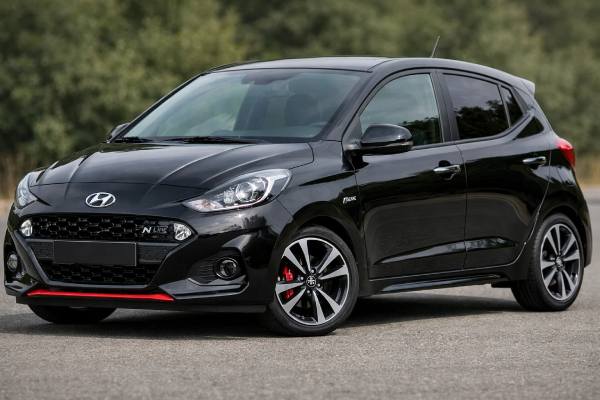
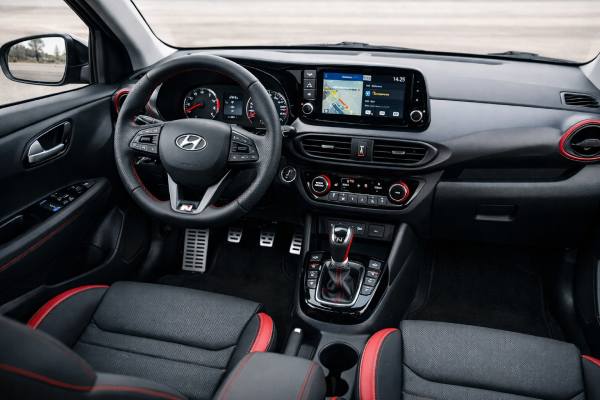
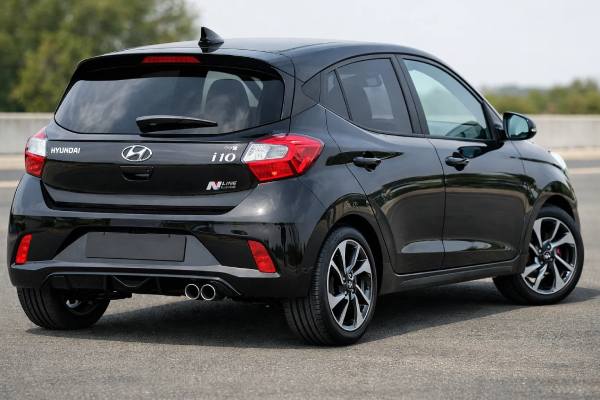
The Hyundai i10 N Line AC3 is one of those rare small cars that feels more special than its size suggests. It keeps the practical strengths of the regular i10, such as easy parking, sensible cabin packaging, and low running costs, but adds a much stronger personality through the turbocharged 1.0 T-GDi engine, sharper styling, and chassis tuning aimed at drivers who actually enjoy a back road. In launch-period form, this version used the 100 PS turbo engine, which is commonly rounded to 100 hp in used-car listings, even though the exact imperial conversion is slightly lower. That matters because later market brochures in some regions moved to a lower-output figure, so this guide is focused on the earlier 2020–2023 100 hp-class N Line. For buyers today, the appeal is clear: genuine pace for an A-segment hatchback, strong equipment, and a much more interesting drive than most city cars, without stepping into full hot-hatch cost or complexity.
Top Highlights
- Strong 172 Nm torque gives the i10 N Line far better mid-range shove than the regular petrol models.
- Compact size, 252 L boot, and five-door practicality make it usable as more than a weekend toy.
- Standard safety equipment is unusually good for a small car, including AEB and lane-keeping support.
- Check service history carefully, especially oil changes, spark plugs, tyres, and clutch condition.
- A sensible oil and filter interval is every 15,000 km or 12 months, sooner with hard urban use.
Contents and shortcuts
- Hyundai i10 N Line character
- Hyundai i10 N Line spec sheet
- Hyundai i10 N Line trims and safety
- Known issues and service actions
- Maintenance routine and buyer checks
- Real-world performance and economy
- Where the N Line fits
Hyundai i10 N Line character
The AC3-generation i10 was already a strong city car because Hyundai understood the basics. It is small outside, but not cramped inside. It offers a useful 252-liter boot, decent rear-seat room for the class, and a square, upright shape that helps visibility in traffic. The N Line takes that practical base and adds a much more assertive edge. The front bumper, grille, red detailing, 16-inch wheels, twin exhaust finishers, and sportier interior touches make it look more serious than the standard car without pretending to be a full N model.
The biggest difference, though, is mechanical. The regular i10 engines are adequate and efficient, but the 1.0 T-GDi changes the car’s whole mood. With 172 Nm available from low revs, the N Line feels alert in a way most A-segment hatchbacks simply do not. It is still a light front-wheel-drive city car with a five-speed manual, but the turbo torque gives it stronger step-off, easier overtaking, and a more grown-up feel at suburban and dual-carriageway speeds.
This version also matters because it sits in a sweet spot. It is quicker and more characterful than the regular i10, but still much cheaper to run than a true hot hatch. Insurance, tyres, fuel use, and routine servicing stay closer to ordinary supermini levels than to something like an i20 N. For many drivers, that makes the N Line more realistic as an only car.
There is one detail worth clarifying before buying. Hyundai’s early N Line material in Europe and the UK quoted 100 PS for the 1.0 T-GDi. That is the specification covered here. In some later market brochures, the same basic N Line concept appears with 90 PS instead. Used-car listings often blur the two. That means a buyer should confirm the exact output, registration year, and market specification instead of relying only on the badge.
In short, the i10 N Line is not just an appearance pack. It is a genuinely different version of the i10, with more pace, more attitude, and more driver appeal. The reason it still stands out is simple: very few city cars combine this level of equipment, practical cabin packaging, and turbocharged fun in such a compact footprint.
Hyundai i10 N Line spec sheet
The figures below focus on the 2020–2023 Hyundai i10 N Line AC3 with the early 1.0 T-GDi 100 PS engine and five-speed manual. Some details vary slightly by market and homologation sheet, so VIN and regional brochure checks still matter.
| Powertrain and efficiency | Data |
|---|---|
| Code | Kappa 1.0 T-GDi family |
| Engine layout and cylinders | Inline-3, DOHC, 12-valve |
| Bore × stroke | 71.0 × 84.0 mm (2.80 × 3.31 in) |
| Displacement | 1.0 L (998 cc) |
| Induction | Turbocharged |
| Fuel system | Gasoline direct injection |
| Compression ratio | 10.5:1 |
| Max power | 100 PS / 73.5 kW @ 4,500 rpm, commonly listed as about 99–100 hp |
| Max torque | 172 Nm (126.9 lb-ft) @ 1,500 rpm |
| Timing drive | Chain-driven valvetrain layout |
| Rated efficiency | WLTP combined about 5.4 L/100 km (43.6 mpg US / 52.3 mpg UK) in UK launch spec |
| Real-world highway @ 120 km/h | Typically about 6.0–6.8 L/100 km depending on tyres, weather, and load |
| Transmission and driveline | Data |
|---|---|
| Transmission | 5-speed manual |
| Drive type | Front-wheel drive |
| Differential | Open differential |
| Chassis and dimensions | Data |
|---|---|
| Suspension front / rear | MacPherson strut / coupled torsion beam axle |
| Steering | Motor-driven power steering; 14.0 ratio; 2.64 turns lock-to-lock |
| Brakes | Front 252–256 mm ventilated discs, rear discs in launch-period N Line spec |
| Wheels and tyres | 195/45 R16 on 6.5J × 16 alloy wheels |
| Ground clearance | About 152 mm (6.0 in) |
| Length / width / height | 3,675 / 1,680 / 1,483 mm (144.7 / 66.1 / 58.4 in) |
| Wheelbase | 2,425 mm (95.5 in) |
| Turning circle | About 9.7–10.0 m (31.8–32.8 ft), depending on source format |
| Kerb weight | 1,024–1,045 kg (2,258–2,304 lb) |
| GVWR | 1,470 kg (3,241 lb) |
| Fuel tank | 36 L (9.5 US gal / 7.9 UK gal) |
| Cargo volume | 252 / 1,050 L (8.9 / 37.1 ft³), VDA |
| Performance and capability | Data |
|---|---|
| 0–100 km/h | About 10.5 s |
| Top speed | About 185 km/h (115 mph) |
| Braking distance | Strong for the class, but highly tyre-dependent |
| Towing capacity | 310 kg braked / 310 kg unbraked in UK launch material |
| Payload | 425–446 kg (937–983 lb) |
| Fluids and service capacities | Data |
|---|---|
| Engine oil | Use VIN-matched Hyundai-approved full synthetic; around 3.5–3.6 L with filter is a practical working figure to verify |
| Coolant | Hyundai-approved long-life coolant; exact fill varies, so verify from manual or dealer data |
| Transmission fluid | Correct Hyundai manual-transmission oil specification only; capacity varies by service data source |
| A/C refrigerant | Verify from under-bonnet label before service |
| A/C compressor oil | Verify by system label and service equipment data |
| Key torque specs | Always confirm from VIN-specific workshop data before tightening critical fasteners |
| Safety and driver assistance | Data |
|---|---|
| Crash ratings | Euro NCAP 2020: 3 stars; 69% adult, 75% child, 52% vulnerable road users, 59% safety assist |
| Headlight rating | IIHS not applicable |
| ADAS suite | AEB, Forward Collision Warning, Lane Keep Assist, Driver Attention Alert, speed limiter, High Beam Assist; some items vary by pack and market |
| Passive safety | Front, side, and curtain airbags; ISOFIX outer rear seats; eCall |
The spec sheet explains the car’s appeal well. It is not powerful in an absolute sense, but it is very light, usefully torquey, and much better equipped than older city cars with similar outputs.
Hyundai i10 N Line trims and safety
The i10 N Line is easier to understand than some Hyundai trims because it is both a style upgrade and a mechanical step-up. In launch-period UK specification, it came only with the 1.0 T-GDi manual powertrain and a clearly sport-themed equipment mix. That included 16-inch N Line alloy wheels, N Line exterior detailing, rear disc brakes, a more aggressive grille and bumper treatment, and a sportier interior with N-branded steering wheel and gearlever, black headlining, and red accents.
That matters on the used market because the N Line is not just a regular i10 with cosmetic stickers. The equipment bundle is meaningfully different. You get a stronger engine, a more interesting wheel-and-tyre setup, and a much better standard safety package than most small cars offered a few years earlier. Launch-spec material listed Autonomous Emergency Braking with Forward Collision Warning, Driver Attention Alert, Lane Departure Warning with Lane Keep Assist, ESC, Hill-start Assist, TPMS, eCall, cruise control with speed limiter, and front, side, and curtain airbags. For an A-segment car, that is a serious list.
There were also option-pack differences by region. In the UK, one important extra was the Tech Pack, which added navigation, Bluelink, Intelligent Speed Limit Warning, and wireless charging. In other European markets, trim packaging and names could vary, so it is smart to check the exact car rather than assume every N Line has the same infotainment or convenience setup.
Safety ratings deserve a careful explanation. Euro NCAP tested the new-generation i10 in 2020 and gave it three stars under a very demanding modern protocol. That sounds average, but it is far more meaningful than comparing it with older four-star city cars tested under much easier rules. The main weak areas were driver chest protection in the frontal test, poor driver abdominal protection in the full-width test because of submarining, and mediocre results in some active-safety scenarios. Even so, the i10 did offer standard AEB, lane support, driver monitoring, rear-seat belt reminders, and eCall, which helped it stand above many older competitors in real-world safety technology.
The best used examples usually have the full N Line identity intact: correct 16-inch wheels, N Line cabin trim, proper safety equipment, and no signs of cheap crash repair. On a small performance-flavored car, missing trim pieces, mixed tyres, warning lights, and poor wheel alignment usually tell you more than the seller’s description ever will.
Known issues and service actions
The encouraging part of i10 N Line ownership is that there is no single widely known, model-defining failure point that overshadows the whole car. The less encouraging part is that it is still a small turbocharged direct-injection engine in a light car that may be driven harder than a normal city hatchback. That means condition and maintenance history matter more than the badge.
Common, usually low to medium cost
- Uneven tyre wear from hard use, poor alignment, or cheap replacement tyres.
- Front brake wear and rear disc surface corrosion on lightly used cars.
- Clutch wear or a high bite point on cars driven mostly in town.
- 12 V battery weakness affecting idle-stop behavior, warning lights, or general electrical confidence.
These are not exotic faults, but they are typical of a quick small car. Because the N Line encourages enthusiastic driving, tyres and brakes matter more here than on a base i10. A car on mismatched budget tyres can feel much worse than it should and may hide a poor maintenance culture.
Occasional, medium cost
- Coil-pack or spark-plug-related misfire under boost.
- Wastegate or boost-control complaints that show up as flat mid-range response.
- Gearshift quality deterioration or driveline shunt caused by worn mounts or neglected clutch use.
- Cabin rattles and trim noises, especially if the car has spent years on rough urban roads.
Turbo three-cylinder engines ask more from their ignition system than small naturally aspirated cars. A slight misfire or hesitation under load can quickly become obvious. That is why plug condition, correct plug type, and routine servicing matter so much. On a test drive, the car should pull cleanly from low rpm without jerking, coughing, or dropping into reduced performance.
Less common, but worth watching
- Timing-chain noise on cold start if oil changes have been neglected.
- Carbon build-up over time in the intake path because this is a direct-injection engine.
- Turbo oil-feed or heat-related issues on heavily abused cars.
- Accident repair hiding beneath N Line trim pieces and bumper details.
Because this is a newer model than the older PA and IA i10s, official campaign history is best checked by VIN rather than by reading generic lists. Hyundai’s recall and service-campaign portal is the correct place to verify outstanding work. That is especially important on a 2020–2023 car, because software updates, calibration changes, or small running updates may not be obvious from paperwork alone.
The overall reliability outlook is good, not fragile. The i10 N Line is not known as a troublesome car when serviced properly. But it is much less tolerant of missed oil changes, worn plugs, bad tyres, or poor-quality repairs than the regular 1.0 MPi i10. Buy the cleanest, most consistently maintained example you can find.
Maintenance routine and buyer checks
The best way to keep an i10 N Line healthy is to service it like a small turbo engine, not like a disposable city runabout. It may be inexpensive compared with larger performance cars, but the turbocharger, direct injection, and extra grip mean it benefits from disciplined upkeep.
| Practical maintenance schedule | Sensible interval |
|---|---|
| Engine oil and filter | Every 15,000 km or 12 months maximum; sooner for repeated short trips or hard use |
| Engine air filter | Inspect every service, replace around 30,000 km or sooner in dusty use |
| Cabin filter | Every 15,000–20,000 km or yearly |
| Spark plugs | Around 40,000–45,000 km is a prudent working interval |
| Coolant | Follow the official manual; many long-life schedules begin with a major change at about 5 years |
| Brake fluid | Every 2 years |
| Manual gearbox oil | Inspect for leaks and consider preventive replacement around 60,000–80,000 km |
| Timing chain | No fixed routine replacement; investigate rattle, poor oil history, or timing-correlation faults |
| Serpentine belt and hoses | Inspect yearly |
| Tyre rotation and alignment check | Every 10,000–12,000 km or whenever uneven wear appears |
| Brake pads and discs | Inspect at every service, especially rear discs on low-mileage cars |
| 12 V battery test | Yearly once the car is beyond 4 years old |
For buying and ownership decisions, a few workshop-level details matter more than brochure talk. Use only the correct VIN-matched engine oil approval. A practical fill is roughly 3.5–3.6 liters with filter, but do not order fluids blindly without checking the correct data for the exact car. The same caution applies to coolant type, gearbox oil, and A/C service information.
A thorough pre-purchase inspection should include:
- Cold start with the bonnet open, listening for chain noise or rough idle.
- Full-load pull in second and third gear to check for hesitation or misfire.
- Clutch engagement test on a hill.
- Brake feel, steering straightness, and tyre wear pattern.
- Underside inspection for kerb damage, exhaust knocks, and corrosion.
- Wheel inspection for cracks, bends, or poor-quality refurbishing.
- Scan for fault codes, especially misfire, boost, or safety-system warnings.
- Proof of routine servicing and VIN-based recall completion.
The best examples are normally stock, on matching quality tyres, with full history and clean bodywork. Cars to be cautious about are modified ones, especially with questionable intake, exhaust, or remap work. On a small turbo car, casual tuning can shorten the useful life of parts faster than many owners admit.
Real-world performance and economy
The i10 N Line feels faster than its numbers suggest because it is light and because the turbo torque arrives early. In town, it moves with real urgency. You do not need to chase the red line to enjoy it. The engine pulls strongly from low rpm, and that makes everyday gaps, roundabouts, and short overtakes feel easy in a way the regular i10 never quite manages.
On a good road, the N Line’s character comes through even more clearly. The steering is still light, but it is quicker and more direct than you expect in a city car. The front end reacts neatly, the body stays tidy, and the car feels eager without being nervous. It is not a true hot hatch with huge grip or deep steering feel, yet it is genuinely entertaining at sane speeds. That is a big part of its appeal. You can enjoy it without needing a racetrack or a reckless mindset.
There are trade-offs. The short wheelbase and 195/45 R16 tyres mean the ride is firmer than a regular i10, especially on sharp edges and poor urban surfaces. At motorway speed, wind and engine noise are noticeable, and the five-speed gearbox means the engine is busier than a six-speed supermini would be. Long journeys are perfectly possible, but the N Line remains a small car first.
Fuel economy is respectable if you drive sensibly. Official WLTP combined consumption sits around 5.4 L/100 km in launch-period data. In real use, mixed driving often lands somewhere in the mid-5s to low-6s. A careful motorway cruise can stay in the low-6s, while hard urban use or frequent full-boost driving will push higher. Cold weather and short trips make a visible difference because the engine spends more time warming up and the stop-start system may work less often.
Braking and traction are both good for the class. The N Line’s tyre width and disc-brake setup give it more confidence than a standard city car, but tyre quality changes the verdict significantly. On premium or strong mid-range tyres, it feels eager and composed. On cheap rubber, much of the N Line advantage fades. For this model more than most i10s, tyres are part of the car, not just consumables.
Where the N Line fits
The i10 N Line competes in a part of the market that almost no one treats seriously anymore. Most city cars are built either for basic transport or for visual lifestyle appeal. Very few aim to be genuinely fun while staying affordable. That is why the N Line stands out.
Against a regular Hyundai i10 1.0 MPi or 1.2 MPi, the N Line is clearly the enthusiast’s choice. It is quicker, better equipped, and much more memorable to drive. Against the Kia Picanto GT-Line or GT-Line S, the comparison is very close because the cars share so much engineering logic. In practice, condition, equipment, and price often decide the winner more than brand loyalty.
Against rivals like the Volkswagen up! GTI, the i10 N Line loses some purity. The up! GTI feels more like a tiny hot hatch, with a more focused identity. But it also tends to cost more and is older in concept. Against mainstream city cars such as the Toyota Aygo X, Peugeot 108, or Fiat 500 mild-hybrid variants, the Hyundai offers more real performance and often more cabin practicality.
That leads to the key buying point. The i10 N Line is not the absolute best at one thing. It is not the cheapest i10, not the most comfortable small car, and not the purest performance option ever made in this class. What it does very well is combine a lot of good answers at once: decent pace, strong safety kit, five-door usability, respectable fuel economy, and a fun factor missing from most small hatchbacks.
For the right buyer, that combination is enough to make it the smart choice. If you want a compact daily car that feels cheerful rather than dutiful, and you are willing to keep up with proper maintenance, the 2020–2023 i10 N Line 1.0 T-GDi is one of the most convincing small performance-flavored cars of its era.
References
- Hyundai i10 N Line prices and specifications 2020 (Technical Data)
- All-New Hyundai i10: making a big statement in the A-segment 2019 (Press Kit)
- Hyundai i10 – Euro NCAP 2020 Results – 3 stars 2020 (Safety Rating)
- Hyundai Owners manuals | Hyundai Motor UK 2026 (Owner’s Manual)
- Home | Hyundai Recalls & Service Campaigns 2026 (Recall Database)
Disclaimer
This article is for informational purposes only and is not a substitute for professional diagnosis or repair. Specifications, torque values, intervals, capacities, procedures, and equipment can vary by VIN, market, trim, and production date, so always verify the exact details against the official service documentation for the vehicle in front of you.
If this guide helped you, please consider sharing it on Facebook, X, or another platform to support our work.