
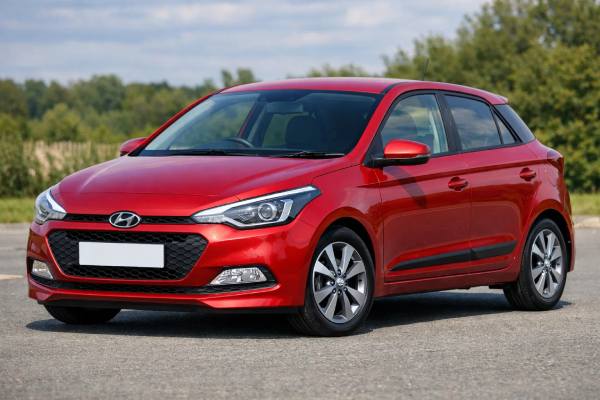
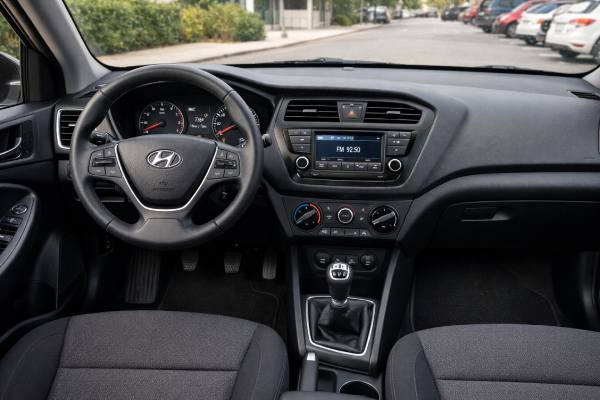
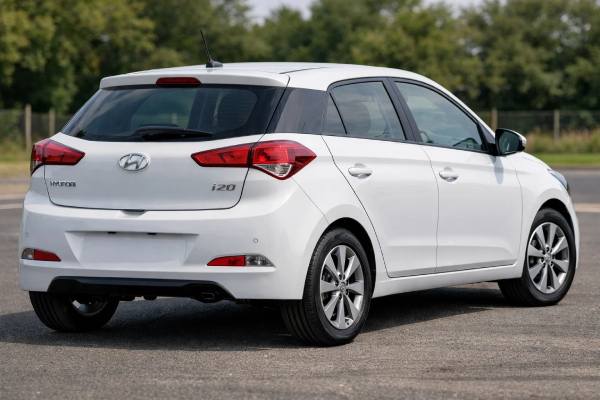
The Hyundai i20 GB 1.0 T-GDi 120 hp is one of the most interesting versions of the second-generation i20 because it adds real mid-range punch to a car that was already roomy, mature, and easy to live with. This is the small turbo-petrol model for buyers who want more than basic transport but do not need a full hot hatch. The 1.0-litre three-cylinder engine brings useful torque, the 6-speed manual makes better use of it than the lower-powered 5-speed cars, and the GB platform itself is a big step forward over the older PB generation in comfort, cabin quality, and everyday practicality. It also helps that Hyundai kept the overall mechanical layout simple. Today, though, condition matters more than the badge or the brochure. A well-kept 1.0 T-GDi can still feel quick, tidy, and surprisingly refined. A neglected one can turn into a chain of turbo-petrol servicing needs, worn suspension, tired tyres, and overdue fluids.
What to Know
- Strong 172 Nm torque and a 6-speed manual make this one of the most usable GB i20 petrol variants.
- Roomy cabin, 326 L boot, and mature ride quality are real advantages over many older superminis.
- Later cars gained stronger infotainment and more active-safety equipment, especially from mid and upper trims.
- Buy carefully: direct-injection turbo engines depend on good oil history, healthy cooling, and sensible warm-up habits.
- A cautious used-car oil service every 10,000–15,000 km or 12 months is a smart routine.
Contents and shortcuts
- Hyundai i20 GB turbo snapshot
- Hyundai i20 GB 1.0 data
- Hyundai i20 GB grades and safety
- Trouble spots and official checks
- Service routine and smart buying
- Turbo punch and daily manners
- Best alternatives and verdict
Hyundai i20 GB turbo snapshot
The GB-generation Hyundai i20 was the car that moved the i20 line from value-focused outsider to a genuine mainstream supermini contender. It grew in all the right places, gained a longer 2,570 mm wheelbase, improved ride maturity, and offered a cabin and boot space that often felt closer to the class above. In basic form, the GB i20 was already a smart small hatchback. In 1.0 T-GDi 120 hp form, it became the version that finally added real pace to the platform.
That matters because the regular 1.25 petrol cars are honest and dependable, but they can feel a little stretched once the car is loaded or used heavily on faster roads. The 1.0 T-GDi solves that problem with torque rather than drama. Its 172 Nm arrives low in the rev range, so the car feels stronger in normal driving than the 120 hp headline alone suggests. It is not an i20 N before the i20 N existed, but it is the version that feels most complete for drivers who want easy overtakes, calmer motorway work, and enough performance to make the chassis feel properly awake.
There are also some year-by-year details worth knowing. The 120 PS version was introduced for the refreshed 2016 i20 line-up in markets such as the UK, where Hyundai positioned it above the 100 PS 1.0 T-GDi and described it as the most powerful engine in an i20 to date. In that stage of the range, it appeared in better-equipped trims such as Premium and Coupe Sport versions and above. By the 2018 facelift, Hyundai reshaped the nose, added more connectivity, improved standard equipment, and in the UK tied the 120 PS 6-speed manual mainly to the Premium Nav SE 5-door. So when shopping today, it is important not to treat every 2015–2018 1.0 T-GDi 120 as identical. Early and late cars can differ meaningfully in trim, safety equipment, and infotainment.
Mechanically, the appeal is easy to understand. You get a compact turbocharged direct-injection three-cylinder petrol engine, front-wheel drive, a manual gearbox, MacPherson strut front suspension, a torsion-beam rear axle, and electric steering. That is still a simple recipe compared with many newer small cars. But because it is a turbo direct-injection engine, it also asks for better maintenance discipline than the base naturally aspirated petrols.
Who suits this car best? A driver who wants a supermini that feels stronger than its class position suggests, without stepping into true performance-car costs. Who should skip it? Someone who wants absolute long-term simplicity above all else, because the 1.25 non-turbo petrol remains the lower-risk choice. The 120 hp turbo car is the sweet spot for buyers who care about effortlessness, not just economy.
Hyundai i20 GB 1.0 data
Public Hyundai technical data for the GB i20 gives a clear picture of the 1.0 T-GDi 120 PS version. The engine is a 998 cc Kappa-family three-cylinder turbo-petrol with double overhead camshafts and 12 valves, paired with a 6-speed manual gearbox and front-wheel drive. The official figures explain why the car feels so much stronger than the lower-output petrol versions: 120 PS, 88 kW, and 172 Nm available from 1,500 to 4,000 rpm.
Powertrain and efficiency
| Item | Figure |
|---|---|
| Code | Kappa 1.0 T-GDi family |
| Engine layout and cylinders | Inline-three, 3 cylinders, DOHC, 4 valves per cylinder |
| Bore × stroke | 71.0 × 84.0 mm (2.80 × 3.31 in) |
| Displacement | 1.0 L (998 cc) |
| Induction | Turbocharged |
| Fuel system | Gasoline direct injection |
| Compression ratio | 10.0:1 |
| Max power | 120 hp (88 kW) @ 6,000 rpm |
| Max torque | 172 Nm (126.9 lb-ft) @ 1,500–4,000 rpm |
| Timing drive | Chain-driven timing system |
| Rated efficiency | Around 5.0–5.2 L/100 km combined on later published figures, depending on trim and wheel size |
| Real-world highway @ 120 km/h | Usually around 6.0–6.8 L/100 km in healthy manual cars |
Transmission and driveline
| Item | Figure |
|---|---|
| Transmission | 6-speed manual |
| Drive type | FWD |
| Differential | Open |
Chassis and dimensions
| Item | Figure |
|---|---|
| Front suspension | MacPherson strut |
| Rear suspension | Coupled torsion beam axle |
| Steering | Motor-driven power steering |
| Steering ratio / lock-to-lock | 2.70 turns lock-to-lock |
| Brakes | Front ventilated discs, rear solid discs on upper trims |
| Most common tyre size | 195/55 R16 on the 120 PS upper trim |
| Ground clearance | 140 mm (5.5 in) |
| Length | 4,035 mm (158.9 in) |
| Width | 1,734 mm (68.3 in) excluding mirrors |
| Width incl. mirrors | 1,880 mm (74.0 in) |
| Height | 1,474 mm (58.0 in) |
| Wheelbase | 2,570 mm (101.2 in) |
| Turning circle | 10.2 m (33.5 ft) |
| Kerb weight | 1,070 kg (2,359 lb) |
| GVWR | 1,640 kg (3,615 lb) |
| Fuel tank | 50 L (13.2 US gal / 11.0 UK gal) |
| Cargo volume | 326 L seats up / 1,042 L seats folded, VDA |
Performance and capability
| Item | Figure |
|---|---|
| 0–100 km/h (0–62 mph) | 10.2 s |
| Top speed | 190 km/h (118 mph) |
| Towing capacity, braked | 1,110 kg (2,447 lb) |
| Towing capacity, unbraked | 450 kg (992 lb) |
| Payload | 570 kg (1,257 lb) |
| Noseweight | 75 kg (165 lb) |
Fluids and service capacities
| Item | Practical guidance |
|---|---|
| Engine oil | Use only the exact Hyundai-approved turbo-petrol oil specification for the VIN and market |
| Engine oil capacity | Verify by VIN-specific handbook or workshop data before refill |
| Coolant | Aluminum-safe ethylene-glycol coolant of the correct Hyundai standard |
| Coolant capacity | Verify by VIN-specific handbook before refill |
| Transmission oil | Manual gearbox oil must match the exact Hyundai specification for the 6-speed unit |
| A/C refrigerant | R-134a on GB-era cars |
| Key torque specs | Wheel nuts commonly fall in the 88–107 Nm range; verify for the exact wheel and market |
Safety and driver assistance
| Item | Figure |
|---|---|
| Euro NCAP | 4 stars |
| Adult occupant | 85% |
| Child occupant | 73% |
| Vulnerable road user / pedestrian | 79% |
| Safety assist | 64% |
| ADAS | No full modern package early on; later facelift cars gained AEB, lane keep assist, driver attention alert, and high beam assist from SE trim upwards in some markets |
The central point is that this car combines genuinely useful output with modest weight and good space efficiency. It is not quick in a dramatic way, but on paper and on the road it is clearly the most rounded non-N petrol GB i20.
Hyundai i20 GB grades and safety
Trim structure is important on the 1.0 T-GDi 120 because Hyundai did not treat it as a basic fleet engine. From the start, the stronger turbo version sat higher in the range than the 75 hp and 84 hp petrol models. That means equipment, brakes, wheel sizes, and appearance packages all matter when you are comparing cars.
In the 2016 refreshed line-up, Hyundai used the new 1.0 T-GDi engines to replace the old 1.4 manual petrol in much of the range. The 100 PS version appeared from SE trim upward, while the 120 PS version was introduced in Premium and Coupe Sport versions and above. That meant the more powerful engine was linked to better equipment, stronger visual specification, and a buyer profile more likely to care about performance and image. By the 2018 facelift, the structure changed again. In the UK, the 120 PS 6-speed manual was tied to the Premium Nav SE 5-door, a top-spec version with much stronger comfort and safety equipment.
Equipment progression is one of the GB i20’s strengths. Even modest versions offered Bluetooth, steering-wheel controls, electric windows, USB connectivity, heated mirrors, and useful cabin adjustability. Higher trims added alloy wheels, projector lamps, LED running lights, parking sensors, climate control, navigation, power-folding mirrors, privacy glass, panoramic roof, heated seats, heated steering wheel, and upgraded trim details. The facelift also improved the standard infotainment story with a 7-inch display audio system, DAB, Apple CarPlay, Android Auto, rear-view camera, and automatic headlamps.
These trim details matter for practical reasons:
- better trims usually feel more modern and easier to live with,
- upper trims can be more desirable on resale,
- and missing or broken high-spec equipment often reveals a car that has been maintained cheaply.
Safety is another major part of the GB i20 case. Euro NCAP awarded the car four stars under the stricter 2015 protocol, with strong scores in adult occupant, pedestrian, and general structural protection, but a weaker safety-assist result because the model did not have a full modern active-safety package across the range. In plain terms, the car’s fundamentals were sound, but its technology offering was not strong enough to secure five stars under the evolving rules.
Hyundai’s own safety structure was solid for the class. The GB i20 used a body with high-strength and ultra-high-strength steel content, along with six airbags, ESC, ABS, EBD, Hill-start Assist Control, Vehicle Stability Management, and tyre-pressure monitoring. Later facelift versions improved matters by adding Autonomous Emergency Braking, Lane Keep Assist, Driver Attention Alert, and High Beam Assist from SE trim upwards in the UK. That is a meaningful upgrade for late 2018 cars and one of the clearest reasons to choose the facelift if budget allows.
For used buyers, the safest approach is simple: check the trim against what the car actually has, confirm all warning lights behave correctly, and inspect for poor crash repair. A top-spec i20 with missing driver aids, dead sensors, or odd panel alignment is not a bargain. It is a warning.
Trouble spots and official checks
The 1.0 T-GDi 120 is not known for one single unavoidable design disaster, but it is more maintenance-sensitive than the naturally aspirated GB petrols. That is the right way to frame its reliability. A carefully serviced example can be a strong long-term used buy. A neglected one can become an expensive lesson in how small turbo direct-injection engines punish laziness.
Common and low-to-medium cost
- Ignition and running-quality issues: Hesitation, misfire, weak cold starts, or a rough idle often point to ignition components, plugs, or overdue maintenance rather than catastrophic engine trouble.
- Boost leaks and intake-side faults: Split hoses, loose clamps, or tired intercooler plumbing can make the car feel flatter than it should. On a turbo i20, these faults can mimic a more serious turbo problem.
- Suspension wear: Front drop links, bushes, top mounts, and dampers age in the usual small-car way. The symptoms are knocks, wandering over rough roads, and uneven tyre wear.
Occasional and medium cost
- Cooling-system and thermostat drift: Turbo engines depend on healthy temperature control. Slow warm-up, unstable gauge behaviour, or unexplained coolant loss should never be brushed off.
- Carbon build-up and intake contamination: Because this is a direct-injection petrol, deposit build-up is more of a long-term possibility than on the 1.25 port-injected engine. Cars that have done many short trips and irregular servicing deserve closer attention.
- Clutch wear: The engine’s 172 Nm can expose a worn clutch sooner than in the lower-output petrol models. A slipping clutch under load is a real negotiation point.
Less common but higher-risk
- Timing-chain wear from poor oil history: The chain system avoids a routine belt service, but it is not immune to dirty oil, long intervals, or repeated cold short-trip use. Cold-start rattle, timing-related fault codes, or vague servicing should be taken seriously.
- Turbocharger wear or oil-feed neglect: Persistent whistling, smoke, or oily plumbing can mean more than one thing, but a car with poor oil history deserves extra caution.
- Crash repair and alignment problems: Small hatches are often repaired cheaply after minor accidents. Uneven panel gaps, strange tyre wear, an off-centre steering wheel, or mismatched lights matter more than cosmetic buyers think.
Chassis and driveline issues are usually ordinary rather than model-specific. Wheel bearings, brakes, and bushings wear with mileage and road quality. On later 120 PS cars with rear discs, proper rear-brake maintenance matters because neglected calipers can make the car feel lazy and increase fuel use. Corrosion is not usually dramatic on the GB, but rear beam areas, brake lines, arch lips, and door edges still deserve inspection.
Software and calibration concerns are not dominant, but late facelift cars with more driver-assistance hardware should be checked for proper operation. If the car has AEB, lane keep assist, camera hardware, or parking sensors, make sure they actually function. A badly repaired front end can upset these systems.
For recalls, campaign work, and any service-action history, use an official Hyundai VIN or registration lookup. Do not rely on seller memory. On a modern turbo supermini, proof of completed campaigns and proof of correct oil servicing are worth more than low mileage alone.
Service routine and smart buying
The best way to own a 1.0 T-GDi 120 is to ignore the temptation to service it like the cheapest small hatchback on the road. It is still a straightforward car overall, but the turbocharged direct-injection engine rewards caution. A conservative maintenance routine is the difference between a strong used buy and an irritating one.
Practical maintenance schedule
| Item | Sensible interval |
|---|---|
| Engine oil and filter | Every 10,000–15,000 km or 12 months |
| Check oil level | Monthly and before long trips |
| Engine air filter | Inspect yearly, replace around 20,000–30,000 km in dusty or mixed use |
| Cabin air filter | Every 15,000–20,000 km or 12 months |
| Spark plugs | Around 40,000–60,000 km, depending on plug type and running quality |
| Coolant | Replace promptly if history is unclear, then follow the exact market handbook schedule |
| Brake fluid | Every 2 years |
| Manual gearbox oil | Inspect condition and leaks regularly; refresh around 60,000–100,000 km on ageing cars |
| Auxiliary belt and hoses | Inspect at every annual service |
| Tyres and alignment | Check yearly and after suspension work |
| Brakes, steering joints, driveshaft boots, and suspension bushes | Inspect every service |
| 12 V battery | Test yearly once the car is past about year 4 |
That schedule is intentionally cautious. Turbo petrol engines survive very well on good habits and deteriorate quickly on poor ones. Warm-up matters. Oil quality matters. Coolant condition matters. A tidy owner history is a bigger asset here than a low odometer reading supported by vague invoices.
Useful service guidance
- Use only the exact Hyundai-approved oil specification for the 1.0 T-GDi in the car’s market and VIN.
- Do not guess the refill quantity. Turbo engines are sensitive to overfill and underfill.
- If the gearbox feels notchy or noisy, inspect fluid condition and linkage adjustment instead of assuming it is “just how they are.”
- Tyres matter more than usual on this version because the stronger torque and better chassis can be undermined quickly by cheap rubber.
Buyer’s checklist
- Start the car cold and listen for chain noise, unstable idle, or warning lamps.
- Drive it gently first, then test mid-range acceleration in a higher gear for clutch slip or boost hesitation.
- Check the coolant, oil level, and signs of oil misting around turbo plumbing.
- Inspect all four tyres for matching brands, even wear, and the correct size.
- Test air conditioning, infotainment, Bluetooth, camera, parking sensors, and any driver-assistance functions.
- Drive over rough roads and listen for front-end knocking or steering vagueness.
- Verify recall and service-campaign status through Hyundai.
Best years and trims depend on your priorities. Early 2016–2017 cars can be excellent buys if they have strong history and fewer gadgets to go wrong. Late 2018 facelift cars are more desirable if you want better infotainment and added active safety. Cars to avoid are the predictable ones: poor service history, cheap mixed tyres, patchy crash repairs, weak clutch feel, and sellers who only talk about low mileage.
Long-term durability can be very good, but only if the car was maintained like a turbo engine, not like a disposable city hatch.
Turbo punch and daily manners
The best part of the 1.0 T-GDi 120 is how much more complete it makes the GB i20 feel. This is not just the “faster one.” It is the version that gives the chassis enough shove to feel naturally matched to the car’s size, weight, and maturity.
Around town, the engine pulls cleanly from low revs and needs fewer downshifts than the 1.25 petrols. The clutch is usually light, the control weights are easy, and the steering is tuned for convenience first. In traffic, the car feels smoother and less breathless than its modest engine size suggests. That is the core virtue of the 172 Nm torque figure. It gives the i20 the sort of effortless response people often expect only from a larger engine.
On faster roads, the benefit becomes more obvious. Slip roads, overtakes, and gentle climbs no longer require as much planning. The 6-speed manual also helps the car settle into a more relaxed motorway rhythm than the 5-speed lower-output petrol models. Officially, the 120 PS car reaches 62 mph in 10.2 seconds and tops out at 118 mph, which is enough to make it clearly brisk in supermini terms without ever feeling wild.
Ride quality is one of the GB platform’s hidden strengths. It is not soft, but it is composed. The longer wheelbase and Hyundai’s European tuning give the car better body control and more stability than many older budget-branded hatchbacks. The steering is still light rather than full of feel, so this is not a Fiesta-rivaling driver’s car, but it is secure, easy to place, and genuinely pleasant on ordinary roads.
NVH is decent for the class. At city speed, the three-cylinder character is noticeable but not intrusive. Under load, it sounds purposeful rather than coarse. At motorway pace, tyre roar and wind noise matter more than the engine itself, especially if the car is on worn or cheap tyres. A good example on quality tyres feels more mature than many buyers expect.
Real-world fuel use is respectable rather than miraculous. In healthy manual cars, a sensible owner can usually expect roughly:
- around 7.0–8.2 L/100 km in heavy city use,
- around 6.0–6.8 L/100 km at a true 120 km/h cruise,
- and around 5.6–6.5 L/100 km in mixed driving.
That is not hybrid economy, but it is a fair return for a genuinely useful 120 hp supermini. Drive hard, load it heavily, or let maintenance slip, and the numbers move quickly in the wrong direction.
The verdict on driving is simple. This is the GB i20 for people who want the platform’s maturity without feeling underpowered. It is not as playful as the best Ford rival, but it is quicker than the basic petrol Hyundais, more refined than many buyers expect, and easy to like every day.
Best alternatives and verdict
The 1.0 T-GDi 120 sits in a very competitive used-car crowd. Its obvious rivals include the Ford Fiesta 1.0 EcoBoost 125, Volkswagen Polo 1.0 TSI, Skoda Fabia 1.0 TSI, Seat Ibiza 1.0 TSI, and Mazda2 in higher-output petrol form. Each one has a clear strength. The Fiesta is still the sharper car to drive. The Polo often feels more solid and premium. The Fabia makes a straightforward practical case. The Ibiza can feel a little more youthful. The Mazda2 is light and eager. The Hyundai’s answer is balance.
Compared with a Fiesta EcoBoost, the i20 gives up some steering feel and playfulness, but it often wins on interior space and simple everyday usability. Compared with a Polo or Ibiza, it can feel a touch less polished in the finer details, yet it often delivers a lot of equipment for the money and a lower-risk ownership image than some direct-injection turbo rivals with patchier histories. Compared with the lower-powered i20 petrols, the 120 hp car is the one that finally feels properly relaxed on faster roads.
The trim story also helps its case. Because the 120 PS engine tended to sit in better-equipped versions, many used examples come with nicer wheels, stronger infotainment, better convenience features, and, on later facelift cars, a more convincing active-safety package. That can make a good 120 PS i20 feel much newer than the price suggests.
Where does it fall short? It is not the most exciting car in the class. It is not the cheapest i20 to maintain. And because it is a turbo direct-injection engine, it does ask for more discipline than the naturally aspirated 1.25. Buyers wanting the lowest possible ownership risk should still look hard at the 1.25 84 hp. Buyers wanting the most fun may still prefer a Fiesta. Buyers wanting the strongest premium feel may still lean toward a Polo.
But the i20 1.0 T-GDi 120 has a compelling used-car logic:
- it is quick enough to feel effortless,
- spacious enough to work as a proper everyday hatch,
- simple enough not to feel intimidating,
- and well equipped enough in upper trims to feel genuinely modern.
So who should choose it? Drivers who want a supermini with real mid-range strength, a roomy cabin, and sensible long-term costs provided they stay disciplined on servicing. Who should look elsewhere? Anyone who wants to buy on the smallest budget possible, skip maintenance, or expects modern ADAS across every early car.
As a used buy, the Hyundai i20 GB 1.0 T-GDi 120 is one of those cars that rewards the careful shopper. Find a straight one with good oil history, good tyres, proper cooling-system care, and no signs of crash neglect, and it becomes one of the most rounded small turbo petrol hatchbacks of its generation.
References
- Hyundai Motor UK reveals pricing of 2016 i20 line-up 2016 (Press Release)
- Hyundai Motor UK announces New i20 5 door pricing and specifications 2018 (Press Release)
- New Hyundai i20 – Technical data and dimensions 2018 (Technical Guide)
- Hyundai i20 – Euro NCAP Results 2015 2015 (Safety Rating)
- Hyundai Owners manuals | Hyundai Motor UK 2026 (Owner’s Manual portal)
Disclaimer
This article is for informational purposes only and is not a substitute for professional diagnosis, repair, or official workshop guidance. Specifications, torque values, intervals, procedures, and fluid requirements can vary by VIN, market, gearbox, trim, wheel package, and model year, so always verify the exact details against the correct official service documentation for the vehicle in front of you.
If this guide helped you, please consider sharing it on Facebook, X, or another social platform to support our work.