
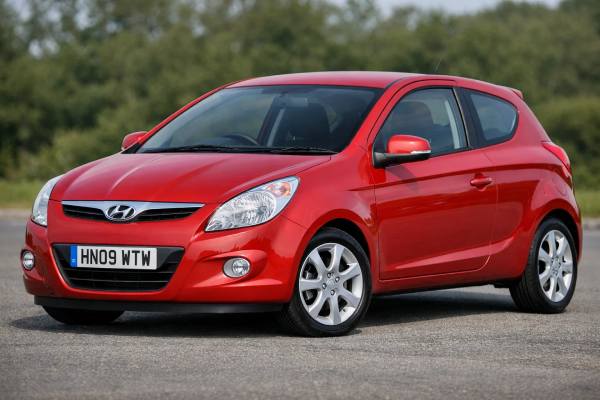
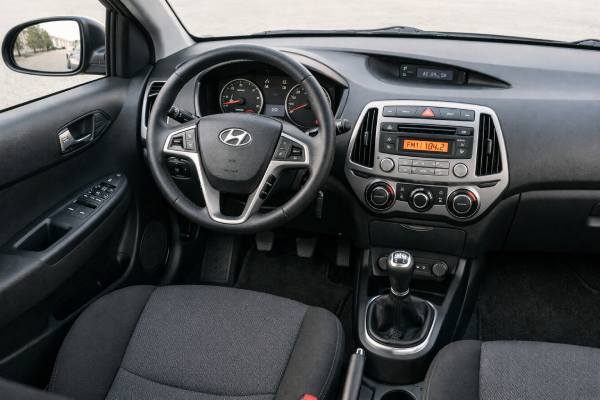
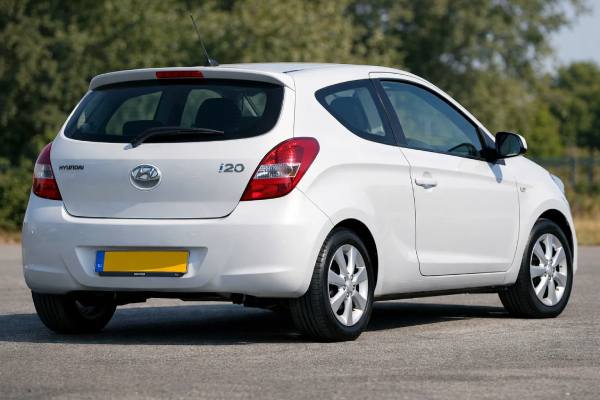
The Hyundai i20 3-door PB with the 1.6 CRDi 115 hp diesel sits in an interesting part of the supermini market. It combines a compact three-door body with a much stronger diesel torque output than the smaller petrol engines in the range, which changes the car’s character more than the styling does. This version feels less like a city-only hatch and more like a small long-distance car with real motorway ability. The useful engineering points are easy to identify: a 1.6-litre common-rail turbo diesel, a typically six-speed manual gearbox, front-wheel drive, and a practical B-segment platform with a long 2,525 mm wheelbase. That makes it appealing to buyers who want fuel economy, stronger mid-range performance, and lower running costs than a larger diesel hatchback. The trade-off is that diesel-specific age and maintenance risks now matter more than the brochure numbers. This guide focuses on the 2009–2012 Hyundai i20 3-door PB 1.6 CRDi 115 hp, covering specs, reliability, safety, maintenance, driving manners, and how it compares with its key rivals.
Fast Facts
- Strong 260 Nm-class diesel torque gives this i20 much better motorway and overtaking ability than the small petrol versions.
- The three-door body keeps the same useful 2,525 mm wheelbase, so cabin space stays competitive for the class.
- Official fuel economy is excellent for the era, and steady long-distance use usually suits this engine well.
- Short-trip use can create diesel-specific problems, especially around EGR, intake contamination, and DPF-equipped cars.
- Under normal European servicing, engine oil and filter are typically due every 20,000 km or 12 months.
Guide contents
- Hyundai i20 3-door diesel profile
- Hyundai i20 3-door data tables
- Hyundai i20 3-door trims and safety
- Known issues and factory actions
- Service schedule and buyer advice
- Real driving and fuel use
- Against the main rivals
Hyundai i20 3-door diesel profile
The PB-generation Hyundai i20 was developed as the replacement for the Getz, but the 3-door version gave it a slightly different mission. Hyundai launched it to widen the model’s appeal with a lower-entry, more style-led body, yet the core engineering stayed practical rather than flashy. The three-door body uses the same 2,525 mm wheelbase as the five-door and remains properly usable for adults in the rear, which is important because some three-door superminis become awkward the moment rear access matters. Hyundai also gave the car longer front doors and front-seat walk-in and memory functions to make access more manageable.
The 1.6 CRDi 115 hp version changes the i20’s personality more than the body style does. While the smaller petrol engines suit urban driving and low annual mileage, the 1.6 diesel makes the i20 feel like a genuinely capable small-distance car. Torque arrives low in the rev range, so the engine does not need to be worked hard in normal driving. That makes it a better fit for fast A-roads, motorway commuting, and drivers who regularly carry passengers or luggage. In practical terms, this is the i20 for people who want a supermini footprint without supermini-level driveline effort.
The car’s strengths are easy to understand even now. It offers strong economy for its age, respectable cruising ability, and a cabin that still feels roomy by class standards. For buyers coming from a petrol i20 1.2 or 1.4, the diesel’s mid-range shove is the biggest difference. The 115 hp output does not sound dramatic on paper, but in a small hatchback it is enough to make the car feel mature and relaxed rather than strained.
Its limits are equally clear. This is now an older diesel, and older diesels demand more discipline from owners than simple naturally aspirated petrol engines do. The engine is best used regularly and fully warmed up. Cars that have spent years doing only short trips may carry EGR soot build-up, sticky intake deposits, weak glow-plug systems, overdue fuel-filter servicing, or DPF trouble where fitted. The three-door body is also less convenient than a five-door for family use, even if the wheelbase and rear space are good.
So the right way to view the i20 3-door 1.6 CRDi is not as the sportiest i20, but as one of the most capable long-range versions of the early PB range. It offers a better spread of performance and economy than the smaller engines, and that still makes sense today for the right owner. The key is buying one with the correct history, correct use pattern, and no signs of diesel-system neglect.
Hyundai i20 3-door data tables
The table set below focuses on the Hyundai i20 3-door PB with the 1.6 CRDi 115 hp diesel, usually sold in European markets from 2009 to 2012. Some values vary slightly by country, trim, emissions package, tyre size, and production date, so exact parts ordering should always be confirmed by VIN.
Powertrain and efficiency
| Item | Hyundai i20 3-door (PB) 1.6 CRDi 115 |
|---|---|
| Code | D4FB family |
| Engine layout and cylinders | Transverse I-4, DOHC, 4 valves per cylinder |
| Displacement | 1.6 L (1,582 cc) |
| Bore × stroke | 77.2 × 84.5 mm (3.04 × 3.33 in) |
| Induction | Turbocharged |
| Fuel system | Common-rail direct injection |
| Compression ratio | About 17.3:1 |
| Max power | 115 hp (85 kW) @ 4,000 rpm |
| Max torque | About 260 Nm (192 lb-ft) @ 1,900–2,750 rpm |
| Timing drive | Verify by VIN and engine build before major parts ordering |
| Rated efficiency | About 4.4–4.5 L/100 km (52.3–53.5 mpg US / 62.8–64.2 mpg UK) |
| Real-world highway at 120 km/h | Typically about 5.3–5.9 L/100 km, depending on tyres, weather, and load |
The biggest practical takeaway is torque. In everyday driving, this diesel feels stronger than the raw power figure suggests because it makes useful pulling power well below peak revs.
Transmission, driveline, and chassis
| Item | Hyundai i20 3-door (PB) 1.6 CRDi 115 |
|---|---|
| Transmission | 6-speed manual |
| Drive type | Front-wheel drive |
| Differential | Open |
| Front suspension | MacPherson strut |
| Rear suspension | Torsion beam |
| Steering | Electric power steering |
| Brakes | Front ventilated discs / rear discs on most 115 hp European-market cars |
| Wheels and tyres | Commonly 195/50 R16 on higher trims; smaller sizes in some markets |
| Ground clearance | Market dependent |
| Turning circle | About 10.2 m (33.5 ft) |
The six-speed manual is a meaningful advantage over smaller-engined versions because it helps the 1.6 CRDi cruise more calmly and use its torque more effectively.
Dimensions, weights, and practicality
| Item | Hyundai i20 3-door (PB) 1.6 CRDi 115 |
|---|---|
| Length | 3,940 mm (155.1 in) |
| Width | 1,710 mm (67.3 in) |
| Height | 1,490 mm (58.7 in) |
| Wheelbase | 2,525 mm (99.4 in) |
| Kerb weight | About 1,140–1,160 kg (2,513–2,557 lb), market dependent |
| GVWR | About 1,560 kg (3,439 lb), market dependent |
| Fuel tank | 45 L (11.9 US gal / 9.9 UK gal) |
| Cargo volume | About 295 L (10.4 ft³) seats up / about 1,045–1,060 L (36.9–37.4 ft³) seats folded, market dependent |
The three-door keeps the same wheelbase as the five-door, so it is not merely a styling exercise. That helps the car feel more grown-up than its compact footprint suggests.
Performance, service capacities, and safety
| Item | Hyundai i20 3-door (PB) 1.6 CRDi 115 |
|---|---|
| 0–100 km/h | About 10.7 s |
| Top speed | About 190 km/h (118 mph) |
| Braking distance | Depends heavily on tyre package and test source |
| Towing capacity | Verify by VIN and market before towing |
| Payload | Roughly 400 kg class, market dependent |
| Fluid or spec | Value |
|---|---|
| Engine oil | ACEA B4 / API CH-4 or above; common grades include 5W-30; capacity about 5.3 L (5.6 US qt) |
| Coolant | Ethylene-glycol based coolant for aluminium radiator; about 6.8 L (7.2 US qt) |
| Manual transaxle fluid | API GL-4 SAE 75W-85; about 1.9 L (2.0 US qt) |
| Brake and clutch fluid | FMVSS116 DOT 3 or DOT 4 |
| Wheel lug nut torque | 88–107 Nm (65–79 lb-ft) |
| Safety item | Value |
|---|---|
| Euro NCAP | 5 stars |
| Adult occupant | 88% |
| Child occupant | 83% |
| Pedestrian | 64% |
| Safety assist | 86% |
| IIHS | Not applicable for this model/market context |
| ADAS | No modern AEB, ACC, LKA, BSD, or RCTA; ESC availability varies by trim and market |
Hyundai i20 3-door trims and safety
Trim structure for the i20 3-door depends on market, but Hyundai’s launch material for Europe points to a familiar ladder built around Classic, Comfort, and Style. The important thing for used buyers is that the 1.6 CRDi 115 was usually not the absolute base car. In many markets it sat in better-equipped trims because it was the more expensive engine choice, so you often find it paired with features that make the car feel more complete: larger alloys, better seat trim, air conditioning or climate control, upgraded audio, trip computer functions, and parking aids.
The three-door itself brings a few specific functional differences. It uses longer front doors than the five-door and typically includes front-seat walk-in and memory functions to improve rear access. That does not make it as convenient as the five-door in tight parking spaces, but it does make the layout more practical than some coupe-style superminis. For buyers who mostly use the front seats and only occasionally carry rear passengers, it can be a perfectly sensible compromise.
There are also meaningful differences in wheel and tyre packages. Smaller-wheel versions tend to ride a little better and cost less to re-tyre, while larger 16-inch packages suit the diesel’s stronger performance but can add noise and make worn suspension more noticeable. Higher trims may also bring cosmetic differences such as body-colour mirrors, fog lamps, upgraded steering-wheel trim, or improved cabin materials. These do not transform the car, but they do affect the ownership feel.
Safety was one of the i20’s stronger arguments when new. The model earned a five-star Euro NCAP rating in 2009, and the rating applied across the i20 line rather than to one isolated high-spec variant. Hyundai also pushed broad passive-safety coverage, including front, side, and curtain airbags on well-equipped cars, front seatbelt pretensioners, and active front head restraints. ISOFIX mountings in the rear outboard seats improved family usability, even though Euro NCAP noted that the marking of those anchorages could have been clearer.
Electronic safety equipment can vary by market and trim, which matters because older budget hatchbacks are often advertised too optimistically. ABS and EBD were widely fitted, while ESC was standard on many cars but not always universal across every market. Euro NCAP expected the great majority of cars sold to have ESC as standard, but a buyer should still verify the individual car rather than assume. That is especially important on imports or low-trim examples.
Modern driver assistance is effectively absent. There is no autonomous emergency braking, adaptive cruise, blind-spot monitor, or lane-keeping assist in the way buyers understand those systems now. The best way to judge the i20’s safety value is as a well-equipped late-2000s supermini with good passive safety and decent electronic stability support, not as a modern ADAS-rich hatchback. In used form, that remains respectable, but expectations should stay realistic.
Known issues and factory actions
The Hyundai i20 3-door 1.6 CRDi can be a durable small diesel, but condition and usage pattern matter more than model reputation. A car that has spent years covering warm, longer trips can be much healthier than a low-mileage example used only in town. The issues below are best understood by prevalence and likely cost.
Common, usually low-to-medium cost issues
- EGR and intake contamination: Symptoms include hesitant throttle response, uneven idle, reduced low-rpm pull, and occasional warning lights. The likely cause is soot and oil residue building up in the EGR path and intake system. The usual remedy is cleaning or replacing affected components and checking vacuum lines and sensor readings.
- Fuel-filter neglect: Diesels are sensitive to poor filtration. Hard starting, hesitation under load, or water contamination warnings can point to an overdue fuel filter or contaminated diesel. Correct filter service is often enough to restore normal running.
- Brake corrosion and slider seizure: Cars used lightly can develop rear-brake drag, uneven pad wear, or weak handbrake performance. This is common on older small hatchbacks and is not unique to Hyundai.
- Suspension links and bushes: Front drop links, anti-roll-bar bushes, and tired dampers can create knocks and looseness without being especially expensive to fix.
Occasional, medium-cost issues
- DPF-related trouble on some cars: If fitted, repeated short-trip use can interrupt regeneration and trigger warning lights, limp mode, or rising oil level if regens fail repeatedly. The symptom pattern is usually worse in city-only use. The remedy ranges from a forced regeneration and software check to sensor or filter replacement.
- Boost leaks and charge-air hose faults: Split hoses or loose clamps can cause weak pull, whistling, excess smoke, or underboost faults. These are easy to miss because the engine may still run fairly smoothly.
- Glow-plug and cold-start faults: Slow starting, rough initial idle, or a warning light in cold weather often points to glow plugs, the control module, battery condition, or poor fuel quality.
Less common but expensive issues
- Clutch and dual-mass flywheel wear, where fitted: High bite point, shudder under load, or rattle at idle can indicate expensive driveline wear. Not every car fails here, but the risk rises with poor driving style and heavy urban use.
- Injector sealing or injector faults: Chuffing sounds, diesel smell, hard starting, or uneven running can come from injector sealing failure or more serious injector issues.
- Turbo wear after poor oil history: A healthy 1.6 CRDi usually pulls cleanly with steady boost. Excess oil smoke, heavy whistle, or shaft play risk should be taken seriously.
On factory actions and recalls, the smart approach is simple: check by VIN and check dealer records. Campaign coverage varies by market, and older cars may have moved across borders or between owners several times. Ask for proof of completed recall work, not just reassurance. A buyer should also request evidence of recent oil service, fuel-filter replacement, and any diesel-system diagnosis or software work. That paperwork matters more on this engine than on a simple small petrol.
Service schedule and buyer advice
The 1.6 CRDi rewards regular servicing, and this is one area where being conservative pays off. Under normal European service schedules, engine oil and filter are typically replaced every 20,000 km or 12 months. Under severe use, that drops to 10,000 km or 6 months. For an older diesel, the severe-use schedule is often the safer real-world rule, especially if the car sees cold starts, short trips, or heavy urban traffic.
Practical maintenance schedule
| Item | Practical service guide |
|---|---|
| Engine oil and filter | Every 20,000 km or 12 months normal; every 10,000 km or 6 months severe use |
| Engine air filter | Inspect regularly; commonly replace around 40,000 km or sooner in dust |
| Cabin filter | About every 20,000 km or 12 months |
| Fuel filter cartridge | Typically every 60,000 km in normal European use; earlier where fuel quality is poor |
| Coolant | Verify exact interval by market handbook; inspect condition and level routinely |
| Auxiliary belts and hoses | Inspect every annual service |
| Manual gearbox oil | Inspect routinely; earlier replacement makes sense if shift quality degrades or repair work is done |
| Brake fluid | Every 24 months |
| Brake pads and discs | Inspect at every service, especially rear-brake condition |
| Tyres | Rotate and inspect regularly; align if pull or uneven wear appears |
| 12 V battery | Test yearly once age passes about 4 years |
| Timing components | Verify exact system by VIN/engine build; inspect for noise, correlation faults, and service history concerns |
That last line matters because owners often assume all diesel timing systems have the same maintenance logic. They do not. Before major preventative timing work, confirm the exact engine build and parts arrangement by VIN and official parts data rather than guessing from forum advice or aftermarket listings.
Useful capacities for ownership decisions include about 5.3 L of engine oil, 6.8 L of coolant, 1.9 L of manual-transaxle fluid, and wheel-lug torque of 88–107 Nm. The right oil grade and spec matter on this engine because turbocharger life, cold starts, and soot handling all depend on correct lubrication and sensible intervals.
Buyer’s inspection checklist
- Start the engine cold and listen for injector blow-by, unusual rattle, long cranking, or excessive smoke.
- Check idle quality both cold and warm.
- Make sure the turbo pulls smoothly without limp mode, flat spots, or loud boost hiss.
- Confirm the clutch engages cleanly and does not shudder under load.
- Inspect coolant hoses, radiator seams, and the expansion tank for staining or pressure problems.
- Look under the oil cap and around the intake path for signs of neglect or sludge.
- Check for rear-brake binding, uneven tyre wear, worn suspension bushes, and wheel-bearing noise.
- Verify all warning lights, heater operation, windows, locks, and parking sensors if fitted.
- Ask for proof of fuel-filter replacement, regular oil servicing, and recall completion.
Long-term durability is good when the car is used properly and serviced on time. Neglect is the main thing that makes this version expensive. A well-kept i20 1.6 CRDi can still be an efficient, capable small diesel. A cheap but poorly maintained one can quickly erase the savings at the pump.
Real driving and fuel use
On the road, the i20 3-door 1.6 CRDi feels more substantial than the entry-level versions of the range. The extra torque transforms the car’s character. Instead of needing revs and planning, the diesel pulls with much less effort from everyday speeds. In town, that means fewer downshifts. On fast roads, it means the car feels calmer and more flexible than the 1.2 petrol ever can.
Straight-line performance is strong for the class and era rather than outright sporty. A 0–100 km/h time of around 10.7 seconds and a top speed of about 190 km/h place it comfortably above the weakest B-segment diesels of the period. The engine’s real appeal is not the launch number, though. It is the mid-range. At motorway speeds, the i20 1.6 CRDi has enough torque to overtake with confidence in a way small naturally aspirated superminis do not.
Ride and handling remain conventional PB i20 strengths and weaknesses. The chassis is safe, predictable, and easy to live with, but it is not a Fiesta-style driver’s car. The steering is light and useful rather than rich in feedback. Straight-line stability is good enough for long journeys, helped by the wheelbase and the diesel’s more relaxed gearing. On rougher roads, the suspension usually does a decent job of smoothing sharp edges, though larger wheel packages can make broken surfaces more noticeable.
Noise, vibration, and harshness are typical for a small diesel from this period. At cold start and idle, the engine sounds more industrial than the petrol range. Once warm and cruising, it settles down well enough for the class. Wind and tyre noise become more obvious at higher speeds, especially on worn tyres or larger wheels, but the car still feels more like a mini-tourer than a city special.
Real-world economy depends heavily on use pattern. In mixed driving, a healthy manual car often returns around 4.8 to 5.5 L/100 km. On a steady highway run at 100–120 km/h, about 5.3 to 5.9 L/100 km is realistic. Repeated short urban trips can push consumption into the 6.0 to 7.0 L/100 km range or higher, especially in winter, and that same driving pattern is also the one most likely to upset EGR and DPF-equipped cars.
So the verdict on performance is straightforward. This is one of the most satisfying early i20 variants for drivers who cover real distance. It is not sporty in the hot-hatch sense, but it is genuinely useful, flexible, and efficient. That combination is exactly why the 1.6 CRDi still makes sense for the right used-car buyer.
Against the main rivals
The Hyundai i20 3-door 1.6 CRDi 115 entered a competitive field. Its natural rivals included the Ford Fiesta 1.6 TDCi, Volkswagen Polo 1.6 TDI, Skoda Fabia 1.6 TDI, Renault Clio dCi, Peugeot 207 HDi, and in some markets the Toyota Yaris D-4D. Each of those cars had a clear strength, and the Hyundai’s job was to win by balance.
Against the Ford Fiesta, the Hyundai usually loses on steering feel and cornering polish. The Ford feels more eager and better tied down when driven hard. The Hyundai counters with strong value, a roomy feel for the class, and a more comfort-first personality that many owners prefer over long distances.
Against the Volkswagen Polo and Skoda Fabia, the i20 often feels less premium inside, but it can make a stronger used-value case. Parts and trim may not feel as expensive, yet the Hyundai often offers good equipment, solid crash performance, and simpler ownership logic for the money. Buyers who care more about cost and condition than badge image often land on the i20 for exactly that reason.
Against the Renault Clio dCi and Peugeot 207 HDi, the Hyundai usually feels less quirky and easier to assess as a used buy. It may not always match them for charm or ride sophistication, but it often feels like the more straightforward ownership proposition. That matters more once the cars are well into second- or third-owner territory.
The Toyota Yaris D-4D is a slightly different rival because buyers often trust Toyota’s long-term reputation more instinctively. The Hyundai fights back with a more relaxed long-wheelbase feel, strong safety credentials for the era, and often better equipment per euro or pound spent in the used market.
The i20 3-door 1.6 CRDi is strongest for drivers who do regular longer trips and want a small car that does not feel underpowered on faster roads. It is weaker for buyers who mainly drive in town, need frequent rear-door access, or want modern driver assistance. In the right use case, though, it remains a very credible rival. It combines useful diesel performance, sensible packaging, and honest ownership value in a way that still holds up well today.
References
- HYUNDAI I20 THREEDOOR 2009 (Model Overview)
- Hyundai Owners Manuals | Hyundai Motor UK 2026 (Owner’s Manual portal)
- HYUNDAI I20 – Euro NCAP Results 2009 2009 (Safety Rating)
- Check if a vehicle, part or accessory has been recalled – GOV.UK 2026 (Recall Database)
Disclaimer
This article is for informational purposes only and is not a substitute for professional diagnosis, repair, or vehicle-specific technical advice. Specifications, torque values, maintenance intervals, procedures, towing limits, and fitted equipment can vary by VIN, market, trim, emissions package, and production date, so always verify critical details against official service documentation for the exact vehicle.
If this guide was useful, please consider sharing it on Facebook, X, or another social platform to support our work.