
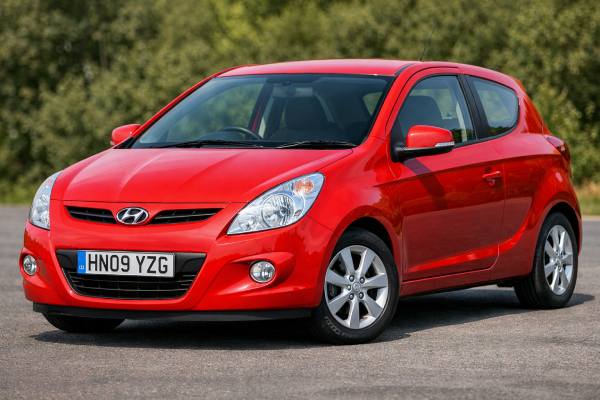
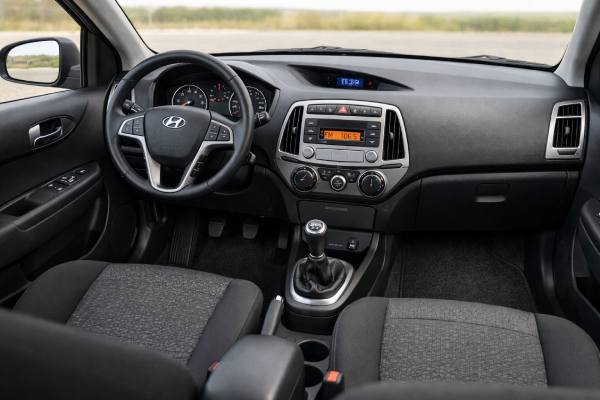
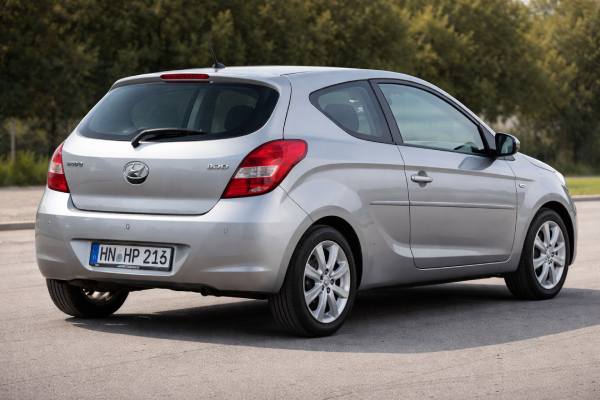
The Hyundai i20 3-door PB with the 75 hp 1.4 CRDi is a very specific kind of small hatchback. It is not the fast diesel in the range, and it was never meant to be. Its appeal is quieter and more practical: low fuel use, simple front-wheel-drive engineering, a light body shell, and just enough torque to make daily driving easy when the car is in good condition. In three-door form, it also looks slightly tidier and more purposeful than the five-door, while keeping the same basic cabin space and luggage capacity.
That balance still works today. A sound example can be a useful commuter or a cheap long-distance workhorse, but this is now an age-sensitive used car. Maintenance history matters much more than trim or paint colour. Belt history, fuel-filter service, cooling-system condition, and corrosion underneath are what separate a sensible buy from a false economy. For buyers who want an honest, efficient small diesel rather than a fashionable one, this i20 still deserves a serious look.
Owner Snapshot
- Very economical in mixed driving, with realistic fuel use often staying near 5.0–5.5 L/100 km.
- Lighter 3-door body keeps the car simple, practical, and easy to park.
- Strong low-rpm diesel torque helps more than the modest 75 hp figure suggests.
- Avoid cars with missing timing-belt history, poor cold starts, or visible underbody rust.
- Routine oil service is typically every 20,000 km or 12 months in normal use, and sooner in severe driving.
What’s inside
- Hyundai i20 3-door diesel basics
- Hyundai i20 3-door technical figures
- Hyundai i20 3-door grades and protection
- Known faults and service campaigns
- Upkeep plan and buyer checks
- On-road behaviour and economy
- Where it stands against rivals
Hyundai i20 3-door diesel basics
The three-door Hyundai i20 PB sits in an interesting corner of the old supermini market. It shares the same basic structure and packaging as the five-door, but the shorter side profile and longer front doors give it a slightly more youthful shape. In practice, though, this is not a warm hatch or a sporty trim. With the 1.4 CRDi 75 hp engine, it is best understood as the efficiency-first version of the i20.
That matters, because expectations shape ownership satisfaction. If you buy one expecting the pace of the 90 hp 1.4 CRDi or the stronger 1.6 CRDi, it will feel underpowered. If you buy it for low running costs, honest diesel torque, and simple everyday transport, it makes much more sense. The 220 Nm torque figure is the key. In normal traffic the car pulls better than the power figure suggests, especially at urban and suburban speeds where you are using the engine’s mid-range rather than chasing the top end.
The engineering formula is straightforward. You get a transverse 1.4-litre common-rail turbo diesel, a five-speed manual gearbox, electric power steering, and front-wheel drive. The rear suspension is a simple torsion-beam setup, which keeps packaging efficient and costs low. There is no advanced hybrid hardware, no modern driver-assistance suite, and no all-wheel-drive complication. That keeps both the ownership case and the risk profile easier to understand. Most real problems are the familiar ones seen on older small diesels: overdue servicing, dirty intake hardware, weak batteries, worn clutches, tired dampers, leaking hoses, and corrosion on neglected cars.
The 3-door body also changes the car’s appeal slightly. Rear access is less convenient, especially if the front seats do not tilt smoothly anymore, but the car can feel a little tighter and lighter on the road. It is a good fit for solo commuters, couples, or buyers who want a small diesel hatch without needing frequent rear-seat access. Boot space remains useful for the class, and the basic footprint stays compact enough to make the car easy in traffic and simple to park.
There is one important year-and-market caveat. The PB i20 range changed slightly depending on country, emissions spec, and model year, so exact trim and engine availability were not fully identical everywhere between 2009 and 2012. This guide focuses on the European-market 3-door 1.4 CRDi 75 hp configuration most often listed in those years. That is worth noting because some advertisements mix 3-door and 5-door details, or confuse the 75 hp and 90 hp diesel versions.
In used-car terms, the i20 3-door 1.4 CRDi is appealing for the same reason many modest Hyundais age fairly well: it is conceptually simple. You are not paying for prestige, and you are not managing exotic hardware. The best cars are the ones that were serviced on time and not treated as disposable transport. When that happens, this little diesel can still be a genuinely smart buy.
Hyundai i20 3-door technical figures
Open official sources do not place every 3-door 75 hp figure in one clean public document, so the table below combines period Hyundai owner information, official safety data, and the most widely repeated technical figures for the European-market 3-door PB 1.4 CRDi 75. Where values vary slightly by year, tyre package, or regional trim, that is noted rather than overstated.
| Category | Specification |
|---|---|
| Code | D4FC |
| Engine layout and cylinders | Inline-4, transverse, DOHC, 4 valves per cylinder |
| Bore × stroke | 75.0 × 79.0 mm (2.95 × 3.11 in) |
| Displacement | 1.4 L (1,396 cc) |
| Induction | Turbocharged, intercooler |
| Fuel system | Common-rail direct diesel injection |
| Compression ratio | 17.0:1 |
| Max power | 75 hp (55 kW) @ 4,000 rpm |
| Max torque | 220 Nm (162 lb-ft) @ about 1,750–2,350 rpm |
| Timing drive | Belt |
| Rated efficiency | 4.4 L/100 km (53.5 mpg US / 64.2 mpg UK) combined |
| Real-world highway @ 120 km/h | Roughly 5.2–5.9 L/100 km (45.2–40.0 mpg US / 54.3–47.9 mpg UK) |
| Transmission and driveline | Specification |
|---|---|
| Transmission | 5-speed manual |
| Drive type | FWD |
| Differential | Open |
| Chassis and dimensions | Specification |
|---|---|
| Suspension, front | MacPherson strut |
| Suspension, rear | Torsion beam |
| Steering | Rack-and-pinion electric assist; about 2.8 turns lock-to-lock |
| Brakes | Front ventilated discs, rear discs on many European listings; verify by VIN and market |
| Most popular tyre size | 175/70 R14 |
| Other common tyre size | 185/60 R15 |
| Ground clearance | About 150 mm (5.9 in) |
| Length | 3,940 mm (155.1 in) |
| Width | 1,710 mm (67.3 in) |
| Height | 1,490 mm (58.7 in) |
| Wheelbase | 2,525 mm (99.4 in) |
| Turning circle | 10.4 m (34.1 ft) |
| Kerb weight | About 1,099–1,127 kg (2,423–2,485 lb), depending on trim and market |
| GVWR | About 1,635 kg (3,605 lb) |
| Fuel tank | 45 L (11.9 US gal / 9.9 UK gal) |
| Cargo volume | 295 L (10.4 ft³) seats up / 1,060 L (37.4 ft³) seats folded, commonly quoted in VDA style |
| Performance and capability | Specification |
|---|---|
| 0–100 km/h | 16.2 s |
| Top speed | 161 km/h (100 mph) |
| Braking distance | No widely published factory figure for this exact 3-door 75 hp variant |
| Towing capacity | Up to about 1,100 kg (2,425 lb) braked / 450 kg (992 lb) unbraked, market dependent |
| Payload | Roughly 508–536 kg (1,120–1,182 lb), equipment dependent |
| Fluids and service capacities | Specification |
|---|---|
| Engine oil | 5W-30 commonly used; use the exact diesel spec required for the VIN and emissions version; capacity about 5.3 L (5.6 US qt) |
| Coolant | Ethylene-glycol based coolant and demineralised water; capacity about 6.8 L (7.2 US qt) |
| Transmission oil | API GL-4 SAE 75W-85; about 1.9 L (2.0 US qt) |
| Brake and clutch fluid | DOT 3 or DOT 4; typically about 0.7–0.8 L (0.7–0.8 US qt) for service fill |
| Differential / transfer case | Not applicable |
| A/C refrigerant | Verify by under-bonnet label; charge varies by system build |
| A/C compressor oil | Verify by under-bonnet label and refrigerant type |
| Key torque specs | Wheel nuts 88–107 Nm (65–79 lb-ft) |
| Safety and driver assistance | Specification |
|---|---|
| Euro NCAP | 5 stars; 88% adult, 83% child, 64% pedestrian, 86% safety assist |
| IIHS | Not applicable |
| Headlight rating | Not applicable |
| ADAS suite | No factory AEB, ACC, lane-keeping assist, blind-spot monitoring, rear cross-traffic alert, or traffic-sign assist |
The key point behind these figures is simple. This is not a quick diesel supermini, but it is a light one with modest official consumption and useful torque. For the intended job of steady commuting and low-cost daily use, the numbers still make sense. Buyers just need to remember that specification drift is common in classified ads. Always verify tyres, brake hardware, and trim equipment on the actual car rather than trusting a generic listing.
Hyundai i20 3-door grades and protection
Trim names for the PB i20 varied by market, but the pattern was consistent. Lower trims focused on price, mid-spec cars added comfort equipment, and the 3-door body was often positioned as the slightly more style-led version without changing the car’s basic utility. In many markets, trim names such as Classic, Comfort, Style, Active, or similar equivalents were used. The 75 hp 1.4 CRDi was usually aimed at buyers who cared more about efficiency and purchase price than outright performance, so it often appeared in modest or mid-level trims rather than fully loaded versions.
That means the equipment spread can be wide. Some cars have manual air conditioning, basic wheel covers, simple cloth trim, and very little visual decoration. Others add fog lamps, alloy wheels, steering-wheel audio controls, a trip computer, better seat fabrics, and climate-control or convenience upgrades depending on country and year. Mechanically, the most important distinction is not usually trim but engine output. The 75 hp diesel is the economy-focused version; the 90 hp 1.4 CRDi feels noticeably stronger, while the 1.6 CRDi sits further up the range where offered.
Quick identifiers are helpful on a used example. Steel wheels with smaller 14-inch tyres often point to lower trims, while 15-inch alloys usually suggest a better-equipped car. Interior clues include steering-wheel buttons, dashboard trim finish, seat fabric pattern, and whether the car has manual or automatic climate controls. The three-door body itself is the easiest identifier, but some sellers accidentally reuse five-door photos or specification data, so checking VIN-decoded equipment through a dealer is worth the effort if the car looks unusually well or poorly equipped.
Safety is a stronger point. Euro NCAP awarded the i20 five stars in 2009, and the rating applied across the i20 range. The tested car was a left-hand-drive 1.4 GL 5-door, but the published rating states that it applies to all i20s, which is important for the 3-door buyer. The percentages were strong for the class and era: 88% adult occupant protection, 83% child occupant protection, 64% pedestrian protection, and 86% safety assist. The passenger compartment remained stable in the frontal test, and side-impact performance was especially good.
However, buyers should understand what that does and does not mean. The i20 PB has a good passive-safety foundation for an older supermini, but it does not offer modern active safety technology. There is no autonomous emergency braking, adaptive cruise control, lane-centering, blind-spot warning, or active rear cross-traffic system. ESC was standard on some variants and optional on others, though most vehicles sold in several markets were expected to have it. That makes a physical equipment check worthwhile, especially on early or budget-spec cars.
Child-seat practicality is acceptable but not exceptional. Rear ISOFIX mountings are present on the outboard seats, but the three-door layout makes daily access less convenient than in the five-door. Airbags generally include front, side-body, and side-head coverage depending on exact trim and market. On an older used example, the most important safety inspection now is condition rather than brochure count: tyres, brake balance, suspension wear, and corrosion all matter more than trim badges.
For most buyers, the smartest pick is a mid-spec car with ESC, working air conditioning, complete history, and no warning lights. In this model line, a tidy, documented 3-door always beats a supposedly nicer trim with patchy maintenance.
Known faults and service campaigns
The i20 3-door 1.4 CRDi is generally a durable small diesel when maintained correctly, but it is firmly in old-car territory now. Most trouble comes from age, missed servicing, poor fuel, or short-trip use rather than one catastrophic built-in flaw. The right way to assess reliability is by prevalence and repair cost.
Common and low-to-medium cost issues
- EGR contamination and intake soot build-up
Symptoms: flat response, hesitation, rough idle, occasional smoke.
Likely cause: soot and oil residue in the EGR path and intake.
Remedy: inspect, clean, and replace failed valves or hoses if needed. - Fuel-filter restriction
Symptoms: hard starting, surging under load, poor pull at higher demand.
Likely cause: overdue filter changes or contaminated diesel.
Remedy: replace the filter and inspect the housing and fuel lines. - Thermostat and minor cooling issues
Symptoms: engine slow to warm up, poor cabin heat, temperature fluctuation.
Likely cause: weak thermostat or aging coolant.
Remedy: replace thermostat, refresh coolant, inspect hoses. - Glow-plug and battery complaints
Symptoms: poor cold starts, rough initial idle, smoke at start-up.
Likely cause: old glow plugs, weak battery, poor charging.
Remedy: test all four glow plugs, battery, and charging system together. - Front-end wear
Symptoms: clunks, vague steering, tyre-edge wear.
Likely cause: anti-roll-bar links, bushes, top mounts, or alignment drift.
Remedy: replace worn components and align the car properly.
Occasional and medium-cost issues
- Clutch and dual-mass flywheel wear
Symptoms: vibration on take-off, rattle at idle, slipping under torque.
Likely cause: high mileage or repeated urban stop-start use.
Remedy: clutch kit, and flywheel when symptoms justify it. - Injector imbalance or leak-off problems
Symptoms: lumpy idle, smoke, hard hot starts, diesel knock.
Likely cause: wear, contamination, or poor fuel history.
Remedy: test leak-off rates and correct with repair or replacement. - Turbo and boost-control faults
Symptoms: whistle, limp mode, poor pull, oil residue around hoses.
Likely cause: split boost pipes, vacuum issues, or neglected oil service.
Remedy: diagnose plumbing first, then actuator and turbocharger condition. - Engine mounts
Symptoms: idle shake, vibration through cabin, sloppy gearchange feel.
Likely cause: age and diesel vibration load.
Remedy: replace failed mount rather than chasing smaller symptoms.
Less common but more serious concerns
- Timing-belt neglect
Symptoms: often none before failure.
Likely cause: undocumented interval or skipped replacement.
Remedy: treat unknown history as urgent and replace belt kit with pump. - Corrosion underneath
Symptoms: flaky subframe metal, rusty seams, tired brake lines, rotten fixings.
Likely cause: salted roads and poor underside care.
Remedy: repair only if the shell is still worth saving; severe rust is usually a walk-away issue.
Public, model-specific TSB and campaign detail for this exact 3-door diesel is not especially transparent in open sources, so buyers should not rely on internet lists alone. The practical solution is better: check the car through Hyundai’s campaign lookup, ask for dealer service-history proof, and confirm against the official government recall database by registration or VIN where supported. Also ask whether any ECU updates were applied, because older diesels can benefit from dealer software revisions that improve starting, idle quality, or fault handling even when those updates are not widely discussed in public.
Before purchase, request complete service records, proof of timing-belt work, recent fluid changes, and evidence that cold-start and charging issues were addressed properly. On this car, paperwork is often the difference between reliable transport and a rolling catch-up job.
Upkeep plan and buyer checks
A practical maintenance plan for the i20 3-door 1.4 CRDi should be stricter than the minimum mindset many older budget cars receive. Hyundai’s normal schedule for period diesels was relatively long, but age and used-car uncertainty justify a conservative approach. For real ownership, frequent fluid and filter attention is cheap insurance.
A sensible service routine looks like this:
- Engine oil and filter every 10,000–15,000 km or 12 months in real-world use. Short trips, cold starts, or urban work justify the shorter end.
- Fuel filter every 60,000 km, or sooner if there is any sign of restricted flow or contaminated fuel.
- Engine air filter inspect at every service and replace as needed, sooner in dusty conditions.
- Cabin filter every 20,000 km or 12 months.
- Coolant first major change around 5 years, then every 2 years after that unless your VIN-specific schedule says otherwise.
- Brake fluid every 2 years.
- Manual gearbox oil inspect regularly and replace around 80,000–100,000 km if history is unknown.
- Timing belt, tensioners, and water pump at the manufacturer interval for the exact VIN, or immediately if undocumented.
- Auxiliary belt and hoses inspect every service; replace on condition or when aging is visible.
- Tyre rotation and alignment check every 12,000 km or whenever wear suggests it.
- Battery test yearly once the battery is past about 4 years old.
- Brake inspection every service, especially rear corrosion on lightly used cars.
The basic fluid picture is easy to manage. Engine oil capacity is about 5.3 L, coolant is about 6.8 L, and the manual gearbox uses roughly 1.9 L of GL-4 75W-85. Wheel-nut torque is 88–107 Nm. Those are useful ownership figures, but for any major work, final procedure and exact consumable spec should still be checked by VIN and emissions version.
For buyers, the inspection checklist should be deliberate:
- Look under the car first for rust, bent jacking points, and wetness around the engine, gearbox, and cooling system.
- Start the engine cold and listen for uneven idle, excess rattle, or smoke that lingers too long.
- Check clutch take-up and confirm the gearbox selects first, second, and reverse cleanly.
- Watch the temperature behaviour on the test drive; a diesel that never warms properly may need thermostat work.
- Test every electric item, especially blower speeds, air conditioning, locking, windows, and warning lights.
- Inspect tyre wear carefully, because uneven wear often reveals suspension or alignment neglect.
- Ask directly for timing-belt proof. If the seller cannot show it, budget for the job immediately.
The most common reconditioning items on a newly bought example are usually tyres, front suspension links or bushes, battery, full fluids, filters, brakes, and sometimes a thermostat or engine mount. None of those are unusual. The expensive catches are hidden corrosion, injector problems, or a clutch and flywheel job on top of neglected belt service.
The best versions to seek are usually later 2011–2012 cars with ESC, air conditioning, and clear maintenance history. The ones to avoid are the cheapest early cars with missing records, poor tyres, rust, or a seller who treats diesel hard-starting as “normal.” Long term, the durability outlook is fair to good if the car enters your ownership in healthy condition. The trick is buying on maintenance quality, not just on price.
On-road behaviour and economy
The i20 3-door 1.4 CRDi 75 is best on the road when driven within its design brief. It is calm, predictable, and easy to place, but it is not quick. Around town, the light steering and compact footprint make it straightforward to thread through traffic and easy to park. Visibility is decent, although the long three-door front doors can be awkward in tighter spaces.
Ride quality is generally acceptable for an older supermini. The suspension tuning leans toward firmness over float, but it is not harsh when the dampers and tyres are in good order. Small sharp bumps can be felt, especially on worn suspension or higher-pressure tyres, but the car usually settles well at urban and secondary-road speeds. Straight-line stability is respectable, and the car feels more mature on a motorway than its modest output suggests.
The powertrain character is defined by torque rather than speed. Low-rpm pull is good enough for daily driving, and the engine’s best work happens in the middle of the rev range. That makes the car feel more useful than the 75 hp figure implies in city traffic. Once speeds rise, however, the modest power becomes obvious. Overtakes need planning, uphill sections punish lazy gearchanges, and a full load makes the car feel noticeably slower. The five-speed manual is usually light and easy enough, but it needs to be used well to keep the engine in its useful band.
Noise, vibration, and harshness are typical of a late-2000s small diesel. At idle and when cold, there is clear diesel clatter. At steady speed the engine settles down, but it never becomes especially hushed. Wind noise is acceptable, tyre noise depends heavily on the rubber fitted, and worn engine mounts can make the whole car feel coarser than it should.
Real-world economy is still one of the car’s biggest strengths. A good example can usually manage:
- City: about 5.5–6.3 L/100 km
about 42.8–37.3 mpg US
about 51.4–44.8 mpg UK - Highway at 100–120 km/h: about 5.0–5.9 L/100 km
about 47.0–39.9 mpg US
about 56.5–47.9 mpg UK - Mixed use: about 5.0–5.6 L/100 km
about 47.0–42.0 mpg US
about 56.5–50.4 mpg UK
In cold weather, short trips can add roughly 0.5 to 1.0 L/100 km, especially if the thermostat is weak or the battery is tired. That is normal for an older small diesel.
Braking feel is simple and predictable. The car does not have a sports-hatch pedal, but it is easy to modulate. What changes the driving experience most is tyre quality. On decent tyres, the i20 feels secure, neutral, and honest. On cheap mismatched tyres, it feels louder, less precise, and less confidence-inspiring in the wet.
If you carry passengers often or use the car on fast roads every day, the stronger 90 hp diesel is the easier recommendation. But if your priority is efficiency, modest purchase cost, and a simple driving experience, the 75 hp 3-door still does its job well.
Where it stands against rivals
The Hyundai i20 3-door 1.4 CRDi 75 does not beat its main rivals in every category, but it remains competitive because it avoids obvious weaknesses. Against a Ford Fiesta 1.4 TDCi of the same period, the Hyundai usually loses on steering feel and overall driver appeal. The Fiesta is the more entertaining car. The i20 fights back with a more matter-of-fact ownership experience, a strong safety result for the era, and a cabin that often feels a little more practical than buyers remember.
Compared with a Volkswagen Polo or Skoda Fabia diesel, the Hyundai tends to feel less polished in materials and not quite as refined at motorway pace. But it also tends to be easier to justify as a used buy because expectations are lower and purchase prices are often friendlier. A good i20 usually wins by being good value rather than by feeling premium.
Against a Vauxhall Corsa 1.3 CDTi, the Hyundai often feels like the more rounded ownership bet. The Corsa can be perfectly serviceable, but the i20’s packaging, safety baseline, and straightforward character make it easier to recommend when service history is similar. The same is true against many period budget superminis. The Hyundai rarely dominates one category, but it usually avoids being badly compromised.
Its closest comparison is often the Kia Rio of the same family era. There, the decision usually comes down to individual vehicle condition, trim, and body integrity rather than any dramatic mechanical difference. If you are cross-shopping those two, buy the cleaner car with the stronger records.
There is also an important rival inside Hyundai’s own range: the 90 hp version of the 1.4 CRDi. For many drivers, that is the sweeter engine because it adds useful flexibility without changing the basic ownership case. The 75 hp version only makes the better choice if fuel economy, initial cost, and mechanical simplicity matter more than performance.
So where does that leave the 3-door 75 hp i20 today? It sits as the pragmatic option. It is less fashionable than a MINI, less sharp than a Fiesta, and less polished than a Polo. But it is often cheaper to buy, easy to understand, roomy enough to live with, and economical enough to justify as a daily driver. In a used market full of small cars that promise more than they deliver, that honesty is a real strength.
For the right owner, the biggest advantage is not excitement. It is predictability. A well-kept i20 3-door 1.4 CRDi is a sensible, durable, low-drama hatchback that still makes practical sense. That is why it remains worth considering long after its showroom years ended.
References
- Hyundai Owners manuals | Hyundai Motor UK 2026 (Owner’s Manual Portal)
- Hyundai Car Servicing | Hyundai Motor UK 2026 (Service Information)
- 5-Year Warranty | New Cars | Hyundai Motor UK 2026 (Campaign and Service History Lookup)
- HYUNDAI I20 – Euro NCAP Results 2009 2009 (Safety Rating)
- What make is the vehicle? – Check if a vehicle, part or accessory has been recalled – GOV.UK 2026 (Recall Database)
Disclaimer
This article is for informational purposes only and is not a substitute for professional diagnosis, repair, or workshop advice. Specifications, torque values, service intervals, procedures, and fitted equipment can vary by VIN, market, model year, and trim, so always verify details against the official Hyundai service documentation for the exact vehicle.
If this guide was useful, please consider sharing it on Facebook, X, or another platform to support our work.