
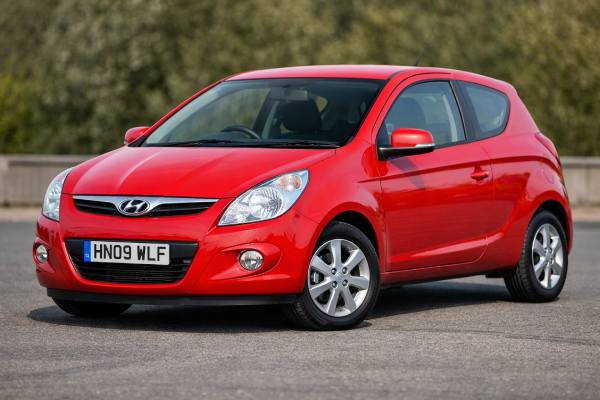
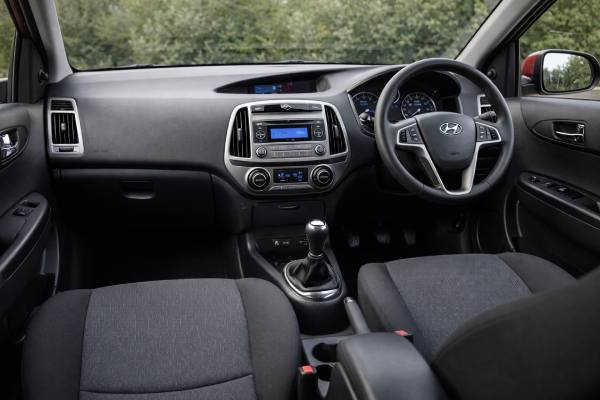
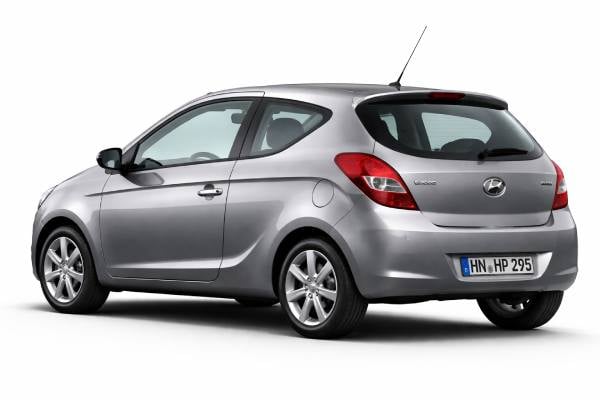
The Hyundai i20 3-door PB with the 1.4 CRDi 90 hp diesel sits in a useful sweet spot in the older supermini market. It combines the tidy footprint and easy parking manners of the regular i20 with a stronger diesel engine that feels more relaxed on fast roads than the small petrol options. The appeal is not only fuel economy. This version also brings solid low-rpm torque, simple front-wheel-drive packaging, and a body style that looks a little sportier without turning into a compromise-heavy coupe. That said, these cars are now old enough that condition matters far more than brochure promise. A well-kept 1.4 CRDi can still be a practical, efficient, and durable daily driver. A neglected one can become a chain of diesel-related faults, tired suspension, and deferred service work. For most buyers, this i20 is best understood as a sensible long-term used car with one clear rule: buy history first, mileage second.
Fast Facts
- Strong diesel torque makes the 3-door i20 feel easier and calmer than the entry petrol versions.
- Compact size, simple chassis layout, and a roomy cabin make it a practical everyday hatchback.
- Five-star Euro NCAP safety remains a real strength for an older B-segment car.
- Check diesel-specific upkeep carefully, especially fuel system health, EGR condition, and evidence of regular oil changes.
- Engine oil service is every 20,000 km or 12 months in normal European use, and every 10,000 km or 6 months in severe use.
What’s inside
- Hyundai i20 3-door PB profile
- Hyundai i20 3-door CRDi specs
- Hyundai i20 3-door trims and safety
- Diesel weak points and fixes
- Service plan and buying advice
- Road manners and economy
- Rival check Fiesta Polo and Yaris
Hyundai i20 3-door PB profile
The first-generation Hyundai i20 PB was designed to compete where European superminis live or die: everyday practicality, sensible running costs, decent safety, and a cabin that feels more grown-up than the badge price suggests. In 3-door form, the PB i20 adds a little extra style without changing the car’s basic mission. It is not a hard-edged coupe and it does not try to be one. Instead, it gives you longer front doors, a slightly cleaner side profile, and the same compact hatchback footprint that makes the regular i20 easy to use in town.
The 1.4 CRDi 90 hp version is the one that turns the car from merely competent into genuinely useful. The diesel’s main advantage is not outright pace. It is the way the car carries speed with less effort. The 220 Nm torque output means the i20 feels less strained on inclines, less busy when loaded, and more comfortable on longer trips than the lower-powered petrol alternatives. That matters in real ownership because this is exactly the kind of car people use for commuting, mixed urban and motorway driving, and long-term low-drama service.
There is one important point about the year range. The PB generation covers both pre-facelift and facelift-era cars, and the 1.4 CRDi 90 hp setup was not presented identically in every market for every year. Early PB listings and later facelift brochures do not always line up perfectly on gearbox count, emissions, or even body-length figures. That is why buyers should treat the headline search term “2009–2012 3-door 1.4 CRDi 90 hp” as a family of closely related cars rather than one perfectly identical spec sheet. VIN, registration year, and country of sale matter.
Mechanically, the car stays refreshingly simple. You get a transverse four-cylinder diesel, front-wheel drive, a basic but proven suspension layout, and modest tyre sizes. That simplicity helps on the used market. A PB i20 is easier to inspect, easier to maintain, and usually less financially risky than a newer small hatch with more electronics and more complicated emissions hardware. The downside is equally clear: age exposes neglect. If the engine has seen irregular oil changes, poor diesel fuel, short-trip use, and long delays between services, the car will feel older than its age very quickly.
Who does the 3-door 1.4 CRDi suit today? Someone who wants a compact diesel hatch that is cheap to run, easy to park, and still capable of proper road-trip duty. Who should avoid it? Buyers wanting the most spacious rear access, the quietest motorway refinement, or modern driver-assistance technology. This Hyundai works best when you appreciate its strengths for what they are: honest engineering, real-world torque, and low-complexity ownership, provided the previous owners respected the maintenance schedule.
Hyundai i20 3-door CRDi specs
The 1.4 CRDi 90 hp diesel uses Hyundai’s 1,396 cc four-cylinder common-rail turbo-diesel engine. In PB-era documentation and market listings, it is tied to the D4FC engine family and produces 66 kW at 4,000 rpm with 220 Nm from low engine speeds. That torque-rich delivery is the reason the car feels more capable than the modest horsepower number suggests. Public PB data also shows that some earlier versions were paired with a 5-speed manual, while later facelift-era 90 PS diesel brochures in Europe show a 6-speed manual and stop-start on certain trims. That distinction matters when comparing fuel economy, cruising refinement, and emissions.
Powertrain and efficiency
| Item | Figure |
|---|---|
| Engine code | D4FC family |
| Engine layout | Front-transverse inline-four |
| Cylinders | 4 |
| Valvetrain | DOHC, 4 valves per cylinder |
| Displacement | 1.4 L (1,396 cc) |
| Induction | Turbocharged diesel |
| Fuel system | Common-rail direct injection |
| Max power | 90 hp (66 kW) @ 4,000 rpm |
| Max torque | 220 Nm (162 lb-ft) @ 1,750–2,750 rpm |
| Timing drive | Chain-type timing system; inspect for noise, stretch symptoms, and oil-history problems rather than assuming a routine belt service |
| Rated efficiency | Typically about 4.1–4.4 L/100 km combined, depending on year, market, wheel size, and stop-start equipment |
| Real-world highway at 120 km/h | Usually around 5.0–5.6 L/100 km in healthy trim |
Transmission and driveline
| Item | Figure |
|---|---|
| Transmission | Manual, typically 5-speed on earlier cars and 6-speed on later facelift-era 90 PS versions |
| Drive type | FWD |
| Differential | Open |
Chassis and dimensions
| Item | Figure |
|---|---|
| Front suspension | MacPherson struts |
| Rear suspension | Coupled torsion beam axle |
| Steering | Motor-driven power steering |
| Steering turns | About 2.8 lock-to-lock |
| Brakes | Front disc, rear disc or drum by market and trim |
| Popular tyre sizes | 175/70 R14, 185/60 R15, 195/50 R16 |
| Ground clearance | Market-dependent, modest supermini ride height |
| Length | 3,940 mm pre-facelift; some later facelift material lists 3,995 mm |
| Width | 1,710 mm |
| Height | 1,490 mm |
| Wheelbase | 2,525 mm |
| Turning circle | 10.4 m diameter |
| Kerb weight | Roughly around 1,100 kg, depending on body style and market |
| Fuel tank | 45 L |
| Cargo volume | About 295 L seats up and around 1,060 L with rear seats folded |
Performance and capacities
| Item | Figure |
|---|---|
| 0–100 km/h | About 13.5–13.6 seconds |
| Top speed | About 171–174 km/h |
| Engine oil | 5.3 L (5.60 US qt) |
| Oil specification | API CH-4 or above, ACEA B4 |
| Common diesel oil grades | 5W-30 preferred, with 10W-30 or 15W-40 also shown by climate range; 0W-30 for extreme cold |
| Manual transaxle fluid | 1.9 L, API GL-4 SAE 75W-85, fill-for-life specification |
| Coolant | 6.8 L, ethylene-glycol based coolant for aluminum radiator |
| Brake and clutch fluid | 0.7–0.8 L, DOT 3 or DOT 4 |
| A/C refrigerant | R-134a |
| Wheel nut torque | 88–107 Nm |
Safety and driver assistance
| Item | Figure |
|---|---|
| Euro NCAP | 5 stars |
| Adult occupant | 88% |
| Child occupant | 83% |
| Vulnerable road user / pedestrian | 64% |
| Safety assist | 86% |
| Modern ADAS | No true modern AEB, ACC, LKA, BSD, or RCTA on this generation |
For buyers, the most important takeaway from the specs is not the exact decimal in the economy figure. It is the balance of the package: useful torque, simple packaging, low-weight hatchback dimensions, and a diesel drivetrain that can still make sense if your mileage pattern suits it and the service record is strong.
Hyundai i20 3-door trims and safety
The i20 PB was sold in many European markets with slightly different trim names and equipment bundles, so it is better to think in terms of equipment tiers than to assume that every country used the same badge. In Irish-market brochure form, Hyundai separated the car into trims such as Classic and Premium. Elsewhere, similar equipment could appear under other names. The 3-door body was usually the style-led alternative within that same trim ladder, not a separate mechanical performance model. That means the 1.4 CRDi 90 hp 3-door normally shares its fundamentals with the 5-door, while differing mainly in access and visual character.
Lower and mid trims still had a respectable safety baseline for the class. Hyundai listed front, side, and curtain airbags, front and rear seatbelt reminders, ABS, Electronic Stability Program, Vehicle Stability Management, remote central locking, rear ISOFIX points, fog lamps, audio controls, and split-folding rear seats as part of the core package on many PB-market brochures. Higher trims added equipment such as alloy wheels, air conditioning, automatic lights, rain sensors, Bluetooth, rear parking assist, privacy glass, and on some versions a reversing camera integrated into the mirror. For a supermini of this age, that is a solid feature spread.
In real used-market terms, trim differences matter for three reasons. First, nicer trims are easier to live with because they usually have the convenience items owners actually value every day. Second, upper trims can be easier to resell because buyers notice air conditioning, parking aids, and alloy wheels long before they notice suspension layout. Third, missing or broken trim-specific equipment tells you something about how carefully the car was maintained. A dead rear camera, failed parking sensors, or inoperative mirror indicators are not necessarily expensive disasters, but they are signs to slow down and inspect more carefully.
Safety is one of the strongest parts of the PB i20 story. Euro NCAP awarded the i20 five stars in 2009, with strong scores in adult and child occupant protection and a very respectable safety-assist result for the time. The tested car was a left-hand-drive five-door, but the published rating applied across the i20 line. That matters for a 3-door buyer because it means the stylish body variant is not a thinly disguised downgrade in basic crash structure. It remains a safety-conscious small car by class standards of its era.
There are still a few caveats. Euro NCAP noted only marginal whiplash protection, and the car belongs to the period before small cars gained widespread autonomous emergency braking or lane-support systems. So the safety case is based on sound passive safety, multiple airbags, ABS, stability control, and seatbelt reminders rather than smart software. In practice, that is still valuable. An older used supermini with a good crash structure and ESC is a much better ownership proposition than a cheaper rival that skimps on those fundamentals.
If you are shopping today, check actual trim content instead of trusting the badge on the tailgate. Test every window, mirror, lock, wiper speed, heater setting, audio control, and parking aid. On an older Hyundai, broken convenience equipment is less about the feature itself and more about whether the car has been cared for with the same attention everywhere else.
Diesel weak points and fixes
The 1.4 CRDi 90 hp i20 is not famous for one giant fatal flaw. Its reliability story is more typical of an older small diesel: good durability when serviced on time, but very sensitive to neglect, weak batteries, poor fuel, and endless short trips. That makes condition and usage history far more important than mileage alone.
Common and usually low-to-medium cost
- EGR and intake contamination: Symptoms include hesitation, flat response, rougher running, and soot-related fault codes. The likely cause is repeated short-trip use and low-load driving. The normal remedy is inspection, cleaning, and checking related vacuum lines and control components.
- Air and boost leaks: Split hoses, tired clamps, or intercooler-side leaks can make the car feel underpowered long before the turbo itself is actually bad. A pressure test and careful hose inspection are often more useful than jumping straight to expensive parts.
- Glow plug and battery weakness: Hard cold starts, warning lamps, or smoky first starts are often tied to glow plug performance or low cranking voltage rather than major internal engine damage.
Occasional and medium cost
- Fuel filter and water contamination issues: The owner schedule pays real attention to diesel fuel quality for a reason. Symptoms can include hard starting, surging, restricted fuel flow, or loss of power. The remedy is to inspect or replace the fuel filter promptly and then confirm the system is free of water or contamination.
- Clutch wear and dual-mass flywheel-type symptoms on harder-used cars: Not every car will show this, but urban use, towing, or repeated low-speed lugging can lead to vibration, chatter, or an uncomfortably high bite point. A test drive with full-load acceleration in a higher gear is useful here.
- Sensor and emissions-side faults: MAF, boost control, or diesel emissions hardware issues can create annoying drivability problems that feel worse than they are. A proper diagnostic scan matters more than guesswork.
Less common but higher risk
- Timing-chain wear from weak oil history: This engine uses a chain system, which avoids routine belt intervals but does not excuse poor maintenance. Cold-start rattle, timing correlation faults, or dirty oil history are the warning signs to take seriously.
- Injector or seal problems: Combustion smell, rough idle, difficult starting, or black carbon around injectors should push you toward a specialist inspection.
- Turbocharger wear after poor shutdown habits or dirty oil: Blue smoke, persistent whistle, or oily intake plumbing can point to trouble, but many cars are condemned too quickly for leaks elsewhere.
On the chassis side, expect age-related issues rather than model-specific drama: drop links, bushes, wheel bearings, rear brakes, and tired dampers. Steering racks are usually not the first thing to fail, but loose front-end feel or knocking needs investigation. Corrosion is more important than many buyers think. Check the rear beam, subframe areas, brake lines, wheel arches, door bottoms, and tailgate edge.
As for recalls and service campaigns, the smartest approach is VIN-based verification, not internet folklore. Official Hyundai and DVSA recall tools are more useful than hearsay because campaign scope can vary by market, production date, and whether earlier work was already completed. Ask for documented service history, proof of campaign completion where possible, and invoices that show diesel-specific maintenance rather than generic “just serviced” claims.
Service plan and buying advice
The i20 1.4 CRDi rewards disciplined maintenance. In normal European service, Hyundai’s published schedule sets engine oil and filter changes at 20,000 km or 12 months. For severe use, the interval shortens to 10,000 km or 6 months. On an older diesel, that shorter interval is usually the safer real-world rule unless the car does regular long journeys and has a superb history. For a buyer, that one interval tells you a lot: if the seller cannot prove timely oil changes, treat the car as a risk.
Practical maintenance schedule
| Item | Sensible interval |
|---|---|
| Engine oil and filter | 20,000 km or 12 months normal use; 10,000 km or 6 months severe use |
| Check oil level and leaks | Every 500 km or before a long trip |
| Air cleaner filter | Inspect at 20,000 km; replace around 40,000 km or 24 months |
| Climate control air filter | Replace every 20,000 km or 12 months |
| Fuel filter cartridge | For Europe, inspect at 20,000 and 40,000 km; replace around 60,000 km, then repeat by schedule and fuel quality |
| Brake and clutch fluid | First replacement at 100,000 km or 60 months, then every 40,000 km or 24 months |
| Engine coolant | First replacement at 100,000 km or 60 months, then every 40,000 km or 24 months |
| Manual transaxle fluid | Inspect regularly; severe-use replacement at 100,000 km is a sensible planning point |
| Drive belts | Inspect regularly and replace on condition |
| Tyres, brakes, driveshaft boots, steering and suspension | Inspect at every annual service |
| Battery test | Annually once the car is more than four years old |
Useful service figures
- Engine oil: 5.3 L, API CH-4 or above, ACEA B4.
- Manual gearbox oil: 1.9 L, GL-4 SAE 75W-85.
- Coolant: 6.8 L.
- Brake and clutch fluid: 0.7–0.8 L, DOT 3 or DOT 4.
- Wheel nuts: 88–107 Nm.
The buyer’s guide is straightforward. First, start the engine from fully cold. A healthy car should start cleanly without excessive cranking, dramatic smoke, or chain-like rattle. Second, inspect for evidence of diesel neglect: poor idle, injector smell, split hoses, oily residue around boost plumbing, and warning lights that mysteriously disappear after startup. Third, check the clutch and gearbox under load. A torquey small diesel will reveal clutch weakness more clearly than a low-powered petrol.
Also inspect the body honestly. The 3-door shape looks cleaner, but the longer front doors take more abuse in tight parking spaces. Make sure they do not sag and that the seals, hinges, and check straps feel right. Rear-seat access should still work smoothly, and the folding front seats should not feel broken or overly loose.
Best versions to seek are cars with a clear file of diesel-specific servicing, original or quality-equivalent filters, good tyres, and intact trim equipment. Cars to avoid are those with vague service history, multiple cheap tyres, smoking starts, dashboard warning lights, or evidence of poor crash repair. Long-term durability can still be good, but only when the service basics were never treated as optional.
Road manners and economy
On the road, the 1.4 CRDi gives the i20 a more mature feel than you might expect from a small three-door hatchback. The powertrain’s character is defined by torque rather than revs. It pulls cleanly from low speeds, suits relaxed commuting, and makes the car feel much less breathless on inclines and motorway slip roads than the small naturally aspirated petrol models. That is the main reason people still seek this engine out.
The car’s ride and handling follow the same sensible theme. The PB platform is light, easy to place, and predictable. Steering is light rather than rich in feedback, which suits town use and tighter parking. Cornering balance is safe and tidy, though not playful. This is not the i20 you buy for fun on a Sunday morning. It is the one you buy because it tracks straight, brakes honestly, and behaves well on ordinary roads with ordinary tyres.
Refinement depends heavily on year, gearbox, tyre brand, and condition. A later 6-speed facelift-era diesel usually feels calmer at cruise than an earlier shorter-geared manual. At city speeds, the diesel engine is audible but not intrusive. At motorway pace, wind and tyre noise tend to matter more than engine harshness, especially on worn or budget tyres. A tired example can sound much older than a fresh one.
Real-world economy remains a major advantage. Official combined figures sit in the low-4 L/100 km range, but the number that matters most today is what owners can expect in mixed real use. In warm conditions and healthy tune, many cars can return roughly:
- around 5.5–6.2 L/100 km in heavy urban use,
- around 5.0–5.6 L/100 km at a true 120 km/h motorway cruise,
- and around 4.6–5.3 L/100 km in mixed driving.
Short trips, low winter temperatures, underinflated tyres, old filters, and weak thermostats can push those numbers up quickly. Diesel cars of this age hate being run as neglected short-trip appliances. If your driving is almost entirely urban and low-mileage, the fuel savings may not justify the diesel-specific maintenance risk.
Performance is enough rather than exciting. A 0–100 km/h time in the mid-13-second range sounds modest, but the more relevant test is everyday elasticity. Once moving, the 1.4 CRDi feels stronger than the headline suggests because it does not need revs to get on with the job. That gives the car a surprisingly calm personality on rural roads and in overtaking situations, provided you use the torque and do not expect hot-hatch response.
Load carrying is fine for normal hatchback use, but as always with a small diesel, a full cabin and luggage will expose any weakness in clutch condition, brakes, and rear dampers. A sorted i20 remains composed. A neglected one feels busy, crashy, and less substantial than it really is.
Rival check Fiesta Polo and Yaris
The i20 3-door 1.4 CRDi competes with a very familiar group: Ford Fiesta 1.4 TDCi, Volkswagen Polo 1.2 or 1.6 TDI, Toyota Yaris D-4D, and in some markets cars like the Skoda Fabia or Mazda2 diesel. Each rival has a clearer headline strength. The Fiesta is the sharper car to drive. The Polo often feels more solid and mature. The Yaris has a stronger reputation for long-term dependability. The Fabia usually wins on plain usefulness. What the Hyundai offers is balance.
Against the Fiesta, the i20 loses some steering feel and driver appeal, but often makes up ground with equipment and cabin space. Against the Polo, it loses some perceived polish, though it can be cheaper to buy and less intimidating to own. Against the Yaris, it trades a little brand trust for better feature value and often a more settled motorway feel in diesel form.
The three-door body also changes the comparison slightly. It makes the i20 look more youthful than a standard five-door hatch, which can matter if you want a small car that still feels a bit special. But it does not change the underlying verdict: this is still a practical diesel supermini first and a style choice second. Rear access is less convenient than in the five-door, and families with child seats will notice that quickly.
The Hyundai’s biggest used-market strength is that it can be a smart buy when better-known rivals are overpriced or have equally patchy maintenance histories. On paper, a Fiesta or Polo may look more desirable. In reality, a cleaner i20 with honest servicing, fresher brakes, and fewer signs of neglect is often the better ownership decision. Used cars should be judged by condition, not just reputation.
Where does the i20 fall short? It does not offer the most engaging chassis, the quietest cabin, or the strongest premium feel. It is also not the best choice for buyers who only do short urban trips, because the diesel advantage becomes harder to justify. And because this variant is rarer than the common petrol cars, finding the exact right one can take longer.
Still, the verdict is easy to understand. The Hyundai i20 3-door PB 1.4 CRDi 90 hp is a strong used buy for drivers who value torque, economy, safety, and simple long-term usability more than image or sporty flair. It is the sort of car that makes sense after the first month of ownership, not just on the day you buy it. That is often a much better reason to choose a car than a prettier badge or a more fashionable reputation.
References
- One Car. Multiple Senses. 2012 (Brochure)
- Hyundai Owners manuals 2026 (Owner’s Manual portal)
- HYUNDAI I20 – Euro NCAP Results 2009 2009 (Safety Rating)
- Home | Hyundai Recalls & Service Campaigns 2026 (Recall Database)
- Check if a vehicle, part or accessory has been recalled 2026 (Recall Database)
Disclaimer
This article is for informational purposes only and is not a substitute for professional diagnosis, repair, or official workshop guidance. Specifications, torque values, service intervals, procedures, and equipment can vary by VIN, market, model year, transmission, and trim, so always verify the exact details against the correct official service documentation for the specific vehicle.
If this guide was useful, please consider sharing it on Facebook, X, or another social platform to support our work.