
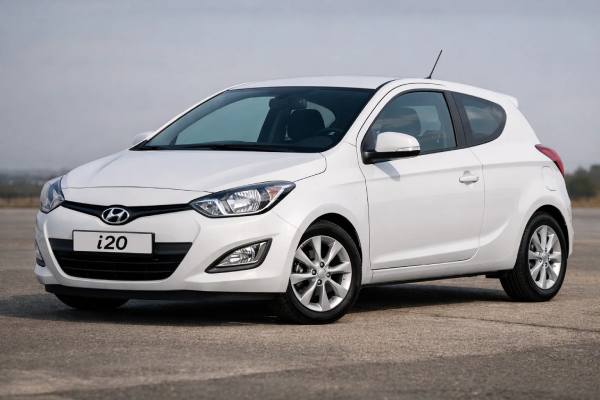
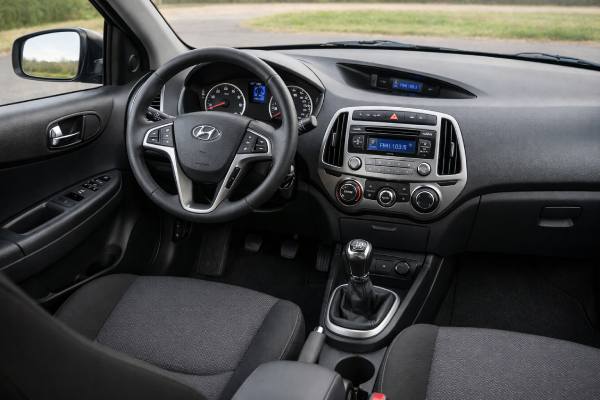
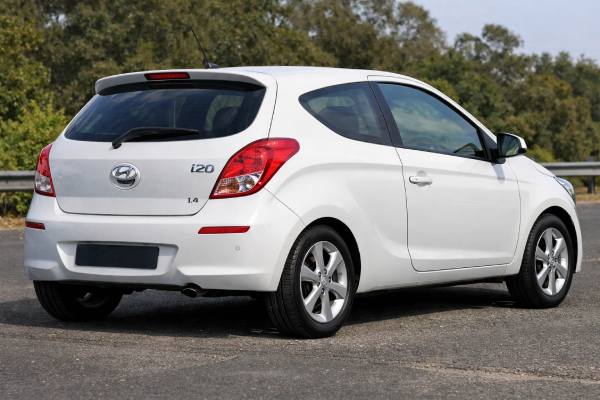
The facelifted Hyundai i20 3-door PB with the 1.1 CRDi 75 hp diesel is one of those small cars that makes more sense in ownership than it does in a brochure headline. On paper, 75 hp does not sound impressive. In practice, the three-cylinder diesel’s low-end torque, 6-speed manual gearbox, and low official fuel use make it a very capable commuter and long-distance budget hatchback. The facelift also sharpened the look of the original i20 without changing its core strengths: practical packaging, compact dimensions, and straightforward engineering. For buyers covering regular motorway or mixed-road mileage, this version can still be a smart used choice. It offers lower running costs than the larger diesels and more real-world flexibility than many small petrol engines of the same age. The catch is typical of any older diesel supermini: condition matters more than trim, and maintenance history matters more than price.
Essential Insights
- The 1.1 CRDi delivers strong low-rpm torque for its size and remains impressively efficient.
- A 6-speed manual gearbox helps motorway refinement and real-world fuel economy.
- The 3-door facelift body gives the i20 a cleaner, more distinctive look without losing everyday usefulness.
- Poorly maintained cars can suffer from EGR fouling, injector concerns, clutch wear, and age-related corrosion.
- Under normal service, Hyundai scheduled engine oil and filter changes every 20,000 km or 12 months.
Contents and shortcuts
- Hyundai i20 3-Door Facelift Picture
- Hyundai i20 3-Door Facelift Specs
- Hyundai i20 3-Door Facelift Equipment
- Trouble Spots and Service Campaigns
- Upkeep Plan and Buyer Advice
- Behind the Wheel and Fuel Use
- Where It Sits Among Rivals
Hyundai i20 3-Door Facelift Picture
The facelifted Hyundai i20 3-door PB sits in an interesting corner of the used-car market. It is still part of the first-generation i20 family, so its basic engineering is familiar: front-wheel drive, a transverse engine, simple suspension, and compact supermini packaging. But the 2012–2014 facelifted version tightened the styling and gave the three-door body a more deliberate identity. Combined with the 1.1 CRDi diesel, it became a small hatchback aimed less at entry-level first-time buyers and more at drivers who valued economy, range, and everyday usability.
That engine is the real point of this model. The 1.1-litre CRDi is a small three-cylinder turbo-diesel with modest peak power but useful low-end torque. In a light hatchback, that matters more than the raw horsepower figure suggests. This is not a quick car in headline terms, yet it often feels more relaxed in normal driving than a similarly old small petrol engine because it does not need to be worked as hard. The 6-speed manual gearbox adds to that impression. It gives the car more flexible gearing than many small hatchbacks from the same period and makes steady higher-speed driving feel less busy.
The facelifted 3-door body also deserves more attention than it usually gets. Hyundai’s three-door launch material for the PB i20 already showed that the shorter side glass and longer doors changed the look of the car without changing the core dimensions that much. In facelift form, the concept matured. The 3-door still looked a little sportier than the five-door, but it never lost the practicality expected from an i20. Rear-seat access is naturally less convenient, but the car remains usable as a daily commuter or light family hatchback rather than a style-led compromise.
Ownership logic is where the car makes the strongest case for itself. Compared with the older 1.4 CRDi diesels in the same family, the 1.1 CRDi focuses more heavily on economy. Compared with the small petrol versions, it suits drivers who cover enough distance to benefit from diesel fuel use and longer cruising range. For the right buyer, that makes it one of the most rational facelift PB choices.
Still, this is now an age-sensitive purchase. The newest cars in this bracket are old enough that service history, rust condition, and the health of diesel-specific components matter more than how fresh the front bumper looks. A sound example can still feel like a clever buy. A neglected one can turn into a cheap car with expensive habits very quickly. That is why this model is best judged not by its badge or brochure image, but by how honestly it has been maintained.
Hyundai i20 3-Door Facelift Specs
The facelifted i20 3-door 1.1 CRDi 75 is defined by its efficient powertrain and simple chassis layout. Open technical data for this exact late-PB variant is more fragmented than for mainstream petrol versions, so the table below focuses on figures that are widely consistent across recognized vehicle-specification databases and Hyundai owner documentation for the i20 family. Where exact build-level detail can vary by VIN, that is treated cautiously.
| Powertrain and efficiency | Figure |
|---|---|
| Code | D3FA |
| Engine layout and cylinders | Inline 3, DOHC, 4 valves per cylinder |
| Bore × stroke | 75.0 × 84.5 mm (2.95 × 3.33 in) |
| Displacement | 1.1 L (1120 cc) |
| Induction | Turbocharged |
| Fuel system | Common-rail direct injection |
| Compression ratio | About 17.3:1 |
| Max power | 75 hp (55 kW) @ 4000 rpm |
| Max torque | 180 Nm (133 lb-ft) @ 1750–2500 rpm |
| Timing drive | Chain |
| Rated efficiency | About 3.8–4.0 L/100 km depending on trim and eco package |
| Real-world highway @ 120 km/h | Usually around 4.8–5.6 L/100 km in a healthy car |
| Transmission and driveline | Figure |
|---|---|
| Transmission | 6-speed manual |
| Drive type | Front-wheel drive |
| Differential | Open |
| Chassis and dimensions | Figure |
|---|---|
| Suspension, front | MacPherson strut |
| Suspension, rear | Torsion beam |
| Steering | Electric power steering |
| Brakes | Front discs, rear drums on many trims |
| Wheels and tyres | Common fitment 175/70 R14 or 185/60 R15 |
| Ground clearance | About 150 mm (5.9 in) |
| Length | 3940 mm (155.1 in) |
| Width | 1710 mm (67.3 in) |
| Height | 1490 mm (58.7 in) |
| Wheelbase | 2525 mm (99.4 in) |
| Turning circle | 10.4 m (34.1 ft) |
| Kerb weight | About 1120–1140 kg depending on trim |
| GVWR | About 1600 kg class, verify by VIN plate |
| Fuel tank | 45 L (11.9 US gal / 9.9 UK gal) |
| Cargo volume | 295 L seats up, about 1060 L seats folded |
| Performance and capability | Figure |
|---|---|
| 0–100 km/h | About 14.0–14.8 s depending on trim and source |
| Top speed | About 158–165 km/h (98–103 mph) |
| Payload | Roughly 430–470 kg depending on market version |
| Fluids and service capacities | Figure |
|---|---|
| Engine oil | Low-ash ACEA C2 or C3 diesel oil where DPF-equipped; verify by VIN; about 5.3 L |
| Coolant | Hyundai-approved coolant mix; verify capacity by VIN and market |
| Transmission fluid | API GL-4 SAE 75W/85 manual transmission oil |
| A/C refrigerant | Vehicle-label and market dependent |
| Key torque spec | Wheel lug nuts 88–107 Nm (65–79 lb-ft) |
| Safety and driver assistance | Figure |
|---|---|
| Euro NCAP | 5 stars |
| Adult occupant | 88% |
| Child occupant | 83% |
| Vulnerable road users | 64% |
| Safety assist | 86% |
| ADAS suite | No modern AEB, ACC, lane centering, or blind-spot monitoring |
These figures explain why the car remains appealing. The power output is modest, but the 180 Nm torque figure and 6-speed gearbox make the package more usable than the 75 hp label implies. The dimensions are also well judged for the class. It is small enough for urban work, yet the wheelbase and hatchback shape keep the car practical.
A few details are worth verifying on the actual vehicle. Rear-brake setup, tyre package, DPF fitment, and exact emissions calibration can differ by market and trim. That matters because it affects service needs, ride quality, and the risk attached to a poorly maintained example.
Hyundai i20 3-Door Facelift Equipment
The facelifted i20 3-door was still sold within Hyundai’s value-first logic, but the body style and later model-year positioning gave it a slightly more distinctive role than the standard five-door. The three-door was there to add visual appeal to the lineup, while the 1.1 CRDi diesel added a clear efficiency angle. In practice, that means many surviving cars are modestly equipped rather than luxurious, but the exact mix depends heavily on country and trim.
Lower trims in this period typically focused on essentials: cloth seats, simpler audio systems, manual air conditioning or basic climate control, and smaller wheels. Higher grades usually added alloy wheels, steering-wheel controls, upgraded infotainment, trip-computer functions, and a more finished interior feel. On this version, those features matter less than the underlying drivetrain, but they still shape the ownership experience. An air-conditioned, correctly maintained diesel with sound tyres and working electronics is a much better used car than a sparsely equipped example that has been allowed to drift into neglect.
Mechanically, the most important distinction is the 6-speed manual gearbox. That is one of the features that most clearly separates the 1.1 CRDi from some of the smaller petrol and older diesel variants. It is not just a specification-sheet detail. It changes the car’s personality by making open-road driving less busy and giving the engine a broader useful range. For buyers who spend time on faster roads, that matters more than a nicer stereo or a set of alloy wheels.
Safety equipment was one of the i20’s stronger market points throughout the PB generation. Euro NCAP’s 2009 test result applied across the i20 range and remains one of the main reasons this model still looks respectable against older B-segment rivals. Hyundai promoted six airbags, ABS, electronic brake-force distribution, and electronic stability control during the model’s life, but exact fitment still varied by market. That is important because a used buyer should not assume every facelift 3-door includes identical active-safety equipment.
ISOFIX outer rear-seat mountings, seatbelt reminders, and a decent passive-safety structure were meaningful strengths for the period. This is not a modern ADAS car, though. The model predates the widespread adoption of autonomous emergency braking, lane-keeping support, adaptive cruise control, blind-spot warning, and traffic-sign recognition in small hatchbacks. Buyers stepping from newer cars should adjust expectations accordingly.
Quick identifiers help when viewing cars in person. Eco-focused badging, smaller wheels, a 6-speed shift pattern, and trim names associated with efficiency can suggest the correct 1.1 CRDi variant. Even so, engine code, VIN data, and official registration details matter more than a tailgate badge. That is especially true because some late PB cars can be confused with other i20 variants by sellers who rely on partial paperwork or copied advertisements.
In ownership terms, the right equipment mix is simple: working air conditioning, proper service records, full electrics, correct tyres, and proof of routine maintenance are more valuable than cosmetic trim upgrades. For this model, functionality is the real luxury feature.
Trouble Spots and Service Campaigns
The Hyundai i20 3-door facelift 1.1 CRDi has a predictable reliability profile for an older small diesel. The core design is not widely known for a single dramatic failure point, but the usual diesel caveats apply, and age magnifies them. The biggest dividing line between a good car and a poor one is still maintenance quality rather than model reputation.
A practical way to map the issues is by frequency and cost:
- Common, low to medium cost: batteries, glow-plug faults, worn front drop links, aged brake components, tired dampers, and older tyres fitted to low-value cars.
- Common, medium cost: EGR fouling, intake soot buildup, boost-hose leaks, thermostat issues, and rough idle caused by injector sealing or fuel-system wear.
- Occasional, medium to high cost: clutch wear, possible flywheel-related vibration depending on specification, wheel bearings, air-conditioning faults, and corrosion repair.
- Occasional, high cost: injector replacement, persistent chain-noise diagnosis, neglected DPF-related trouble where fitted, and chronic driveability faults caused by bad servicing.
- Rare but important: hidden accident damage, unresolved service actions, or seller-masked warning-light problems.
Symptoms matter more than stories. A healthy 1.1 CRDi should start cleanly, settle fairly quickly, and pull smoothly from low rpm. Warning signs include hard starting, excessive smoke, a diesel smell in the cabin, strong hissing under load, obvious hesitation, clutch slip in a high gear, or repeated warning lights. Because this is a three-cylinder diesel, some coarse idle behavior is normal compared with a petrol engine. What is not normal is persistent metallic rattling, unstable idle, or a car that feels obviously weaker than the torque figure suggests.
Timing hardware deserves special care. The engine uses a chain rather than a routine timing belt service item, but that does not mean it is immune to wear. Long oil intervals, poor oil quality, and repeated short-trip use can raise the risk of chain and tensioner wear over time. That is why oil history matters so much on this model. The same applies to emissions hardware. On DPF-equipped versions, the correct low-ash oil is not optional; it is part of responsible maintenance.
Corrosion is another age-based risk that buyers should not overlook just because the car is small and economical. Check the sills, rear arches, underbody seams, brake lines, front and rear subframe areas, and the underside around mounting points. Surface rust may be manageable. Structural corrosion, improvised welding, or heavily coated underbodies that hide decay should be treated as serious warning signs.
Public UK records also show non-code actions affecting some i20 models in this era. One covered defective tyre valves that could lead to air loss. Another earlier action applied to some petrol cars for wiring-loom damage and is not a direct diesel fault, but it reinforces the wider point: verify campaign completion by VIN and dealer history. Before buying, ask for service records, evidence of correct oil use, proof of recent filter work, and enough time for a fully cold start and proper test drive.
Upkeep Plan and Buyer Advice
The best i20 1.1 CRDi cars are not necessarily the newest-looking ones. They are the ones that have been serviced on time, driven in a way that suits a diesel, and repaired before small problems became expensive ones. This engine rewards routine care. It also punishes skipped maintenance more sharply than a simple small petrol hatchback.
A sensible ownership schedule should start with the factory framework and then become more cautious as the car ages. Hyundai’s normal schedule used a 20,000 km or 12-month oil-and-filter interval. On an older used diesel, many owners and specialists prefer to shorten that if the service history is uncertain, the usage is urban, or the car sees cold-weather short trips. That is sensible, especially for chain life and emissions-system health.
| Item | Practical interval |
|---|---|
| Engine oil and filter | Every 20,000 km or 12 months maximum; sooner in harsh or uncertain use |
| Engine air filter | Inspect at every service and replace by condition |
| Cabin air filter | Inspect annually and usually replace every 12 months |
| Fuel filter | Replace by schedule and sooner if fuel quality is poor or running quality drops |
| Coolant | First replacement at 100,000 km or 60 months, then every 40,000 km or 24 months |
| Auxiliary belts | Inspect from 80,000 km or 48 months, then every 20,000 km or 12 months |
| Brake fluid | Every 2 years is sensible |
| Brake pads and shoes or rotors | Inspect at each service |
| Manual gearbox oil | Check for leaks; renew on age and mileage if history is missing |
| Tyre rotation | Around every 12,000 km |
| Battery test | Annually after about year four |
| Timing chain | No routine replacement interval in the normal owner schedule; inspect if noisy or if timing faults appear |
| Core fluids and values | Figure |
|---|---|
| Engine oil capacity | About 5.3 L |
| Gearbox oil type | API GL-4 SAE 75W/85 |
| Wheel lug nut torque | 88–107 Nm |
| Fuel tank | 45 L |
The buyer’s checklist should focus on the high-value basics:
- Start the engine from cold and listen for abnormal chain or injector-area noise.
- Check for smoke under acceleration and for smooth low-rpm pull.
- Confirm the clutch does not slip in higher gears.
- Inspect for boost-hose leaks, oily misting, or signs of poor previous repair.
- Look underneath for corrosion, leaks, and damaged brake lines.
- Make sure the air conditioning, windows, locks, and all warning lights behave properly.
- Check tyre wear for suspension or alignment issues.
- Verify service history, oil type, and campaign completion by VIN.
The trims to seek are usually the honest, moderately equipped cars with full records, not the cheapest or the flashiest. The cars to avoid are the usual ones: patchy history, rough cold starts, visible rust in structural areas, warning-light excuses, and obvious attempts to hide diesel smoke or noise.
Long-term durability can be good if the car starts from a healthy baseline. The appeal of this model is that it can still deliver very low running costs without complicated modern systems. But that only holds true when the car has been maintained like a diesel and not merely used like disposable transport.
Behind the Wheel and Fuel Use
The i20 3-door facelift 1.1 CRDi feels exactly like a well-judged small diesel hatchback should. It is not fast, but it is more useful than its power figure suggests, and that difference matters in everyday driving. The 180 Nm torque output arrives low enough in the rev range to give the car an easy, relaxed step-off in traffic. That means it rarely feels as strained as a small naturally aspirated petrol engine in the same kind of use.
The 6-speed manual gearbox is central to the experience. In town, it gives the driver enough flexibility to keep the engine in its useful range without constant shifting. On open roads, the sixth gear helps the car settle into a calmer cruise than many older superminis. This is where the facelift 1.1 CRDi makes its strongest case. It is not a city-only eco special. It is a car that can genuinely handle regular higher-speed commuting while still returning very modest fuel use.
Ride and handling are conventional but honest. The MacPherson-strut front and torsion-beam rear layout produce predictable behavior and keep maintenance costs under control. Steering is light, which works well in urban driving and parking, though feedback is limited. The car is stable enough on straighter roads and easy to place, but it is not the sharpest or most engaging driver’s car in the class. Buyers looking for playful cornering would still lean toward some Fiesta rivals.
Noise, vibration, and harshness are typical for a three-cylinder diesel of this era. At idle and under load, the engine is clearly diesel and clearly three-cylinder. It is not especially refined by modern standards. Once warmed through and cruising, though, it becomes more acceptable, and the tall top gear helps reduce fatigue on longer trips. In that sense, refinement is good enough for the mission even if it is never a selling point.
Performance is adequate rather than exciting. Most sources place the car somewhere in the mid-14-second range to 100 km/h, with top speed around the low-160 km/h mark. Those figures are ordinary, but they do not tell the whole story. The real value lies in how the car uses its torque between 50 and 110 km/h, where it feels more cooperative than its headline number suggests.
Fuel economy remains the strongest reason to choose this version. Official combined figures hover around the high-3 to low-4 L/100 km range depending on trim and eco package. Real-world mixed driving will usually come out higher, but still favorable. A healthy example can return excellent economy in ordinary commuting, and steady 120 km/h motorway use often stays around the high-4 to mid-5 L/100 km range. For buyers who actually use a diesel properly, that remains a compelling advantage.
Where It Sits Among Rivals
The facelift Hyundai i20 3-door 1.1 CRDi 75 competes in a crowded class of efficient small hatchbacks, but it carves out a clear role. Its natural rivals include diesel versions of the Ford Fiesta, Volkswagen Polo, Skoda Fabia, Renault Clio, Peugeot 208, and Kia Rio. Many of those cars beat the Hyundai in one specific area. The Fiesta often feels better to drive. The Polo and Fabia can feel more mature inside. Some French rivals ride better. The Kia Rio shares much of the same ownership logic with slightly different styling and packaging.
The Hyundai’s strength is balance. It combines strong diesel economy, compact but useful dimensions, a 6-speed manual gearbox, respectable safety for its age, and generally straightforward engineering. It is also less likely than some rivals to be bought today for image reasons alone, which can help value if you find a clean example. In other words, it tends to appeal to practical buyers, and practical buyers often maintain cars better than trend-driven buyers.
Compared with the older 1.4 CRDi 75 version in the pre-facelift range, the 1.1 CRDi is more focused on outright efficiency and emissions. It gives away some torque, but its gearbox and later calibration still make it easy enough to live with. Compared with a smaller petrol i20, the 1.1 CRDi is the better choice for drivers who cover regular distance and want lower fuel costs. For very short urban use, the petrol versions remain the safer bet simply because they are less sensitive to diesel-specific neglect.
The three-door body also changes the value proposition slightly. It gives the facelift PB a more distinctive shape and can make the car feel less purely utilitarian than a standard five-door. For some buyers, that matters. The downside is expected: longer front doors, slightly less convenient rear access, and a smaller pool of used buyers if you later resell the car.
The final verdict is positive, but with clear conditions. The Hyundai i20 3-door PB facelift 1.1 CRDi 75 is a smart used supermini for drivers who understand what it is. Its main advantages are fuel efficiency, useful low-rpm torque, compact size, and relatively simple long-term engineering. Its main risks are age, neglect, and diesel-specific maintenance shortcuts. Buy the best-documented car, not the cheapest one, and this version can still make a very convincing case as an affordable long-distance small hatchback.
References
- Hyundai I20 Owner’s Manual 2016 (Owner’s Manual)
- Hyundai i20 three-door 2009 (Manufacturer release)
- HYUNDAI I20 – Euro NCAP Results 2009 2009 (Safety Rating)
- Non Code Action Bulletin: 01 January 2008 – 31 December 2012 2013 (Recall Database)
- Hyundai i20 (PB) 1.1 CRDi 75 Specs 2026 (Technical Data)
Disclaimer
This article is for informational purposes only and is not a substitute for professional diagnosis or repair. Specifications, torque values, intervals, procedures, and fitted equipment can vary by VIN, market, build date, emissions hardware, and trim level, so readers should always verify details against the official service documentation for the exact vehicle.
If this guide was helpful, please consider sharing it on Facebook, X, or another social platform to support our work.