
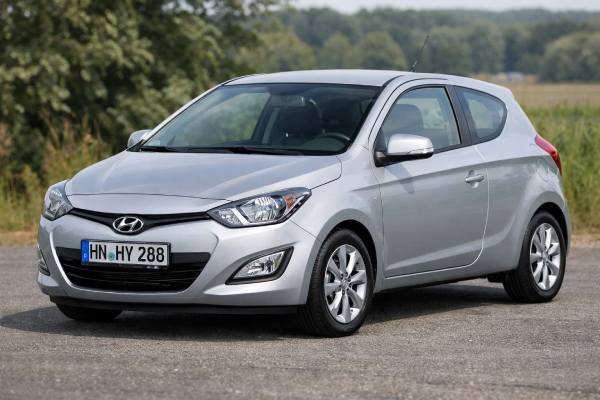
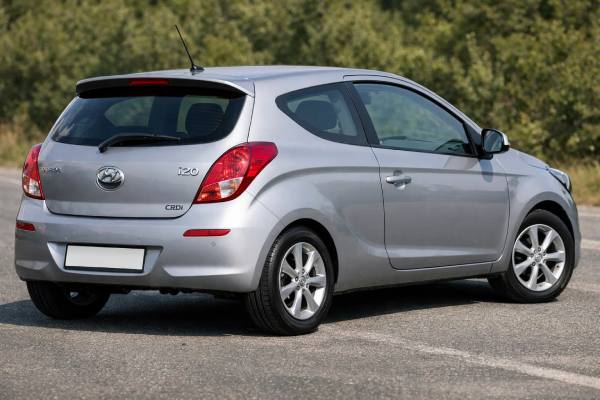
The facelifted Hyundai i20 3-door PB with the 1.4 CRDi 90 hp diesel is one of those overlooked superminis that becomes more interesting once you look past the badge and body style. It pairs a compact three-door shell with a useful 220 Nm turbo-diesel torque figure, a six-speed manual gearbox, and a practical chassis that was designed more for easy real-world use than for showroom drama. That combination matters. It gives the car much better motorway and overtaking ability than the smaller petrol versions, while still keeping the footprint, running costs, and cabin packaging of a B-segment hatchback. In facelift form, the PB i20 also gained a cleaner, more modern front end and a tidier overall presentation. The downside is equally clear: this is now an older diesel, and diesel-specific condition matters. This guide covers the 2012–2014 facelift Hyundai i20 3-door 1.4 CRDi in detail, including specs, safety, reliability, service needs, ownership risks, and its position among key rivals.
Quick Specs and Notes
- The 1.4 CRDi’s 220 Nm torque gives this i20 much stronger mid-range pull than the small petrol engines in the range.
- A six-speed manual and low official fuel use make it a better long-distance car than many older superminis.
- The three-door keeps the same 2,525 mm wheelbase as the five-door, so rear space stays better than the styling suggests.
- Short-trip use is the main ownership caveat, because older diesels dislike repeated cold starts and incomplete warm-up cycles.
- A sensible oil-and-filter interval for long-term use is every 10,000–15,000 km or 12 months, depending on driving conditions.
Start here
- Hyundai i20 3-door facelift explained
- Hyundai i20 3-door numbers and hardware
- Hyundai i20 3-door trims and protection
- Weak points, recalls, and wear
- Service planning and smart buying
- On-road character and diesel economy
- Where it sits among rivals
Hyundai i20 3-door facelift explained
The facelifted PB-generation Hyundai i20 did not try to reinvent the original formula. It refined it. That is important, because the core strengths of the first i20 were already clear: sensible dimensions, good space efficiency, useful safety equipment, and straightforward engineering. The facelift sharpened the look, improved the cabin presentation in many markets, and introduced updated engine choices and lower-emissions versions. In 1.4 CRDi 90 hp form, the result is one of the most complete long-distance versions of the early i20 range.
The three-door body gives the car a slightly different flavor from the five-door without changing the basic package underneath. It keeps the same 2,525 mm wheelbase, so it still feels roomy for the class. Hyundai also designed the three-door around longer front doors and a proper walk-in front-seat mechanism with memory return, which means rear access is better than many coupe-style superminis manage. That does not make it the best choice for frequent child-seat work or tight parking spaces, but it does make it more practical than the styling suggests.
The 1.4 CRDi is the real reason to look closely at this version. With 90 hp and 220 Nm, it transforms the i20 from a mainly urban supermini into a small car that can handle commuting distance, motorway runs, and loaded driving with far less effort than the naturally aspirated petrol models. The six-speed manual helps here. Instead of feeling busy at speed, the car settles into a more relaxed rhythm than many old B-segment hatchbacks.
The facelift-era diesel range was also shaped by Hyundai’s efficiency push. In many markets, the 1.4 CRDi could be had in standard form or with lower-CO2 Blue Drive and ISG-related economy measures. That means official economy figures can vary depending on version, but the broad theme remains the same: low fuel use and decent torque. For buyers who still cover meaningful annual mileage, that combination can be very attractive.
The trade-off is ownership risk. A small petrol i20 can tolerate urban life more easily. This diesel prefers regular use, stable battery health, good fuel quality, and correct servicing. Cars that have spent years on repeated short trips can suffer from soot-related problems, EGR contamination, lazy warm-up, and, on equipped cars, diesel particulate filter stress. None of those issues make the car a bad choice by default. They simply mean that a used buyer has to choose by condition and use history, not by brochure promise.
Viewed in the right way, the facelifted i20 3-door 1.4 CRDi is a niche but sensible used car. It is not the sportiest i20, and it is not the easiest i20 for city-only use. But for drivers who want a small footprint with genuine cruising ability and low fuel use, it still has a strong engineering case.
Hyundai i20 3-door numbers and hardware
The facelift technical sheet is especially useful on this model because it covers the exact PB facelift generation and includes the 1.4 CRDi 90 hp diesel alongside the updated petrol range. Some values vary slightly by market, emissions package, trim, and wheel size, so the individual car should still be checked by VIN before ordering parts or towing.
Powertrain and efficiency
| Item | Hyundai i20 3-door (PB facelift) 1.4 CRDi 90 hp |
|---|---|
| Code | U2 1.4 CRDi |
| Engine layout and cylinders | Transverse I-4, DOHC, 4 valves per cylinder |
| Displacement | 1.4 L (1,396 cc) |
| Bore × stroke | Not consistently published in the open facelift brochure set; verify by VIN data if needed |
| Induction | Turbocharged |
| Fuel system | Common-rail direct injection |
| Compression ratio | 17.0:1 |
| Max power | 90 hp (66 kW) @ 4,000 rpm |
| Max torque | 220 Nm (162 lb-ft) @ 1,500–2,750 rpm |
| Timing drive | Verify by engine build and official parts data before preventive timing work |
| Rated efficiency | 4.1 L/100 km combined standard, or 3.7 L/100 km with ISG/Blue Drive where fitted |
| Rated economy | 57.4 mpg US / 68.9 mpg UK standard, or 63.6 mpg US / 76.4 mpg UK with ISG/Blue Drive |
| Real-world highway at 120 km/h | Typically about 4.8–5.5 L/100 km in healthy cars |
That torque figure is the key number. It explains why the 1.4 CRDi feels much stronger in normal use than its power rating alone suggests.
Transmission, driveline, and chassis
| Item | Hyundai i20 3-door (PB facelift) 1.4 CRDi 90 hp |
|---|---|
| Transmission | 6-speed manual |
| Drive type | Front-wheel drive |
| Differential | Open |
| Front suspension | MacPherson strut with subframe and anti-roll bar |
| Rear suspension | Torsion beam |
| Steering | Motor-driven power steering |
| Steering wheel turns | 2.8 |
| Brakes | Front ventilated discs / rear discs |
| Wheels and tyres | Common market fitments include 175/70 R14 or 185/60 R15; larger alloys appeared on higher trims |
| Ground clearance | 150 mm (5.9 in) |
| Turning circle | 10.4 m (34.1 ft) kerb-to-kerb |
For a small diesel hatchback of this era, the hardware is straightforward and sensible. Nothing here is exotic, and that is part of the ownership appeal.
Dimensions, weights, and practicality
| Item | Hyundai i20 3-door (PB facelift) 1.4 CRDi 90 hp |
|---|---|
| Body style | 3-door / 5-seat |
| Length | 3,995 mm (157.3 in) |
| Width | 1,710 mm (67.3 in) |
| Height | 1,490 mm (58.7 in) |
| Wheelbase | 2,525 mm (99.4 in) |
| Kerb weight | About 1,180–1,297 kg (2,602–2,859 lb), depending on exact trim and specification |
| GVWR | 1,650 kg (3,638 lb) |
| Fuel tank | 45 L (11.9 US gal / 9.9 UK gal) |
| Cargo volume | 295 L (10.4 ft³) seats up / 1,060 L (37.4 ft³) seats folded, VDA |
| Roof load | 70 kg (154 lb) |
The practical point is that the three-door is not dramatically compromised. It gives away convenience, not real cabin size.
Performance, towing, and service capacities
| Item | Hyundai i20 3-door (PB facelift) 1.4 CRDi 90 hp |
|---|---|
| 0–100 km/h | 13.5 s |
| Top speed | 174 km/h (108 mph) |
| Towing capacity | 1,100 kg (2,425 lb) braked |
| Unbraked trailer | 450 kg (992 lb) |
| Payload | About 350–470 kg depending on trim and body specification |
| Fluid or spec | Value |
|---|---|
| Engine oil | Commonly about 5.3 L (5.6 US qt); use the correct diesel spec and viscosity for climate and DPF status |
| Coolant | Commonly about 6.4 L (6.8 US qt); ethylene-glycol type for aluminium cooling system |
| Manual transaxle fluid | Commonly about 1.7–1.8 L (1.8–1.9 US qt) |
| Brake and clutch fluid | DOT 3 or DOT 4 |
| Wheel lug nut torque | 88–107 Nm (65–79 lb-ft) |
Those capacity figures are good working numbers for ownership decisions, but as always on an older Hyundai diesel, exact confirmation by VIN and handbook is the safe route.
Hyundai i20 3-door trims and protection
Trim naming varies by market, but the basic facelift i20 pattern is familiar: entry-grade cars focused on value, mid-spec cars with the most useful comfort equipment, and better-equipped versions that added convenience items, wheel upgrades, and appearance details. The 1.4 CRDi 90 hp usually sat above the cheapest end of the range, which means used examples often come with a better equipment mix than the smallest petrol versions.
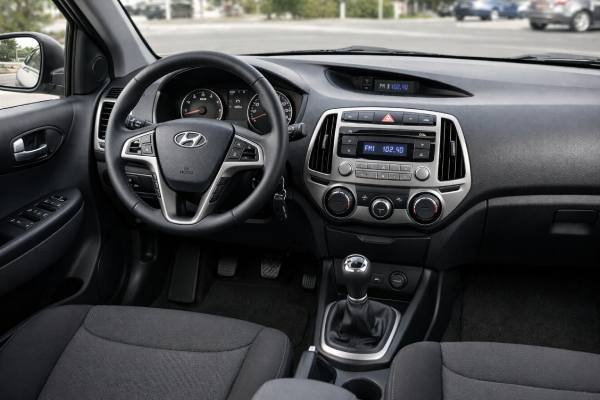
For the three-door body, some of the most relevant differences are functional rather than cosmetic. The longer doors are part of the design, but the more important detail is the walk-in seat mechanism with memory return, which makes rear access less awkward than expected. Some markets also repositioned rear speakers in the quarter panels on the three-door model, and trim packs could add items such as automatic climate control, multifunction steering-wheel controls, keyless entry, heated mirrors, cruise control, rear parking sensors, and a reversing camera display in the mirror.
The facelift brochure also points to LED daytime running lights, fog lamps, 15- and 16-inch alloy wheels, rain and light sensors, a supervision-style instrument display, and upgraded seat fabrics or leather-and-cloth combinations on better versions. That matters because the best-used i20 is often a middle-spec car with the diesel engine and six-speed manual, not the lowest trim and not the most option-loaded one. Mid-spec cars usually strike the best balance between comfort and future repair risk.
From a safety point of view, the i20 remained a strong class performer for its era. Euro NCAP gave the model five stars, with 88% for adult occupant protection, 83% for child occupant protection, 64% for pedestrian protection, and 86% for safety assist. Those percentages were impressive when new and remain meaningful when comparing late-2000s and early-2010s superminis against one another. The key point is not that the i20 feels modern by 2026 standards. It does not. The point is that it was engineered to a good passive-safety level for its own generation.
Hyundai also made a strong case for standard safety equipment. Facelift brochure material lists ABS, ESC with Vehicle Stability Management, and front, side, and curtain airbags as standard. Earlier three-door material also highlights front seatbelt pretensioners and active head restraints. In real used-car terms, that means the i20 PB does not feel stripped back or unsafe just because it was value-priced when new.
What it does not have is modern ADAS. Do not expect autonomous emergency braking, adaptive cruise control, blind-spot monitoring, lane-centering, traffic-sign recognition, or rear cross-traffic alert. Parking sensors and a rear camera were about as far as this car goes in assisted driving. Buyers used to newer cars will notice that. Still, there is an upside: the i20’s safety story depends mainly on solid body engineering and conventional stability hardware, not on expensive sensor calibration or camera-based systems that can complicate repairs later.
When buying, confirm equipment by VIN or by the car itself. Check the wheel size, verify ESC, count the airbags if literature is unclear, and inspect whether items such as cruise control, mirror-folding, rain sensor, and rear camera are actually fitted. On the used market, equipment assumptions are where many “same model” comparisons go wrong.
Weak points, recalls, and wear
The facelift i20 3-door 1.4 CRDi is not a fragile car, but it is a used diesel, and used diesels always need to be judged by how they were driven. Long, regular journeys are this car’s friend. Repeated short cold trips are not. Once you understand that, the fault pattern makes sense.
Common and usually low-to-medium cost
- EGR and intake contamination: Symptoms include flat response, hesitant pickup, smoke under load, rough idle, and occasional warning lights. The likely cause is soot and oil residue building up in the EGR path or intake. The normal fix is cleaning or replacing the affected parts and checking related hoses and sensors.
- Fuel-filter neglect: Hard starting, weak pull, or uneven running under load can come from an overdue fuel filter, contaminated diesel, or water in the fuel system. This is especially relevant on cars with patchy service history.
- Brake corrosion: Cars that sit unused or only do urban mileage can develop sticking rear calipers, uneven pad wear, and weak handbrake feel. This is common on older small hatchbacks and not unusual here.
- Front-end wear items: Anti-roll-bar links, bushes, tired dampers, and wheel bearings can produce knocks or roughness without representing a major mechanical failure.
Occasional and medium cost
- Turbo hose or boost leaks: Symptoms are weak acceleration, hissing, smoke, or underboost faults. Split hoses and loose connections are simple problems that can feel worse than they are.
- Glow-plug and cold-start issues: Long cranking, a rough first few seconds, or poor winter starting usually point to glow plugs, the control module, battery condition, or old fuel.
- Battery and charging weakness: Diesel cars are more sensitive to weak battery health than many owners expect, especially where stop-start systems are involved. Low voltage can also confuse other systems.
Higher-cost risks
- Clutch and dual-mass flywheel wear: Not every car suffers here, but a heavy pedal, take-off shudder, idle rattle, or vibration under load can indicate expensive driveline work ahead.
- DPF-related trouble on equipped versions: Where DPF or Blue Drive hardware is present, interrupted regenerations and repeated short-trip use can create warning lights, limp mode, or rising oil level from failed regeneration cycles.
- Injector or sealing issues: Diesel smell, chuffing sounds, poor idle, and difficult starting can come from injector sealing failures or injector problems themselves.
- Turbo wear after poor oil history: A healthy 1.4 CRDi should pull cleanly and predictably. Excess whistle, oil smoke, or obvious shaft-play risk should be taken seriously.
The engine itself is strong when maintained. The biggest mistakes owners make are stretching oil changes, ignoring the fuel filter, and treating a small diesel like a city-only petrol hatchback. That usage mismatch creates most of the expensive stories.
On recalls and service actions, the right answer is always a VIN check. Campaign coverage varies by market and production date, and older cars may have crossed borders. Check official Hyundai recall records and dealer history, not just seller memory. Even when there is no open recall, the dealer record can reveal missed servicing or earlier campaign work. For a used diesel, that paperwork matters as much as the road test.
If there is one pattern worth remembering, it is this: the i20 1.4 CRDi ages well when used like a diesel and neglected badly when used like a short-hop petrol.
Service planning and smart buying
A practical maintenance plan is what separates a cheap i20 diesel from an expensive one. The engine and chassis are not unusually delicate, but older diesels punish skipped basics more quickly than simple petrols do. The safest approach is conservative servicing and careful inspection.
Practical maintenance schedule
| Item | Practical interval |
|---|---|
| Engine oil and filter | Every 10,000–15,000 km or 12 months; use the shorter end for city or short-trip use |
| Engine air filter | Inspect annually; replace about every 30,000 km or earlier in dust |
| Cabin air filter | Every 15,000–20,000 km or 12 months |
| Fuel filter | About every 30,000–40,000 km, sooner if fuel quality is uncertain |
| Coolant | Inspect at every service; replace by official schedule for the exact car |
| Auxiliary belt and hoses | Inspect every annual service |
| Manual gearbox oil | Inspect for leaks and shift quality; refresh when worn feel or repair work suggests it |
| Brake fluid | Every 24 months |
| Brake pads and rotors | Inspect at every service, especially rear-brake condition |
| Tyres | Rotate and inspect regularly; align if pull or uneven wear appears |
| Glow plugs | Test when cold-start quality changes |
| 12 V battery | Test yearly once age passes about 4 years |
| Timing components | Verify exact engine build and inspect for noise, fault codes, or history concerns before preventive replacement |
That last line matters. Many owners treat timing-system advice on diesels as universal, but it is not. Before any major timing work, confirm the exact engine build and parts layout through official data for the car in front of you.
Useful working figures for ownership decisions include about 5.3 L of engine oil, about 6.4 L of coolant, about 1.7–1.8 L of manual-transaxle fluid, and 88–107 Nm wheel-lug torque. Those numbers help when reading invoices and spotting obviously incorrect service claims.
Used-buyer checklist
- Start the engine cold. Listen for injector blow-by, extended cranking, rough idle, and unusual diesel rattle.
- Make sure the turbo pulls cleanly without flat spots, limp mode, or loud boost leaks.
- Check for smoke under load, but do it after the engine is warm.
- Test the clutch in a higher gear at low speed for slip or vibration.
- Inspect coolant hoses, radiator seams, and the expansion tank for staining or pressure signs.
- Check the oil level and ask whether it has been rising, which can matter on DPF-equipped cars.
- Look for rear-brake drag, uneven tyre wear, front suspension knocks, and wheel-bearing noise.
- Confirm all warning lights, heater operation, windows, locks, parking sensors, and audio controls.
- Verify service history, recall completion, fuel-filter changes, and oil-change frequency.
As a buyer, the best examples are usually manual cars with consistent annual servicing, decent tyres, a cold-start demonstration, and evidence of regular distance use. The worst examples are often low-priced city cars with incomplete history, weak batteries, budget tyres, and vague explanations about warning lights.
Long-term durability is good when this model is serviced properly and used for the kind of work it was designed to do. It is not a risky car by nature. It just has less tolerance for neglect than the simplest petrol alternatives in the range.
On-road character and diesel economy
On the road, the facelifted i20 3-door 1.4 CRDi feels more mature than its size suggests. The diesel engine is the reason. While the petrol versions ask for revs and careful planning, this car works through torque. From low and middle engine speeds it pulls with less effort, which makes daily driving easier and gives the i20 a more relaxed feel on faster roads.
That does not make it a hot hatch. The official 0–100 km/h time is 13.5 seconds, so outright acceleration is only modest by modern standards. But the useful performance happens in the middle of the rev range, not in a launch figure. At motorway speeds, the 220 Nm torque output and six-speed gearing mean the car feels less strained than most old superminis. It overtakes more confidently than the small petrol i20s, and it does not need to be driven hard to keep pace.
The ride and handling balance is conventional Hyundai PB i20. It is stable, tidy, and easy rather than playful. The steering is light and predictable, but it does not deliver especially rich feedback. The chassis does not encourage aggressive cornering in the way a Ford Fiesta might. Instead, it prioritizes ease of use and decent straight-line comfort. For the typical buyer, that is probably the right decision. This is a commuting and travel tool, not a toy.
Wheel choice matters. On smaller wheel and tyre packages, the i20 rides more comfortably and usually feels quieter. Larger alloys look better and can sharpen initial response a little, but they also add tyre cost and can make worn suspension or rough road surfaces more obvious. In used form, a well-kept smaller-wheel car is often the more sensible choice.
Noise, vibration, and harshness are normal for a small diesel of this age. At cold start the engine sounds industrial. Once warm, it settles down, though it never becomes especially quiet. At city speeds it feels solid enough. At motorway speeds, wind and tyre noise increase, but the car still comes across as more capable than its class size implies.
Real-world economy remains the major attraction. In mixed driving, many healthy cars return about 4.6–5.3 L/100 km. A steady motorway cruise at roughly 120 km/h often lands closer to 4.8–5.5 L/100 km, depending on wind, wheel size, tyres, and load. Dense urban use can push the number into the high-5s or low-6s, especially in winter, and that same kind of use is also the one most likely to upset soot-control systems.
So the verdict on driving is simple. The facelift i20 1.4 CRDi is not exciting in a sporty sense, but it is satisfying in a practical one. It feels like a small car doing a larger car’s everyday job with reasonable confidence and very good fuel use. That is exactly why it still deserves attention.
Where it sits among rivals
The facelift i20 3-door 1.4 CRDi 90 competed in one of the busiest parts of the European market. Its main rivals included the Ford Fiesta 1.6 TDCi, Volkswagen Polo 1.6 TDI, Skoda Fabia 1.6 TDI, Renault Clio dCi, Peugeot 207 HDi, and Toyota Yaris D-4D. Each of those cars had at least one clear strength, so the Hyundai’s case was always about balance.
Against the Ford Fiesta, the Hyundai generally loses on steering feel and cornering polish. The Ford is the better driver’s car. The Hyundai fights back with a more comfort-oriented character, useful safety specification, and a cabin that often feels roomier than expected for the size.
Against the Volkswagen Polo and Skoda Fabia, the i20 usually feels less premium inside, but it often wins on value. The Hyundai’s plastics and design may not feel as restrained or mature, yet many buyers end up caring more about condition, equipment, and repair exposure than dashboard prestige. In that comparison, the i20 can be the smarter used buy.
Against French rivals such as the Clio dCi and 207 HDi, the Hyundai often feels simpler to own and easier to assess. It may not always match them for style or ride nuance, but it tends to appeal to buyers who want fewer surprises and more straightforward parts-and-service logic.
The Toyota Yaris D-4D is the reputation play in this class. Toyota’s durability image remains strong, but the Hyundai counters with a longer-wheelbase feel, generous safety equipment for the era, and often better value per unit of equipment in the used market. The Kia Rio is perhaps the closest philosophical rival because it shares the same broad ownership logic: compact size, sensible engineering, and low-drama transport.
The i20 3-door diesel makes the most sense for drivers who cover real distance and want a small hatchback that does not feel weak or overworked on faster roads. It makes less sense for buyers who do almost all their driving in dense city traffic, need easy rear access every day, or expect modern driver-assistance features.
That leaves the car in a clear position today. It is not the most stylish choice, the most exciting choice, or the newest-feeling choice. It is the sensible distance-driving choice for buyers who understand old diesels and buy carefully. In that role, the facelifted i20 3-door 1.4 CRDi 90 still makes a surprisingly strong case.
References
- HYUNDAI i20 FL 2013 (Technical Data)
- One Car. Multiple Senses. – Hyundai 2012 (Brochure)
- HYUNDAI I20 THREEDOOR 2009 (Model Overview)
- HYUNDAI I20 – Euro NCAP Results 2009 2009 (Safety Rating)
- Home | Hyundai Recalls & Service Campaigns 2026 (Recall Database)
Disclaimer
This article is for informational purposes only and is not a substitute for professional diagnosis, repair, or vehicle-specific technical advice. Specifications, torque values, maintenance intervals, procedures, emissions equipment, and fitted features can vary by VIN, market, trim, and production date, so always verify critical details against official service documentation for the exact vehicle.
If this guide was useful, please consider sharing it on Facebook, X, or another social platform to support our work.