
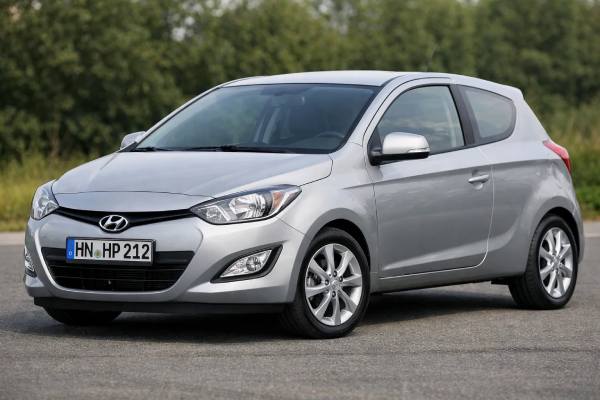
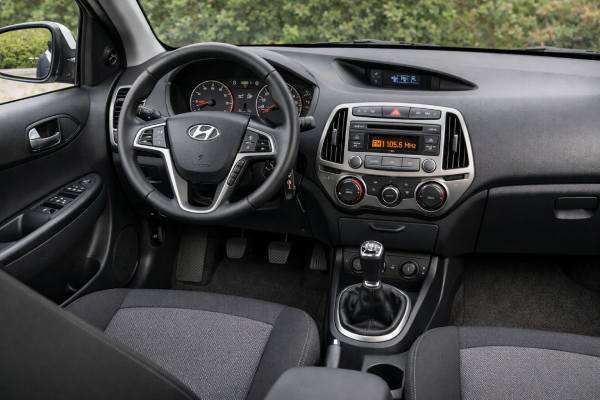
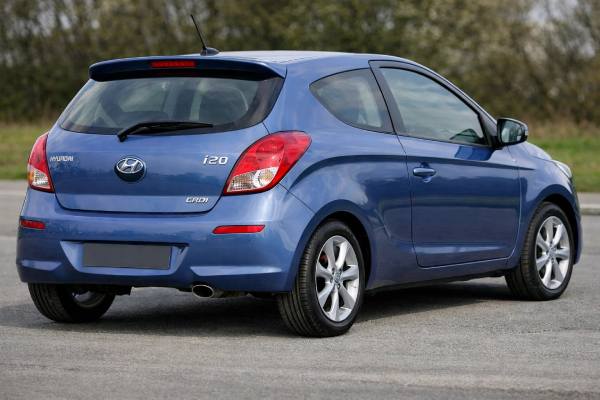
The facelifted Hyundai i20 3-door PB 1.4 is one of the more sensible small hatchbacks of its era if you want simple engineering, decent space, and a cleaner design than the original launch car. In this 2012 to 2014 update, Hyundai kept the same core formula but sharpened the styling, refined the trim structure, and in many markets paired the 1.4-liter petrol engine with a 6-speed manual. That matters, because the naturally aspirated 100 hp four-cylinder is not about outright punch. Its strength is smoothness, predictability, and lower long-term risk than a more complex turbocharged alternative. The 3-door body adds a sportier look without turning the car into something impractical, so it still works as an everyday supermini. For used buyers, the key is to separate the facelift 3-door from earlier PB cars and from the later GB-generation i20. Trim, gearbox, market, and VIN all affect the exact specification, even when the basic engine and body style look the same.
Essential Insights
- The 1.4 petrol is simple, smooth, and usually easier to live with than an aging small diesel.
- The facelift gives the i20 a neater design and often better equipment packaging than earlier PB cars.
- The 3-door body looks sharper but still keeps a useful 295 L boot and practical rear space for the class.
- Check cooling leaks, suspension wear, clutch condition, and minor electrical faults before buying.
- A careful owner should change the engine oil and filter every 12 months, or sooner under short-trip or severe-use driving.
Contents and shortcuts
- Hyundai i20 3-door facelift character
- Hyundai i20 3-door hard data
- Hyundai i20 3-door trims and protection
- Age-related faults and campaign checks
- Service routine and buying tips
- Drive feel and real economy
- Facelift 3-door among rivals
Hyundai i20 3-door facelift character
The facelifted Hyundai i20 PB arrived at the right time for the model. The original car had already built a reputation for sensible packaging and good safety for the class, but the update helped it look more modern and more polished. In 3-door form, the facelift also gave the i20 a slightly different character. It still functioned as a practical supermini, but the longer front doors, cleaner side profile, and revised front-end styling made it feel more style-conscious without becoming fragile or cramped.
That balance is the reason this version still makes sense in the used market. Many older small hatchbacks fall into one of two traps. They are either cheap and honest but feel too basic, or they are stylish but compromised. The facelift i20 3-door 1.4 sits between those extremes. It looks sharper than the 5-door, yet it still offers a genuinely usable rear bench, easy controls, and a boot large enough for normal daily use. It does not ask the owner to put style ahead of utility.
Mechanically, this version is appealing because it stays conventional. The 1.4-liter naturally aspirated four-cylinder petrol engine, widely associated with Hyundai’s G4FA family, is a simple multi-point-injection unit with no turbocharger and no direct-injection hardware. In a used car, that matters. The engine is not especially exciting, but it is predictable, smooth when healthy, and relatively straightforward to maintain. In many facelift-market listings, it is paired with a 6-speed manual, which gives it a broader, calmer character than earlier small hatchbacks that relied on shorter-geared 5-speed boxes. Some markets also offered an automatic, but the manual is the more natural fit.
The 100 hp output tells only part of the story. This engine is best understood as a light-duty all-rounder. It does not deliver strong low-rpm shove in the way a diesel does, but it revs more cleanly, copes better with short urban use, and generally suits owners who do mixed mileage rather than heavy motorway commuting. It is also quieter and less fussy in winter short-trip use than the old small diesels that once dominated this class.
The facelift 3-door is not perfect. Rear-seat access is still less convenient than in the 5-door, and the car does not suddenly become sporty just because it has a three-door shell. But the overall ownership case is strong. It is compact, practical, economical enough, and much easier to recommend today than a neglected older turbo-diesel supermini. For buyers who want a conventional small hatch with a clean design and sensible engineering, the facelift i20 3-door 1.4 remains a quietly smart choice.
Hyundai i20 3-door hard data
The facelift 2012 to 2014 i20 3-door 1.4 is best understood as a Euro 5-era update of the original PB formula rather than an entirely new car. The body style stays compact, the luggage space remains useful, and the engine keeps the simple naturally aspirated petrol layout that many used buyers still prefer. Where the facelift car improves is in presentation and, on many manual versions, gearing.
Powertrain and efficiency
| Item | Hyundai i20 3-door (PB facelift) 1.4 manual | Hyundai i20 3-door (PB facelift) 1.4 automatic |
|---|---|---|
| Code | G4FA family, verify by VIN | G4FA family, verify by VIN |
| Engine layout and cylinders | Inline-4, DOHC, 16-valve | Inline-4, DOHC, 16-valve |
| Valves per cylinder | 4 | 4 |
| Bore × stroke | 77.0 × 75.0 mm | 77.0 × 75.0 mm |
| Displacement | 1.4 L (1396 cc) | 1.4 L (1396 cc) |
| Induction | Naturally aspirated | Naturally aspirated |
| Fuel system | MPFI | MPFI |
| Compression ratio | 10.5:1 | 10.5:1 |
| Max power | 100–101 hp (74 kW) @ 5500 rpm | 100–101 hp (74 kW) @ 5500 rpm |
| Max torque | 137 Nm (101 lb-ft) @ 4200 rpm | 137 Nm (101 lb-ft) @ 4200 rpm |
| Timing drive | Verify exact timing-drive detail by VIN before major parts ordering | Verify exact timing-drive detail by VIN before major parts ordering |
| Rated efficiency | About 5.2 L/100 km combined on many manual listings | About 5.8 L/100 km combined on typical automatic listings |
| Real-world highway @ 120 km/h | Usually around 6.0 to 6.8 L/100 km | Usually a little higher than the manual |
Transmission and driveline
| Item | Figure |
|---|---|
| Transmission | 6-speed manual in many facelift markets; 4-speed automatic in some markets |
| Drive type | FWD |
| Differential | Open |
Chassis and dimensions
| Item | Figure |
|---|---|
| Suspension, front | MacPherson strut |
| Suspension, rear | Torsion beam |
| Steering | Rack-and-pinion with power assistance |
| Steering ratio / lock-to-lock | About 2.8 turns lock-to-lock |
| Brakes | Front disc and rear disc on commonly listed 1.4 specs; exact diameter should be confirmed by VIN |
| Wheels and tyres | 185/60 R15 common, 195/50 R16 on higher trims |
| Ground clearance | About 150 mm |
| Length | 3940 mm |
| Width | 1710 mm |
| Height | 1490 mm |
| Wheelbase | 2525 mm |
| Turning circle, kerb-to-kerb | About 10.4 m |
| Kerb weight | About 1028 kg manual / about 1080 kg automatic, depending on market and trim |
| GVWR | About 1565 kg |
| Fuel tank | 45 L |
| Cargo volume | 295 L seats up / 1060 L seats folded, VDA |
Performance and capability
| Item | Manual | Automatic |
|---|---|---|
| 0–100 km/h | About 11.6 s | About 12.9 s |
| Top speed | About 181 km/h | About 170 km/h |
| Braking distance | Not consistently published in stable open factory material | Not consistently published in stable open factory material |
| Towing capacity | Verify by market and homologation plate | Verify by market and homologation plate |
| Payload | Around 500 kg class, depending on trim and market |
Fluids and service capacities
| Item | Figure |
|---|---|
| Engine oil | About 3.3 L; use the correct approved viscosity and specification for climate and market |
| Coolant | About 5.8 L |
| Manual transmission fluid | Verify by VIN and gearbox code |
| Automatic transmission fluid | Verify by VIN and transmission code |
| A/C refrigerant | Confirm by under-bonnet label |
| A/C compressor oil | Confirm by service documentation |
| Key torque specs | Wheel nuts 88–107 Nm |
Safety and driver assistance
| Item | Figure |
|---|---|
| Euro NCAP | 5 stars |
| Adult occupant | 88% |
| Child occupant | 83% |
| Vulnerable road user / pedestrian | 64% |
| Safety assist | 86% |
| ADAS suite | No mainstream AEB, ACC, lane-centering, or blind-spot systems in this generation |
The key reading of the numbers is straightforward. The manual is the more convincing drivetrain match, the automatic exists but is clearly softer in performance and economy, and the facelift 3-door keeps the i20’s traditional advantage of packaging more usable space into a compact footprint.
Hyundai i20 3-door trims and protection
Trim and equipment matter more on the facelift i20 3-door than many used buyers first assume. The engine and body style give the car its broad character, but the trim decides whether it feels like a tidy value hatch or a surprisingly grown-up small car. In many European facelift-era brochures, the i20 range was organized around familiar grades such as Classic, Active, Style, and Blue-themed efficiency variants, though the exact naming depended on market. The important point is that the 3-door was often positioned as the slightly more image-conscious shape within the range.
That usually means entry versions are not as common as buyers expect. Many facelift 3-door examples in the used market are mid-grade or upper-mid-grade cars, which is generally good news because they add the equipment that matters in daily use. Air conditioning, steering-wheel audio controls, Bluetooth, USB connectivity, trip computer functions, better seat trim, and alloy wheels all help the car feel less basic. Higher trims may also bring automatic lights, rain-sensing wipers, climate control, rear parking sensors, upgraded mirror functions, or more polished cabin detailing.
There is still a cost trade-off. A 15-inch-wheel car on 185/60 R15 tyres is usually the best long-term ownership spec because it rides more softly, tyres cost less, and the difference in appearance is rarely worth the extra expense of larger wheels. A 16-inch car can look a little sharper and feel a touch firmer in response, but the dynamic change is modest. On a used supermini, smaller-wheel practicality usually wins.
The facelift did not transform the safety structure, but that is not a criticism. The original i20 platform had already posted strong Euro NCAP results, and Hyundai kept promoting the car’s safety credentials through the facelift years. Depending on trim and market, buyers will typically find six airbags, ABS, electronic brake-force distribution, electronic stability control, seatbelt reminders, front pretensioners, ISOFIX outer rear-seat anchorages, and a passenger-airbag deactivation switch. That remains a respectable passive-safety package for a small car from this era.
Modern driver assistance is essentially absent, which is exactly what informed buyers should expect. There is no adaptive cruise control, no lane-centering, and no modern autonomous emergency braking package in the facelift PB i20. That makes it less attractive to buyers who want the newest active-safety features, but it can also make ownership simpler. There are fewer sensors, fewer cameras, and fewer calibration-sensitive repair steps after minor accident work.
A used buyer should still take the safety hardware seriously. Warning lamps for ABS, stability control, or airbags should never be dismissed. The car’s core safety promise depends on those systems working properly, and older examples can develop issues from tired wheel-speed sensors, battery voltage problems, poor repairs, or mismatched tyre sizes. In practical terms, the best facelift 3-door is not necessarily the highest-spec car. It is the one with the right equipment for your needs, sensible wheels, and evidence that everything still works as intended.
Age-related faults and campaign checks
The facelift i20 3-door 1.4 petrol has the kind of reliability profile that usually ages well, but only if the car has not been treated as disposable. Its biggest advantage is that it avoids several of the complexity traps that affect later small turbo engines. At the same time, it is still an older supermini, so wear, neglect, and cooling-system issues can make a seemingly simple car surprisingly expensive if the buyer focuses only on the asking price.
The most common faults are low- to medium-cost age items. Front suspension drop links, dampers, bushes, wheel bearings, brake wear, and minor cabin rattles are all typical by this age. These problems do not suggest a bad design. They simply reflect years of urban potholes, curbs, heat cycles, and ordinary use. A good car should still feel tight enough over broken surfaces. If it crashes heavily over bumps, clunks from the front axle, or feels vague in a straight line, assume the car needs routine chassis work rather than assuming that “they all drive like that.”
Cooling-system health deserves special attention. The 1.4 petrol is generally durable, but coolant seepage from ageing hoses, radiator seams, or plastic fittings can turn a cheap minor repair into a major headache if ignored. Used buyers should look for crusted coolant marks, a sweet smell after a drive, signs of repeated top-ups, or unexplained temperature fluctuation. An owner who cannot clearly explain recent cooling-system work on an older car is not automatically hiding something, but the risk is high enough that it should always be checked carefully.
Engine-related faults are usually straightforward when they appear. Rough idle, uneven hot running, misfire under load, or sluggish response are more likely to come from ignition parts, tired sensors, intake contamination, or overdue servicing than from a major internal-engine problem. The 1.4 should feel smooth, willing, and clean through the mid-range. If it feels flat, shaky, or hesitant, diagnosis is needed before purchase. The good news is that the naturally aspirated petrol setup is easier to inspect and usually cheaper to sort than a neglected small turbo-diesel.
Gearbox and clutch behaviour matter too. The manual should shift easily and cleanly, especially when warm. Any crunching, excessive notchiness, or clutch shudder deserves attention. The automatic, where fitted, should shift smoothly without flaring or delayed engagement. On a 100 hp supermini, the automatic is harder to recommend because it adds complexity while making the car slower and thirstier.
Factory actions and recalls should always be checked by VIN rather than assumed from forum chatter or seller memory. Public recall tools and Hyundai’s own recall portal are the right starting point, and they should be backed up by service invoices where possible. Public information does not suggest that the facelift 3-door 1.4 is defined by one obvious campaign issue, which is positive. But that also means buyers need to rely even more on paperwork, mechanical inspection, and evidence of normal maintenance. On an older Hyundai, the strongest reliability sign is not a promise. It is a file full of boring invoices.
Service routine and buying tips
A facelift i20 3-door 1.4 that gets regular service is usually inexpensive to own. A car that has been run on stretched intervals and occasional top-ups is a very different proposition. The smartest approach is to treat the car as a simple petrol hatch that still deserves disciplined maintenance, especially now that most surviving examples are well past the point where factory warranty ever offered a safety net.
Practical maintenance schedule
| Item | Practical interval |
|---|---|
| Engine oil and filter | Every 10,000 to 15,000 km or 12 months |
| Engine air filter | Inspect every service, replace as needed |
| Cabin air filter | Every 12 months or sooner in dusty use |
| Spark plugs | Inspect by service schedule and replace by plug type and condition, typically around 30,000 to 45,000 km for ordinary service use |
| Coolant | Replace on schedule or immediately if history is unclear |
| Brake fluid | Every 2 years |
| Manual gearbox oil | Refresh around 80,000 to 100,000 km if history is unknown |
| Automatic transmission fluid | Verify service method and interval by market and transmission code |
| Auxiliary belt and hoses | Inspect every service |
| Brake pads and discs | Inspect every service |
| Tyre rotation and alignment | Check regularly and after suspension work |
| 12 V battery | Test yearly once the car is older than about 4 years |
| Timing components | Verify exact timing-drive design and service requirement by VIN before major work |
Useful service figures
| Item | Figure |
|---|---|
| Engine oil capacity | About 3.3 L |
| Coolant capacity | About 5.8 L |
| Fuel tank | 45 L |
| Common tyre sizes | 185/60 R15 and 195/50 R16 |
| Wheel nut torque | 88–107 Nm |
The buyer’s checklist should start with the service record, not the bodywork. Look for invoices that show regular oil changes, brake-fluid service, coolant replacement, spark plug work, and normal wear-item replacement. A stamped booklet is helpful, but itemized invoices are much better because they reveal whether the car received meaningful servicing or just the cheapest possible oil change.
Once the paperwork looks reasonable, move to the car itself. Inspect the front suspension for knocks, tyre wear for alignment clues, and the engine bay for coolant residue, oil leaks, and poor-quality battery or audio wiring. Inside the cabin, test every switch. Windows, blower motor, radio, central locking, air conditioning, steering-wheel controls, and all warning lights matter because small faults on an older supermini tend to cluster rather than appear one at a time.
On the road, a strong example should feel smooth, track straight, shift cleanly, and stop without vibration or pull. The engine should not struggle to idle hot, and it should rev cleanly when extended. The cars to seek are manual, documented, and sensibly specced. A mid-grade facelift car on 15-inch wheels with complete history is often a better buy than a higher-trim example with larger wheels, cosmetic upgrades, and gaps in the paperwork.
The cars to avoid are easy to spot once you stop chasing the lowest price. Avoid cars with vague history, coolant top-up habits, tired clutches, warning lights, and obvious suspension neglect. Long term, the facelift i20 3-door 1.4 has a decent durability outlook precisely because it is conventional. That only stays true if the owner respects the basics.
Drive feel and real economy
The facelift i20 3-door 1.4 is not a fast car, but it is a pleasant one. Its appeal comes from the way all the parts work together. The engine is smooth, the control weights are light, visibility is good, and the body size makes the car easy to place in traffic or tight parking areas. For everyday driving, that low-effort character is more valuable than a dramatic power figure.
The 1.4 petrol prefers to be driven like a naturally aspirated engine. It does not deliver the instant mid-range shove of the diesel versions, but it responds cleanly and predictably once it is kept in the right part of the rev range. Around town, that means a little more gear use and a little more throttle, but the payoff is smoother running and fewer of the compromises that come with an aging small diesel. On the open road, the manual car feels adequately brisk rather than genuinely quick. With around 100 hp and a relatively light curb weight, it is enough to keep the i20 from feeling strained.
The 6-speed manual fitted to many facelift-market cars is important here. It helps the engine feel less busy at higher speeds and gives the car a more mature motorway character than many older superminis. The automatic, where available, is usable but much less convincing. It blunts response, raises fuel use, and makes the car feel older than it needs to. For most buyers, the manual is clearly the better drivetrain.
Ride quality is one of the i20’s quiet strengths. On 15-inch tyres, the car handles rough urban roads competently and does not punish the driver for small imperfections. Steering is light and accurate enough, even if it does not communicate much. Straight-line stability is respectable, and the car feels safe and predictable when driven briskly rather than enthusiastically. On worn dampers or tired suspension, this composure fades quickly, which is why condition matters so much in the used market.
Noise levels are fair for the class. The petrol engine is smoother and quieter at low speed than the older diesels, which makes it better suited to short urban use. At motorway pace, wind and tyre noise become noticeable, but the car still feels reasonably settled rather than coarse. That helps the facelift 3-door feel more substantial than some budget supermini rivals.
Fuel economy remains good enough to support the car’s everyday appeal. Official combined figures for the manual often sit around 5.2 L/100 km, while the automatic is usually closer to 5.8 L/100 km. In real use, a healthy manual car often lands around 6.0 to 7.0 L/100 km in mixed driving, dipping lower on gentle open-road use and climbing higher in cold city traffic. That is not exceptional by modern standards, but it is still perfectly respectable for a conventional 1.4-liter petrol hatch. The verdict is simple: the facelift i20 3-door 1.4 is not exciting, but it is smooth, easy, and refreshingly honest.
Facelift 3-door among rivals
The facelift Hyundai i20 3-door 1.4 competes best when the buyer values balance over image. It is not the sharpest-driving supermini of its generation, and it is not the most fashionable used choice either. What it offers instead is a compact body, solid practicality, strong period safety, and a relatively simple petrol powertrain that still makes sense in today’s used market.
Against rivals that focused more on sporty feel, the Hyundai can seem conservative. Some alternatives deliver more steering feedback or a livelier front end. But that usually comes with a trade. The i20 answers back with a more straightforward ownership proposition. The cabin is roomy for the class, the controls are intuitive, and the 1.4 petrol avoids much of the complexity that can make modern small used cars costly to sort when they age badly.
The 3-door body also gives it a useful niche. It looks cleaner and slightly more purposeful than the 5-door, which helps if you want a supermini that does not feel purely utilitarian. Yet it does not become impractical enough to serve only a very narrow audience. For singles, couples, or small households that rarely load rear passengers, the 3-door shape is often the most attractive version of the PB facelift.
Where does it lose ground? Mainly in excitement and in rear-seat convenience. A five-door rival is always easier for daily family use, and a more performance-minded supermini will feel more eager on a good road. Buyers who want strong low-rpm torque for regular highway mileage may still prefer the diesel. Buyers who want maximum simplicity for short urban use should choose this petrol version, but they should also accept that it needs revs and a manual gearbox to feel at its best.
That leaves the facelift i20 3-door 1.4 in a strong middle position. It is a good choice for buyers who want a tidy, conventional hatchback with no major gimmicks, credible safety, and predictable costs. The best cars are usually documented manual examples in sensible trims with modest wheel sizes and complete service history. The wrong cars are the cheap, shiny ones with gaps in the paperwork and the usual signs of deferred maintenance. Buy on condition, not on fantasy, and the facelift 3-door i20 remains one of the more rational older superminis in the market.
References
- Hyundai Owners manuals | Hyundai Motor UK 2026 (Owner’s Manual)
- Handleidingen | Hyundai Motor Nederland 2026 (Owner’s Manual)
- HYUNDAI I20 – Euro NCAP Results 2009 2009 (Safety Rating)
- Home | Hyundai Recalls & Service Campaigns 2026 (Recall Database)
- Check if a vehicle, part or accessory has been recalled 2026 (Recall Database)
Disclaimer
This article is for informational purposes only and is not a substitute for professional diagnosis or repair. Specifications, torque values, intervals, fluid requirements, and procedures can vary by VIN, market, trim, gearbox, and fitted equipment, so always verify against the official service documentation for the exact vehicle.
If this guide was useful, please consider sharing it on Facebook, X, or another platform to support our work.