

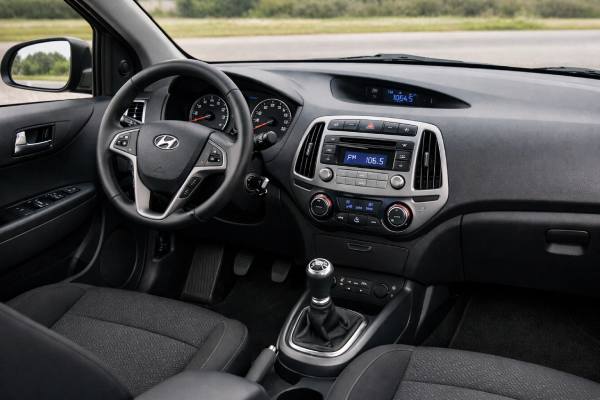
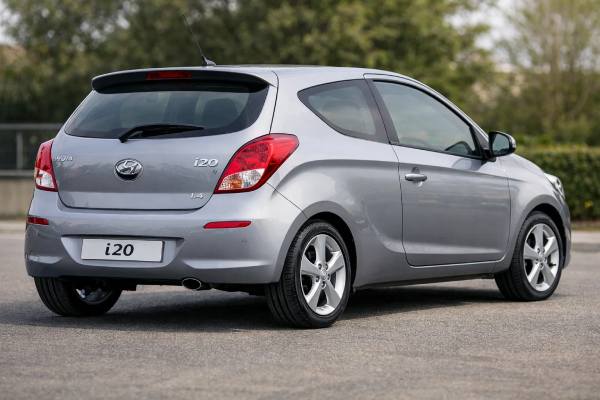
The facelifted Hyundai i20 3-door PB with the 1.25-litre 85 hp petrol engine is one of the more sensible used superminis from its era. It takes the basic strengths of the PB-platform i20—good cabin packaging, easy controls, solid safety credentials for the class, and simple mechanicals—and wraps them in a tidier 3-door body with cleaner facelift styling. This is not a hot hatch, and it was never intended to be. Instead, it is a straightforward naturally aspirated petrol car with a five-speed manual gearbox, front-wheel drive, and low technical complexity. That matters today because it reduces ownership risk compared with many newer small cars that rely on turbocharging, direct injection, or more complicated electronics. The trade-off is modest performance. The 1.25 engine is willing and smooth enough, but it needs revs and planning on faster roads. In used form, condition, maintenance history, and evidence of careful ownership matter much more than trim badge alone.
Essential Insights
- The 1.25 petrol is simple, proven, and usually cheaper to maintain than small turbo alternatives.
- The 3-door body gives the facelift i20 a cleaner shape without changing its everyday usability too much.
- Cabin space and boot capacity remain strong for an older supermini.
- Performance is adequate rather than strong, so the car suits city and mixed driving better than heavy motorway use with full load.
- A safe ownership baseline is engine oil and filter every 10,000 km or 12 months.
Section overview
- Hyundai i20 3-door Facelift Overview
- Hyundai i20 3-door Facelift Specifications
- Hyundai i20 3-door Facelift Trims and Safety
- Common Problems and Service Actions
- Maintenance Plan and Buyer Advice
- Real Driving and Efficiency
- Comparison with Key Rivals
Hyundai i20 3-door Facelift Overview
The 2012–2014 facelifted Hyundai i20 3-door 1.25 sits in a practical middle ground that still makes a lot of sense as a used buy. It is small enough for city use, easy to park, and cheap to run, but it avoids feeling stripped down or flimsy. Hyundai’s facelift sharpened the PB-generation car visually, especially at the front, and gave it a more polished look without changing the car’s basic mission. In 3-door form, that visual improvement matters more, because the longer doors and cleaner side profile make the car look less utilitarian than the five-door version.
From an ownership point of view, the appeal is easy to understand. The 1.25-litre petrol engine is naturally aspirated, uses a timing chain rather than a routine replacement belt, and avoids the complexity that often worries second or third owners of newer small cars. There is no turbocharger, no direct injection, and no dual-clutch transmission in this configuration. That lowers the number of expensive system-level failures you need to fear. What the car gives up in return is outright shove. With 85 hp, it is usable but not lively. It is happiest in commuting, local running, and mixed secondary-road work.
The 3-door body changes the car’s character more than its core practicality. Front-seat access is good and the longer doors create a slightly coupe-like feel for a supermini, but rear-seat entry is naturally less convenient than in the five-door. That means this version is best suited to singles, couples, or small households that use the rear seats only occasionally. If rear passengers are frequent, the five-door makes more sense.
One of the i20’s strongest hidden advantages is packaging. Even in 3-door form, it tends to feel larger inside than some direct rivals. Front-seat space is generous for the class, rear room is acceptable, and the boot remains useful rather than token. That broad usability is why the i20 often ages well in owner satisfaction, even if it never became the most exciting car in the segment.
Today, the key issue is not whether the design is fundamentally sound. It usually is. The key issue is how the car was maintained. A clean, unmodified example with full records, good tyres, quiet suspension, working air conditioning, and no signs of cooling-system neglect is far more valuable than a cosmetically sharper car with missing history. This is a condition-led buy.
Hyundai i20 3-door Facelift Specifications
Exact figures vary a little by market, trim, and emissions package, but the facelifted 2012–2014 Hyundai i20 3-door PB 1.25 petrol generally used Hyundai’s Kappa-family four-cylinder engine in 85 hp form with a five-speed manual gearbox. The table below reflects the common European-style configuration.
Powertrain and efficiency
| Item | Hyundai i20 3-door PB facelift 1.25 petrol |
|---|---|
| Code | Kappa 1.25, commonly G4LA family |
| Engine layout and cylinders | Inline-4, DOHC, 16-valve |
| Cylinders | 4 |
| Valves per cylinder | 4 |
| Bore × stroke | 71.0 × 78.8 mm (2.80 × 3.10 in) |
| Displacement | 1.25 L (1,248 cc) |
| Induction | Naturally aspirated |
| Fuel system | Multi-point fuel injection |
| Compression ratio | About 10.5:1 |
| Max power | 85 hp (63 kW) @ about 6,000 rpm |
| Max torque | 121 Nm (89 lb-ft) @ about 4,000 rpm |
| Timing drive | Chain |
| Rated efficiency | Roughly 4.8-5.3 L/100 km (49-44 mpg US / 59-53 mpg UK), market-dependent |
| Real-world highway @ 120 km/h | About 5.8-6.6 L/100 km |
Transmission and driveline
| Item | Hyundai i20 3-door PB facelift 1.25 petrol |
|---|---|
| Transmission | 5-speed manual |
| Drive type | FWD |
| Differential | Open |
Chassis and dimensions
| Item | Hyundai i20 3-door PB facelift 1.25 petrol |
|---|---|
| Suspension front | MacPherson strut with coil springs |
| Suspension rear | Coupled torsion beam axle |
| Steering | Motor-driven power steering |
| Brakes | Front disc, rear drum on most 1.25 trims |
| Wheels and tyres | Commonly 175/70 R14 or 185/60 R15 |
| Ground clearance | About 150 mm (5.9 in), market-dependent |
| Length | About 3,995 mm (157.3 in) |
| Width | 1,710 mm (67.3 in) |
| Height | About 1,490 mm (58.7 in) |
| Wheelbase | 2,525 mm (99.4 in) |
| Turning circle | About 10.4 m (34.1 ft) |
| Kerb weight | Roughly 980-1,060 kg (2,161-2,337 lb) |
| GVWR | Roughly 1,500-1,570 kg (3,307-3,461 lb), market-dependent |
| Fuel tank | 45 L (11.9 US gal / 9.9 UK gal) |
| Cargo volume | 295 L (10.4 ft³) seats up / about 1,060 L (37.4 ft³) seats folded |
Performance and capability
| Item | Hyundai i20 3-door PB facelift 1.25 petrol |
|---|---|
| 0–100 km/h (0–62 mph) | About 12.7-13.1 s |
| Top speed | About 168-171 km/h (104-106 mph) |
| Braking distance 100–0 km/h | Typically around 40-43 m on good tyres |
| Towing capacity | Market-specific and modest; verify by VIN before towing |
| Payload | Commonly around 430-500 kg |
Fluids and service capacities
| Item | Hyundai i20 3-door PB facelift 1.25 petrol |
|---|---|
| Engine oil | Commonly 5W-30 or 5W-40 meeting market-approved specification |
| Engine oil capacity | Around 3.3 L (3.5 US qt) with filter, verify by VIN |
| Coolant | Long-life ethylene glycol mix, exact capacity varies by market |
| Transmission fluid | Manual gearbox oil to Hyundai specification, around 1.8-2.0 L |
| Differential / transfer case | Not applicable |
| Brake fluid | DOT 3 or market-approved equivalent |
| A/C refrigerant | Type and charge vary by build and label |
| A/C compressor oil | Verify on service label or official literature |
| Key wheel-nut torque | Commonly about 88-110 Nm depending on market guidance |
Safety and driver assistance
| Item | Hyundai i20 PB |
|---|---|
| Euro NCAP | 5 stars |
| Adult occupant | 88% |
| Child occupant | 83% |
| Vulnerable road user | 64% |
| Safety assist | 86% |
| IIHS | Not applicable |
| Headlight rating | Not applicable |
| ADAS suite | No factory AEB, ACC, LKA, BSD, or RCTA |
Hyundai i20 3-door Facelift Trims and Safety
Trim names varied by country, so the facelifted i20 3-door was sold under different labels depending on market. Some regions used names such as Classic, Comfort, Active, Style, or Premium. Others paired the same broad equipment groups with different local badges. That means used buyers should inspect equipment carefully rather than trust the trim name on an advert.
On the 1.25 85 hp car, the main mechanical package stayed fairly consistent. Most examples use the same 1.25 Kappa petrol engine, five-speed manual gearbox, front-disc and rear-drum braking layout, and the same basic suspension design. Differences between trims were mainly about comfort, technology, and appearance. Lower trims often came with steel wheels, simpler cloth trim, fewer audio features, and more limited convenience equipment. Higher trims tended to add alloy wheels, fog lamps, leather-trimmed steering wheel and gear knob, Bluetooth or steering-wheel controls, rear parking sensors, automatic lights, and on some markets a reversing camera integrated into the mirror.
Useful trim clues on a used car include:
- 14-inch steel wheels versus 15-inch alloys
- fog lamps
- multifunction steering wheel
- rear parking sensors
- privacy glass
- body-colour mirror caps and door handles
- upgraded seat fabric and dashboard trim
The 3-door body is itself a practical and visual differentiator. It gives the i20 a neater side profile and a more youthful look, but buyers need to decide whether that style is worth the reduced ease of rear-seat access. For owners who mostly use the front seats, it often is. For families using child seats or carrying adults in the back often, the five-door is more convenient.
Safety is one of the strongest reasons the PB i20 aged well in the market. The platform achieved a five-star Euro NCAP result, and that was a meaningful point in the late-2000s and early-2010s supermini class. The body structure, restraint systems, and electronic stability systems gave the i20 a level of credibility that some budget small cars did not always match.
Typical safety equipment on facelift cars included:
- front airbags
- side airbags
- curtain airbags
- ABS
- electronic stability control on many trims and markets
- vehicle stability management
- ISOFIX child-seat mountings
- seatbelt reminders
There are no modern driver-assistance systems here. No autonomous emergency braking, no lane-keeping system, no blind-spot monitoring, and no adaptive cruise control. This is a late old-school supermini, and buyers should value it for its structural safety and mechanical simplicity, not for current-generation assistance technology.
One final point matters on used examples: safety depends heavily on repair quality. In this price range, a badly repaired crash car can be a much bigger risk than a lower trim with fewer convenience features.
Common Problems and Service Actions
The facelifted i20 3-door 1.25 petrol is usually a dependable car, but it is now old enough that age-related wear matters more than original engineering reputation. Its basic strength is simplicity. Most ownership problems come from neglect, ordinary wear, or poor repair rather than from a single fatal design flaw.
Common issues, low-to-medium cost
- Front suspension knocks: Drop links, top mounts, and bushes wear with age. Symptoms are clunks over potholes and a looser front-end feel.
- Ignition-related rough running: Spark plugs, ignition coils, or a dirty throttle body can cause hesitant acceleration, uneven idle, or an engine warning light.
- Weak battery or charging complaints: Slow cranking, random warning lights, or inconsistent electrical behaviour often start with battery age rather than major module failure.
- Brake drag or rear-brake service neglect: Rear drum hardware can become sticky on lightly used cars, especially if servicing has been minimal.
Occasional issues, medium cost
- Wheel-bearing hum: A steady road-speed-related noise is the usual clue.
- Air-conditioning performance loss: Often linked to refrigerant leakage, tired compressor parts, or simply long periods without proper service.
- Door-lock and window faults: These are often actuator, regulator, or switch problems rather than serious control-module failures.
- Cooling-system age issues: Old coolant, aging hoses, thermostat wear, or minor seepage should be addressed early. This engine is not known for chronic overheating when maintained, so any temperature instability deserves attention.
Less common but important
- Timing-chain noise on poorly maintained engines: The chain is a long-life asset, but poor oil service can still wear guides or tensioners over time.
- Severe corrosion on damaged or badly repaired cars
- Electrical issues caused by poor aftermarket audio or alarm installation
Historical Hyundai service-action records for the i20 range included a non-code action for defective tyre valves on some vehicles and an earlier action covering possible wiring-loom damage on certain gasoline cars from a specific build window. These do not condemn the model, but they are good reasons to check whether campaign work was ever completed, especially when paperwork is thin.
A strong pre-purchase check should include:
- Cold start and warm idle assessment
- Fault-code scan
- Suspension and brake inspection on a lift
- Cooling-system inspection for leaks or staining
- Proof of service records and campaign verification
In practical terms, the i20 1.25 is reliable when it gets routine oil changes, proper ignition service, and suspension maintenance. It becomes frustrating when owners treat it as a car that needs nothing.
Maintenance Plan and Buyer Advice
This is a car that responds very well to preventive maintenance. Because the engine and transmission are simple, small servicing gaps tend to show up first as reduced refinement, then as drivability complaints, and only later as bigger repair costs. That makes the i20 1.25 a good car for owners who prefer steady routine care over reactive repair.
Practical maintenance schedule
| Item | Practical interval |
|---|---|
| Engine oil and filter | Every 10,000 km or 12 months |
| Engine air filter | Every 30,000 km, sooner in dusty use |
| Cabin air filter | Every 20,000 km or 24 months |
| Spark plugs | About 45,000-60,000 km depending on plug type |
| Coolant | Around 5 years or 100,000 km, then inspect more closely by age |
| Brake fluid | Every 2-3 years |
| Manual gearbox oil | Refresh around 60,000-90,000 km for long-term ownership |
| Serpentine belt | Inspect every service, replace on cracking or noise |
| Hoses | Inspect annually for swelling, leaks, or hardening |
| Brake pads and front discs | Inspect every service |
| Rear drums and hardware | Inspect periodically |
| Tyre rotation | Every 10,000 km |
| Alignment | Check yearly or when tyre wear suggests it |
| 12 V battery | Test yearly from year 4 onward |
| Timing chain | Inspect by symptom, not by a fixed routine interval |
Useful service notes
- Use the correct oil grade and do not stretch intervals just because annual mileage is low.
- Replace spark plugs before they become a misfire issue.
- Keep coolant fresh and properly mixed.
- Manual gearbox oil is often forgotten, but a refresh helps long-term shift quality.
- Brake fluid should be treated as a time-based service item.
Buyer’s inspection checklist
- Check cold start, not only a warmed-up engine.
- Listen for front suspension knock over broken roads.
- Make sure idle is steady and free of warning lights.
- Inspect coolant bottle, hose joints, and radiator area for staining.
- Test every window, mirror, lock, and switch.
- Confirm the clutch engages cleanly and the gearbox shifts easily.
- Check tyre condition and brand match; cheap mixed tyres often point to penny-pinching maintenance.
Best cars to seek
- Stock, unmodified examples
- Cars with recent tyres, brakes, and fluid service
- Cars with complete records
- Dry, straight bodies without crash-repair clues
Cars to avoid
- Any with overheating history
- Cars with repeated misfire symptoms
- Cars with obvious accident repairs
- Cars with major suspension noise and irregular tyre wear
Long-term durability is generally good. The car’s weakness is not design fragility, but the fact that many cheap superminis get maintained too late.
Real Driving and Efficiency
The facelifted i20 3-door 1.25 feels tidy, light, and easy rather than sporty. In town, that is a real advantage. The steering is light at parking speed, the pedals are easy to modulate, and the compact size makes traffic and narrow streets simple to manage. The 1.25-litre engine is smooth for a small naturally aspirated four-cylinder, and because the car is not especially heavy, it feels alert enough in normal urban use.
Where the engine shows its limits is on faster roads. The 85 hp output is perfectly serviceable, but the car needs revs if you want brisk acceleration. Overtaking on a two-lane road takes planning, and climbing long grades with passengers on board often means a downshift. The five-speed manual is pleasant enough to use, though it does not give the relaxed highway gearing of some diesel rivals. At motorway speeds, the i20 remains stable, but the engine is working harder and the noise level rises accordingly.
Ride quality is one of the car’s better traits. Hyundai tuned the i20 more toward everyday comfort than sharp handling, and that suits the mission well. Broken urban surfaces are handled with decent compliance, and the car generally feels more mature than some firmer rivals from the same period. Steering feel is limited, but the chassis is predictable and secure. It does not invite spirited driving in the way a Fiesta might, yet it remains trustworthy and easy to place.
Real-world fuel use is usually respectable:
- City: about 6.5-7.5 L/100 km
- Highway: about 5.3-6.1 L/100 km
- Mixed: about 5.8-6.6 L/100 km
That roughly equals:
- City: 31-36 mpg US / 38-43 mpg UK
- Highway: 39-44 mpg US / 46-53 mpg UK
- Mixed: 36-41 mpg US / 43-49 mpg UK
Weather, tyre pressure, traffic, and driving style matter more on a modestly powered naturally aspirated engine than many drivers expect. Short trips in winter can move the city figure upward quickly, while calm secondary-road driving can produce better numbers than the mixed average above.
As a driving package, the facelifted i20 1.25 is best described as friendly and mature. Its main appeal lies in easy control, decent comfort, and predictable running costs rather than excitement or speed.
Comparison with Key Rivals
The facelifted i20 3-door 1.25 competed in one of the busiest parts of the market, and it still sits among several credible used alternatives. Its core argument is not that it is the sharpest or the fastest car in the class. It is that it offers space, safety, and low complexity at a sensible price.
Against a Ford Fiesta 1.25, the Hyundai usually loses on steering feel and dynamic involvement. The Fiesta is the better driver’s car. The Hyundai tends to answer with more cabin space, a calmer ride, and often better value for the money on the used market.
Against a Toyota Yaris 1.33, the i20 often feels roomier and can be easier to buy at a lower price. The Toyota often carries stronger resale confidence and a slightly more reassuring reputation for long-term low-drama ownership. The Hyundai is often the smarter bargain; the Toyota is often the safer emotional purchase.
Against a Skoda Fabia 1.2, the i20 usually offers strong packaging and straightforward mechanicals. The Fabia may feel more solidly built in some trims and can be a better highway companion, but equipment and condition vary widely. In real-world buying, service history matters more than badge in this comparison.
Against a Kia Rio from the same period, the Hyundai is a close relative in philosophy. Both cars prioritize honest engineering, sensible space, and manageable running costs. The choice often comes down to trim, local parts pricing, and how well the individual car was maintained.
Where the facelifted i20 3-door 1.25 stands out most:
- simple naturally aspirated petrol engine
- practical interior space for the class
- respectable comfort
- strong period safety credentials
- sensible used-market pricing
Where it is weaker:
- modest performance
- rear-seat access compared with the five-door
- little driver excitement
- no modern driver-assistance systems
For the right buyer, these trade-offs are easy to accept. If you want a small hatch that is uncomplicated, easy to own, and still feels like a complete car rather than a stripped commuter box, the Hyundai i20 3-door facelift 1.25 remains a credible and often underrated choice.
References
- Hyundai Owners manuals 2026 (Owner’s Manual)
- HYUNDAI I20 – Euro NCAP Results 2009 2009 (Safety Rating)
- One Car. Multiple Senses. 2013 (Brochure)
- Non Code Action Bulletin: 01 January 2008 – 31 December 2012 2012 (Service Action Bulletin)
Disclaimer
This article is for informational purposes only and is not a substitute for professional diagnosis, repair, or model-specific technical guidance. Specifications, torque values, service intervals, capacities, fluids, and procedures can vary by VIN, market, trim, body style, and equipment. Always verify maintenance data and repair steps against the official service documentation for the exact vehicle.
If this guide was useful, please consider sharing it on Facebook, X, or another social platform to support our work.