
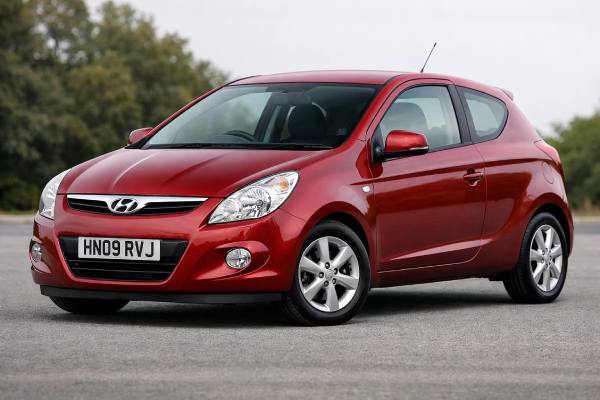
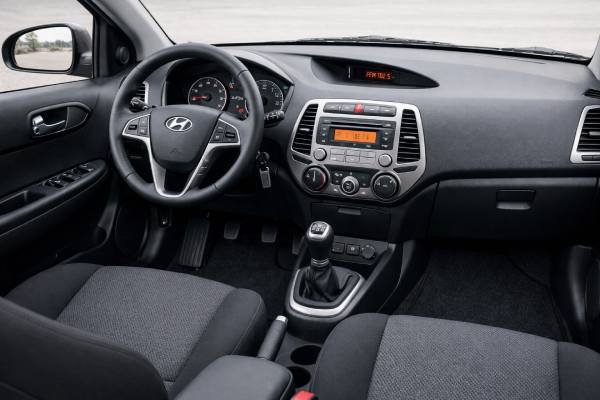
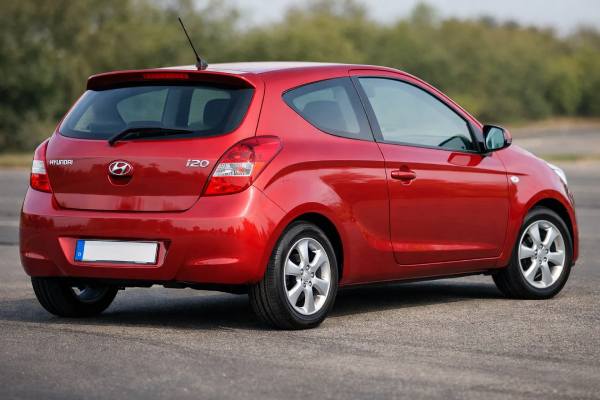
The Hyundai i20 3-door PB with the 1.6 petrol engine is one of the more overlooked versions of Hyundai’s first modern supermini. Most buyers remember this generation for value, space, and low running costs, but the 126 hp 1.6-litre model adds a stronger performance edge without turning the car into something expensive or difficult to own. In practical terms, it combines compact dimensions, simple front-wheel-drive engineering, and useful everyday pace in a way that still makes sense on the used market. The three-door body also gives the i20 a slightly sportier look than the standard five-door, while preserving most of the cabin and cargo practicality that made the model competitive in Europe. Today, the appeal is clear but conditional. A well-kept car can be a smart choice for buyers who want an affordable small hatch with enough power for motorway use. A neglected one can quickly lose that value through suspension wear, clutch issues, rust, or age-related electrical problems.
What to Know
- The 1.6 petrol gives the i20 3-door much stronger real-world pace than the smaller petrol engines.
- Compact size, simple naturally aspirated engineering, and a manual gearbox help long-term ownership.
- The three-door body looks sportier while keeping a useful 295 L boot and decent rear space for the class.
- Cheap examples often need suspension, clutch, brake, tyre, and corrosion work before they feel right again.
- In normal service, Hyundai scheduled engine oil and filter changes every 20,000 km or 12 months.
Explore the sections
- Hyundai i20 3-Door Character
- Hyundai i20 3-Door Numbers
- Hyundai i20 3-Door Features
- Known Faults and Campaigns
- Service Planning and Purchase Checks
- Real-World Pace and Economy
- Against Other Small Hatchbacks
Hyundai i20 3-Door Character
The three-door Hyundai i20 PB was introduced to broaden the appeal of the standard i20 range. Hyundai positioned it as a more style-led version of the same basic car, aimed at younger buyers who wanted the practicality of a supermini without the more upright look of a five-door hatchback. In engineering terms, though, it remained a simple and sensible car. The three-door kept the same basic platform, front-wheel-drive layout, and compact footprint, while using longer front doors and a different side profile to give the body a cleaner, more coupe-like shape.
That matters because this version is best understood as a practical small hatch with a sharper personality, not as a full warm hatch. The 1.6-litre naturally aspirated petrol engine is the key to that character. At 126 hp, it gives the i20 enough power to feel genuinely brisk by class standards from its era, especially when paired with a manual gearbox. It does not deliver turbocharged punch, but it gives the car cleaner throttle response, stronger top-end pull, and a more relaxed feel on faster roads than the 1.2 and 1.4 petrol models.
Hyundai’s own launch material for the three-door emphasized that the body style sat on the same 2525 mm wheelbase as the five-door and was about 10 kg lighter. That is a small difference on paper, but it fits the broader impression of the car. This is still an i20 first, yet the lighter body, longer doors, and stronger petrol engine make it feel like the most naturally driver-oriented non-diesel version in the lineup.
The ownership appeal is also fairly easy to understand. Unlike the diesel models, the 1.6 petrol avoids some of the soot, injector, and short-trip concerns that can make older small diesels expensive when neglected. It is also less complicated than later turbocharged rivals. For buyers who want a used small hatchback with enough power for motorway merging and occasional enthusiastic driving, that simplicity is still attractive. A naturally aspirated petrol engine, manual gearbox, and modest curb weight remain a solid formula.
The catch is that time changes the equation. A 2009–2012 i20 3-door is now old enough that condition matters far more than trim badge or brochure promise. These cars are only good buys when the basics are right: clean body structure, honest service history, healthy clutch and suspension, and an engine that pulls cleanly. The concept remains strong. The challenge is finding an example that still reflects it.
Hyundai i20 3-Door Numbers
The 1.6-litre petrol i20 3-door is one of the simpler versions of the PB-generation car to understand technically. It uses a naturally aspirated four-cylinder petrol engine, front-wheel drive, and a manual transmission, with conventional B-segment chassis hardware and no unusual driveline complexity. Public Hyundai material confirms the three-door body’s shared wheelbase and lighter body weight relative to the five-door, while widely consistent technical catalog data fills in the detailed engine and performance figures for the 126 hp version.
| Powertrain and efficiency | Figure |
|---|---|
| Engine code | G4FC |
| Engine layout and cylinders | Inline 4, DOHC, 4 valves per cylinder |
| Displacement | 1.6 L (1591 cc) |
| Bore × stroke | 77.0 × 85.4 mm (3.03 × 3.36 in) |
| Induction | Naturally aspirated |
| Fuel system | Multi-point fuel injection |
| Compression ratio | 10.5:1 |
| Max power | 126 hp (93 kW) @ 6200 rpm |
| Max torque | 157 Nm (116 lb-ft) @ 4200 rpm |
| Timing drive | Chain |
| Rated efficiency | 6.1 L/100 km combined (38.6 mpg US / 46.3 mpg UK) |
| Real-world highway @ 120 km/h | Usually about 6.7 to 7.5 L/100 km depending on condition, tyres, load, and weather |
| Transmission and driveline | Figure |
|---|---|
| Transmission | 5-speed manual |
| Drive type | Front-wheel drive |
| Differential | Open |
| Chassis and dimensions | Figure |
|---|---|
| Suspension, front | MacPherson strut |
| Suspension, rear | Torsion beam |
| Steering | Electric power steering |
| Brakes | Front ventilated discs, rear discs |
| Wheels and tyres | Common fitment 195/50 R16 |
| Ground clearance | 150 mm (5.9 in) |
| Length | 3940 mm (155.1 in) |
| Width | 1710 mm (67.3 in) |
| Height | 1490 mm (58.7 in) |
| Wheelbase | 2525 mm (99.4 in) |
| Turning circle | 10.4 m (34.1 ft) |
| Kerb weight | About 1086 kg (2394 lb) |
| GVWR | About 1565 kg (3450 lb) |
| Fuel tank | 45 L (11.9 US gal / 9.9 UK gal) |
| Cargo volume | 295 L seats up, about 1060 L seats folded |
| Performance and capability | Figure |
|---|---|
| 0–100 km/h | 9.5 s |
| Top speed | 190 km/h (118 mph) |
| Payload | About 479 kg (1056 lb) |
| Fluids and service capacities | Figure |
|---|---|
| Engine oil | Around 3.3 L; correct viscosity and spec depend on market and climate |
| Coolant | Hyundai-approved coolant mixture; verify capacity by VIN and market |
| Manual transmission fluid | API GL-4 class manual gearbox fluid; verify quantity by gearbox code |
| A/C refrigerant | Market and build-dependent; verify on vehicle label |
| Key torque spec | Wheel lug nuts 88–107 Nm (65–79 lb-ft) |
| Safety and driver assistance | Figure |
|---|---|
| Euro NCAP | 5 stars |
| Adult occupant | 88% |
| Child occupant | 83% |
| Vulnerable road users | 64% |
| Safety assist | 86% |
| ADAS suite | No modern AEB, ACC, lane centering, or blind-spot monitoring |
These numbers show why this version still has appeal. A 9.5-second 0–100 km/h time and 190 km/h top speed were strong results for a naturally aspirated supermini of this period. Just as important, the car stays simple. There is no turbocharger, no dual-clutch gearbox, and no advanced hybrid system to complicate long-term ownership. The caution is that some fine-detail specifications, especially fluids, tyre options, emissions hardware, and market trim combinations, can vary. The actual car, its VIN, and its service documentation always matter more than a catalog summary.
Hyundai i20 3-Door Features
The three-door i20 was not sold as a separate performance sub-brand. Hyundai instead treated it as a body-style expansion of the main i20 line, with Classic, Comfort, and Style-type trim structures depending on market. That means the 1.6 petrol could appear with different levels of equipment, but it usually made the most sense in better-specified cars, where the stronger engine matched the more premium end of the range.
On lower-spec cars, equipment could be fairly basic: simpler cloth upholstery, more limited audio functions, manual air conditioning, and steel wheels in some markets. Higher grades usually added alloy wheels, upgraded interior trim, steering-wheel controls, climate-control features, electric mirrors and windows, keyless entry in some versions, and a better overall cabin finish. In the three-door body, those upgrades mattered because this model relied partly on style appeal. A better-equipped three-door feels much closer to the role Hyundai intended for it.
Mechanically, the most important distinction is the engine itself rather than the trim label. The 1.6 petrol is the reason to choose this version. The body shell is not radically different from a smaller-engine i20, and suspension geometry remains conventional for the class, but the stronger engine changes how usable the car feels. It makes the three-door more credible for longer-distance driving and reduces the sense that the body style is just a cosmetic variation.
Safety equipment was a meaningful strength for the i20 when new. Euro NCAP awarded the model five stars in 2009, and the tested specification included frontal airbags, side chest airbags, curtain airbags, front seatbelt pretensioners and load limiters, ISOFIX plus top-tether points on the outer rear seats, and seatbelt reminders. Hyundai also promoted six airbags, active head restraints, ABS, electronic brake-force distribution, and electronic stability control in period material. As with many cars from this era, however, not every market received the same specification in the same trim, so buyers should confirm rather than assume.
That point is especially important with ESC. Some cars had it as standard, while on others it depended on market and trim level. For a used buyer, this matters more than minor cosmetic features. Alloy wheels and nicer audio are pleasant, but stable handling, predictable braking support, and the full intended safety package matter more.
The model predates the current era of advanced driver assistance. There is no autonomous emergency braking, no adaptive cruise control, no lane-keep assist, and no blind-spot warning. What the car offers instead is solid passive safety for its time, clear outward visibility, and conventional control systems that are easy to understand and maintain.
Quick identifiers are practical when shopping. The 1.6 badge, larger wheels, sportier trim details, and a better-equipped cabin can hint that you are looking at the right version, but badges and seller descriptions are not enough. The correct engine code, registration data, and original paperwork are still the safest way to confirm that the car is genuinely the 126 hp 1.6 and not a smaller petrol model wearing better trim.
Known Faults and Campaigns
The Hyundai i20 3-door 1.6 petrol has a fairly straightforward reliability profile. The basic powertrain is not unusually fragile, and the naturally aspirated engine avoids some of the heavier risk found in older diesels or later downsized turbo units. Even so, this is now an older used car, and most of the important faults are age-related rather than design headlines. In other words, the model’s main problem is not what it was when new, but what years of mixed maintenance have done to individual cars.
A useful way to frame the problem areas is by prevalence and cost:
- Common, low to medium cost: tired batteries, worn front drop links, aged dampers, brake wear, exhaust corrosion, and worn tyres on cars that have lived at the cheaper end of the market.
- Common, medium cost: clutch wear, noisy wheel bearings, leaking rocker-cover gaskets, tired engine mounts, and air-conditioning weakness.
- Occasional, medium to high cost: electric power steering faults, ABS sensor issues, rust repair, and poor running caused by neglected ignition or fueling components.
- Rare but important: serious accident repairs, chronic overheating history, and seller-covered warning-light issues.
The engine itself is generally one of the stronger parts of the package if serviced correctly. Because it is naturally aspirated, there is no turbocharger to worry about, and normal throttle response tends to stay linear and predictable as the car ages. The timing drive is chain-based rather than belt-based, which helps ownership costs, but that should not be taken to mean no risk at all. Dirty oil, very long change intervals, and repeated neglect can still create chain noise or tensioner wear over time. A persistent rattle on cold start, especially if it lasts beyond the first seconds, deserves attention.
Cooling system health also matters. Older small hatchbacks often get treated as cheap transport, and that means missed coolant changes, old hoses, and thermostats that are only replaced after a problem becomes obvious. Any sign of overheating history, contaminated coolant, or repeated coolant loss should make a buyer cautious. Likewise, ignition-related rough running may be something as simple as spark plugs or coils, but repeated misfire use can damage the catalytic converter and turn a small repair into a bigger bill.
The 3-door body introduces a few practical age points of its own. Longer doors can suffer from hinge wear or careless parking damage, and seat-fold access hardware should work smoothly if rear-seat access is going to matter. Interior trim wear around the seat-release areas is common on higher-mileage cars, though that is usually more cosmetic than serious.
Corrosion should still be checked carefully. Look at sills, wheel arches, the underside, brake lines, subframe areas, and the rear structure. Light surface rust is not shocking on a car of this age, but structural corrosion or poor past repairs should be treated as a major warning sign.
Open public records also show non-code actions affecting some i20 models in this period. One concerned defective tyre valves that could lead to tyre inflation loss, and another involved some petrol i20 vehicles built in a limited early production window for potential wiring-loom damage. That does not mean every 1.6 3-door is affected, but it does mean campaign history should be checked by VIN and dealer records before buying.
Service Planning and Purchase Checks
A good maintenance plan for the i20 3-door 1.6 is less about complexity and more about consistency. This is one of the reasons the car still makes sense as a used buy. The service needs are ordinary, the parts are generally understandable, and most items can be managed predictably as long as the owner stays ahead of wear rather than reacting after things fail.
For normal service, Hyundai used a 20,000 km or 12-month oil-and-filter interval, with tougher conditions justifying shorter intervals. On a used car of this age, being conservative is wise. Regular oil service helps the chain system, keeps the engine cleaner internally, and reduces the chance of age-related running problems becoming more expensive than they need to be.
A practical schedule looks like this:
| Item | Practical interval |
|---|---|
| Engine oil and filter | Every 20,000 km or 12 months maximum; sooner if history is unclear |
| Engine air filter | Inspect every service and replace by condition |
| Cabin air filter | Inspect annually and usually replace every 12 months |
| Spark plugs | Replace by schedule and condition; verify exact plug type for the engine |
| Coolant | First replacement at 100,000 km or 60 months, then every 40,000 km or 24 months |
| Auxiliary belts | Inspect from 80,000 km or 48 months, then every 20,000 km or 12 months |
| Brake fluid | Every 2 years is sensible |
| Brake pads and rotors | Inspect at each service |
| Manual gearbox oil | Check for leaks and renew on age and mileage if service history is missing |
| Tyre rotation | Around every 12,000 km |
| Battery test | Annually from about year four onward |
| Timing chain | No routine replacement item in normal owner schedules; inspect if noisy or if correlation faults appear |
| Core fluids and values | Figure |
|---|---|
| Engine oil capacity | About 3.3 L |
| Wheel lug nut torque | 88–107 Nm |
| Gearbox fluid type | API GL-4 class manual transmission fluid |
| Fuel tank | 45 L |
The buyer’s checklist should focus on the items that change the ownership verdict most:
- Start the engine from cold and listen for chain rattle, uneven idle, or obvious top-end noise.
- Confirm the engine pulls cleanly with no hesitation through the rev range.
- Check the clutch for slip and feel for a high or inconsistent bite point.
- Inspect the brakes and tyres for uneven wear that may suggest alignment or suspension issues.
- Drive over broken surfaces and listen for front-end knocks from links, bushes, or dampers.
- Verify that all electrics, including air conditioning and power steering, work properly.
- Look under the car for corrosion, leaks, and poor repair work.
- Check rear-seat access hardware and the longer doors for wear or sagging.
- Confirm service history and campaign completion by VIN.
- Avoid cars with hidden warning lights, cooling-system excuses, or vague maintenance claims.
The trims to seek are often the middle or higher-spec cars with honest history rather than the cheapest examples. A clean, modestly equipped car is a better buy than a tired but flashy one. Long-term durability is good when the basics are maintained, but the car only stays cheap if it starts from a healthy baseline.
Real-World Pace and Economy
The reason to choose the 1.6 petrol over the smaller i20 engines is easy to feel within the first few minutes of driving. The car is not dramatic, but it is much more eager. In town, the naturally aspirated engine responds cleanly and predictably, and there is enough power that the car never feels burdened by normal traffic or moderate hills. On open roads, the difference becomes clearer. Where smaller petrol superminis from this era can start to feel strained, the 1.6 i20 still has enough in reserve to merge, pass, and cruise without needing constant planning.
That balance defines the car’s road manners. It is not a hot hatch, and it does not try to be one, but it is one of those older small cars that feels more complete because the engine suits the chassis better than the base versions do. The manual gearbox is part of that appeal. It is simple, predictable, and well matched to the engine’s character. The naturally aspirated layout also means no real turbo lag, just steady response that builds progressively as the revs rise.
Ride and handling remain classically B-segment. The MacPherson-strut front and torsion-beam rear setup make the i20 stable and easy to place, though not especially playful. Steering weight is light, which works well in daily driving and parking, but feedback is only average. Compared with the sharpest rivals of the era, especially some Ford Fiesta versions, the Hyundai feels more secure than exciting. Still, the 1.6’s stronger power makes the chassis feel more awake than the smaller-engined cars.
Noise, vibration, and harshness are typical for the class and period. Around town, the engine sounds smoother than the diesels and more refined under load, though it still does not have the isolation of a larger hatchback. At motorway speeds, wind and road noise become more noticeable than in newer cars, but the engine’s pace means the i20 no longer feels underpowered at those speeds, which improves the overall impression.
Officially, the car is quick enough to remain relevant. A 0–100 km/h time of 9.5 seconds and a 190 km/h top speed were genuinely strong numbers for a naturally aspirated 1.6 supermini. In real life, the car’s usefulness matters even more than its launch figure. It has enough performance to feel relaxed on faster roads, and that changes how mature the whole package feels.
Fuel economy is respectable rather than exceptional. Official combined consumption is around 6.1 L/100 km, with real-world mixed use usually landing somewhat higher. In city driving, expect a noticeable rise over the official figure, especially with short cold trips. At a steady 120 km/h cruise, most healthy examples will sit in the high-6 to mid-7 L/100 km range. That is still perfectly acceptable for an older 1.6 petrol hatchback, especially one that avoids the complications of a turbocharged drivetrain.
Against Other Small Hatchbacks
The Hyundai i20 3-door 1.6 sits in an interesting place among its rivals. Its natural alternatives include the Ford Fiesta 1.6, Volkswagen Polo 1.6, Skoda Fabia 1.6, Mazda2 1.5 or 1.6 depending on market, Peugeot 207 1.6, and Suzuki Swift 1.5 or Sport-adjacent versions for buyers wanting something compact and reasonably lively. Each of those cars brings a different strength. The Fiesta is often the better driver’s car. The Polo and Fabia can feel more mature inside. The Mazda2 usually feels lighter and more alert. The Swift can be more playful and distinctive.
The Hyundai’s argument is more balanced. It combines decent power, a practical body, a straightforward naturally aspirated engine, competitive safety for its period, and usually better value on the used market than some more fashionable rivals. It is rarely the class icon, but it is often the rational buy when a buyer wants enough pace without turbo complexity or premium-brand pricing.
Compared with the smaller-engined i20 petrol versions, the 1.6 3-door is clearly the enthusiast’s practical choice. It preserves the easy ownership logic of the basic i20 while removing much of the sluggishness that can make modest superminis feel compromised outside town. The three-door shape also helps the visual appeal. It looks more purposeful than the five-door without becoming impractical enough to stop working as a daily hatch.
Its weaknesses should still be taken seriously. It is not as sharp to drive as the best-handling rivals. Cabin materials are decent rather than special. Rear-seat access is naturally less convenient than in the five-door. And because many examples are now cheap cars, condition varies wildly. A poor one will feel old, loose, and barely worth saving. A good one, by contrast, can feel like a clever purchase because it gives you honest naturally aspirated petrol performance in a compact, simple package.
The final verdict is positive. The Hyundai i20 3-door PB 1.6 126 hp is one of the most appealing non-turbo versions of the first-generation i20 because it brings enough power to make the chassis feel complete while keeping ownership straightforward. Its best qualities are simple engineering, solid everyday pace, practical size, and strong safety credentials for the era. Its biggest risks are age, maintenance shortcuts, and the temptation to buy purely on price. Choose a well-kept example with clean history, sound suspension, and no signs of rust or cooling-system trouble, and this version makes far more sense than its quiet reputation suggests.
References
- HYUNDAI I20 THREEDOOR 2009 (Manufacturer release)
- HYUNDAI I20 – Euro NCAP Results 2009 2009 (Safety Rating)
- Non Code Action Bulletin: 01 January 2008 – 31 December 2012 2013 (Recall Database)
- Handleidingen | Hyundai Motor Nederland 2026 (Owner’s Manual)
- Hyundai i20 I (PB) | Technical Specs, Fuel consumption, Dimensions 2026 (Technical Data)
Disclaimer
This article is for informational purposes only and is not a substitute for professional diagnosis, repair, or vehicle inspection. Specifications, torque values, intervals, procedures, and fitted equipment can vary by VIN, market, build date, and trim level, so always verify them against the official service documentation and parts information for the exact vehicle.
If this guide helped you, please consider sharing it on Facebook, X, or another social platform to support our work.