
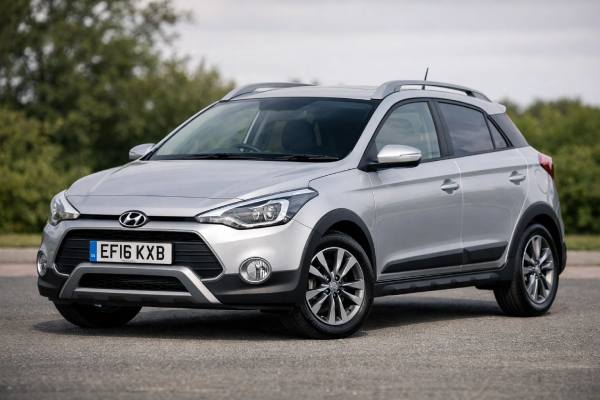
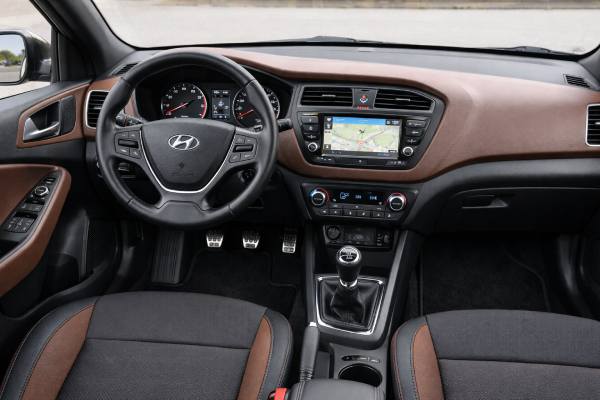
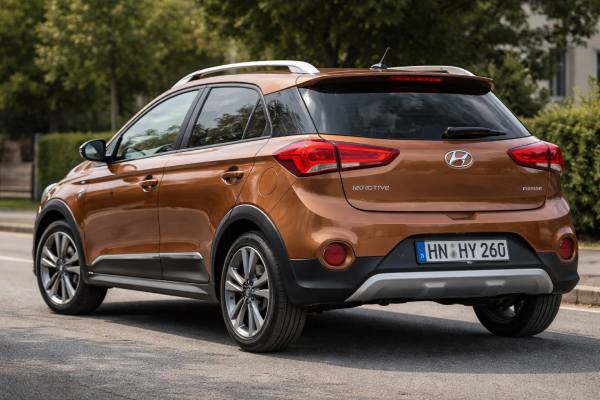
The Hyundai i20 Active GB with the 1.4 CRDi 90 hp diesel takes the regular second-generation i20 hatchback and gives it a slightly tougher brief. It adds crossover-style cladding, extra ride height, and a more rugged visual stance, but it keeps the same front-wheel-drive layout and supermini footprint. That makes it less of an SUV alternative than the styling suggests. In reality, it is a practical small hatch with a useful diesel engine, sensible packaging, and just enough added clearance to cope better with poor roads, broken city surfaces, and light gravel use.
That balance still works today. A healthy example can be efficient, roomy, and easier to live with than many small crossovers that replaced it. The catch is that this remains a modern small diesel. DPF condition, service history, cooling health, chain condition, and underbody wear matter far more than the plastic cladding or trim name. For the right buyer, though, the i20 Active remains one of the more sensible used diesel crossovers in miniature.
What to Know
- Higher ride height and tougher trim make it more forgiving on rough roads than the standard i20.
- The 1.4 CRDi has enough torque to feel genuinely useful beyond city driving.
- Cabin room and a practical hatchback layout remain core strengths.
- Repeated short-trip use can lead to DPF, EGR, and battery-related trouble.
- A cautious real-world oil service interval is every 10,000–15,000 km or 12 months.
Start here
- Hyundai i20 Active GB overview
- Hyundai i20 Active GB specification guide
- Hyundai i20 Active GB trim and safety
- Common faults and service-history risks
- Maintenance plan and buyer checklist
- Real-world driving and economy
- Where the Active fits among rivals
Hyundai i20 Active GB overview
The Hyundai i20 Active arrived at a time when car makers were learning that many buyers liked the look of a crossover more than they actually needed four-wheel drive. Hyundai’s answer was straightforward: take the roomy and sensible GB-generation i20, raise it slightly, add tougher exterior details, and give it a more adventurous visual identity without turning it into something mechanically complicated. That formula explains the car perfectly. The i20 Active is not an off-roader. It is a lightly ruggedised supermini that feels more robust on bad roads and a little more distinctive in a crowded segment.
With the 1.4 CRDi 90 hp diesel, the Active makes more sense than it does with the smallest engine options. The extra torque gives it the kind of flexibility the raised stance and tougher styling promise. In everyday use, that means the car no longer feels like it is merely coping. It feels properly serviceable for mixed driving. Town use is easy, faster roads are manageable, and motorway runs feel more natural than they do in many small crossovers with weaker petrol engines. The six-speed manual helps a lot here, giving the diesel version calmer long-distance manners than its size suggests.
The chassis changes are modest but meaningful. Hyundai gave the Active extra ride height and crossover-style body protection, along with roof rails and a more upright stance. That does not transform it into a vehicle for serious off-road work, yet it does improve confidence on rough lanes, damaged tarmac, speed humps, and winter-rutted surfaces. For buyers who live outside cities or simply deal with poor roads every day, that matters more than marketing language about adventure.
The interior remains very much i20 rather than mini-SUV. That is good news. The standard GB car was already spacious for a supermini, with a mature driving position and a practical boot. The Active keeps those strengths. It is not as high or commanding as a true crossover, but it also avoids the weight, cost, and bulk that usually come with one. In used form, that balance is a real advantage. You get some of the visual and practical benefits of a crossover without the penalties of a larger vehicle.
There is one important ownership caveat. The 1.4 CRDi is a better long-distance companion than the smaller 1.1 diesel, but it is still a diesel, and diesels reward the right use pattern. Cars used mainly for short cold trips often suffer more. Cars used for mixed or longer drives usually age better. That is why a good i20 Active is defined more by maintenance and usage history than by mileage or trim.
In short, this version works because it stays honest. It looks tougher than a normal i20, rides a little higher, and feels better suited to rougher everyday use, but it keeps the efficient, practical, front-wheel-drive logic that made the base car a sensible choice in the first place.
Hyundai i20 Active GB specification guide
Official Hyundai material for the i20 Active provides the key Active-specific dimensions and engine data, while owner-support pages and public model information help frame the service-capacity and maintenance picture. Where a figure can vary by market, trim, wheel size, or homologation version, that is noted rather than treated as universal.
| Category | Specification |
|---|---|
| Code | U2 1.4 CRDi, commonly listed as D4FC family |
| Engine layout and cylinders | Inline-4, transverse, DOHC, 4 valves per cylinder |
| Bore × stroke | 75.0 × 79.0 mm (2.95 × 3.11 in) |
| Displacement | 1.4 L (1,396 cc) |
| Induction | Turbocharged, intercooler |
| Fuel system | Common-rail direct diesel injection |
| Compression ratio | About 16.0:1 |
| Max power | 90 hp (66 kW) @ 4,000 rpm |
| Max torque | 240 Nm (177 lb-ft) @ about 1,500–2,500 rpm |
| Timing drive | Chain |
| Rated efficiency | Roughly 4.1–4.3 L/100 km (57.4–54.7 mpg US / 68.9–65.7 mpg UK), depending on market and tyre package |
| Real-world highway @ 120 km/h | Roughly 4.9–5.7 L/100 km (48.0–41.3 mpg US / 57.6–49.6 mpg UK) |
| Transmission and driveline | Specification |
|---|---|
| Transmission | 6-speed manual |
| Drive type | FWD |
| Differential | Open |
| Chassis and dimensions | Specification |
|---|---|
| Suspension, front | MacPherson strut with anti-roll bar |
| Suspension, rear | Semi-independent torsion beam |
| Steering | Electric power-assisted rack and pinion |
| Brakes | Front ventilated discs, rear discs on widely listed diesel Active configurations |
| Most popular tyre size | 185/65 R15 |
| Other common tyre sizes | 195/55 R16 |
| Ground clearance | 160 mm (6.3 in) |
| Length | 4,035 mm (158.9 in) |
| Width | 1,760 mm (69.3 in) |
| Height | About 1,529–1,535 mm (60.2–60.4 in), depending on rails and market |
| Wheelbase | 2,570 mm (101.2 in) |
| Turning circle | About 10.2 m (33.5 ft) |
| Kerb weight | About 1,190–1,220 kg (2,624–2,690 lb), market dependent |
| GVWR | About 1,690–1,720 kg (3,726–3,792 lb), equipment dependent |
| Fuel tank | 50 L (13.2 US gal / 11.0 UK gal) |
| Cargo volume | About 326 L (11.5 ft³) seats up / roughly 1,042 L (36.8 ft³) seats folded |
| Performance and capability | Specification |
|---|---|
| 0–100 km/h | About 12.1–12.5 s |
| Top speed | About 170–175 km/h (106–109 mph) |
| Braking distance | No widely published factory figure for this exact Active diesel version |
| Towing capacity | Around 1,100 kg (2,425 lb) braked / 450 kg (992 lb) unbraked, market dependent |
| Payload | Roughly 470–500 kg (1,036–1,102 lb), trim dependent |
| Fluids and service capacities | Specification |
|---|---|
| Engine oil | Commonly 5W-30 diesel-grade oil; exact approval depends on emissions version; about 5.3 L (5.6 US qt) |
| Coolant | Ethylene-glycol based coolant with demineralised water; about 6.8 L (7.2 US qt) |
| Transmission oil | Manual transaxle fluid, commonly around 1.9 L (2.0 US qt) |
| Brake and clutch fluid | DOT 3 or DOT 4; around 0.7–0.8 L (0.7–0.8 US qt) service fill |
| Differential / transfer case | Not applicable |
| A/C refrigerant | Verify by under-bonnet label by VIN |
| A/C compressor oil | Verify by system label and refrigerant type |
| Key torque specs | Wheel nuts 88–107 Nm (65–79 lb-ft) |
| Safety and driver assistance | Specification |
|---|---|
| Euro NCAP | Publicly relevant reference is the GB i20’s 2015 4-star result: 85% adult, 73% child, 79% pedestrian, 64% safety assist |
| IIHS | Not applicable |
| Headlight rating | Not applicable |
| ADAS suite | Typical cars have ESC and a conventional safety package; no normal 1.4 CRDi Active setup includes modern AEB, ACC, or blind-spot monitoring |
The specification story is clear. The Active is still fundamentally a small hatchback, but the extra clearance, slightly broader stance, and stronger 1.4 diesel give it a more versatile feel than the standard 1.1 CRDi i20. That makes it one of the more convincing versions of the GB family for mixed road use.
Hyundai i20 Active GB trim and safety
The i20 Active was not just an appearance package in the casual sense. Hyundai used it to give the i20 range a crossover-flavoured alternative with its own stance, trim details, and a more lifestyle-oriented presentation. Depending on the market, trim names could still vary, but the Active itself was already a distinct derivative rather than a standard i20 with random accessories attached.
The visual identifiers are straightforward. You get extra body cladding, roof rails, a more rugged lower body treatment, and a slightly taller ride height. Many cars also came with wheel designs and bumper details not shared directly with the ordinary hatch. These changes matter because they affect both the appearance and the way buyers perceive the car. Even in used form, the Active usually looks more robust and a little more expensive than a regular i20 from the same era.
Equipment spread depends heavily on country and year. Some cars are fairly modest, with basic infotainment, manual air conditioning, and smaller wheels. Others add climate control, cruise control, parking sensors, rear camera functions in some markets, upgraded audio, and a more polished cabin trim finish. Higher trims can look tempting, but the smartest buy is rarely the fanciest on paper. With a used diesel crossover-style hatch, documented maintenance and the right usage history matter far more than an extra chrome detail or larger media screen.
Mechanical differences between trims are usually small, but wheel and tyre choices matter more than buyers often realise. Fifteen-inch wheels generally suit the 1.4 CRDi Active well, preserving ride quality, economy, and steering calmness. Sixteen-inch wheels can improve appearance and turn-in feel slightly, but they may also raise tyre costs and increase impact harshness on broken roads. Since the Active’s appeal is part comfort and part versatility, there is a strong argument for choosing the wheel package that best suits that role rather than the most aggressive-looking option.
Safety is good enough for the class and time, but it should be understood in context. Euro NCAP’s publicly relevant GB-generation i20 result from 2015 was four stars, with strong adult protection but a lower overall score due to missing autonomous emergency braking on the tested setup. That makes the platform respectable rather than outstanding by current standards. Structurally, the car is decent. In terms of crash avoidance technology, it is old-school.
For used buyers, that means physical condition matters enormously. ESC functionality, tyre quality, brake condition, suspension health, and a dashboard free of stored problems are more important than a trim-level boast. Airbags, ISOFIX, and standard passive-safety systems remain valuable, but they do not replace careful inspection. This is especially true for an Active, because the raised look can tempt buyers to think it is somehow more rugged in every respect. It is not. It still depends on ordinary hatchback fundamentals being in good order.
The best examples are usually mid-to-upper trim Active cars with complete service history, correct tyres, working air conditioning, and no signs of hard urban-only use. That combination matters more than whether the car once sat at the top of the brochure.
Common faults and service-history risks
The i20 Active 1.4 CRDi is generally a better used proposition than many buyers assume, but it has the same core weakness as most small modern diesels: it dislikes the wrong usage pattern. Cars that did regular longer trips often age well. Cars used mainly for short, cold, urban journeys are far more likely to bring expense and frustration. That is the first reliability filter.
The most common issue pattern centers on the emissions hardware. DPF loading is a major concern if the car rarely saw sustained road speeds. Symptoms may include warning lights, limp behaviour, increased fuel use, repeated fan operation after shutdown, or a car that feels strangled under load. The fault is often not a failed filter in isolation. It is the cumulative result of short-trip use, interrupted regenerations, overdue servicing, or weak battery performance.
EGR contamination and intake soot are also common diesel realities. When they build up, the car can hesitate, idle roughly, feel flatter than it should, or trigger warning lights. On a 90 hp diesel Active, that matters because the engine should feel reasonably flexible. If it feels slow and reluctant even by modest standards, contamination or boost-control faults deserve inspection.
The timing chain is an important long-term note. Unlike earlier belt-driven small diesels, the 1.4 CRDi here relies on a chain, which removes the scheduled belt-change cost. However, chain systems still depend heavily on clean oil and sensible intervals. Stretch, guide wear, or tensioner problems can appear if oil services were neglected. Persistent chain rattle at start-up, timing-correlation faults, or abnormal upper-engine noise should never be dismissed lightly.
Cooling-system health also matters. Thermostat weakness can cause slow warm-up and poorer efficiency, while minor leaks around hoses or joints can become larger issues if ignored. Because the Active is often bought by owners who value economy, some people tolerate a diesel that never quite warms properly. That is a mistake. Poor temperature control hurts both drivability and emissions behaviour.
Medium-cost issues include clutch wear, engine mounts, injectors, boost-pipe leaks, suspension links, bushes, and wheel bearings. Since the Active rides a little higher and is sometimes driven more boldly over poor roads, suspension wear and tyre damage can appear earlier than on a gently used standard hatch. That does not make the chassis weak. It simply means a rough-road image can lead to rough-road treatment.
Corrosion is not usually the headline issue on this generation, but underbody inspection still matters. Check the subframe, brake lines, jacking points, axle areas, and lower seams. Cars from snowy or salted-road regions deserve extra care underneath, especially if the raised Active stance encouraged owners to use them on poorer surfaces year-round.
The smart approach is simple: verify official campaign and service history, listen for chain noise, check the DPF story, and take underbody condition seriously. On this model, reliable ownership usually starts with buying the right example rather than fixing the wrong one.
Maintenance plan and buyer checklist
The i20 Active 1.4 CRDi responds well to preventive maintenance, and that is exactly how it should be owned. The stronger diesel is capable enough to hide small problems for a while, which can tempt owners to delay servicing. That is rarely wise. A disciplined routine costs far less than catching up on deferred diesel work after warning lights appear.
A practical used-car maintenance schedule looks like this:
- Engine oil and filter every 10,000–15,000 km or 12 months.
- Fuel filter roughly every 40,000–60,000 km, depending on fuel quality and use.
- Engine air filter inspect at every service and replace as needed.
- Cabin filter every 15,000–20,000 km or annually.
- Coolant inspect regularly and renew by age and schedule, commonly after about 5 years initially and then at shorter intervals.
- Brake fluid every 2 years.
- Manual gearbox oil refresh around 80,000–100,000 km if the history is unclear.
- Timing chain no routine replacement interval, but inspect carefully for noise, wear, and timing faults.
- Auxiliary belt and hoses inspect every service.
- Tyre rotation and alignment check every 10,000–12,000 km or as wear suggests.
- Battery test yearly once the battery is more than about 4 years old.
- DPF and EGR health monitor especially on cars used mostly in town; regular longer drives help.
The fluid and capacity picture is manageable. Expect about 5.3 L of engine oil, about 6.8 L of coolant, roughly 1.9 L of gearbox oil, and about 0.7–0.8 L for brake and clutch hydraulic service fill. Wheel-nut torque is typically 88–107 Nm. These figures help with planning, but the exact VIN-specific specification should still be confirmed before major service work.
For buyers, the inspection process should start underneath. Look for rust, dampness, damaged undertrays, brake-line corrosion, tired bushes, and evidence that the car has met rough roads a little too enthusiastically. Then insist on a true cold start. A good 1.4 CRDi should start cleanly, settle quickly, and show no worrying chain noise beyond a brief initial moment.
A practical used-buying checklist includes:
- Full service history with believable intervals.
- Evidence of regular oil changes, not just one recent visit.
- No DPF or engine warnings.
- No obvious regeneration struggles or limp-home behaviour.
- Stable coolant level and no staining around joints.
- Smooth clutch action and clean six-speed shift quality.
- Decent tyres of matching brand and type.
- No suspension clunks over broken surfaces.
- No excessive chain rattle or persistent upper-engine noise.
Common catch-up jobs after purchase are usually manageable: fluids, filters, tyres, battery, rear brakes, suspension links, alignment, and sometimes thermostat or EGR cleaning work. The expensive risks are chain work, injector issues, heavily compromised DPF systems, or hidden underside corrosion.
The best examples are typically later 2017–2018 cars with complete records and a mixed-use history rather than purely urban use. Avoid bargain cars with vague servicing, persistent warning-light stories, or a seller who describes diesel hard-starting as normal. With this model, smart buying is a major part of smart maintenance.
Real-world driving and economy
On the road, the i20 Active 1.4 CRDi feels like the version of the i20 that best justifies the crossover treatment. The regular hatch already had solid packaging and mature manners, and the Active adds just enough extra ride height to improve confidence on bad roads without making the car feel clumsy. The diesel engine helps too. With 240 Nm available low in the rev range, the Active feels far more relaxed than its modest 90 hp figure might suggest.
Around town, the engine pulls cleanly and the six-speed manual keeps the car from feeling busy. That matters because many small crossovers look substantial but feel underpowered in real traffic. The i20 Active does not feel fast, yet it does feel willing. On country roads and motorway slips, it has enough mid-range shove to cope with everyday overtaking and merging, provided the driver does not expect instant response from high speeds in a tall gear.
Ride quality is one of its best traits. The slightly raised suspension and crossover stance make the car more forgiving over scarred urban roads, patched surfaces, and broken tarmac than the standard i20 on larger wheels. It is not soft or floaty. It is simply less fussed by imperfect roads. That suits the car’s role extremely well. Straight-line stability is good for the class, and the extra ride height does not introduce the kind of top-heavy feel that some larger crossovers suffer.
Handling is safe and predictable rather than sporty. The steering is light, accurate enough, and easy to live with, but it is not especially communicative. The Active leans more than the standard hatch if pushed hard, but in normal driving it feels composed and honest. Good tyres make a real difference. Since buyers often choose these cars for rougher roads, the temptation to fit cheap tyres can be strong. That usually makes the car noisier, less precise, and less reassuring in the wet.
Refinement is decent for a small diesel crossover-style hatch. There is a recognisable diesel note at idle and under load, but once warm the engine settles into a more relaxed rhythm than many older superminis manage. Wind noise is reasonable, tyre noise depends heavily on rubber choice, and worn engine mounts can make an otherwise good car feel harsher than it should.
Real-world economy is still one of the car’s major strengths. A healthy example can usually deliver:
- City: about 5.3–6.2 L/100 km
about 44.4–37.9 mpg US
about 53.3–45.6 mpg UK - Highway at 100–120 km/h: about 4.9–5.7 L/100 km
about 48.0–41.3 mpg US
about 57.6–49.6 mpg UK - Mixed use: about 5.0–5.8 L/100 km
about 47.0–40.6 mpg US
about 56.5–48.7 mpg UK
Cold weather, frequent short journeys, and DPF-related interruptions will push those figures up. That is why the Active works best for drivers who actually use it on mixed routes or regular longer runs.
In practical terms, this version feels like the grown-up diesel i20 for imperfect roads. It is not exciting, but it is composed, efficient, and more versatile than it first appears.
Where the Active fits among rivals
The Hyundai i20 Active 1.4 CRDi competes in an awkward but useful corner of the market. It is smaller and simpler than full crossovers, but it offers more road tolerance and a more rugged look than an ordinary supermini hatch. That makes it easy to compare with both small hatchbacks and style-led mini-crossovers.
Against a Ford Fiesta Active-style equivalent, the Hyundai usually loses on steering feel and playful handling. Ford still built the more engaging driver’s car. But the Hyundai fights back with a more practical, comfort-led balance and a diesel that feels better suited to long mixed-road use. Against a Volkswagen Polo or Skoda Fabia in ordinary hatch form, the i20 Active offers the more crossover-like stance and a slightly more forgiving attitude to rough roads, even if it does not always feel as polished inside.
Compared with a Renault Captur or Peugeot 2008 of the same broad era, the Hyundai is the less fashionable choice but often the more straightforward one. It feels more like a toughened hatch than a shrunken SUV, and that can be an advantage. You get fewer visual flourishes, but also fewer compromises in size, weight, and complexity. For some used buyers, that is exactly the right answer.
Its closest real rival may be Hyundai’s own standard i20 1.4 CRDi. That comparison matters because the mechanical logic is similar. The regular i20 is the better choice if you want the simplest, cleanest hatchback version with slightly lower ride height and less visual cladding. The Active becomes the smarter choice if your roads are poor, you like the tougher look, or you simply want a supermini that feels a little less fragile when daily conditions are rougher.
That is really the point of the Active. It is not pretending to be a serious SUV. It is an i20 that has been adapted for buyers who want practicality plus a bit of extra tolerance for the real world. In used form, that is often more valuable than image alone.
The final verdict is straightforward. The i20 Active 1.4 CRDi is not the most exciting crossover-style small car of its era, and it is not the most premium. But it is roomy, efficient, mechanically understandable, and more usable than its modest footprint suggests. For buyers who want a small diesel hatch with a bit more road confidence and a bit more visual attitude, it remains one of the quietly smart choices. The best ones are not just good for their type. They are good because they never tried to be something they were not.
References
- Hyundai Owners manuals | Hyundai Motor UK 2026 (Owner’s Manual Portal)
- Routine Servicing 2026 (Service Information)
- 150915_New i20 Active Press Information IAA 2015.docx 2015 (Technical Specifications)
- Hyundai i20 – Euro NCAP Results 2015 2015 (Safety Rating)
- What make is the vehicle? – Check if a vehicle, part or accessory has been recalled – GOV.UK 2026 (Recall Database)
Disclaimer
This article is for informational purposes only and is not a substitute for professional diagnosis, repair, or workshop advice. Specifications, torque values, service intervals, procedures, and fitted equipment can vary by VIN, market, model year, and trim, so always verify details against the official Hyundai service documentation for the exact vehicle.
If this guide was useful, please consider sharing it on Facebook, X, or another platform to support our work.