
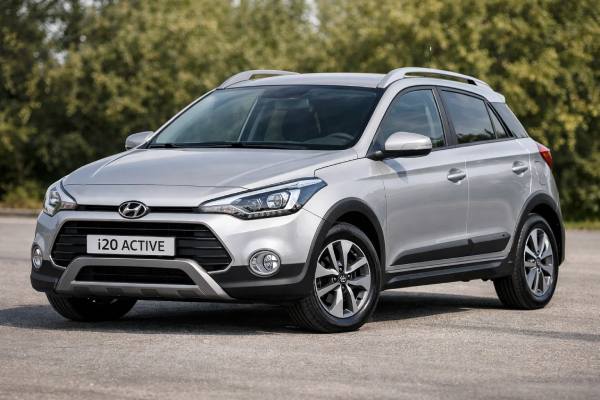
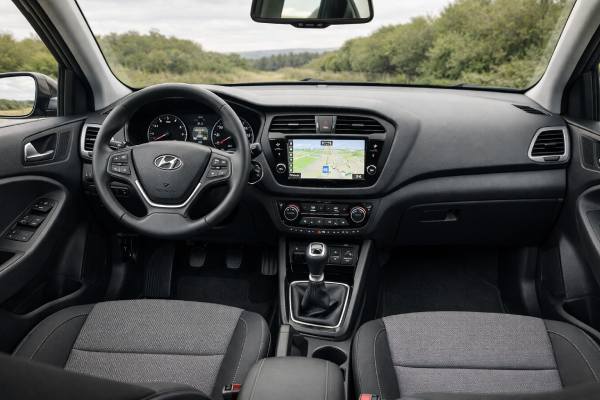
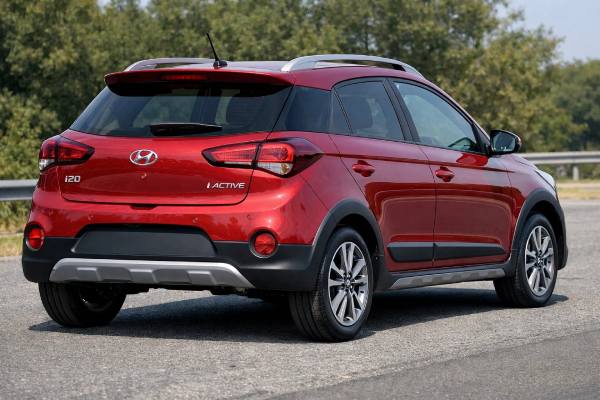
The facelifted Hyundai i20 Active GB with the 1.4-litre 100 hp petrol engine is a small car that makes more sense the longer you look at it. On the surface, it is a style-led crossover version of the regular i20, with tougher trim, extra ride height, and a slightly more adventurous stance. Underneath, though, it stays refreshingly simple. You get a naturally aspirated four-cylinder engine, front-wheel drive, a practical hatchback body, and none of the extra weight or complexity that often comes with larger crossover rivals.
That matters on the used market. A good example can still be roomy, comfortable on rough roads, and cheaper to own than a turbocharged or diesel alternative. The main caution is that this exact facelift-era 1.4 100 hp Active combination was market-specific, so buyers should verify engine, transmission, and equipment by VIN rather than trust a generic advert. Done carefully, however, it remains one of the more sensible small crossover-style hatches of its era.
Core Points
- Naturally aspirated 1.4-litre petrol engine keeps the ownership case simple and predictable.
- Active suspension lift and body cladding make it more relaxed on broken roads than the standard i20.
- Cabin room and hatchback practicality remain major strengths for the class.
- Automatic versions need extra scrutiny for shift quality and fluid-service history.
- A realistic oil-service routine is every 10,000–15,000 km or 12 months in used-car ownership.
Jump to sections
- Hyundai i20 Active petrol profile
- Hyundai i20 Active data and layout
- Hyundai i20 Active grades and safeguards
- Fault patterns and age-related issues
- Service planning and used-buying advice
- Behind the wheel and at the pump
- Rival check and final position
Hyundai i20 Active petrol profile
The i20 Active always sat in an interesting corner of the market. It looked like a small crossover, but it never tried to become a full SUV. Hyundai raised the suspension, added body cladding, fitted roof rails, and gave it a tougher visual stance, yet it kept the i20’s supermini footprint, hatchback practicality, and front-wheel-drive simplicity. That is exactly why it still works today. It offers some of the comfort and road-tolerance benefits buyers want from a crossover without the cost, weight, or bulk of moving into a larger class.
With the facelift-era 1.4-litre 100 hp petrol engine, the Active makes sense in a very old-fashioned way. Instead of relying on a small turbo engine to deliver mid-range punch, it uses a simple naturally aspirated four-cylinder. That changes the driving character. Response is linear, throttle behaviour is easy to judge, and the engine generally feels smoother and less fussy than many small turbo triples. The downside is obvious: it does not feel especially fast. The upside is just as obvious: it tends to be easier to live with and easier to understand as a used car.
The raised ride height matters more than the styling. This is not a rock-crawler, but it copes better than the standard i20 on scarred city streets, rough lanes, winter-broken tarmac, and awkward parking ramps. That makes it attractive to buyers who want a small car that feels less delicate in the real world. The Active is not about adventure in the marketing sense. It is about removing some of the daily irritations that ordinary low-riding hatchbacks can bring.
The cabin remains one of the model’s quiet strengths. The GB-generation i20 was already one of the roomier cars in its class, and the Active keeps that benefit. Adults can fit in the rear more easily than many rivals suggest, the driving position is mature rather than cramped, and the boot is large enough to make the car useful as a primary household vehicle rather than a second runabout. That practicality is a major reason these cars still deserve attention.
There is one important market caveat. The facelifted i20 range changed by region, and the 1.4 100 hp Active was not equally visible in every market. Some countries leaned harder into the 1.0 T-GDi engines after the update. Others kept the 1.4 MPi as the simpler alternative. That is why engine code, transmission type, and equipment list should always be confirmed against the actual vehicle rather than assumed from broad model-year data.
In used form, this version of the Active appeals to a specific buyer: someone who wants the look and road tolerance of a small crossover, but still prefers the mechanical simplicity of a naturally aspirated petrol hatchback. That is not a flashy selling point, but it is a very sensible one.
Hyundai i20 Active data and layout
The facelifted i20 Active kept the core GB-generation body structure but combined it with higher ground clearance, tougher styling, and market-specific powertrain choices. Because this 1.4-litre 100 hp facelift configuration was not identically marketed everywhere, some figures vary by market and transmission. The table below reflects the most consistent public data for the facelift-era i20 Active with the naturally aspirated 1.4 petrol.
| Category | Specification |
|---|---|
| Code | Kappa 1.4 MPi, commonly associated with G4LC-family listings |
| Engine layout and cylinders | Inline-4, transverse, DOHC, 4 valves per cylinder |
| Bore × stroke | About 72.0 × 84.0 mm (2.83 × 3.31 in) |
| Displacement | 1.4 L (1,368 cc) |
| Induction | Naturally aspirated |
| Fuel system | Multi-point fuel injection |
| Compression ratio | About 10.5:1 |
| Max power | 100 hp (74 kW) @ 6,000 rpm |
| Max torque | About 134 Nm (99 lb-ft) @ 3,500 rpm |
| Timing drive | Chain |
| Rated efficiency | Roughly 5.8–6.3 L/100 km (40.6–37.3 mpg US / 48.7–44.8 mpg UK), market and gearbox dependent |
| Real-world highway @ 120 km/h | Roughly 5.8–6.7 L/100 km (40.6–35.1 mpg US / 48.7–42.1 mpg UK) |
| Transmission and driveline | Specification |
|---|---|
| Transmission | 6-speed manual or market-dependent automatic on some 1.4 applications |
| Drive type | FWD |
| Differential | Open |
| Chassis and dimensions | Specification |
|---|---|
| Suspension, front | MacPherson strut |
| Suspension, rear | Torsion beam |
| Steering | Electric power-assisted rack and pinion |
| Brakes | Front ventilated discs; rear drums on many 1.4 petrol versions |
| Most popular tyre size | 185/65 R15 |
| Other common tyre size | 195/55 R16 |
| Ground clearance | 160 mm (6.3 in) |
| Length | 4,035 mm (158.9 in) |
| Width | 1,760 mm (69.3 in) |
| Height | About 1,529–1,535 mm (60.2–60.4 in), depending on rails and market |
| Wheelbase | 2,570 mm (101.2 in) |
| Turning circle | About 10.2 m (33.5 ft) |
| Kerb weight | Roughly 1,080–1,140 kg (2,381–2,513 lb), market and transmission dependent |
| GVWR | Roughly 1,560–1,620 kg (3,439–3,571 lb) |
| Fuel tank | 50 L (13.2 US gal / 11.0 UK gal) |
| Cargo volume | About 326 L (11.5 ft³) seats up / roughly 1,042 L (36.8 ft³) seats folded |
| Performance and capability | Specification |
|---|---|
| 0–100 km/h | Roughly 11.8–12.3 s |
| Top speed | Roughly 175–179 km/h (109–111 mph) |
| Braking distance | No widely published factory figure for this exact facelift variant |
| Towing capacity | Market dependent; verify by VIN and local handbook |
| Payload | Roughly 430–520 kg (948–1,146 lb), trim dependent |
| Fluids and service capacities | Specification |
|---|---|
| Engine oil | Commonly 5W-30 or 5W-40 depending on climate and spec; about 3.3–3.6 L (3.5–3.8 US qt) typical |
| Coolant | Ethylene-glycol based coolant with demineralised water; verify exact fill by VIN |
| Transmission / ATF | Manual or automatic fluid depends on gearbox code; verify by transmission type |
| Differential / transfer case | Not applicable |
| Brake and clutch fluid | DOT 3 or DOT 4; service fill varies |
| A/C refrigerant | Verify by under-bonnet label |
| A/C compressor oil | Verify by system label and refrigerant type |
| Key torque specs | Wheel nuts 88–107 Nm (65–79 lb-ft) |
| Safety and driver assistance | Specification |
|---|---|
| Euro NCAP | Publicly relevant GB i20 result: 4 stars; 85% adult, 73% child, 79% pedestrian, 64% safety assist |
| IIHS | Not applicable |
| Headlight rating | Not applicable |
| ADAS suite | Facelift cars in many markets offered AEB, lane support, driver attention alert, and high beam assist on better-equipped trims |
The key takeaway is that the Active remains mechanically simple even though it looks more adventurous than the standard hatch. Its specifications do not promise sporty performance, but they do promise everyday usefulness, which is exactly the point.
Hyundai i20 Active grades and safeguards
The facelifted i20 Active was more than a cosmetic trim line, but it was still not a fundamentally different vehicle from the standard i20 underneath. Hyundai gave it a distinct identity through body cladding, roof rails, crossover-style bumpers, and a slightly taller stance, then paired that with market-specific trim structures that could range from modestly equipped to genuinely well specified. That means buyers need to pay attention to the individual car, not just the Active badge.
In lower or mid-level forms, an Active may come with basic alloy wheels, manual or simple automatic climate equipment, a smaller media unit, and a straightforward interior trim finish. Better-equipped cars can add navigation, smartphone integration, reversing camera, parking sensors, cruise control, climate control, upgraded audio, and extra convenience equipment. The facelift period also made it easier to find cars with more modern safety features, but not every market followed the same packaging logic. Two facelift Active cars from different countries can look similar and still have meaningfully different equipment.
That matters most in safety. The underlying GB i20 platform carried the same broad Euro NCAP background as the regular hatch, but facelift-era trim improvements made a real difference in day-to-day safety potential. Hyundai publicised the broader availability of features such as Autonomous Emergency Braking, Lane Keep Assist, Driver Attention Alert, and High Beam Assist on better-equipped facelift i20s in some markets. That does not mean every Active automatically has them. It means the facelift period is worth checking carefully because the equipment spread widened.
The safest buying strategy is to inspect the exact car as if the badge tells you almost nothing. Confirm whether it has AEB. Confirm whether lane support is present. Confirm whether reversing sensors or a camera actually work. Confirm whether ESC and tyre-pressure systems are fault-free. On a used small crossover-style hatch, the mechanical condition of the brakes, tyres, and suspension will still matter more than any brochure safety claim, but there is real value in finding a car with the better assistance package.
Wheel size also influences the ownership picture. Fifteen-inch wheels generally suit the 1.4 petrol Active very well, because they preserve ride comfort and keep the car feeling light on its feet. Sixteen-inch wheels improve the look, but they can make the ride busier and slightly blunt the already modest engine response. Since this is not a performance model, the most sensible wheel-and-tyre package is often the best one.
Inside, the Active’s raised stance does not create SUV-like seating height, but it does make the car feel a little easier to get in and out of than some regular superminis. Rear-seat space remains good, and the hatchback layout stays one of the model’s strongest selling points. That makes even a modestly equipped Active a viable household car rather than just a fashion piece.
The best trim is usually the one that blends a strong safety and comfort spec with clear service history and sensible tyre choices. In other words, the right Active is not simply the most expensive one. It is the one that was specified intelligently and maintained properly.
Fault patterns and age-related issues
The 1.4-litre facelift i20 Active is, on paper, one of the simpler versions of the GB family to own. It avoids diesel aftertreatment, avoids turbocharger complexity, and uses a naturally aspirated four-cylinder with a chain-driven timing system. That already gives it an advantage over some rivals. But simplicity should not be confused with immunity. Like any used supermini, it develops a pattern of faults that is driven more by age, use, and maintenance than by dramatic design flaws.
The most common lower-cost issues are the predictable ones. Suspension links, bushes, top mounts, and dampers wear with mileage and poor roads. Since Active models are often driven a little harder over rough surfaces than ordinary hatchbacks, front-end knocks and alignment issues deserve careful attention. Rear drum brakes, where fitted, can corrode or stick on lightly used cars. Tyres also tell a story. Cheap mismatched tyres often signal a seller who economised in the wrong places.
Cooling-system problems tend to be mild but worth catching early. Thermostats can weaken, small hose seepage can develop, and neglected coolant can leave crusting around joints. A 1.4 petrol that takes too long to warm up or smells faintly sweet after a drive deserves closer inspection. These are not usually catastrophic faults, but ignoring them creates nuisance and long-term wear.
The timing chain is one of the more important long-term notes. There is no scheduled belt replacement to budget for, which is a real advantage. But a chain still depends on clean oil and sensible service intervals. Cars that went too long between oil changes or were run low on oil can begin to show chain or tensioner wear. The warning signs are familiar: persistent rattling at cold start, timing-related codes, or an upper-engine sound that is harsher than expected. The best prevention is simple regular oil service.
Automatic cars, where this engine was paired with an automatic in certain markets, need extra attention. Shift quality should be smooth and predictable. Any hesitation, flare, or harsh engagement deserves investigation. Unlike a simple suspension consumable, gearbox faults can quickly change the value equation of a used supermini. A doubtful automatic is rarely worth optimistic buying.
Other occasional issues include ignition coils, sensor faults, battery-related electronic oddities, engine-mount wear, and infotainment glitches. None of these are especially exotic, but several minor faults together can make a supposedly simple car feel surprisingly annoying.
Corrosion is less severe than on much older generations, yet it should never be ignored. Check lower seams, inner arches, brake lines, jacking points, and underbody fasteners, especially on cars from snowy climates. The Active’s cladding can also hide cosmetic damage or trap dirt, so a visual inspection needs to be thorough.
The reliability verdict, then, is fairly positive. This is not a fragile car. But it is only as good as the maintenance it has received. The 1.4 petrol i20 Active rewards buyers who choose boring history over exciting promises.
Service planning and used-buying advice
The best-maintained facelift i20 Active 1.4 is usually easy to own because its needs are straightforward. That is one of the biggest reasons to buy it. You do not have to plan around turbo cooling habits or diesel regeneration cycles. You simply need to keep the engine lubricated properly, maintain the cooling and braking systems, and stay ahead of the ordinary wear items that any small hatchback accumulates.
A sensible used-car maintenance schedule looks like this:
- Engine oil and filter every 10,000–15,000 km or 12 months.
- Engine air filter inspect every service and replace as needed.
- Cabin filter every 15,000–20,000 km or yearly.
- Coolant inspect regularly and renew by age and official schedule.
- Brake fluid every 2 years.
- Spark plugs at the correct interval for the exact plug type and market, often around 60,000 km for normal planning.
- Manual gearbox oil inspect or replace around 80,000–100,000 km if history is vague.
- Automatic transmission fluid where applicable, refresh by sensible used-car practice even if not strongly advertised in brochures.
- Timing chain no set replacement interval, but listen for noise and monitor for timing faults.
- Auxiliary belt and hoses inspect every service.
- Tyre rotation and alignment every 10,000–12,000 km or when wear suggests it.
- Battery test yearly once the battery is about 4 years old.
The fluid picture is manageable. Engine oil is typically around 3.3–3.6 L, with coolant and transmission volumes dependent on exact drivetrain. Wheel-nut torque is normally 88–107 Nm. Those figures are enough for planning, but serious work should always be checked against VIN-specific documentation and the exact gearbox type.
For used buyers, the inspection order should be calm and methodical. Start with paperwork, then the cold start, then the underside, then the road test. A good 1.4 should start easily, idle cleanly, and warm up without fuss. Underneath, you want to see no serious rust, no significant oil wetness, and no obvious suspension damage. On the road, look for steering straightness, brake consistency, quiet suspension, and normal gearbox behaviour.
A strong buyer’s checklist includes:
- Clear oil-service history at believable intervals.
- No persistent engine, ABS, airbag, or ESC warnings.
- Quiet cold start with no long chain rattle.
- Clean coolant condition and no stains around joints.
- Smooth clutch action or smooth automatic shifts where relevant.
- Even tyre wear and sensible-brand matching tyres.
- No front suspension knocking over rough surfaces.
- Fully working camera, sensors, infotainment, and climate systems where fitted.
- Evidence that the car has not merely been cosmetically prepared for sale.
Common catch-up jobs after purchase are usually manageable: tyres, filters, plugs, fluids, brakes, battery, alignment, and perhaps suspension links or a thermostat. The expensive surprises are mainly gearbox-related on automatics or hidden underbody corrosion, not engine drama.
The best examples are usually later 2019–2020 cars with mid-grade or higher trim, good safety spec, and boringly complete records. In this market, boring is valuable. A tidy, well-maintained Active is much more appealing than a flashy bargain with missing history.
Behind the wheel and at the pump
The facelifted i20 Active 1.4 petrol is pleasant to drive in a way that is easy to underestimate. It does not win on big-number performance, but it often feels calmer and more natural than small turbo alternatives in everyday use. Throttle response is linear, the engine note is smoother than many triples, and the raised Active setup takes some of the sting out of poor road surfaces without making the car feel loose.
Around town, the car is simple and friendly. The steering is light, visibility is good, and the engine is easy to modulate in traffic. You do need to work it more than a turbo engine to get strong acceleration, but the delivery is predictable. That makes it comfortable for drivers who prefer smooth control to sudden boosts of torque. Parking and low-speed manoeuvres are also easy because the Active remains compact despite the crossover look.
On rougher roads, the Active earns its badge more than many styling packages do. The extra ride height helps with potholes, road humps, bad lane edges, and uneven surfaces. It does not transform the car into an off-road machine, but it does make it feel less vulnerable than the standard hatch. That is one of the model’s biggest real-world advantages, especially in regions where the road network is not kind to low small cars.
Handling is safe and predictable rather than sporty. The car leans a bit more than the standard i20 if pushed hard, and the steering is not especially rich in feedback, but the chassis remains honest and easy to trust. Straight-line stability is decent, and the Active feels more mature than many fashionable small crossovers that rely on looks more than engineering balance.
The 1.4 petrol’s limits show up most clearly when fully loaded or overtaking at higher speeds. There is no turbo surge to rescue a lazy gear choice. You need to plan, downshift when required, and accept that the performance is solid rather than brisk. Manual versions suit that engine better for enthusiastic drivers, while automatics trade some urgency for convenience.
Real-world fuel economy usually lands in a reasonable bracket for a lightly raised naturally aspirated supermini:
- City: about 7.0–8.3 L/100 km
about 33.6–28.3 mpg US
about 40.4–34.0 mpg UK - Highway at 100–120 km/h: about 5.8–6.7 L/100 km
about 40.6–35.1 mpg US
about 48.7–42.1 mpg UK - Mixed use: about 6.3–7.3 L/100 km
about 37.3–32.2 mpg US
about 44.8–38.7 mpg UK
That is not class-leading efficiency, but it is honest and usually repeatable. More importantly, it comes without the usage sensitivity that often follows modern diesels. Short trips hurt fuel economy, but they do not create DPF anxiety. That simplicity is worth something.
Overall, the i20 Active 1.4 feels like a well-judged compromise. It is not fast, but it is easy. It is not premium, but it is mature. And it rides bad roads better than its ordinary hatchback roots might suggest.
Rival check and final position
The facelifted i20 Active 1.4 100 hp sits in a useful gap between ordinary superminis and small crossovers. That makes it easy to compare both upward and sideways. Against a Ford Fiesta Active-style rival, the Hyundai usually loses on driver involvement. The Ford is sharper and more playful. But the Hyundai answers with a calmer, more comfort-led character and often a more practical rear cabin and luggage area.
Compared with a Volkswagen Polo or Skoda Fabia in regular hatch form, the Active offers the raised stance and rough-road confidence those cars do not naturally provide. The Polo may feel a little more polished in the cabin, but the Hyundai makes a stronger case for buyers who want a crossover-like posture without moving into a larger, heavier class. Against a Renault Captur or Peugeot 2008, the i20 Active usually feels smaller and less fashionable, but also lighter, simpler, and more hatchback-like to own.
Its closest competition may actually come from within Hyundai’s own range. The standard facelift i20 1.4 makes sense for buyers who want the simplest, cleanest hatchback version with slightly lower ride height and a marginally tidier on-road feel. The Active becomes the better choice if your roads are poor, you prefer the tougher look, or you want the small comfort advantage that extra clearance brings. It is a matter of emphasis, not of one clearly replacing the other.
There is also the engine question. Many facelift i20 buyers were drawn to the 1.0 T-GDi engines because they look more modern on paper and feel punchier in the middle of the rev range. That is fair. But the 1.4 naturally aspirated car answers with smoother linearity and less perceived complexity. For a used buyer who values simplicity over turbo character, that still matters a great deal.
That is why the i20 Active 1.4 remains relevant. It does not promise anything dramatic. It gives you space, visibility, a more forgiving suspension setup, and a simple petrol engine in a body that feels a little tougher than an ordinary hatch. For many buyers, especially those who keep cars for several years, that is more valuable than sharper styling or slightly faster acceleration.
The final verdict is straightforward. This is not the most exciting small crossover-style car of its era, and it is not the most prestigious. But it is one of the more sensible. If you want a compact, practical, raised small hatchback with a simple petrol engine and a mature everyday character, the facelifted i20 Active 1.4 deserves a serious look. The right example will never feel trendy for long. It will just keep making sense.
References
- Hyundai Owners manuals | Hyundai Motor UK 2026 (Owner’s Manual Portal)
- Routine Servicing 2026 (Service Information)
- Hyundai Motor UK announces New i20 5 door pricing and specifications 2018 (Press Release)
- Hyundai i20 Active mit erweitertem Motorenangebot 2016 (Model and Engine Line-up)
- Hyundai i20 – Euro NCAP Results 2015 2015 (Safety Rating)
Disclaimer
This article is for informational purposes only and is not a substitute for professional diagnosis or repair. Specifications, torque values, service intervals, procedures, and equipment can vary by VIN, market, engine calibration, gearbox, and trim, so always verify details against the official service documentation for the exact vehicle.
If this guide helped you, please consider sharing it on Facebook, X, or another platform to support our work.